
You probably have an image of the Salar de Uyuni in your head before you read this. Maybe the one with the surface flooded after rain, perfectly mirroring the sky and any human figure standing on it. Maybe the dry-season hexagonal salt-cell pattern that runs to the horizon. Both versions are real, they happen at different times of year, and the rest of this guide is about how to actually see whichever one you came for, plus the surrounding altiplano landscape that the Salar tour reaches over three days.
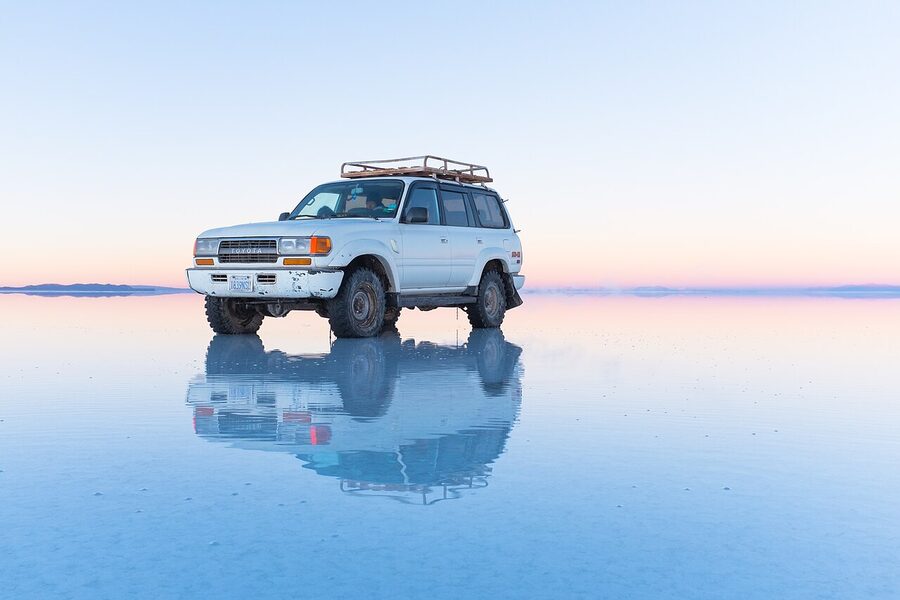
The Salar de Uyuni sits in the southwestern altiplano of Bolivia, at an elevation of 3,656 metres. The salt flat itself covers about 10,500 km², roughly the size of Lebanon, and is the largest single salt flat on Earth. It formed from a series of prehistoric lakes that gradually evaporated, leaving the salt deposits that now lie up to 10 metres deep in some places. Underneath the salt is the lithium reserve we covered in our environmental piece; on top of it is the most-photographed landscape in South America. This guide focuses on visiting the place.
In This Article
- When to go: wet season, dry season, or the transition
- Tour options: 1-day, 3-day, and the cross-border
- Choosing an operator
- The Uyuni town and the train cemetery
- Day 1: the Salar surface
- Day 2: the lagunas and the high altiplano
- Day 3: geysers, hot springs, and the green lake
- What to bring
- Photography notes
- Practical: getting to and from Uyuni
- What to keep in mind
When to go: wet season, dry season, or the transition
The single biggest decision is when. The Salar has two completely different visual modes, and which one you see depends on the date of your visit.
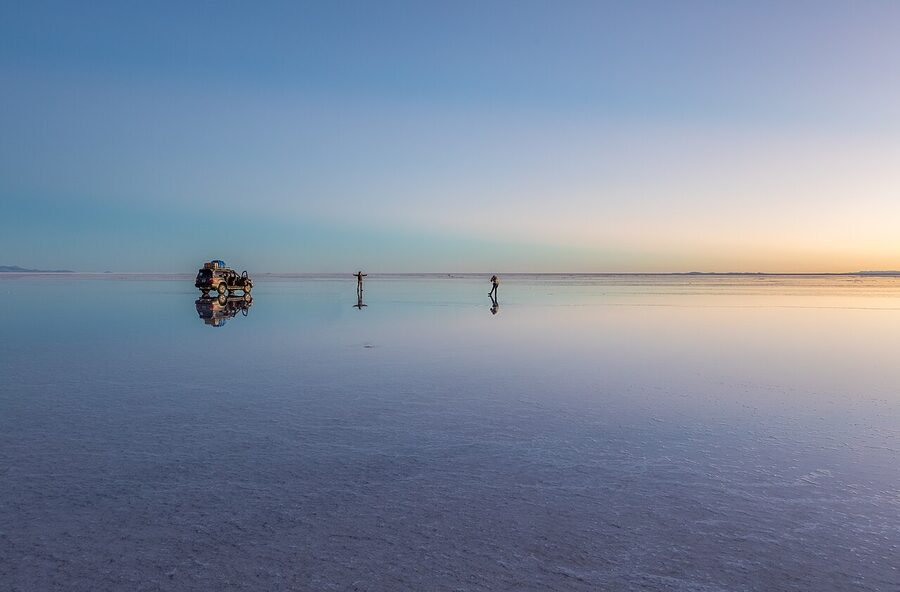
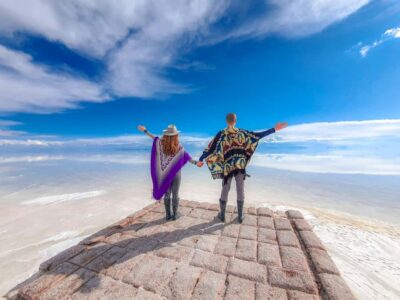
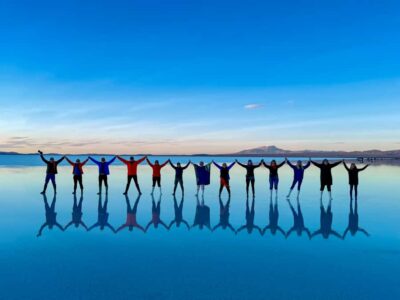
Wet season (December through April), peaking January-February-March: seasonal rain and the natural runoff from the surrounding altiplano flood the Salar surface in a thin (1-30 cm) layer of water. The surface becomes a perfect mirror. This is the version most travelers picture, the one that produces the Instagram-defining horizon shots. The trade-off is access: large parts of the Salar are not driveable when flooded, and the Tunupa volcano route, the Isla Incahuasi cactus island, and many of the more remote spots become inaccessible. Tour itineraries get truncated, although the photographs that come out of a properly-flooded Salar are unmatched.
Dry season (May through November), peaking June-July-August: the Salar is completely dry, the salt crust hardened, the entire surface accessible. The sun is sharp, the light contrast extreme, the photographs entirely different. This is when you can drive across the Salar to Tunupa volcano, walk on Isla Incahuasi among the giant cardón cacti, and reach all the lagunas to the south on a 3-day tour. The trade-off is the absence of the mirror effect.
The transition months (April-May and November-December): the Salar is partly wet and partly dry, in patches that the tour drivers will navigate around. You can sometimes get the best of both, including a partial mirror effect alongside accessible Salar driving. The downside is unpredictability; some travelers come in mid-May expecting the mirror and find a fully dry Salar already.
If you have flexibility, mid-March to mid-April or late November to mid-December gives you the best chance at both effects in the same trip. If you must pick one, the mirror is the more iconic photograph but the dry-season tour reaches more of the surrounding region.
Tour options: 1-day, 3-day, and the cross-border
The standard tour formats are settled. Almost every operator runs essentially the same itinerary; the differences are in vehicle quality, food, accommodation, and guide standard.
1-day Salar tour from Uyuni: the Salar surface only. Pick up at 10am, drive to Colchani salt town and the train cemetery, lunch in a salt hotel near the centre of the Salar, sunset photos on the salt, return to Uyuni by 7pm. Cost: 200 to 350 BOB per person. Best if you have only a single day and want the mirror or salt-flat photographs without the full 3-day commitment.
3-day Salar and lagunas tour from Uyuni: the canonical tour. Day 1 covers the train cemetery and Salar surface (Colchani, Isla Incahuasi if accessible, the Salt Hotel for lunch, sunset on the Salar). Day 2 heads south through the altiplano lagunas (Laguna Cañapa, Laguna Hedionda, Laguna Honda, Laguna Chiarkota), past flamingo populations, with overnight at a basic hostel near Laguna Colorada at around 4,200m. Day 3 is the early-morning push to the Sol de Mañana geyser field at 4,850m, the Polques hot springs, the green Laguna Verde at the Chilean border, then the long drive back to Uyuni. Cost: 850 to 1,400 BOB per person depending on operator quality and group size. This is what most travelers should do.
3-day Salar tour ending in San Pedro de Atacama, Chile: same itinerary as above for Days 1 and 2, but Day 3 ends with a border-crossing drop at the Chilean immigration post at Hito Cajón. This makes sense if your itinerary includes Chile and you want to combine the Salar with San Pedro de Atacama. Cost: 1,000 to 1,600 BOB per person plus the Chilean immigration fees and transfer to San Pedro (200 to 300 BOB extra).
4-day Tupiza-departure tour: some operators run the same circuit in reverse, departing from Tupiza in the south, ending in Uyuni. The Tupiza departure is less popular but gives you a different first-day landscape (the colourful Tupiza valleys) and is generally less crowded. Cost similar.
Choosing an operator

This is the part of the trip where price differences matter. The cheapest operators (around 700 to 850 BOB for a 3-day tour) routinely run older 4x4s that break down on the high-altitude lagunas circuit. Drivers in this segment are sometimes underpaid, sometimes drink, and the food on the road is sometimes poor. The reputable mid-tier operators (1,000 to 1,400 BOB) maintain newer vehicles, employ guides who speak basic English in addition to Spanish, run twice-daily coordination check-ins with their dispatch, and provide proper food. The premium operators (1,500+ BOB) add private vehicle options, English-fluent guides, and accommodation upgrades.
Reputable operators worth knowing about:
- Quechua Connection: long-running, professional, mid-to-upper tier. Around 1,200 to 1,400 BOB per person.
- Red Planet Expedition: Australian-owned, English-fluent guides, comfortable vehicles. Around 1,300 to 1,500 BOB.
- Andes Salt Expeditions: solid mid-tier, family-run, around 1,000 to 1,200 BOB.
- Cordillera Traveller: budget-friendly but reliable, around 850 to 1,000 BOB.
- Salty Desert Aventura Tours: based in Uyuni, English guides, around 1,100 to 1,300 BOB.
What to avoid: any operator who quotes you under 700 BOB for a 3-day tour, the touts at the Uyuni bus station who promise you a discount if you book on the spot, and any operator without a proper office address. The quality difference between a 700 and a 1,000 BOB tour is enormous; the difference between a 1,000 and a 1,500 BOB tour is smaller. The mid-tier is where the value is.
Book in advance during the wet-season peak (December through February) and the dry-season peak (June through August). Bookings 2 to 4 weeks ahead are reasonable; same-day walk-in bookings are sometimes possible in shoulder season but are a gamble in peak.
The Uyuni town and the train cemetery
Uyuni town itself is small (population around 11,000), windy, dusty, and not particularly attractive. It is a transport node and a tour-departure base, nothing more. Spend a single night before the tour starts and another after it ends if you need it; do not plan extended Uyuni-town time. The town’s altitude (3,670m) is also notably brutal in the cold months; bring layers.
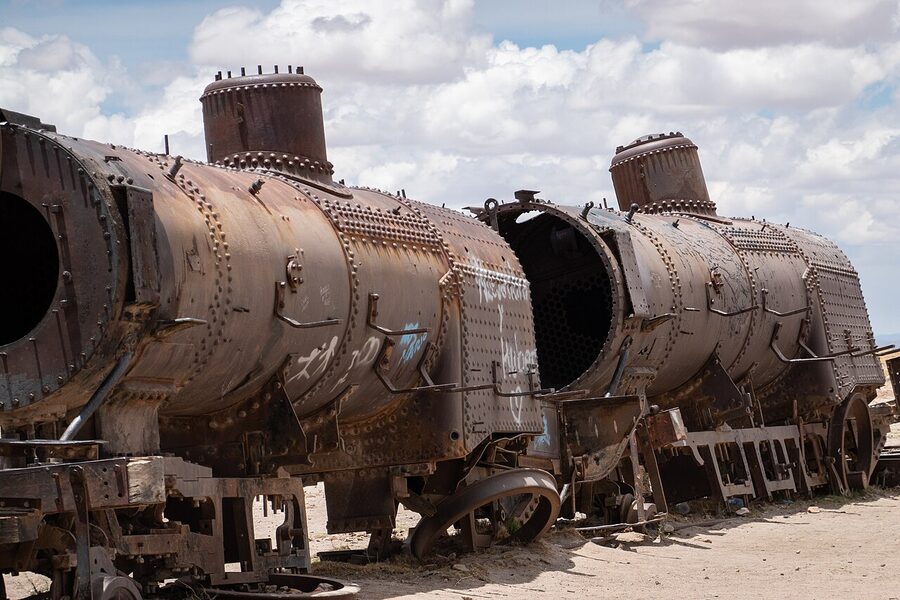
The single attraction in Uyuni proper is the Train Cemetery, a 3 km drive south of the town centre. Most Salar tours stop here as their first activity at around 10:30am on day 1; if you want to walk among the trains in better light, get up at sunrise and walk out (or take a 30 BOB taxi) before the tour groups arrive. The locomotives were abandoned when the mining industry of nearby Pulacayo collapsed in the 1940s, and they have been corroding in the high-altitude wind for 80 years.
Where to stay in Uyuni: Hotel Jardines de Uyuni (mid-tier, around 350 to 500 BOB), Tonito Hotel (long-running budget-mid, 200 to 350), and various hostels around the bus terminal at 80 to 150 BOB per dorm bed. Where to eat: Minuteman Pizza is the long-running expat-favourite (US-style pizza, around 60 to 90 BOB per pie), Tika Cocina Boliviana for Bolivian food at around 50 to 80 BOB per main, and Lithium Club for a quasi-fine-dining option (200 to 300 BOB per main).
Day 1: the Salar surface
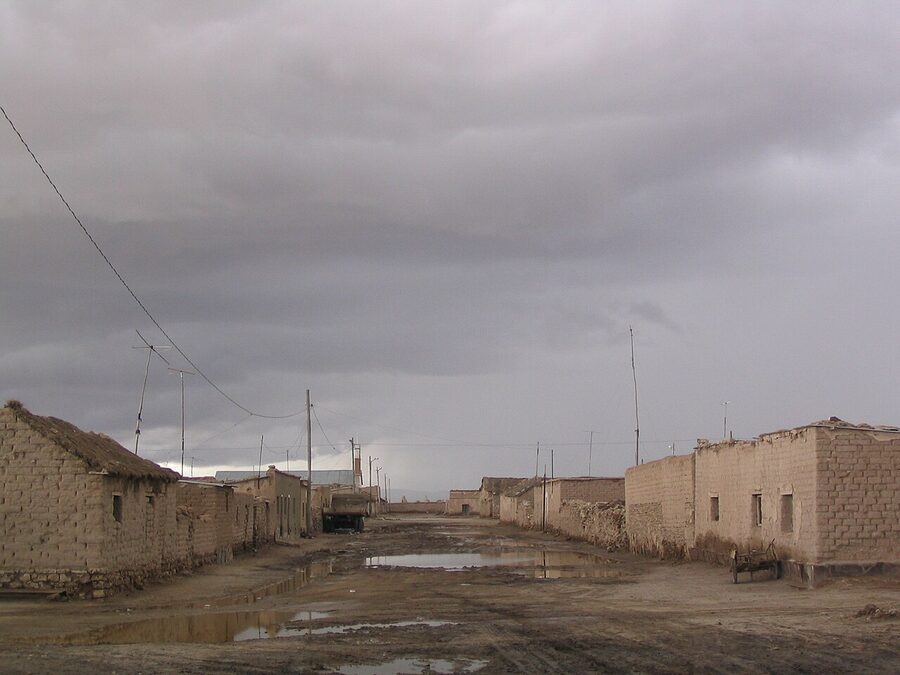
The standard Day 1 itinerary is the Salar surface and the small communities on its edges. After the train cemetery, the tour drives 25 km to Colchani, the salt-mining village at the Salar’s eastern edge. You stop at one of the small salt-processing operations to see the basics: piles of salt scraped from the surface, heated in a wood-fired oven to drive off residual water, then milled and iodised before being bagged for sale. The whole demonstration takes about 30 minutes. The traders sell salt-block souvenirs and the standard llama-wool textiles afterwards; the prices on the tourist-side of the village are negotiable but not cheap.
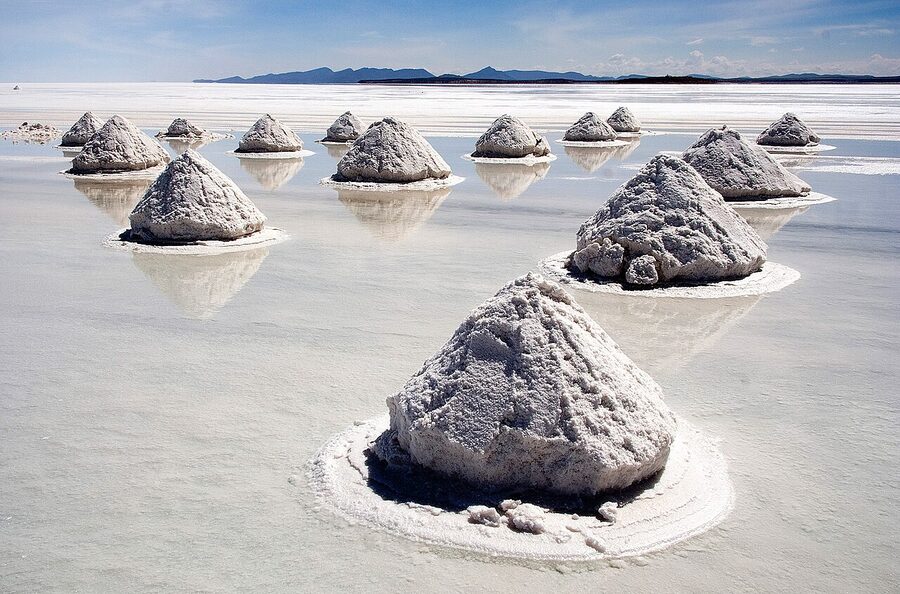
From Colchani the tour drives onto the Salar itself. The drive across the salt surface is the canonical Salar experience; in the dry season you cover up to 90 km in a relatively straight line at 80 km/h, with nothing but salt to the horizon. In the wet season the same drive happens through a thin layer of water, with reflections that effectively double the sky.
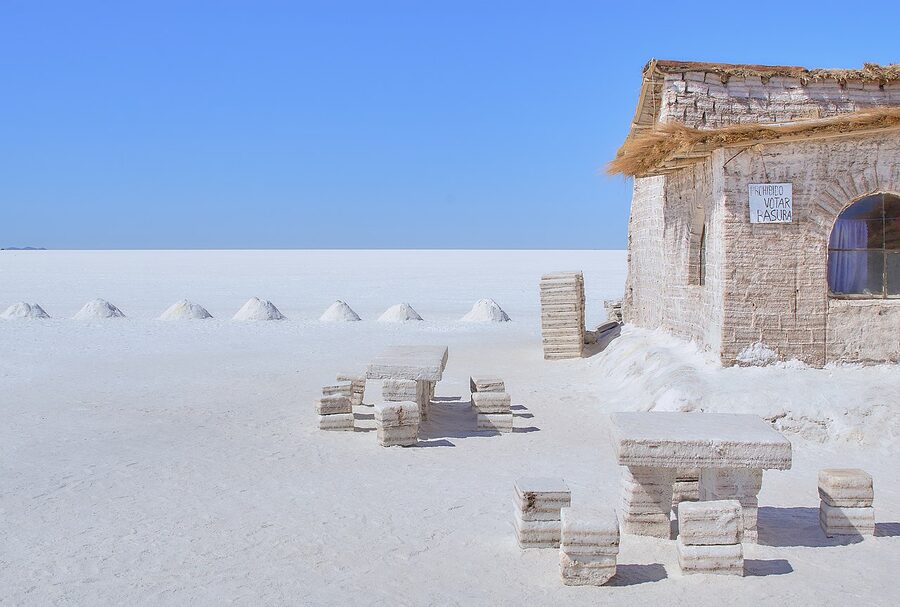
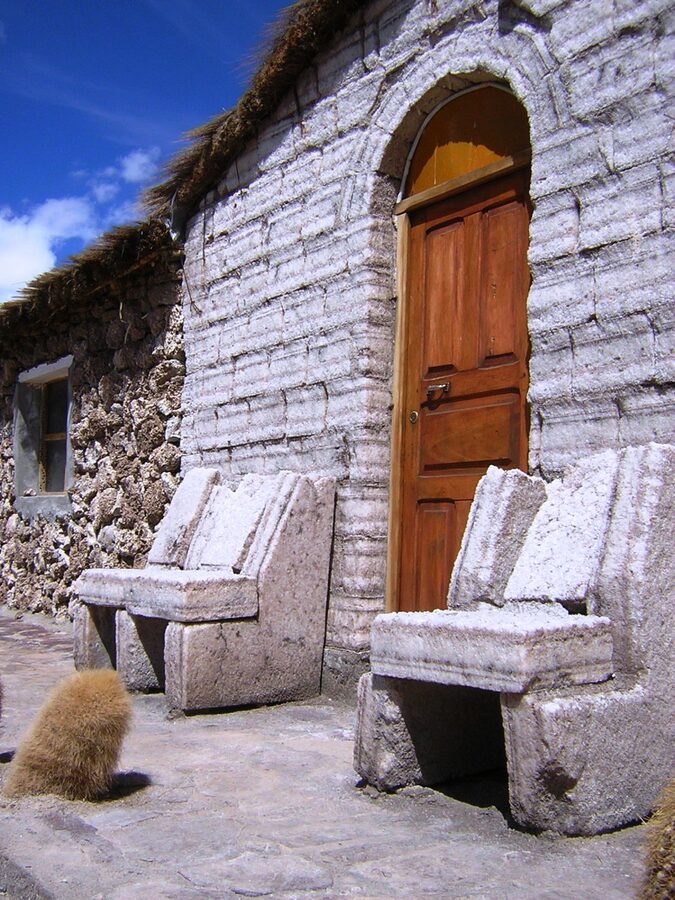
Lunch on Day 1 is in a “salt hotel” or “casa de sal,” a building constructed from compressed salt blocks. Several of these exist around the Salar’s edge; your tour will stop at whichever has space. The structures are part novelty, part practical (salt is the cheapest local building material), and the food they serve is reasonable but not exceptional.
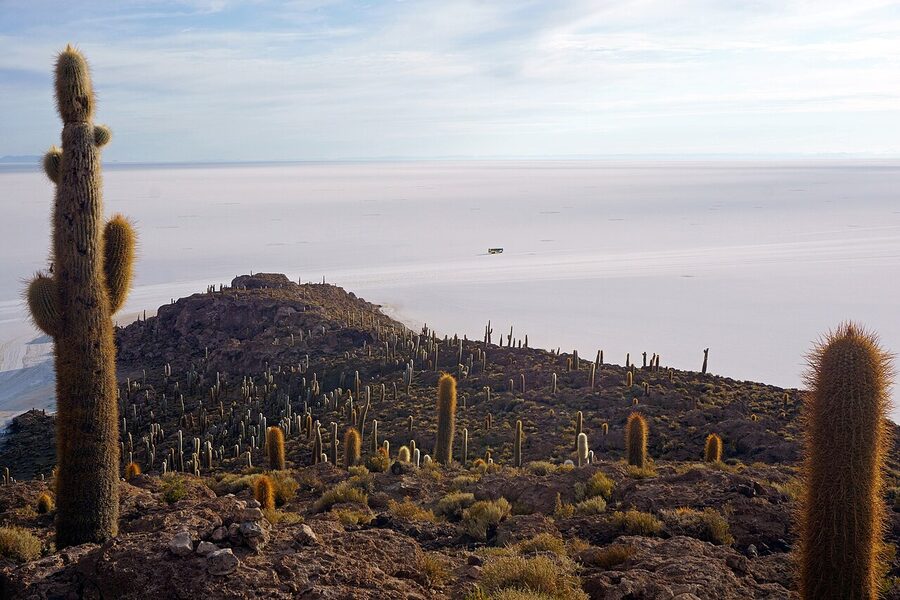
Isla Incahuasi (sometimes called Isla del Pescado, “fish island,” because of its profile) is the headline stop on Day 1 in the dry season. The rock island, technically a fossilised volcanic outcrop covered in giant cardón cacti, rises about 70 metres out of the salt and gives you a 360-degree view of the Salar. A 30-minute walk to the top is the standard activity. Entry is 30 BOB at the cabin at the foot of the island. In the wet season Incahuasi is sometimes inaccessible (the surrounding salt is flooded too deep to drive); your tour will substitute another stop.
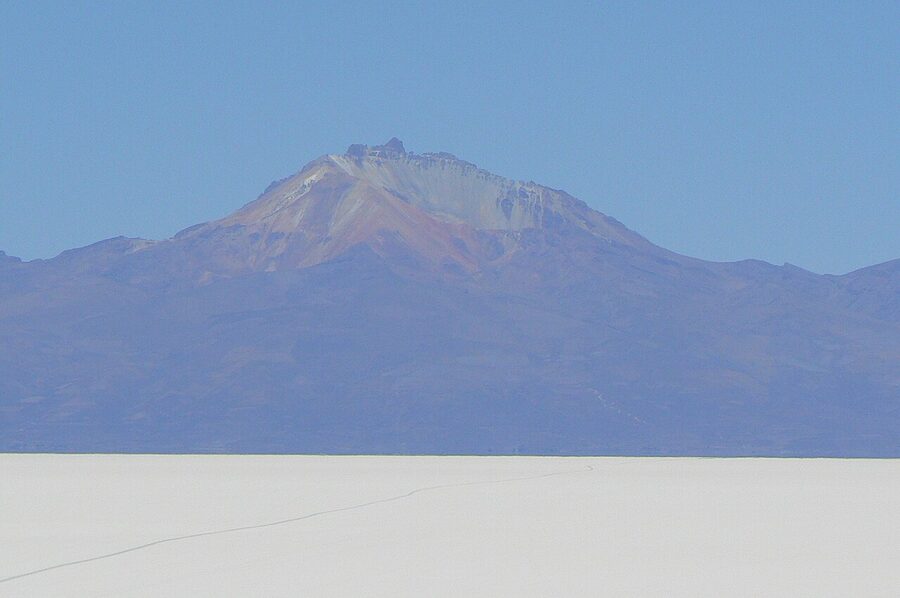
The Day 1 finale is sunset on the Salar. Your driver will park somewhere with a clear horizon and you will have 30 to 45 minutes to wander the surface, take photographs, and watch the colour shift. In the dry season the salt turns yellow then orange then deep pink. In the wet season the mirror effect makes the entire horizon look like a watercolour. This is the photograph most people came for; bring a wide-angle lens or a phone with the panorama mode you want to test.
Overnight on Day 1 is at a small basic hostel either at the Salar’s edge or in the village of San Juan, depending on the route. Expect cold rooms, simple food, and intermittent power. The accommodation is functional, not luxurious; the budget operators sometimes offer beds in actual salt-block buildings, the mid-tier ones use more conventional concrete construction.
Day 2: the lagunas and the high altiplano
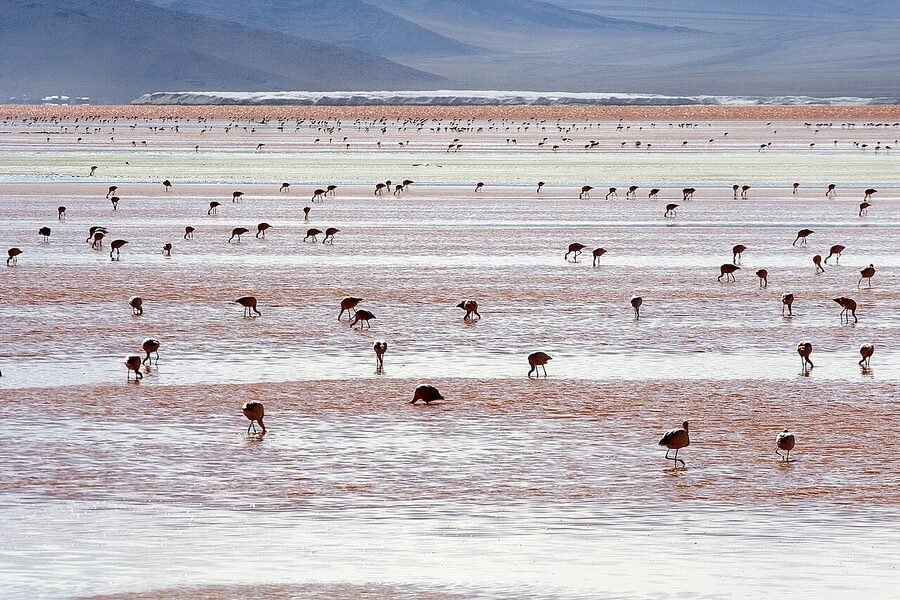
Day 2 is the long altiplano drive south. Total distance is around 350 km on rough dirt and washboard roads; the day starts at 7am and ends at the Laguna Colorada accommodation by 5pm. You climb steadily through the day, ending the night at around 4,200m. Expect cold and altitude effects; the second night is the hardest of the tour for sleep.
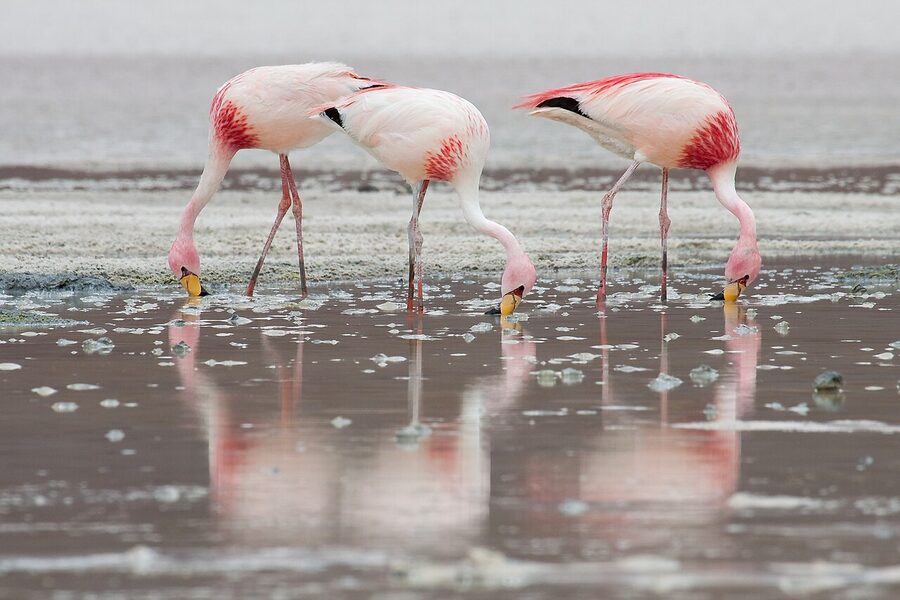
Stops along the way: a series of altiplano lagunas (Laguna Cañapa, Laguna Hedionda, Laguna Honda, Laguna Chiarkota), each of which hosts populations of Andean flamingos in the dry season. Hedionda’s name means “stinking” in Spanish (from the sulphur in the lake) but the flamingos do not mind; Cañapa is the more visually striking. The Árbol de Piedra (Stone Tree) is a wind-eroded rock formation that everyone takes the same photograph of.

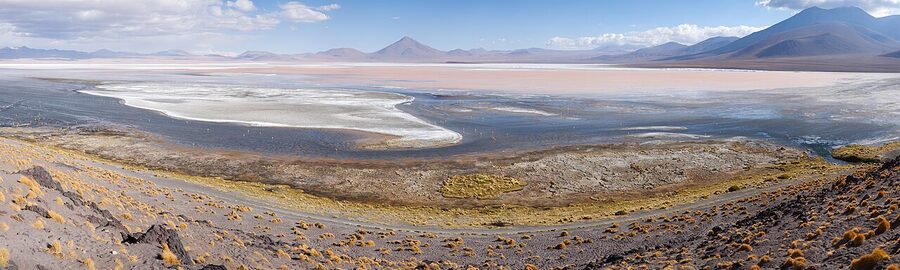
Laguna Colorada itself is the day’s headline destination. The 60 km² shallow lake gets its red colour from algae pigments and red sediments; the colour shifts depending on light and wind, deepest red in the late afternoon. The lake is also the year-round home of the largest population of James’s flamingos in the world (around 25,000 birds). The flamingos breed here in November-March; in dry season the population thins but you will still see thousands.
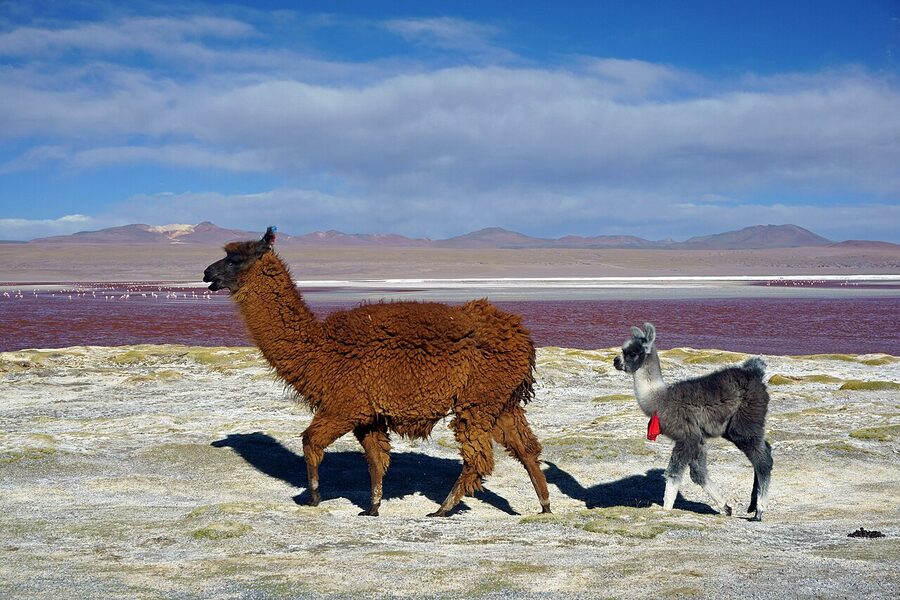
Overnight on Day 2 is at a basic hostel at 4,200m on the south shore of Laguna Colorada. The accommodation is sparse: small rooms, shared bathrooms, no heating, electricity from generators that shut off at 9pm. Bring a sleeping bag if you have one (the budget operators do not always provide proper bedding) and your warmest clothes. The night is genuinely cold (-10°C is normal in winter); the headache from altitude is normal. Drink water and walk slowly.
Day 3: geysers, hot springs, and the green lake
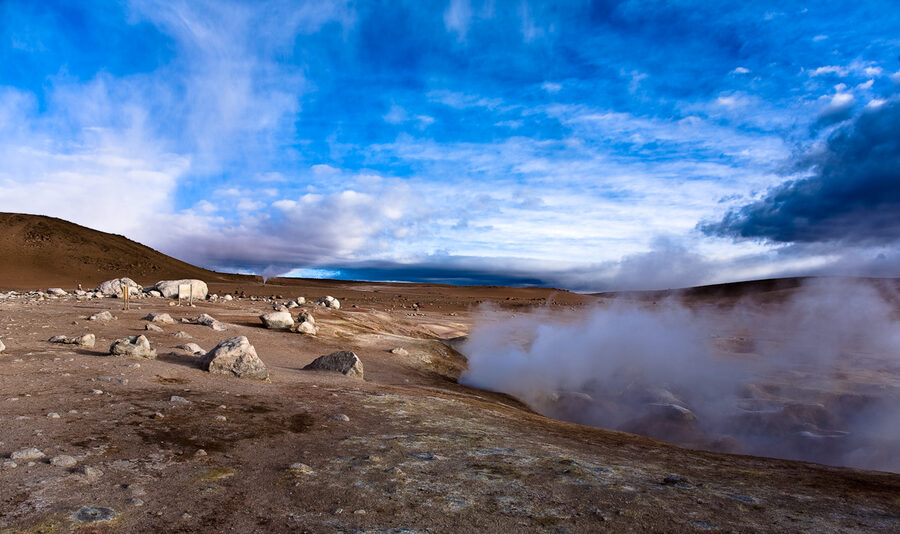
Day 3 starts early. The first stop, at the Sol de Mañana geyser field, is reached at sunrise (5am to 6am wakeup, 6am to 6:30am arrival). The field sits at 4,850m, which is the highest point of the entire tour; you will feel the altitude. The field has fumaroles, mud pools, and small geysers; it is not Yellowstone, but the cold-air-meeting-steam effect at sunrise is genuinely spectacular. Tour groups have about 30 minutes to walk among the vents; do not approach the active fumaroles too closely.

From the geysers, the route descends to the Polques hot springs, where you can soak in a 30°C natural pool with a view across the altiplano. Bring a swimsuit and a towel; the changing facilities are basic. Around 25 BOB entry. Most tours allow 45 minutes here, which is enough to warm up after the cold morning.
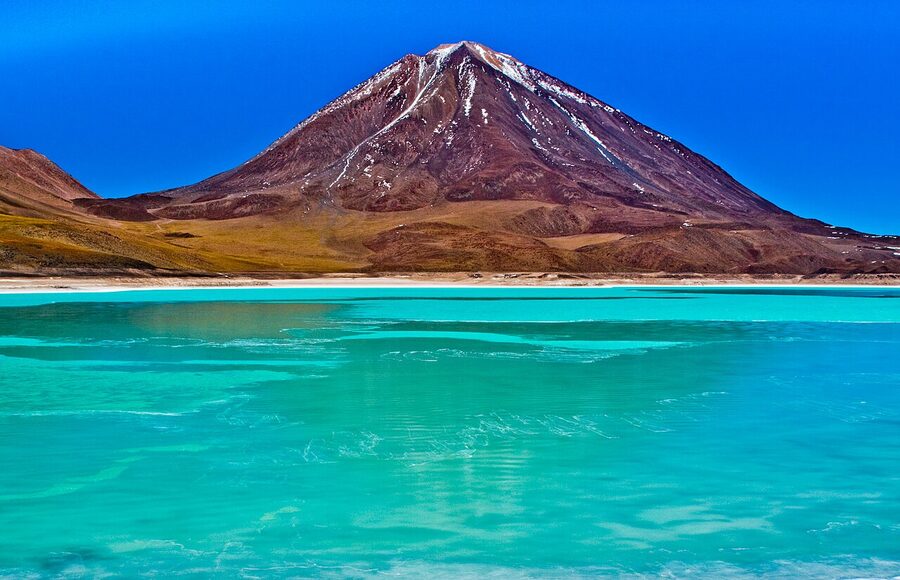
The final stop is Laguna Verde, the green lake, at the very southern tip of Bolivia at the Chilean border. The colour comes from copper and arsenic minerals; the green appearance is most striking when the wind picks up and stirs the surface. Behind the lake rises Volcán Licancabur (5,916m), the perfectly conical volcano that marks the border. From Laguna Verde, your tour either turns north for the long drive back to Uyuni (about 7 hours), or drops you at the Hito Cajón immigration post for the cross to San Pedro de Atacama.
What to bring
The cold and the altitude are the two things travelers underprepare for. A short list of essentials:
- Layers, including a proper warm jacket and thermal base layer. Daytime can be 15°C in the sun; night drops below freezing in the dry season. The Day 2 hostel at Laguna Colorada is unheated.
- A warm hat and gloves. The altiplano wind is constant.
- Sunglasses with UV protection. Salt reflection is brutal; people get snow-blindness on the Salar in the dry season without proper glasses.
- Sunscreen, factor 50+, applied every 2 hours. The UV at 4,500m is roughly 50 percent stronger than at sea level.
- Lip balm. Cracked lips are the most common complaint after a 3-day tour.
- 2 to 3 litres of water minimum per day. Tour vehicles do not always carry enough.
- Snacks for between meals. Tour meals are not generous.
- A swimsuit and quick-dry towel for the Polques hot springs.
- Cash in small bills (50 and 100 BOB notes). The small fees on the route (Incahuasi 30 BOB, Polques 25 BOB, the national park entry 150 BOB on Day 2) all want exact change.
- Headlamp or torch. The Day 2 accommodation has unreliable electricity.
- Camera with extra batteries. Cold drains lithium batteries quickly; plan accordingly.
What not to bring: heavy luggage. Tour vehicles are 4×4 Toyota Land Cruisers carrying 6 passengers plus the driver and the gear. A daypack and a small duffel works; any kind of wheeled suitcase is awkward.
Photography notes
The Salar is one of the most photographed places on Earth and the standard shots have all been done. A short list of techniques worth knowing:
Perspective shots in the dry season: the white salt and infinite horizon let you play with relative scale. A small object in front of the camera and a person far behind can produce the gag photos that the Salar is famous for. Tour drivers will help you stage these; bring a small prop (a wine bottle, a Pringles can) if you want the classic shots.
Mirror photography in the wet season: stand in the water (boots required) for the cleanest reflection. Late afternoon and early morning give the best light. Drone shots from above are spectacular; tour groups often share rentals.
Star photography at the Day 2 hostel: at 4,200m with no light pollution, the Milky Way is unbelievable. A tripod and a 15-30 second exposure at f/2.8 ISO 3200 should give you the band of the galaxy clearly. Astronomy nerds: this is some of the best dark-sky territory on Earth.
Practical: getting to and from Uyuni
From La Paz: the standard option is the overnight bus from La Paz’s main bus terminal. Trans Omar and Todo Turismo run the route nightly, departures around 9pm, arrival in Uyuni around 7am. Cost: 100 to 200 BOB depending on company and seat class. The semi-cama (reclining seat) is fine; the cama (full bed) is worth the extra 50 BOB if you can sleep on a moving bus. Alternative: the Wara Wara del Sur train from Oruro to Uyuni (Tuesday and Friday departures, 90 to 200 BOB depending on class), with Oruro reachable from La Paz by morning bus. The train is the more comfortable option but runs only twice weekly.
By air: Boliviana de Aviación (BoA) and EcoJet fly La Paz-Uyuni daily, around 600 to 900 BOB return depending on date. The flight is 50 minutes versus 10 hours by bus, and is a reasonable splurge if your time is short.
From Sucre or Potosí: direct buses run from both, around 5 to 7 hours from Sucre and 4 to 5 from Potosí. Cost: 80 to 150 BOB.
From Tupiza: 4-day reverse-direction tours leave from Tupiza, ending in Uyuni; if you are heading north from Argentina, this is the natural option.
What to keep in mind
The Salar de Uyuni is, by any measure, one of the great landscapes on Earth, and a 3-day tour through it and the surrounding altiplano is the experience most travelers in La Paz have come to do. It is also harder than it looks: the altitude, the cold, the rough roads, and the long driving days add up. The right operator and the right preparation make the difference between a once-in-a-lifetime trip and a miserable 72 hours of mild altitude sickness.
Pick your season deliberately. Do the research on the operator. Bring layers and a sleeping bag. Take the photographs that matter to you. And remember that the surrounding landscapes (the lagunas, the geysers, the cactus island) are arguably as good as the Salar itself; the standard tour gets you all of them, and if you have the time, the 4-day Tupiza-Uyuni version is the better way to do it. Seven days in southwest Bolivia, including the Salar, the lagunas circuit, a couple of nights in Tupiza, and an overnight in Sucre on the way back, is a route that almost no other country can match.
You Might Also Enjoy
 Cochabamba Travel Guide: Bolivia Culinary Capital, Cristo Statue, and the Largest Market in South America
 La Paz Travel Guide: The World’s Highest Capital, Cable Cars, and What to Actually Do
 Sucre Travel Guide: Bolivia’s White City, Independence Capital, and Where to Slow Down
 Tarija Travel Guide: The Wine Country, Singani Distilleries, and the Mediterranean Side of Bolivia
Book the Salar
One-day runs, sunset-and-stars evenings and the three-day 4x4 loops, ranked by the travellers who took them.



.jpg)


