Ask a Bolivian what the national dish is and you will get a different answer in every city. La Paz says salteña. Cochabamba says silpancho. Sucre says salteña, but the spicy chicken one. People in Santa Cruz quietly point at majadito and let the highlanders argue.
The real answer is that Bolivian food is not one dish. It is what arrives on the table before you have ordered anything. A small plastic basket of marraqueta bread. A bowl of llajwa, the green salsa with tomato and locoto chilli, that the cook will refill if you finish it. A glass of mate de coca for the altitude, especially if you are eating in La Paz or Potosí. Once those three things have appeared, the meal has started, and what comes next depends entirely on which valley you are eating in.
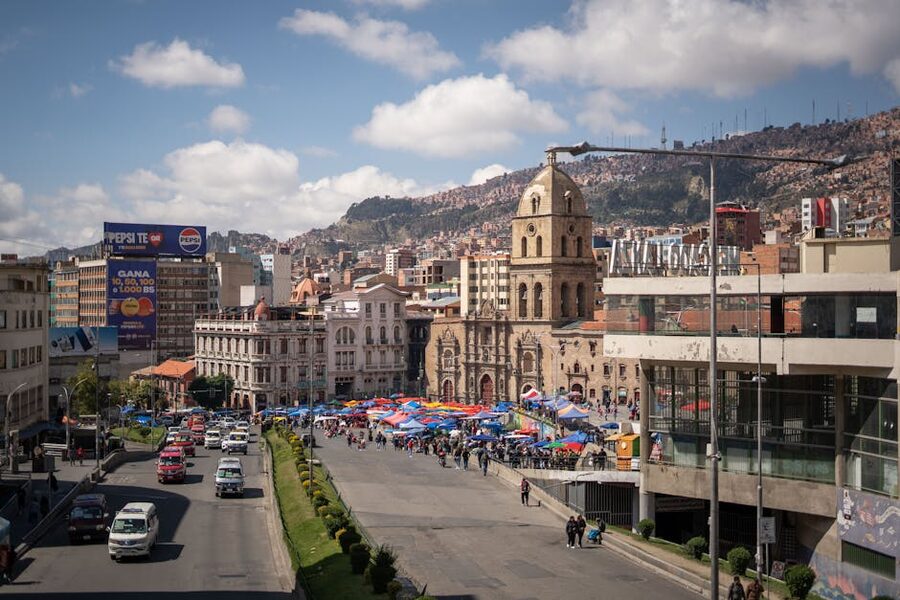
This guide is the long answer. I have organised it the way Bolivians actually think about their food, which is by region rather than by dish, and by meal rather than by category. There is an altiplano table, a valley table, and a lowland table, and they share less than you would expect for one country. Within each, I have tried to point you at named places where I have eaten well, named dishes worth ordering, and a few worth skipping if you only have a week.
In This Article
- What lands on the table before you order
- The four meals that actually shape a Bolivian day
- The altiplano table: La Paz, Lake Titicaca, and the highlands
- The valley table: Cochabamba, Sucre, and Tarija
- The lowland table: Santa Cruz, Beni, and the Amazon
- Salteñas: the mid-morning ritual
- Llajwa, ají, and the salt of the table
- Chuño, tunta, and the Andean potato
- The contemporary Bolivian table
- Vegetarians, vegans, and dietary travel
- Eating well as a traveller
What lands on the table before you order
Three things arrive at almost every Bolivian sit-down meal without being asked for. They tell you more about the country than any single signature dish.
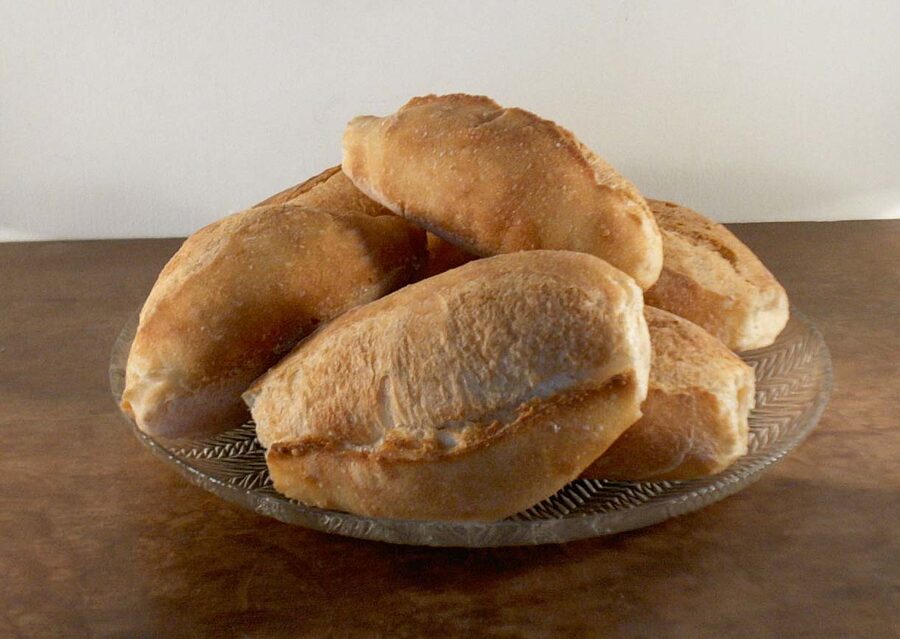
The first is the marraqueta. This is the everyday bread roll of Bolivia, particularly the paceña version made in La Paz, recognisable by its split top and almost crackly outer crust. Bakers shape it like two stuck-together rolls, which split into halves at the table. It costs around 1 BOB at a neighbourhood bakery and you will usually be given two without asking. The Greek immigrants who arrived in the early 19th century brought the recipe; the altitude in La Paz changed the crumb. Marraqueta sits next to butter and jam at breakfast, gets dipped into soup at lunch, and shows up again under a fried egg at almuerzo if the kitchen is busy. There is also a softer Cochabamba version called pan de batalla. Both are best within four hours of the oven.
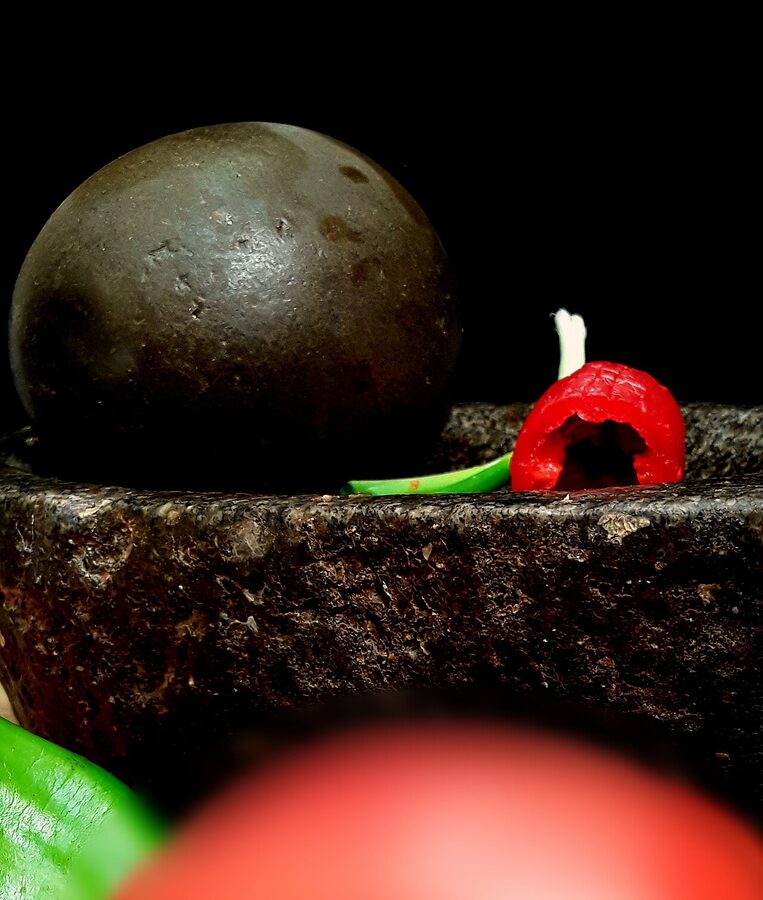
The second is llajwa. Every kitchen makes it slightly differently, but the base is locoto chilli, tomato, and quirquiña, a herb that is sometimes translated as Bolivian coriander but tastes more like a sharper, mint-edged version of cilantro. Traditionally it is ground on a stone batán, which is the flat grinding slab you will see in the Mercado Rodríguez and at any restaurant that takes its food seriously. The salsa is meant to be added by you, gradually, until the dish has whatever heat you want. It is not the cook’s job to season your plate. If you want it milder, ask for sin locoto and they will give you a tomato-and-quirquiña version that still has the fragrance without the burn.
The third is mate de coca, but only above 2,500 metres. La Paz, Potosí, Sucre, and Uyuni all default to coca tea at meals; Santa Cruz and the lowlands do not. The leaves come in a tea bag or loose, and the standard altitude advice is to drink one cup before lunch on your first day in the highlands. It is not a stimulant in any meaningful sense if you are sipping the tea, and it tastes faintly grassy and sweet. Coca arrives because Bolivians grew up drinking it; the fact that it doubles as altitude help is incidental. We cover the cultural and legal context of the coca leaf in our coca customs and rituals piece.
The four meals that actually shape a Bolivian day
Bolivia officially has five meals; in practice it is four, with one of them shaped almost entirely around a single pastry. Knowing the rhythm matters because shops and restaurants close along with it.
Desayuno (breakfast) is small. A cup of black coffee, called café tinto, or sometimes a milky one called api if you are in the highlands during cold months, plus marraqueta with butter and jam. That is most of it. Boiled eggs and fresh cheese turn up more often in the highlands; tropical fruit and yogurt take over in Santa Cruz and the lowlands. Hostels often add scrambled eggs and pancakes for tourists; this is not what locals eat. If you want a breakfast that feels Bolivian, find a café tinto and a marraqueta and add nothing.
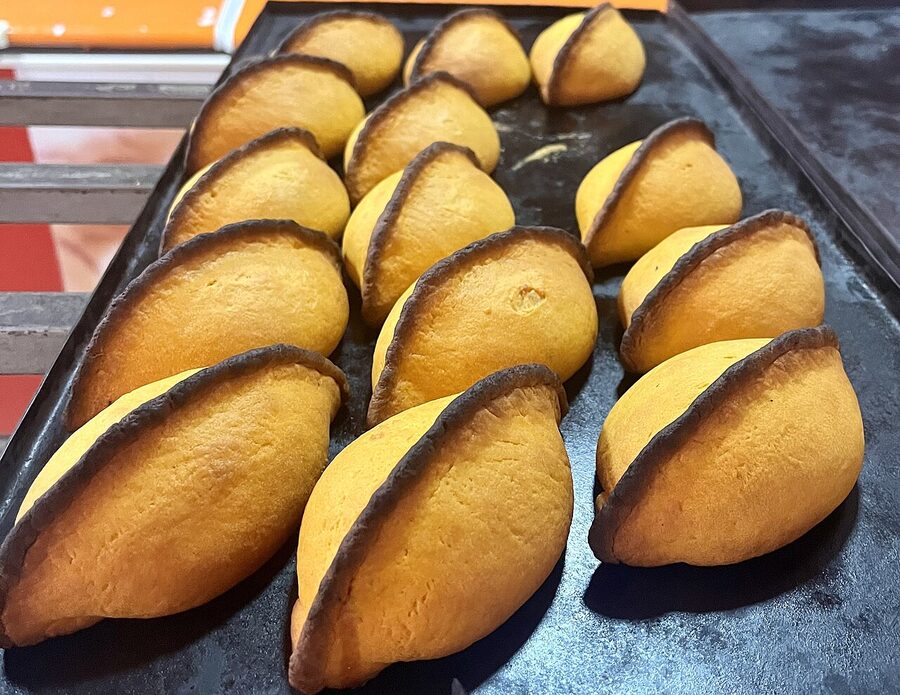
Mid-morning (around 10am) is the salteña window. This is the half-hour when the country pauses for a single pastry, and it is genuinely a national habit. Offices break, schools have a snack period, and bakeries have queues. It is so reliable that almuerzo, which arrives an hour and a half later, can be relatively light without anyone going hungry. We have a section on salteñas later because they earn it.
Almuerzo (lunch, roughly 12.30 to 2.30pm) is the meal that defines the day. It is multi-course, leisurely, and treated as the social anchor. Most pensiones and almuerzo restaurants offer a fixed menú del día for somewhere between 25 and 50 BOB, comprising soup, a main with meat and a starch, a small dessert, and either a drink or coffee. Businesses close. Banks close. Even small market stalls sometimes close. If you are a traveller and you want the most food for the smallest price, almuerzo is your meal. The lunchtime menú at a comedor in Sopocachi or San Pedro will give you more food than you can eat for around 35 BOB. The siesta that follows is real; it just is not always taken in a bed.
Té (4 to 6pm) is the genuinely English-feeling break. Salones de té across La Paz, Sucre, and Cochabamba fill up, often inside bakeries that have been waiting since lunch. You order a cup of black tea or a herbal infusion, and it comes with biscuits or a piece of cake. Galletas Maria is the default cookie. In Sucre, where colonial European influence sits closest to the surface, this is genuinely a social hour and worth participating in for the cost of one tea, around 8 BOB.
Cena (dinner, 8pm and later) is light. After a serious almuerzo and a tea, nobody wants three more courses. A bowl of soup, a sandwich, a salteña left over from morning, or anticuchos from a street vendor. Restaurants serve a full menu, but if you watch a Bolivian at the next table, they often eat about half what you do.
The altiplano table: La Paz, Lake Titicaca, and the highlands
The altiplano sits between 3,500 and 4,200 metres. It is dry, cold at night, and full of llamas, which is a clue to the cuisine. The altiplano table is built around meat (lamb, beef, llama, the occasional alpaca), spices, and the freeze-dried potato preparations that allowed pre-Hispanic peoples to store food across seasons. It is the most distinctively Bolivian regional cuisine, partly because it has the deepest indigenous Aymara and Quechua roots and partly because the altitude makes it impossible to grow most of what cooks elsewhere in the country. Talk to anyone in La Paz about food and you will hear about the altiplano table even if they call it something else.
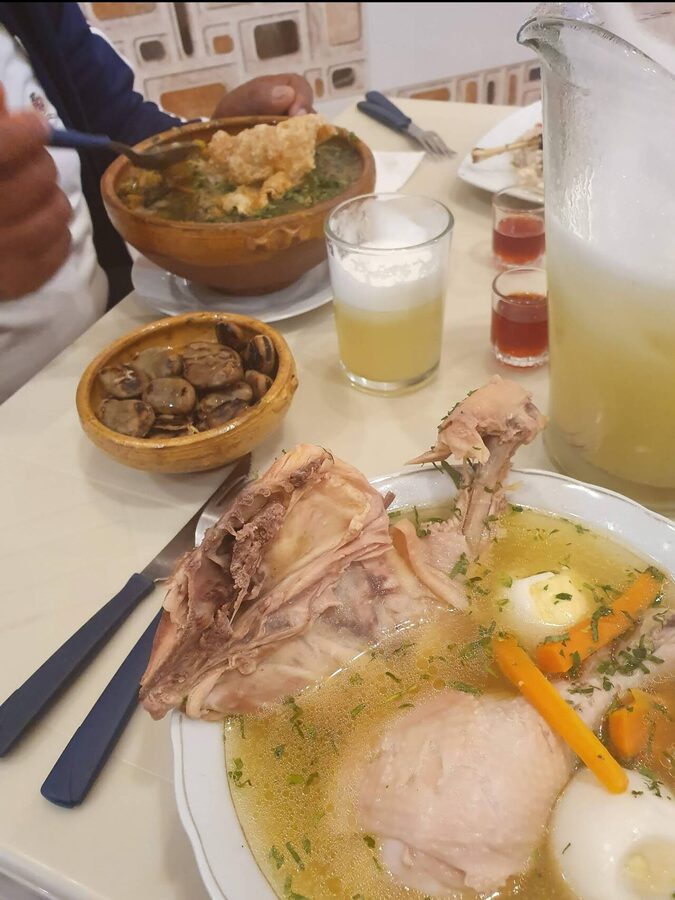
Chairo is the soup most paceños would name first if you asked them what their grandmother made. It is chunky, slow, and labour-intensive: lamb or beef simmered for hours with chuño, fresh corn, broad beans, peas, carrots, and a small handful of wheat. The chuño at the top is the giveaway; restaurants that skip the chuño are saving themselves an overnight soak and a careful rehydration. A proper bowl will run you 25 to 35 BOB at a comedor and 60 to 80 at a restaurant. Aim for the comedor. The colder the day, the better it tastes; chairo is genuinely cold-weather food and on a sunny dry-season afternoon it can feel heavy.
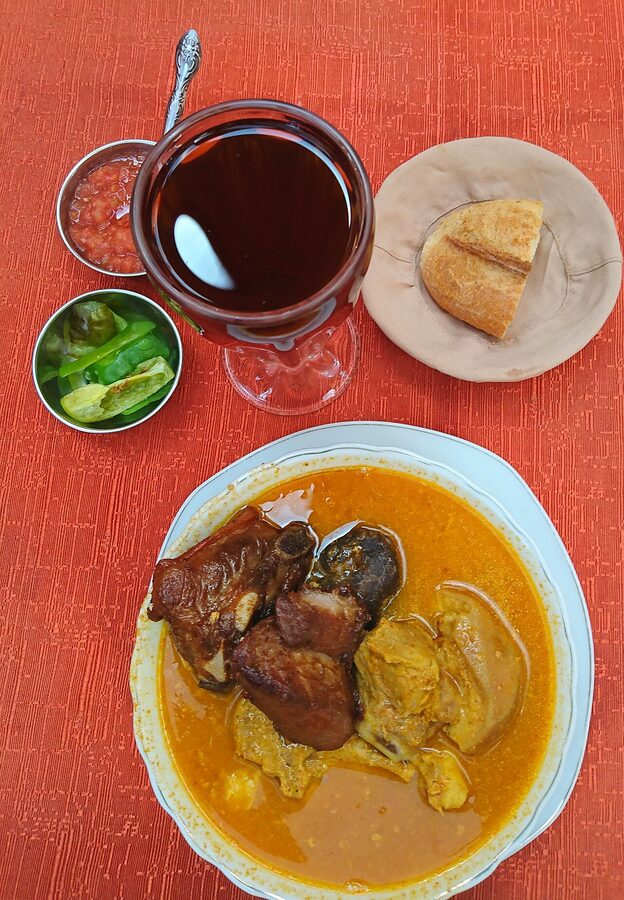
Fricasé is the Sunday-morning soup. Cubes of pork, hominy, and rehydrated white corn called mote, in a broth that is yellow with ají amarillo and cumin and salty enough to bring you back from a Saturday night. The Bolivian version traces back to a French recipe, but Bolivians have stripped almost everything French out of it; what remains is altiplano comfort. Hostel 3600 and the cluster of comedores around Mercado Lanza all serve it through Sunday lunch, which is when it is genuinely meant to be eaten. By Tuesday it tastes like a soup that was made on Sunday.
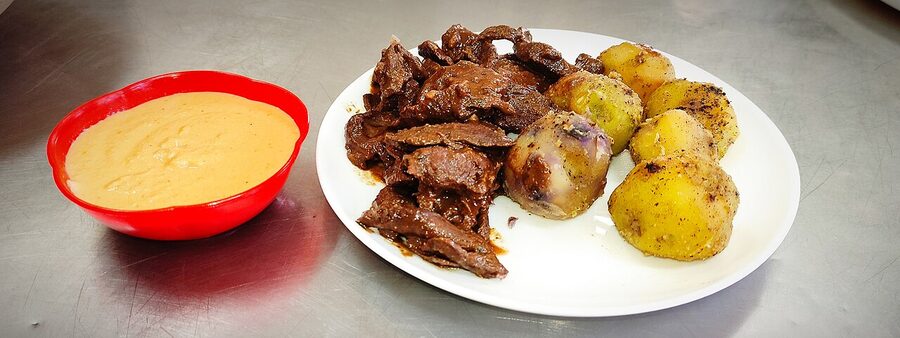
Anticuchos paceños are the city’s evening street food, and once the sun goes down between 6 and 7pm, the smoke from the grills rolls through Calle Sagárnaga and the area around Plaza Murillo. The skewers are beef heart, marinated in vinegar, garlic, ají, and cumin, then grilled over charcoal and served with a boiled potato and a generous dollop of peanut sauce. Two skewers and a potato is around 15 to 20 BOB. Beef heart is a tough sell to some travellers, but it has none of the chewy, livery quality you might brace for. Grilled correctly, it tastes like good steak with a slightly cleaner finish. Skip the daytime versions in tourist plazas; the proper anticuchos appear at dusk and are gone by 10.

Sandwich de chola is the iconic La Paz sandwich. Two halves of a bread bun the size of a small hamburger, layered with slices of slow-roasted pork called pierna, pickled carrot, a slice of locoto, and a sprig of quirquiña. The cholas, the women in pollera skirts who built this sandwich into a city institution, sell it from sidewalk stations across La Paz and El Alto. The classic place is the Sandwich de Chola Plaza Camacho stand, which has been there since the 1970s. A sandwich is around 12 to 18 BOB. Locoto is hot. Ask for it without if you have a sensitive palate, but you will be missing the dish.
Trout from Lake Titicaca is one of the standard altiplano restaurant dishes, especially in Copacabana on the lake itself. The trout was introduced from North America in 1937 to support fisheries; the introduction worked too well and the rainbow trout has displaced several native fish species. The fish you eat is delicious, often grilled whole with a wedge of lime and boiled potato, but the ecological story is genuinely uncomfortable. If that bothers you, the locally caught pejerrey is a smaller silvery native fish that is now harder to find but worth ordering when it appears. A trout plate at a Copacabana lakeside restaurant runs 50 to 70 BOB.
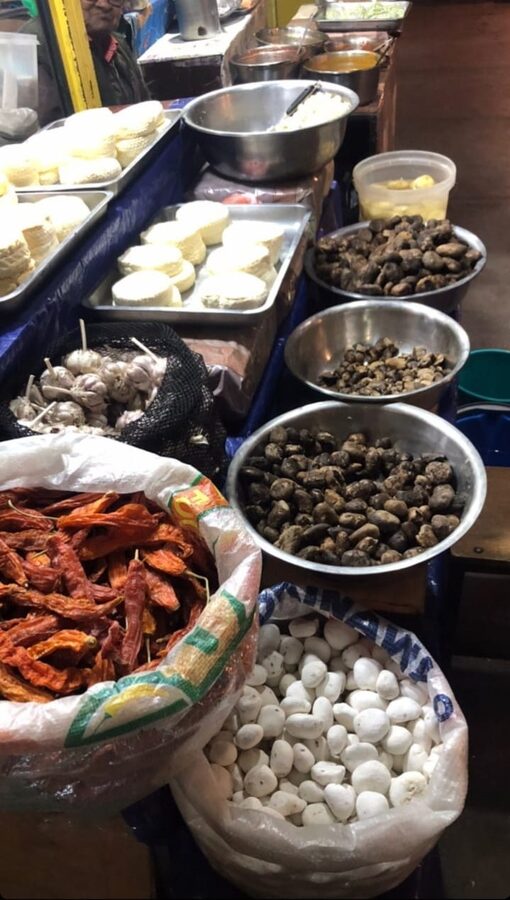
And underneath all of this is the potato. Bolivia and Peru between them are home to several thousand native varieties, only a few of which ever leave the Andes. Chuño, the small dark dehydrated potato you will see in chairo and on plates of fricasé, is freeze-dried by being left out on the altiplano in the cold nights and dry days for about a week, then trodden underfoot to squeeze out the moisture. Tunta is the same idea but the potatoes are also soaked in cold running water for two or three weeks, which gives the lighter, almost paper-pale colour. Both predate the arrival of any European technology and were a strategic food in the Inca empire. They taste of nothing much by themselves but absorb everything they sit in.
Where to actually eat this in La Paz: the upper food court at Mercado Lanza is the easy entry point with a row of dozens of comedores serving everything from fricasé to chairo for around 30 BOB; the more serious altiplano cooking happens at Mercado Rodríguez, particularly the row that sells salteñas and api in the morning. For a sit-down version, Café del Mundo and Vicuña on Calle Sagárnaga are reliable; for a serious dinner, see the contemporary section below.
The valley table: Cochabamba, Sucre, and Tarija
The valleys of central Bolivia sit between 1,800 and 2,800 metres. Warmer than the altiplano, cooler than the lowlands, with rich soils for fruit, grain, vegetables, and grapes. Cochabamba is the country’s culinary capital by reputation and probably by reality; people from anywhere else in Bolivia will tell you, sometimes with rolled eyes, that cochabambinos are obsessed with food. The valley table is where the dishes you might recognise as classic Bolivian (silpancho, pique macho, sopa de maní) are most authentically prepared.
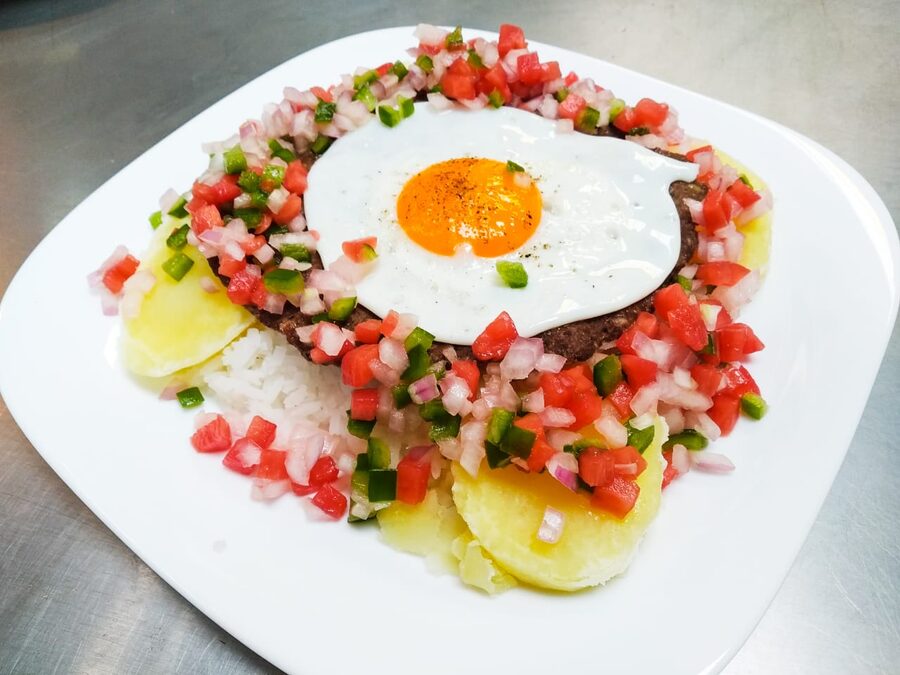
Silpancho is the Cochabamba dish. The word means thin and pounded, which is what they do with the beef: a slice flattened with a wooden mallet until it is almost the size of a dinner plate, breaded with bread crumbs, and pan-fried. The plate underneath is rice and boiled, sliced potatoes, sometimes with a layer of beetroot salad. On top of the breaded beef goes a fried egg with the yolk still soft, and on top of that goes a salsa criolla of finely diced tomato, onion, and locoto. It is unapologetically a stack: every fork has rice, potato, breading, egg, and salsa. A proper silpancho at a cochabambino comedor is 30 to 40 BOB and will defeat most travellers; a takeaway box for tea time is not unusual.
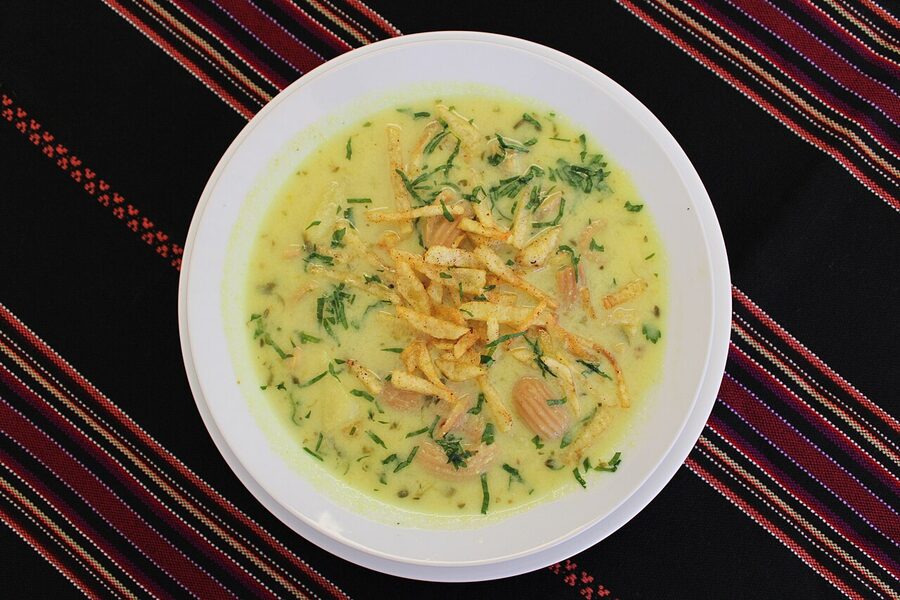
Sopa de maní is, depending on who you ask, the original Bolivian peanut soup. Archaeologists have found peanut traces in the Andes that go back at least 7,000 years, and Bolivia is the most plausible historical centre of peanut domestication. The soup itself is creamy and thick, almost like a gravy that a beef stew is sitting in. Ground peanuts give it the body, beef shin gives it the depth, and pasta and chunks of potato go in for substance. The french fries on top are not optional and not a garnish: they go on the broth at serving and partially soak. Cochabamba is the spiritual home of the soup; the version you get at a Sucre or Potosí comedor will be slightly thinner. A bowl runs 30 to 45 BOB.
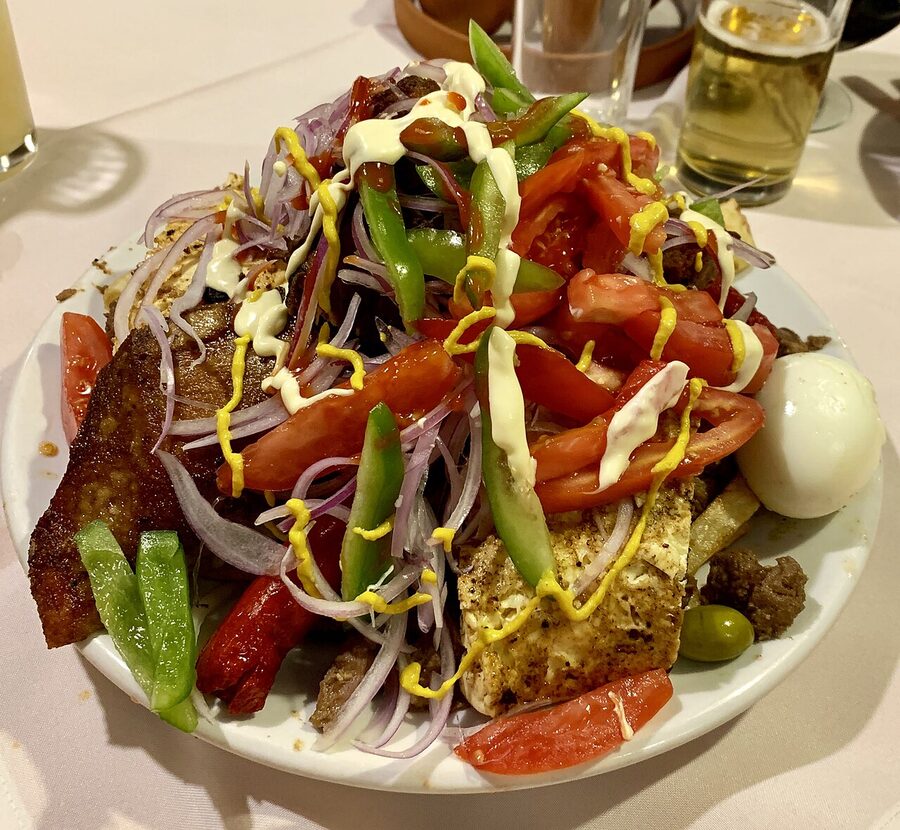
Pique macho deserves its reputation as the dish people argue about. Cochabamba claims it; everyone else argues. A platter of strips of beef, sausage rounds, hot dog slices, hard-boiled eggs, peppers, onions, and french fries, all tossed with a sauce that includes mustard, beer, and llajwa. The plate is enormous and is made for sharing. It is a late-night dish in spirit; the small Cochabamba bar Casa de Campo on Calle España made it famous, and in a 2019 vote organised by the city council, was named the original. A shared pique macho is 80 to 110 BOB and feeds two well; a single-person plate is a poor idea unless you are walking it off afterwards.
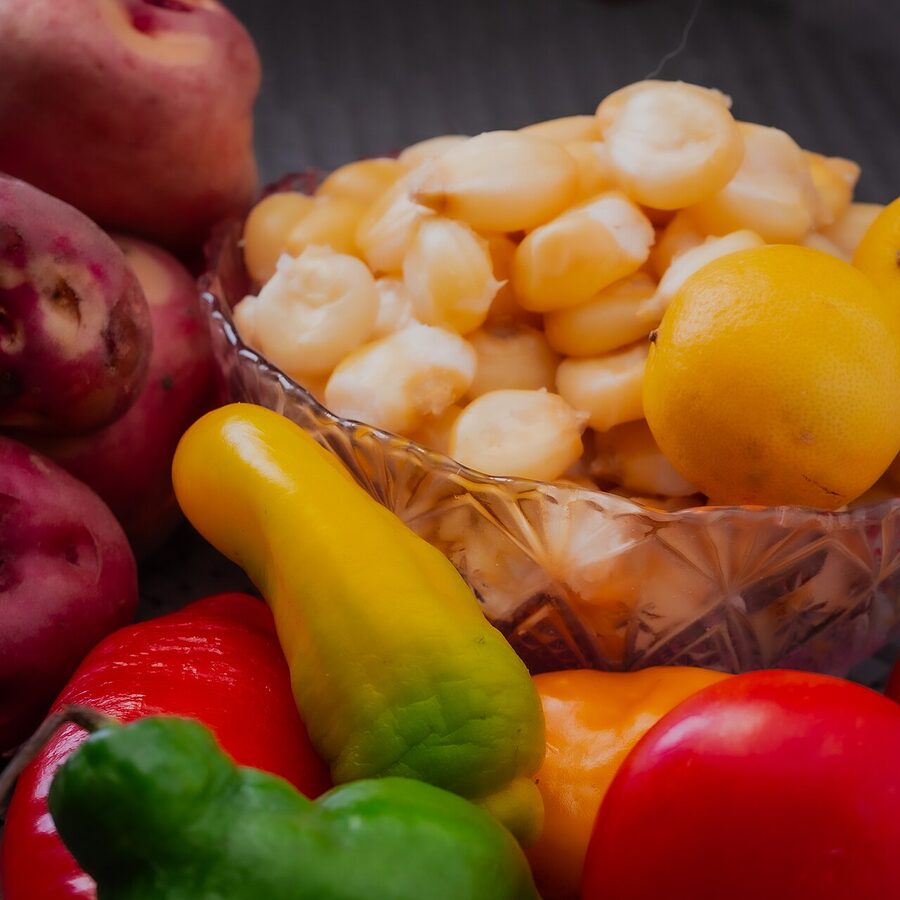
Chicharrón cochabambino is the Sunday morning thing. Pork is simmered for hours in its own fat and a quantity of chicha (fermented corn beer), until the meat is tender and the outside crisps. It is served with mote (white hominy), boiled chuño, and a wedge of fresh cheese; you eat it with your hands. The proper places are out near Quillacollo and on the road to Sacaba on a Sunday between 11am and 3pm. The smell of chicharrón cooking on a Cochabamba Sunday is one of those small national flavours that does not exist on a Tuesday or in any other city. A plate is 50 to 70 BOB depending on size, and you will smell of it for the rest of the afternoon.
Salteña chuquisaqueña is the Sucre version of the salteña. Spicier, smaller, often beef rather than chicken, and (this is the structural detail that matters) drier on the inside than the La Paz version. The salteña paceña has more broth; the salteña chuquisaqueña is closer to a baked empanada with a slight wet edge. Sucre treats the 10am window with as much seriousness as La Paz, but the queue forms outside Confitería El Patio on Plaza 25 de Mayo, where the spicy chicken salteña has been the same recipe for several decades. Around 7 to 10 BOB each.
Tarija is the wine country. The valleys around Tarija and the Cinti canyon are where the singani grape grows, the small white Muscat of Alexandria that is distilled into Bolivia’s national spirit. We unpack singani and other Bolivian drinks in our companion Bolivian drinks piece, but for the food side: Tarija’s table tilts Mediterranean. Asado on a wood grill, fresh cheese, chorizo, lots of bread, and a bottle of locally made wine. The Mercado Campesino in Tarija is the place to put together a picnic. The trout dish locro de pollo, made with chicken instead of fish, is the local comfort dish.
Where to eat across the valleys: La Cancha, the enormous central market in Cochabamba, is the entry point and has dozens of comedores serving silpancho and pique macho for under 40 BOB; Mercado 25 de Mayo is the other big food market. In Sucre, Mercado Central has an upper floor of comedores plus the salteña row by Plaza 25 de Mayo. In Tarija, the Mercado Campesino is the everyday spot.
The lowland table: Santa Cruz, Beni, and the Amazon
Santa Cruz, Beni, and Pando together cover roughly the eastern two thirds of Bolivia. They are tropical, low (sometimes effectively sea level on the river plains), and feel almost like a different country. Yuca replaces the potato as the everyday starch. River fish replaces beef in many dishes. The cooking has more in common with northern Argentina, the Brazilian Mato Grosso, and the Amazonian regions of Peru than with the Andean highlands. Santa Cruz de la Sierra is the gateway and where most travellers will eat lowland food.
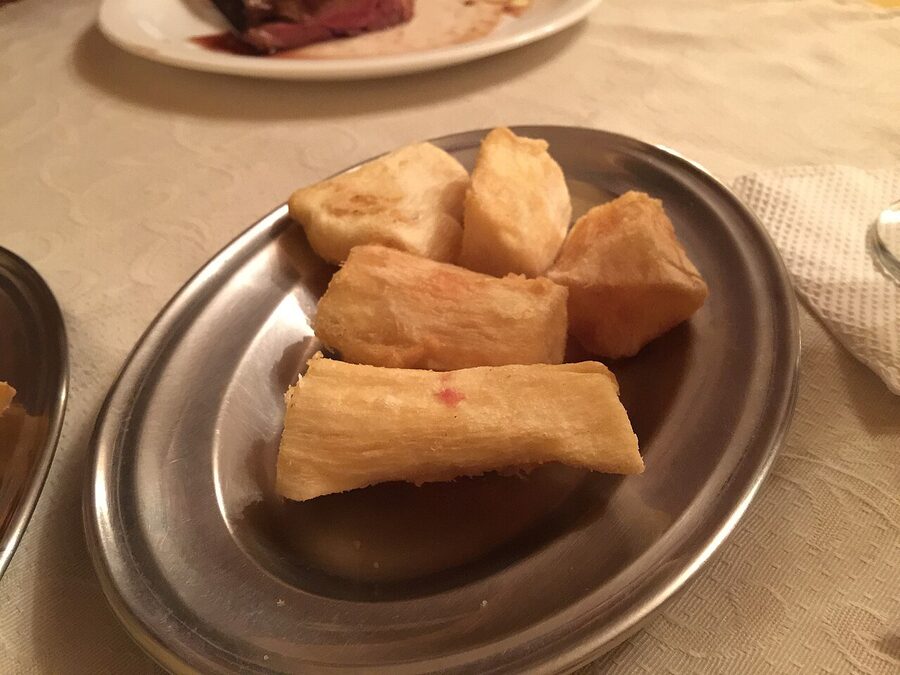
Yuca is the everyday root and you will see it served boiled, mashed, fried, or grilled at almost every meal. The most distinctive use is sonso (also spelt zonzo), which is yuca mashed with cheese, formed onto a stick, and grilled over charcoal. It is the lowland equivalent of corn on the cob: a 6 BOB street snack that you eat walking from a stall. Los Pozos market in Santa Cruz has the densest concentration. Sonso is gluten-free, vegetarian, and fundamentally simple, which makes it among the most useful items for travellers with restrictions in a meat-heavy country.
Cuñapé is the lowland’s bread. Yuca flour and a salty queso fresco are kneaded together with eggs and butter, formed into balls or rings, and baked. The texture is the closest thing in the world to Brazilian pão de queijo: a slight crust, an almost stretchy interior, an unmistakable cheese flavour. Cuñapé is sold in clear plastic bags at every Santa Cruz cafetería for around 5 BOB each. Eat them within an hour. After that they harden and the magic is gone.
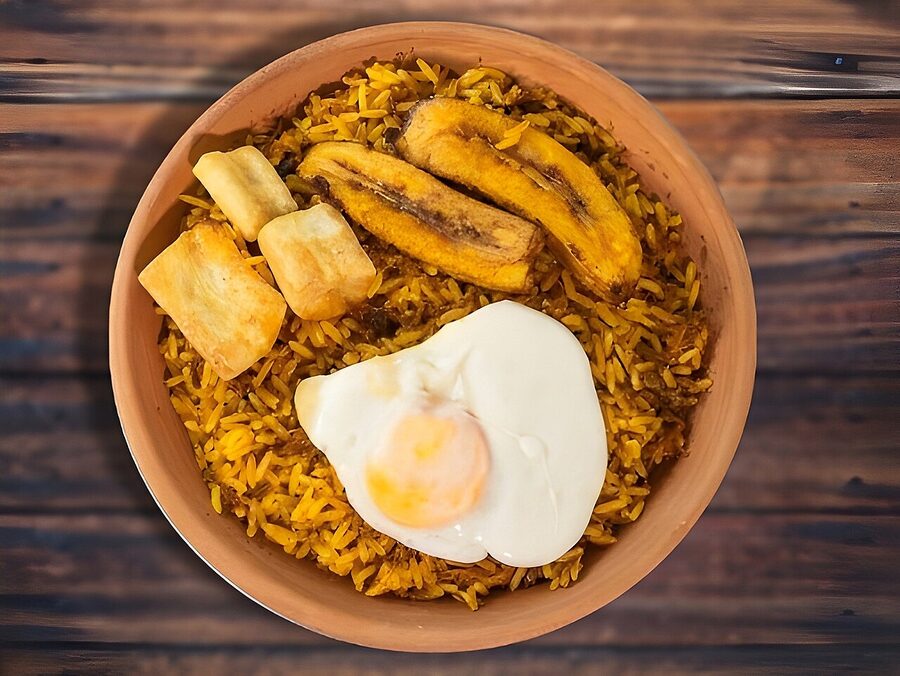
Majadito is the Beni dish that Santa Cruz adopted. Toasted rice cooked with charque (dried, salted beef), tomato, onion, and yellow ají, then topped with a fried egg and a slice of fried plantain. The dish has the texture of a paella that has stayed too long in the oven; the crispy bottom layer is the part to fight over. A plate at a comedor in Trinidad or in Santa Cruz is 35 to 55 BOB. Variations include majadito de pato (with duck) and majadito batido, where the rice is a softer, almost risotto-like stir.
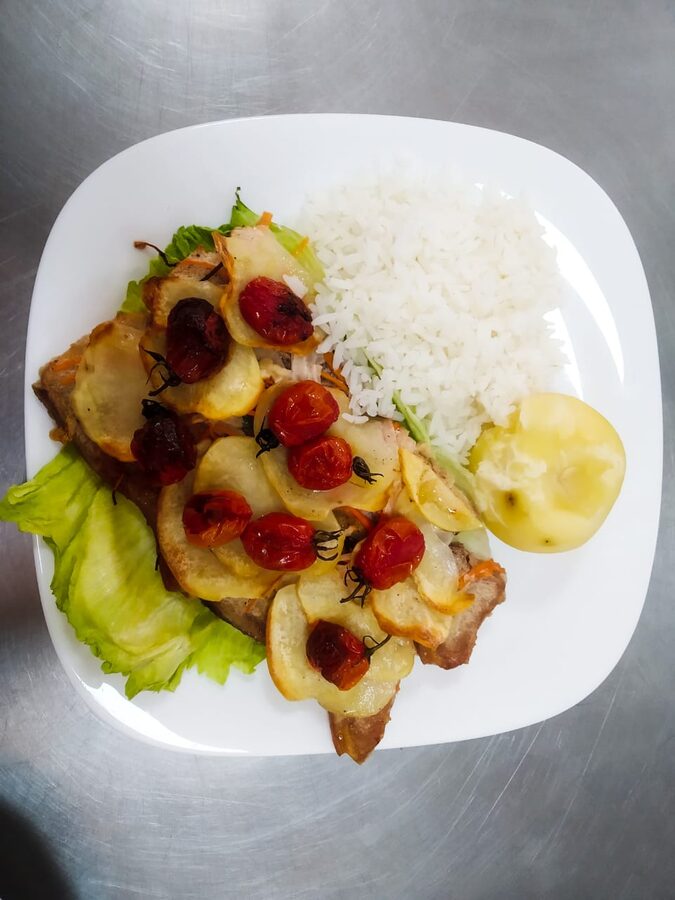
Surubí, a large catfish from the rivers of the Amazon basin, is the lowland’s main fish. Grilled over charcoal with garlic and lime, it is the headline dish at riverside restaurants in Trinidad, in Rurrenabaque, and along the road from Santa Cruz to Camiri. The flesh is firm and white. The dish almost always comes with yuca, fried plantain, and a tomato-onion salad. A whole grilled surubí for two is around 120 to 180 BOB, depending on the size of the fish.
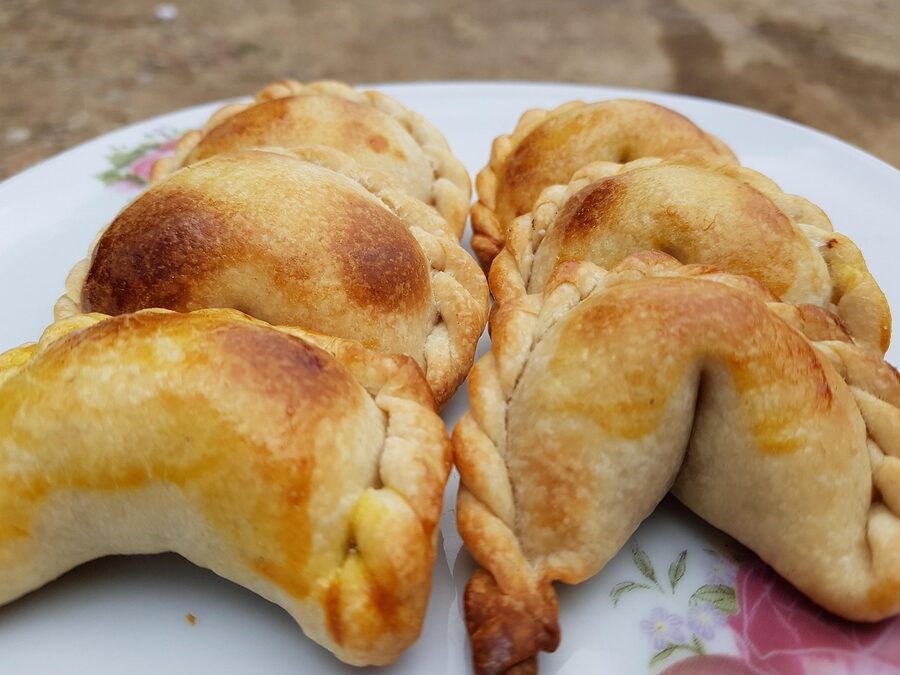
Achachairú is one of the lowland fruits worth seeking out. A small egg-shaped bright orange fruit native to the Bolivian Amazon, with a single large seed and a sweet-tart pulp that tastes faintly like mangosteen. The fruit only travels well for a few days, so achachairú is something you eat where it grows. Mid-November to February is the season. A bag of fresh fruit at the Camiri or Santa Cruz mercados is 10 to 15 BOB.
Salteñas: the mid-morning ritual
The salteña deserves its own section because it is the food Bolivians most agree on, and the food most travellers most often get wrong.
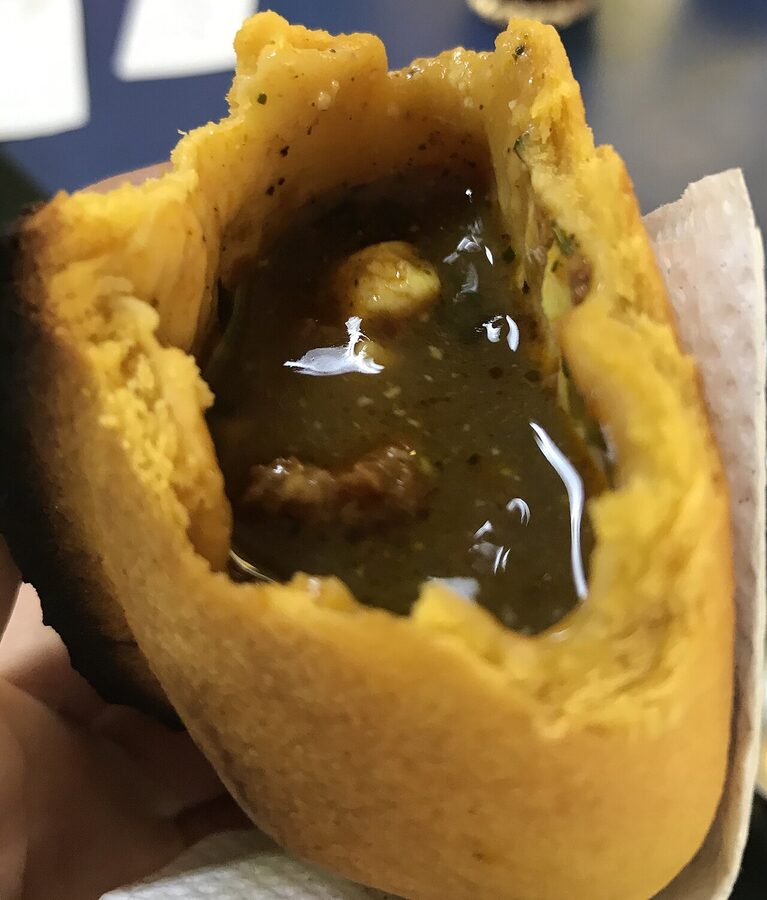
The salteña is, in essence, a baked empanada with a stew sealed inside it. The structural trick is that the stew is set with gelatine or natural collagen so it can be enclosed in dough without leaking, and then the gelatine melts back into broth as the salteña bakes. You bite the corner of a salteña and broth runs out. This is correct and is why eating a salteña requires either the lean-forward technique (corner first, over a plate) or a saucer to catch the leak. Restaurants for tourists sometimes serve salteñas with a fork and knife; that is wrong and tells you the place does not specialise.
The fillings vary by city and shop. The standard Bolivian salteña has chicken or beef with potato, peas, onion, hard-boiled egg, an olive, a raisin, and ají. Sucre’s tend spicier; Santa Cruz versions go beefier and slightly drier; La Paz versions are juicier with sweeter notes from the potato. A salteña costs 7 to 12 BOB at a panadería that knows what it is doing, and 18 to 25 at a fancy chain that does not.
Where to actually go in La Paz: the salteña shop just up from Alexander’s Coffee in Sopocachi (Plaza Avora area) makes a spicy chicken version that is widely considered among the best in the city. Salteñas Paceña, the chain, is competent but characterless; if you only have time for one place, go to a neighbourhood panadería rather than a chain on the Prado. In Sucre, queue at Confitería El Patio on Plaza 25 de Mayo. In Cochabamba, El Patio (a different El Patio) on the Plaza Colon. In Santa Cruz, Salteñas Las Castañuelas in Urbarí.
What to skip: the prepackaged salteñas at airport cafés and at the El Alto bus terminal, which have all of the structural complexity of the dish (the broth, the seal, the texture) and none of the magic. Also skip any salteña on a sit-down restaurant menu after 1pm; salteñas are a 9am to 11.30am food and the leftover ones from the morning are noticeably worse.
Llajwa, ají, and the salt of the table
Llajwa is so universal in Bolivian eating that you can think of it as the country’s salt. The basic recipe is locoto chilli, ripe tomato, and quirquiña, ground together on a flat stone batán with a smaller cylindrical roller called a moroko. Salt goes in at the end. Many cooks add a spoonful of fresh tomato pulp as the salsa is finished to keep it bright and to lift the heat off the raw chilli edge.
The locoto is the key ingredient and its variability is why no two llajwas taste the same. Locotos are roughly the heat range of a milder Mexican jalapeño on average, but a single hot one can spike a batch. Some cooks use rocoto, the larger Andean cousin that runs hotter and fruitier. Quirquiña is the herb that makes the salsa specifically Bolivian: the leaf has a sharp, almost mint-meets-cilantro quality and is grown across the central valleys. If you cannot identify it, ask the cook, hold a leaf, and crush it: the smell tells you immediately whether the kitchen is using fresh herb or dried supermarket sprinkle.
Beyond llajwa, the broader Bolivian sauce family includes ají amarillo (yellow chilli, milder, more orange-fruit aromas) and ají rojo or ají colorado (red chilli, deeper, more meat-friendly). Both are paste-based rather than chunky, and both turn up in stews and slow-cooked dishes rather than as a finishing condiment. Llajwa is the only one you put on by yourself at the table.
If you are sensitive to heat, ask for llajwa sin locoto. The cook will give you a tomato-and-quirquiña version that has the herbs without the burn. This is a perfectly normal request; nobody will read it as a tourist faux pas.
Chuño, tunta, and the Andean potato
It is hard to overstate the role of the potato in highland Bolivian cooking. The Andes are the original home of the cultivated potato, and Bolivia is, with Peru, the global centre of native potato variety. Estimates of the count of distinct varieties vary, but the conservative figure for the two countries together is around 3,500. Most travellers see only a fraction of this; the markets sell maybe 10 or 15 visible varieties, mostly because the others are kept in highland communities for local consumption rather than for export.
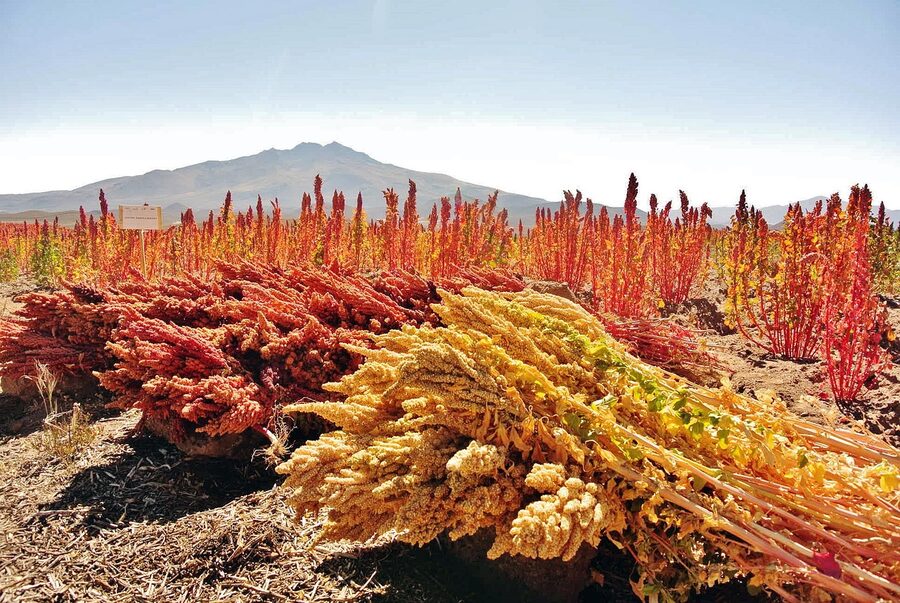
Chuño is the freeze-dried preservation form. The technique is pre-Hispanic and beautiful in its simplicity: small bitter potatoes are spread out on the altiplano in late winter, when the day-night temperature swing freezes them at night and dehydrates them in the dry day. After about a week of this cycle, the village walks across them barefoot to squeeze out the remaining moisture. The result is a small dark wrinkled potato that keeps for years and can be soaked overnight to rehydrate. The flavour by itself is faintly sour and earthy; the function is to absorb whatever broth or sauce it sits in.
Tunta (also called chuño blanco or moraya) is the more processed version. After the same freeze-thaw cycle, the potatoes are also packed in small mesh bags and submerged in cold running mountain stream water for two to three weeks, which leaches out the bitter compounds and lightens the colour. Tunta has a softer, more porous texture than chuño and a milder taste. It shows up in chairo, in the soups served at altiplano feasts, and as a side at highland restaurants.
You will encounter chuño and tunta most often at the Mercado Lanza spice level in La Paz, where they are sold in cloth bags by weight, and on the plate of any traditional dish that involves a long-cooked stew or soup. If a restaurant serves chairo without chuño, it is cutting a corner. If it serves you fresh chuño that has not been soaked overnight, you will know within one bite (the texture stays harsh). Both are tells.
The contemporary Bolivian table
Until 2013, the conversation about Bolivian fine dining was a short one. Then Claus Meyer, the Danish co-founder of Noma, and chef Kamilla Seidler opened Gustu in the Calacoto neighbourhood of southern La Paz with a single-rule kitchen: every ingredient must come from Bolivia. No imported butter, no imported flour, no imported wine, no imported olive oil. The challenge of this rule, and the way the team solved it (by going out and finding Bolivian replacements for every supposed European essential), reshaped the conversation about what Bolivian ingredients could do. Gustu has appeared on Latin America’s 50 Best Restaurants list multiple times. Tasting menus run 600 to 900 BOB; reservations are needed at least a week ahead.
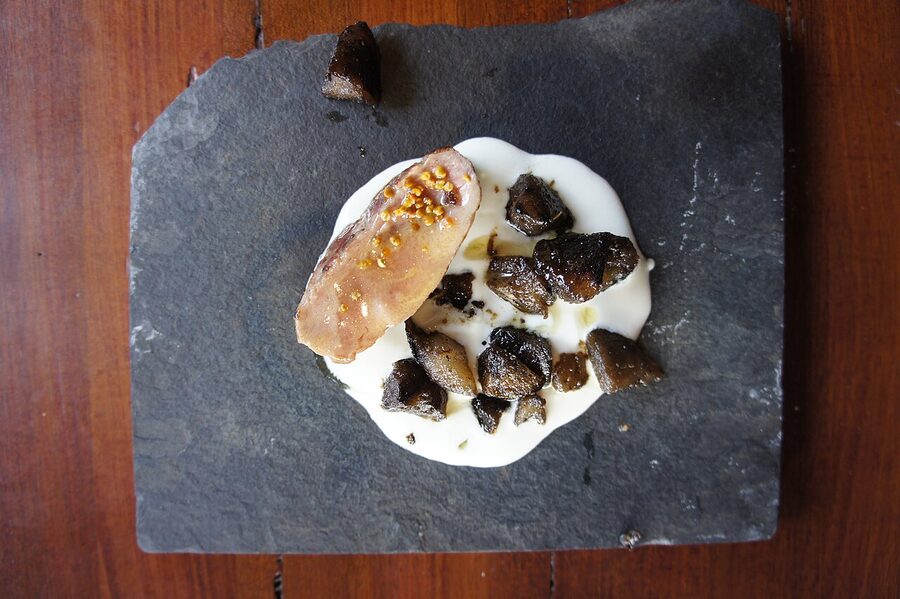
Popular Cocina Boliviana, also in La Paz, took a different route. A small lunch-only restaurant on Calle Murillo, opened by chef Mauricio López and Sergio Medina, that does a five-course Bolivian tasting for 95 BOB. It is one of the best lunch values in the country and turns over fast; the queue starts at 12.15. The menu rotates weekly through regional Bolivian cooking with a careful focus on the dishes you will not see elsewhere: dishes from the altiplano, but also from the Amazonian interior and the chaco.
Ali Pacha is La Paz’s vegan restaurant, a short walk from Plaza San Francisco. The menu draws entirely from Andean and Amazonian ingredients and produces some of the most interesting plant-based cooking in South America. Tasting menus around 300 BOB. This is the answer if you have been told there is nothing for vegetarians in Bolivia, which is half-true at the comedor level and entirely false at the contemporary level.
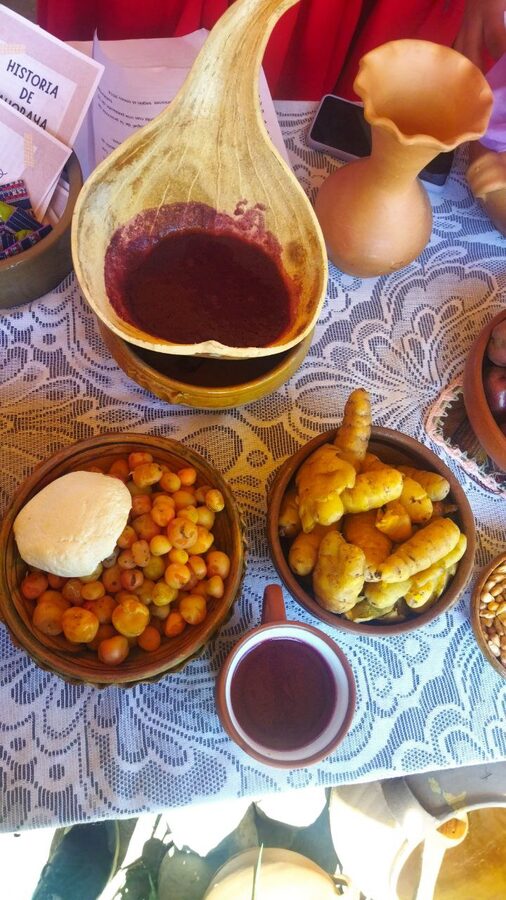
Phayawi in Sucre is a smaller, quieter operation: chef and owner Marsia Taha cooking the central valley’s traditions with a touch of New Nordic in the plating. Around 350 BOB for the tasting. The cinti goat dish alone is worth the trip if you happen to be in town.
What this scene says about Bolivian food more broadly is that the altiplano and valley cooking has finally been recognised as material that does not need a French or Italian frame to be taken seriously. Quinoa, chuño, oca, llama, locoto, and the rest of the Andean larder hold up on their own.
Vegetarians, vegans, and dietary travel
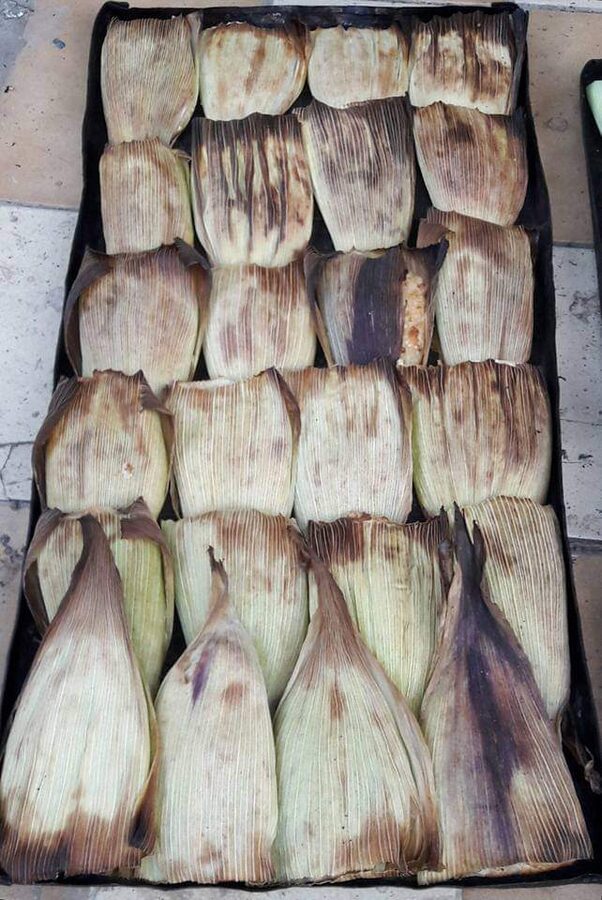
Bolivia is meat-heavy and the cooking traditions of the Aymara and Quechua have always centred on lamb, llama, and beef where available. That said, the daily eating pattern is full of vegetarian options once you know to look for them.
For breakfast, api morado plus pastel (a fried cheese pastry) is genuinely one of the best vegetarian breakfasts in South America. For mid-morning, salteñas exist in cheese-and-vegetable versions in many panaderías, though you need to ask. At lunch, the daily menú will include a bowl of soup; ask for it sin carne and most cooks will substitute or skip the meat for you. Yuca sonso, humintas, papas a la huancaína, and pastel de quinoa work as filling vegetarian mains. Markets are easier than restaurants; the Mercado Lanza in La Paz has dedicated vegetarian comedores on the upper floor.
For full vegetarian meals, the named places matter: Ali Pacha in La Paz (vegan, contemporary, the standout), Armonia (also La Paz, more comfort-focused), and Las Velas in Sucre. Outside the major cities, you will fall back on yuca, fresh cheese, eggs, and the tropical fruit. It is workable but takes more planning than vegetarian travel in Peru.
For coeliac or gluten-free travellers, yuca-based dishes are your friend. Cuñapé is gluten-free by virtue of being yuca flour. Chuño and tunta are gluten-free. The salteña is not, but most regional soups (chairo, sopa de maní) are if the kitchen has not thickened with wheat flour. Ask before ordering soup at a sit-down restaurant; at comedores the answer is almost always no flour, but check.
Eating well as a traveller
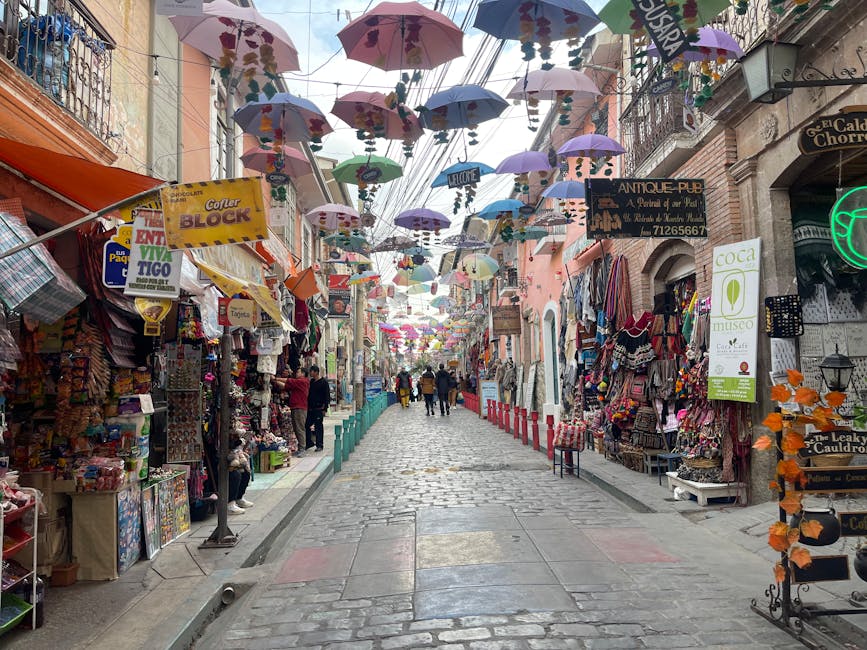
A few practicalities collected from across the country.
Budget tiers. Street food and market eating is 10 to 30 BOB per item. The almuerzo menú at a comedor is 25 to 50 BOB for soup-main-drink. A sit-down dinner at a mid-range Bolivian restaurant is 60 to 150 BOB per person. Contemporary fine dining is 300 to 900 BOB per person depending on tasting menu length. The food at the comedor end of the spectrum is consistently among the best value travel food in South America.
Food tours. Red Cap Tours runs a La Paz food tour that is genuinely useful for orientation if you have only a few days. It hits Mercado Lanza, an anticucho stand, and a sandwich de chola spot, and the guides are knowledgeable. Around 280 BOB per person. Cooking classes are harder to find well-run; ask at your hostel rather than booking online ahead. In Cochabamba, La Cancha tours through the central market are excellent.
Altitude and appetite. Above 3,500 metres, your appetite often disappears for the first day or two. This is not the time to push for a full almuerzo. Stick to soups (chairo, sopa de maní) and smaller plates until your body adapts. Mate de coca helps. A heavy meat meal on day one in La Paz is something you will regret by 3am.
Water and raw vegetables. Bottled water at every level. Salads in good restaurants are usually fine; market salads are a coin flip. Cooked food at busy comedores is broadly safe because the turnover is high; the food sitting in a heat lamp at a slow restaurant is the riskier choice.
When to go for the food. The dry season (May to October) makes outdoor markets pleasant and means more festival food in the streets. November to March, the rainy season, drives more eating indoors. June and July, the coldest months in the highlands, are the right time for chairo, fricasé, and the heavy soups. November and December, in Cochabamba, are the chicharrón season at its peak.
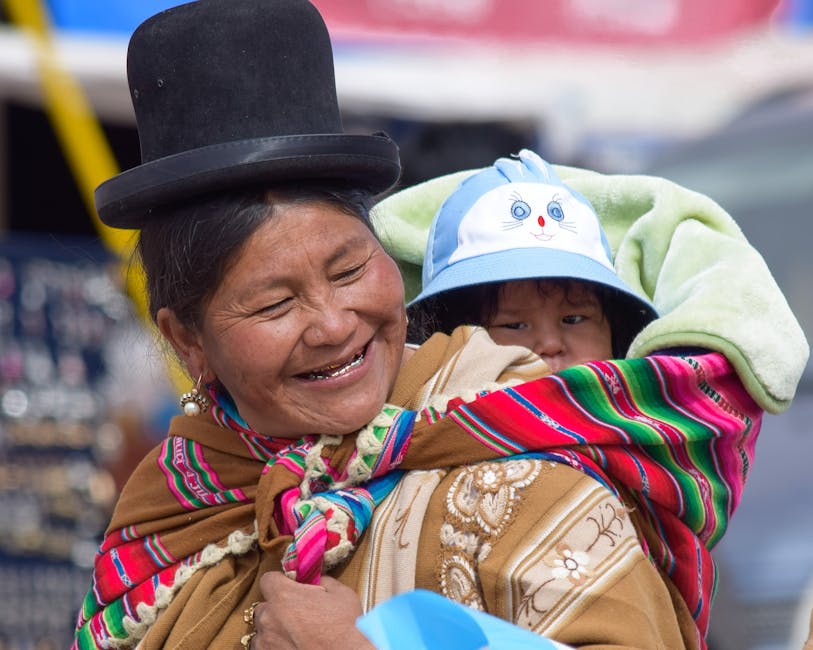
If there is one thing to take from all of this: ignore the lists of national dishes and go to the markets. The food on the plate at a 30 BOB almuerzo at Mercado Lanza or La Cancha will tell you more about Bolivia in one meal than three days of eating off a sit-down menu. Add a ration of llajwa, take your time with it, and ask the cook what she would order if she were sitting where you are. The answer is almost always the right one.