
In 1880 a small group of British railway engineers laying track through the Bolivian Andes between Uyuni and La Paz ran out of gin. The supply ship from Hamburg had not arrived, and Bolivian customs at the time was in no rush to release it. The engineers, who liked their gin and ginger ale at the end of a working day, asked a local barman what could fill the gap. He poured them singani, the Muscat-grape brandy that had been distilled in the Cinti canyon since the 1500s. They drank it with ginger ale and lime, decided it was good, and called it a “shoofly,” a railway term for a temporary side-track. The locals, working with the same letters, called it chuflay.
Most countries’ national drink has a story that is half legend. Bolivia’s actually checks out: the railway records exist, the Cinti distilleries existed before the British arrived, and a chuflay served at any La Paz bar today is recognisably the same drink. The deeper Bolivian drinking culture, however, is older than singani by several thousand years and broader than what one cocktail can capture. This is a guide to all of it: the spirits, the cocktails, the corn drinks of the altiplano, the cold drinks of the lowlands, the beer, the wine, and the cultural rhythms of when and where you drink each of them.
In This Article
- Singani: the national spirit
- Chuflay: the railway-era national cocktail
- Yungueño: the Yungas orange drink
- Té con té: the warming cocktail
- Sucumbé: the Potosí miners’ drink
- The Singani 63 moment, and what it means
- Api: the breakfast corn drink of the highlands
- Chicha and the chichería tradition
- Mocochinchi, somó, tujuré: the cold-drink family
- Beer: Paceña, Taquiña, Huari, Bock
- Tarija and the wine country
- Coffee, mate de coca, and what Bolivians drink instead of water
- Where to drink across Bolivia
- What to skip
Singani: the national spirit
Singani is the spine of Bolivian drinking, and it is worth understanding before you order anything mixed. It is a brandy distilled exclusively from Muscat of Alexandria white grapes grown in the high valleys of southern Bolivia. The vines sit at altitudes that no other commercial wine grape will tolerate, between 1,600 and 2,800 metres in the Cinti canyon and the Tarija valley. The thin air, the strong UV, and the wide day-night temperature swing make the grapes develop unusually thick skins, which give singani its distinctive floral and faintly spicy character.

The first Spanish friars arrived in the area now known as Camargo, in southern Chuquisaca department, in the 1530s. They planted vines almost immediately to produce sacramental wine and quickly discovered the by-product: distil the wine and you got a clear spirit that the silver-mining settlements of Potosí would buy at any price. By the late 16th century, singani was being shipped up to Potosí by mule. The name probably comes from the Quechua word for the wild herb growing alongside the vineyards in those years.
The protected designation of origin came in 1992, formalising what producers had argued for decades: singani can only be called singani if it is distilled from Muscat of Alexandria grapes grown above 1,600 metres in five specific Bolivian provinces (Cinti, Sud Cinti, Avilés, Méndez, and Cercado). The classification mirrors the way Cognac protects its name, or Champagne. Pisco, the Peruvian and Chilean cousin, allows several grape varieties; singani is single-variety only.
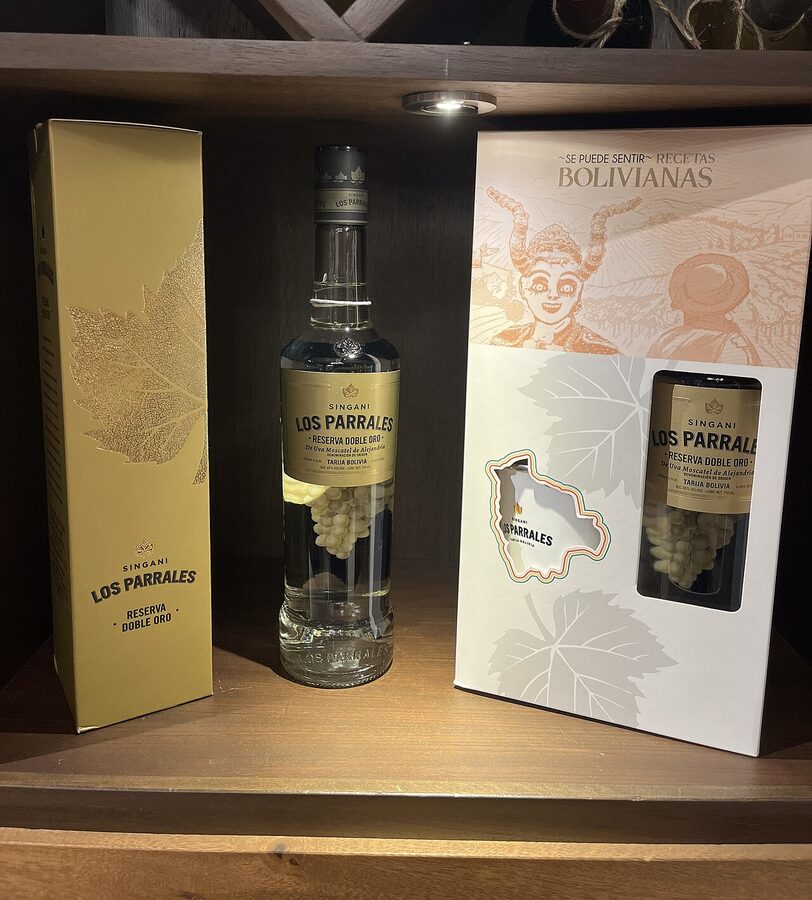

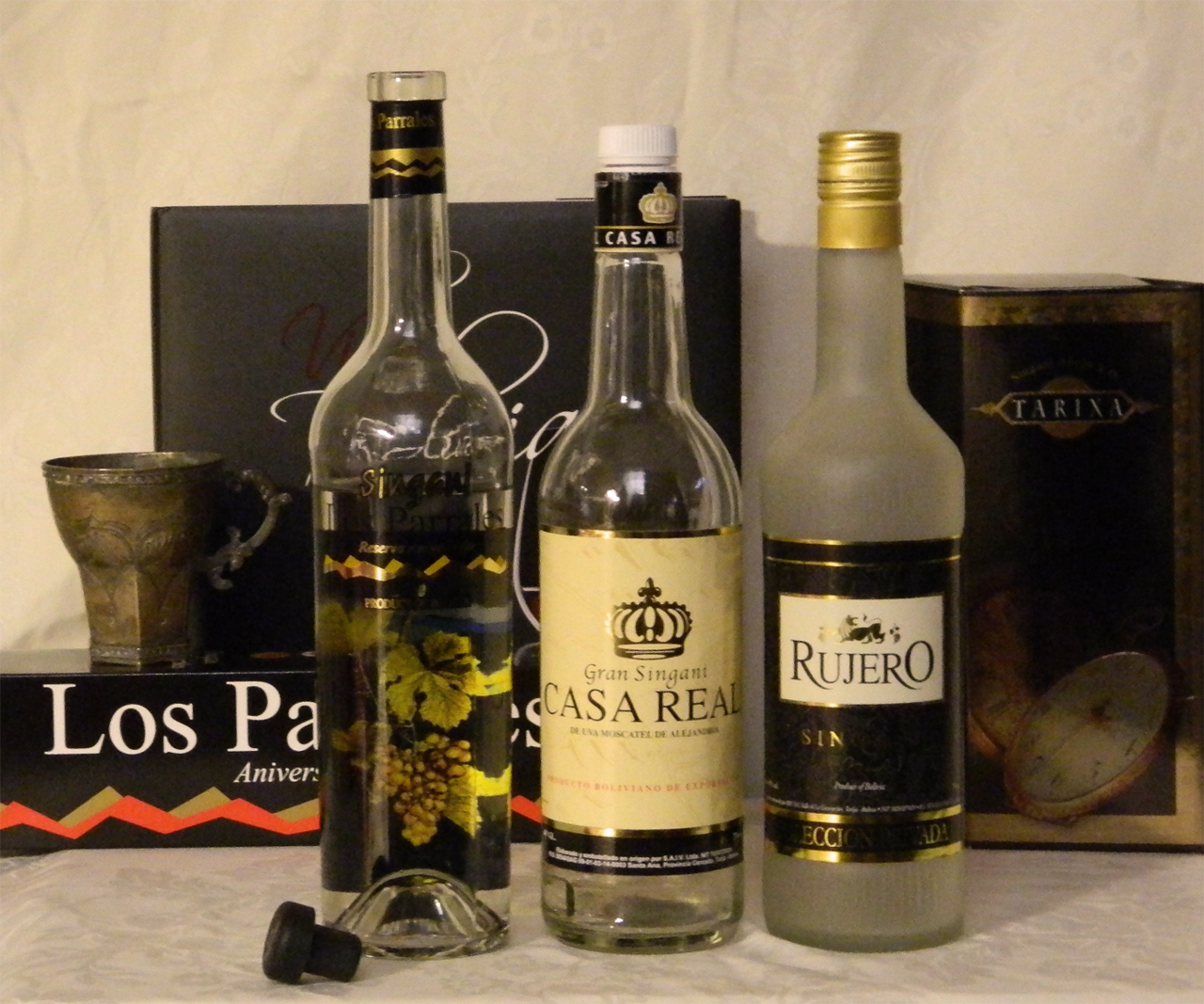
How to drink it: the traditional move is neat, in a small glass, before or after a meal. Casa Real and Don Lucho are the two most widely available premium brands. Bodega Los Parrales and Bodega Aranjuez sit just below them at slightly more accessible prices. The very small Cinti distilleries (Bodegas Marquéz de Cinti, San Pedro, La Concepción) make some of the most interesting bottles but are hard to find outside the south, and worth the detour to Camargo if you are travelling through Chuquisaca. The American director Steven Soderbergh started importing singani to the US in 2014 under his Singani 63 label, and since then a generation of American bartenders has begun substituting it for gin or pisco in classic cocktails. In Bolivia, that substitution has been the entire idea of the drink for two hundred years.
For a Bolivian reference point: a 750ml bottle of Casa Real Singani Etiqueta Negra is around 90 to 130 BOB at a La Paz supermarket. A glass of singani neat at a sit-down bar is 25 to 40 BOB. Bolivians do not generally sip singani on its own through a long evening; it is either a quick neat shot before lunch or, far more often, the base of a cocktail. The age statement on a singani label is mostly marketing; unlike whisky, singani is consumed young (1 to 3 years from distillation) and the older bottlings are not uniformly better.
Chuflay: the railway-era national cocktail
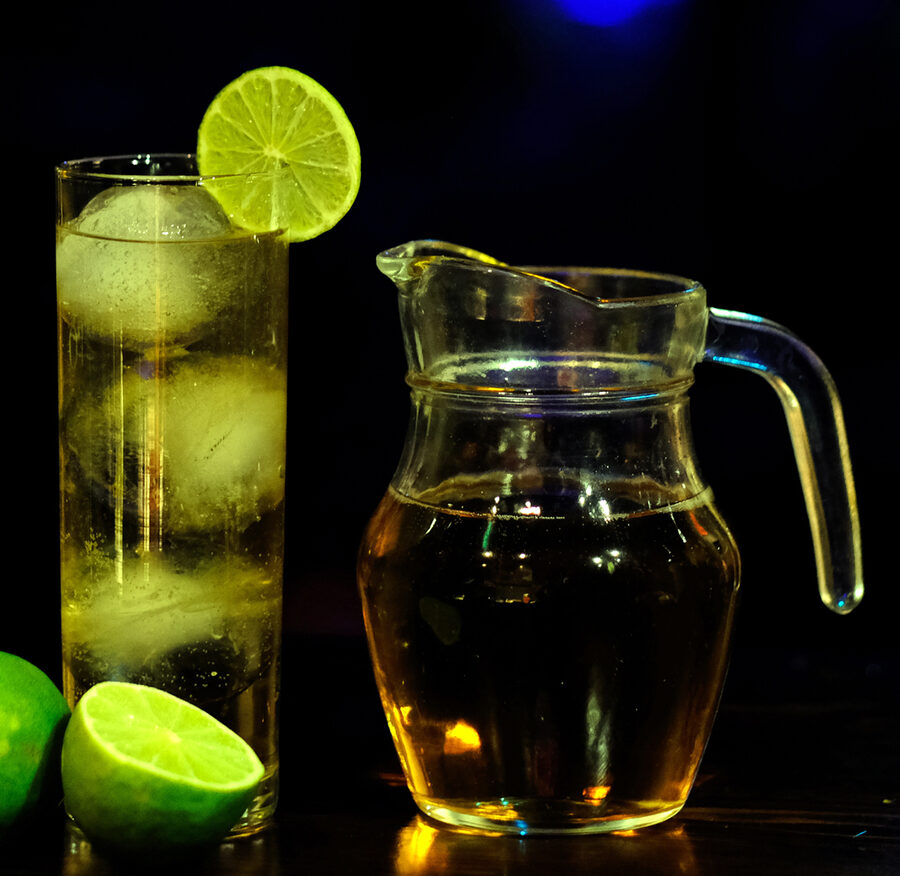
The chuflay is the singani drink Bolivians drink. Two ounces of singani, ice, ginger ale to top off, a slice of lime. The ginger ale should be cold and properly fizzy. The lime is not a garnish; squeeze it.
The railway origin is documented in old photographs from the Antofagasta and Bolivia Railway Company that show the British engineers’ bar at the Uyuni junction; the British paid the bar’s manager a small premium to import gin, and when the supply broke down, the singani-substitution that became chuflay started there. “Shoofly” is a real railway term for a temporary side-track, and the bilingual joke that singani was a temporary substitute for gin sustained the name. The Bolivian Railway opened the line from Antofagasta to Uyuni in 1889, which gives the cocktail its plausible founding decade. By the 1900s the drink had spread to La Paz, Sucre, and Cochabamba.
Where to actually drink one: in La Paz, Bocaisapo (in Sopocachi, near the Plaza Avora that comes up in the salteña scene) makes a chuflay with fresh ginger syrup rather than bottled ginger ale, which puts it a clear notch above the standard. Higher Ground on Calle Sagárnaga is good for a more touristy version with a view. In Sucre, the bar at Hostal Su Merced does a creditable one. In Cochabamba, La Muela del Diablo is the spot. Anywhere that uses Casa Real Singani and fresh ginger ale (not flat soda water that has been sitting open) will serve a good chuflay; anywhere that uses 7-Up or Sprite as a substitute should not be ordering chuflay at all.
What to skip: the chuflays at airport restaurants and at chain hotel bars, which use the cheapest singani available and bottled ginger ale that has been open for hours. A good chuflay is not a cheap drink; budget 35 to 60 BOB for one made with proper ingredients.
Yungueño: the Yungas orange drink
The yungueño is Bolivia’s summer cocktail, named after the Yungas, the warm subtropical valleys on the eastern slopes of the Andes where citrus grows in abundance. The drink is widely understood to have been invented by the Afro-Bolivian community of the Yungas region, descendants of enslaved people brought to colonial Bolivia from Africa to work the silver mines and the lowland plantations. After emancipation in the 19th century, much of the community settled in the Yungas, and the cocktail was their solution to the heat: singani plus fresh orange juice plus a small amount of sugar syrup, served very cold.
Recipe: 1.5 oz singani, 0.5 oz simple syrup, top with freshly squeezed orange juice over ice. The fresh orange matters. The Yungas oranges have a sharper, more complex profile than supermarket Valencia oranges, but if you are making this at home anywhere else, fresh-squeezed Valencia is the closest substitute.
Where to drink one in Bolivia: it is genuinely a hot-weather drink, so the further south or east you are, the more authentic it is. In Coroico, the Yungas town that most travellers visit, the bar at Hotel Esmeralda makes the standard. In Santa Cruz, where the climate justifies it for half the year, almost any sit-down restaurant will serve one. In La Paz, where the climate does not, the yungueño is more of a curiosity than a default; ordering one in October or November when the city is cold makes you look like a tourist.
Té con té: the warming cocktail
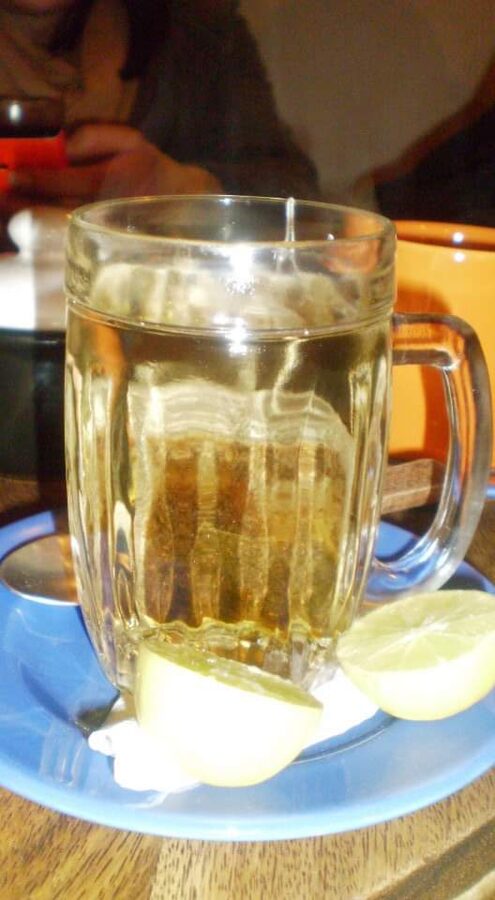
“Tea with tea” is the literal translation, and the joke is that the second tea is singani. The drink is hot black tea (ideally infused with cinnamon stick), one and a half ounces of singani, a quarter-ounce of fresh lemon juice, and a small spoon of honey. It is served in a coffee mug or, in more formal places, a tall glass with a handle. The cinnamon stick stays in the cup.
This is genuinely an altitude / cold-weather drink. La Paz nights drop below freezing in the dry-season months of June and July, and the singani-and-hot-tea combination warms you from the inside in a way that ordinary mulled wine does not. The combination is also genuinely medicinal: black tea is mildly stimulating, the singani opens up your circulation, and the lemon and honey do for a Bolivian winter cold what an English grandmother’s hot toddy does for a London chest infection.
The spot for one in La Paz is the Café del Mundo on Calle Sagárnaga, which has a cold-night version that is genuinely good. The bar at Bocaisapo serves a slightly more elaborate version with cardamom. At a chichería or a comedor, you will not find té con té on a menu but you can usually order one if you ask politely. The drink is most at home above 3,000 metres; below that it is sometimes served as a curiosity but rarely as a default.
Sucumbé: the Potosí miners’ drink
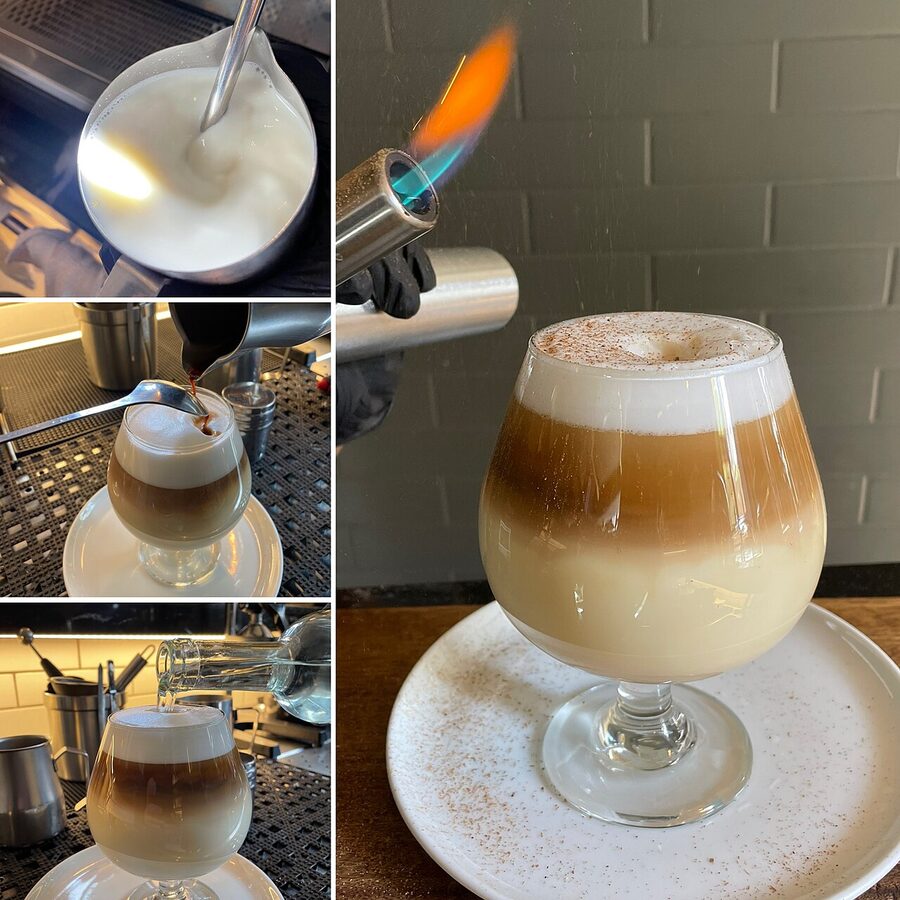
Sucumbé is the most under-celebrated singani drink in Bolivia. Hot whole milk, an ounce of singani, an egg yolk, sugar, and ground cinnamon, all whipped together until frothy and served warm. It is reminiscent of eggnog, but the texture is closer to a slightly alcoholic cinnamon hot chocolate without the chocolate.
The drink originates with the Afro-Bolivian community brought to Potosí as enslaved labour to work the Cerro Rico silver mines from the 16th century. At the altitude of Potosí (4,090 metres), in temperatures that dropped close to zero on cold nights, miners coming off shift needed something heavily caloric and warming. Hot milk and an egg yolk gave them the calories; the singani gave them the burn that thawed the hands. The name’s origins are uncertain but probably tied to the Afro-descendant slang word “cumbé,” meaning drunk.
In Potosí itself, the bar at Hostal Compañia de Jesús and the small bar inside the Casa Nacional de la Moneda mint museum both serve sucumbé in winter. After a tour of the Cerro Rico mines (which is genuinely physically gruelling for the people who do it for a living), a sucumbé is the right call. Around 25 to 40 BOB. In La Paz the drink is harder to find on a menu but Bocaisapo will make one in winter, and the Magick Cantina Café in Sopocachi adds it to the menu around June and July.
The Singani 63 moment, and what it means
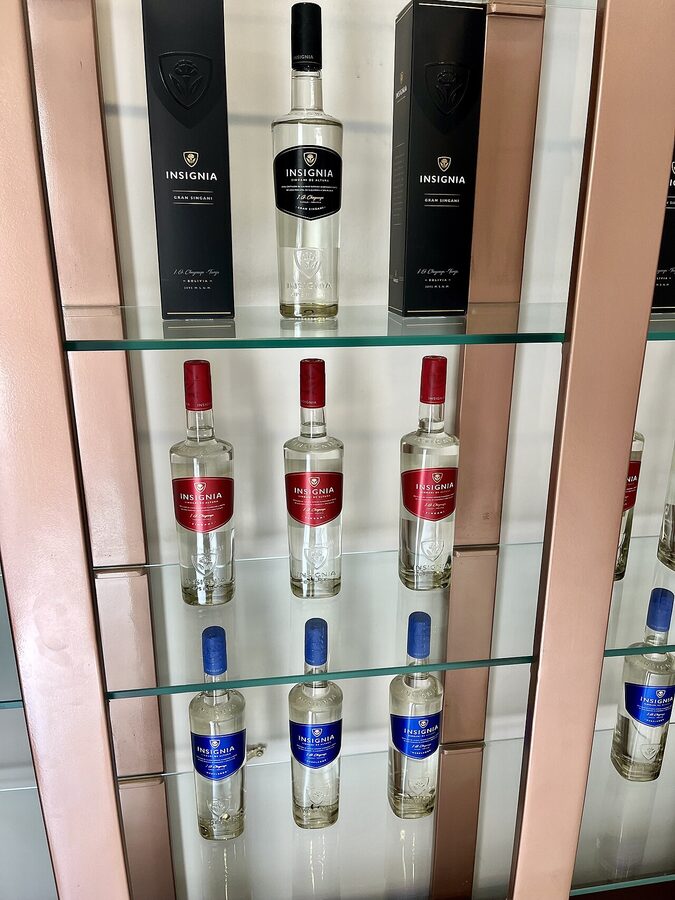
For most of the 20th century, almost no singani left Bolivia. Pisco, exported aggressively from Peru and Chile, became the South American grape brandy in the global drinks conversation. Singani, made by small producers, with no marketing budget and a complicated PDO regime, stayed at home.
That changed in 2014 when the American film director Steven Soderbergh, who had developed a personal taste for the drink while filming Che in Bolivia in 2008, founded Singani 63 and began importing it into the United States. The brand is named for the year of his birth and is sourced from Casa Real distillery in Tarija. The marketing rests on the argument that singani is a separate category from pisco and deserves its own listing on a back bar, which the US Tax and Trade Bureau eventually agreed with in 2014, granting it a unique designation.
The downstream effect, ten years on, is that you can walk into any serious cocktail bar in New York, San Francisco, or London and ask for a singani drink without too many puzzled looks. In Bolivia, the change is felt mostly through pricing and through a quietly developing modern bar scene that includes singani in non-traditional cocktails. Higher Ground in La Paz, the Vinos del Mundo bar in Tarija, and Phayawi in Sucre are leading the modernisation. None of this changes what your average Bolivian orders at lunch (still a chuflay), but it does mean the drink has finally been recognised as a category of one.
Api: the breakfast corn drink of the highlands
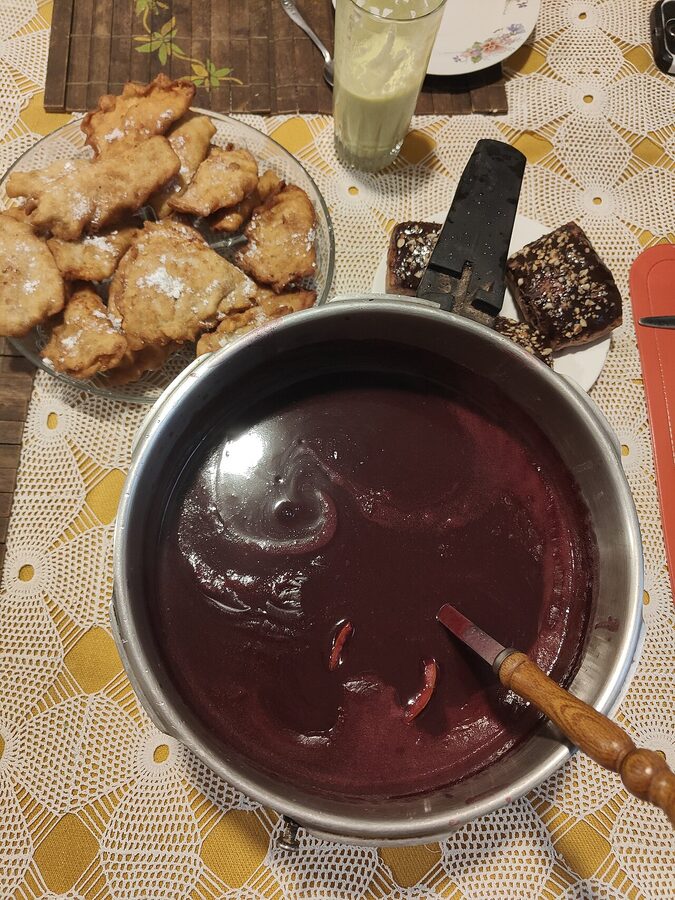
Api is the drink that defines a highland Bolivian breakfast. Two versions, both served hot in a shallow chipped cup or a tall glass: api morado made from purple maize (the dominant version), and api blanco made from white maize. Cinnamon, cloves, and orange peel are added during the cooking; sugar to finish. The result is a thick, sweet, mildly spiced drink that sits closer in texture to a thin porridge than to a tea.
The pairing is fundamental: api comes with pastel, a thin square of fried dough sprinkled with icing sugar, sometimes with a thin layer of melted cheese inside. Api con pastel is the name of the combination, and in the highlands during the cold months it is what locals genuinely eat for breakfast. A glass of api with a pastel is around 6 to 10 BOB at a market stall and 15 to 25 BOB at a cafetería. The cuisine companion piece (traditional cuisine of Bolivia) covers what else lands on a Bolivian breakfast table.
Where to find it: in La Paz, the upper level of the Mercado Rodríguez and the Mercado Lanza both have api stalls that serve from about 6am until 10am. The cluster of api vendors near the bus terminal is the busiest because passengers arriving on overnight unheated buses from Oruro genuinely need warming up at 5am. In Sucre, the row of api vendors outside the Mercado Central works the same way. In Cochabamba, the cafetería on the corner of Plaza Colon serves api into the late afternoon.
Api is also the festival drink of the highlands. During Carnaval de Oruro, the giant pre-Lent festival in February, api stalls work overnight to keep dancers and spectators warm. During the Alasitas miniature-fair in January (a festival that we will cover in a separate piece), api is served alongside the small clay miniatures that vendors sell as good-luck charms. There is no sit-down restaurant version of api worth seeking out; the market is the place.
Chicha and the chichería tradition
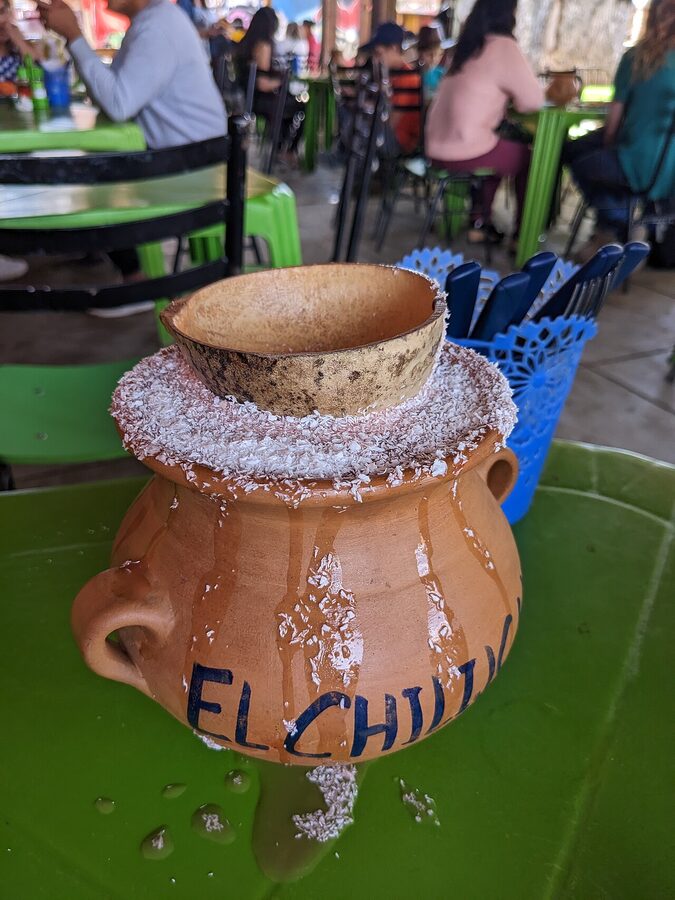
Chicha is the oldest drink in Bolivia. The word covers a family of corn-based drinks that range from a non-alcoholic refresher to a properly fermented beer; in Bolivia, chicha unqualified almost always means the fermented kind, and the centre of chicha culture is Cochabamba and the surrounding valleys.
The technique is pre-Hispanic and predates the arrival of any Andean state by at least three thousand years. White corn (or sometimes yellow) is sprouted, dried, ground, boiled, and left to ferment in clay pots called wirkis for one to two weeks. The fermentation, traditionally driven by saliva amylase from women who chewed and spat the corn at an early stage of the process, has now mostly been replaced by an enzyme starter, but a few traditional chicherías still chew. The result is a slightly sour, mildly fizzy, low-alcohol (1 to 4 percent) drink that tastes a little like cloudy farmhouse cider.
A chichería is a chicha bar, marked from the outside by a white flag on a long pole tied to the front of the building. The flag is the regional signal that the day’s fresh chicha is ready; once the day’s batch is sold out, the flag comes down. Chicherías are concentrated in the towns of Cliza, Punata, and Quillacollo around Cochabamba, and a Sunday afternoon in any of those three is the right time to visit one. A glass of chicha is 3 to 8 BOB. The drinking pattern is leisurely and fundamentally social: you go with friends, you stay for several hours, you eat picante de pollo or chicharrón along with the chicha (the food side is in our traditional cuisine piece).
One ethical note: chicha quality varies, and the more traditional preparations involve fermentation conditions that are not modern-restaurant clean. Chicha from a busy chichería with high turnover is generally fine; chicha from a small home producer with low turnover is a coin flip. Bolivians who drink chicha regularly know which producers they trust, and asking your hostel for a recommendation is the right move. The chichería opening pattern is Friday afternoon through Sunday evening; Tuesday or Wednesday chicha is typically left over from the weekend and is the version most likely to disappoint.
Beyond the fermented Cochabamba version, you will see chicha morada (a non-alcoholic purple-corn drink that is more popular in Peru) and chicha de maní (peanut chicha) on some menus. Both are decent but neither is the same animal as the fermented Cochabamba chicha. There is also a yuca-based fermented drink called chive, popular in the eastern lowlands, which has a similar low-alcohol register but a paler colour and a more neutral flavour.
Mocochinchi, somó, tujuré: the cold-drink family
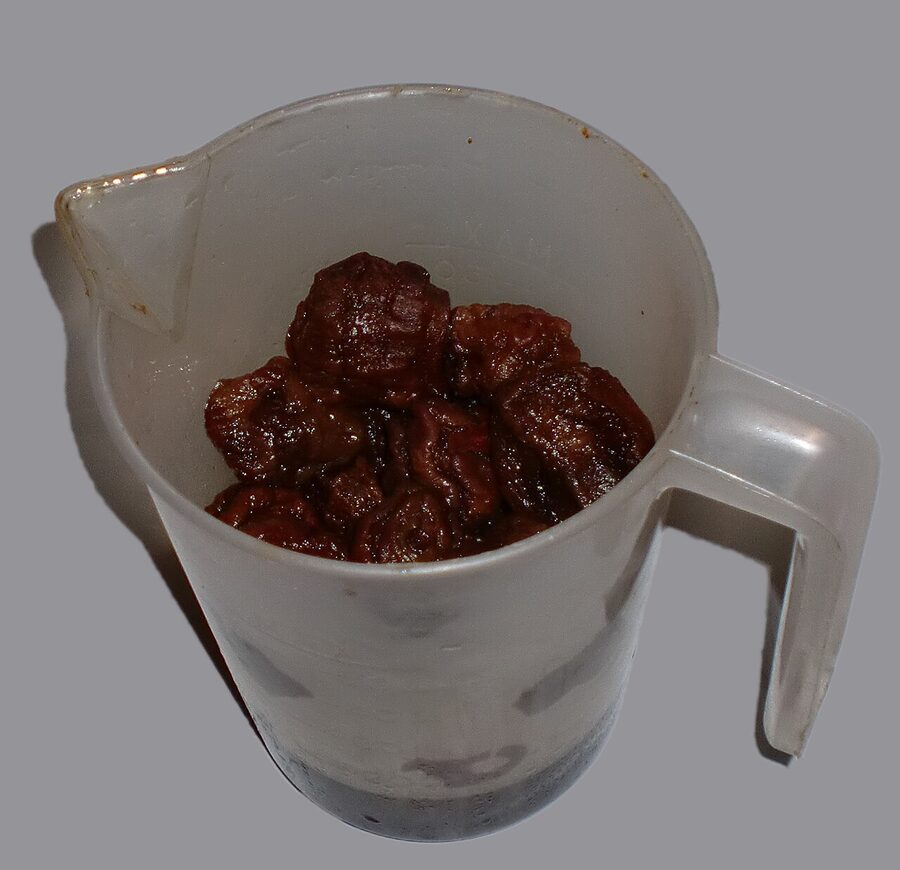
The lowlands and the eastern half of Bolivia, where the climate is hot and humid for much of the year, run an entirely different drinks vocabulary. The defining group is the chilled, sweet, fruit-or-corn-based refresher sold from large glass jars on city sidewalks.
Mocochinchi is the headline. Whole dehydrated peaches (with the stone) are simmered for hours with cinnamon, cloves, and sugar, then chilled. The drink is served with a piece of the rehydrated peach in the bottom of the glass, which you eat with a small spoon at the end. The flavour is deep, slightly cooked, almost stewed-fruit. A glass at a street vendor is 4 to 8 BOB. The plaza in Santa Cruz has the densest concentration of mocochinchi vendors; in La Paz they appear on warm dry-season afternoons but are not the local habit.
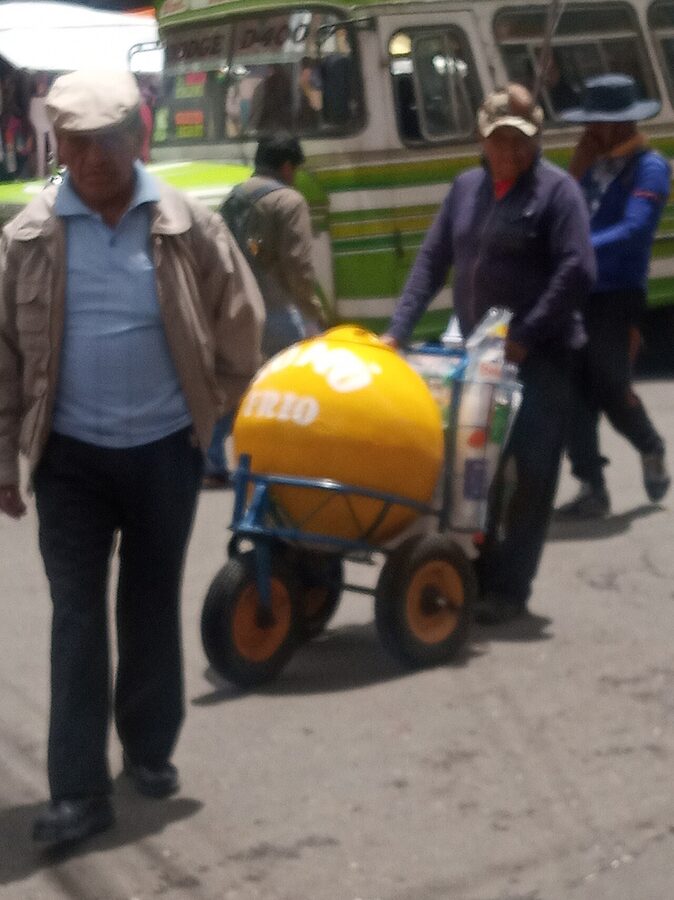
Somó is the everyday cold drink of the lowlands. Frangollo (a coarsely ground white corn) is boiled with cinnamon and sugar, then chilled and served thick and slightly grainy. A glass is around 5 to 10 BOB. It is heavier than mocochinchi and works as a meal-replacement on a hot day.
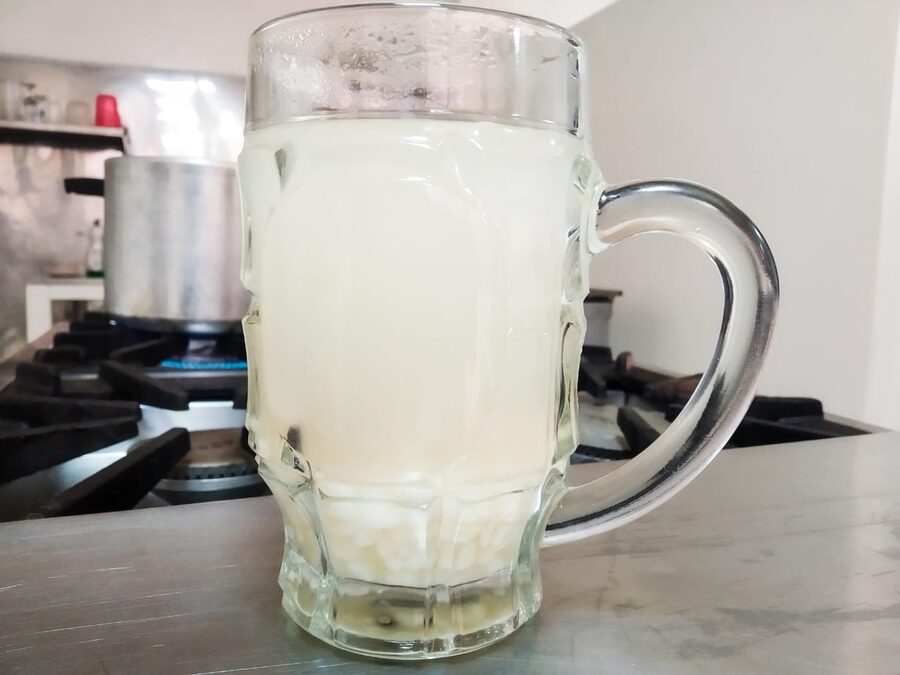
Tujuré combines white corn with plantain. Sweeter and thicker than somó, it is more popular in the Beni and Pando regions than in Santa Cruz. Pululo is the plantain-only version. Linaza is flax-seed juice and turns up at health-food-leaning juice stands. Chicha de maní is non-alcoholic peanut juice and is genuinely delicious if you can find a good one in Cochabamba.
Limonada is Bolivian lemonade, and the Bolivian version is closer to limeade: fresh-squeezed lime juice (sometimes blended with the rind for the slight bitter edge), water, sugar. The Coca-Cola FEMSA-bottled stuff exists too, but a fresh limonada from a market juice stand is 8 to 12 BOB and is among the best summer drinks in South America. In Santa Cruz, the area around Los Pozos market has the densest concentration.
One to skip: the prepackaged mocochinchi and somó in supermarket bottles. Both lose almost everything in the bottling. Stick to the street vendors. Also worth flagging: do not buy these from a vendor whose glass jar is sitting in direct sun without ice. The drinks are not pasteurised after preparation, and on a 32°C Santa Cruz afternoon the bacterial growth in a warm glass jar is real.
Beer: Paceña, Taquiña, Huari, Bock
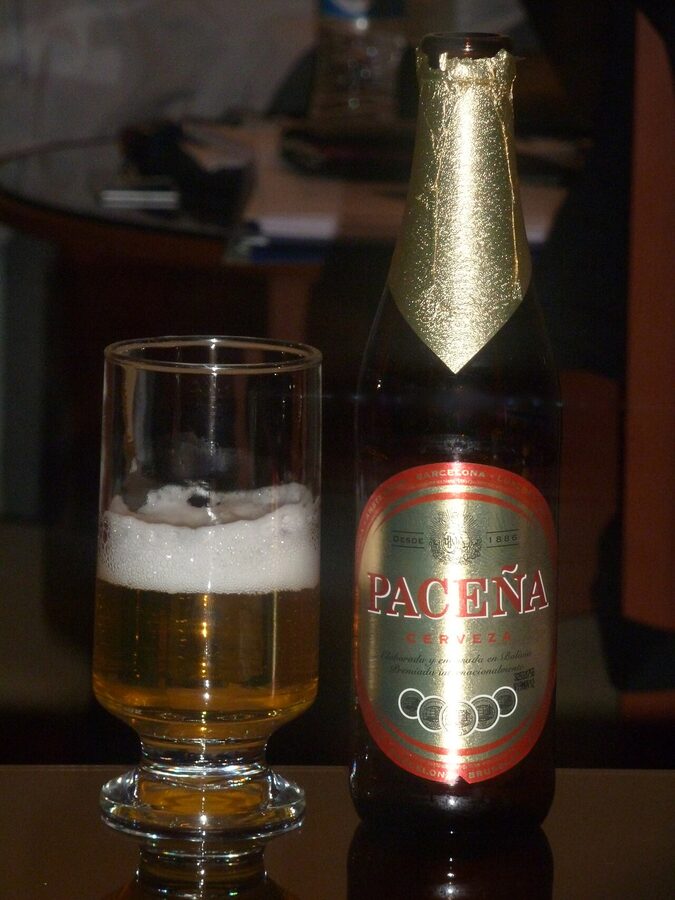
Bolivia has four major commercial beers, and which one a Bolivian drinks tells you a lot about where they are from. Paceña is the La Paz beer (Cervecería Boliviana Nacional, founded 1877). It is a clean lager, light on the palate, close to a Czech-style pilsner. The default pour at any La Paz lunch or evening. A 620ml bottle is 12 to 18 BOB at a comedor, 25 to 40 BOB at a sit-down restaurant. The 330ml “petaca” stubby is the takeaway size and runs 8 to 10 BOB at a corner shop.
Taquiña is the Cochabamba beer, brewed in the city since 1895. Slightly more full-bodied than Paceña, with a touch of bitterness that the Cochabambinos will tell you fits their food better. The annual Taquiña Oktoberfest in Cochabamba is real, runs for three weekends in September, and is a legitimate event with around 80,000 attendees in a recent year. The brewery itself, in the western district of the city, also runs a small tour and tasting that includes the brewery’s archive of Bolivian beer-can designs going back to the 1920s.
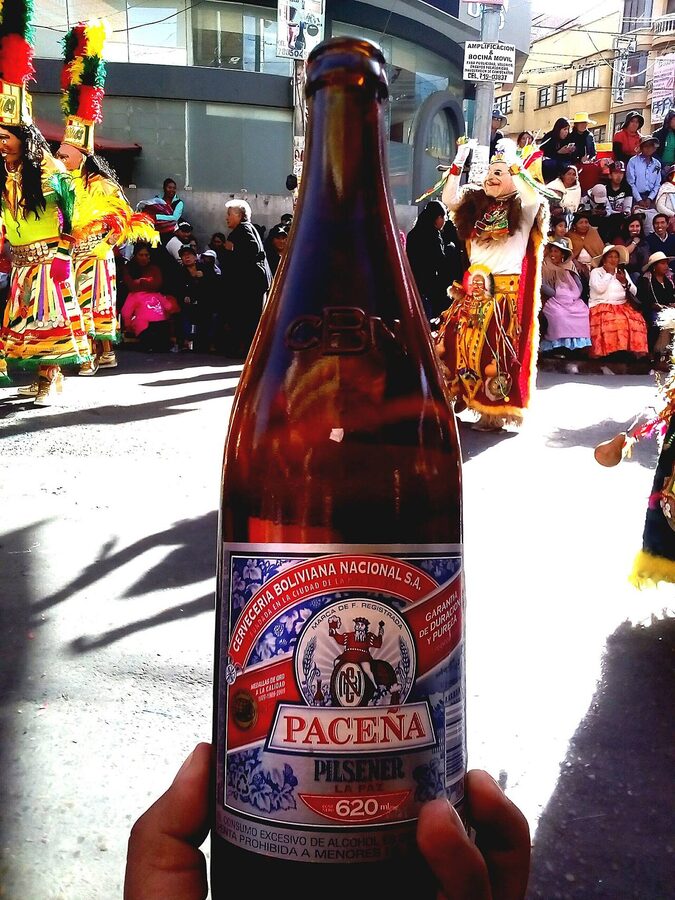
Huari, named after the Huari people of the altiplano, is a darker, more premium lager from Oruro. The Huari Negra is genuinely good as a stout-adjacent style; the gold-label Huari is the more standard premium pour. The brand is also marketed at the higher festival end and shows up at Carnaval de Oruro every February as the official sponsor of several of the dance fraternities. Bock is the dark winter lager from CBN that comes out in May and runs through July. Pair it with chairo or fricasé. Cordillera is the cheaper national beer aimed at budget drinkers; drinkable but undistinguished, generally about 30 percent cheaper than Paceña, and the only real reason to choose it is price. El Inca, also from CBN, is the cheapest of the four and is genuinely worse than Cordillera; skip it.
The growing craft beer scene is small but real. Saya in La Paz, Cervecería Stiegl in Cochabamba (German-owned), and the brewpub at Higher Ground in La Paz are the named spots. Pints are 30 to 50 BOB, and the IPA-style options are decent but rarely competitive with what you can drink in San Diego or London. The interesting craft is the local-ingredient stuff: corn-based beers, coca-leaf beers, quinoa-based stouts, and a handful of small altiplano breweries experimenting with native barley varieties grown above 3,500 metres.
Tarija and the wine country
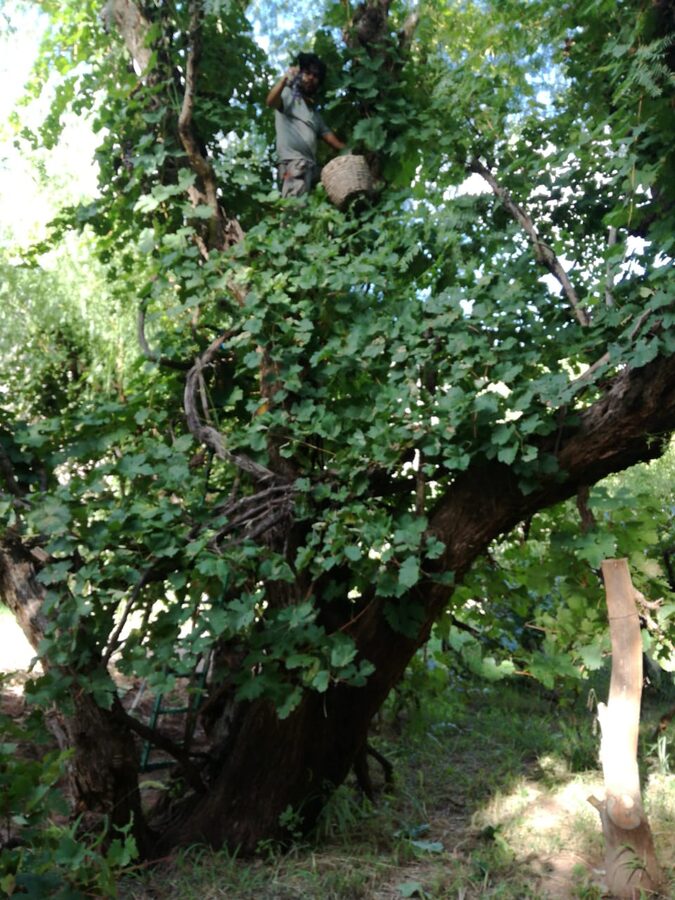
The valleys of southern Bolivia, around the city of Tarija and the Cinti canyon further north, are the second-highest commercial wine-growing region in the world, after a small Argentine-Mendoza enclave. Vineyards sit between 1,800 and 3,000 metres above sea level. The grapes that thrive at this altitude include Tannat (the Uruguayan red grape, which Bolivia has adopted as something of a flagship), Malbec, Cabernet Sauvignon, Syrah, and a few Italian varieties.

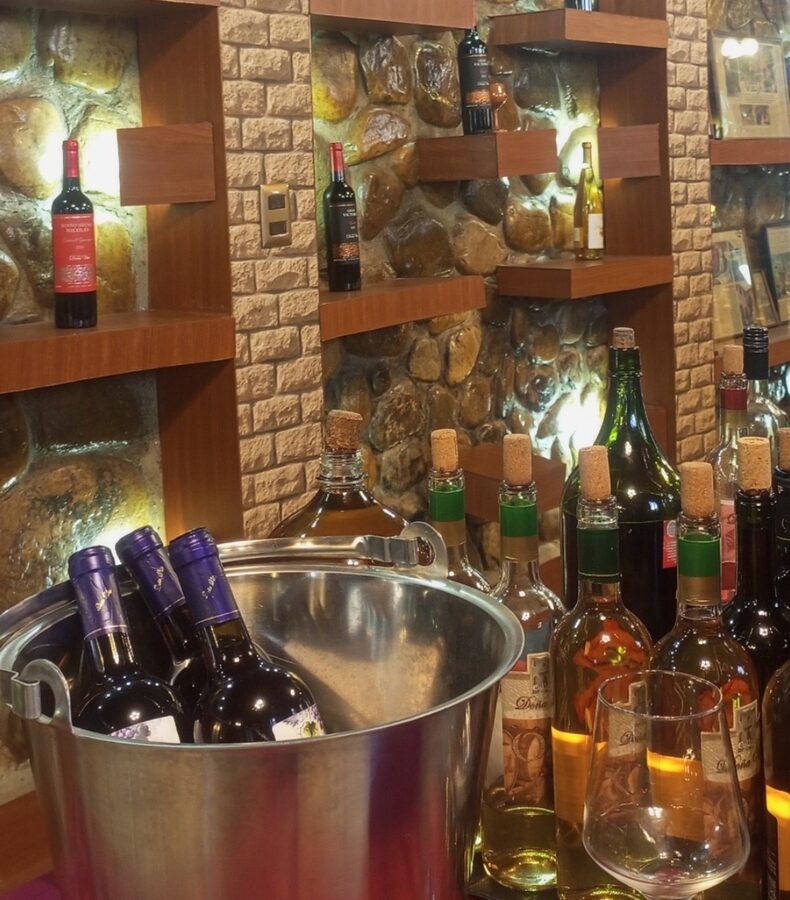
The major producers are Kohlberg, Aranjuez, Campos de Solana, Magnus, and the smaller-batch Bodegas Casa Vieja. A bottle of Aranjuez or Kohlberg Tannat at a Tarija restaurant is around 70 to 120 BOB; the same bottle in La Paz is 110 to 180 BOB. The wines are genuinely worth seeking out, particularly the Tannats, which carry a deep concentration that the high-altitude grape thickens into something singular. The Tannat from Aranjuez was the first Bolivian wine to win a major South American award (Argentina’s Concours Mondial de Bruxelles, 2018), and the score has held since.
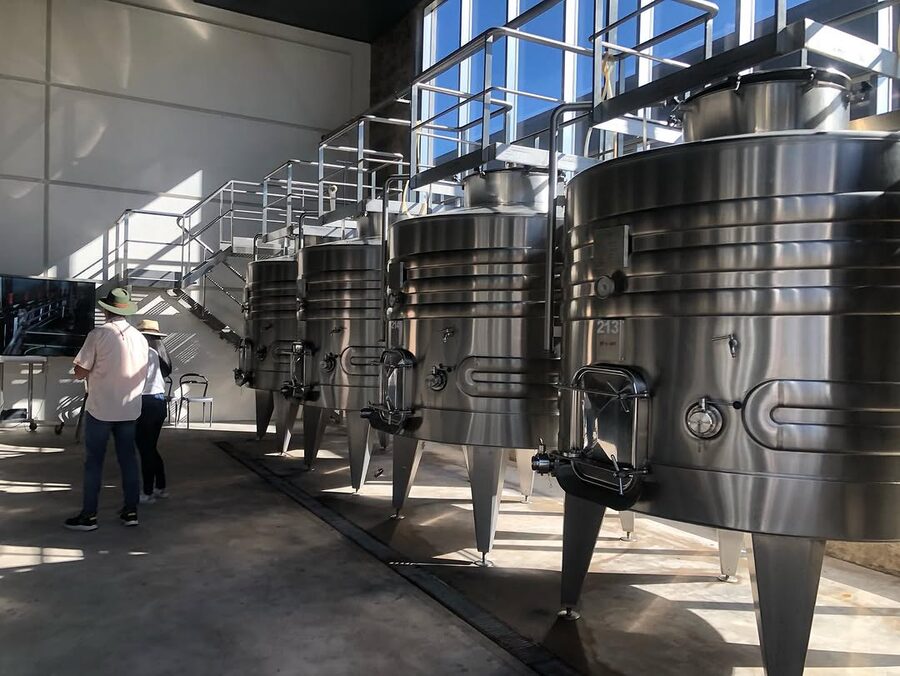

Tasting in the region: the Tarija valley wine route runs through about 15 producers and can be done as a half-day or full-day trip from Tarija city. The Casa Vieja and Aranjuez tastings cost around 50 to 80 BOB and include 4 to 6 wines plus a snack. The Cinti canyon route, further north, is the more rugged and rewarding option for someone serious about wine; the small bodegas around Camargo (Bodegas Marquéz de Cinti, La Concepción, Bodega Cepa de Oro) sit in some of the most spectacular high-altitude scenery in South America and serve wines that almost nobody outside Bolivia has tasted.
One specific bottle to look for: the Casa Real Singani Aniversario, the older oak-aged singani that Casa Real release each year in March around the producer’s anniversary. Limited run, around 200 BOB at the bodega in Tarija, occasionally found in La Paz at La Vinoteca on Calle 21 de Calacoto. It is the bottle to take home if you only buy one Bolivian spirit.
Coffee, mate de coca, and what Bolivians drink instead of water
Bolivian coffee is undertold globally. The Yungas region, the same valleys that gave the world the yungueño cocktail, also produce some of the highest-altitude coffee in South America. The beans are mostly arabica, often grown by small Aymara cooperatives, and the cup tends toward the bright, fruity end of the spectrum rather than the smoky-chocolate Brazilian profile. Café del Mundo in La Paz, Café Vainilla in Sopocachi, and Higher Ground all roast properly. A flat white at any of these is 18 to 28 BOB.
The Yungas coffee origin is genuinely worth knowing about: the beans are grown in cooperatives that mostly avoid the colonial coffee estate model that dominates much of South America. Most of the beans you will see at a La Paz speciality café have been roasted within a week of arriving from a small Cooperativa Agraria in Caranavi or Coroico. Single-origin Bolivian Yungas is increasingly available at speciality cafés in San Francisco, London, and Tokyo too; it is a small-volume but well-reputed origin.
Mate de coca is the everyday hot drink of the highlands. The cultural and legal context, including why coca tea has nothing to do with cocaine despite the leaf being the same plant, is in our coca customs and rituals piece. For drinking purposes: order it at any altitude restaurant or cafetería, drink one cup before lunch on your first day in La Paz or Potosí, and treat it as a baseline against altitude headache rather than a stimulant. Practical hydration advice for high-altitude travel sits in our altitude sickness primer.
Other warm tea you will see: mate de manzanilla (chamomile), mate de anís (star anise, with cinnamon), and mate de muña (a high-altitude wild mint that smells faintly like spearmint and Andes alpine grass). Muña is genuinely calming and worth ordering after a heavy almuerzo if your stomach is not used to fried pork at 3,650 metres.
And tap water: do not drink it. Bottled water is universally available, costs 5 to 10 BOB for 600ml at a comedor, and is what Bolivians themselves drink. Carbonated water (agua con gas) is more expensive but fine. Ice in restaurants in La Paz, Sucre, and Cochabamba is usually fine; ice from street vendors in any city is a coin flip.
Where to drink across Bolivia
La Paz has the densest bar scene. Sopocachi (specifically the area around Plaza Avora, Calle Belisario Salinas, and Plaza España) is the bar district. Bocaisapo for proper cocktails, Higher Ground for the singani-forward modern menu, Magick Cantina Café for the more bohemian crowd, and Diesel Nacional on Calle Federico Zuazo for cheap Paceña and chuflays in big group rounds. A La Paz bar evening starts late (10pm) and runs to 2am or 3am.
Cochabamba drinks differently. The bar zones are around Plaza Colon and along El Prado, but the real Cochabamba drinking is at the chicherías in the surrounding towns of Cliza, Punata, and Quillacollo on a Sunday afternoon. La Muela del Diablo is the named cocktail bar in the city centre.
Sucre, being a smaller and more colonial city, has a more low-key scene. The bar at Hostal Su Merced does decent cocktails; Nous Café Cultural is the spot for live music and a glass of wine. Florin in the Plaza 25 de Mayo is a long-standing tourist bar that locals also use.
Tarija centres on wine. The Vinos del Mundo bar near Plaza Luis de Fuentes is the right place to taste through the regional producers without committing to a full vineyard tour.
Santa Cruz de la Sierra has a more cosmopolitan, almost Argentine bar scene. Equipetrol is the high-end zone; the bar street near Plaza 24 de Septiembre runs more locally. Mocochinchi vendors are at every plaza in the city for the daytime.
Practical: most Bolivian bars take cash only or have a minimum card spend of around 100 BOB. Bring small bills. Bars in La Paz and Sucre accept Bolivianos, US dollars, and increasingly Argentine pesos; in Tarija and Santa Cruz, US dollars work in tourist-leaning places but Bolivianos are universal. Tipping at bars is around 10 percent and is not assumed.
What to skip
A short list of drinks experiences not worth your time.
Casquito: a mix of pure undenatured alcohol and cola, sold cheaply and consumed in some economically strained communities. It is technically illegal because of the pure-alcohol component and is genuinely dangerous; the alcohol content is not regulated and varies. Avoid.
Tourist chuflays at hotel bars: as covered above, made with cheap singani and flat ginger ale that has been open for hours. A chuflay is a simple drink and a bad one is depressingly common. Pay the extra 15 BOB for the proper version.
Singani sour at non-specialist bars: this is a Bolivian-substitute version of pisco sour, and at a competent bar it is fine. At a non-specialist bar, the egg white is sometimes replaced with cheap meringue mix, which is not the same drink. Order a chuflay or a yungueño instead unless you are at a known cocktail bar.
Bottled “Mocochinchi” and “Somó” in supermarkets: pasteurised, over-sweetened, missing the texture. Drink the street version.
Imported wine at La Paz bars: the markup on Argentine and Chilean wine in Bolivia is steep enough that you are better off ordering the Bolivian Tannat. The Bolivian wine is also frankly more interesting at the price point.
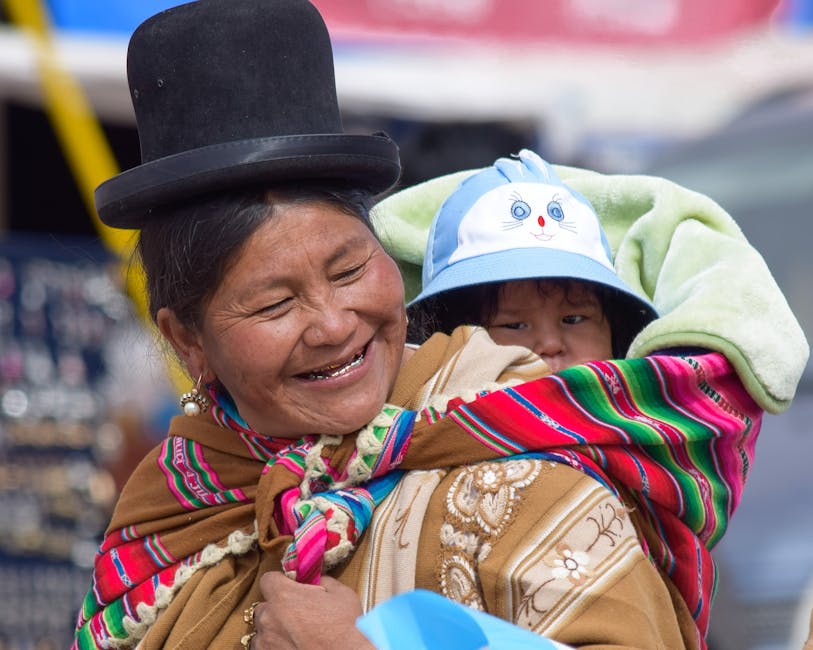
If there is one thing to take from this: the singani-and-chuflay framing that the world is starting to discover is real, but it is the smaller part of Bolivian drinking. The drinks that have shaped life in this country are the corn-based ones: api at 6am to start the day, chicha on a Sunday afternoon, somó at the lowland market on a hot Saturday. They are 3 to 8 BOB, sold from clay pots and glass jars on the street, and they have been here longer than the Spanish, the rail, the wine, or anyone’s idea of a national cocktail. Order both. Order them often.



.jpg)


.jpg)


