
Reviewed · BOLIVIA
Bolivia: Full day to Copacabana & Isla del Sol
Lake Titicaca is the star here, but the memorable stop is Isla del Sol, where a boat ride leads to Inca-era sites and the Eternal Fountain. From Puno, you cross into Bolivia, visit Copacabana’s basilica, then return by bus in the evening.
I like two things in particular: the combination of lake scenery and living religious tradition in Copacabana, and the chance to see archaeological sites on the island in one day without arranging separate transport. Guides named Ana and Jaime have led tours, though you should not assume which guide you’ll have.
The main drawback is the long, tightly scheduled day. Border procedures, bus transfers, and limited time on the island can make the outing feel rushed, and one account describes confusion over who handled the transfer and paperwork.
In This Review
- At a glance
- From Puno to Copacabana: a border-crossing day
- Copacabana’s basilica and a lakeside lunch
- Crossing Lake Titicaca to Isla del Sol
- What the guide adds
- The return journey and the day’s real pace
- Is $105 good value?
- Who should choose this day trip?
- Should you book it?
- FAQ
- Where does the tour start?
- Does the tour cross into Bolivia?
- What places do you visit?
- Is lunch included?
- What languages does the guide speak?
- How large is the group?
- What should I bring?
- Can I cancel for a refund?
- Is the tour suitable for wheelchair users?
At a glance
- Copacabana is in Bolivia: You start in Puno, Peru, and cross the border at Cassani.
- The day runs about 15 hours: Hotel pickup is around 6:00 a.m.; arrival back in Puno is scheduled for about 9:00 p.m.
- The island visit includes Inca-era sites: Expect Pilkoken, the Umani stairs, and the Eternal Fountain.
- A shared boat crosses Lake Titicaca: The ride is part of the experience, not just a transfer.
- Lunch and key tour costs are included: The $105 price covers transport, a guide, island entry, the boat, and lunch in Copacabana.
- Pack your passport and patience: Border paperwork and a busy schedule are the main practical concerns.
From Puno to Copacabana: a border-crossing day
The tour starts with pickup near Puno’s main square at about 6:00 a.m. You are taken to the bus terminal, then travel toward Copacabana, roughly 142 kilometers away. The journey includes a stop at the Cassani border crossing, where you complete the procedures to enter Bolivia.
That border stop matters. It is not a quick formality you can ignore when planning the day: bring your passport, and check with the supplier about any paperwork you need before departure. One participant reported having trouble completing an online form without a connection and said the necessary documents had not been provided. That may not be typical, but it is sensible to confirm the current process in advance, especially if you book close to the travel date.
The scheduled arrival in Copacabana is around noon Bolivia time. Peru and Bolivia use different time zones, so the clock changes as you cross. Keep your phone’s time setting in mind when following meeting times.
There is a small-group limit of 15, and the tour includes an English- and Spanish-speaking guide. The exact arrangement deserves a little attention: one person described being taken to the bus terminal, given bus tickets, and told the guide would meet them in Copacabana. Other accounts praise the overall organization from pickup through the border and return. If you expect a guide to accompany you on every leg, confirm that detail with the operator before you go.
You can also read our reviews of more tours and experiences in Copacabana Bolivia.
Copacabana’s basilica and a lakeside lunch
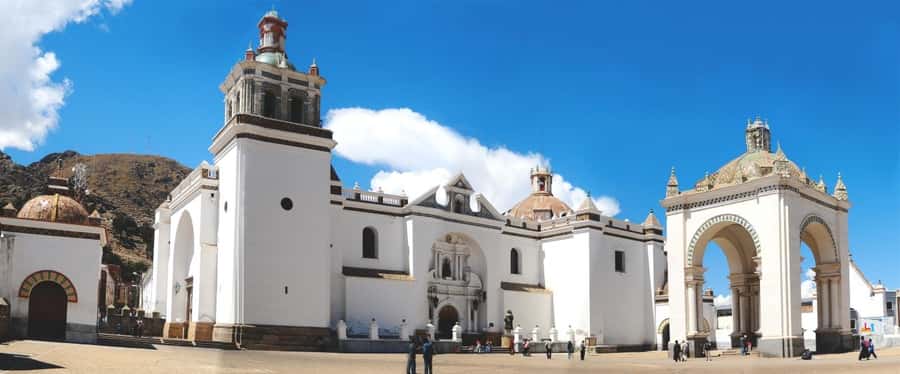
Copacabana is more than a convenient port for the island. The town is known for the Basilica of Our Lady of Copacabana, also referred to as the Basilica of the Virgin Candelaria. Visiting gives you a look at a major local religious site before the day shifts to the archaeological and natural appeal of Isla del Sol.
The church visit is a worthwhile counterpoint to the ruins. The tour’s appeal is not only ancient Inca remains; it also connects the lake to present-day religious traditions. You’ll have lunch in Copacabana, and one meal is included in the price. Drinks and other food are not, so bring water and some cash for anything extra.
The schedule does not specify how long you’ll spend in town before boarding the boat. One participant found the overall visit quite fast, with little time at stops. Think of Copacabana as a focused visit to the basilica and lunch, not a leisurely town day with room to browse at length.
Crossing Lake Titicaca to Isla del Sol
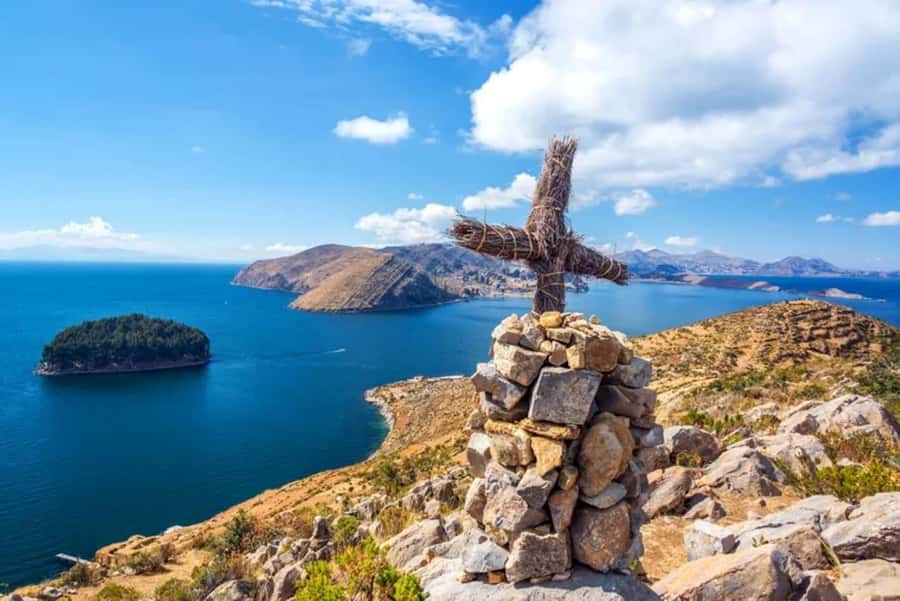
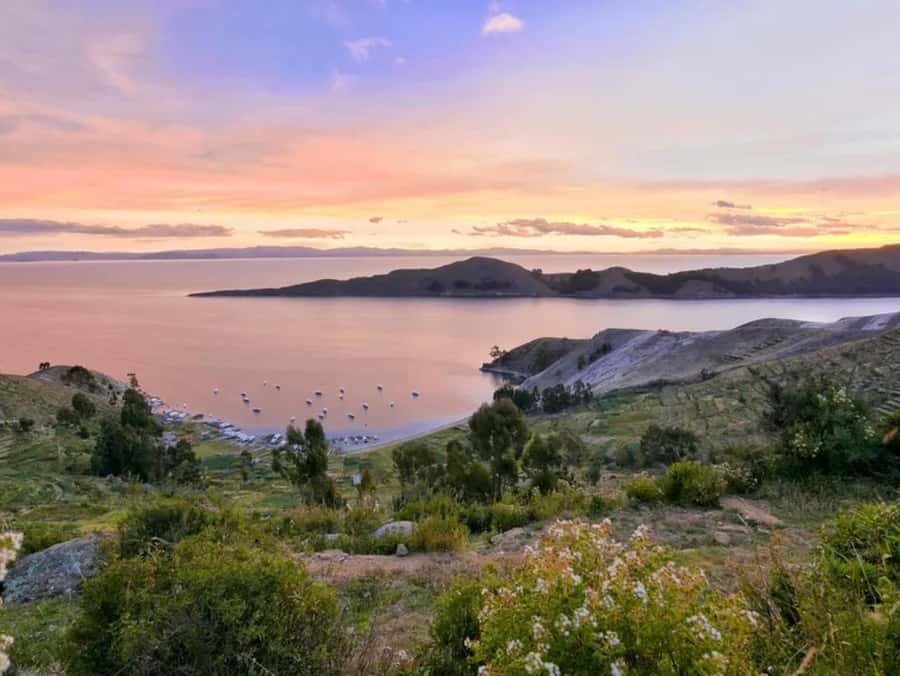
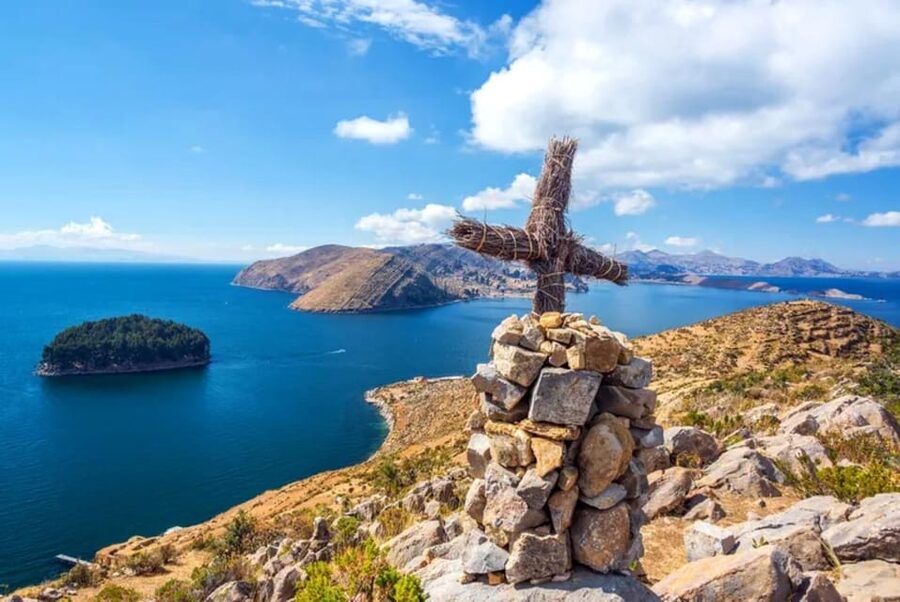
From the dock, you take a shared boat across the lake to the southern side of Isla del Sol. The ride is both transport and a highlight: the island visit begins with open-water views across Lake Titicaca, one of the defining features of the trip.
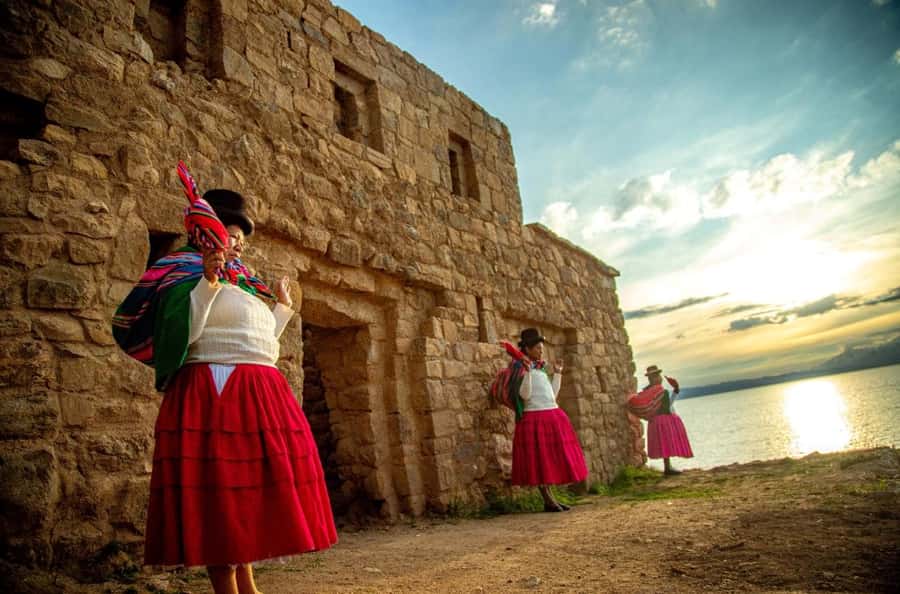
The island is associated with the origin story of the Inca Empire, and the tour visits archaeological sites connected with the worship of Inti, the Sun god. At Pilkoken, also described as the Temple of the Sun, you get a close look at a site that gives the island its historical focus. The visit is guided, so you can hear context rather than simply arriving, taking a picture, and heading back.
You’ll also encounter the Umani stairs, described as dating from the Inca era, and the Eternal Fountain of the Incas. The tour includes a chance to taste the fountain’s water, regarded as holy. These stops add a more physical, hands-on quality to the island visit, but they also mean walking on stairs and uneven ground. Comfortable shoes are a must.
The short visit has a trade-off. It lets you see Isla del Sol on a day trip from Puno, but it does not leave much room to linger. If your priority is a slow island stay or extended walking, this itinerary may feel compressed. If you want a guided introduction to the island’s main southern sites without arranging an overnight visit, the schedule makes the experience possible.
What the guide adds
The guide can make a substantial difference on a day with several moving parts. Past tours have been led by Ana and Jaime, and individual accounts describe guides who took time to explain the sites and respond to visitors’ interests. Those are useful signs, but names and guide assignments can change, so treat them as examples rather than a guarantee.
A bilingual guide is especially helpful when you are moving between countries, town, dock, boat, and archaeological sites within a tight timetable. At the same time, the guide’s role may not cover every transport leg in the same way. Be clear about where the guided portion begins and ends before you set out.
The return journey and the day’s real pace
The boat is scheduled to return to Copacabana at about 5:00 p.m. You then have some free time before boarding transport back to Puno, with arrival at the terminal around 9:00 p.m. That leaves little margin for delays: this is a full-day outing, not a short excursion you can comfortably pair with evening plans.
Transport quality may vary. One person found the outbound bus old and uncomfortable, while another praised the organization despite road works affecting the journey. A separate account described a comfortable night bus on the return but had to find a taxi after arriving in Puno. Since the included return is to the Puno terminal, plan how you’ll get from there to your accommodation.
The tour is listed as a round trip by tourist bus, but the way transfers are coordinated may feel more like a series of handoffs than one continuous escorted ride. Confirm the return arrangements if you need to know exactly where you’ll be dropped off or who to contact if plans shift. The operator asks you to provide a phone number with your country code and have WhatsApp, which is a practical way to stay reachable.
Is $105 good value?
At $105 per person, this is not simply a bus ticket to Copacabana. The price includes pickup from your hotel in Puno, the transfer to the bus terminal, tourist transport between Puno and Copacabana, a private bilingual guide, island entry, the shared boat, the guided island visit, and lunch. For someone who wants the border crossing, town visit, boat, and island sites arranged in one day, those inclusions can make the price worthwhile.
The value depends on how smoothly the transport works. One dissatisfied participant compared the price with a much cheaper one-way bus ticket and felt the service did not justify the cost, particularly given the paperwork confusion and the condition of the outbound bus. That criticism points to the key question: you are paying for coordination and a guide, not only for the road journey. If the handoffs are unclear or the bus disappoints, the value drops.
On the other hand, a well-organized day saves you from piecing together transport, a boat crossing, entry, lunch, and a guide on your own. Strong praise has focused on smooth pickup and border arrangements, detailed explanations, and the effort made to keep the tour running when road works disrupted travel. I’d see the $105 as reasonable if you want convenience and interpretation, but less compelling if you are comfortable organizing each leg independently and mainly need a bus ride.
The booking terms offer free cancellation up to 24 hours in advance and a reserve-now, pay-later option. For last-minute bookings, check availability with the supplier by email first.
Who should choose this day trip?
This outing suits you if you are based in Puno, want to see a meaningful slice of Bolivia, and have only one day for Copacabana and Isla del Sol. It is particularly appealing if you value a guide’s explanations and prefer having the boat, entry, lunch, and transport bundled together.
It is less suitable if you need a slow pace, have difficulty with stairs, or depend on wheelchair access. The activity is listed as unsuitable for wheelchair users, visually impaired people, pregnant women, people with pre-existing medical conditions, and people over 95. You’ll be on your feet at the island sites, and the day includes a long bus journey and border procedures.
Bring your passport, comfortable clothes and shoes, sun protection, sunglasses, a hat, water, snacks, a camera, and cash. Smoking, alcohol, and drugs are not allowed. Keep your phone number accurate and reachable on WhatsApp, and ask about border paperwork before departure.
Should you book it?
Book this if you want a guided, one-day introduction to Copacabana and Isla del Sol from Puno, and you are comfortable with an early start, a border crossing, shared transport, and a brisk pace. The strongest reasons to go are the boat crossing, the island’s Inca sites, and the chance to pair them with Copacabana’s basilica in one trip.
Think twice if you want generous time at each stop or expect every transfer to be closely escorted. Before booking, confirm the border-document instructions, where the guide meets you, and the return drop-off point. With those details clear, the itinerary offers a practical way to see two sides of Lake Titicaca in a single, long day.
FAQ
Where does the tour start?
Pickup is from your hotel near Puno’s main square at about 6:00 a.m. You are then taken to the bus terminal.
Does the tour cross into Bolivia?
Yes. The route goes from Puno, Peru, to Copacabana, Bolivia, with border procedures at Cassani.
What places do you visit?
The tour visits Copacabana’s Basilica of Our Lady of Copacabana and the southern side of Isla del Sol, including Pilkoken, the Umani stairs, and the Eternal Fountain.
Is lunch included?
Yes. One lunch in Copacabana is included. Other food, drinks, and extra expenses are not included.
What languages does the guide speak?
The live guide speaks English and Spanish.
How large is the group?
The tour is listed as a small group, limited to 15 participants.
What should I bring?
Bring your passport, comfortable shoes and clothes, sunglasses, a sun hat, a camera, snacks, sunscreen, water, and cash.
Can I cancel for a refund?
You can cancel up to 24 hours in advance for a full refund.
Is the tour suitable for wheelchair users?
No. It is listed as unsuitable for wheelchair users. It is also listed as unsuitable for pregnant women, visually impaired people, people with pre-existing medical conditions, and people over 95.