
Reviewed · BOLIVIA
La Paz: Andean Architecture Tour in El Alto
El Alto turns buildings into bold statements. This three-hour tour takes you above La Paz by cable car, into a part of the city that sees far fewer visitors, and through the colorful cholets built by successful Andean business owners. I like the chance to enter one of these mansions rather than viewing the facades from the street, and I like how the cable-car ride helps you understand the scale of El Alto. The main drawback is the high-altitude walking, which can make the outing tiring if you have only just arrived in Bolivia.
The $25 price includes transportation, a bilingual guide, and local snacks. That is fair value for a small cultural tour with interior access, though it may feel expensive if you end up as the only person in the group. You meet in central La Paz, not at your hotel, and should arrive ready for changing weather, stairs, and a steady pace.
In This Review
- Key points to know before booking
- Why El Alto’s cholets are worth seeing
- Meeting at the purple cable-car station
- Riding the teleférico above La Paz
- Walking through El Alto’s unusual streets
- Entering a cholet and seeing the inside
- What the guide adds to the buildings
- Local snacks and the $25 value
- Weather, footwear, and altitude
- Who will enjoy this tour most
- Should you book the El Alto cholet tour?
- FAQ
- How much does the tour cost?
- How long does the tour last?
- Where do I meet the guide?
- Is hotel pickup included?
- Is cable-car transportation included?
- Can I enter a cholet?
- Which languages are available?
- What does the price include?
- What should I bring?
- Can I bring luggage or a large bag?
Key points to know before booking
- Cholets are the main event: See the colorful mansion exteriors and enter one to view the design inside.
- The cable car is part of the experience: Ride the teleférico up toward El Alto while looking across several parts of the city.
- You get cultural context, not just photographs: Guides explain Andean traditions, modern textiles, wealth, parties, and the meaning behind the buildings.
- The route leaves the usual tourist circuit: El Alto offers a different view of La Paz and daily urban life.
- Guides earn strong praise: Amara, José, Denise, Chris, Remberto, and Daniel have all been singled out for clear explanations and friendly service.
- Altitude and weather matter: Wear comfortable shoes, bring a rain jacket, and tell your guide when you need a rest.
Why El Alto’s cholets are worth seeing
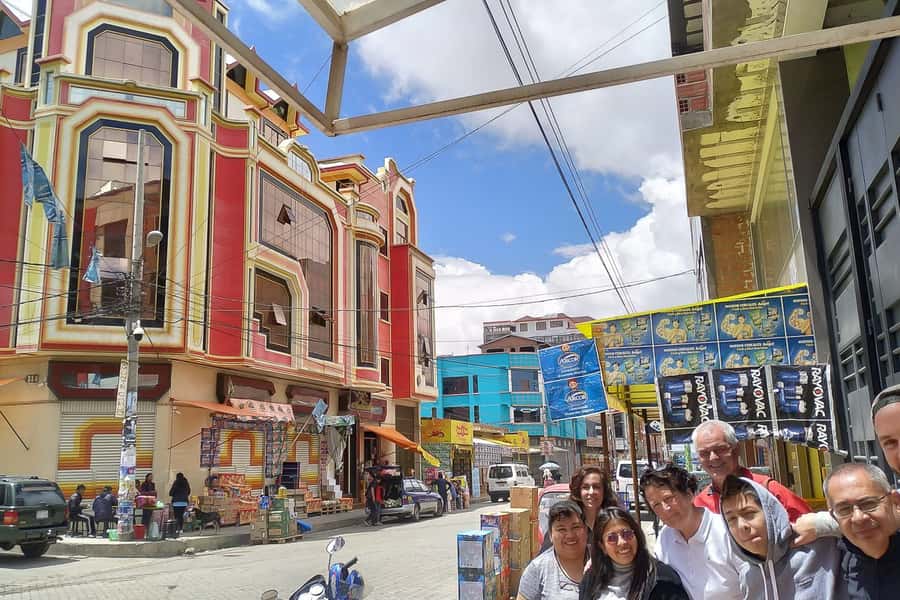
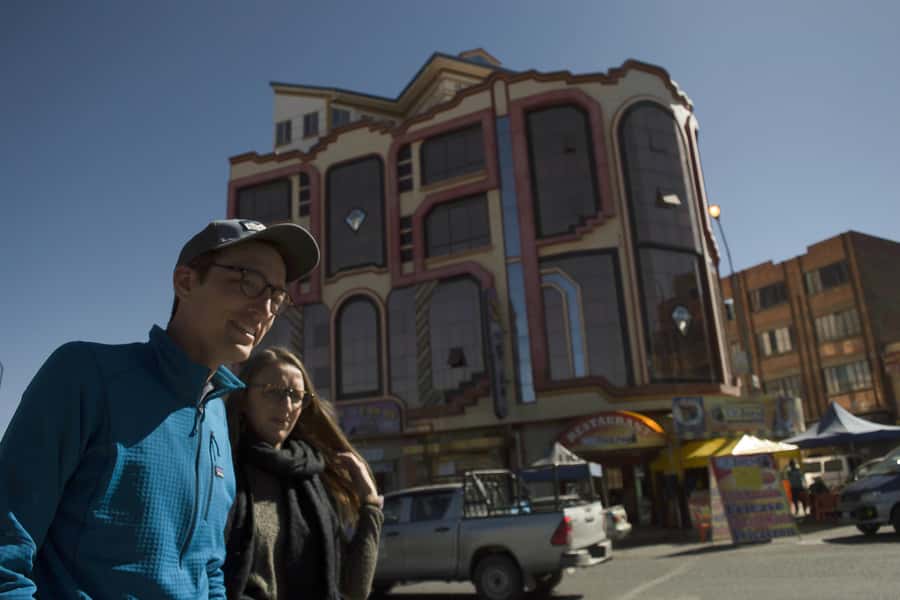
A cholet is more than an unusually painted mansion. It is a public display of money, family success, Andean identity, and personal taste. The buildings combine references to ancient Andean civilization with modern textiles and highly decorative designs. The result can look futuristic, theatrical, and unapologetically grand.
This tour gives you a way to read those buildings instead of simply photographing them. Your guide explains how bourgeois residents use cholets for luxurious parties and as a sign of social and financial progress. That context matters because the architecture is easy to dismiss as kitsch if you do not understand what it represents to the people who commission and use it.
You may also hear about architect Freddy Mamani, who is described on the tour as the first major designer of these cholets. His work helped shape the colorful style associated with El Alto. The buildings are not presented as old monuments. They are modern expressions of Andean culture, built for present-day families and businesses.
The word colorful is not enough to capture them. Expect strong geometric patterns, elaborate facades, unusual shapes, and details that continue inside. The architecture is intentionally eye-catching. It is meant to be noticed.
Meeting at the purple cable-car station
The meeting point is easy to identify once you know what to look for: meet at the doors of the Michelline cafe, next to the entrance to the purple cable-car station in central La Paz. The station is called Estacion Teleferico Morado. Your guide wears a red cap.
There is no hotel pickup or drop-off, so allow enough time to reach the meeting point. This arrangement keeps the price modest, but it also means you need to handle the first part of the outing yourself. If you are carrying luggage, make other arrangements before arriving. Large bags and luggage are not allowed on the tour.
The guide is important here because the outing depends on more than transport. Past guides have included Amara, José, Denise, Chris, Remberto, and Daniel. Amara was praised for explaining the history and traditions of the buildings. José gave a broad introduction to La Paz and El Alto, while Denise handled detailed questions about architecture and urban planning in clear English.
Remberto also explained Freddy Mamani and the origins of the cholet style. Those details suggest that the tour can work well for visitors who want more than a quick photo stop. Still, guide quality can vary from one departure to another, as it does on any walking tour.
Riding the teleférico above La Paz
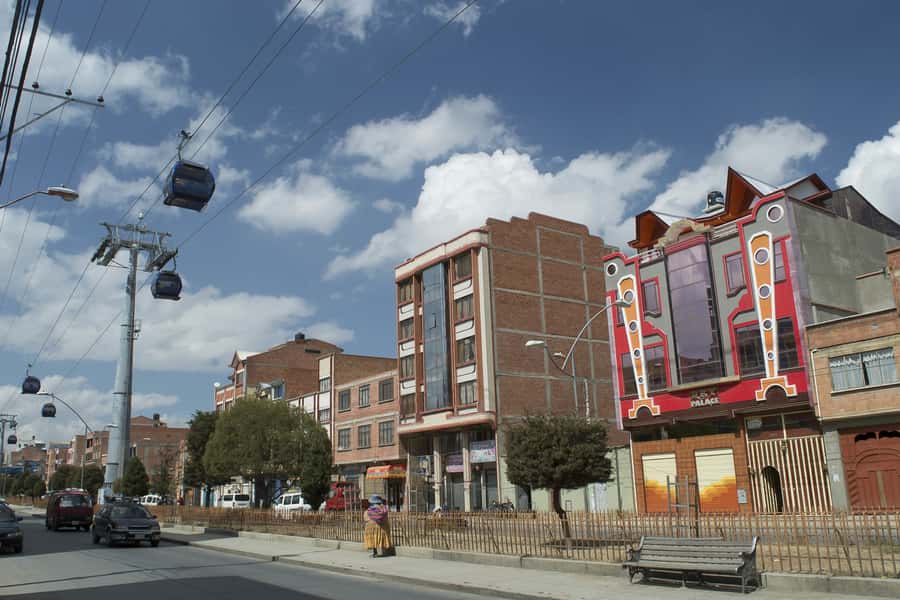
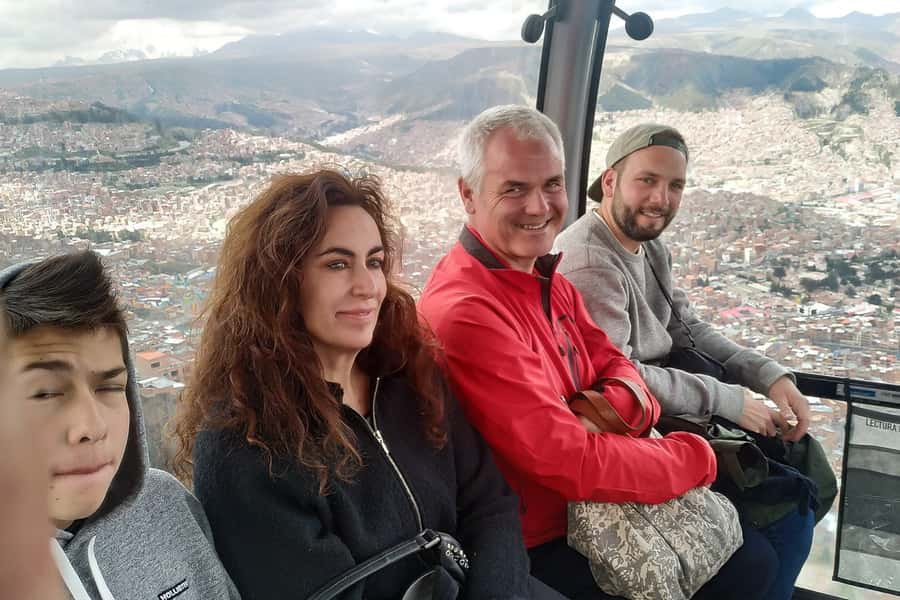
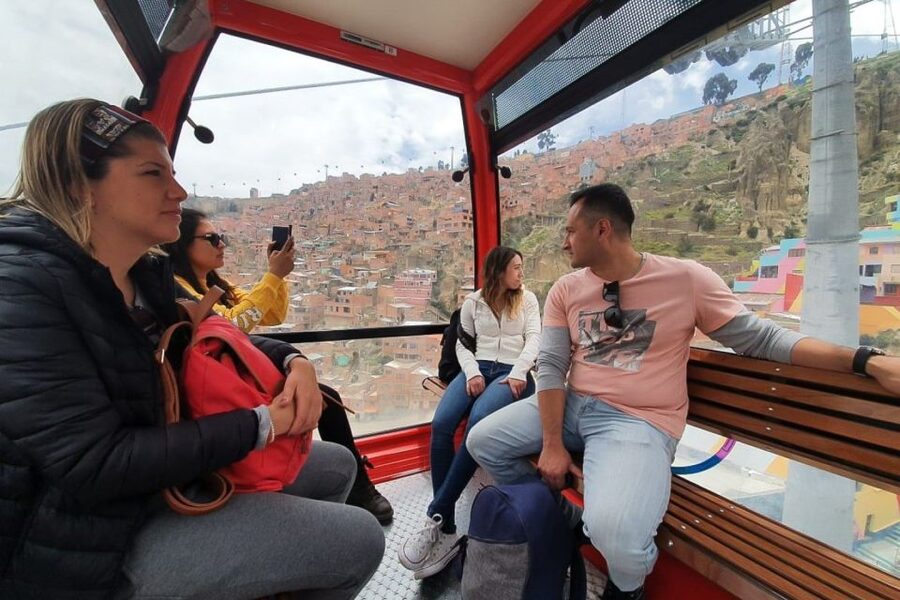
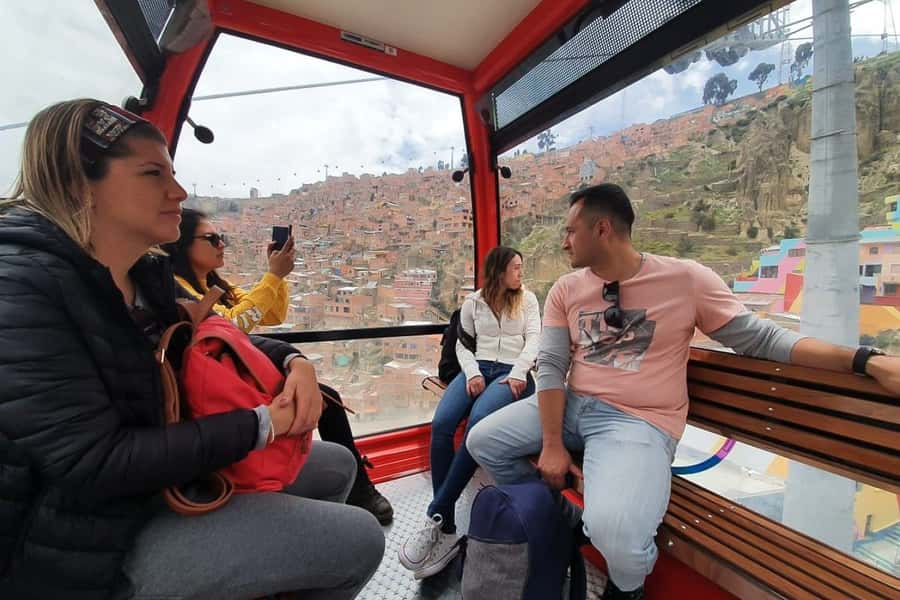
The cable-car ride is not just a practical way to reach El Alto. It gives you a useful visual introduction to the city. As the car rises, you pass over different parts of La Paz and gain a sense of how the city stretches up the surrounding slopes and toward the high plateau.
The ride also helps connect La Paz and El Alto in your mind. On a street-level visit, the two cities can feel separate. From the cable car, you can see how the urban area changes as you move upward. A visitor praised this as an excellent way to see the city and its surroundings.
You are also shown how to use the teleférico. That is valuable if you are unfamiliar with La Paz’s cable-car system. The tour turns a local transport method into part of the cultural lesson rather than treating it as a simple transfer.
Keep your expectations practical. The cable car is one section of a three-hour walking tour, not a long scenic ride with a dedicated viewing platform. Its value comes from the combination of movement, orientation, and access to a less familiar part of the city.
Walking through El Alto’s unusual streets
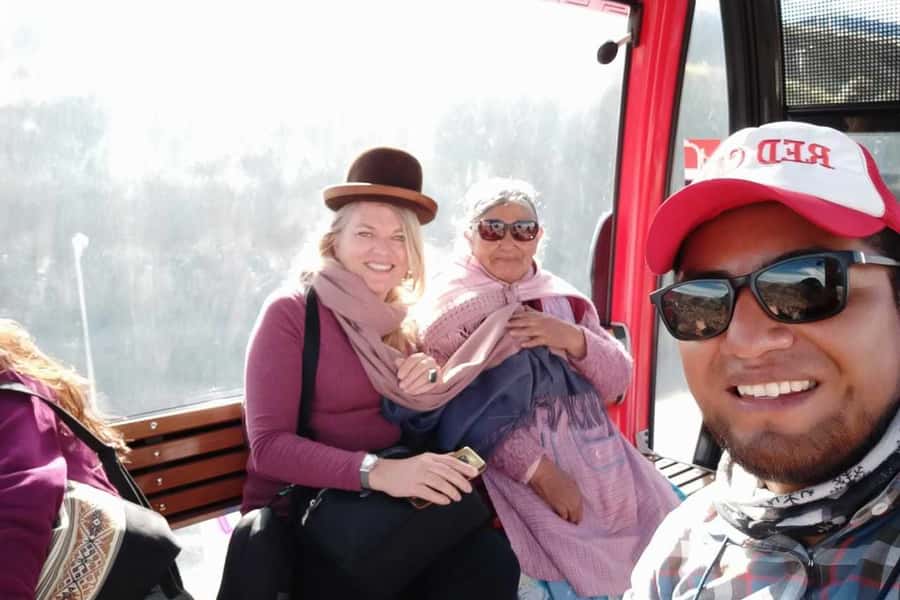
Once in El Alto, the focus shifts to the architecture and the stories behind it. You look at luxurious mansions, learn about their owners, and consider why families invest so heavily in buildings that make such a public statement.
This part of the tour gets you away from the standard La Paz route. El Alto is specifically presented as an area unknown to many tourists, so you are not simply moving between the city’s best-known sights. You see a place shaped by contemporary Andean ambition and local traditions.
That difference is the reason to book this tour. If you want colonial churches, museums, or classic city viewpoints, this is not the right half-day. If you want to understand a modern side of Bolivia that is often missed, the route offers something more distinctive.
The pace deserves attention. This is a walking tour at high altitude, and you should not treat the three-hour duration as effortless. Take your time, drink at your normal pace, and tell the guide if you need to rest. The tour is not recommended for people with limited mobility, and uneven walking or extended time on your feet may be difficult.
Entering a cholet and seeing the inside
The strongest feature is the interior visit. From the outside, a cholet can seem like a single oversized facade. Entering one shows how the decorative approach continues through the building.
You get to see the designs throughout the interior rather than stopping at an explanation on the pavement. This makes the visit more useful for anyone interested in architecture, decoration, or urban planning. Maria, who has a particular interest in architecture and urban planning, found the explanations detailed enough for serious curiosity rather than just a casual introduction.
The interior also helps explain the social purpose of the buildings. These are linked to wealth, family celebrations, and luxurious parties. Their grand style is not accidental. It reflects how owners want to present success and Andean pride.
Access to a private or working building can never be treated as guaranteed beyond the tour arrangement itself, but entering a cholet is a stated part of this experience. That is the feature that separates it from a simple architecture walk. You are not only looking at a striking exterior; you are seeing how the idea carries into the rooms and shared spaces.
What the guide adds to the buildings
A good guide turns visual overload into a story. Without explanation, you may see bright colors, dramatic angles, and decorative motifs without understanding the social choices behind them. The guide connects the buildings to Andean civilization, textile traditions, business success, and local customs.
The strongest guide comments focus on El Alto itself, not just on individual mansions. José was praised for giving useful insight into the city and local culture. Chris answered questions about both El Alto and La Paz, making the tour feel broader than a single architectural theme.
English and Spanish are offered. Denise was specifically praised for excellent, easy-to-understand English and for answering detailed questions. Amara was described as full of information about the history and traditions of the area. Daniel was also praised for being friendly and well informed.
Those names give you a sense of the guide team’s strengths, but they do not guarantee a particular guide on your date. The key question is what you want from the outing. If you want technical architectural detail, make that clear early. If you are more interested in culture and city life, ask about the people and traditions behind the buildings.
Local snacks and the $25 value
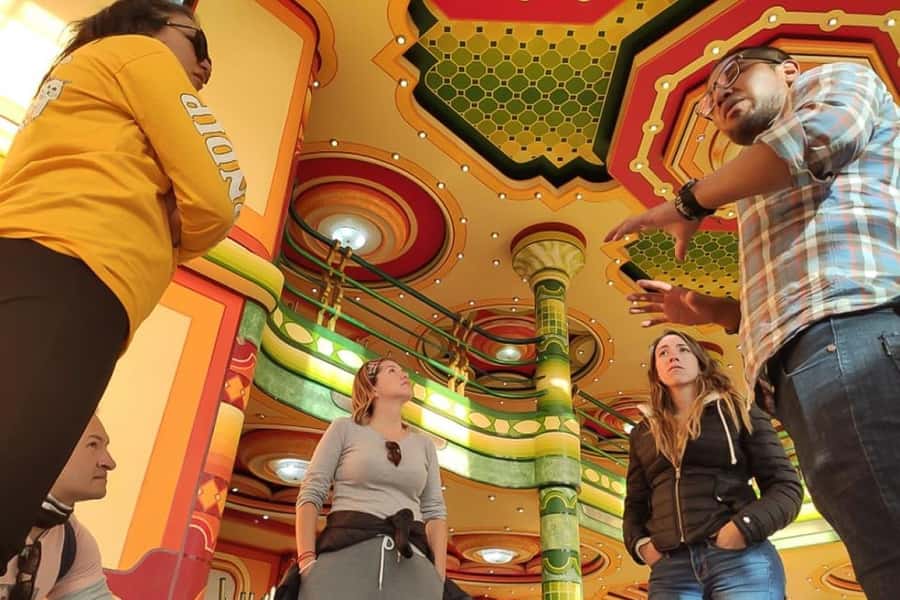
At $25 per person, the tour sits in a reasonable range for a guided three-hour outing that includes transportation, a bilingual guide, local snacks, cable-car travel, and entry into a cholet. The interior visit is especially important when judging the price. A street walk alone would offer less access and less structure.
The snacks are a small addition, not a meal. Think of them as part of the local experience rather than a reason to skip breakfast or lunch. The price does not include hotel pickup and drop-off, so factor in your own transport to the Michelline cafe.
The value is strongest when you want cultural explanation and do not feel comfortable finding El Alto and the cholets on your own. Remberto was praised for teaching visitors how to ride the teleférico, and one participant described the whole outing as something they could not have managed alone. That is a fair point: the practical route, language help, and local interpretation all have value.
The value is less clear for a solo participant on a quiet day. One person found the tour overpriced after being the only tourist that day. A small group can offer better social energy, while a one-person departure may give you more room for questions. The $25 price remains the same either way, so decide how much you value the guide’s access and context.
Weather, footwear, and altitude
La Paz weather can change quickly. Bring a rain jacket even if the morning begins dry, and wear clothing that can handle sun, wind, cold, and rain. Comfortable shoes are essential because the tour combines cable-car travel with walking.
Do not pack a large day bag or luggage. The restrictions are simple but important: large bags are not allowed. Bring only what you need for a three-hour outing.
High altitude is the main physical concern. The tour does not require athletic ability, but you should walk slowly and speak up when you need a break. If you have limited mobility, this experience is not a good match.
I would avoid scheduling it immediately after a long arrival day if you already feel tired or affected by altitude. The tour is most enjoyable when you can look up at the buildings, listen to the guide, and take your time rather than rushing to keep pace.
Who will enjoy this tour most
I recommend this outing to you if you enjoy modern architecture, city culture, design, or places that do not appear on every Bolivia postcard. It is also a strong choice if you want a guided introduction to El Alto rather than visiting only La Paz’s central sights.
Architecture students, urban-planning fans, photographers, and curious first-time visitors should find plenty to discuss. The tour works particularly well for anyone who wants to understand how buildings express wealth, identity, and family pride.
You may want to skip it if you are looking for a relaxed sightseeing ride with little walking. It is also a poor choice if you dislike bold decorative styles or prefer old monuments to modern buildings. The tour does not hide the theatrical side of the cholets; that is the point.
A 4.7 out of 5 rating from 46 ratings reflects strong overall satisfaction, with praise focused on the guides, cultural explanations, cable-car ride, and chance to enter a cholet. The one recurring concern in the supplied comments is value on a day with only one participant.
Should you book the El Alto cholet tour?
Book it if you want an unusual, culture-focused half-day and are ready for high-altitude walking. The combination of cable-car travel, El Alto street views, detailed guiding, and interior access makes this more than a quick architecture photo walk.
I would especially choose it early in a La Paz visit if you want a clearer sense of how the city and El Alto connect. Just wear good shoes, carry a rain jacket, leave your luggage behind, and arrive at the purple cable-car station with enough time to find the Michelline cafe.
Skip it if mobility is a concern, if you need hotel pickup, or if $25 feels high for a possible solo departure. For most visitors who value local context and unusual architecture, though, this is a thoughtful way to spend three hours beyond the usual tourist path.
FAQ
How much does the tour cost?
The tour costs $25 per person.
How long does the tour last?
The experience lasts three hours.
Where do I meet the guide?
Meet at the doors of the Michelline cafe, next to the entrance to the purple cable-car station in central La Paz. The station is Estacion Teleferico Morado, and the guide wears a red cap.
Is hotel pickup included?
No. Hotel pickup and drop-off are not included.
Is cable-car transportation included?
Yes. Transportation is included, and the tour includes a ride on the cable car toward El Alto.
Can I enter a cholet?
Yes. The tour includes the opportunity to enter one cholet and see its interior designs.
Which languages are available?
The tour is offered in English and Spanish with a live bilingual guide.
What does the price include?
It includes transportation, a bilingual guide, and local snacks.
What should I bring?
Bring comfortable shoes and weather-appropriate clothing. A rain jacket is recommended because La Paz weather can change quickly.
Can I bring luggage or a large bag?
No. Luggage and large bags are not allowed. The tour is also not recommended for people with limited mobility because it involves walking at high altitude.