
Reviewed · DEATH ROAD BIKING
La Paz | Death by Bike Route | Lunch
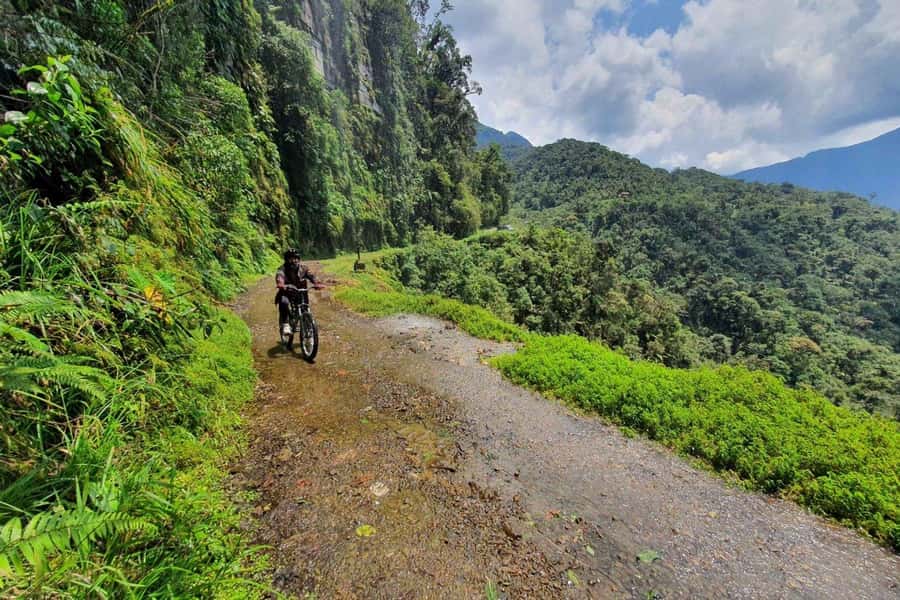
The road drops fast from the high Andes. This one-day ride takes you from La Cumbre at 4,700 meters down toward Coroico, with a full-suspension RMX Rocky Mountain bike, hydraulic brakes, lunch, and a small group of seven riders plus one guide. I like the solid bike setup and the close group size, which should make coaching and basic safety easier. I also like that a support van follows behind the group, with planned stops for water, photos, and bike checks.
The main concern is reliability at the meeting point. One verified booking ended with nobody arriving after a 30-minute wait and no contact, a serious problem if this is your last day in La Paz. You also pay Bs. 50 for the national park separately, and the early start, high altitude, long ride, and wet conditions can make this a demanding day.
In This Review
- Key points before you book
- From La Paz to La Cumbre at 4,700 meters
- Stage One: 22 kilometers to build confidence
- Stage Two: 10 kilometers on Death Road
- Stage Three: 32 kilometers and a waterfall stop
- The bike and safety setup
- What $140 really covers
- Timing, comfort, and who will enjoy it
- Should you book this Death Road tour?
- FAQ
- Where does the tour meet?
- How much does the tour cost?
- How long does the activity last?
- How far do you ride?
- What kind of bicycle is provided?
- Is protective equipment included?
- Is lunch included?
- Are snacks and water provided?
- Do I need to pay anything extra?
- What languages does the guide speak?
- Can I cancel for a refund?
Key points before you book
- 64 kilometers of riding: The route includes 22 kilometers on paved asphalt, 10 kilometers on Death Road, and about 32 kilometers in the final stage.
- A proper mountain bike: The advertised RMX Rocky Mountain has full suspension and hydraulic disc brakes, a useful setup for rougher riding.
- Small groups: Seven riders and one guide allow the group to stay together more easily.
- Support follows behind: A security van carries the group’s backup and gives you a reassuring presence on the route.
- Lunch comes at the finish: At Yolosa, you get access to a hotel with showers and a swimming pool before lunch.
- Bring extra cash: The Bs. 50 park entrance fee and drinks at lunch are not included.
From La Paz to La Cumbre at 4,700 meters
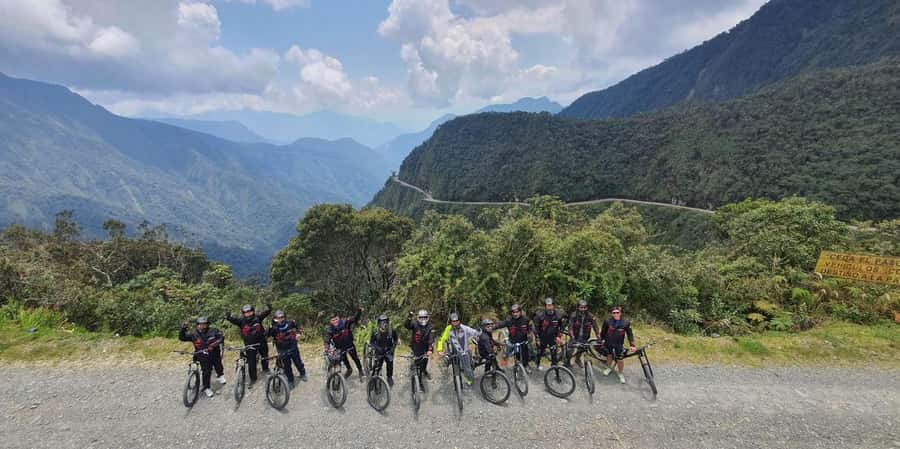
The day begins early at the Vicuña Travel office, office 144, in La Paz. From there, transport takes about one hour to La Cumbre, the high starting point of the ride.
That first view and the change in altitude set the tone. You begin high in the Andes and ride downhill toward the warmer valleys near Coroico. At 4,700 meters, the air is thin, so this is not the place to treat the opening minutes as a casual warm-up. You should arrive rested and pay attention to how you feel before setting off.
The tour provides round-trip transport, so you do not need to arrange a separate vehicle for the route. A bilingual Spanish- and English-speaking guide leads the group. When booking, you are asked to leave a WhatsApp number, which is especially important for receiving practical meeting information.
The tour includes a helmet, gloves, jacket, and pants. That clothing matters because the day can shift from cold high-altitude conditions to wetter, warmer valley weather. You still need to dress sensibly underneath the supplied gear, but the provided kit saves you from packing a complete downhill outfit.
You can also read our reviews of more cycling tours in La Paz
Stage One: 22 kilometers to build confidence
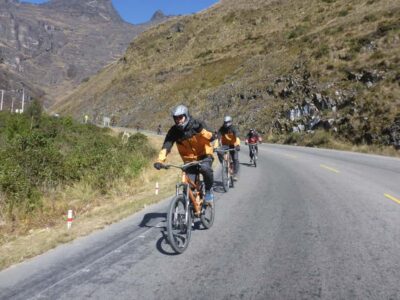
The first section covers 22 kilometers on paved asphalt. After about 45 minutes, the group reaches a police checkpoint where each rider pays Bs. 50 to enter the national park.
This stage has a useful purpose. You can get used to the bike, test the hydraulic brakes, and find a comfortable rhythm before reaching the more serious section. If you have not ridden a full-suspension mountain bike recently, this is the time to learn how the controls feel.
The support van stays behind the group. The guide also schedules stops for water, photographs, and bike checks. I like this approach because it gives you room to settle in rather than forcing you straight into the roughest part of the route.
The paved opening is also a practical safety feature. It lets the guide see how the group rides before everyone reaches the compact section of Death Road. You should use the time to ask questions, adjust your gloves or jacket, and make sure your brakes and seat feel right.
Stage Two: 10 kilometers on Death Road
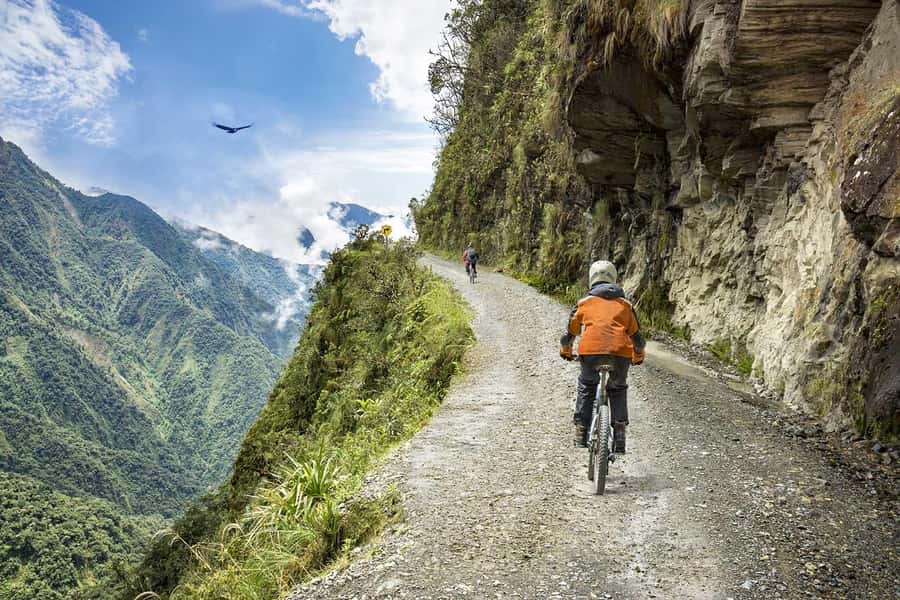
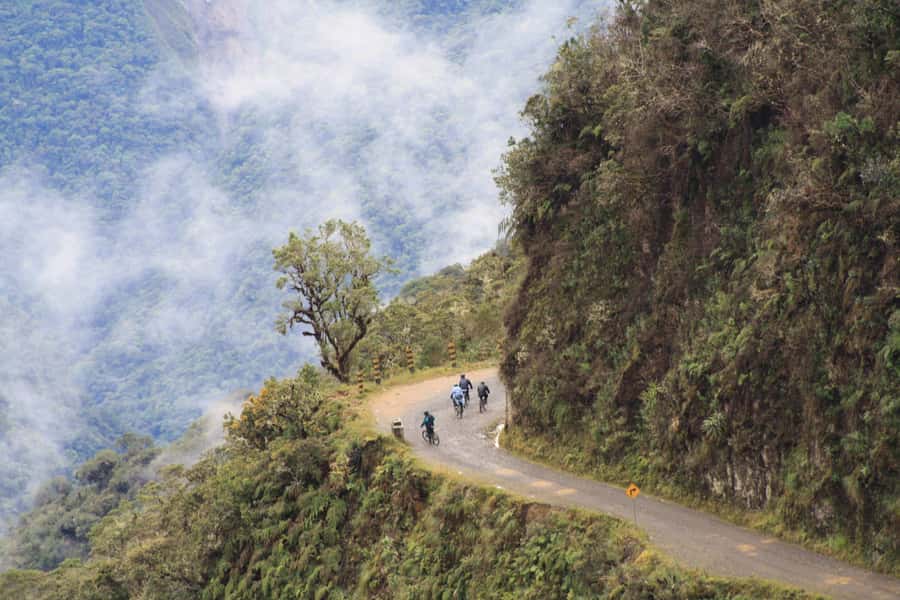
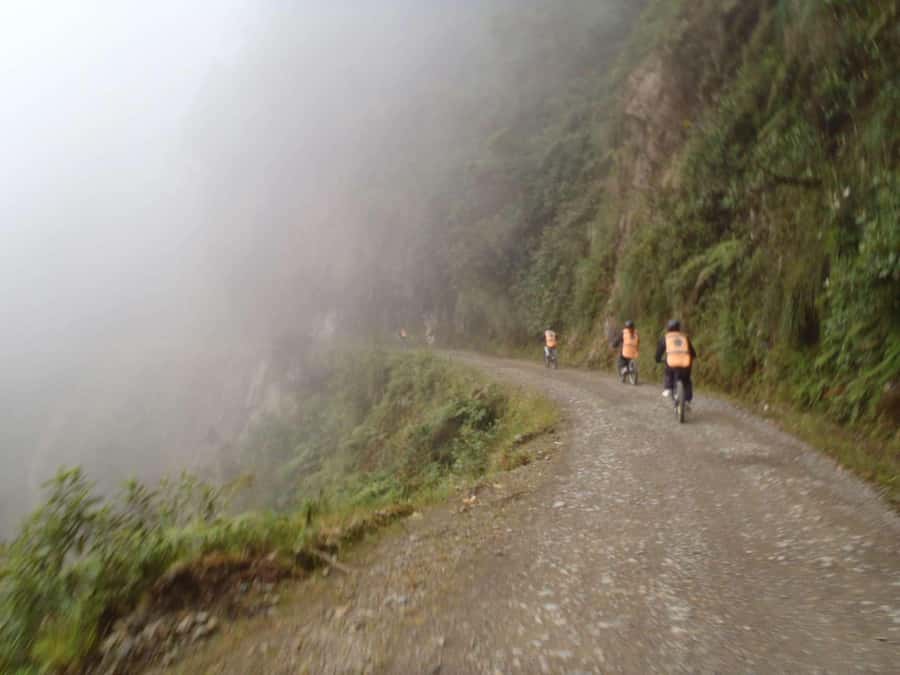
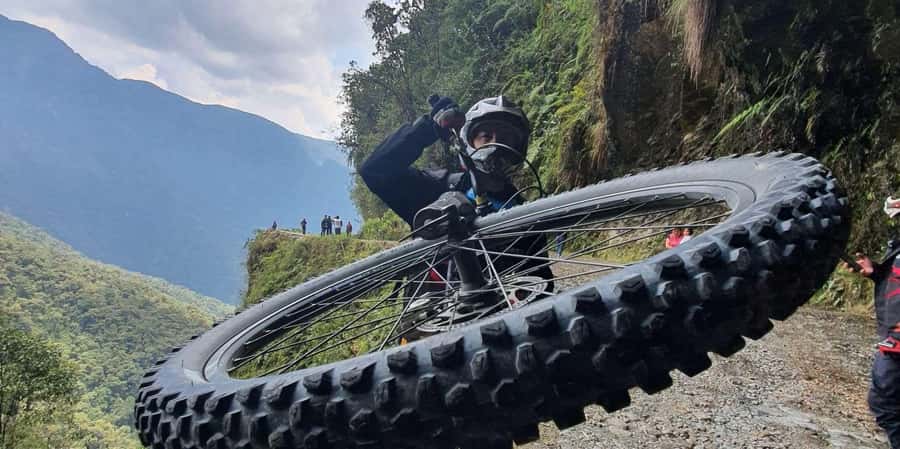
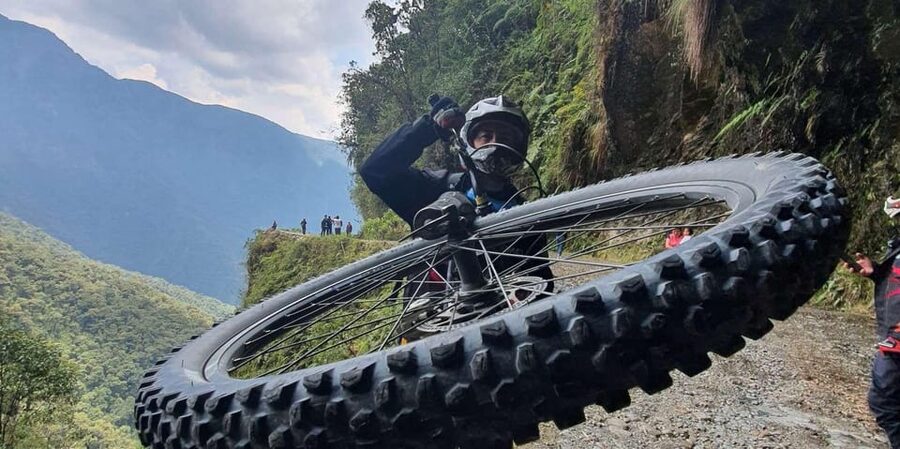
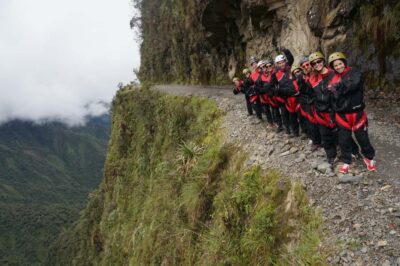
The second stage is about 10 kilometers on Death Road itself. The group rides together in a compact formation, with safety taking priority over speed.
That instruction matters. This is not presented as a free-for-all race, and you should not expect to set your own pace far ahead of the guide. Staying together helps the guide monitor the group and keeps the support arrangements simpler.
The route name creates plenty of drama, but the practical issue is your riding style. Follow the guide’s instructions, keep control of your speed, and leave room around the rider ahead. The supplied full-suspension bike and hydraulic disc brakes give you better equipment than a basic rental, but no bike removes the need for care.
There is also a snack stop during this section. Chocolate, fruit, and other small foods are provided, along with water. These breaks are welcome after the cold start and the concentration required on the route. The snacks are not a full meal, so you should eat breakfast before leaving La Paz.
Weather can change the mood of this stage. Giacomo from Italy described his November ride as especially beautiful because the day was rainy and cloudy, and he gave particular praise to the accompanying staff. That is a useful reminder that wet weather may add atmosphere, but it can also make riding conditions less comfortable. A waterproof layer of your own is sensible, even though a jacket is included.
Stage Three: 32 kilometers and a waterfall stop
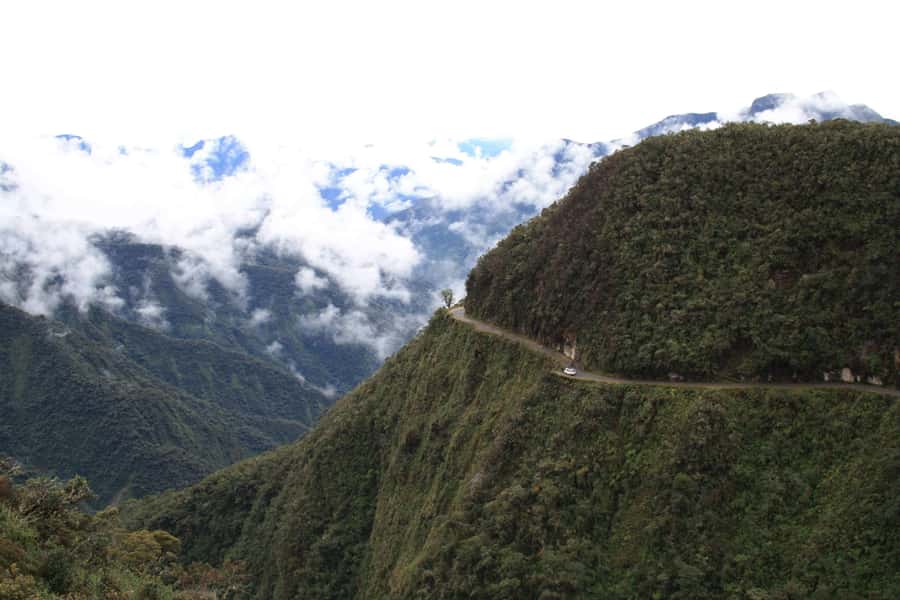
The final stage covers about 32 kilometers and begins with a splash through a waterfall. That makes for a memorable transition after the main Death Road section, though you should expect to get wet.
This is the longest stage by distance. By this point, you have already spent time riding downhill, concentrating on the road, and managing changing temperatures. The supplied jacket and pants help, but you should not assume that every part of your clothing will stay dry.
The route finishes at Yolosa. The day does not end beside the road with a quick snack and a rushed transfer. Instead, you go to a hotel with showers and a swimming pool, then have lunch. I like this finish because it gives you a proper chance to clean up and recover after the ride.
The pool is included as part of the hotel stop, according to the tour details, but extra drinks at lunch are not included. You should budget for those separately. The provided lunch is one of the stronger parts of the package, since you are likely to want a full meal after roughly 64 kilometers of riding.
The bike and safety setup
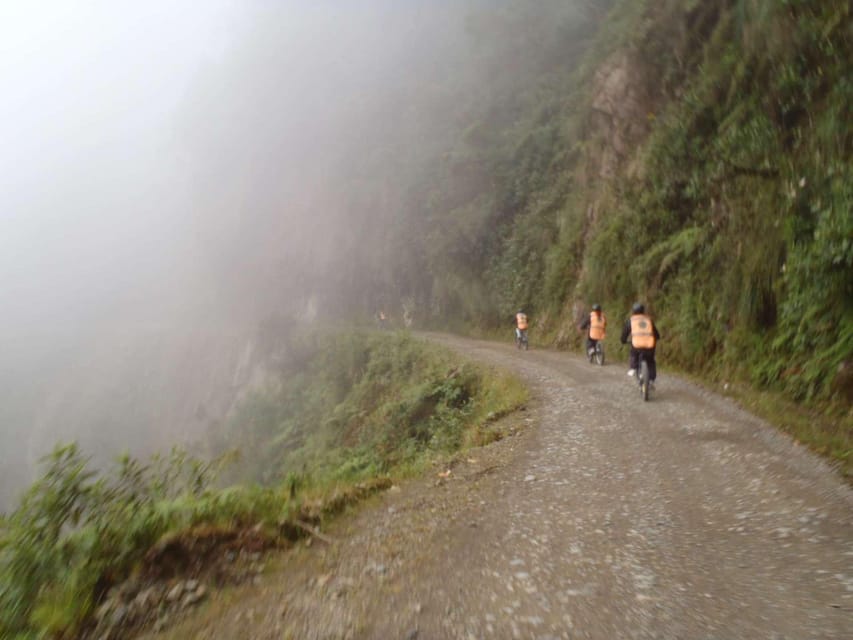
The bike is described as a full-suspension RMX Rocky Mountain with hydraulic disc brakes. Those are meaningful details, not just sales language. Full suspension can make rougher sections less punishing, while hydraulic brakes offer controlled braking with less hand effort than many basic cable systems.
The tour also supplies a full helmet, gloves, jacket, and pants. You do not need to rent those items separately, which adds value to the $140 price. Still, ask to check the fit before leaving La Cumbre. A helmet that shifts or gloves that pinch will bother you for hours.
The small group is another plus. With seven riders and one guide, the group is large enough to share the cost of transport and support but small enough for the guide to keep an eye on everyone. The compact formation on Death Road reinforces that safety-first approach.
The security van follows behind the group throughout the ride. It provides backup and means you are not left entirely on your own if the group needs to stop. The information does not specify mechanical support or medical services, so I would not assume more than the stated following van, guide, and bike checks.
A few more La Paz tours and experiences worth a look
What $140 really covers
At $140 per person, this is not the cheapest possible way to ride Death Road. But the price includes the parts that can add up quickly: round-trip transport from La Paz, a bilingual guide, a full-suspension bike with hydraulic brakes, protective clothing, helmet, gloves, water, snacks, and lunch.
The hotel stop with showers and a swimming pool adds practical value. After a long descent, that is more useful than a simple roadside meal. You are paying for a complete day rather than only for bike hire.
The extra costs are clear. The national park entry ticket is Bs. 50 per person, and drinks during lunch are separate. Those are small additions compared with the tour price, but you should have Bolivian cash ready for the park checkpoint.
The lower rating of 3.4 from seven reviews is important. The positive experience described by Giacomo points to excellent staff and a memorable rainy day, while the one-star account reports a complete failure at the meeting point. That second issue is not a minor complaint. If you book, confirm the pickup details through WhatsApp before the morning of the ride and avoid scheduling the tour when you have no time left to recover from a missed departure.
Timing, comfort, and who will enjoy it
This is a full-day activity. The return to La Paz begins at about 5:00 p.m., using the new road rather than riding back. You should expect an early start and a late return, so leave your evening open.
The tour suits you best if you want an active day with a strong downhill focus and are comfortable following a guide’s instructions. The small group, support van, included protective gear, and scheduled breaks make it easier to manage than organizing the route alone.
It is less suitable if you want a relaxed sightseeing day, dislike wet clothing, or are not comfortable spending hours on a bicycle. The route covers about 64 kilometers, and the ride starts at 4,700 meters before descending through several stages. The package provides useful equipment, but it does not turn a demanding bike day into a gentle excursion.
You should also think about your schedule in La Paz. The meeting point is specific, and one booking failed because no one arrived and no contact was made. A WhatsApp confirmation is not a guarantee, but it is a sensible step. If you are using the tour on your final day, that reliability concern deserves extra weight.
Should you book this Death Road tour?
I would consider booking it if the confirmed departure is important to you and the operator responds clearly before the day begins. The bike quality, small group, support van, included clothing, snacks, and hotel lunch stop make $140 a reasonable price for a full-day package.
I would be cautious if you have a tight schedule or cannot tolerate a missed start. Confirm the office location, office 144 at Vicuña Travel, and the pickup details through WhatsApp. If you want Death Road with transport, a proper mountain bike, and a clean-up stop at Yolosa, this tour offers a useful package. If the company does not confirm promptly, I would choose a better-established option rather than gamble your only available morning.
FAQ
Where does the tour meet?
The meeting point is the Vicuña Travel office, office 144.
How much does the tour cost?
The price is $140 per person.
How long does the activity last?
It is a one-day tour. The return journey to La Paz begins at approximately 5:00 p.m.
How far do you ride?
The route covers about 64 kilometers in total: 22 kilometers on paved road, 10 kilometers on Death Road, and about 32 kilometers in the final stage.
What kind of bicycle is provided?
The tour provides a full-suspension RMX Rocky Mountain bicycle with hydraulic disc brakes.
Is protective equipment included?
Yes. A full helmet, gloves, jacket, and pants are included.
Is lunch included?
Yes. Lunch is served after the ride at a hotel in Yolosa. Extra drinks during lunch are not included.
Are snacks and water provided?
Yes. Water and appetizers are included, with snacks such as chocolate and fruit during the ride.
Do I need to pay anything extra?
You must pay Bs. 50 for the national park entrance ticket. Drinks during lunch also cost extra.
What languages does the guide speak?
The guide service is available in Spanish and English.
Can I cancel for a refund?
You can cancel up to 24 hours in advance for a full refund. The tour also allows you to reserve now and pay later.
More Lunch Experiences in La Paz
More Cycling Tours in La Paz
More Tour Reviews in La Paz

Not for you? Here's more nearby things to do in La Paz we have reviewed

Death Road Biking, compared
 ★ 4.9La Paz: Mountain Bike Down the World’s Most Dangerous RoadFrom $145386 reviews
 ★ 4.7From La Paz: The World’s Most Dangerous Road Biking TourFrom $12968 reviews
 ★ 5.0World’s Most Dangerous Road “Private” Mountain Biking TripFrom $1497 reviews
 ★ 4.7From La Paz: 3-Day Biking Tour Death Road & Uyuni Salt FlatsFrom $4294 reviews
Browse the lists this tour appears in