
Reviewed · UYUNI SALT FLATS TOURS
La Paz: 5-Day Uyuni Salt Flats by Bus
Bolivia saves its strangest colors for the high desert. This five-day trip links La Paz to the Uyuni Salt Flats, flamingo-filled lagoons, volcanoes, geysers, and hot springs without making you arrange several separate transfers. I like the hotel pickup and reclining-seat night bus, and I love that the route goes far beyond the salt flat itself to the remote lagoons and Licancabur Volcano.
The main trade-off is comfort. You spend long hours in a bus and an older Toyota 4×4 on rough roads, then sleep in basic shared lodges where electricity, hot water, and heating may be limited. For $486 per person, the package offers strong value if you want big scenery, included meals, and a tightly managed route more than polished hotels.
In This Review
- Five things to know before you book
- The real shape of the journey: two buses and a highland 4×4
- Night 1: La Paz to Uyuni in a reclining-seat bus
- Day 2: Train Cemetery, Colchani, and Incahuasi Island
- Day 3: Five lagoons, flamingos, and Laguna Colorada
- Day 4: Geysers, hot springs, Dali Desert, and Green Lagoon
- Day 5: La Paz arrival and hotel drop-off
- What $486 buys you in practical terms
- Guides, photographers, and rough-road driving
- Cold rooms and simple facilities
- Who should book this five-day route?
- Should you book it?
- FAQ
- How long does the tour last?
- What transport is included?
- Are meals and water included?
- What accommodation is provided?
- What extra costs should I plan for?
- What should I bring?
Five things to know before you book
- Two night buses make the route possible: You travel from La Paz to Uyuni and back in reclining seats with an onboard bathroom.
- The salt flat is only the beginning: Incahuasi Island, five highland lagoons, geysers, Polques hot springs, Dali Desert, and Green Lagoon fill the following days.
- The second night is the rough one: Laguna Colorada accommodation is basic, cold, and not built for comfort, though warm blankets are provided.
- Guides and drivers earn much of the praise: Guides including Johnny, Ronaldo, Dolphin, and Adalid have been praised for calm service, good photography, and careful driving.
- Budget for extras: Entrance fees cost BOB 200 per person, while a private room costs $35 per night per person. No single room is available.
The real shape of the journey: two buses and a highland 4×4
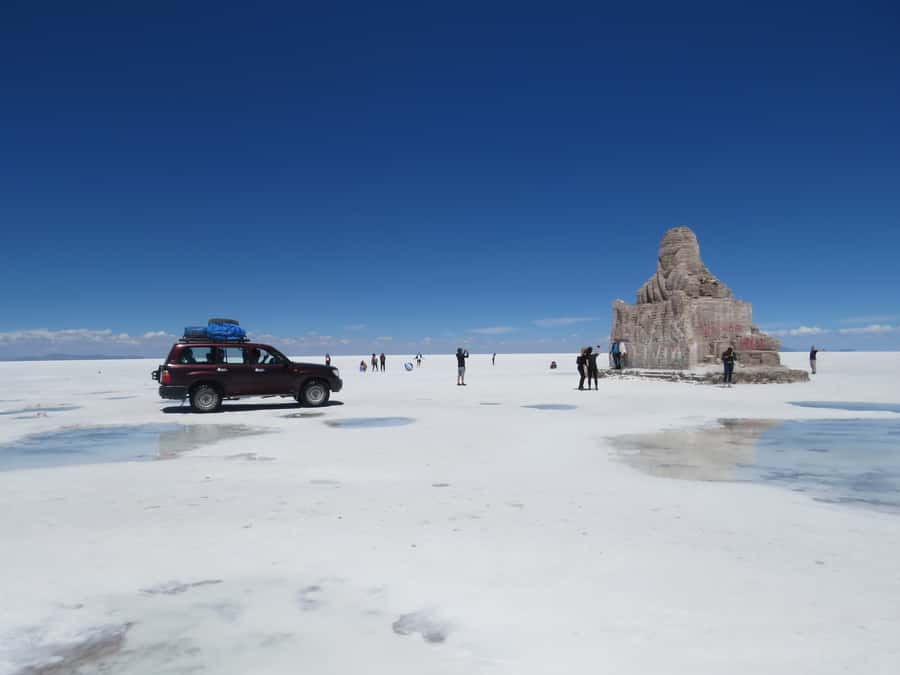
Despite the title, the main sightseeing is done in a 4×4 vehicle, not a bus. The bus handles the long intercity legs, while a shared vehicle takes you across the salt flat and the rough desert roads toward Chilean-border country.
Your group is advertised as a small group of up to 10 people. That size matters here. You share meals, vehicle stops, and long drives, so a small group makes the days easier to manage and gives you more room for conversation and photographs.
The tour is offered in English and Spanish. Pickup begins at your La Paz hotel, so you do not need to find the bus station alone. Keep your passport, warm clothing, and essential items in a small day bag rather than buried in your main luggage.
A few more Uyuni Salt Flat tours and experiences worth a look
Night 1: La Paz to Uyuni in a reclining-seat bus
The first day is mostly a transfer. You are collected from your hotel and taken to the bus station for the overnight ride to Uyuni, which takes about nine hours.
The selected bus has reclining seats and a bathroom. That is a useful step up from a standard coach, especially since you arrive early and begin the sightseeing program soon after breakfast.
Still, do not mistake a reclining seat for a hotel bed. You may sleep well, or you may not. I would keep earplugs, a warm layer, water, and any medicine you need within reach.
The long bus ride is a fair price for reaching Uyuni without paying for a separate flight. It also keeps the total cost down, but it means the first and last parts of the trip are travel days rather than sightseeing days.
Day 2: Train Cemetery, Colchani, and Incahuasi Island
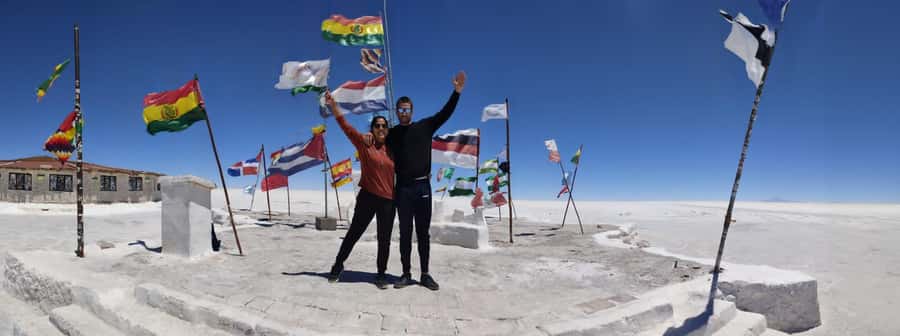
After arriving in Uyuni, you are taken to the local offices for breakfast before the 4×4 trip begins. The handoff is organized around a short wait in town, and the practical setup has included time at Hotel Atipax for breakfast, a shower, and a place to rest before or after the desert route.
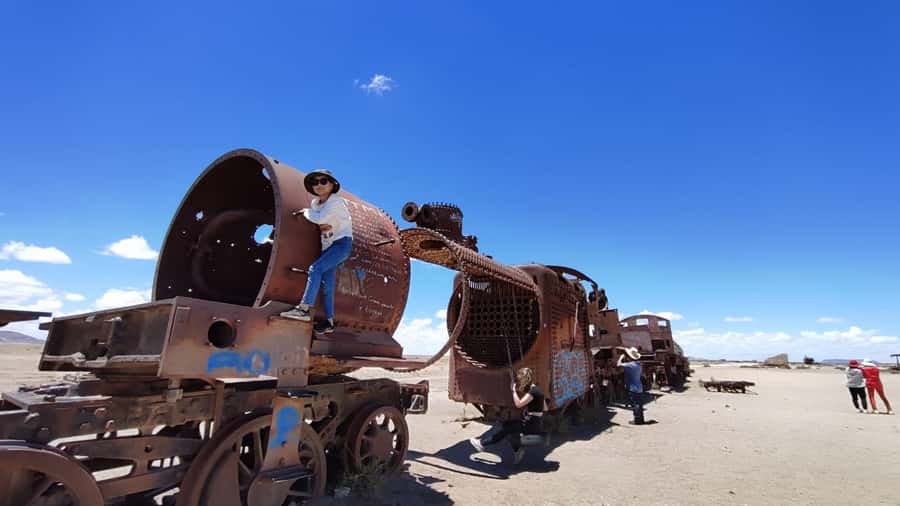
The first stop is the Train Cemetery, where old locomotives sit rusting in the open desert. It is a theatrical stop, but not a long one. The wind, rust, and empty ground make it a good opening scene for the journey.
At Colchani, you see how local workers process edible salt by hand. This is one of the better stops for understanding that the salar is not only a photo backdrop; it also supports local work and trade.
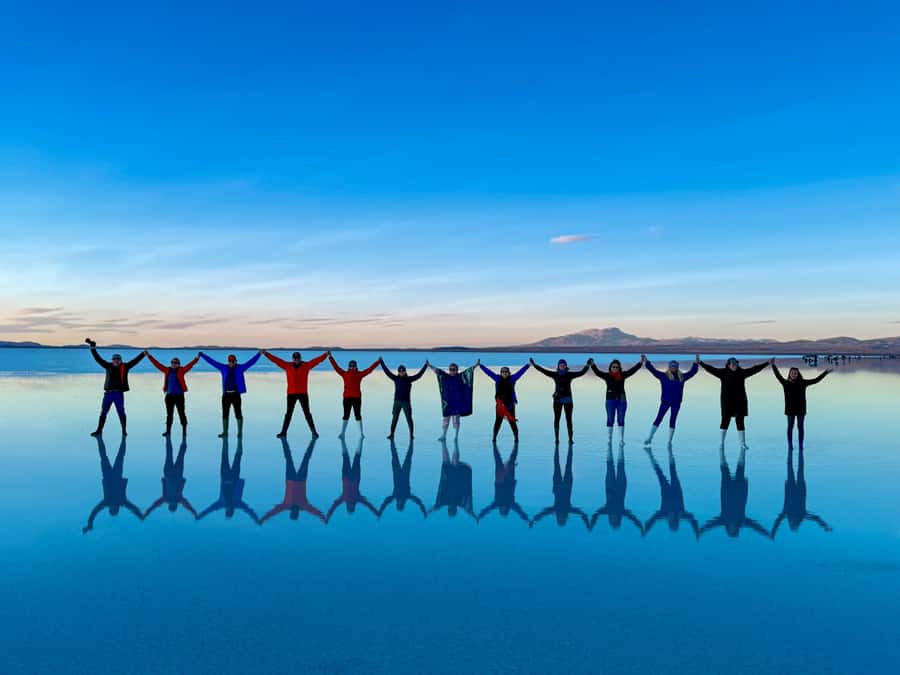
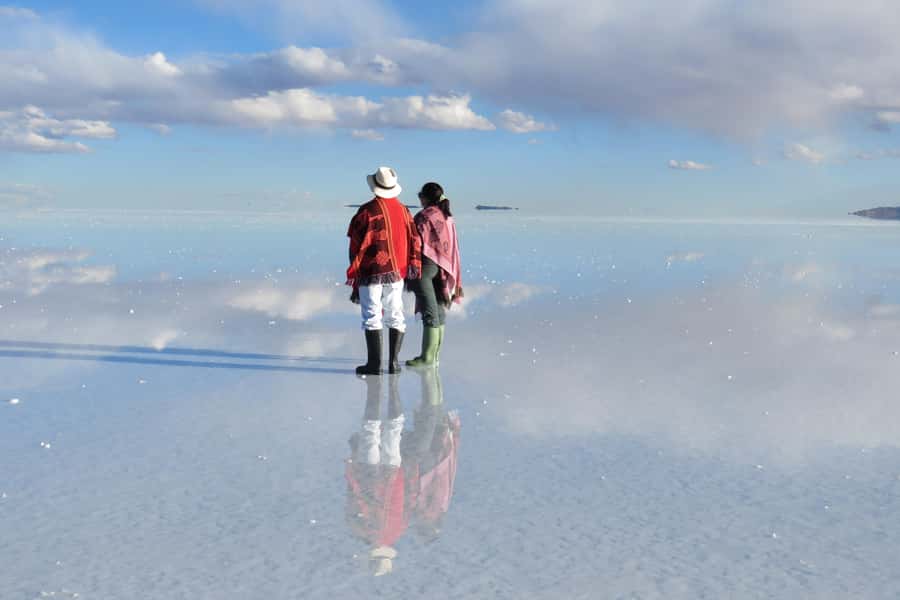
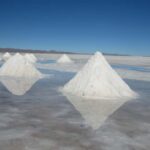
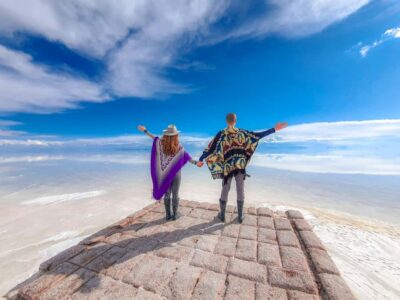
From there, the vehicle crosses the salt crust to the salt mounds and the center of Salar de Uyuni. The white surface can look almost endless, with the horizon hard to read and the sky seeming to meet the ground.
Incahuasi Island gives the day a different shape. This volcanic-rock formation rises from the salt flat and is covered with giant cacti. The contrast between dark rock, green cactus, and white salt is one of the strongest visual moments on the route.
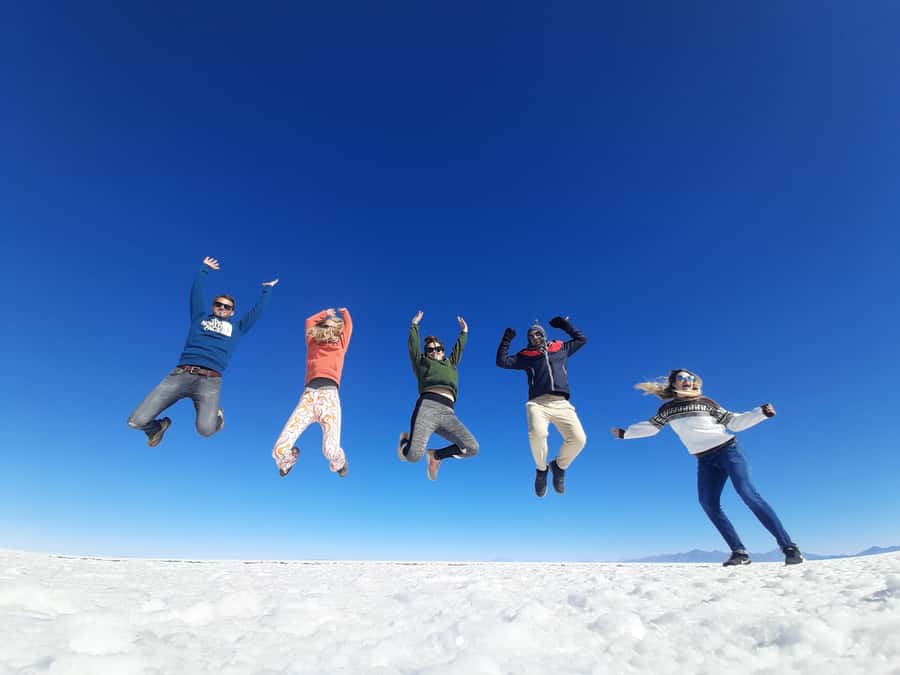
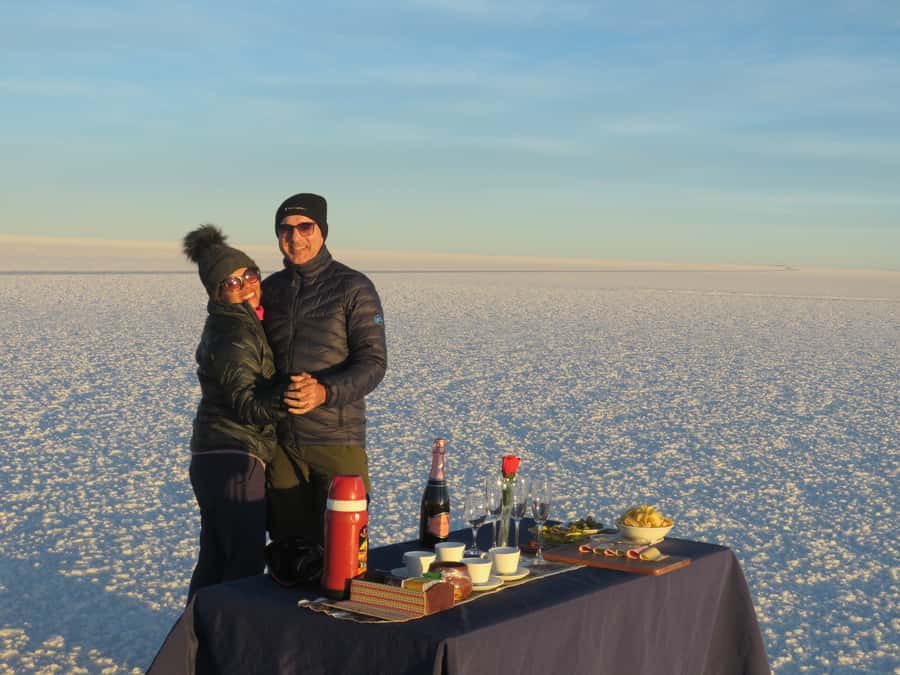
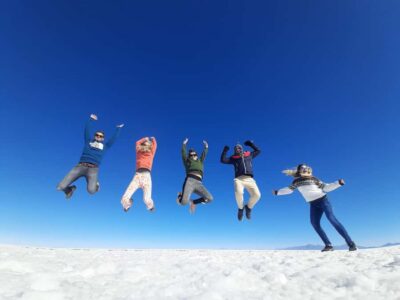
Your guide usually helps with perspective photographs on the flat, where the lack of visual scale makes playful images possible. Bring extra batteries and plenty of storage, since you will take more pictures than you expect.
The day ends in San Juan, a settlement beside the salar. You sleep in a shared room and eat a local dinner. Conditions here are described as comfortable compared with the next night, but the room is still shared rather than private unless you pay for an upgrade.
Day 3: Five lagoons, flamingos, and Laguna Colorada
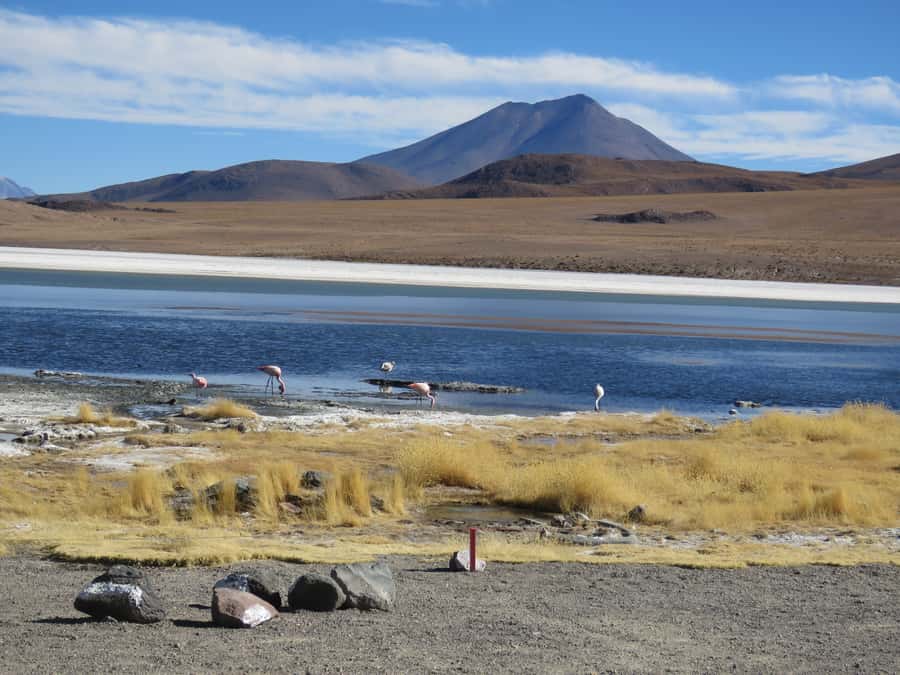
After breakfast, the route turns southwest toward a string of highland lagoons: Cañapa, Stink, Chiarkota, Honda, and Ramadita. The stops are not minor add-ons. For many people, they become the most memorable part of the trip.
The lagoons bring wildlife into an otherwise severe setting. You can see large groups of flamingos, along with Andean geese and seagulls. Snowy volcanoes frame the water, and each lagoon has its own color and shape.
The road between stops is long and rough. Older Toyota Cruisers are used for the route, and the ride can be bumpy, especially from the back row where legroom may be tight. There is no air conditioning, though the cold highland weather means you are more likely to want another warm layer than a cool breeze.
The final major stop is Laguna Colorada, known for its red-toned water. The color comes from the mineral and biological conditions of the lagoon, but you do not need a science lecture to appreciate the effect: red water, pale ground, flamingos, and volcanoes make this feel far removed from ordinary sightseeing.
You spend the night in a basic room with warm blankets. This is the point where expectations matter most. Some accommodation has a heater in the dining room, but sleeping areas can be very cold, and electricity may only run for a few hours.
Hot water, towels, soap, and toilet paper may not be reliably available. I would pack a small wash kit and treat this night as a high-altitude camp with beds, not as a normal hotel stay.
After dinner, look outside for the stars. The remote setting and limited artificial light can make the Milky Way unusually clear. Bring a hat and gloves even if the daytime sun feels strong.
Day 4: Geysers, hot springs, Dali Desert, and Green Lagoon
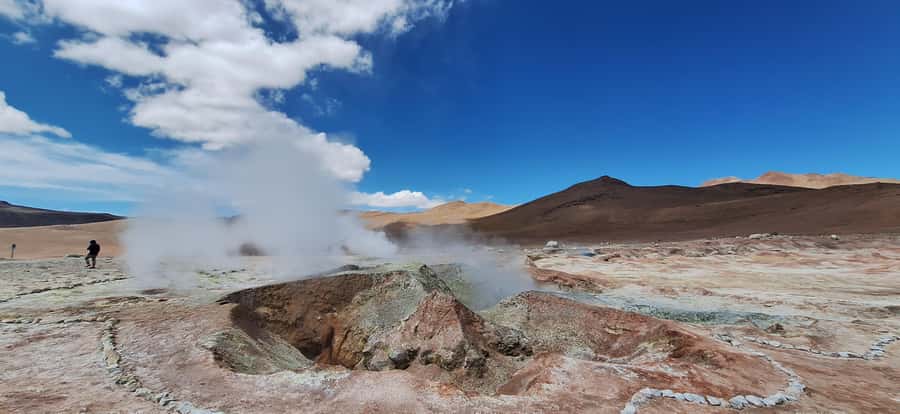
Day four begins before sunrise. You head to the geysers known as Morning Sun, arriving in time for the first rays to hit the fumaroles and volcanic ground.
Steam rises from vents while nearby volcanoes release small amounts of fumarolic activity. The early hour is part of the appeal, but it also adds another cold start after a chilly night.
The route climbs to its highest point at about 5,000 meters above sea level. That elevation is a serious practical detail. You should have warm clothing ready, move at a steady pace, and pay attention to how you feel rather than rushing from one photo stop to the next.
You return toward Laguna Colorada before stopping at the Stone Tree, a rock formation shaped by wind erosion. From there, the vehicle crosses the high plateau to Polques hot springs.
The hot springs are a welcome change after the cold morning and rough roads. Bring a swimsuit and towel if you plan to bathe, and keep some cash in Bolivianos because site fees can be separate from the tour price.
Next comes the Dali Desert, named for rock forms and colors that recall the strange scenery of a surrealist painting. It is a broad, open stretch rather than a single attraction, so the appeal comes from the setting and the way the road passes between volcanic features.
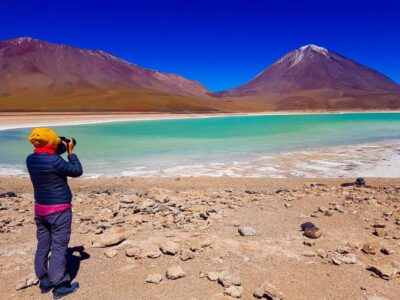
The final major stop is Green Lagoon, set below Licancabur Volcano. The volcano gives the lagoon a strong visual anchor and provides one of the trip’s clearest examples of how water, mineral color, and high-altitude geology shape this region.
You then travel back toward Uyuni, watching for Andean plants and animals along the way. Arrival is expected around 5 p.m., followed by a short break before the night bus to La Paz.
This makes for an extremely full day. You get a remarkable number of sights, but you also spend much of the day in the vehicle, followed by another overnight ride.
Day 5: La Paz arrival and hotel drop-off
The bus reaches La Paz at about 6 a.m. A driver meets you and takes you back to your hotel.
That final transfer is useful after an overnight bus. It means the service does not simply leave you at the station with luggage and no plan.
The return bus can run late. One reported delay lasted about three hours, so I would avoid booking a flight or a fixed appointment soon after the scheduled arrival.
What $486 buys you in practical terms
The price includes hotel pickup and drop-off, both bus tickets, two overnight bus rides, two nights in shared accommodation, a bilingual guide, meals and drinks listed in the schedule, snacks, and bottled water.
Breakfast, lunch, and dinner are included on the first sightseeing day in Uyuni and on the lagoon day. Day four includes breakfast and lunch before you return to Uyuni. That arrangement saves money and removes the need to search for food in remote areas.
The food is generally a strong part of the package. It is local and simple rather than restaurant dining, but it has been praised as better than expected. One dinner at the Laguna Colorada lodging was described as small and disappointing, so I would carry the included snacks for extra security.
The value is strongest when you count the transport. Two night buses, a multi-day 4×4 route, meals, water, and guides would cost more to arrange separately, even before adding the hotel transfers.
The main extra is BOB 200 per person for entrance fees. Site charges can also need clarification, especially for the hot springs, so ask what that amount covers before departure.
A private room costs $35 per night per person. There is no single-room option, so solo visitors should expect to share unless they pay for a private room that is available for the night.
Guides, photographers, and rough-road driving
The guide can shape this trip more than any single stop. The service includes an English- and Spanish-speaking guide who also helps with photography and keeps the group together across a large, exposed area.
Guide assignments vary. Johnny has been praised for being calm, funny, prepared, and well-informed. Ronaldo has been described as friendly, attentive, and good at keeping everyone together, while Adalid has been praised for professional guidance throughout the route.
Driver quality matters just as much. Dolphin has been singled out for smooth driving and a calm manner despite difficult roads. That is not a small benefit when you spend hours bouncing across the high plateau.
You should also allow for variation. One guide was described as an excellent photographer but too focused on racing other vehicles and moving quickly between checkpoints. If you want more time at a viewpoint, ask politely and early.
Cold rooms and simple facilities
The two shared lodges are the biggest weakness for anyone who values comfort. San Juan may feel fairly comfortable, but the Laguna Colorada night can bring freezing temperatures, limited electricity, and no dependable hot shower.
Warm blankets are provided, and some dining rooms have heaters. Even so, I would pack thermal layers, gloves, a hat, thick socks, sunscreen, sunglasses, and a headlamp or small flashlight.
Power can be switched off to save fuel. One accommodation has had no outlets in the sleeping room, and basic supplies such as towels and toilet paper may cost extra or run out.
This is not a luxury trip. It is a practical way to sleep near remarkable places that have very little infrastructure. If a hot shower and reliable electricity are essential, pay for a private room when available or choose a shorter salt-flat visit.
Who should book this five-day route?
I would recommend it to you if you want the full southern Bolivia circuit in one organized package. The route gives you the salt flat, cactus island, flamingos, red and green lagoons, volcanoes, geysers, hot springs, and desert rock formations in a short period.
It suits people who are happy sharing rooms, eating with a small group, and spending long hours on rough roads. The social side can be pleasant, especially at shared meals, and the small group helps you meet people without joining a large coach party.
I would hesitate if you need soft beds, predictable showers, or plenty of rest. The second lodge and the back-to-back overnight buses can wear you down.
Pregnant women should not book this activity, and anyone concerned about the 5,000-meter elevation should ask a medical professional before choosing the route. Although the activity is marked wheelchair accessible, the rough 4×4 section is worth confirming directly before booking.
You can reserve now and pay later, and cancellation is free up to 24 hours before departure. Pickup begins in your hotel lobby, so wait there at the agreed time.
Should you book it?
Book this tour if your priority is seeing as much of the Uyuni region as possible for one fixed price. The scenery is the star, but the reliable transfers, included food, careful drivers, and strong guide service make the journey easier than arranging each leg yourself.
Skip it if you want a comfortable holiday with short drives. For most people choosing between a quick salt-flat visit and this longer circuit, I think the extra days are worth it—provided you accept the cold lodge, bumpy vehicle, and long return bus.
FAQ
How long does the tour last?
The experience lasts five days. It begins with hotel pickup in La Paz, includes the Uyuni route and two overnight bus rides, and ends with hotel drop-off in La Paz at about 6 a.m. on day five.
What transport is included?
You travel by overnight bus between La Paz and Uyuni. The sightseeing portion uses shared Toyota 4×4 vehicles for the salt flat, lagoons, geysers, hot springs, and highland deserts.
Are meals and water included?
Yes. Food and drinks are included according to the itinerary, along with snacks and bottled water. Breakfast, lunch, and dinner are included on the first two sightseeing days, while day four includes breakfast and lunch.
What accommodation is provided?
Two nights in shared rooms are included. The first is in San Juan, and the second is near Laguna Colorada in basic accommodation with warm blankets. Private rooms cost $35 per night per person when available, and no single room is offered.
What extra costs should I plan for?
Entrance fees are listed at BOB 200 per person. Souvenirs, travel insurance, and private rooms are not included, and you should confirm whether any hot-spring charge is included in the entrance-fee amount.
What should I bring?
Bring your passport, comfortable shoes, comfortable clothing, gloves, a hat, sunscreen, sunglasses, warm clothing, extra camera batteries, and enough storage for photographs. The activity is not suitable for pregnant women.
More 5-Day Experiences in Uyuni Salt Flat
More Tour Reviews in Uyuni Salt Flat
Not for you? Here's more nearby things to do in Uyuni Salt Flat we have reviewed
Uyuni Salt Flats Tours, compared
 ★ 4.5From La Paz: Uyuni Salt Flat Tour & Overnight Roundtrip BusFrom $275327 reviews
 ★ 4.5Uyuni tour express from La Paz by busFrom $269172 reviews
 ★ 4.4From Uyuni: Red Lagoon & Uyuni Salt Flats 3-Day Guided TourFrom $354160 reviews
 ★ 4.1La Paz: Uyuni Salt Flats & San Pedro de Atacama 3-Day TourFrom $469145 reviews
Browse the lists this tour appears in