
Reviewed · UYUNI SALT FLATS TOURS
La Paz: Uyuni Salt Flats & San Pedro de Atacama 3-Day Tour
White salt, red water, volcanic fire. This La Paz-to-San Pedro route packs Bolivia’s finest high-altitude scenery into a demanding but rewarding journey. I like the mix of Uyuni’s surreal salt flats and the remote lagoons, deserts, geysers, and volcanoes that follow. The trip ends in Chile, so you see far more than the salt flats alone.
I also like the practical setup: your night bus, 4WD transport, meals, two nights of lodging, English-speaking guide, and Chile border transfer are bundled into the $469 price. The trade-off is comfort. Very cold nights, basic hostels, long driving days, and a three-and-a-half-hour wait in Uyuni can test your patience.
This suits you if you want scenery and an efficient Bolivia-to-Chile connection more than polished lodging. Guides such as Saul, Liliana, Ronaldo, and Leroy have earned strong praise for their care and organization, but room conditions, meal arrangements, and communication can vary.
In This Review
- Five details to know before booking
- Why this La Paz-to-Chile route works
- The 9 p.m. bus from La Paz to Uyuni
- The morning wait before the salt flats
- Salt mines, cactus island, and sunset on Day 2
- Lagoons, flamingos, and the Red Lagoon on Day 3
- Geysers, hot springs, and the Green Lagoon on Day 4
- Food, hostels, and the real comfort level
- Extra fees and useful packing advice
- Should you book this Uyuni tour?
- FAQ
- How long does the tour take?
- Where do I meet the bus in La Paz?
- What time do I arrive in San Pedro de Atacama?
- What is included in the price?
- Which costs are not included?
- Can I visit Isla Incahuasi during the rainy season?
- What languages are available?
- Do I need a visa for Chile?
- What should I bring?
Five details to know before booking

- The tour takes four calendar days: You spend the first night on a bus, then have three days of 4WD touring before reaching San Pedro de Atacama.
- The salt flats are only the beginning: The route continues to flamingo-filled lagoons, Siloli Desert, hot springs, geysers, and the Green Lagoon.
- You may wait in Uyuni: The night bus arrives around 7:00–7:30 a.m., but the salt-flat trip does not leave until 10:30 a.m.
- Bring more cash than the basic fee list suggests: Park, island, hot spring, toilet, and border charges total 221 BOB, before any sleeping-bag rental or tip.
- Cold-weather gear matters: Winter nights can be brutally cold, and the second hostel may have no electricity, hot water, or convenient charging outlets.
Why this La Paz-to-Chile route works
The main appeal is simple: you do not need to arrange separate transport from La Paz to Uyuni, find a separate salt-flat company, and then organize a border transfer to Chile. The route gathers all three pieces into one trip.
At $469 per person, the price has good value if you want the complete crossing. It covers the La Paz–Uyuni bus, three days of 4WD transport, two nights of accommodation, seven meals during the road portion, and an English-speaking guide. You also get a local driver and transport to San Pedro’s main square.
The value is less clear if you want comfort or a slow pace. The vehicles cover rough roads for long stretches, the accommodation is basic, and some stops are short. You are paying for access to a remote part of Bolivia and for logistical help, not luxury.
The group is limited to 11 people. That is small enough to keep the 4WD experience sociable without turning it into a large coach trip. Your exact guide and driver can vary, but the strongest praise has gone to guides including Saul, Liliana, Ronaldo, and Leroy, along with drivers such as Frans and Bernardo.
A few more La Paz tours and experiences worth a look
The 9 p.m. bus from La Paz to Uyuni
You go to the Todo Turismo bus office at 8:30 p.m. for check-in. The bus leaves at 9:00 p.m., so do not arrive at the last minute. The operator asks for your email address or WhatsApp number to help coordinate the meeting point.
This is more than a bare seat on a night bus. The service includes dinner with a meat or vegetarian option, breakfast, bottled water, a hot drink, heating, toilets, a polar blanket, and a first-aid kit. Those extras matter because the journey runs overnight and you begin the salt-flat portion soon after sunrise.
Keep your passport or national ID, warm layer, water, and small personal items close to you. Your main luggage can travel on the bus and later on the 4WD, but the rooftop luggage rack means you should not assume everything will be instantly accessible.
The morning wait before the salt flats
The bus reaches Uyuni around 7:00–7:30 a.m. The tour office is about one block from the bus station. You then have free time until the 10:30 a.m. departure because the main sites and operating companies do not open earlier.
This pause is useful for buying snacks and water, using a toilet, and washing up after the night bus. It is also the least polished part of the trip. Communication can be thin, and one reported schedule left the whole group waiting in a café for roughly three and a half hours.
I would treat this as planned downtime rather than a mistake. Have breakfast money ready, carry a book or downloaded entertainment, and do not schedule a tight activity in Uyuni that morning. Once the 4WD leaves at 10:30, the trip becomes much more focused.
Salt mines, cactus island, and sunset on Day 2
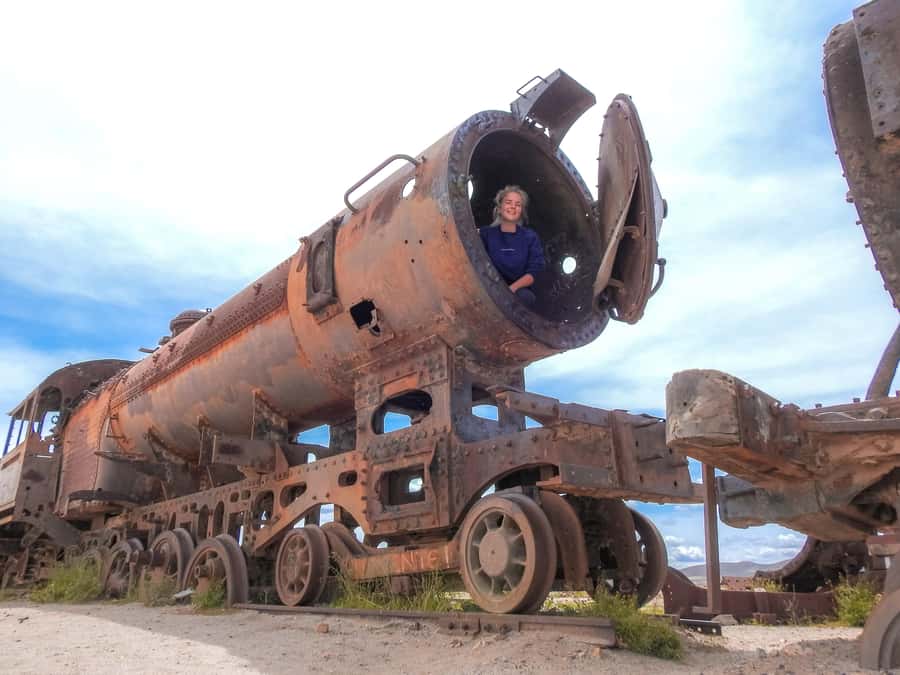
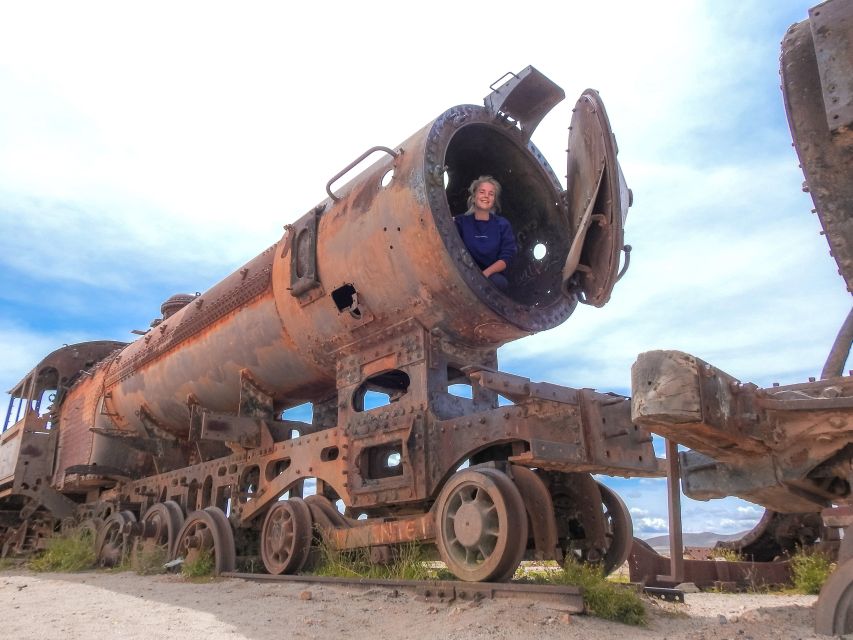
The first stop is the Train Graveyard, where abandoned locomotives sit in the dry highland air. It is a quick, unusual introduction to Uyuni, though timing can put you there in strong midday heat and among many other groups.
At Colchani, you see the small settlement linked to salt mining. Workshops sell salt crafts, along with textile pieces made from llama and alpaca fiber. This is a natural place to buy a small souvenir, and purchases support local makers more directly than buying similar items in a city shop.
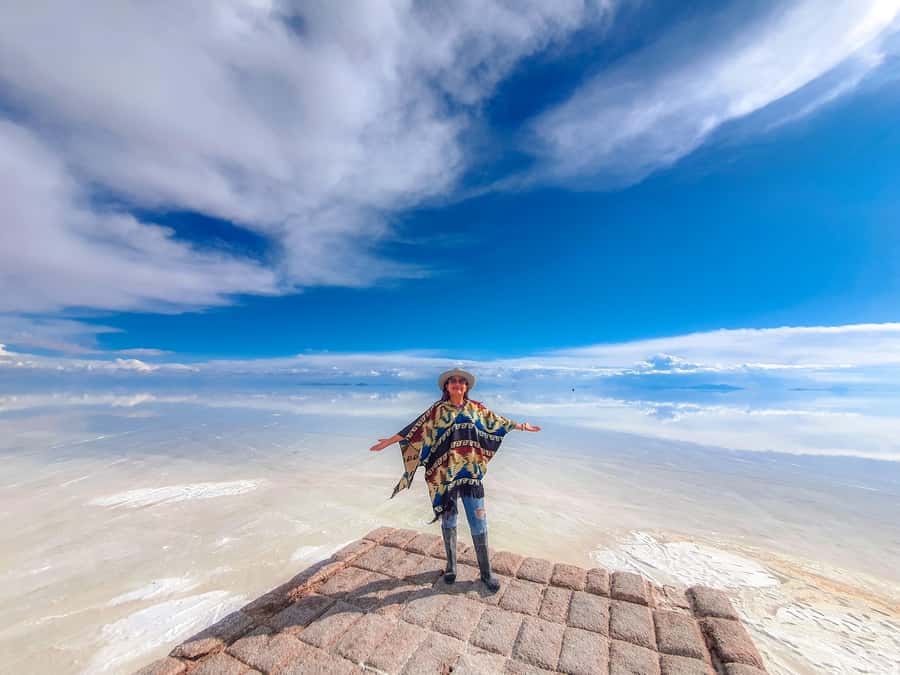
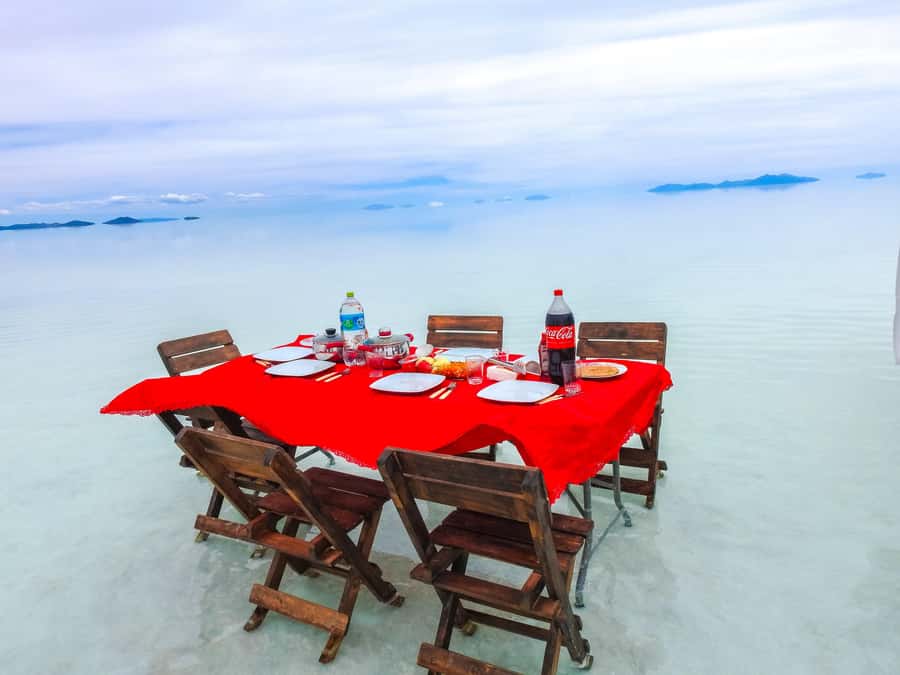
The route then crosses the great white expanse. You stop at the Ojos de Agua Salada, or saltwater eyes, and visit a hotel-museum made entirely from salt. Isla Incahuasi adds a sharp change of texture: giant cacti rise from the otherwise flat white surface, giving you a place to walk and take in the scale of the salt pan.
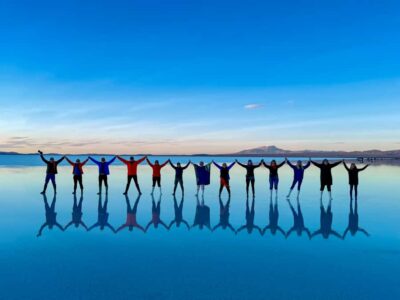
You also get time for the famous perspective photographs. The perfectly flat surface lets you make people appear tiny, huge, or caught inside a bottle. Bring a few simple props if you want more than the standard shoe-and-person tricks; the supplied schedule does not promise a dedicated photo kit.
The best part of the day comes late, when the vehicle moves to an open area for sunset. Colors spread across the salt, and the wide horizon gives you a rare sense of distance. You then continue to Atulcha for dinner and the first hostel night.
During the January-to-April rainy season, water can block access to Incahuasi Island. The wet salt flats can create remarkable reflections, but you should accept that the exact route and overnight locations may change.
Lagoons, flamingos, and the Red Lagoon on Day 3
Day 3 begins with breakfast at 7:00 a.m. The salt flats give way to rough volcanic country and high desert. At the Ollagüe Volcano lookout, you get a broad view across an area shaped by volcanoes and wind rather than roads and towns.
The rocky stretch called El Pasito Tuntun adds a jolt of rough-road travel. This is where the 4WD vehicle matters. You should expect bouncing and long periods on uneven tracks, which explains why the tour is not suitable for people with serious back problems.
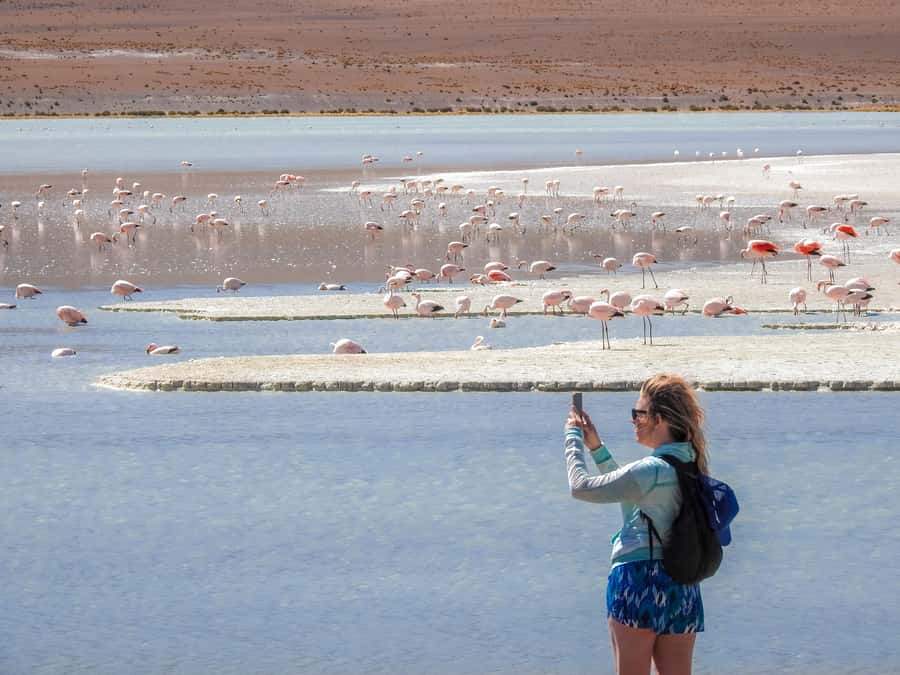
The lagoons are the day’s main reward. Cañapa, Hedionda, and Chiarcota can hold groups of pink flamingos, often set against mineral-colored water and distant volcanoes. You do not come here for one single monument. You come for the changing colors, the birds, and the feeling of moving through a huge, empty region.
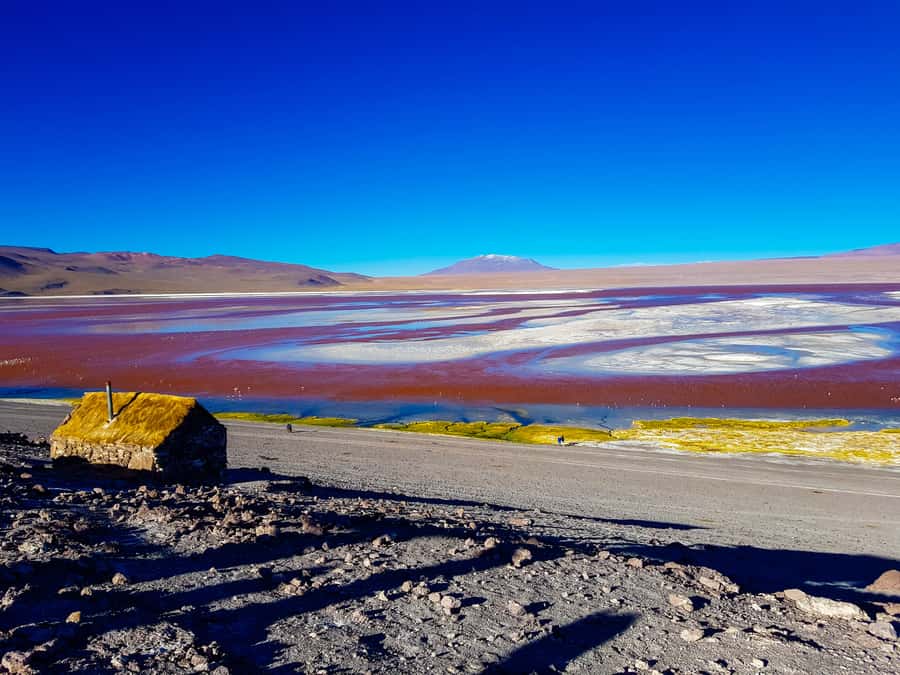
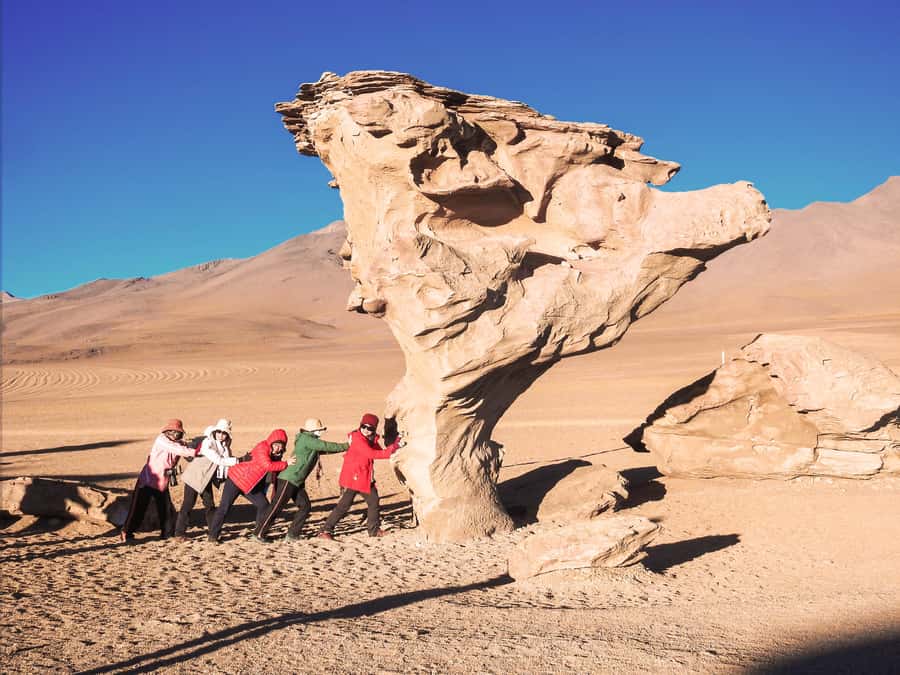
The route enters Eduardo Avaroa National Reserve and continues to Siloli Desert. The Rock Tree is a naturally shaped rock formation that makes a memorable short stop. Later, the Red Lagoon offers another chance to see flamingos in their natural setting, with the water’s color adding an almost strange glow.
You spend the night at a hostel in Huayllajara. Expect shelter and a meal, not resort comforts. Rooms may be shared, and one account describes an outer room exposed to freezing wind through an opening in the structure. If you have a choice, an interior room is worth requesting.
Geysers, hot springs, and the Green Lagoon on Day 4
The final morning starts around 5:00 a.m. That early departure is necessary to reach Sol de Mañana Geyser while the high-altitude air is still cold and the geothermal activity is dramatic. The geyser field sits at close to 5,000 meters, so move carefully and watch how your body responds.
The schedule then includes hot springs. Six BOB covers entry, but the stop may feel rushed because the group must reach the border later that morning. One hour would make this more relaxing; in practice, you should see it as a short warm-up rather than a long soak.
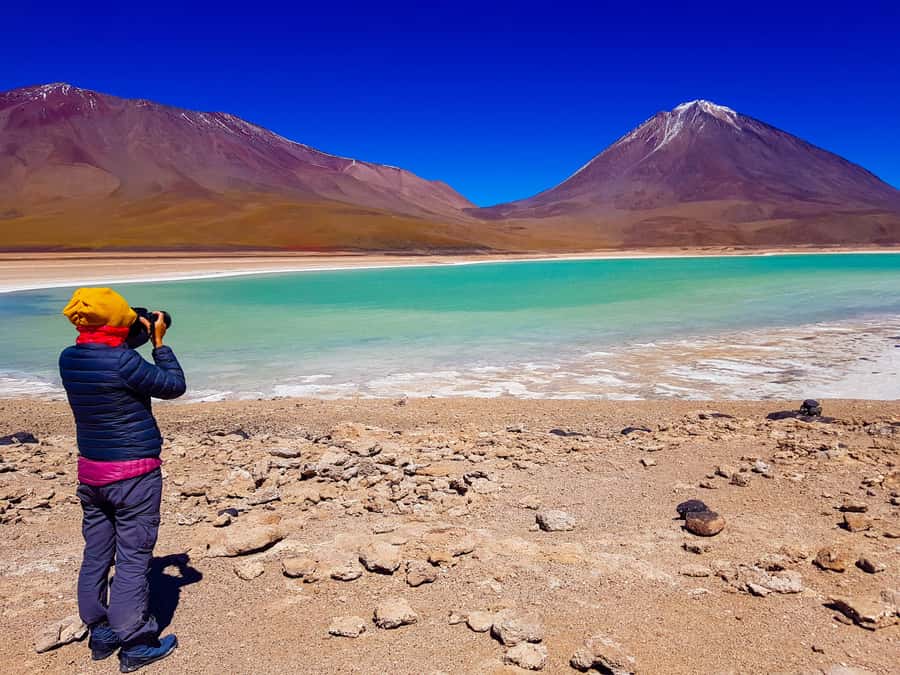
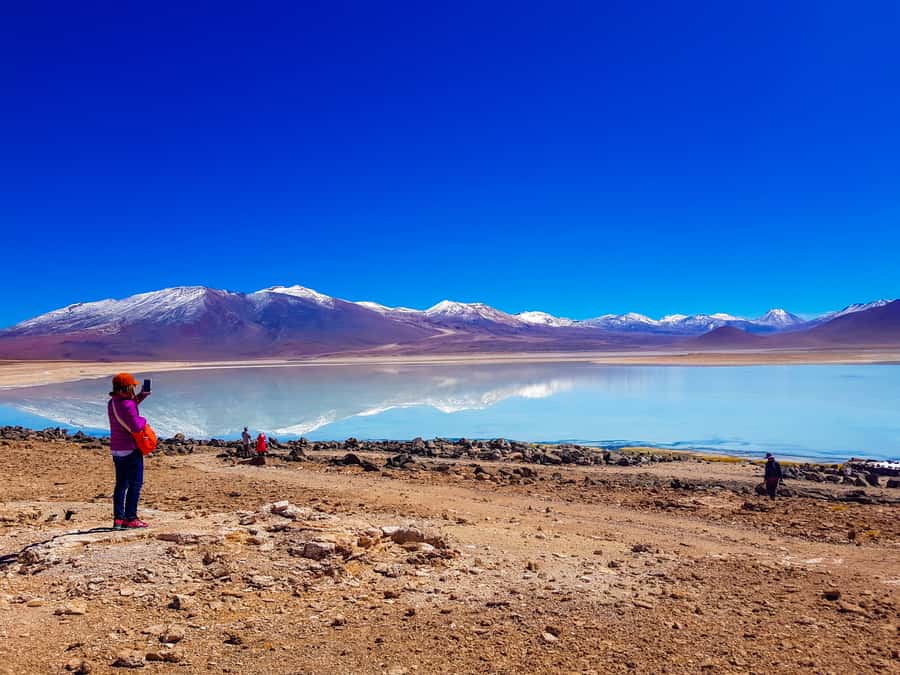
Next come the Dali Desert and the Green Lagoon. The Green Lagoon lies beneath Licancabur Volcano, while the White Lagoon adds another mineral-toned body of water to the route. These stops are excellent reminders that the salt flats are only one part of Bolivia’s high-altitude scenery.
At about 10:30 a.m., you reach Hito Cajon, the Bolivia–Chile border. A guide assists with the border crossing, which is one of the most useful parts of the package. You then continue to San Pedro de Atacama, arriving at the main square around 2:00 p.m.
The tour does not continue into Chile beyond that drop-off. If you need a visa for Chile, you must arrange it yourself before departure.
Food, hostels, and the real comfort level
The bus meals are more substantial than you might expect for an overnight ride, with both meat and vegetarian dinner options. During the 4WD portion, you receive two lunches, two dinners, and two breakfasts. The food is generally basic and filling, and vegetarian meals have been handled well.
Do not assume vegan meals are available. One person who requested vegan food was told that only vegetarian catering was offered. If your diet is strict, confirm this before paying and pack suitable snacks.
The accommodation is functional but very simple. Hot water is not guaranteed, electricity may be unavailable in the morning, and rooms may not have outlets for charging phones. Bring a power bank, toilet paper, hand soap, and a small towel; towels were not clearly included in the packing information.
A sleeping bag is not included. You can bring your own or arrange a rental, but the need is real, especially during the July and August winter period. Warm socks, thermal layers, gloves, a hat, and a windproof outer layer will make a bigger difference than stylish clothes.
Extra fees and useful packing advice
The listed fees are modest individually but easy to overlook. Carry Bolivianos for:
- Isla Incahuasi: 30 BOB
- Eduardo Avaroa National Reserve: 150 BOB
- Hot springs: 6 BOB
- Toilets along the route: 20 BOB
- Bolivian border tax: 15 BOB
That is 221 BOB in stated charges. Carry small notes and coins because toilet stops cost money, and remote sites are not the place to search for a cash machine.
You should bring your passport or ID card, comfortable shoes, warm clothes, sunglasses, a sun hat, sunscreen, and cash. Add a sleeping bag or rental plan, a towel, toiletries, snacks, and a portable charger. The sun is strong at high altitude even when the air feels icy.
The route is not suitable for pregnant people, people with back problems, or people with altitude sickness. If you already know that high altitude affects you badly, this is not a good place to test your limits.
Should you book this Uyuni tour?
I would book it if you want the most efficient way to combine Uyuni with a finish in San Pedro de Atacama. The strongest reasons are the remarkable variety, the included border assistance, the small group, and the amount of scenery packed into three 4WD days.
I would not book it if you need dependable hot showers, charging outlets, generous time at every stop, or a relaxed schedule. The long morning wait in Uyuni and the cold hostels are real drawbacks, not minor footnotes.
For most fit, flexible people, the $469 price is fair because it removes several difficult transport links and covers the core meals and stays. Pack for cold, carry extra cash, expect rough roads, and treat the journey as a high-altitude expedition rather than a comfortable sightseeing coach. Do that, and this is a powerful Bolivia-to-Chile crossing.
FAQ
How long does the tour take?
It takes four calendar days. The first night is spent on the bus from La Paz to Uyuni, followed by three days of 4WD touring before arrival in San Pedro de Atacama.
Where do I meet the bus in La Paz?
Check in at the Todo Turismo bus office at 8:30 p.m. The bus departs La Paz for Uyuni at 9:00 p.m.
What time do I arrive in San Pedro de Atacama?
The planned arrival time is around 2:00 p.m. at San Pedro de Atacama’s main square.
What is included in the price?
The price includes the one-way La Paz–Uyuni bus, transport to San Pedro de Atacama, two nights of accommodation, 4WD transport, a local driver, an English-speaking guide, bus dinner and breakfast, and two lunches, two dinners, and two breakfasts during the tour.
Which costs are not included?
You pay separately for Isla Incahuasi, Eduardo Avaroa National Reserve, the hot springs, toilets along the route, and the Bolivian border tax. A sleeping bag is also not included.
Can I visit Isla Incahuasi during the rainy season?
From January through April, access to Isla Incahuasi may not be possible. Road conditions can also mean sleeping in different locations.
What languages are available?
The tour is offered in Spanish and English, with a live guide. The group is limited to 11 participants.
Do I need a visa for Chile?
If your nationality requires a visa to enter Chile, you must apply for it independently before the tour begins.
What should I bring?
Bring your passport or ID card, comfortable shoes and clothing, warm layers, sunglasses, a sun hat, sunscreen, and cash. You should also plan for a sleeping bag, since it is not included.
More 3-Day Experiences in La Paz
More Tours in La Paz

More Tour Reviews in La Paz
Not for you? Here's more nearby things to do in La Paz we have reviewed
Uyuni Salt Flats Tours, compared
 ★ 4.5From La Paz: Uyuni Salt Flat Tour & Overnight Roundtrip BusFrom $275327 reviews
 ★ 4.5Uyuni tour express from La Paz by busFrom $269172 reviews
 ★ 4.4From Uyuni: Red Lagoon & Uyuni Salt Flats 3-Day Guided TourFrom $354160 reviews
 ★ 4.3La Paz: 5-Day Uyuni Salt Flats by BusFrom $486153 reviews
Browse the lists this tour appears in