
Reviewed · UYUNI SALT FLATS TOURS
Uyuni tour express from La Paz by bus
Uyuni rewards flexible sleepers. This fast La Paz trip is built around a full day at Salar de Uyuni, with round-trip premium sleeper buses, a local breakfast, lunch on the salt flats, and a sunset stop. I like the way it removes most of the planning work, and I like the small Uyuni group with guides such as Oscar, Eric, Mauricio, and Beimar earning special praise for photos, care, and good timing.
The trade-off is a punishing schedule. You leave La Paz at night, spend the next day touring, then board another overnight bus back. The buses can be cold, bumpy, delayed, or interrupted by roadside pickups, and you may wait several hours in Uyuni before the tour begins.
The $269 price is fair if your time is tight and you value transport, meals, pickup, and a guide in one package. It is less appealing if you want a slow visit, more time in Uyuni, or the distant lagoons and flamingos that require a longer salt-flat trip.
In This Review
- Key points to know before booking
- What this 2-day Uyuni express trip really involves
- The 9:45 pm sleeper bus from La Paz
- Breakfast and a useful pause after arrival
- Train cemetery and Colchani: the opening stops
- Salar de Uyuni and Incahuasi Island
- Lunch in the salt and sunset with a view
- Returning to Uyuni and boarding the second bus
- Is $269 good value for one day?
- Who should book this express route?
- Should you book the Uyuni express tour?
- FAQ
- How long is the Uyuni express tour from La Paz?
- Where do I meet the bus in La Paz?
- What is included in the price?
- Is breakfast included?
- Is dinner included?
- Are entrance fees included?
- What should I bring?
- Can I cancel or pay later?
Key points to know before booking
- Two nights on buses: Leave La Paz at 9:45 pm and return the following night, arriving around 6:30 am.
- A full salt-flat day: The tour begins at 10:30 am and includes the train cemetery, Colchani, salt monuments, Incahuasi Island, lunch, and sunset.
- Hotel access in Uyuni: After the night bus, you can usually have breakfast, wait in a lounge, and freshen up before departure.
- Small but not private: The advertised group limit is six, with the salt-flat day operated in a 4×4.
- Bring cash: Entrance fees, dinner, terminal charges, and toilet fees are not fully covered.
- Pack for sun and cold: Sunscreen, sunglasses, warm clothing, and a small bag matter more than fancy equipment.
What this 2-day Uyuni express trip really involves
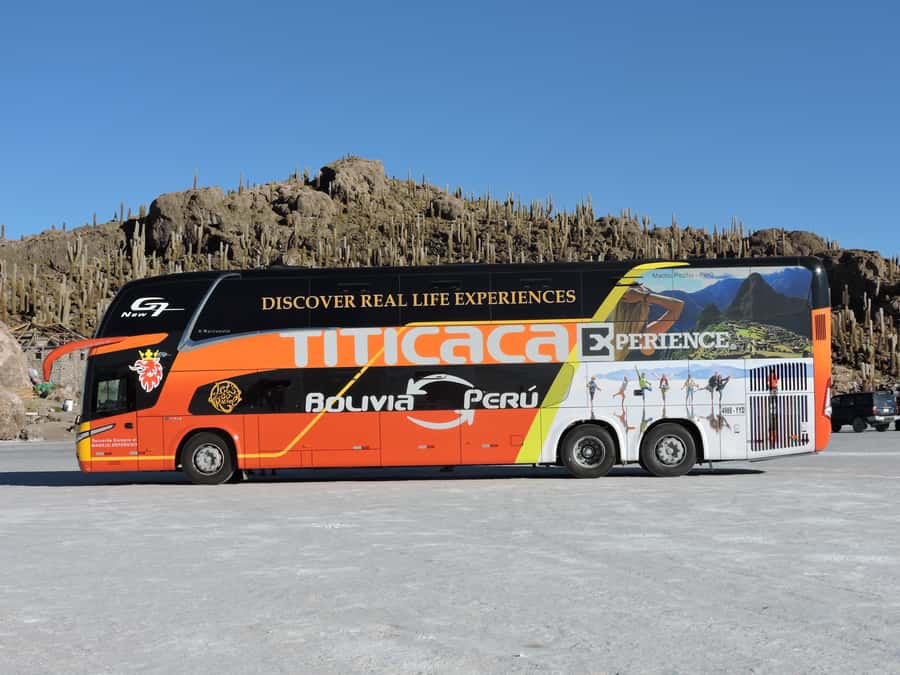
The phrase 2-day tour sounds tidy, but the clock tells a different story. You meet at the Titicaca Experience office inside La Paz’s main bus terminal at 9:00 pm on the first night, board at 9:45 pm, tour Uyuni the next day, and reach La Paz around 6:30 am on the third morning.
I would call it a one-day Uyuni visit wrapped in two overnight bus rides. That is not a criticism. It is the reason this option works for people with only a short window in Bolivia. You lose hotel nights, but you also avoid arranging separate buses, a local tour, transfers, breakfast, and a waiting room.
The package costs $269 per person. That is a serious amount for one sightseeing day, yet it covers both bus legs, sleeper-class transport, pickup in Uyuni, the guided group tour, and food listed in the schedule. I see the value in the convenience, especially if you are trying to fit the salt flats between La Paz and another destination.
You can also read our reviews of more tours and experiences in La Paz.


The 9:45 pm sleeper bus from La Paz
Arrive at the bus office by 9:00 pm, voucher in hand. The office is inside the bus terminal on Peru Street. I would rely on the terminal location rather than an inaccurate map pin, since the departure point has caused confusion.
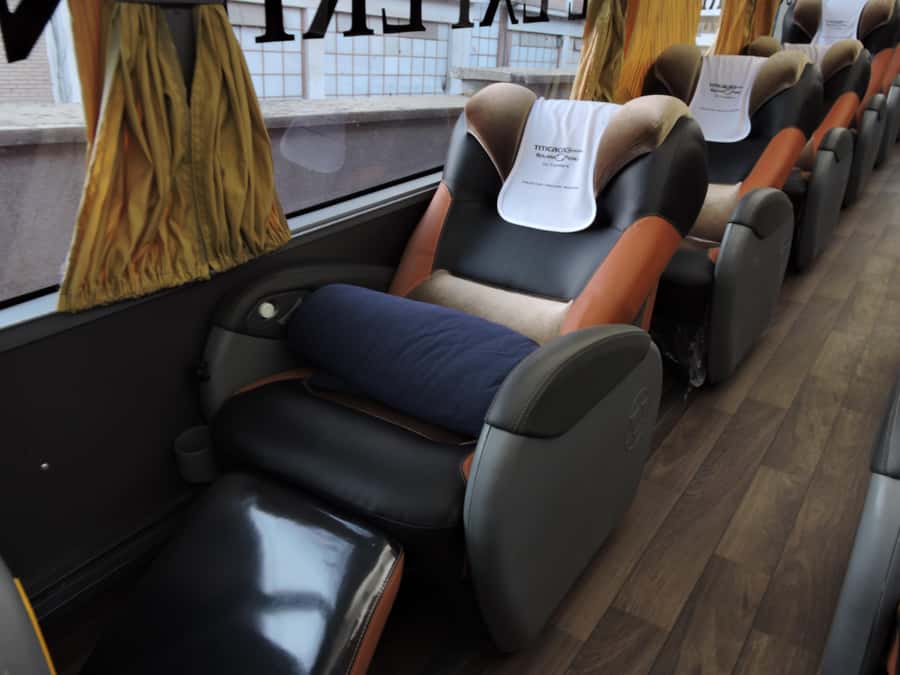
The bus is marketed as premium sleeper class, with a reclining bed-style seat, blankets, heating, and an onboard bathroom. Several people found it roomy and comfortable enough to sleep, with good leg support and a bottle of water provided. Do not picture a silent hotel room on wheels, though.
The road can be bumpy, and the bus may stop to pick up local passengers. One account described more than four stops during the first two hours, making sleep harder. Other problems have included a late departure, cold temperatures, dirty blankets, and weak heating on the return ride.
I would wear warm layers and keep a hat or fleece within reach. Pack earplugs if you sleep lightly. Also ask about the terminal-use charge before boarding; it has not always been explained clearly, and you may need to pay it separately.
The journey takes roughly eight hours. You may arrive around 6:00 am, though the scheduled return to La Paz is about 6:30 am the next morning. Build some spare time into your plans after the return bus, especially if you have a flight or another fixed connection.
Breakfast and a useful pause after arrival
A driver meets you at the Uyuni bus terminal and takes you to a nearby hotel. Hotel Atipax has been used for this stop, and access there is one of the package’s smartest touches.
You can eat breakfast, sit in the lounge, and usually freshen up before the salt-flat outing. That matters after a night bus. It gives you a place to wash, charge yourself mentally, and avoid dragging bags around Uyuni while waiting.
The pause can last two or three hours. The tour normally starts at 10:30 am, so you should not expect to step off the bus and immediately climb into the 4×4. Some people enjoy the break; others find the wait long after a restless night.
A shower may not always be available, so treat that as a bonus rather than a promise. The hotel can also be your base again after the tour. Dinner there is available in some arrangements, but it is not included, so bring extra cash.
You meet the local guide and driver only after reaching Uyuni. That is worth knowing because the La Paz bus operator and the Uyuni sightseeing team are separate parts of the trip. The local operator may be Sweet Travel or Joker Expeditions, and the guide’s name can change.
Train cemetery and Colchani: the opening stops
The first stop is Uyuni’s old train cemetery. Rusting rail cars sit in the open air, making a striking first set of photographs. It is a quick stop and can feel crowded, so I would treat it as a visual introduction rather than the main event.
Next comes Colchani, a town tied to salt production and local crafts. You see salt processors, small workshops, handmade goods, and stalls selling souvenirs. The stop gives you a little context before the open salt plain, though the shopping element may feel less interesting if you prefer scenery to stores.
The route also includes the Plaza de las Banderas and monuments made from salt blocks. These stops are simple but useful for photographs and for seeing how the salt is used beyond the flat surface itself.
Your guide makes a real difference here. Guides such as Mauricio, Oscar, Beto, Nadia, and Beimar have been praised for clear explanations and lively help with pictures. A good guide keeps the short stops moving without turning the day into a rushed checklist.
Salar de Uyuni and Incahuasi Island
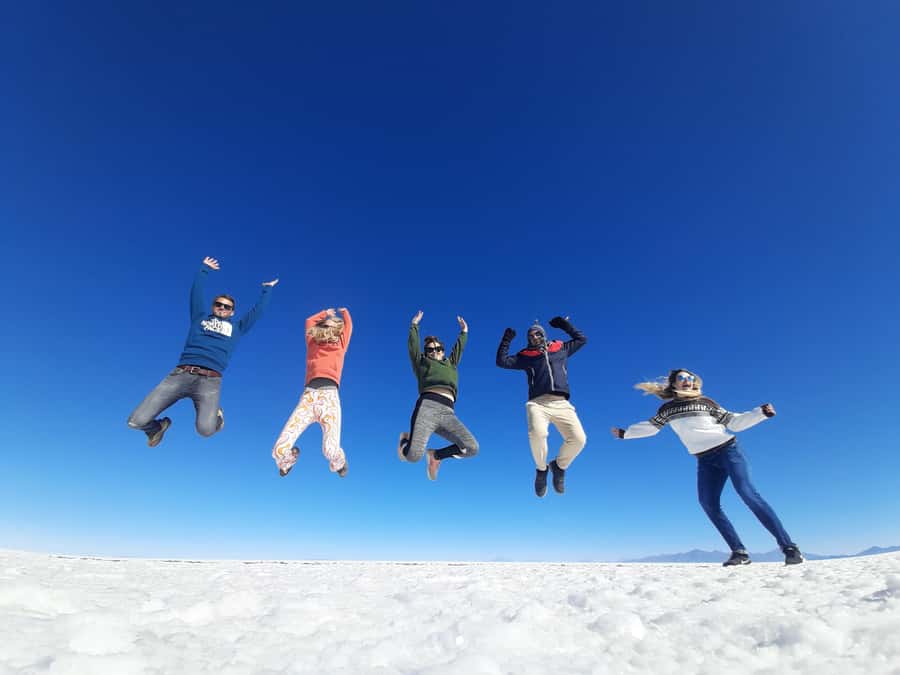
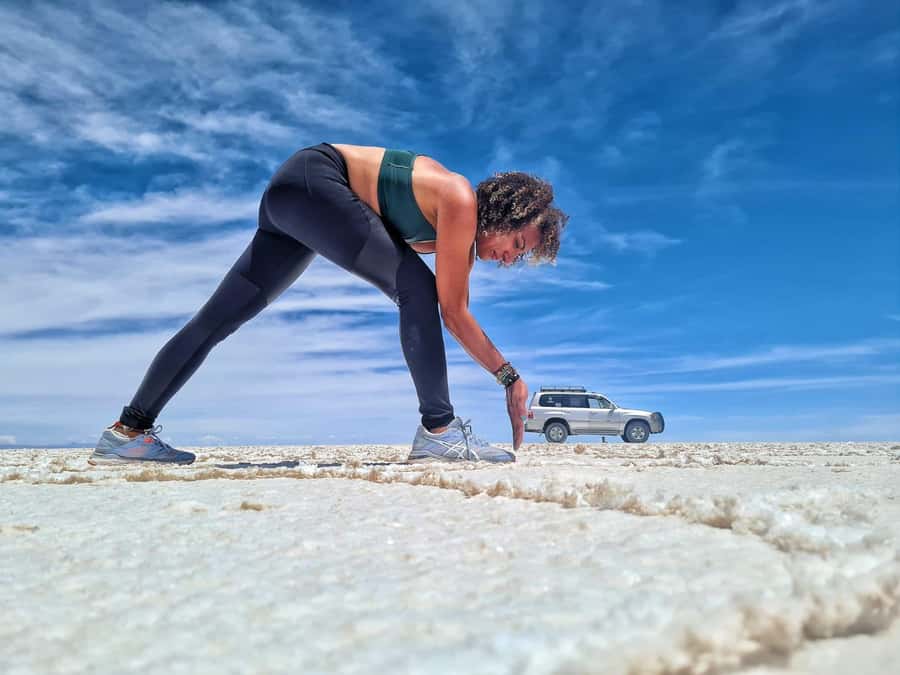
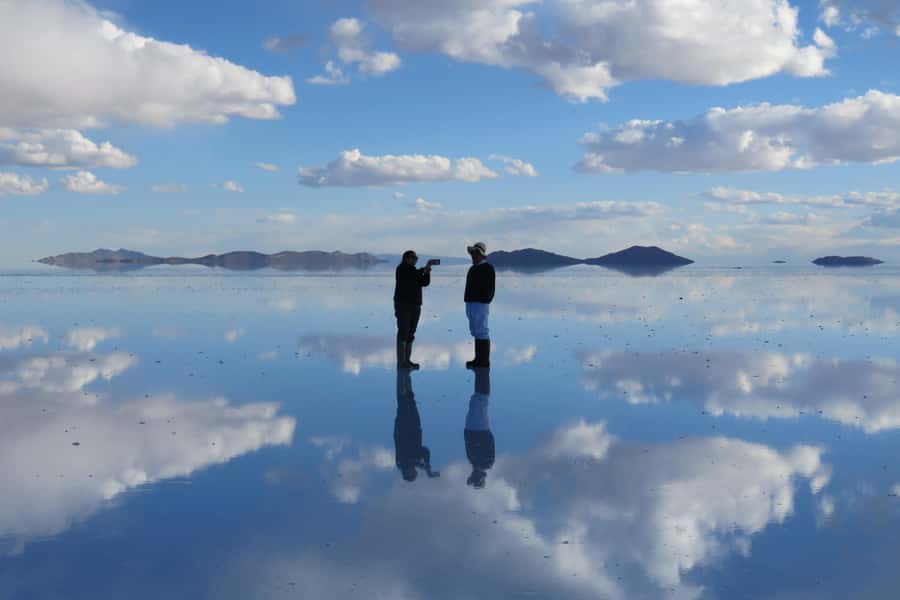
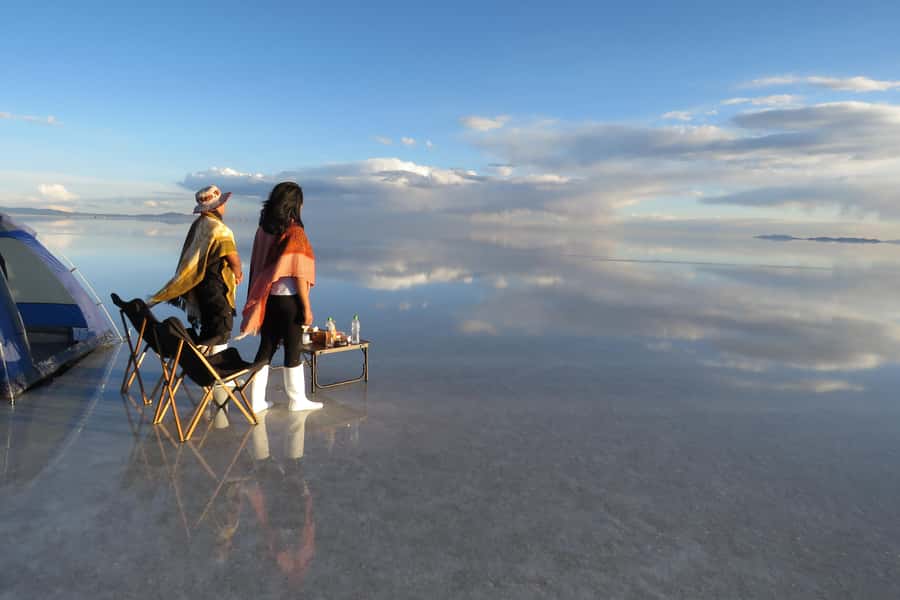
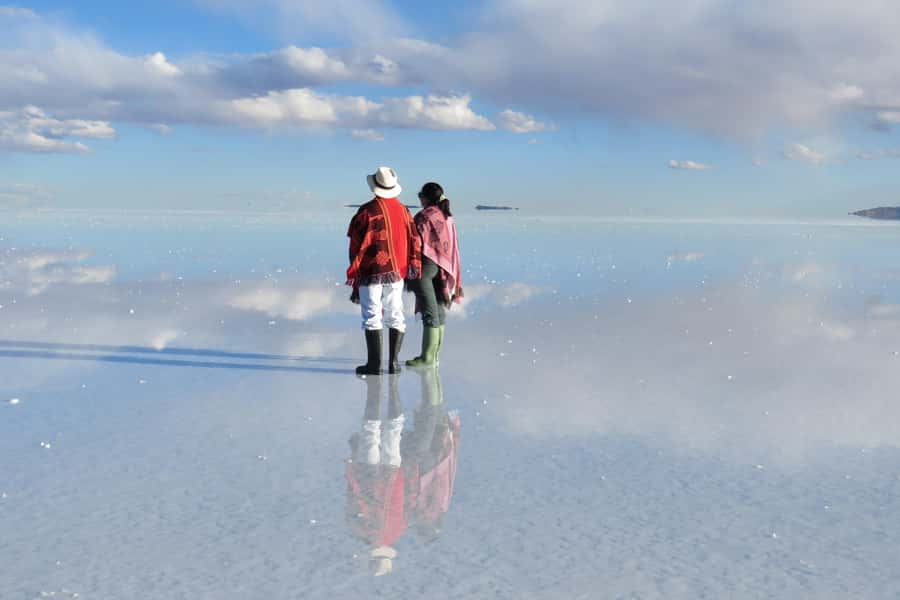
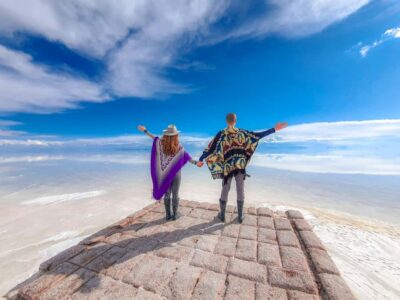
The salt flat is the reason to accept the schedule. The open white surface seems to run without an edge, and the geometric salt patterns can appear clearly in dry conditions. During the rainy season, a thin layer of water may create the famous mirror effect.
Conditions change through the year. At the end of the rainy period, you might walk through shallow salty water in rubber boots supplied by the local operator. In drier weather, the hexagonal salt crust and wide white distance become the main sight.
Sun protection is not optional. Bring sunscreen, sunglasses, and a hat, because the white surface reflects strong light. Sunset can turn cold quickly, so add a heavy jacket and, if you feel the cold, gloves.
Incahuasi Island breaks up the white plain with giant cactuses. You can walk around the island, use the toilets, and look back across the salt from higher ground. Entrance fees are not included. One account put the Incahuasi charge at about 30 bolivianos, while another mentioned a 15-boliviano salt maze fee, so carry more than the bare minimum.
The 4×4 format is a major advantage. You travel in a small vehicle rather than a large coach, which makes it easier to stop for photographs and spend more time in the open salt. It also gives the guide room to set up perspective shots, something several guides have handled with real flair.
Bring a passport or a copy. The operator asks you to carry one, and a copy is accepted according to the trip details. Large bags are not allowed, so leave your main luggage at your accommodation and take only a compact day bag.


Lunch in the salt and sunset with a view
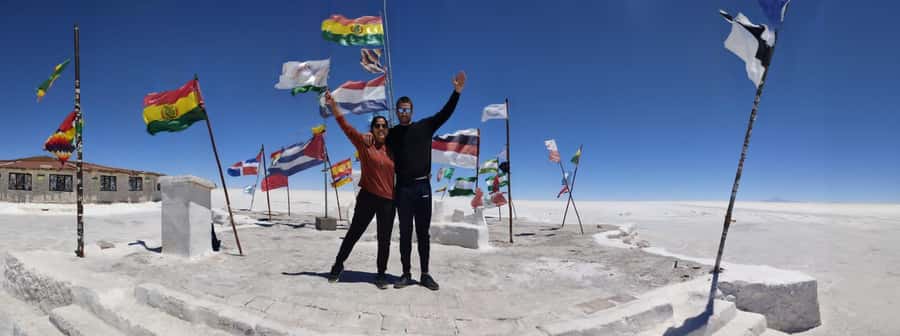
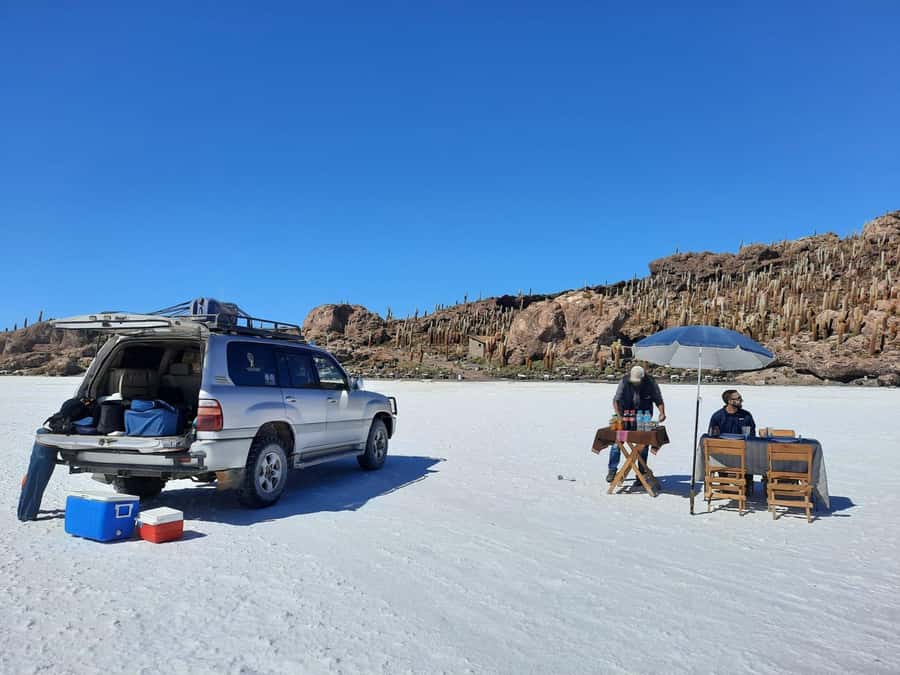
Lunch is served on the salt flat, often in a tented or isolated setting. The food has been described as simple but very good, and guides have made an effort to handle allergies and food preferences when told in advance.
Eating in that vast white setting is more memorable than eating in town, but do not expect a restaurant with a long menu. This is a practical meal designed around the day’s remote route.
At sunset, the group pauses for photographs and a snack. Wine, local wine, coffee, cheese, and other small refreshments have been offered on different departures. The exact spread may vary, but a sunset drink has been a recurring part of the experience.
Take warm clothes out before the sun drops. The temperature can fall within minutes, and the open salt offers little shelter. A guide may take group and perspective photographs, sometimes with bicycles or playful props, but you should still keep your own phone or camera ready.
Returning to Uyuni and boarding the second bus
After sunset, you return to Uyuni and spend some time at the hotel before the night bus. This is another useful pause, though it can feel short after such a long day.
You may be able to use the lounge and freshen up again. Dinner is not part of the included meals, so budget for it and carry cash. Toilet use around the Uyuni area may also cost about 5 bolivianos each time.
The local team takes you back to the bus terminal with your return ticket. Check the ticket and departure details before you leave the hotel. One serious coordination problem involved a missing bus ticket and a long wait for another bus, while another person waited at the terminal without clear pickup information.
That does not mean the transfer will fail, but it does mean you should not arrive at the last minute. Get to the bus office early, keep your voucher and phone accessible, and ask the hotel staff to confirm the return bus. Clear communication is the weakest part of this package.
Is $269 good value for one day?
I think the price works best when time is your main concern. You get two long-distance bus rides, a local pickup, breakfast, lunch, a guide, a group 4×4, and access to a hotel while waiting. Organizing those pieces yourself would take time, and a mistake could cost more than expected.
The price feels less attractive if you have several days available. A longer Uyuni trip can include more remote areas and the lagoons with flamingos, while this express version concentrates on the classic salt-flat sights.
The biggest cost is physical rather than financial. You spend two nights on buses and one long day outside at high altitude. If you need proper sleep, dislike tight schedules, or have altitude sickness, I would choose a slower plan.
The 4.5 rating from 172 bookings reflects the strongest part of the package: the Uyuni day itself. Guides and drivers have repeatedly been praised for safety, organization, meals, explanations, and creative photos. The bus service is more uneven, so judge the experience as two separate pieces: excellent local touring attached to a merely serviceable overnight connection.
Who should book this express route?
I would choose it if you have only two days, want the classic salt-flat sights, and prefer a prearranged plan. It also suits you if you like meeting a small group and want a guide to handle the route, photos, lunch, and timing.
I would not choose it if you are prone to altitude sickness. The trip details specifically warn against it, and the tight schedule leaves little room to recover.
It is also a poor fit for anyone carrying large luggage, because only a small bag is allowed during the activity. Leave your main bags at your La Paz hotel or arrange storage before departure.
Before leaving, pack sunscreen, sunglasses, warm clothes, a passport copy, small cash, and a phone charger. Ask in advance about terminal fees, dinner, entrance charges, hotel washing facilities, and the exact pickup point in Uyuni.
Should you book the Uyuni express tour?
Book this tour if the salt flats are a priority and your calendar is short. The daytime program is strong: local stops, a full salt-flat run, Incahuasi Island, lunch, sunset, and a small vehicle with a guide who can make the day personal.
Skip it for a longer Uyuni itinerary if you have the time. The overnight buses can be cold and noisy, communication can be patchy, and the schedule gives you little margin. For a fast, organized look at Salar de Uyuni from La Paz, though, $269 buys a lot of coordination in a very compressed package.
FAQ
How long is the Uyuni express tour from La Paz?
The activity is sold as a 2-day tour, but it spans two overnight bus rides. You leave La Paz on the first evening, tour Uyuni the next day, and arrive back in La Paz around 6:30 am on the following morning.
Where do I meet the bus in La Paz?
You must go to the Titicaca Experience office inside the main bus terminal on Peru Street. The suggested check-in time is 9:00 pm, with the bus scheduled to leave at 9:45 pm.
What is included in the price?
The $269 price includes round-trip La Paz–Uyuni bus tickets, premium sleeper-bus service, pickup in Uyuni, the small-group tour, food listed in the schedule, and a Spanish- or English-speaking guide.
Is breakfast included?
Yes. Breakfast is provided after you arrive in Uyuni, at the hotel used as the waiting and refreshment point before the tour begins.
Is dinner included?
No. Dinner before the return bus is not included. Bring cash if you plan to eat at the hotel or elsewhere in Uyuni.
Are entrance fees included?
No. Entrance fees are excluded. Carry extra bolivianos for places such as Incahuasi Island and other paid facilities, including toilets.
What should I bring?
Bring sunscreen, sunglasses, and your passport or a copy. Warm clothing is also useful for sunset and the overnight buses, and you should take only a small bag because large luggage is not allowed.
Can I cancel or pay later?
You can cancel up to 24 hours before departure for a full refund. The reservation option also allows you to reserve now and pay later, subject to availability.
More Tours in La Paz
More Tour Reviews in La Paz
Not for you? Here's more nearby things to do in La Paz we have reviewed



Uyuni Salt Flats Tours, compared
 ★ 4.5From La Paz: Uyuni Salt Flat Tour & Overnight Roundtrip BusFrom $275327 reviews
 ★ 4.4From Uyuni: Red Lagoon & Uyuni Salt Flats 3-Day Guided TourFrom $354160 reviews
 ★ 4.3La Paz: 5-Day Uyuni Salt Flats by BusFrom $486153 reviews
 ★ 4.1La Paz: Uyuni Salt Flats & San Pedro de Atacama 3-Day TourFrom $469145 reviews
Browse the lists this tour appears in