
Reviewed · UYUNI SALT FLATS TOURS
From Uyuni: Uyuni Salt Flats full day
Salt can turn the earth into sky. I like this day because hotel or bus-station pickup removes some of the usual Uyuni fuss, and the 4×4 is arranged for up to six people rather than a large coach. I also like the finish: water-mirror sunset gives the salt flat its most striking visual trick, while the train cemetery and Incahuasi add variety.
The trade-off is that the $90 price does not include the entrance to Incahuasi Island. English guidance is also unclear: Spanish is listed as the standard live language, English is mentioned as an option, yet an English-speaking guide is also listed as an extra cost. Confirm that point before booking.
In This Review
- Five Details That Shape Your Uyuni Day
- Starting in Uyuni and Reaching the Train Cemetery
- Crossing Salt Eyes Into the Great White Plain
- Incahuasi Island and the Dakar Monument
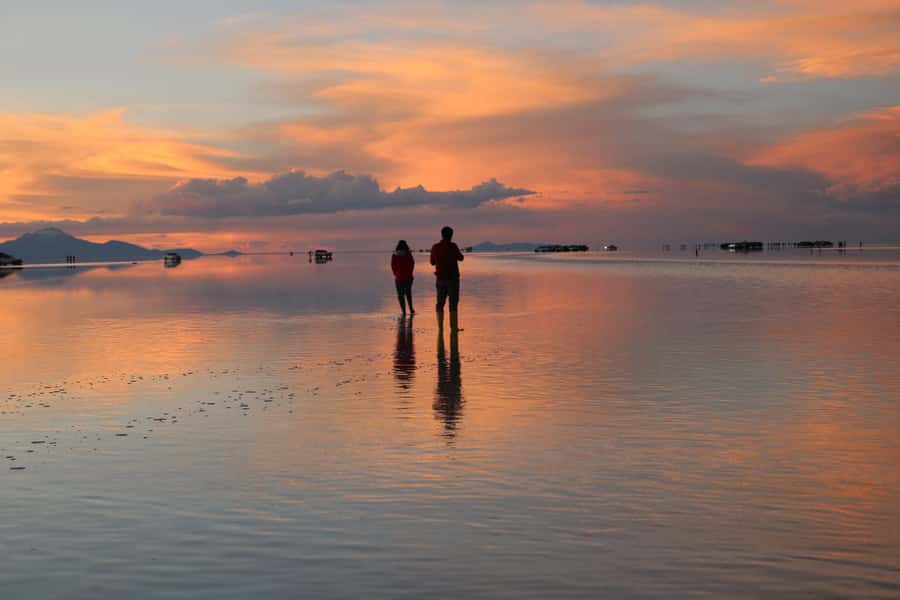
- Sunset at the Water Mirrors
- What the $90 Price Really Covers
- A Small Group and a Guide Make a Difference
- Who Should Choose This Salt Flat Trip?
- Should You Book It?
- FAQ
- How much does the full-day Uyuni Salt Flats tour cost?
- How long does the tour last?
- Where does pickup take place?
- What type of vehicle is used?
- Is lunch included?
- Is the entrance to Incahuasi Island included?
- Is an English-speaking guide included?
- Can I cancel or pay later?
Five Details That Shape Your Uyuni Day
- The train cemetery comes first: You begin with a memorable collection of abandoned railway engines a few kilometers southwest of Uyuni.
- A six-person 4×4 covers the route: The vehicle is suited to the broad salt flat and keeps the group relatively small.
- Incahuasi Island costs extra: The stop is included in the route, but its entrance fee is not part of the $90 price.
- The sunset is timed for the water mirrors: The final stop is chosen for reflections of the sky across the wet salt.
- You return around 6:30 p.m.: This is a full-day outing, not a short afternoon visit, so keep your evening free.
Starting in Uyuni and Reaching the Train Cemetery
Your day begins with pickup from your hotel or the Uyuni bus terminal. You are asked to wait in the hotel lobby 10 minutes before the scheduled pickup time, which matters in a town where many people arrive by overnight bus and may be working with a tight schedule.
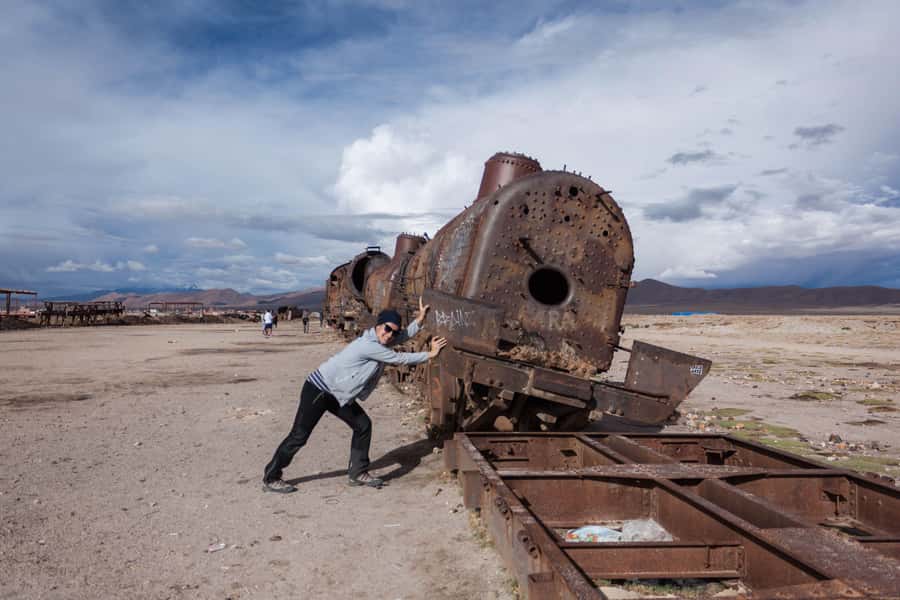
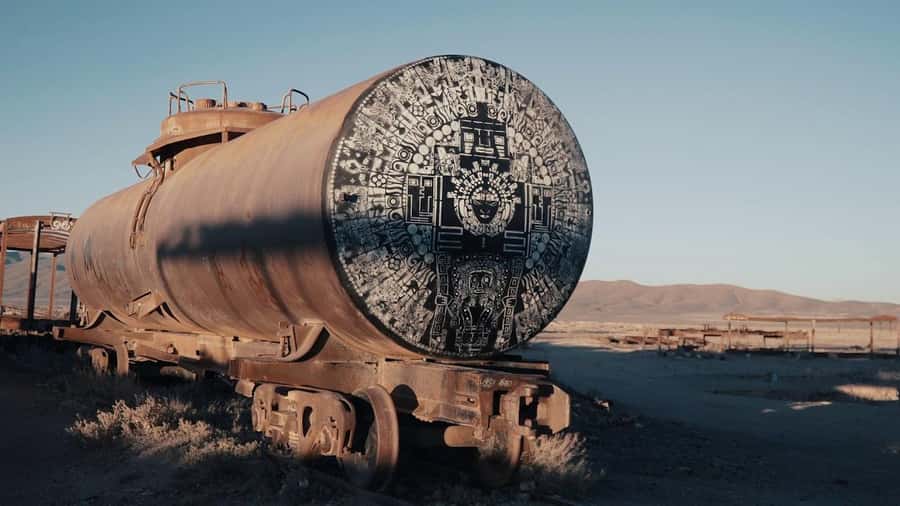
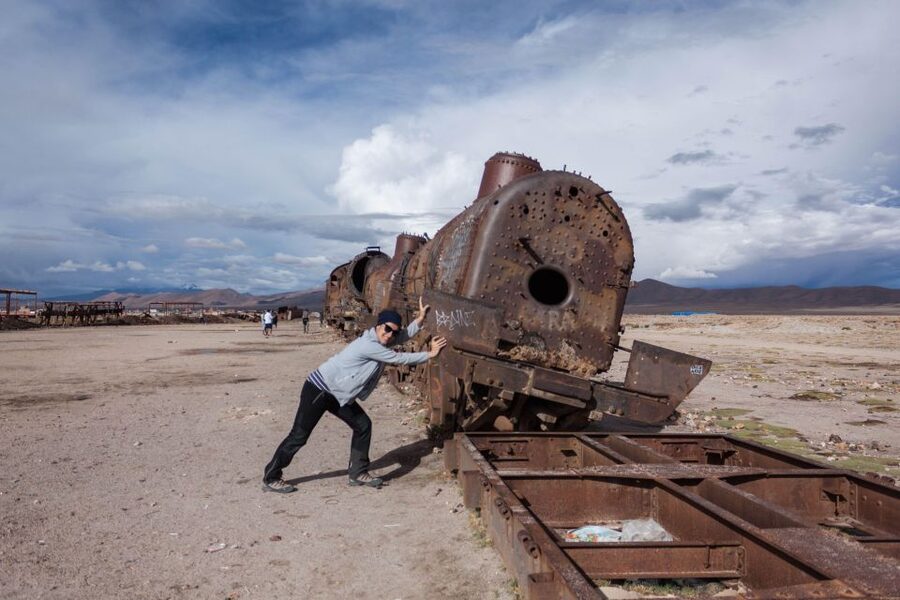
The first stop is the train cemetery, located on the edge of the salt flat a few kilometers from central Uyuni. The site contains abandoned trains and is said to be the largest railway cemetery in the world. It is an unusual opening to the day: before you reach the great white expanse, you see old rail equipment scattered across the dry ground.
I like the contrast. The train cemetery feels stark and mechanical, while the salt flat later becomes almost abstract. It also gives you a chance to start taking photographs before the route reaches its biggest views.
The available details do not give a fixed length of time at the cemetery, so you should not expect a carefully timed museum visit. This is an outdoor stop, and the value comes from walking around the abandoned trains, looking at their shapes, and using them as strong subjects for photographs.
You can also read our reviews of more tours and experiences in Bolivia.
Crossing Salt Eyes Into the Great White Plain
After the train cemetery, the 4×4 heads toward the immense Salar de Uyuni. During the day, the route passes different salt eyes before entering the main salt flat. The phrase sounds poetic, but the practical point is simple: you are not taken straight to one single photo stop. The route includes several changes in setting as you move farther across the salt.
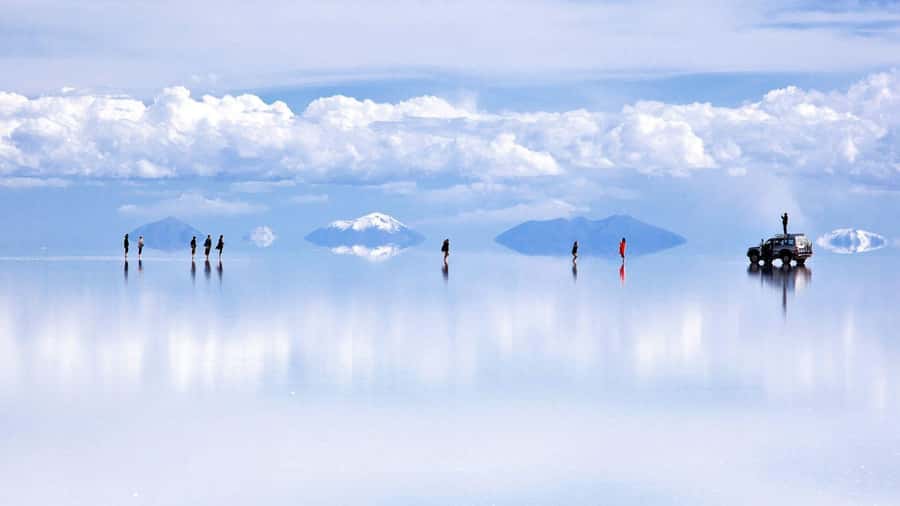
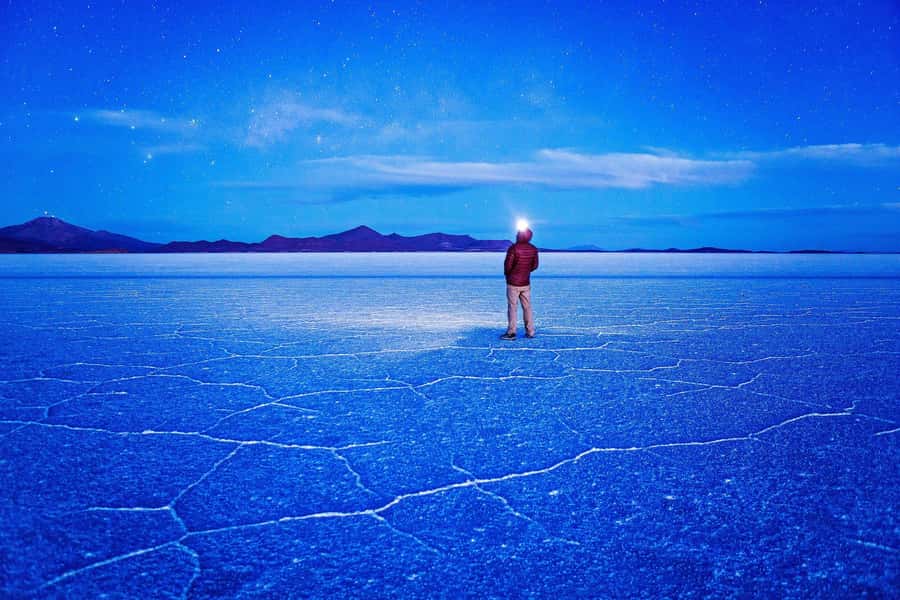
The salt flat is the heart of the experience. It is often presented as the largest mirror in the world, and the broad surface creates the famous sense that the ground and sky have no clear border. Depending on the conditions, the flat can produce photographs with reflections and visual illusions.
I would come ready to enjoy the scale as much as the pictures. The best part is not only posing for an unusual photo. It is having a full day in a place where normal ideas of distance and direction become difficult to judge.
The 4×4 transport matters here. A vehicle designed for six people is a sensible match for the route, and the small-group format has been one of the most praised features of this experience. You get the practical benefit of an all-terrain vehicle without paying for a private trip.
Still, a six-person vehicle does not guarantee that every departure will have exactly six people. The group size may vary, so think of the arrangement as a small shared outing rather than a private ride.
Incahuasi Island and the Dakar Monument
The route includes Incahuasi Island, one of the main named stops on the salt flat. The island gives the day a point of focus after the open salt surface, and it is one of the places where you can pause before continuing across the plain.
The important budget detail is easy to miss: the entrance to Incahuasi is not included. The tour price covers the route and the stop, but you should carry extra money for the admission fee. The supplied information does not state the exact entrance price, so I would ask the operator for the current amount before departure.
You also visit the Dakar monument. Its connection to the Dakar route gives this otherwise empty setting a recognizable human marker. It is another useful photo stop and helps break up the vast, repetitive surface of the salt flat.
The itinerary does not promise a long guided visit at either Incahuasi or the monument. That is worth keeping in mind if you prefer a slow pace at every stop. This day is built around seeing several places by 4×4, enjoying the open views, and reaching the water mirrors near sunset.
Sunset at the Water Mirrors
The final major stop is the water mirrors. Here, a thin sheet of water reflects the sky, creating the effect that the earth and clouds continue into one another without an edge.
This timing is one of the strongest reasons to choose a full-day trip instead of a quick salt-flat outing. The salt is impressive in bright daylight, but the reflections at sunset give you a second mood and a different set of photographs. The tour is arranged so you reach this area in time to watch the sky change.
I like that the day ends with something visually different from the train cemetery and the dry salt eyes. You begin among abandoned trains, cross the white expanse, visit the island and Dakar monument, and finish with a reflection scene. The route has a clear rhythm rather than one long, repetitive drive.
The return to Uyuni is scheduled for approximately 6:30 p.m. That is only an estimated arrival, so I would avoid booking an evening bus or other fixed appointment too close to that time. The information provided does not give a precise sunset departure or return buffer.
What the $90 Price Really Covers
At $90 per person, the tour includes the main practical pieces needed for a full day:
- Pickup from your hotel or the Uyuni bus terminal
- An all-terrain 4×4 vehicle arranged for six people
- A guide
- One lunch
- Transport between the train cemetery, salt flat, Incahuasi Island, Dakar monument, and water mirrors
That makes the price reasonable if you want a shared day rather than arranging separate transport. The 4×4 is the main value. You are paying for a vehicle capable of covering a broad route, plus a guide and lunch, not just for entry to one attraction.
The price does not include the Incahuasi entrance fee, extra expenses, bus tickets, or a hotel in Uyuni. Bus tickets and accommodation are not surprising exclusions, since the activity begins and ends in Uyuni, but they matter if you are building a larger Bolivia itinerary around this trip.
English is the other cost question. The details say the guide is Spanish, mention English as an option, and also list an English-speaking guide as not included. I would not assume English service comes automatically. Contact Viajeros a Peru before payment and ask exactly what language your departure includes and what surcharge applies, if any.
The tour offers free cancellation up to 24 hours before departure for a full refund. You can also reserve now and pay later, which is useful if your Uyuni plans depend on bus connections or changing weather conditions.

A Small Group and a Guide Make a Difference
The current score is 4.4 out of 5 from four verified bookings, with the clearest praise focused on a lovely guide and a small group. That is useful information for this particular outing because the day involves long stretches in a shared vehicle and several stops where timing matters.
A good guide can make the difference between simply being driven across the salt and understanding how to use each stop. The provided details do not give a guide’s name, so there is no individual guide I can recommend by name. They do confirm Spanish as the live language.
If you speak Spanish, the arrangement is straightforward. If you need English, ask before booking rather than relying on the wording about an English option. That small check could prevent an avoidable problem on a long, full-day excursion.
The lunch is included, but no menu or dietary details are supplied. If you have food restrictions, ask Viajeros a Peru directly. It is better to confirm than to assume the included meal will suit you.
Who Should Choose This Salt Flat Trip?
I would choose this experience if you have one day in Uyuni and want the major sights in a single outing. The route gives you a strong first look at the train cemetery, the salt eyes, the main flat, Incahuasi Island, the Dakar monument, and the sunset mirrors.
It also suits you if you prefer a shared trip with a relatively small vehicle. The six-person 4×4 offers a more personal setup than a large group vehicle, while keeping the cost at $90 per person.
This is less suitable if you need a guaranteed English-speaking guide or want every cost included in advance. The language information needs clarification, and the Incahuasi admission is extra.
I would also think carefully about your evening schedule. With an approximate return at 6:30 p.m., this is not a good match for a tightly timed onward departure unless you have plenty of extra time.
Should You Book It?
I would book this tour if you want the classic Uyuni route in one day and value practical transport, lunch, a small-group 4×4, and a sunset finish. The combination of the train cemetery and water mirrors gives the day more variety than a salt-flat-only drive.
Before paying, confirm three things: the current Incahuasi entrance fee, the exact language of the guide, and the pickup time. If those details work for you, the $90 price offers a sensible way to see Uyuni’s main sights without arranging separate transport.
FAQ
How much does the full-day Uyuni Salt Flats tour cost?
The price is $90 per person.
How long does the tour last?
It lasts one day, with an approximate return to Uyuni at 6:30 p.m.
Where does pickup take place?
Pickup is available from your hotel or the Uyuni bus terminal. If you are staying at a hotel, wait in the lobby 10 minutes before the scheduled pickup time.
What type of vehicle is used?
The tour uses an all-terrain 4×4 arranged for six people.
Is lunch included?
Yes. One lunch is included in the tour price.
Is the entrance to Incahuasi Island included?
No. The entrance fee to Incahuasi Island is an extra expense.
Is an English-speaking guide included?
The standard live tour language is listed as Spanish. English is mentioned as an option, but an English-speaking guide is also listed as not included, so confirm the language and any extra charge before booking.
Can I cancel or pay later?
You can cancel up to 24 hours in advance for a full refund. The activity also allows you to reserve now and pay later.
More Tour Reviews in Bolivia
Not for you? Here's more nearby things to do in Bolivia we have reviewed
Uyuni Salt Flats Tours, compared
 ★ 4.5From La Paz: Uyuni Salt Flat Tour & Overnight Roundtrip BusFrom $275327 reviews
 ★ 4.5Uyuni tour express from La Paz by busFrom $269172 reviews
 ★ 4.4From Uyuni: Red Lagoon & Uyuni Salt Flats 3-Day Guided TourFrom $354160 reviews
 ★ 4.3La Paz: 5-Day Uyuni Salt Flats by BusFrom $486153 reviews
Browse the lists this tour appears in