
Reviewed · DEATH ROAD BIKING
From La Paz: The World’s Most Dangerous Road Biking Tour
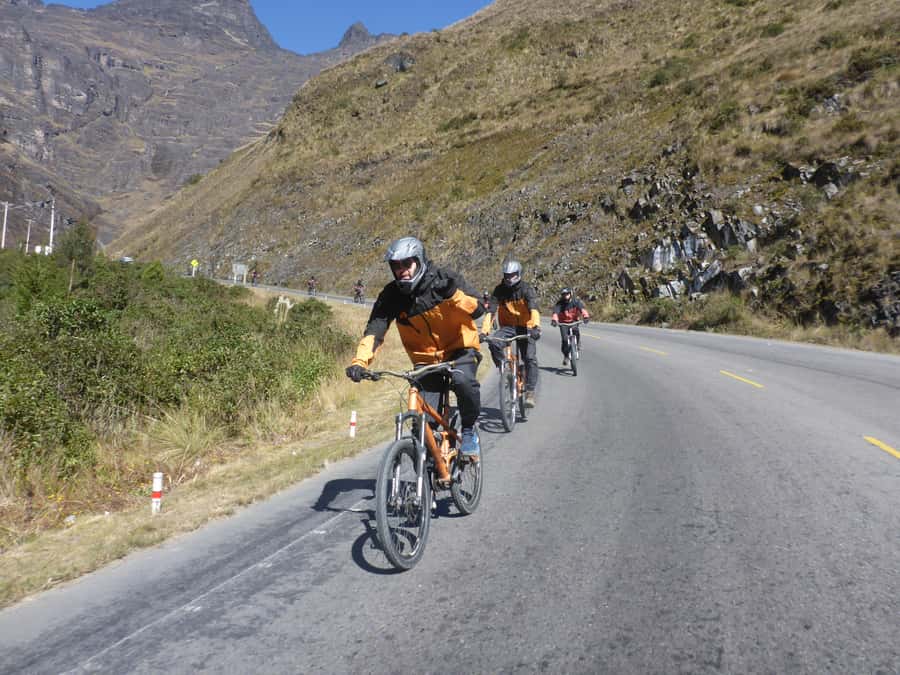
Bolivia turns a road into a roller coaster. This full-day ride takes you from snowy peaks at 4,700 metres to hot Yolosita at 1,200 metres, covering 64 kilometres of downhill cycling through changing scenery. I like the dramatic shift from paved mountain road to misty dirt track, and I like that the day ends with a buffet lunch, shower, and swimming pool rather than a dusty ride back to La Paz.
The guides are another strong point. Bilingual staff, first-aid training, mechanics, protective gear, and a support vehicle give the trip a well-run feel; guides such as Victor, Freddy, Javier, Eddy, Chris, and Maury have all been praised for patience and safety. The main drawback is the long return drive and the fact that this is serious downhill riding, not a gentle sightseeing cycle.
In This Review
- Key Points Before You Book
- From La Paz to Cristo de la Cumbre at 4,700 Metres
- The Paved Opening Lets You Get Comfortable
- Chuspipata Marks the Start of the Famous Road
- Waterfalls, Mud, and Changing Weather
- What the Bike and Safety Gear Really Mean
- Yolosita Brings Heat and a Welcome Change of Pace
- The Long Ride Back to La Paz
- Photos, Videos, Food, and the $129 Price
- Who Will Enjoy This Death Road Tour Most?
- Should You Book It?
- FAQ
- How long is the Death Road biking tour?
- How far do you bike?
- Where does the tour meet?
- What is the starting elevation?
- Where does the ride finish?
- What equipment is included?
- Are food and drinks included?
- Are the zipline and Death Road tax included?
- Which languages are available?
- Who cannot join this tour?
Key Points Before You Book
- 64 kilometres from 4,700 to 1,200 metres: You begin among snow-covered peaks and finish near Bolivia’s Amazon region.
- Two very different rides: The paved opening lets you get comfortable before the rougher Death Road begins at Chuspipata.
- Strong equipment package: You receive a full-face helmet, pads, gloves, protective clothing, and a full-suspension bike with hydraulic disc brakes.
- A proper finish: Buffet lunch, showers, swimming pool access, snacks, and unlimited water are included.
- A full support team: English- and Spanish-speaking guides check bikes, give repeated safety briefings, take photos, and assist throughout the route.
- Plan for extras and conditions: The 50-boliviano Death Road tax and optional zipline are not included, and you should bring warm and spare clothing.
From La Paz to Cristo de la Cumbre at 4,700 Metres
The day begins at the Vertigo Biking office in La Paz. Look for the company office and the tour bus parked outside; this is the meeting point rather than a hotel pickup. From there, private transport takes you toward Cristo de la Cumbre in about 45 minutes.
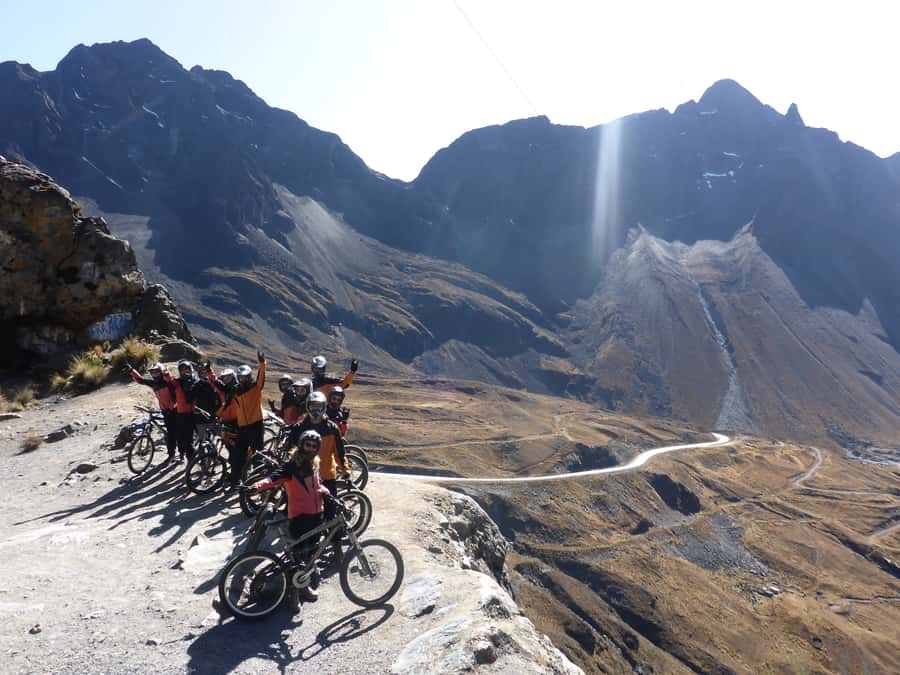
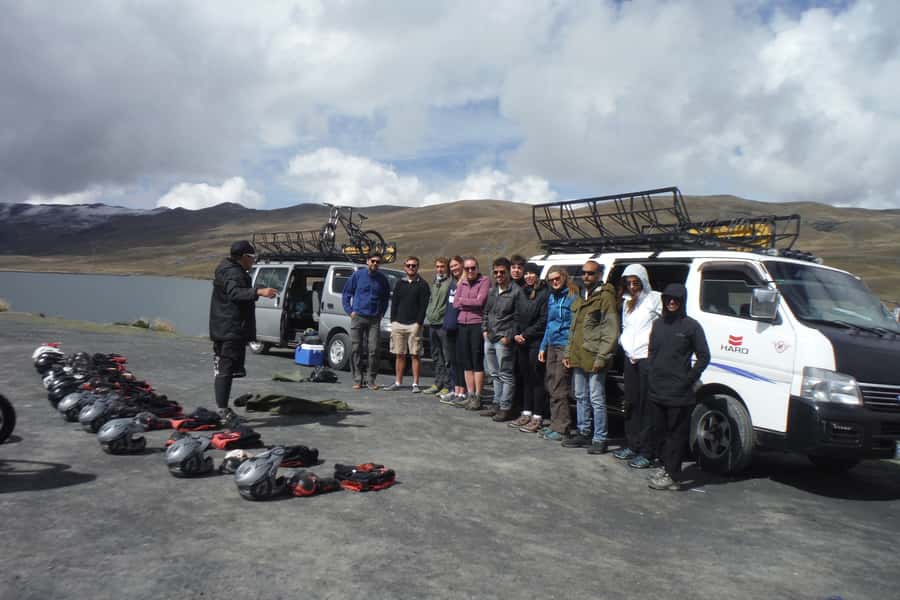
The start feels more like a high-mountain expedition than a bike outing. At roughly 4,700 metres, you get wide views of snow-covered peaks and a cold, exposed setting. Bring a proper warm layer for this part, even if the lower route later feels hot.
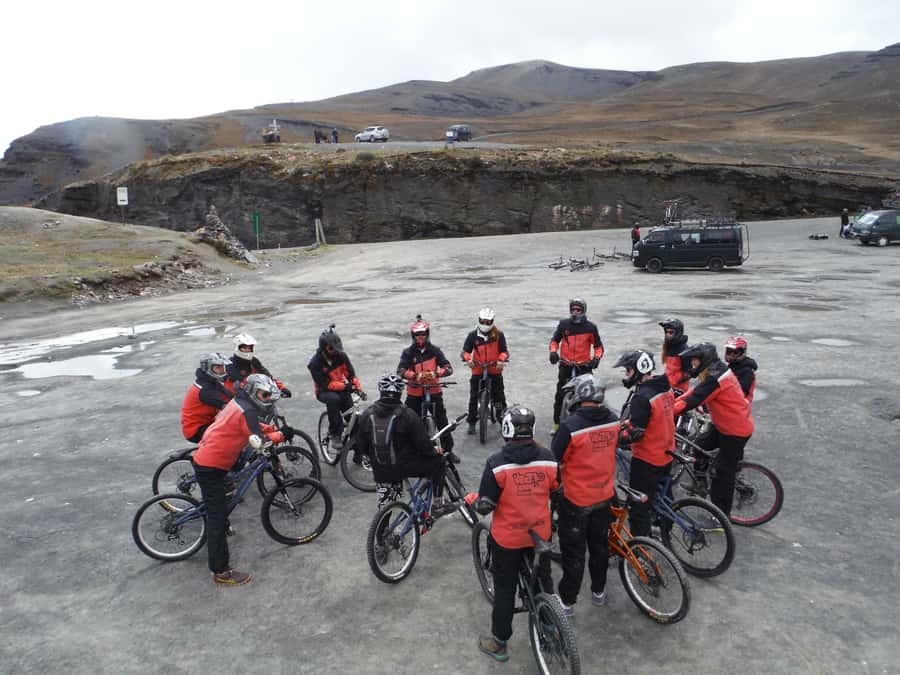
A 30-minute safety briefing covers the bike, riding advice, and what to expect on the road. The guides check the equipment before you set off, which matters here because the day moves from smooth pavement to rough dirt, water, mist, and steep downhill sections.
At this altitude, you should pay attention to how you feel before riding. The tour is not suitable for people who cannot ride a bike, and its downhill length calls for reasonable confidence on two wheels. You do not need to be a racing cyclist, but you should be ready to control a mountain bike for several hours.
You can also read our reviews of more tours and experiences in Bolivia.
The Paved Opening Lets You Get Comfortable
The first riding section uses a paved road and lasts about an hour. This is a useful warm-up, not wasted time: you can test the bike, get familiar with the brakes, and settle into the riding position before the more demanding road begins.
The route passes small villages, with several stops for photographs, bike checks, and further instructions. Guides use these pauses to explain what comes next and to keep the group together. They also provide snacks and water during the ride, so you do not need to carry a full day’s food.
This opening section is the least wild part of the day, but it has a practical purpose. If you have not ridden a full-suspension downhill bike before, the paved road gives you room to learn how it responds before the surface becomes loose and uneven.
The guides generally allow riders to find a comfortable pace. Javier and Eddy have been praised for letting confident riders enjoy faster downhill stretches while still looking after the whole group. That balance is important: you can have fun without being pushed beyond your ability.
Chuspipata Marks the Start of the Famous Road
After the initial ride, a short bus transfer of about 15 minutes takes you to Chuspipata. This is where the actual Death Road section begins, and the setting changes at once.
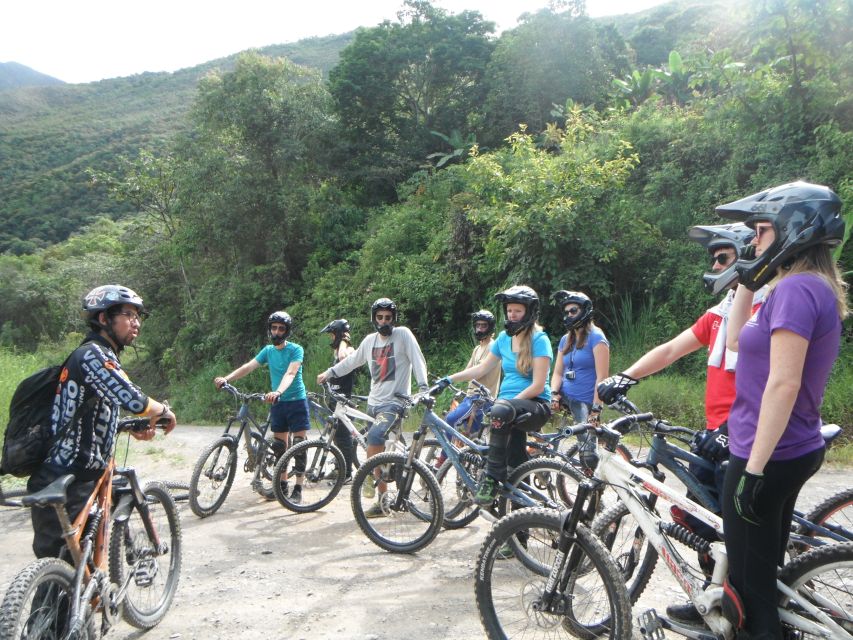
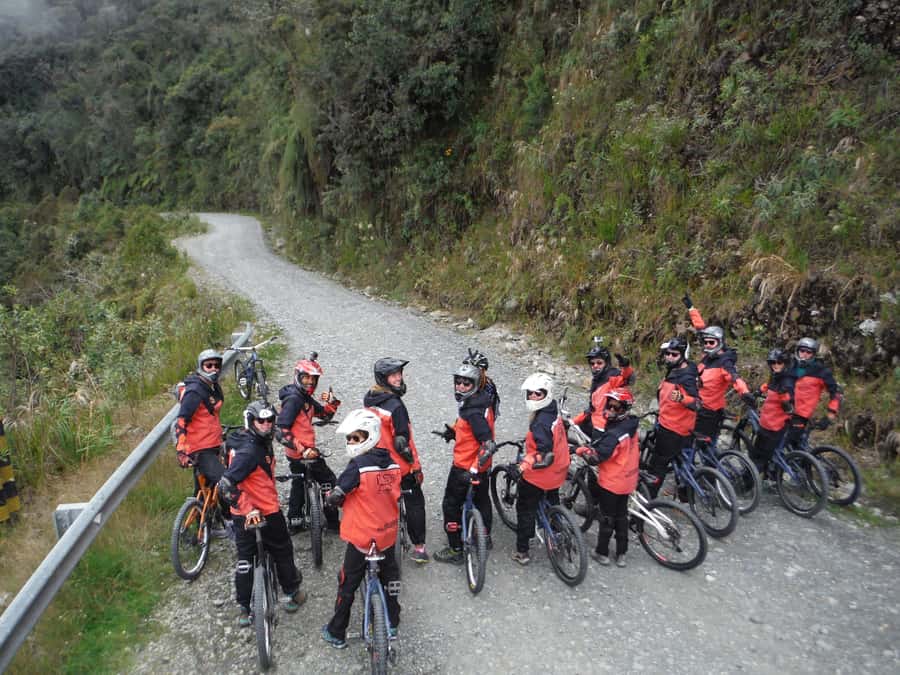
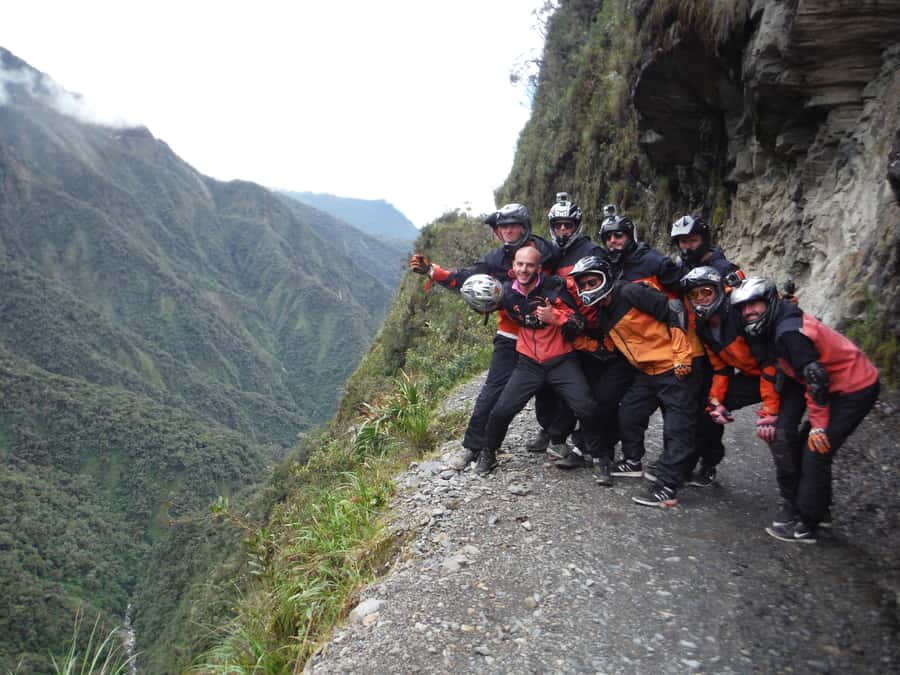
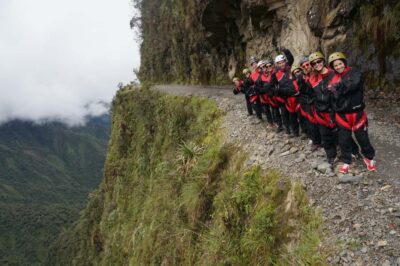
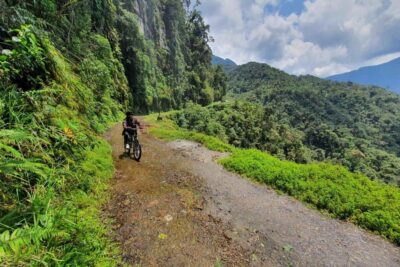
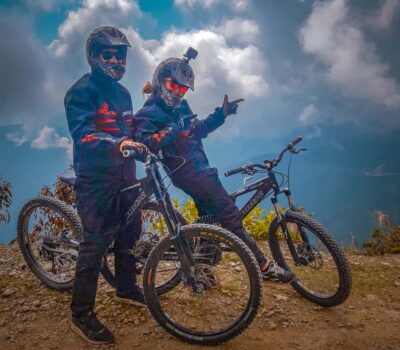
The high, cold mountain scenery gives way to thick vegetation, trees, mist, and low cloud. You ride on a dirt road cut into the mountainside, with the route becoming rougher and more technical than the paved opening.
This four-hour portion includes riding, safety reminders, photo stops, and breaks. The guides stay active throughout, checking bicycles and offering advice as the road changes. A support vehicle is also available when needed, adding a useful layer of security and comfort.
The name creates a dramatic expectation, but the experience is not simply a reckless race downhill. Your attention needs to remain on line choice, braking, surface conditions, and other riders. A guide who explains each section clearly is far more valuable than one who only shouts encouragement, and this is where the operation receives its strongest praise.
Victor has been noted for his fluent English, friendly manner, and close attention to the group. Freddy has also been praised for safe driving and for helping riders feel supported. Guide assignments can change, but the company’s bilingual English- and Spanish-speaking setup is useful if you need clear instructions during a difficult section.
Waterfalls, Mud, and Changing Weather
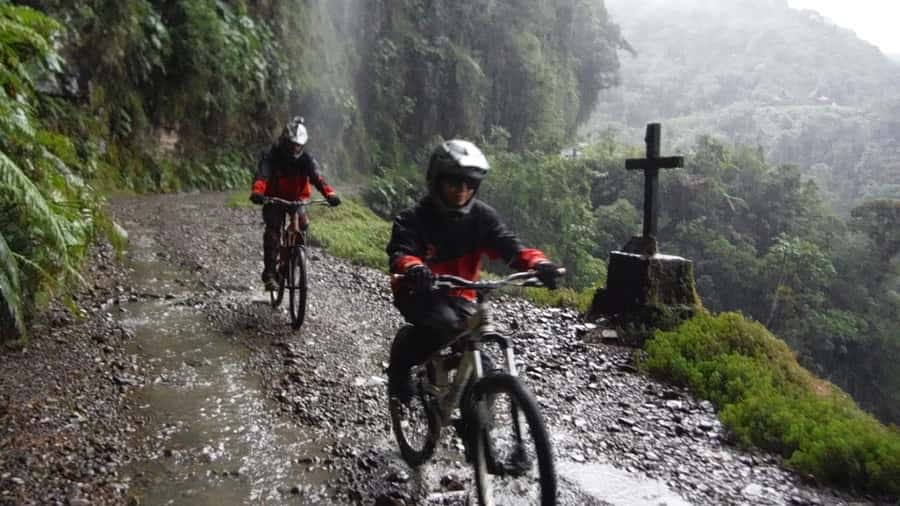
The road’s appeal comes from its constant change. You may ride through mist, pass beneath small waterfalls, cross tiny rivers, and watch the air grow warmer as you lose altitude.
You should expect to get wet and dirty. The route finishes in a hot, lower climate, so the cold clothing you need at the start will feel excessive by the end. Pack a complete change of clothes, swimwear, sunscreen, insect repellent, and sunglasses.
A small daypack is useful for these items, though the operator provides unlimited water and snacks. Cash is also worth carrying for the Death Road tax of 50 bolivianos and for the optional zipline, which is available for an extra payment on the day.
The road is demanding, but the scenery gives you plenty of reasons to pause. One viewpoint stop lasts about 15 minutes and is set aside for photographs and sightseeing. These breaks also help you catch your breath and reset before another section of downhill riding.
What the Bike and Safety Gear Really Mean
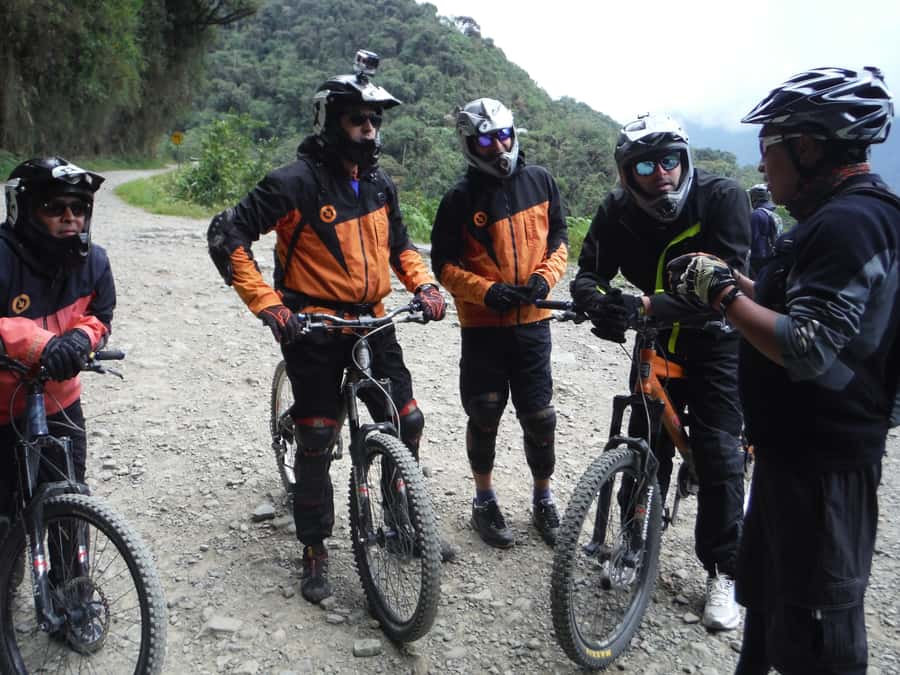
The equipment package is one of the better reasons to choose an organized Death Road tour. You receive a full-face helmet, mountain bike gloves, elbow and knee pads, protective pants and jackets, and a full-suspension downhill mountain bike with hydraulic disc brakes.
Do not expect every bike to look brand-new or high-tech. The important points are working brakes, suspension, and a proper fit. A previous rider specifically noted that the bikes may not look complete, but the brakes and suspension did their job well.
The guides check the bikes at several points, and qualified mechanics are part of the team. First-aid training is also listed among the staff qualifications. None of this removes the need for care, but it means you are not left to manage a mechanical problem alone on a remote mountain road.
The safety approach also depends on you. Listen closely during the briefing, control your speed, and do not copy a faster rider simply because the road looks open. The guides can support you, but they cannot make decisions for you on every bend.
Yolosita Brings Heat and a Welcome Change of Pace
The ride ends at Yolosita, around 1,200 metres above sea level and near the entrance to Bolivia’s Amazon region. By this point, the cold start feels very far away. You are likely to be warm, dusty, and ready for a clean shirt.
A short bus transfer of about 20 minutes takes you to the lunch stop. The final destination is a hotel or resort with a restaurant, showers, and a swimming pool. You get about 105 minutes for buffet lunch and resort time.
This ending adds real value to the day. A basic bike trip could leave you searching for food while covered in mud; here, you can eat, shower, and cool down before the return journey. The buffet and pool have been praised as a satisfying close to an otherwise tiring ride.
Bring swimwear if you want to use the pool. You should also keep a dry change of clothes separate from your riding gear, since the route can involve rain, spray, sweat, and dirt.
The Long Ride Back to La Paz
After lunch and a break, the bus takes about three hours to return to the Vertigo office. This is the least exciting part of the schedule, but it gives you time to rest after the physical effort.
The return journey is also the clearest weakness of the tour. You spend much of the day on the road, and the final bus ride can feel long when you are tired. One person specifically found the van or bus the main area that could be improved.
Still, private transportation removes the need to organize your own way back from Yolosita. That matters because the ride finishes far below La Paz, and arranging separate transport after a full day on the bike would be an unnecessary chore.
Photos, Videos, Food, and the $129 Price
At $129 per person, this is not the cheapest activity in Bolivia. But the price covers a lot: transport from the meeting point and back, guides, bike, protective gear, snacks, unlimited water, buffet lunch, resort facilities, and photos and short videos uploaded to Dropbox.
You are also paying for the logistics of moving people and bikes from La Paz to a high mountain start, then bringing everyone back from Yolosita. The support driver, mechanics, guide team, and equipment would be difficult to arrange independently.
The Death Road tax of 50 bolivianos is extra. So is the zipline, if you decide to add it. I would treat the zipline as optional rather than part of the core experience; the cycling already fills the day.
The photo and video service is a nice extra, especially because stopping to take your own pictures can be awkward on a technical road. The guides make frequent photo stops, so you can enjoy the scenery without constantly handling your phone.
You can cancel up to 24 hours before departure for a full refund, and the reserve-now-pay-later option helps if your Bolivia plans are still shifting. The trip needs at least two people to operate, so check that your chosen date has a confirmed departure.
Who Will Enjoy This Death Road Tour Most?
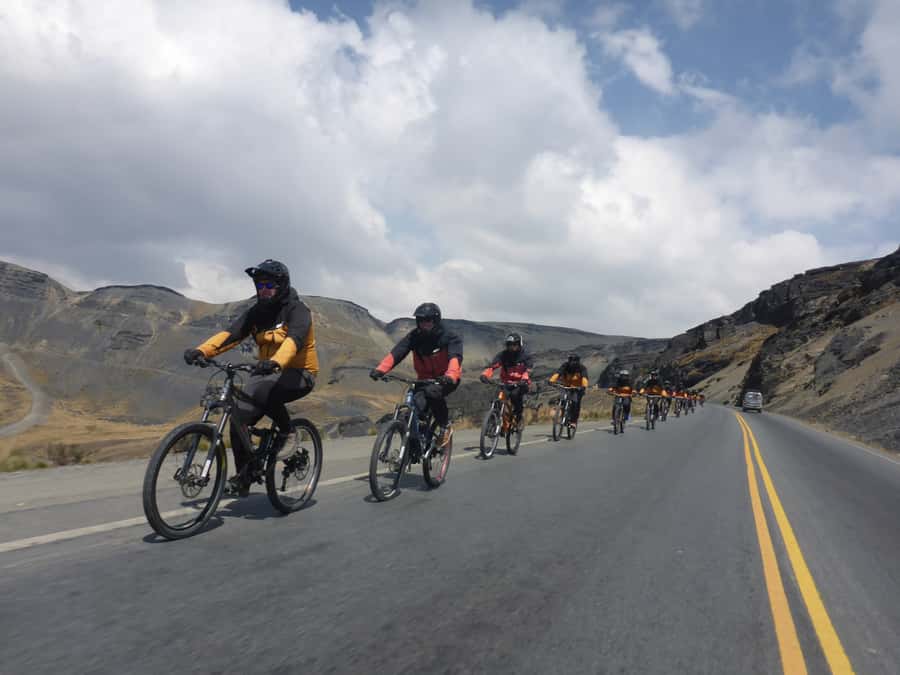
This tour suits you if you want a strong outdoor experience and enjoy the idea of a long downhill ride through several climate zones. It is also a good choice if you prefer having guides, equipment, transport, food, and mechanical support arranged in one package.
You should be comfortable riding a bike before you book. The operator does not accept people who cannot ride, pregnant women, wheelchair users, or people with mobility impairments. There is also a minimum height of 155 centimetres.
The ride works well for mixed-ability groups because guides can give advice and let people move at their own pace. That does not mean the route becomes easy for every rider. You still need to manage a mountain bike for hours and stay alert on dirt, wet surfaces, and changing road conditions.
It is less suitable if you want a quiet nature outing, a short cycle, or a polished luxury day. You will get dirt on your clothes, sweat in the lower sections, and spend several hours in a vehicle. The reward is a memorable route with a genuine sense of movement from the high Andes toward warmer country.
Should You Book It?
I would book this tour if you are in La Paz, can ride confidently, and want one big adventure rather than several small stops. The combination of 64 kilometres of downhill riding, strong protective equipment, bilingual guides, support transport, and a pool-and-lunch finish makes the $129 price reasonable.
Before booking, check the departure minimum, save room in your day for the three-hour return, and pack for both freezing mountain air and hot lowland weather. If those conditions suit you, Vertigo Biking offers a well-supported way to experience Bolivia’s famous Death Road without having to arrange the difficult parts yourself.
FAQ
How long is the Death Road biking tour?
It is a full-day experience. The schedule includes transport, safety briefings, riding, breaks, lunch, pool and shower time, and the return journey to the Vertigo Biking office.
How far do you bike?
The tour covers 64 kilometres of downhill riding.
Where does the tour meet?
You meet at the Vertigo Biking office in La Paz. The tour bus should be parked directly outside the office.
What is the starting elevation?
The tour begins at Cristo de la Cumbre, around 4,700 metres above sea level.
Where does the ride finish?
The cycling ends at Yolosita, around 1,200 metres above sea level.
What equipment is included?
You receive a full-face helmet, pants, jacket, elbow and knee pads, gloves, and a full-suspension downhill mountain bike with hydraulic disc brakes.
Are food and drinks included?
Yes. Snacks during the ride, unlimited water, and a buffet lunch are included.
Are the zipline and Death Road tax included?
No. The zipline costs extra and can be paid for on the day. The Death Road tax of 50 bolivianos is also not included.
Which languages are available?
The live guides speak English and Spanish.
Who cannot join this tour?
The tour is not suitable for pregnant women, people with mobility impairments, wheelchair users, people who cannot ride a bike, or anyone under 155 centimetres tall.
More Tours in Bolivia
More Tour Reviews in Bolivia
Not for you? Here's more nearby things to do in Bolivia we have reviewed
Death Road Biking, compared
 ★ 4.9La Paz: Mountain Bike Down the World’s Most Dangerous RoadFrom $145386 reviews
 ★ 3.4La Paz | Death by Bike Route | LunchFrom $1407 reviews
 ★ 5.0World’s Most Dangerous Road “Private” Mountain Biking TripFrom $1497 reviews
 ★ 4.7From La Paz: 3-Day Biking Tour Death Road & Uyuni Salt FlatsFrom $4294 reviews
Browse the lists this tour appears in