
Reviewed · UYUNI SALT FLATS TOURS
Uyuni: Guided 3-Day Tour Salt Flats & Avaroa National Park
Three days here turn white salt into fire. This route combines the giant Uyuni Salt Flats with flamingo-filled lagoons, volcanic geysers, hot springs, deserts, and the red, green, and white waters of Eduardo Avaroa National Park. I like the broad range of scenery and the fact that meals, transport, accommodation, and an English-speaking guide are included.
I also like the small-group limit of 11 people and the chance to travel in a 4WD rather than a large coach. Guides such as James and Ronaldo have been praised for their humor, information, and care, while drivers such as Oli have earned strong marks for their work. The main drawback is plain: the overnight conditions can be extremely basic and cold, with one account reporting temperatures near -10°C, limited electricity, no heating, and rough roads.
In This Review
- Key points to know before booking
- What the $371 price really includes
- Day 1: Train Cemetery, salt production, and Incahuasi Island
- Day 2: Chiguana, flamingo lagoons, and Red Lagoon
- Day 3: Sol de Mañana geysers and the colored lagoons
- The 4WD ride is part of the deal
- What to pack for cold nights and roadside stops
- Guide quality and group atmosphere
- Accommodation is the main compromise
- Who will get the most from this tour?
- FAQ
- Where does the tour start and finish?
- What time is hotel pickup?
- Can I be picked up at Uyuni Airport?
- How many people are in the group?
- Are meals included?
- Are entrance fees included?
- Can I visit Incahuasi Island during the rainy season?
- Is this tour suitable for children or people with health concerns?
- My booking call
Key points to know before booking
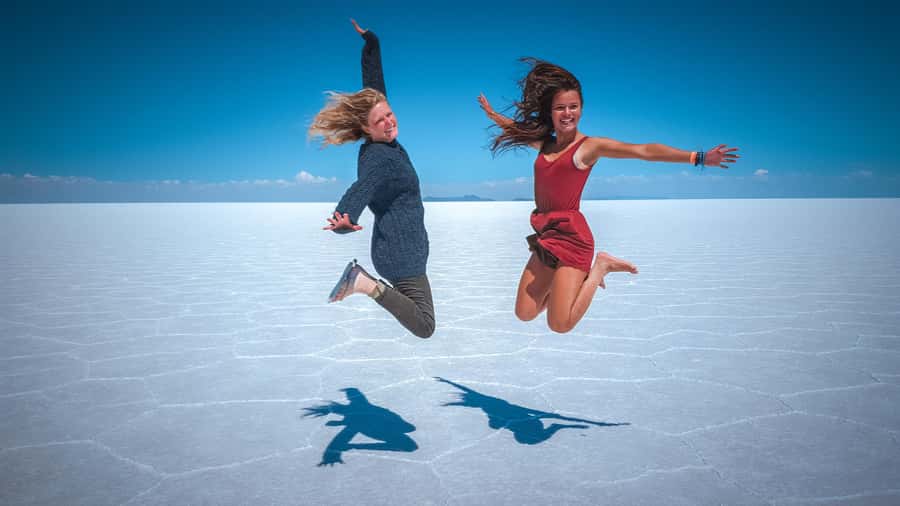
- The first day is the visual star: You get the Train Cemetery, Colchani, the salt flats, Incahuasi Island, the salt museum, and sunset photography.
- The route goes far beyond the salt: Days two and three bring flamingos, volcanoes, fumaroles, deserts, hot springs, and colored lagoons.
- The $371 price covers the essentials: A 4WD, guide, driver, seven meals, and two nights of accommodation are included.
- Expect hard conditions: High altitude, dusty roads, cold nights, shared toilets, and basic rooms are part of the bargain.
- Bring cash for extras: Incahuasi, the national park, hot springs, roadside toilets, drinks, and personal expenses cost extra.
- The tour starts and finishes in Uyuni: It does not include a standard finish in San Pedro de Atacama, though some departures may make a Chile-border stop.
What the $371 price really includes
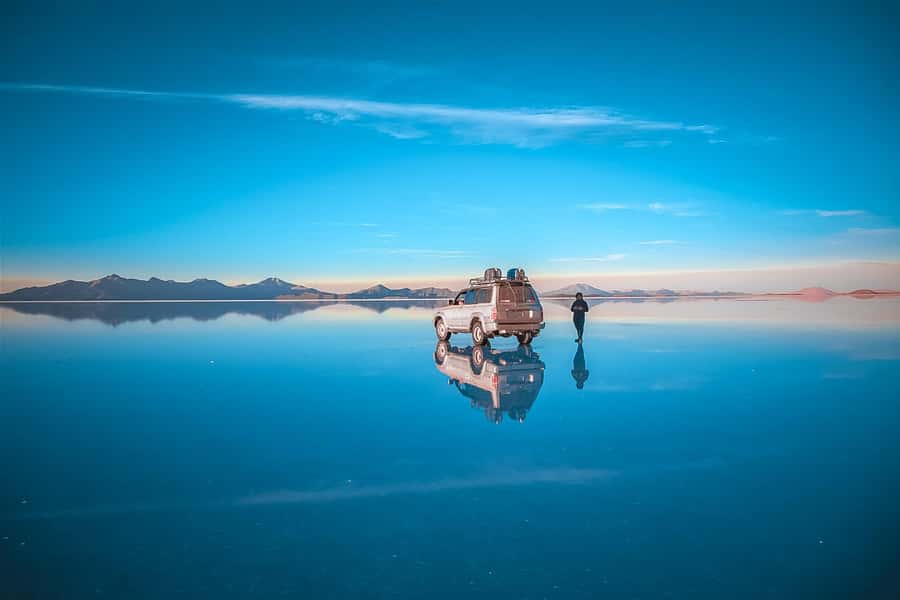
At $371 per person, this is not simply a salt-flat photo outing. You are paying for three days of remote transport in a 4WD, a local driver, a certified English-speaking guide, three lunches, two dinners, two breakfasts, and two nights away from Uyuni.
That matters because Eduardo Avaroa National Park is not an easy place to visit independently. The roads are rough desert tracks, distances are long, and the route has few services. Having a vehicle, driver, food, and a planned overnight route saves you from arranging several difficult pieces yourself.
The group is limited to 11 people, although the number of people in your individual 4WD may vary. A rooftop luggage rack is provided, but I would still pack lightly and keep a small day bag inside the vehicle with your jacket, water, gloves, camera, and passport.
The price does not cover several important costs:
- Isla Incahuasi entrance: 30 Bs
- Eduardo Avaroa National Park entrance: 150 Bs
- Hot springs entrance: 6 Bs
- Roadside toilets: 30 Bs
- Drinks, toiletries, personal expenses, and a sleeping bag
The entrance charges alone add up to 186 Bs if you visit every listed paid site. Bring Bolivian cash, since you should not count on card payment in remote areas.
You can also read our reviews of more guided tours in Uyuni
Day 1: Train Cemetery, salt production, and Incahuasi Island
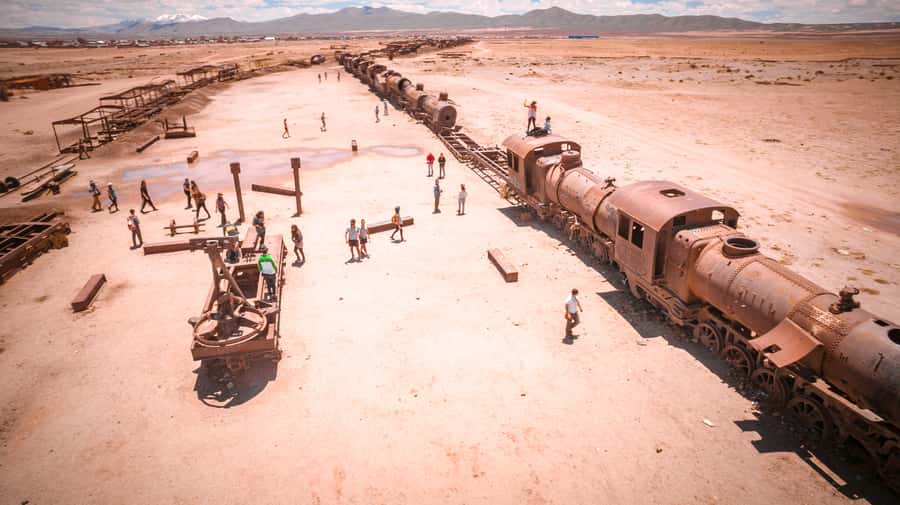
Pickup takes place between 10:15 and 10:30 a.m., with the tour leaving Uyuni at about 10:40. The first stop is the Train Cemetery, an eerie collection of abandoned locomotives from the eighteenth and early twentieth centuries.
This is a good opening stop because it gives you time to test your camera, meet the group, and see something different before the white salt begins. The rusting metal makes strong subjects for photographs, especially against the empty ground around Uyuni.
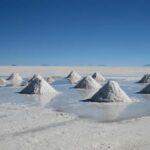
Next comes Colchani village, where you can see small-scale salt production and browse an artisanal market. There is also a museum, giving you a short look at how salt shapes local work and commerce rather than treating the flats as nothing more than a giant photo set.
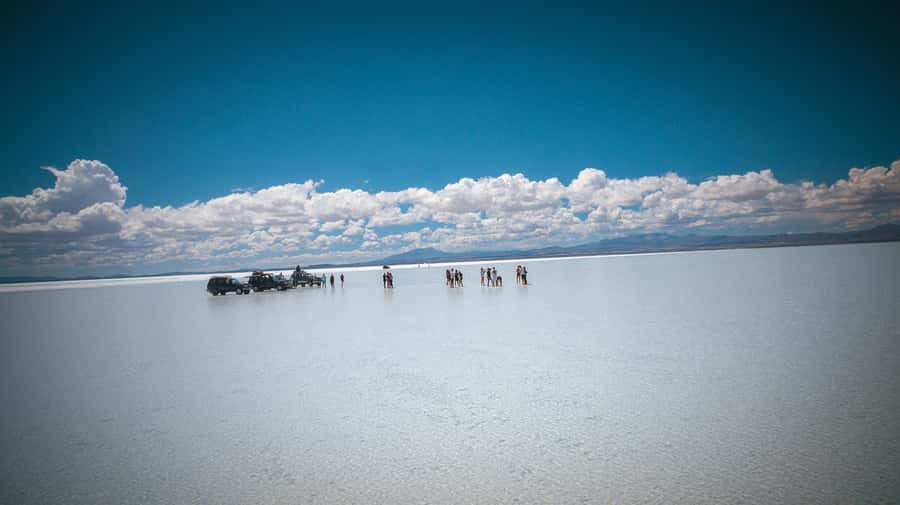
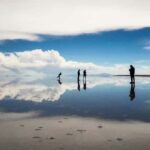
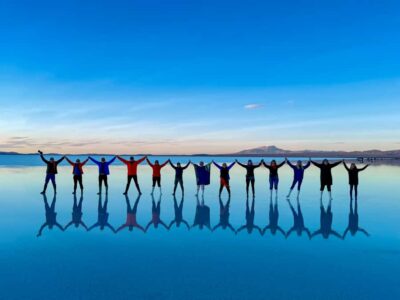
Then the 4WD reaches the Uyuni Salt Flats. At about 3,663 meters above sea level and covering roughly 12,000 square kilometers, the flats are vast enough to make normal distances feel unreliable. The surface can look almost perfectly white and flat, but the famous salt patterns, wet patches, and distant volcanoes give the scene texture.
Stops commonly include salt eyes, which are openings or wet patches in the salt crust, and a salt hotel-museum built entirely from salt blocks. You will also see the Dakar Monument and an area displaying flags from around the world.
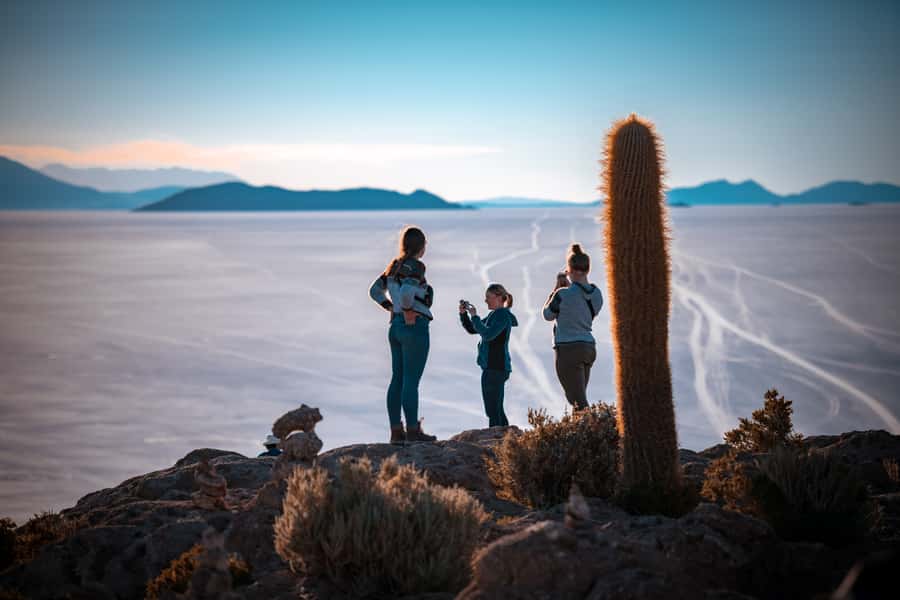
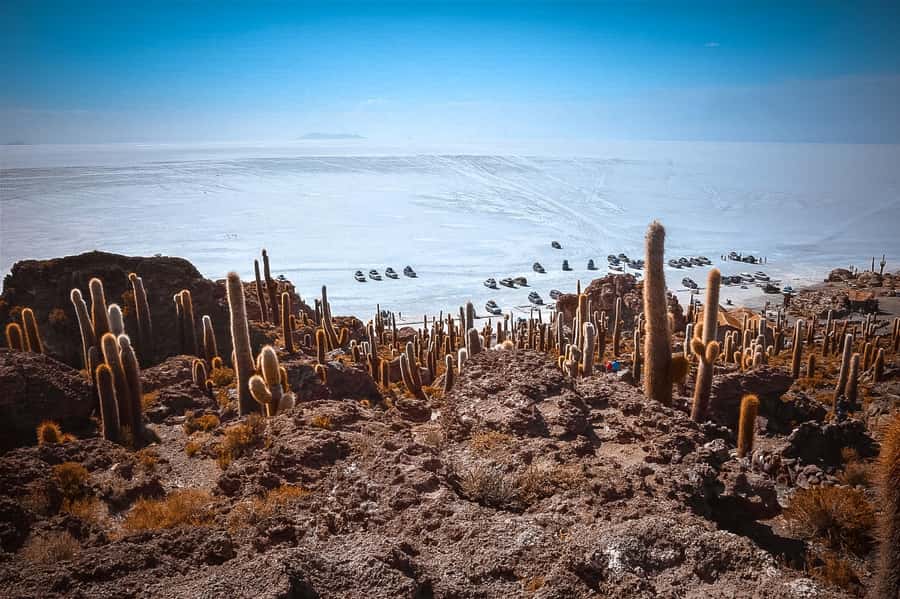
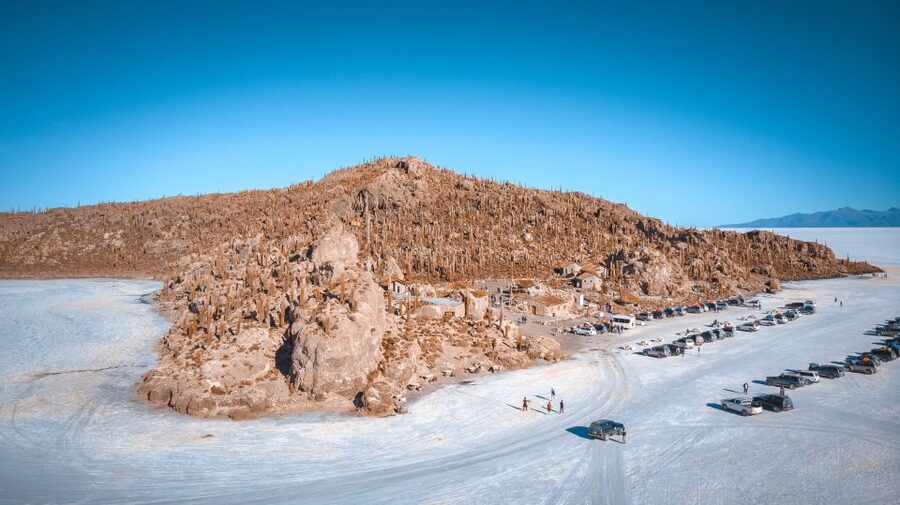
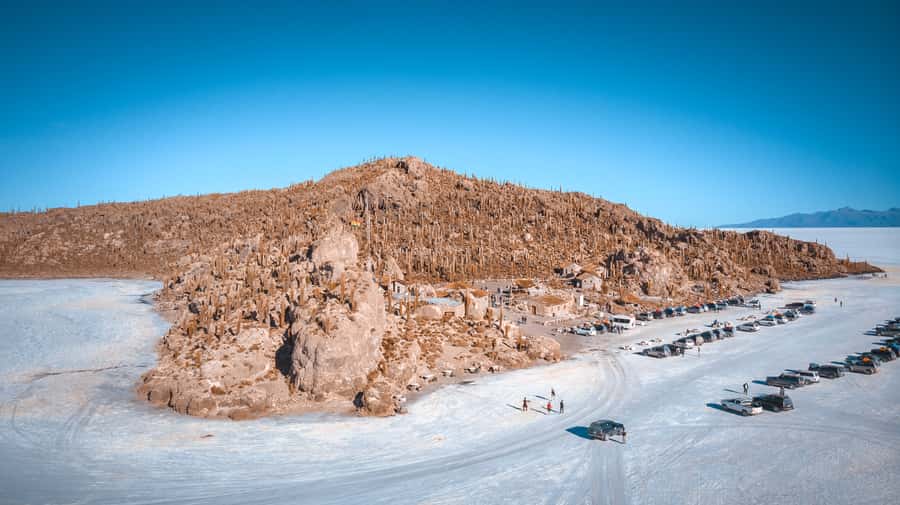
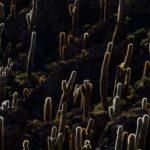
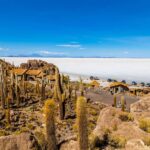
The day’s main stop is Incahuasi Island, where giant cacti rise from a rocky island in the middle of the salt. The contrast is remarkable: pale salt below, dark rock underfoot, and tall cactus silhouettes above you. From here, you get one of the clearest wide views across the flats.
There is an important seasonal catch. From January through April, rain can make Incahuasi inaccessible, so the tour may visit the island only outside the rainy season.
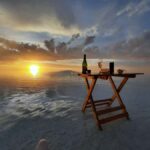
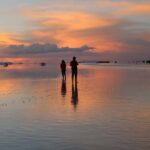
The day ends with time for sunset and, according to the plan, a glass of wine before dinner. Drinks are listed as excluded, so I would confirm whether that wine is supplied or whether you should buy it separately. You then sleep in a hostel with four-, five-, or six-bed rooms and a shared toilet.
Day 2: Chiguana, flamingo lagoons, and Red Lagoon
Day two trades the brilliant white of Uyuni for the dry, rugged scenery of the national park. After breakfast, the route passes through Chiguana and heads toward the Ollague lookout point, with broad views of volcanic terrain and open desert.
The main wildlife stops are Cañapa, Hedionda, and Chiarcota lagoons. These waters attract large numbers of flamingos, and you may see Chilean, James, and Andean flamingos. The birds give the day a welcome change of pace after the stark salt flats, and the lagoons often provide the best chance for close wildlife photographs.
Lunch is included, which is more valuable here than it may sound. You spend much of the day far from shops and restaurants, so carrying snacks and water is still wise even though three lunches are covered.
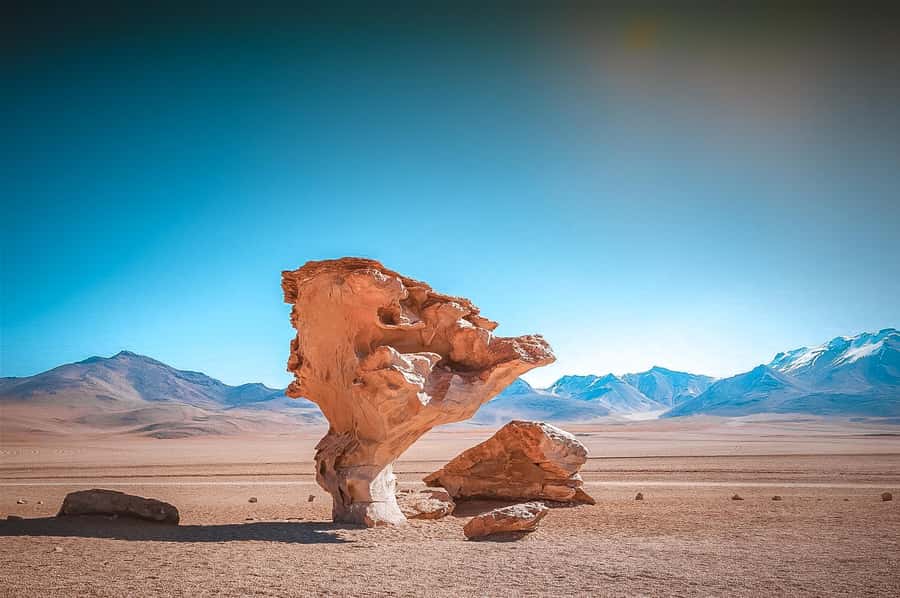
After lunch, the road reaches the Siloli Desert and the Stone Tree, a naturally shaped rock formation that looks almost planted in the sand. The stop is brief but memorable because it shows how wind and erosion have carved the surrounding rock into strange forms.
The destination is Red Lagoon, or Laguna Colorada, a shallow red-toned lake known for its flamingos. The color can vary with conditions, so do not expect the same shade in every photograph. The flamingos, mineral-rich water, and surrounding desert make this one of the most unusual stops on the route.
You spend the second night in the community of Huayllajara. The accommodation is described as hotel lodging with shared six-person arrangements and a shared toilet, though the exact place may change when road access or local conditions require it.
This is the night to take the cold seriously. A recent account describes very low temperatures, no heating, limited hot water, and electricity available for only about three and a half hours in the evening. Pack a warm sleeping layer, gloves, a hat, and a sleeping bag if you have one, since the sleeping bag is not included.
Day 3: Sol de Mañana geysers and the colored lagoons

The final day begins very early. That early start is necessary for the visit to Sol de Mañana, an active volcanic area with fumaroles, steaming holes, bubbling mud, and a strong sulfur smell.
The geysers are most atmospheric in the cold morning air, when steam rises clearly above the ground. You should keep to the guide’s instructions here, since the surface around geothermal areas can be unstable and hot. This is not a place for casual wandering.
Next comes the Polques hot springs. You can pay the 6 Bs entrance fee and soak while looking across the surrounding volcanic scenery. The water provides welcome relief after the cold morning, but remember to bring a towel and warm clothing for getting out.
The route then continues through the Salvador Dalí Desert, named for its surreal rock formations and unusual colors. The shapes are natural, not arranged for visitors, and they give the drive a dreamlike quality without requiring a long walk.
At the viewpoint for Green Lagoon, White Lagoon, and Licancabur Volcano, you get one of the route’s strongest final panoramas. Green Lagoon owes its color to mineral content, while Licancabur forms a dramatic volcanic backdrop near the Bolivian-Chilean border.
Some departures may stop at the Chilean border to transfer people continuing toward San Pedro de Atacama. This can add time, and one account describes several tiring hours spent on border-related transfers. If you are returning directly to Uyuni, ask how this part of the route may affect your schedule.
After lunch, the return journey includes bofedales, or high-altitude wetlands, along with more rock formations. Arrival in Uyuni is scheduled for about 6:30 p.m., though road conditions, border transfers, weather, and other delays can change that time.
The 4WD ride is part of the deal
A 4WD is essential for this route, but it does not make the road comfortable. Expect dusty, bumpy desert tracks and long stretches inside the vehicle. If you have back problems, this is a poor match, and the operator also excludes people with heart problems, epilepsy, serious altitude sickness, claustrophobia, and children under 10.
The vehicle has a rooftop luggage rack, which helps with space but does not mean you should bring a large suitcase. A soft bag is easier to load and less awkward at basic hostels.
The altitude also affects the pace of the trip. The salt flats alone sit at about 3,663 meters, and the route climbs higher in the volcanic areas. If you know you react badly to altitude, this three-day circuit may be too demanding.
A few more Uyuni tours and experiences worth a look

What to pack for cold nights and roadside stops
The supplied packing advice is sensible, but I would treat it as the minimum. Bring comfortable shoes, long pants, a long-sleeved shirt, a jacket, gloves, a scarf, a hat, and extra warm layers.
You also need a towel for the hot springs, drinks, toiletries, and your passport or ID card. A sleeping bag is not included, and I would consider it one of the most useful additions for the second night.
Keep toilet paper and small cash handy. Roadside toilet stops cost 30 Bs, and services are limited. Alcohol and drugs are not allowed, and pets cannot join the trip.
Guide quality and group atmosphere
The English-speaking guide is one of the strongest parts of the arrangement. James has been singled out for being funny, human, and engaging, while Ronaldo has been praised for his information and enthusiasm. The driver-guide combination of James and Oli has also received particularly warm praise.
Of course, you cannot choose which guide you receive unless the operator confirms it. Still, the repeated praise for the guiding and driving suggests that staff quality can make a major difference on a demanding route.
A group of up to 11 is small enough to keep the vehicle manageable and make it easier to hear the guide. It is not private, though, and shared rooms mean you should be comfortable with limited personal space.
Accommodation is the main compromise
The accommodation keeps the price reasonable, but it is not a luxury feature. The first night uses shared hostel rooms and a shared toilet. The second night is also shared, with the possibility of very cold rooms and limited utilities.
An optional upgrade is available for two hostel nights. It adds a private room, private toilet, toilet paper, and a towel. If you are sensitive to cold or value privacy, this upgrade may be worth considering, but confirm the extra price before payment.
I would not book this route expecting comfortable hotels each night. I would book it for the scenery and accept the rooms as part of the remote setting.
Who will get the most from this tour?
I think this tour suits you if you want to see both the salt flats and Eduardo Avaroa National Park in one organized trip. You get far more variety than a one-day Uyuni outing: flamingos, volcanoes, hot springs, geysers, strange rock formations, and colored lagoons all come into play.
It is also a good fit if you prefer having meals, transport, and a guide arranged in advance. The route is too remote for casual improvisation, and the 4WD access is a real practical benefit.
I would hesitate if you want a gentle holiday, need reliable heating and hot water, or dislike long hours on rough roads. I would also think twice if your main goal is only the salt flats, since day one provides the most iconic sights and the remaining route demands more time and physical tolerance.
FAQ
Where does the tour start and finish?
The tour starts in Uyuni City and returns to Uyuni City. Arrival back at the Uyuni office is scheduled for approximately 6:30 p.m. on day three.
What time is hotel pickup?
Hotel pickups take place between 10:15 and 10:30 a.m. You should wait in your hotel lobby during that window. The tour starts at about 10:40 a.m.
Can I be picked up at Uyuni Airport?
Yes, but you need to provide your flight time and airline name in advance. If your hotel is not on the pickup list, go to the office at the corner of Colón Street and Camacho by 10:00 a.m.
How many people are in the group?
The group is limited to 11 participants. Transport is provided in 4WD vehicles with rooftop luggage racks.
Are meals included?
Yes. The package includes three lunches, two dinners, and two breakfasts. Drinks are not included.
Are entrance fees included?
No. You should budget separately for Isla Incahuasi, Eduardo Avaroa National Park, the Polques hot springs, and roadside toilets. Personal expenses and drinks are also extra.
Can I visit Incahuasi Island during the rainy season?
From January through April, Incahuasi Island may not be accessible. Weather and road conditions can also change the route or overnight location.
Is this tour suitable for children or people with health concerns?
It is not suitable for children under 10, people with back, heart, or epilepsy conditions, people with claustrophobia or altitude sickness, or anyone over 95. The cold, altitude, and rough roads make this a physically demanding trip.
My booking call
I would book this tour if I wanted the full Uyuni region in three days and was prepared for basic accommodation, cold nights, and rough roads. The salt flats are the headline, but the flamingo lagoons, geysers, hot springs, and Licancabur views make the longer route worthwhile for anyone who wants more than a single spectacular day.
I would choose a shorter salt-flat trip instead if comfort matters more than variety. Before paying, confirm the second-night accommodation, ask about the optional private-room upgrade, bring enough warm clothing, and clarify any Chile-border transfer. With those points settled, $371 is a fair price for a remote, scenery-heavy circuit with food, transport, and English-language guiding built in.
More Guided Tours in Uyuni
More Tours in Uyuni

More Tour Reviews in Uyuni
Not for you? Here's more nearby things to do in Uyuni we have reviewed
Uyuni Salt Flats Tours, compared
 ★ 4.5From La Paz: Uyuni Salt Flat Tour & Overnight Roundtrip BusFrom $275327 reviews
 ★ 4.5Uyuni tour express from La Paz by busFrom $269172 reviews
 ★ 4.4From Uyuni: Red Lagoon & Uyuni Salt Flats 3-Day Guided TourFrom $354160 reviews
 ★ 4.3La Paz: 5-Day Uyuni Salt Flats by BusFrom $486153 reviews
Browse the lists this tour appears in