
Reviewed · UYUNI SALT FLATS TOURS
Roundtrip to the Uyuni Salt Flat and the Colored Lagoons
The salt flat is only the beginning. This four-day route through Bolivia’s Potosí Department combines the vast Uyuni Salt Flat with flamingo-filled lagoons, geysers, hot springs, volcano views, and the stark Siloli and Salvador Dalí deserts. I love that you get far more than a quick salt-flat photo stop.
I also like the small 4×4 groups of up to six and the family-run feel, with a Villamar hostel and a salt hotel rather than standard city lodging. The main drawback is altitude: you’ll travel between roughly 3,600 and 5,000 meters, with early starts and basic facilities, so this is not an easygoing holiday for everyone.
At $458 per person, the package covers transport, three nights, and seven included meals, making it a strong value if you want the full San Pedro–Uyuni route. Just budget extra for park and attraction fees, bathrooms, hot showers, snacks, water, and border costs.
In This Review
- Five things to know before you book
- From San Pedro to Hito Cajón and the Bolivian highlands
- Laguna Blanca, Laguna Colorada, and volcano country
- Sol de la Mañana and the hot springs at Laguna Polques
- Siloli Desert and the Salvador Dalí Desert
- Incahuasi Island and the vast Uyuni Salt Flat
- Three nights, simple meals, and basic comforts
- Is $458 per person good value?
- Guide language and the human side of the trip
- Altitude, packing, and who should avoid this route
- FAQ
- How long is the Uyuni Salt Flat tour?
- How many people travel in each 4×4?
- What accommodation is included?
- Are park and attraction entrance fees included?
- What language does the guide speak?
- What should I bring?
- Should you book this four-day Uyuni route?
Five things to know before you book
- The salt flat is one part of a much larger route: You’ll also see Laguna Colorada, Laguna Blanca, Sol de la Mañana, Siloli Desert, Salvador Dalí Desert, and Andean volcanoes.
- Altitude is a serious part of the trip: The route reaches up to 5,000 meters, and the tour is not suitable for people with altitude sickness, certain medical conditions, or pregnancy.
- The 4×4 groups stay small: Each car carries up to six people, which matters on long stretches of rough highland road.
- Lodging changes from night to night: The first and third nights use shared rooms with shared bathrooms at a Villamar family hostel; the second night is a private double room at a salt hostel.
- Your guide may shape the whole trip: Spanish is the listed tour language, but Zima was especially praised for explaining sights in both Spanish and English and helping people feel comfortable.
From San Pedro to Hito Cajón and the Bolivian highlands
The journey begins with a minibus transfer from San Pedro de Atacama to Hito Cajón, the Chile–Bolivia border. The return transfer from Hito Cajón to San Pedro is also included, so you are not left to arrange your own way back across the frontier.
You must pass through both the Chilean and Bolivian border controls. Bring your passport and a visa if your nationality requires one. Border procedures can turn a simple morning into a slow one, so keep documents easy to reach and do not pack them deep inside your luggage.
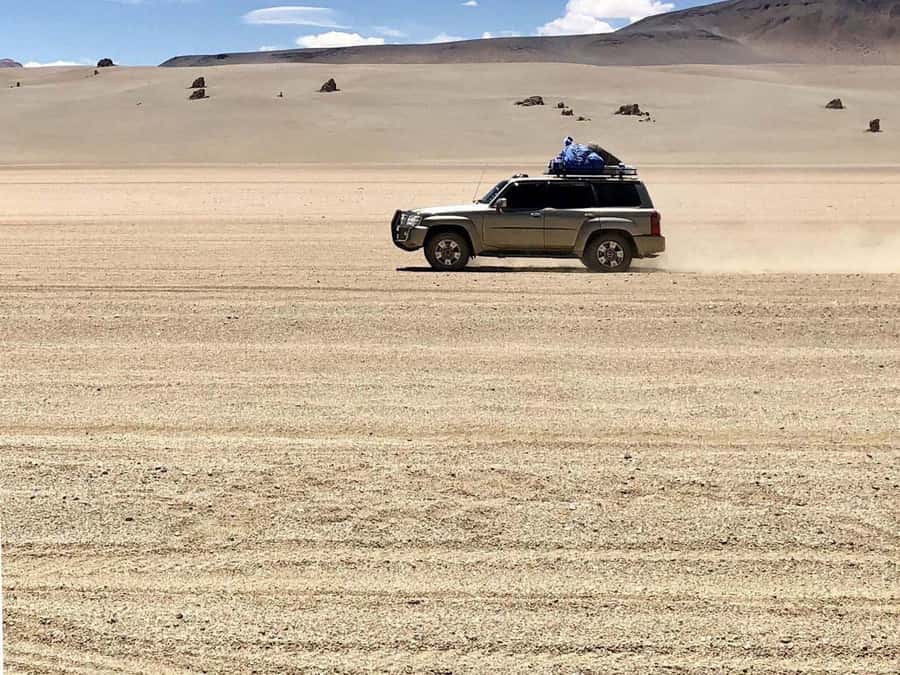
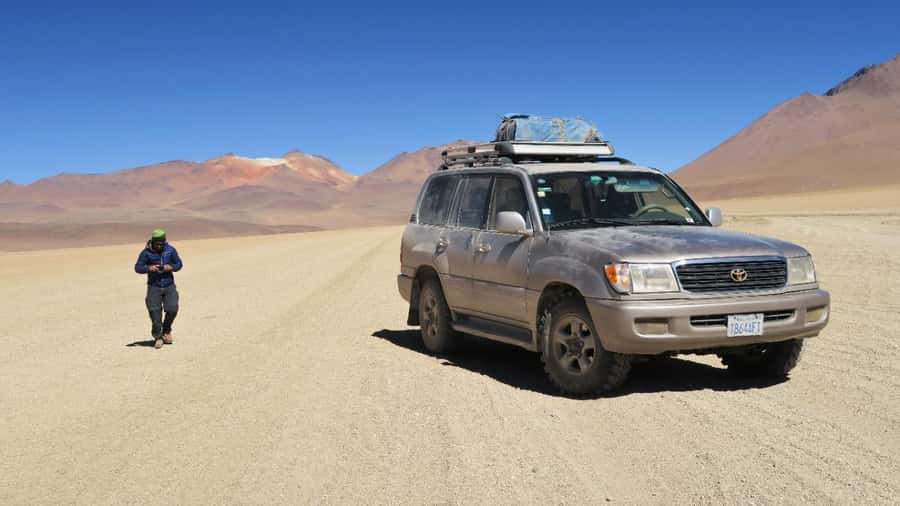
After the border crossing, the main route continues by 4×4. This is the right vehicle for the remote Andean Altiplano, where roads can be rough, distances are large, and the scenery changes from volcano country to open salt plain.
Pickup is included, and you should wait in your hotel lobby 30 minutes before the scheduled time. The driver will wait no longer than five minutes after pickup, so this is one morning when being early is much wiser than being fashionable.
The route is designed for small groups, with no more than six people per car. That gives you a better chance of seeing out the windows and makes stops less unwieldy, though four days in one vehicle still requires patience and a friendly attitude toward your fellow passengers.
You can also read our reviews of more tours and experiences in San Pedro De Atacama.
Laguna Blanca, Laguna Colorada, and volcano country
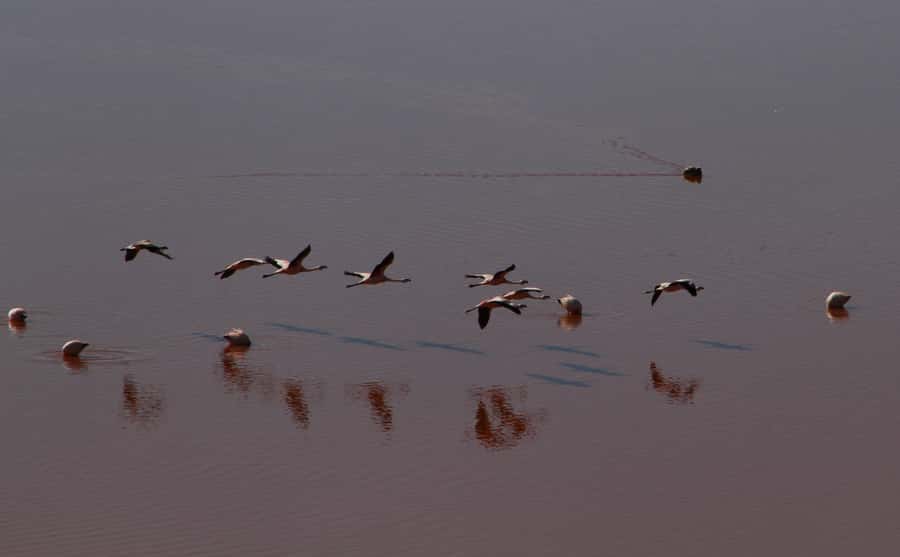
The colored lagoons are among the strongest parts of the trip. Laguna Blanca brings pale mineral tones and a broad, open setting, while Laguna Colorada is known for its red coloring and high-altitude setting. The contrast with the surrounding earth and sky is what makes these stops feel so unusual.
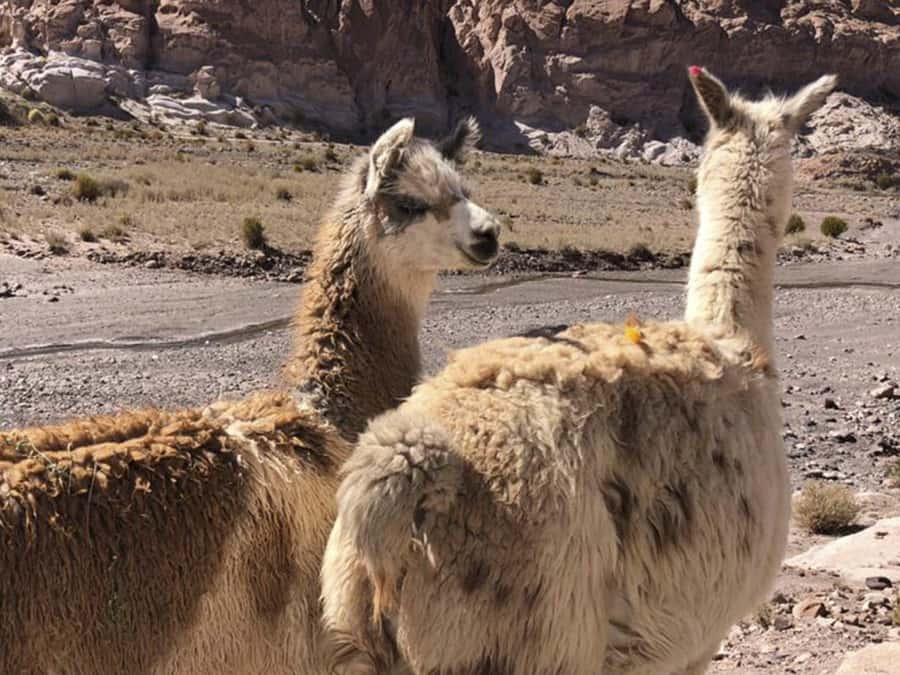
You may also spot flamingos feeding in the lagoons and vicuñas moving across the open ground. The tour places you in a part of Bolivia where wildlife appears against a nearly empty backdrop, rather than inside a formal zoo or carefully managed viewing area.
Volcano views add scale to the route. Licancabur, Ollagüe, and Tunupa rise toward nearly 6,000 meters, while the road itself reaches between 3,600 and 5,000 meters. You do not need to be a serious trekker to appreciate these mountains, but short walks and viewpoints can feel demanding at this elevation.
I would treat every stop as a chance to move slowly. The point is not to rush from one photo to the next. Take a few minutes to look at the colors, watch for wildlife, and notice how little development surrounds you.
The exact order of stops can vary, but the tour is built around the same collection of lagoons, deserts, geysers, and salt formations. That flexibility is normal for a remote 4×4 route, though you should ask your guide about the day’s plan if you need a precise schedule.
Sol de la Mañana and the hot springs at Laguna Polques
Sol de la Mañana is the route’s major geyser field. Steam, mineral ground, and volcanic activity give the stop a rough, otherworldly character. It is not a polished attraction with railings and paved paths, so follow your driver’s instructions and watch your footing.
The geyser field is also one of the places where altitude becomes impossible to ignore. At this height, even a short walk can leave you breathing harder than expected. The tour specifically excludes people with altitude sickness, and that warning deserves serious attention.
Later, you can relax at the natural hot springs near Laguna Polques. The entry fee is listed separately at 6 Bs, and you should carry a towel and warm clothing for the transition between cold air and hot water.
The hot springs are a welcome pause after time in the 4×4. Still, do not expect a spa day. Facilities are simple, and hot showers at the accommodation on the second and third nights cost about 20 Bs each, subject to change.
Laguna Blanca, the geysers, and Laguna Polques show why this route is more than a standard salt-flat excursion. You get volcanic activity, mineral water, and high-altitude scenery in the same journey, with each stop offering a different kind of visual experience.
Siloli Desert and the Salvador Dalí Desert
The Siloli Desert brings a harsher style of scenery, with wind-shaped rock and wide stretches of bare ground. Its appeal is not comfort. It is the sense of being far from normal roads, towns, and familiar signs of daily life.
The Salvador Dalí Desert is named for its surreal appearance. The rock formations and muted colors can look like a painting, especially when the light changes. I would keep your camera ready, but do not let photography make you miss the scale of the place.
These desert stops also help break up the long route between the lagoons and the salt flat. You are not simply driving to a single headline attraction. Each section adds a new texture and color to the journey.
The highland flora and fauna are part of the experience too. You may see vicuñas and flamingos, while the vegetation remains sparse and adapted to the cold, dry conditions. The setting can feel severe, but it is not empty; look closely and you will find signs of life.
Incahuasi Island and the vast Uyuni Salt Flat
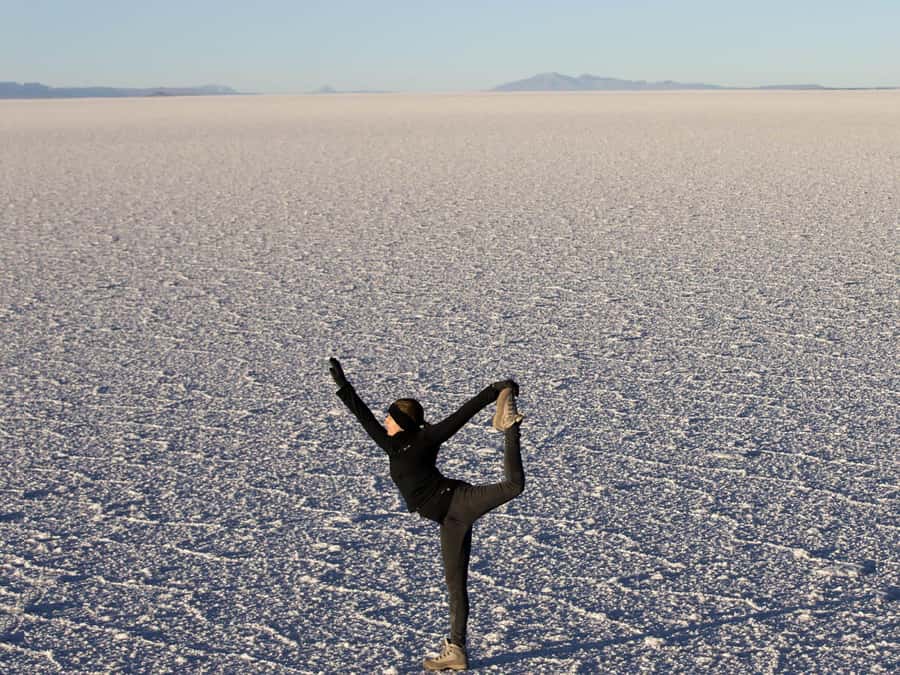
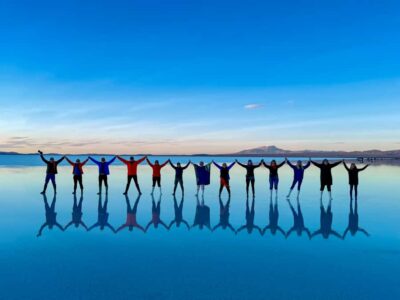
The Uyuni Salt Flat is the famous centerpiece, and its size explains why the 4×4 is essential. The flat stretches across an enormous white expanse, giving you the wide-open views that make this place so easy to recognize in photographs.
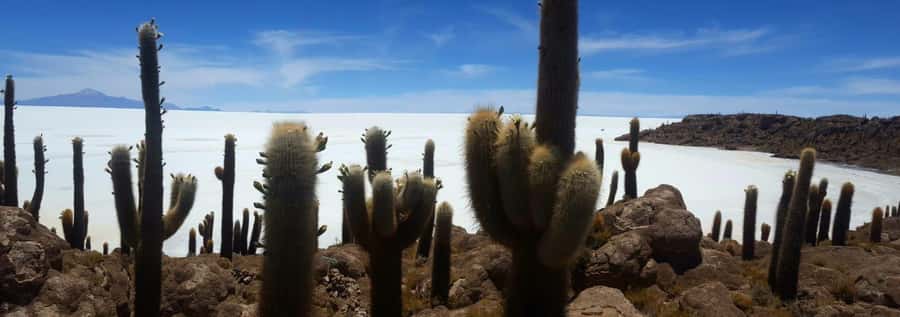
Incahuasi Island offers a different view of the salt flat. Instead of standing on an uninterrupted white plain, you see giant cacti and a rocky rise surrounded by salt. The entrance fee is listed at 30 Bs and is not included in the tour price.
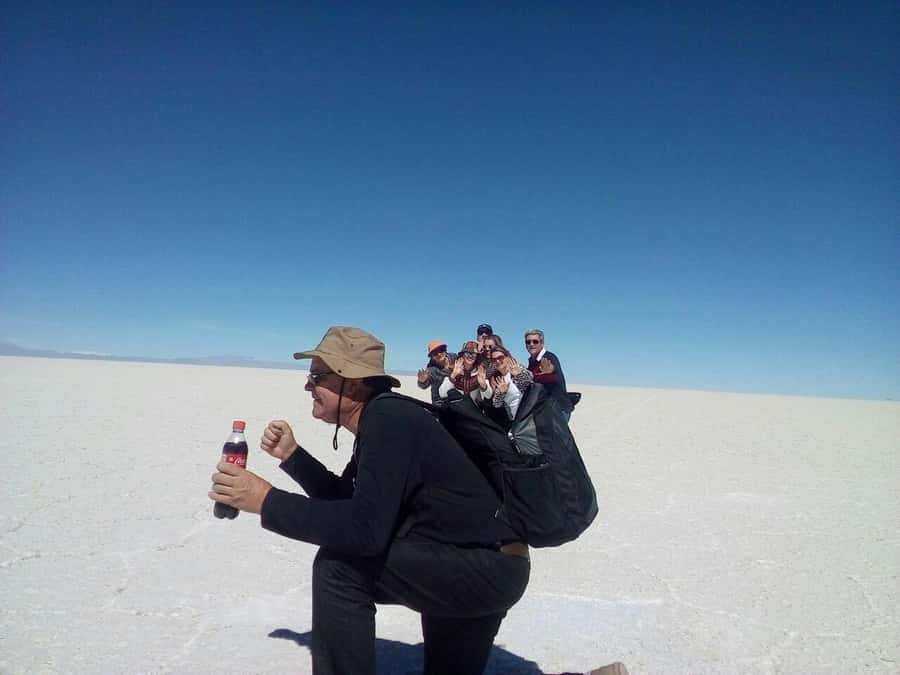
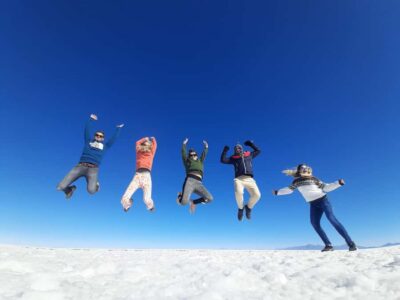
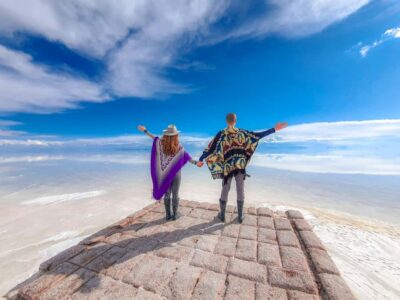
You should expect time for photographs here, including the classic perspective tricks made possible by the flat surface. The quality of your pictures will depend on light, weather, and how crowded the stop feels that day, so keep expectations flexible.
The route also includes a salt hostel for the second night. Staying in a building made with salt gives the trip a strong sense of place, but it does not mean luxury. The accommodation is listed as a private double room, while the first and third nights are shared rooms at a family hostel in Villamar.
A sunset is another major draw. The open salt plain gives the sky plenty of room, and the tour is designed to provide a chance to capture a memorable sunset. Timing depends on the route and conditions, so treat it as an important opportunity rather than a guaranteed private viewing.
Three nights, simple meals, and basic comforts
The accommodation pattern is practical rather than fancy. Your first night is at a Villamar family hostel in a shared room with a shared bathroom. The third night uses the same type of arrangement, while the second night is at the Hostal de Sal in a private double room.
That change in lodging is useful to understand before booking. If you need a private bathroom every night, this is not the right trip. Bathrooms along the route can cost about 20 Bs, and hot showers on the second and third nights cost about 20 Bs.
Meals included are four breakfasts, three lunches, and three dinners. A vegetarian meal was specifically praised, which is useful if you do not eat meat. Even so, bring extra snacks because the package does not cover additional food between scheduled meals.
Bottled water is also excluded. Bring enough for the day or plan to buy it along the route, and carry some Bolivian currency for small purchases. It is sensible to pack toilet paper and a towel as well, since these practical items were not clearly explained before departure for at least one booking.
The early starts are part of the bargain. They allow the vehicle to cover a large route and reach major sights at useful times, but you should not expect long mornings in bed. Warm layers, comfortable shoes, and clothes you can add or remove are essential.
Is $458 per person good value?
I think the price is fair for what is covered. You receive round-trip border transfers from San Pedro, three nights of accommodation, transport in a 4×4, a local driver-guide, and seven meals across four days.
The advertised extra fees add up to 203 Bs before personal spending: 150 Bs for Eduardo Avaroa Protected Area, 6 Bs for Polques Hot Springs, 30 Bs for Incahuasi Island, and 17 Bs for the border tax. These amounts can change without notice.
You should also allow for bathroom use, hot showers, snacks, bottled water, and any personal expenses. Airport transfers are not included, and neither is travel insurance. Once those costs are added, your real budget will be higher than $458.
The value is strongest if you are already in San Pedro and want a single organized route into Bolivia and back. The package removes the need to arrange several vehicles, accommodations, meals, and border transfers separately.
The trade-off is comfort. Shared rooms, simple bathrooms, extra fees, basic English support, and long 4×4 days keep the cost below a more polished private trip. For many people, that is a reasonable exchange for seeing this much of the Altiplano in four days.
Guide language and the human side of the trip
The listed tour language is Spanish, and the driver-guide is described as a local Spanish speaker with basic English. You should not assume every guide will provide detailed explanations in fluent English.
One guide specifically praised by name is Zima from Kantuta Tours. Zima made an effort to explain the sights in both Spanish and English, helped people feel comfortable, and took time to show the wider range of Bolivia rather than focusing only on the salt flat.
That personal touch matters on a route with long drives and simple lodging. A considerate guide can make border crossings, altitude changes, meal stops, and accommodation changes much easier to handle.
At the same time, confirm the guide language before departure if English explanations are important to you. The official details identify Spanish as the main language, so Zima’s bilingual approach should be treated as a welcome possibility, not a promise for every departure.
The operator is described as a local family business, which suits the nature of the route. You stay in family-style accommodation and see remote parts of Bolivia that are difficult to reach without local transport and knowledge of the roads.
Altitude, packing, and who should avoid this route
Altitude is the main issue to consider. The tour travels from about 3,600 to 5,000 meters, with volcanoes approaching 6,000 meters, and it is specifically not suitable for pregnant women, people with altitude sickness, or people with pre-existing medical conditions.
Bring your passport, comfortable shoes, warm clothing, and a visa if required. I would also add water, snacks, toilet paper, a towel, and enough Bolivian currency for fees and basic services.
The tour is listed as wheelchair accessible, but the high-altitude 4×4 route and basic accommodation deserve direct confirmation if you have particular mobility needs. The supplied information does not explain how every stop or hostel handles accessibility.
Free cancellation is available up to 24 hours before departure for a full refund, and you can reserve now and pay later. Availability and starting times should be checked before booking because the four-day route does not have one universal departure time.
FAQ
How long is the Uyuni Salt Flat tour?
The experience lasts four days and includes round-trip transfers between San Pedro de Atacama and Hito Cajón at the Chile–Bolivia border.
How many people travel in each 4×4?
Each 4×4 can carry up to six participants, making this a small-group tour.
What accommodation is included?
The first and third nights are in shared rooms with shared bathrooms at a Villamar family hostel. The second night is in a private double room at the Hostal de Sal.
Are park and attraction entrance fees included?
No. The listed extra fees are 150 Bs for Eduardo Avaroa Protected Area, 6 Bs for Polques Hot Springs, 30 Bs for Incahuasi Island, and 17 Bs for the border tax. Prices may change.
What language does the guide speak?
Spanish is the listed tour language. The driver-guide is described as having basic English, and Zima was praised for explaining in both Spanish and English.
What should I bring?
Bring your passport, comfortable shoes, warm clothing, and a visa if required. You should also plan for snacks, bottled water, bathroom charges, hot-shower fees, and personal expenses.
Should you book this four-day Uyuni route?
Book it if you want the full high-altitude journey rather than a quick visit to the salt flat. The mix of Laguna Colorada, flamingos, vicuñas, geysers, hot springs, desert rock, volcanoes, Incahuasi Island, and a salt hostel gives you a much broader picture of Bolivia.
Skip it if altitude, shared bathrooms, early starts, or long 4×4 rides would make you miserable. At $458, it offers good coverage and a small group, but you must accept basic conditions and keep extra cash for fees and supplies.
For a fit person prepared for cold weather and high elevations, this is a memorable, well-organized route with real local character. Confirm the guide’s English ability, pack more practical supplies than you think you need, and allow time at both borders.
More Tour Reviews in San Pedro De Atacama
Not for you? Here's more nearby things to do in San Pedro De Atacama we have reviewed
Uyuni Salt Flats Tours, compared
 ★ 4.5From La Paz: Uyuni Salt Flat Tour & Overnight Roundtrip BusFrom $275327 reviews
 ★ 4.5Uyuni tour express from La Paz by busFrom $269172 reviews
 ★ 4.4From Uyuni: Red Lagoon & Uyuni Salt Flats 3-Day Guided TourFrom $354160 reviews
 ★ 4.3La Paz: 5-Day Uyuni Salt Flats by BusFrom $486153 reviews
Browse the lists this tour appears in