
Reviewed · UYUNI SALT FLATS TOURS
From San Pedro de Atacama: 3 days to Uyuni Salt Flat
Salt, fire, and sky arrive in one hard-driving journey. I like the way this three-day crossing gives you much more than a quick look at Salar de Uyuni: you see colored lagoons, geysers, hot springs, flamingos, volcanic rock, and the salt flat itself. I also like the small-group format, with shared transport limited to 10 participants and a six-person 4×4 for the Bolivian section.
The trade-off is comfort. This is a remote route with shared rooms, basic bathrooms, no heating or internet in the accommodation, and extra charges for drinks, bathroom access, entrance fees, and border taxes. The Spanish-only guiding and one reported pickup failure also mean you should confirm the arrangements before departure.
In This Review
- Five details worth knowing before you go
- Why this route deserves three days
- Day one: Laguna Verde, hot springs, and flamingos
- Day two: volcanic rock, wildlife, and Anaconda Canyon
- Day three: sunrise on Salar de Uyuni
- What the transport and group size mean
- Is $340 a good value?
- Who will enjoy this tour most?
- Should you book it?
- FAQ
- Where does the tour start and finish?
- How long does the tour last?
- What transport is used?
- What language does the guide speak?
- Are meals and accommodation included?
- What costs are not included?
Five details worth knowing before you go
- A six-person 4×4 takes over at the border: You begin in a minibus from San Pedro de Atacama, then switch vehicles after crossing from Chile into Bolivia.
- Day one packs in the biggest natural sights: Laguna Blanca, Laguna Verde, the Salvador Dali desert, Polques hot springs, Sol de Mañana geysers, and Laguna Colorada all appear on the route.
- Laguna Colorada is a major wildlife stop: More than 30,000 flamingos use the red-colored lagoon as a nesting center.
- The salt-flat day starts early: You watch sunrise over Salar de Uyuni, walk briefly on Incahuasi Island, visit a salt museum, stop in Colchani, and finish at the train cemetery in Uyuni.
- The $340 price covers the main logistics: Pickup, shared transport, a Spanish-speaking driver, all meals, two nights of lodging, and delivery to central Uyuni are included.
Why this route deserves three days
Many people think of Uyuni as one giant white plain and little else. This route proves otherwise. The salt flat is the grand finale, but the first two days carry much of the visual variety: green and white lagoons, volcanic stone, steaming ground, desert, flamingos, canyons, and highland animals.
I especially like the direction of travel. You start in San Pedro de Atacama and finish in Uyuni, so the tour works well as a one-way connection between two major destinations. You do not have to return to Chile after reaching the salt flat, and the final drop-off is at a central location in Uyuni.
The route is not designed for slow, unhurried visits. You cover a lot of ground, and the vehicle is your base for much of the day. I would choose this trip for its range of scenery and practical transport, not for a leisurely pace or polished hotel service.
You can also read our reviews of more tours and experiences in San Pedro De Atacama.
Day one: Laguna Verde, hot springs, and flamingos
Pickup begins at your accommodation in San Pedro de Atacama. You ride by minibus to the Chile–Bolivia border, complete the crossing, and then change into a shared 4×4 vehicle for six people.
That change matters. The minibus handles the approach from San Pedro, while the 4×4 is suited to the rougher Bolivian highland route. Since the group is shared, you should expect to spend much of the day with the same people in a relatively close space.
The first major stops are Laguna Blanca and Laguna Verde, both at the foot of Licancabur volcano. The contrast between the two lagoons gives the opening day its character. The names are not empty labels: one appears pale and white, while the other has a green tone, with the volcano providing a dramatic backdrop.
You then continue to the Salvador Dali desert. The name points to the strange, surreal appearance of the desert forms. I would expect this to be a photo stop rather than a place for a long walk, but it helps break up the drive and adds another type of scenery to the day.
At Polques hot springs, you have time to bathe. This is one of the more welcome stops on a long ride, especially because the route spends much of its time in open highland terrain. Bring or arrange a towel in advance: towels are not included.
The Sol de Mañana geysers are next. These springs of intermittent water can erupt at temperatures of about 90°C. You get the drama of steam, bubbling ground, and sudden bursts of hot water, but this is also a place where you need to pay attention to the driver and keep a sensible distance from the openings.
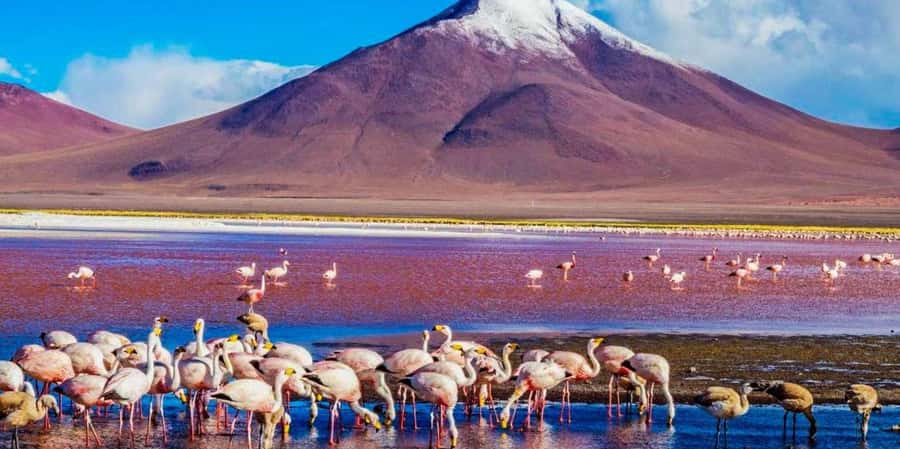
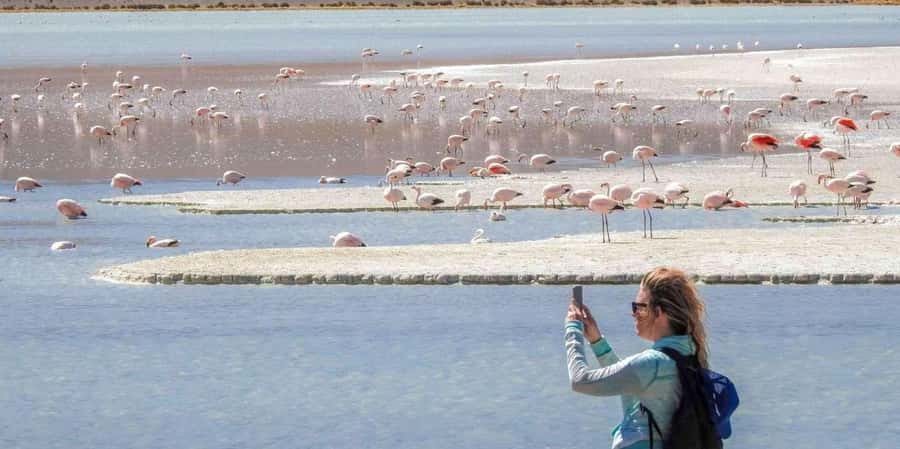
The final major stop is Laguna Colorada, a red-toned lagoon that serves as a nesting center for more than 30,000 flamingos. The birds are the star here, but the setting is just as important: the lagoon gives you a strong sense of the scale and openness of the Bolivian Altiplano.
You spend the first night in a hostel in Villamar. Room arrangements can be double, triple, or quadruple, with a shared or private bathroom depending on the night. The accommodation is functional rather than luxurious, and you should not count on heating, towels, or internet access.
Day two: volcanic rock, wildlife, and Anaconda Canyon
The second day moves away from the most famous lagoons and focuses on unusual rock formations and smaller natural stops. It is a good reminder that the route is not simply a transfer to Uyuni with one photo stop at the end.
At the Valley of Rocks, also known as World Cup or Lost Italy, volcanic rock has formed shapes that resemble an abandoned city. The attraction is visual and open to interpretation. You can look for towers, walls, and animal-like forms in the stone, though the appeal comes from the setting rather than from a formal museum or guided display.
The route continues through Camello and Sora, where you can see wild animals. The available information does not specify which species you will see, so keep expectations flexible. This is a chance to watch for wildlife in its natural setting, not a guaranteed animal encounter.
You also stop at Laguna Catal, a place to walk around and see typical flora and fauna of the Bolivian Altiplano. After sitting in the vehicle for long stretches, even a short walk has value. It gives you a closer view of the ground, plants, and water that shape this high, dry region.
Further stops include Laguna Vinto, a mirador, and Anaconda Canyon. The canyon adds a change of scale to the day, shifting your view from wide open plains to a more sharply cut formation. The itinerary gives you several points of interest, but it does not promise long hikes, so I would think of these as short walks and viewpoints.
At the end of the day, you transfer to the Colcha K Salt Hotel for the second night. Despite its name, you should still treat this as basic accommodation. A January booking described the lodging itself as acceptable but criticized the poor condition of the bathrooms. That is useful guidance: pack patience, and do not assume the word hotel means full comfort.
Day three: sunrise on Salar de Uyuni
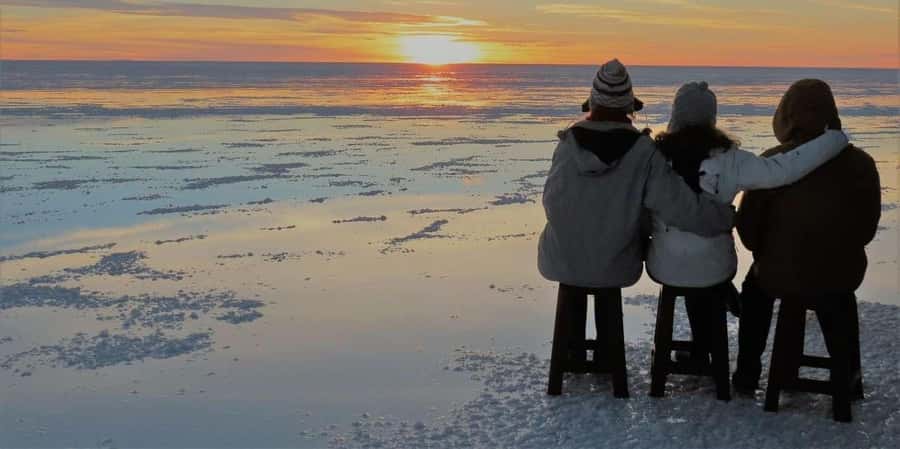
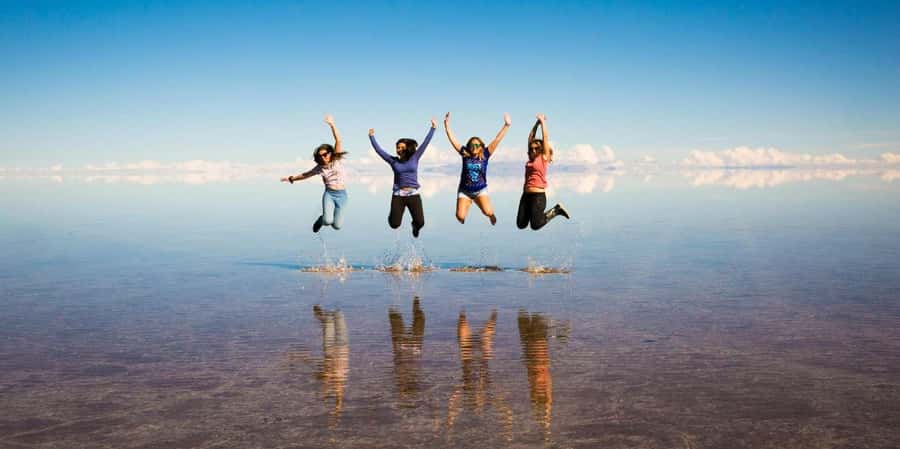
The final day begins early, with a drive onto Salar de Uyuni in time to watch the sunrise. The salt flat appears as a huge white surface formed by the accumulation of salt. At sunrise, the changing light gives the plain more depth and color than you might expect from a seemingly empty expanse.
This is the tour’s main prize, but the early start is part of the deal. You should be ready to leave before normal breakfast hours and spend the opening part of the day outside in an exposed setting.
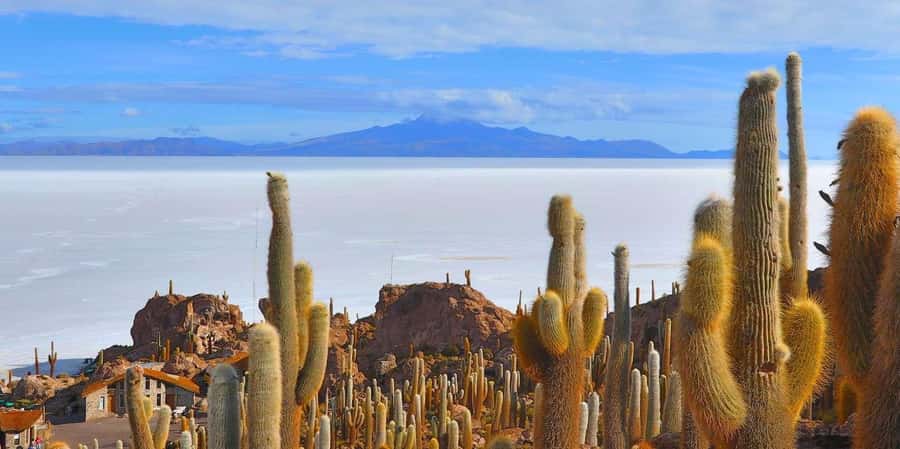
The route then continues to Incahuasi Island. This limestone rock formation rises from the salt flat and contains a giant cactus. You have time for a brief walk and a broad view across the salt surface.
Incahuasi is important because it gives you two experiences at once. You see the flat from ground level, then gain a higher viewpoint over the white expanse. The giant cactus also provides a striking contrast to the salt around it. The walk is described as brief, so this is not a major hiking section.
After Incahuasi, you visit the Salt Museum. The stop adds context to what you have been seeing underfoot and gives you a chance to learn more about the local use of salt. You then leave the flat through Colchani, where you can buy handicrafts.
The last photo stop is the train cemetery before arrival in Uyuni. Old trains and rail equipment provide a very different image from the pure white salt flat. The tour ends in Uyuni rather than returning to San Pedro de Atacama, making this a useful bridge to the next part of a Bolivia trip.
What the transport and group size mean
The tour uses shared transport throughout. You start in a minibus, cross the border, and then continue in a 4×4 for six people. The overall group limit is 10 participants, but the vehicle arrangement means the precise number in your 4×4 may depend on the departure setup.
A shared vehicle helps keep the price at $340 per person under control. It also means you need to accept shared timing and limited personal space. Stops are arranged for the whole group, so you will not have the freedom of a private vehicle to linger at one lagoon or skip a less interesting stop.
The guide service is in Spanish, and the included provider is a Spanish-speaking driver. If you are comfortable with Spanish, you will get the most from the explanations and border arrangements. If your Spanish is basic, the human side can still work well: Léo was praised for being patient with approximate Spanish, as well as attentive and friendly.
Another booking described the guide as very professional and the fellow group members as excellent. That is worth noting because a three-day shared ride depends heavily on the attitude of the people in the vehicle. The published score is 4.4 from five ratings, so the sample is small but generally positive.
There is one serious reliability concern. A March 2025 booking recorded that the operator did not appear for pickup. I cannot tell from the information available if this was an isolated failure, but I would confirm your pickup time and accommodation details with XPLORA AMERICA before the departure day.
Is $340 a good value?
The $340 price covers a lot of the costly pieces: hotel pickup, shared transport, delivery to central Uyuni, a Spanish-speaking driver, breakfast, lunch, dinner, and two nights of accommodation.
That makes the price most attractive if you want the border crossing, 4×4 transport, meals, and lodging handled as one package. Arranging those parts separately in a remote region would take time and could be difficult, especially once you reach the Bolivian highlands.
Still, $340 is not the total amount you should budget. Entry fees and border taxes are excluded. Drinks and water during meals cost extra, and access to bathrooms during the trip can also require payment. Towels, heating in the rooms, and internet access are not included either.
I would set aside extra money for those costs and carry the essentials you need for a basic two-night stay. The supplied information does not give the entrance-fee amounts, so you should ask for the current total before departure rather than assume the advertised price covers every charge.
Who will enjoy this tour most?
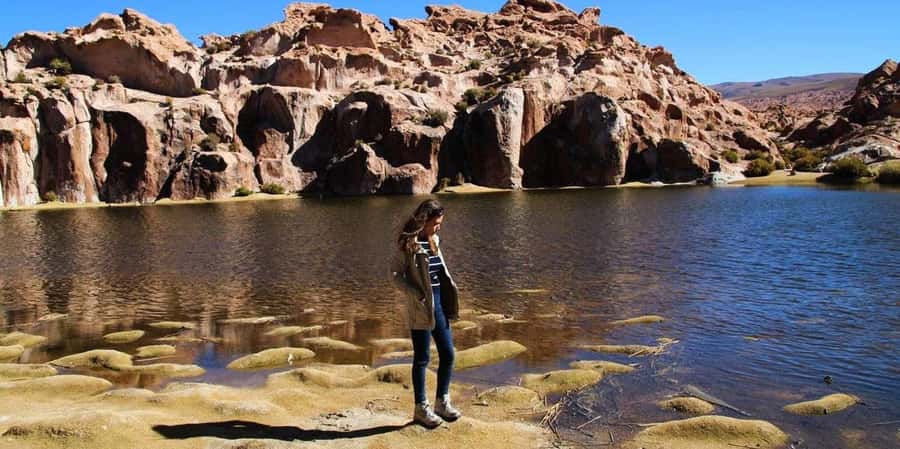
I would recommend this trip to you if you want a one-way route from Chile into Bolivia, prefer a ready-made plan, and care more about scenery than hotel comfort. It suits people who want to see the major sights of Eduardo Avaroa Andean Fauna National Reserve before reaching Salar de Uyuni.
It is also a sensible choice if you are happy sharing a 4×4 and can manage a Spanish-language tour. The schedule gives you a broad sample of the region in only three days, including places you would miss on a direct transfer.
I would hesitate if you need reliable English guiding, private bathrooms every night, heated rooms, or internet access. I would also avoid booking it as a round trip from San Pedro, since the package ends in Uyuni and does not include transportation back to Chile.
Free cancellation is available up to 24 hours in advance, and you can reserve now and pay later. Those terms help if your South America plans are still shifting, but they do not replace the need to verify the pickup.
Should you book it?
Book this tour if you want the full visual sweep from San Pedro de Atacama to Uyuni and accept rustic conditions along the way. The strongest reasons are the range of stops, the included meals and transport, the sunrise on the salt flat, and the chance to see Laguna Colorada and the 90°C geysers before reaching Uyuni.
Think twice if your main priority is comfort or a private schedule. Before paying, confirm the pickup with XPLORA AMERICA, ask about current entry and border charges, and make sure you are prepared for Spanish-only service and basic lodging. For the right kind of trip, $340 is a practical price for a memorable three-day crossing; for a soft-bed holiday, it is the wrong tool.
FAQ
Where does the tour start and finish?
The tour starts with pickup at your accommodation in San Pedro de Atacama, Chile. It finishes at a central location in Uyuni, Bolivia, and does not include a return to San Pedro.
How long does the tour last?
The tour lasts three days and includes two nights of accommodation.
What transport is used?
You travel by minibus from San Pedro de Atacama to the Chile–Bolivia border. After crossing, you change to a shared 4×4 vehicle for six people.
What language does the guide speak?
The included driver and guide service is in Spanish.
Are meals and accommodation included?
Yes. Breakfast, lunch, and dinner are included, along with two nights in a shared double, triple, or quadruple room. The bathroom may be shared or private depending on the night.
What costs are not included?
The price does not include the return to San Pedro, drinks or water during meals, bathroom access during the route, towels, heating, internet access, entry fees, or border taxes.
More Tour Reviews in San Pedro De Atacama
Not for you? Here's more nearby things to do in San Pedro De Atacama we have reviewed
Uyuni Salt Flats Tours, compared
 ★ 4.5From La Paz: Uyuni Salt Flat Tour & Overnight Roundtrip BusFrom $275327 reviews
 ★ 4.5Uyuni tour express from La Paz by busFrom $269172 reviews
 ★ 4.4From Uyuni: Red Lagoon & Uyuni Salt Flats 3-Day Guided TourFrom $354160 reviews
 ★ 4.3La Paz: 5-Day Uyuni Salt Flats by BusFrom $486153 reviews
Browse the lists this tour appears in