
Reviewed · UYUNI
Uyuni Salt Flats (3 Days) English Speaking Guide
The Salar de Uyuni is more than a brilliant white expanse. This three-day trip carries you from rusting British locomotives to cactus-covered Incahuasi, then onward to high desert, flamingo lagoons and steaming geysers. I like that the route shows both the salt flat and the wider Andean region, and that meals and two nights of lodging are included in the $449 price.
I also like the small group limit of five, which can make a long, shared-vehicle journey feel more personal. The trade-off is real: you spend long stretches on rough, remote roads, sleep in basic accommodation and travel at high altitude, so comfort and preparation matter.
In This Review
- Key points to know before you go
- From rusting locomotives to the salt horizon
- Incahuasi Island and the first night
- Day 2: volcanoes, stone and Laguna Colorada
- Day 3: geysers, surreal rock and green water
- What $449 includes, and what it does not
- Getting ready for high altitude and simple lodging
- Should you book this Uyuni tour?
- FAQ
- What time does the tour start?
- How many people are in the group?
- Are meals and accommodation included?
- Do I need to pay extra to enter Incahuasi Island?
- What other fees should I plan for?
- Does the tour include a transfer to San Pedro de Atacama?
- What is the cancellation policy?
Key points to know before you go
- Three days cover two very different regions: Day 1 centers on the salt flat; the next two days range through high desert, volcanic country and lagoons.
- The group is capped at five: That is a useful size for a route where much of the day is spent in a vehicle.
- Meals and lodging are included: Expect three lunches, two breakfasts, two dinners and two nights in basic accommodation.
- Budget for extra fees: Incahuasi entry costs Bs 30, and entry to Eduardo Avaroa Reserve is Bs 150.
- Pack for cold, basic conditions: Warm clothes, sturdy walking shoes, water, snacks and toilet paper are sensible additions.
- A guide can shape the experience: Nelson and Edgar are among the guides named by past participants, and Kevin was cited as a driver. Staff assignments can vary.
From rusting locomotives to the salt horizon
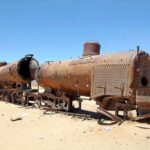
The trip starts at 10:30 am at SKYLINE TRAVELLER UYUNI, near Av. Ferroviaria in Uyuni. First comes the Train Cemetery, about three kilometers from the train station. More than 100 old train cars and locomotives sit rusting on the town’s outskirts, many imported from Britain in the early 20th century.
You can approach the trains and climb on or into some of the cars for photos. Salt-laden winds have eaten away at the metal, leaving skeletal shapes that feel less like a polished exhibit and more like the remains of an abandoned plan. It is a striking start, though the site has long been exposed to vandalism, and you should watch your footing around damaged metal.
Next is Colchani, a small salt-processing village just beyond the flats. For generations, local communities traded salt carried by llama caravans for goods such as coca and maize. Today, a cooperative processes salt for sale in Bolivia and Brazil.
A local salt factory visit explains how salt is extracted and refined. The visit is free, but a donation is expected for the person showing you around. You can also browse salt handicrafts and llama or alpaca textiles. The small Salt Museum, made with salt bricks and carved figures, takes only five to ten minutes to see. Colchani is a brief stop, but it gives the white expanse ahead a human and economic context.
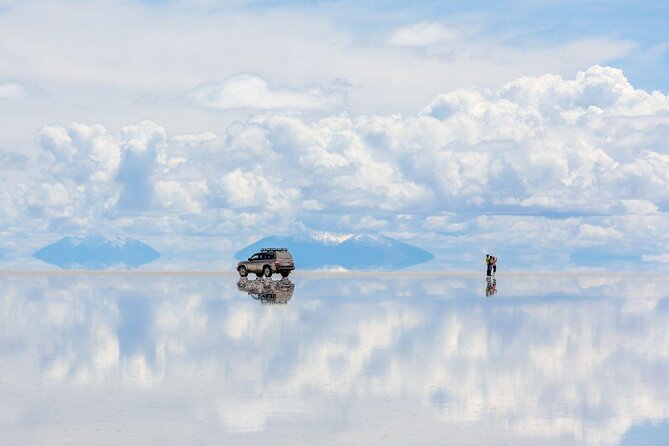
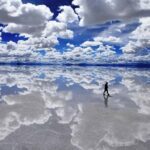
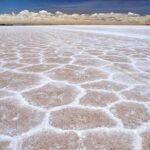
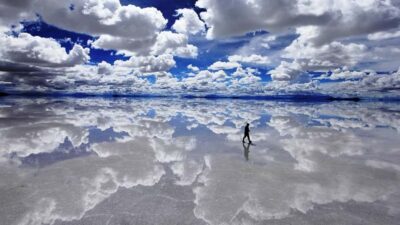
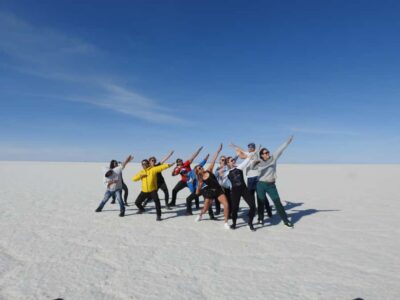
Then the Salar de Uyuni takes over. It is the world’s largest salt flat, formed from ancient lakes that dried out, and its polygonal surface patterns stretch far beyond what a photograph can convey. The tour allows about three hours on the salar, with stops that depend on the day’s route and conditions.
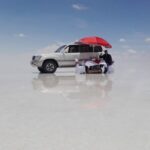
In the dry season, the salt crust and its repeating shapes make the plain feel almost endless. At certain times of year, shallow water covers the surface and reflects the sky. That mirror effect is spectacular, but the wet season can also make Incahuasi Island inaccessible. The flats are also a source of salt and lithium, the latter used in batteries for phones, computers and electric cars. This is not empty scenery: people work here, and the place has an industrial as well as a natural story.
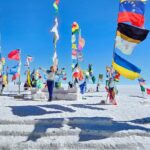
The Dakar Monument is another photo stop. The famous rally began crossing Bolivian territory in 2014, and this monument marks the event’s connection to Uyuni. It is a quick pause rather than a major attraction, but it adds a modern detail to a route otherwise shaped by geology and older transport history.
You can also read our reviews of more tours and experiences in Uyuni.

Incahuasi Island and the first night
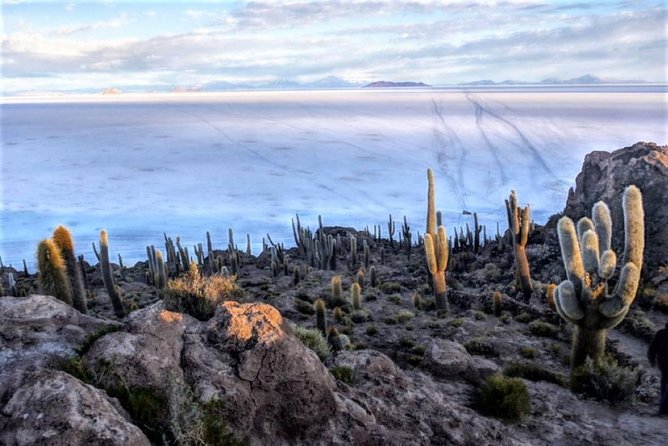
A lunch stop is built into Day 1, followed by Incahuasi Island, also called Inkawasi. It rises from the middle of the salt flat, covered in tall Trichocereus cacti and ringed by the flat white crust. The contrast is the point: a rocky, cactus-covered hill in what otherwise seems to be a limitless plain.
Allow time for a short uphill walk. The trail takes about 15 minutes to reach the top and loops back, offering broad views of the salar. The island is popular, and tour groups can gather on the paths as everyone searches for a good photo. Entry costs Bs 30, paid separately. If you have limited mobility or prefer not to climb, you can still appreciate the island from below, but the summit view is the main reward.
After sunset, the group drives to a hotel built from salt blocks for the first night. The dramatic sunset and the change from open salt to a simple overnight stop are part of the appeal, but do not expect luxury. The included lodging is described as basic, and private rooms cost an extra $35 per person for both nights.
Day 2: volcanoes, stone and Laguna Colorada
The second day leaves the salt flat behind and heads through remote high country. One early viewpoint looks toward Ollagüe, a large volcano on the Bolivia-Chile border. Its summit reaches 5,868 meters, and a fumarole near the summit can be visible from a distance. You view it from afar rather than climbing it.
The route continues into the Siloli Desert, a barren area at roughly 4,550 meters. That elevation is a serious consideration. Even a short walk can feel harder than expected, especially if you have not had time to acclimatize in Uyuni or elsewhere in the Altiplano. Take it slowly, drink water and follow your guide’s advice.
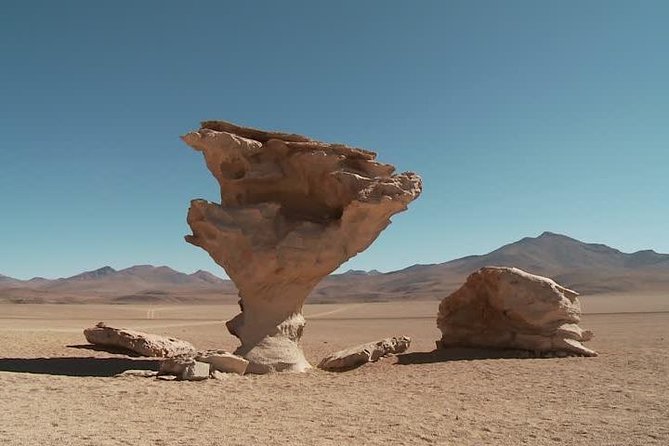
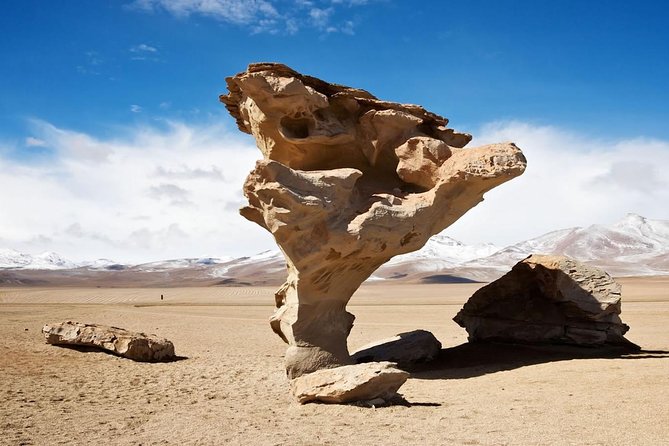
The Arbol de Piedra, or Stone Tree, is a seven-meter rock formation shaped by wind erosion. Its narrow base and broader top make it resemble a tree, though the surrounding open desert is as memorable as the formation itself. You get about an hour in the area, enough time to look around and take photos without turning the stop into a strenuous hike.
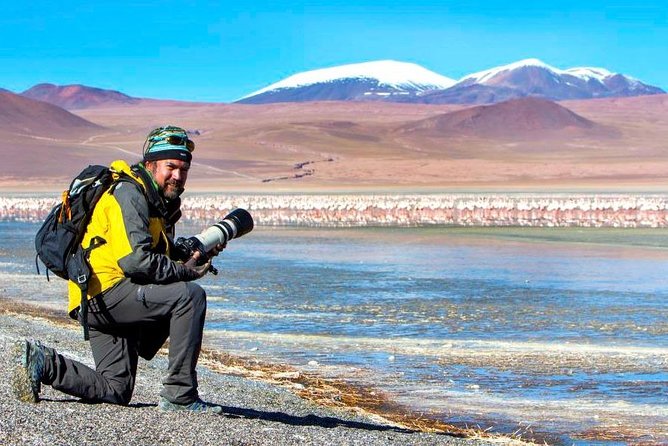
Laguna Colorada is the day’s major natural spectacle. At around 4,300 meters, this shallow lake gets its red-orange color from algae and other microorganisms, with white borax deposits scattered across the water. The result is a strange pattern of red, white and high-altitude sky, backed by rough mountain slopes.
The lagoon is part of Eduardo Avaroa Andean Fauna National Reserve and is an important habitat for flamingos, including the rare James’s flamingo. You may also see llamas, alpacas or Andean foxes in the wider area. Wildlife sightings are never guaranteed, but the lake itself is worth the stop. Reserve entry costs Bs 150 and is not included in the tour price.
The second night is in basic accommodation. One account of the trip describes a very simple hostel near the Chilean border, with a hot spring and stargazing making the evening memorable. Hot-spring access is listed as an extra Bs 6 per person, so treat it as an optional add-on, not an included comfort. Hot showers cost Bs 15 each, and sleeping bags can be rented for Bs 50. Bring warm layers and be ready for modest facilities.
Day 3: geysers, surreal rock and green water
The final morning begins at Sol de la Mañana, a geothermal area best seen at first light. Boiling mud pools and steam vents make this stop feel raw and active. The strongest geyser can send steam up to 50 meters, and there are no safety barriers. Stay well back from unstable ground and follow the guide rather than edging closer for a photograph.
The Dali Desert is known for its ochre and brown tones, scattered rocks and distant snowy peaks. Its name comes from the surreal quality of the scene, not from any claim that the artist visited. It is a visual stop rather than a place with a long list of activities, and the scale of the open terrain is what gives it force.
Laguna Verde lies below Licancábur volcano. Its color can be less vivid than it once was, but the setting remains dramatic, with the water and steep volcanic backdrop making a memorable pairing. Licancábur rises to nearly 6,000 meters. The tour views the volcano; climbing it is a separate activity and requires an additional fee.
The provided route ends at the Uyuni meeting point, while a transfer to San Pedro de Atacama in Chile is listed separately at Bs 130 per person. If you plan to continue into Chile, confirm how that transfer fits your departure before booking. A past participant described the trip as closer to two and a quarter days when continuing to Chile, so your usable time in Uyuni may depend on that onward journey.
What $449 includes, and what it does not
At $449 per person, the price covers round-trip transport, an English-speaking guide, a first-aid kit, tea and coffee, three lunches, two breakfasts, two dinners and two nights of basic lodging. For a three-day trip across a remote region, that bundle offers reasonable value, especially since meals and transport are substantial parts of the logistics.
Still, the headline price is not the whole budget. Add Bs 30 for Incahuasi and Bs 150 for Eduardo Avaroa Reserve, plus any hot spring, shower or rental costs. Towels cost Bs 20 to rent, and private rooms add $35 per person for both nights. The transfer to San Pedro is also extra. Carry some cash for these charges and for the expected donation at the Colchani salt factory.
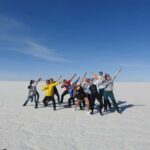
The most consistent strengths of this trip are its route, the efforts of the guide and driver, and the food. Participants have singled out guides Nelson and Edgar for clear explanations, friendly company and helping with fun photos. Kevin was praised for careful driving. These names are not guaranteed for your departure, but they point to the elements that can turn a demanding road trip into a comfortable one: good communication, safe driving and meals that go beyond basic fuel.
The experience can vary. One account describes a guide who was quiet and did little to explain what came next, as well as time management that left a long wait at the hostel. That is a fair reminder that an English-speaking guide does not guarantee a chatty or equally informative one. With only five people maximum, you have a better chance to ask questions directly, but the tour still follows a shared schedule and a long driving route.
Getting ready for high altitude and simple lodging
The itinerary reaches elevations above 4,500 meters, with some stops around 4,300 meters and the volcanoes rising much higher. If you are not acclimatized, the Siloli Desert and early starts can feel demanding. Allow time to adjust to altitude before the tour if your plans permit, and do not treat short walks as effortless.
Pack warm layers, sturdy shoes and water, along with snacks for the road. Take toilet paper, too: basic hostels may not provide it. The tour includes meals, but extra snacks are useful between stops. A sleeping bag can be rented, though bringing one may suit you better if you prefer your own gear.
This is not a comfort-first holiday. It is a practical way to cover far-flung sights that would be difficult to reach independently, with the trade-off of shared transport and simple nights. Group size is capped at five, most people can participate, and the tour ends back at the starting meeting point unless you arrange the Chile transfer separately.
Should you book this Uyuni tour?
Book it if you want more than the salt flat itself. The three-day route includes the Train Cemetery, Colchani, Incahuasi, high desert, a stone formation, flamingo country, geysers and volcanic views. You also get meals, transport and two nights of lodging bundled into one trip, which makes the $449 price easier to judge than a salt-flat-only outing.
Think twice if you need private rooms, reliable hot showers or a flexible schedule. This is a remote, high-altitude circuit, and the basic accommodation and long drives are part of the deal. For a prepared traveler who values varied scenery, a small group and an English-speaking guide, it is a strong way to see the salt flats and the wider Altiplano in one trip.
FAQ
What time does the tour start?
It starts at 10:30 am at SKYLINE TRAVELLER UYUNI, at Av. Ferroviaria in Uyuni.
How many people are in the group?
The tour has a maximum of five participants.
Are meals and accommodation included?
Yes. The price includes two nights of basic accommodation, three lunches, two breakfasts and two dinners.
Do I need to pay extra to enter Incahuasi Island?
Yes. Entry costs Bs 30 per person and is not included.
What other fees should I plan for?
Entry to Eduardo Avaroa Andean Fauna National Reserve costs Bs 150. Hot-spring access, showers, towel and sleeping-bag rentals, a private room and the transfer to San Pedro de Atacama are also extra.
Does the tour include a transfer to San Pedro de Atacama?
No. The transfer to San Pedro de Atacama is listed at Bs 130 per person as an additional cost.
What is the cancellation policy?
You can cancel at least 24 hours before the start time for a full refund. Changes or cancellations made less than 24 hours before the start time are not accepted for a refund.
More Tour Reviews in Uyuni
Not for you? Here's more nearby things to do in Uyuni we have reviewed

Uyuni, compared
 ★ 4.0Day Trip to Uyuni Salt FlatsFrom $130602 reviews
 ★ 4.53-Day Tour to Salt Flats and LagoonsFrom $370168 reviews
 ★ 4.8From Uyuni: Salt Flats Highlights Jeep Tour with LunchFrom $80133 reviews
 ★ 4.3Uyuni: Uyuni Salt Flats and San Pedro de Atacama 3-Day TourFrom $399122 reviews
Browse the lists this tour appears in