
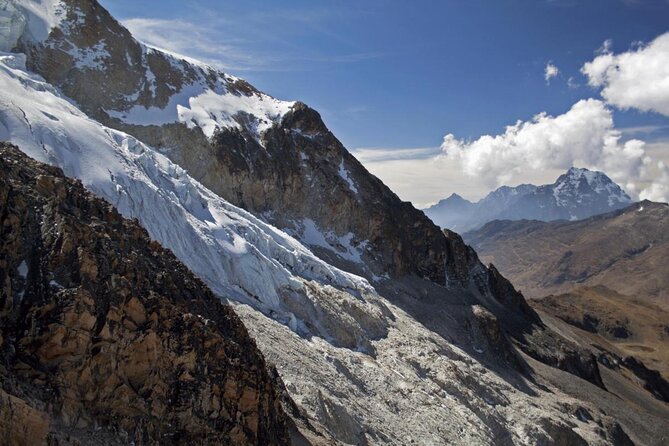
Reviewed · LA PAZ
Climbing Huayna Potosí
Huayna Potosí rises to 6,088 meters, and this climb gives you a brief, hands-on introduction to glacier travel before a demanding overnight summit push. The goal is not just to reach the top: you’ll learn to use climbing gear on a glacier, sleep high and start walking around 1 a.m. beneath the Andean night sky.
I like that glacier practice is built into the first day, so you can try the equipment before the summit attempt. I also like that the climb is private to your group and includes meals, shelter, a guide and substantial high-mountain gear. Guides named by climbers include Johnny, Jhonny and Cristian, whose patience and encouragement feature prominently in accounts of successful summit days.
The main caution is altitude and the tight schedule. You climb to 5,130 meters on day two, then begin the summit attempt after midnight, with up to seven hours of ascent. You need moderate fitness, but that label should not obscure the real challenge of climbing high above 6,000 meters.
- Glacier skills come first: Day one includes a practice session on an old glacier, using the climbing equipment.
- The summit push starts at 1 a.m.: Expect a long climb in darkness, with the dawn view from 6,088 meters as the reward.
- You sleep at two high camps: The base camp is at 4,700 meters; the higher refuge sits at 5,130 meters.
- Much of the main equipment is included: A helmet, ice axe, jackets, thermal pants and boots are provided, but you must bring several essentials.
- A private outing keeps the group to yours: You will not be joined by unrelated participants.
- Budget for more than the $230.77 price: A sleeping bag, headlamp, sunglasses, water, entry ticket and personal baggage carrier are not included.
In This Review
- Three days from La Paz to 6,088 meters
- Day one: equipment checks and glacier practice
- Day two: a measured start, then the high refuge
- Day three: a midnight breakfast and a dark ascent
- Guides, support and the safety questions to ask
- What the $230.77 price covers, and what it leaves out
- Who is likely to enjoy this climb
- Should you book the Huayna Potosí climb?
- FAQ
- How long is the Huayna Potosí climb?
- What is the summit height?
- How high are the camps?
- What time does the summit climb begin?
- How long does the ascent to the summit take?
- What equipment is included?
- What do I need to bring?
- Is the tour private?
Three days from La Paz to 6,088 meters
This is a compact mountaineering course wrapped around a summit attempt. You leave La Paz by private vehicle, travel to base camp, practice on glacier ice, move to a higher refuge and then climb through the night. On the final morning, you aim for the summit before returning to the city around 2 p.m.
The short duration makes the trip appealing if you have limited time in Bolivia, but it also leaves little room for a relaxed pace. The plan includes a rest period at base camp, yet the key effort still comes quickly: an overnight at altitude followed by a climb that can take four to seven hours uphill.
The tour begins at the operator’s office at Av. Illampu 339 in La Paz. It is offered as a private activity, so only your group participates. A Spanish- or English-speaking guide is included. The operator says the climb requires a moderate level of physical fitness, and the elevations make this a serious undertaking rather than a casual hike.
Day one: equipment checks and glacier practice
Meet at the office at 8:30 a.m. to check the climbing equipment. From there, private transport takes you to base camp at 4,700 meters. The drive is described as taking about one hour and 45 minutes, with arrival around late morning.
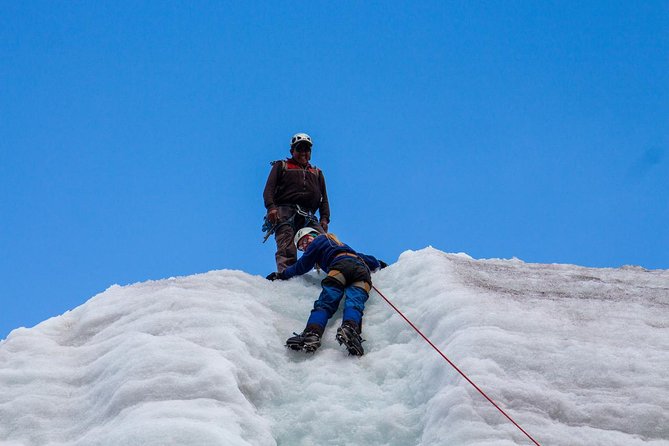
After lunch, you hike for roughly an hour and a half to an old glacier for about an hour of ice-climbing practice. This is one of the most useful parts of the itinerary. You get to handle the gear and learn how it is used before relying on it during the summit climb. The provided details do not spell out each skill taught, so ask the operator what the session covers if you want to know how much technical instruction to expect.
You return to the base-camp refuge for dinner at 6 p.m. and rest. It is a long travel-and-training day, but the practice session gives the climb a more instructive feel than simply arriving at the mountain and starting uphill. It also gives you a chance to notice whether your boots and other issued equipment fit comfortably before the harder days.
You can also read our reviews of more tours and experiences in La Paz.


Day two: a measured start, then the high refuge
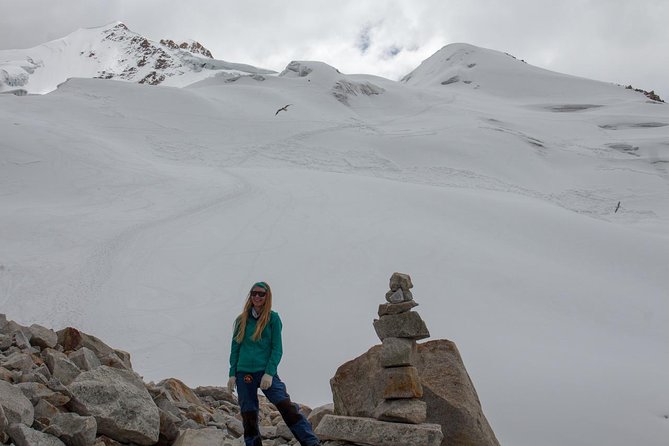
The morning is set aside for rest and acclimatization at base camp. You have lunch there, then prepare for the climb to Campo Alto, the high camp at 5,130 meters. The ascent takes about three hours.
That pause at base camp matters. You are already at 4,700 meters, and the next refuge is higher still. The schedule gives your body some time at the lower camp before you gain elevation, though it cannot guarantee that you will adjust easily. Pay attention to how you feel, and tell your guide if you are struggling.
At Campo Alto, dinner is served, followed by free time for acclimatization. Rest begins around 6 p.m. and lasts until midnight. That is an early bedtime in name, but the combination of altitude, anticipation and a short night may make sleep difficult. The midnight wake-up is part of the plan, not a last-minute surprise, so keep your evening simple and organize your gear before you lie down.
Day three: a midnight breakfast and a dark ascent
The final day begins around midnight with breakfast. At about 1 a.m., you start climbing from Campo Alto, roped to your guide as you move over the glacier. The first stretch is described as relatively easy up to about 5,500 meters, but easy is a relative word at this altitude and in the dark.
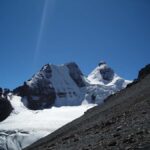
The route steepens sharply. A wall about 50 meters long has a stated incline of 55 to 60 degrees. Above it, at around 5,800 meters, you reach a plateau and continue along a ridge toward the 6,088-meter summit. The overall slope on the glacier route is described as 35 to 40 degrees. The climb from high camp averages four to seven hours, so the summit time depends on pace and conditions.
The target arrival is around 6:30 a.m. That timing places you on top around sunrise, with views across the Cordillera Real. You have about ten minutes at the summit before turning back. That is a short window, but the schedule has a long descent ahead, and the summit is only one part of the day.
The return takes about two hours to high camp. You collect your equipment, then descend another hour and a half to base camp. From there, transport returns you to La Paz, with arrival around 2 p.m. In other words, the summit day is not finished when you reach the top. You still have a substantial descent and a drive back to the city.
Guides, support and the safety questions to ask
Accounts of the climb give particular credit to guides named Johnny, Jhonny and Cristian. Climbers describe patient help with fitting and using equipment, steady encouragement during difficult sections, and attention to how the group is coping. Those details matter on a route where you are roped together and where the hardest part comes after a midnight start.
At the same time, I would not assume every trip will feel identical. One serious account describes poor communication and concern about guides leaving participants without close support. That is a reason to ask clear questions before you commit, not proof that every outing has the same problem. Ask who will guide your group from base camp through the summit attempt, how the guide handles a climber who needs to turn back, and whether the guide stays with the group during descents and river crossings.
The listed activity is private, which means your group will not be combined with unrelated participants. It does not, by itself, tell you how many guides will be assigned or what the guide-to-climber ratio is. Get those specifics directly from the operator, along with details of the safety plan for a summit attempt.
What the $230.77 price covers, and what it leaves out
For $230.77 per person, the package includes meals, base-camp shelter and high-mountain equipment: a helmet, feather jacket, wind jacket, thermal pants, boots and an ice axe. A Spanish- or English-speaking guide is also included. That bundle covers many of the costly, bulky items you would otherwise need to arrange yourself.
But the price is not the full cost of preparing for the climb. You must bring a sleeping bag, headlamp, sunglasses and two liters of water. The entry ticket and a personal baggage carrier are also excluded. Check whether your own sleeping bag is suitable for the conditions and make sure your headlamp is ready for hours of walking before dawn. A weak light is a poor companion on a steep route.
The equipment list is a strong starting point, but the wording does not provide specifications for each item or explain what happens if a size does not fit. Confirm the condition and fit of boots, jackets and other gear during the office check. The first day’s glacier practice is a practical moment to raise problems, rather than discovering them during the summit climb.
The operator’s price should be judged against those inclusions and exclusions, not against the headline figure alone. You receive transport, meals, shelter, a guide and much of the technical kit, but you still need to account for the items listed as extra. The tour is booked, on average, 83 days in advance, so if you have a fixed travel schedule, leave time to arrange your own equipment and confirm the details.

Who is likely to enjoy this climb
This is best suited to someone who wants an intense, guided introduction to high-altitude mountaineering and can manage a demanding three-day schedule. You do not need to arrive as an experienced ice climber: the first day includes practice. But you should be comfortable with a long uphill effort, a night start and a steep descent after reaching the summit.
It is also a good fit if you value a private group and want core gear and meals included. The guide’s role is central, so the experience will depend in part on communication and support. If you have concerns, ask about the guide plan before booking rather than treating a general promise of a bilingual guide as enough detail.
This is a poor match if you want a gentle acclimatization trip, a flexible summit day or a long stay on top. The summit visit is about ten minutes, and the third day includes the return to La Paz. You should also consider whether you can handle the stated altitudes; the operator requires moderate fitness, but physical condition alone does not settle how you will respond to elevation.
Should you book the Huayna Potosí climb?
Book this if you want a compact, high-altitude challenge with glacier practice, a private group and a dawn summit attempt. The included guide, meals, shelter and mountain gear make the $230.77 price useful to assess as a package, while the named guides’ patient coaching is a real plus.
Before paying, confirm the guide arrangement, the equipment you will receive and the plan if you or another climber cannot continue. Bring every excluded item, especially a working headlamp, sunglasses, water and a suitable sleeping bag. If you are comfortable with the altitude, the short night and the strenuous descent, this can be a memorable way to meet the Cordillera Real. If you need more time to acclimatize or want a less demanding climb, choose a different plan.
FAQ
How long is the Huayna Potosí climb?
The activity lasts about three days. It begins with an equipment check in La Paz and ends with a return to the meeting point around 2 p.m. on the third day.
What is the summit height?
Huayna Potosí’s summit is 6,088 meters above sea level.
How high are the camps?
Base camp is at 4,700 meters, and Campo Alto, the high refuge, is at 5,130 meters.
What time does the summit climb begin?
Breakfast is around midnight, and the climb from Campo Alto begins at about 1 a.m.
How long does the ascent to the summit take?
The ascent averages four to seven hours. The schedule aims to reach the summit around 6:30 a.m.
What equipment is included?
The package includes a helmet, feather jacket, wind jacket, thermal pants, boots and an ice axe. Meals, shelter and a Spanish- or English-speaking guide are also included.
What do I need to bring?
You need a sleeping bag, headlamp, sunglasses and two liters of water. The entry ticket and personal baggage carrier are not included.
Is the tour private?
Yes. Only your group participates in the activity.
More Tour Reviews in La Paz
Not for you? Here's more nearby things to do in La Paz we have reviewed



La Paz, compared
 ★ 4.8La Paz and El Alto: Cable Car Rides and Walking TourFrom $10790 reviews
 ★ 4.8La Paz Half-Day Walking TourFrom $3591 reviews
 ★ 4.9La Paz: Private City Tour with Cable Car & Moon Valley VisitFrom $43508 reviews
 ★ 4.5La Paz: Full Day Trip to Copacabana and Isla del SolFrom $59400 reviews
Browse the lists this tour appears in