
Reviewed · UYUNI SALT FLATS TOURS
Uyuni: 3-Day Salt Flats Tour ending in San Pedro de Atacama
White salt, red lagoons, volcanic dawn. This three-day journey brings together Bolivia’s Uyuni Salt Flats and some of its strangest desert scenery, then carries you across the Chilean border to San Pedro de Atacama. I like the route’s mix of giant cacti, flamingo-filled lagoons, geysers, hot springs, and wide-open salt. I also like the practical ending in Chile, which saves you from retracing your route to Uyuni. The trade-off is real: roads are rough, nights are cold, and the second night is very basic.
The shared 4WD carries up to six participants, so you get a small group without paying for a private vehicle. If Jamie is your guide, you have a good reason to look forward to the drive: Jamie has been singled out for making the full three days work well, with the salt flats as a favorite stop and clear explanations along the way. Just remember that this is an expedition-style trip, not a polished hotel tour.
In This Review
- Five details that shape the experience
- Day 1: Train Cemetery, Colchani, and the white expanse
- Day 2: Flamingo lagoons and the Stone Tree
- Day 3: Geysers, hot springs, and the Chilean border
- What $427 includes — and what it does not
- Weather, roads, and comfort
- Who should book this three-day crossing?
- Should you book it?
- FAQ
- What time does the tour start?
- Where does the tour end?
- How many people share the 4WD vehicle?
- What accommodation is provided?
- Are meals and water included?
- Can the itinerary change during rainy season?
Five details that shape the experience
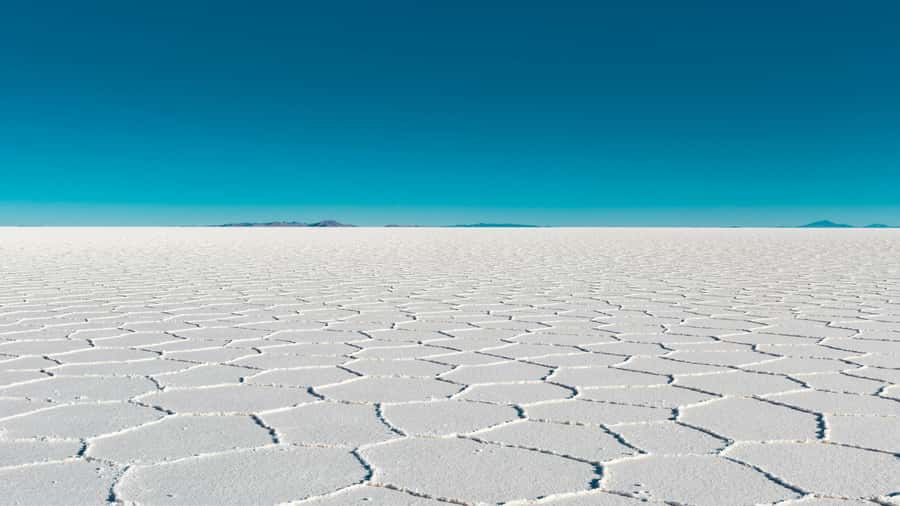
- The salt flats arrive early: Day 1 gives you perspective photos, panoramic views, mirror reflections when conditions allow, and a sunset over the white horizon.
- The route crosses very high, rough country: The Siloli Desert is listed at about 6,000 meters, and the unpaved roads can be bumpy.
- Your best wildlife stop is the lagoon circuit: Cañapa, Hedionda, Chiarcota, and Honda can bring pink flamingos, Andean ducks, and seagulls.
- The second night is basic: Laguna Colorada Refuge uses shared dormitories with shared bathrooms, and heating is generally absent.
- The Chile transfer is built in: You reach the Hito Cajon border at about 9:30 a.m. and San Pedro de Atacama around 12:30 p.m.
- The price covers the hard logistics: At $427 per person, you get a 4WD, meals, two nights, a guide-driver, pickup, and onward transport to Chile.
Day 1: Train Cemetery, Colchani, and the white expanse
Your day begins around 10:30 a.m. with pickup from your hotel, the bus terminal, or Uyuni airport. If your bus arrives earlier, you can have breakfast at a café or wait at the operator’s office. If you are already staying in Uyuni, pickup is generally between 10:30 and 10:45 a.m. in your hotel lobby.
The first stop is the Train Cemetery, a peculiar collection of abandoned railway wagons from the Bolivian Railway Company. Rusted metal and open desert make this an easy place for photographs. It is also a quick reminder that Uyuni grew around transport and mining ambitions that did not last forever.
Next comes Colchani, a small village where you can see how salt production supports local life. You will have time to browse handmade goods, so bring some cash if you want a small souvenir. This stop is short, but it gives the salt flats a human setting before you reach the great white plain.
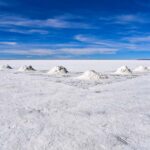
Then the road enters the Uyuni Salt Flats. This is the day’s main event, and the scale is hard to grasp from photographs. The crust stretches so far that the horizon can seem erased. You will be shown underground river aquifers beneath the salt, then visit Flags Square, the Dakar Monument, and the world’s first salt hotel.
Lunch is served on the flats. The setting matters here: you are not simply stopping at a roadside café but eating in one of the most unusual places in Bolivia. Meals are included, though you should expect basic food rather than a restaurant menu.
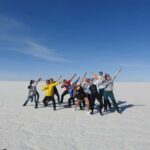
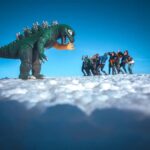
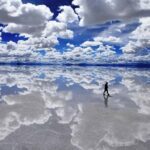
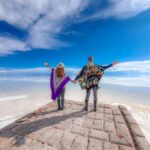
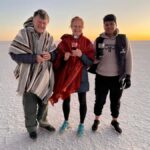
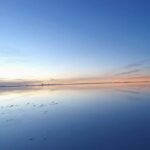
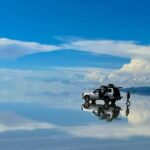
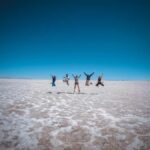
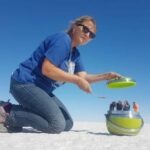
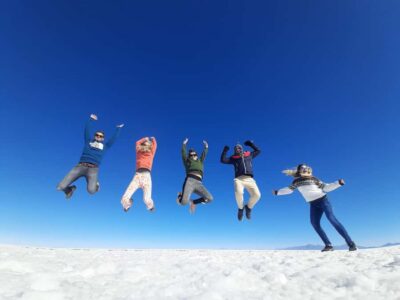
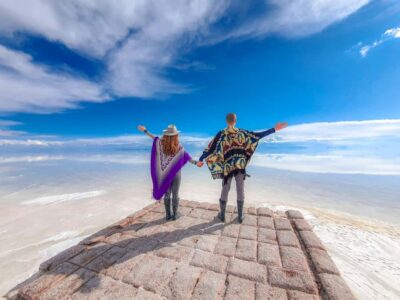
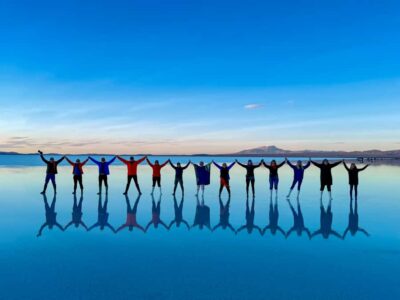
The guide will also help you create perspective photographs. Put a person close to the camera and another farther away, and the flat surface can make one appear huge or tiny. These pictures work best when the salt is dry and sharply patterned. During the rainy season, a thin layer of water can create the famous mirror effect, reflecting the sky and your group. That effect is weather-dependent, so do not book this expecting guaranteed reflections.
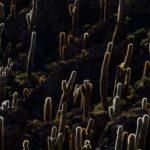
Incahuasi Island adds contrast to the day. Coral fossils and giant cacti rise from the salt, and you get views toward Tunupa Volcano. The island breaks up the flat, open scenery and gives you a chance to see how ancient marine material remains visible in this high-altitude area.
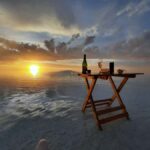
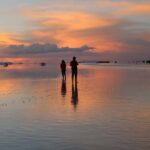
The day closes with sunset over the salt flats. As the light fades, the horizon can take on a pink blur, with the white crust changing color around you. You then continue to your salt hostel for the night.
Night one is the comfortable part of the accommodation plan. Rooms are double or triple, with private bathrooms; on rare occasions, a quadruple room may be assigned. That is a useful detail if you value privacy, but you should still expect a modest hostel rather than a full-service hotel.
A few more Uyuni tours and experiences worth a look
Day 2: Flamingo lagoons and the Stone Tree
After breakfast, you stop in San Juan. This is the practical supply stop, so buy snacks here and use the restrooms. Once you leave town, facilities become scarce, and the long stretches between stops are part of the challenge.
The route continues toward Ollagüe Volcano, which remains active and is sacred to local Indigenous communities. The volcano gives the morning a strong sense of place: this is not just empty desert, but country with spiritual meaning and ongoing geological activity.
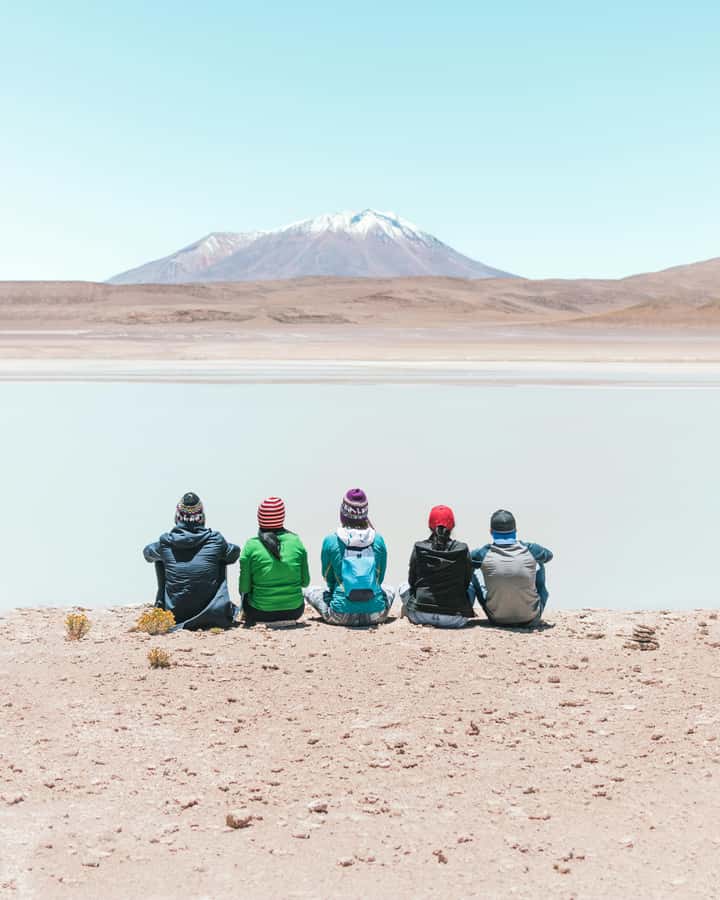
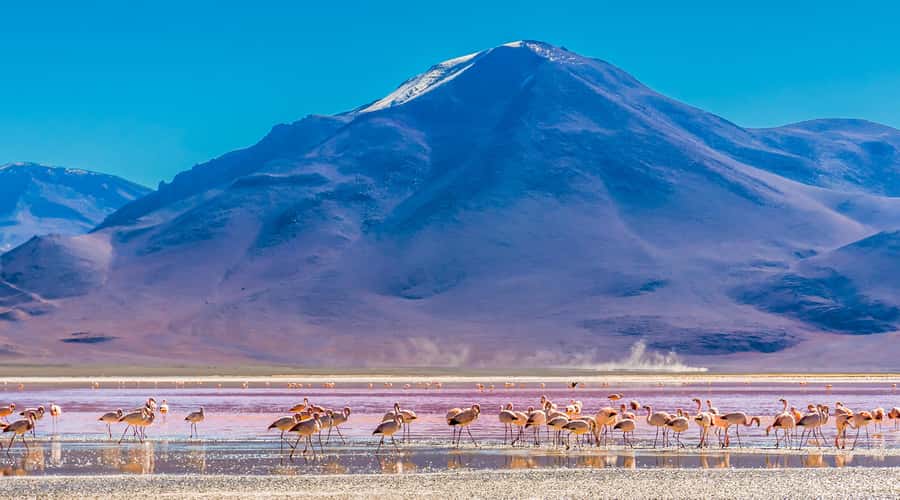
The lagoon circuit is one of the best reasons to choose the full three-day route. Cañapa, Hedionda, Chiarcota, and Honda each offer a different view, though the appeal is not polished infrastructure. You are stopping beside high Andean water, open sky, wind, and wildlife.
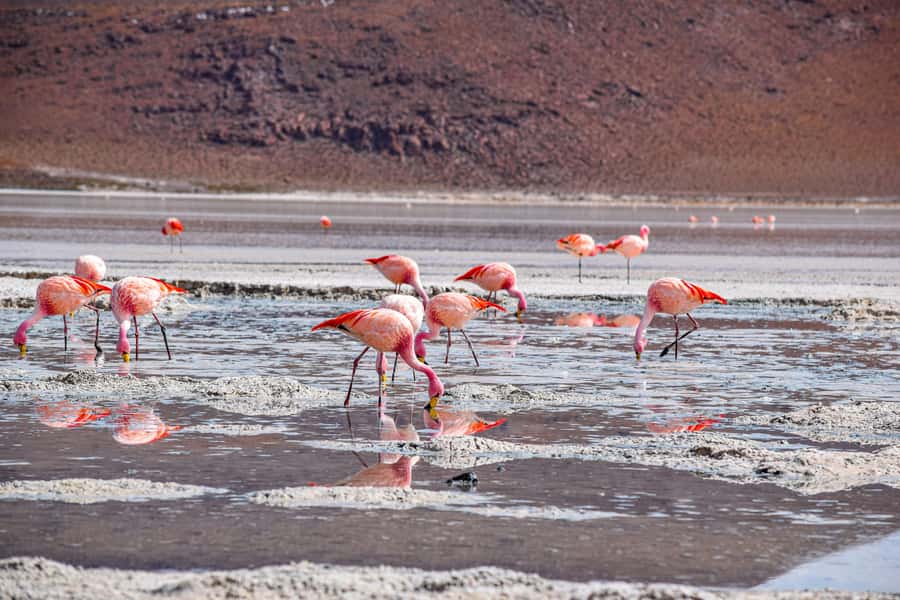
Pink flamingos are the stars. You may also see Andean ducks and seagulls. Hedionda Lagoon is the lunch stop, which makes sense because it is one of the more scenic places to pause. The name suggests the lagoon’s mineral smell, so do not expect every part of the day to smell sweet. Nature does not always provide the perfume.
After lunch, you enter the Siloli Desert, described as one of the driest places on Earth. The famous Stone Tree is the key stop, a naturally shaped rock formation carved by wind. It looks almost placed there for a photographer, but the surrounding emptiness is what makes it convincing.
The altitude is a serious part of this day. The route information places the Siloli Desert at about 6,000 meters above sea level, and the vehicle may occasionally stop briefly because of altitude or road conditions. The operator says it follows safety procedures, but you should still take the conditions seriously. Move slowly, drink what is available, and tell the driver if you feel unwell.
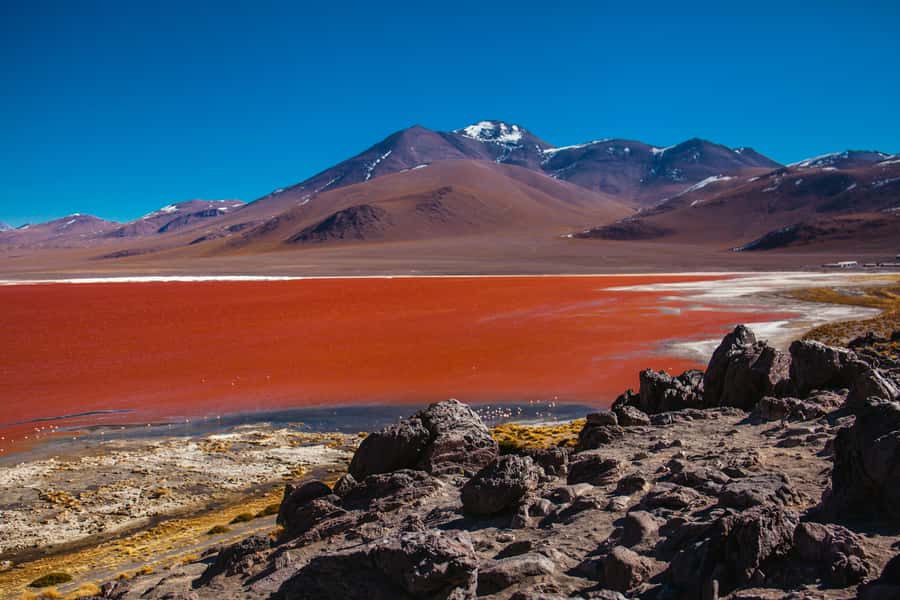
You then enter the Eduardo Avaroa National Reserve, Bolivia’s most visited national park. The scenery becomes more severe and colorful as you approach Red Lagoon, or Laguna Colorada. Its reddish water and broad pink-flamingo population create one of the most memorable views of the trip.
Red Lagoon is also a place where the cold and wind can be hard to ignore. Bring warm layers even if Uyuni felt sunny and mild earlier. The desert sun can fool you during the day, but temperatures drop quickly once the light fades.
The second night is spent at the Laguna Colorada Refuge in Huayllajara town. Accommodation is assigned according to availability, with shared dormitories holding two, three, four, or six beds. Bathrooms are shared. This is the roughest night, and most places on the route have no heating.
A sleeping bag is included from May through September, when winter nights are especially cold. The information also asks you to bring a sleeping bag, so I would clarify the seasonal arrangement before departure if you have one available. Hot showers are included in principle, but drought, gas shortages, or frozen pipes can stop them. Hot water is available about 75 percent of the time, not guaranteed.
Day 3: Geysers, hot springs, and the Chilean border
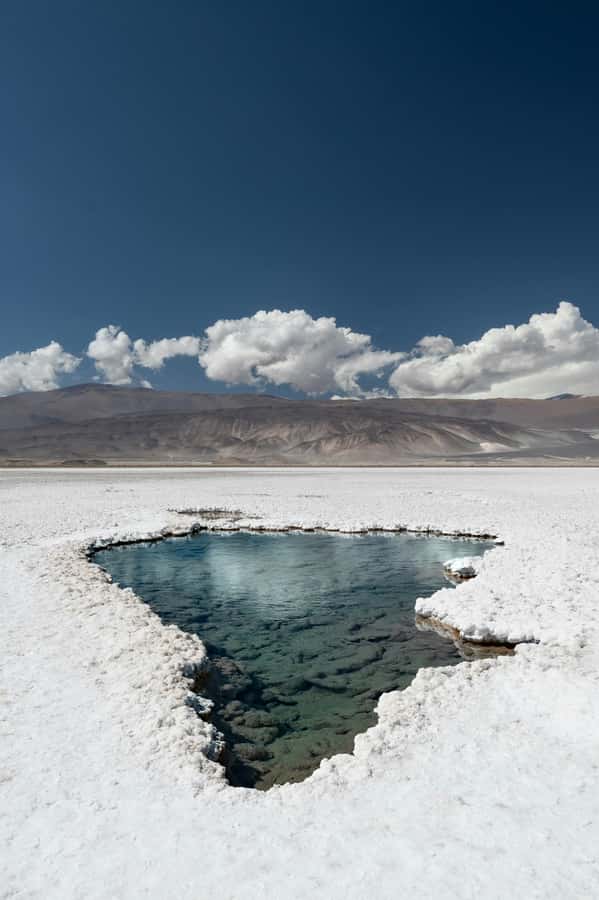
Day 3 begins early, before most people would choose to leave a warm bed. You head to the Sol de Mañana Geysers for sunrise, when steam and light make the geothermal area especially striking.
This is not a paved walkway with railings and signs at every turn. You are in a remote, high-altitude area, so follow the guide closely and do not wander near hot ground. The early start is tiring, but it lets you see one of the strongest contrasts of the trip: the cold night giving way to steam rising from the earth.
After the geysers, you can relax in the Polques Hot Springs. The warm water is a welcome change after the cold morning and bumpy road. Bring a swimsuit if you plan to use the springs, and keep your towel and warm layers close for afterward. The tour information does not promise a specific amount of time there, so think of it as a restorative stop rather than a long spa session.
The Dali Desert follows. Its rock forms and muted colors are said to resemble Salvador Dalí’s paintings, giving the area its name. The comparison is easy to understand without needing much explanation: isolated shapes sit in open desert, with no buildings or crowds to interrupt the view.
The final major sight is Green Lagoon, beside Licancabur Volcano. The volcano rises above the water and acts as a natural border with Chile. This is a fitting final Bolivian stop because it gathers so many themes from the route into one view: mineral-colored water, a tall volcano, strong wind, and a remote frontier setting.
The tour ends at the Chilean border at about 9:30 a.m. From Hito Cajon, an included vehicle transfer takes you to San Pedro de Atacama, where you should arrive around 12:30 p.m. Your passport is essential, and you should plan your onward arrangements around that arrival time. The service ends in San Pedro; it is not a return journey to Uyuni.
What $427 includes — and what it does not
At $427 per person, the tour offers solid value if you want the complete cross-border route. A 4WD vehicle, a driver-guide, two nights of accommodation, meals, water during meals, pickup in Uyuni, a seasonal sleeping bag, and the transfer to San Pedro are all included.
The six-person vehicle is important to the price. You are sharing both the cost and the space, so a seat by the window is not guaranteed. In exchange, you avoid arranging several difficult legs yourself across remote roads and the border.
You still need money for entrance fees, snacks, and toilets. The entrance-fee total is not stated, so carry cash rather than assuming the $427 covers every cost. Rubber boots are also not included. They can be useful if you visit during wet conditions, but you need to arrange them yourself.
Meals are described as basic, with an attempt at variety and a basic vegetarian option. If you have strict dietary needs, do not assume the kitchen can handle them. Carrying snacks from San Juan is sensible, especially because the route has very limited services.
Weather, roads, and comfort
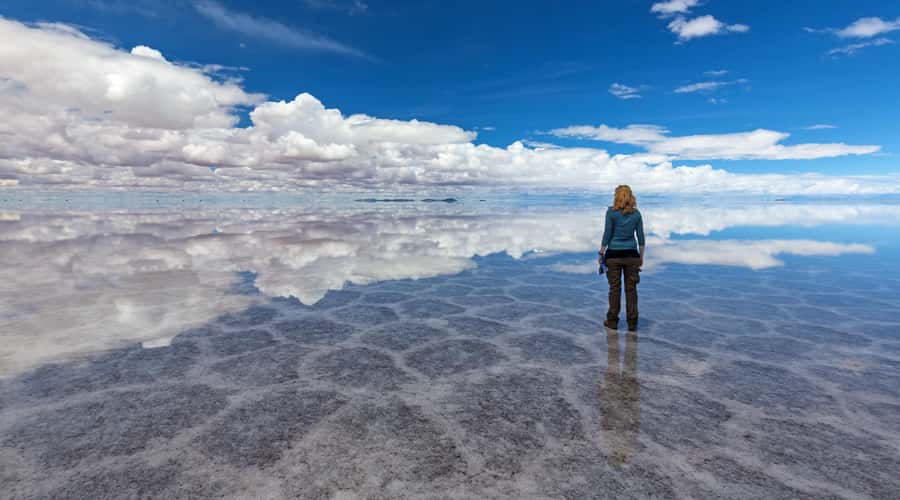
The salt flats change with the season. From December through April, rain can produce the mirror reflections that many people want to photograph. It can also flood roads leading to salt lodges, forcing the overnight stay to move to a regular hostel in Uyuni.
That is the central weather trade-off: wet conditions may give you the best photographs but can also change the plan. The itinerary may shift because of weather or road conditions at any time, so keep some flexibility around your border transfer and later plans.
The roads are rough, unpaved, and bumpy. This is not a good choice if you need smooth transport or have back problems. The tour is also unsuitable for pregnant women and children under three.
Internet is very limited, and on Day 2 you may have none at all. I would download maps, booking details, and any border information before departure. Sunglasses and sunscreen are essential because the white salt reflects strong light, while warm clothing matters at night and during the early geyser visit.
The activity allows free cancellation up to 24 hours before departure and lets you reserve now and pay later. Those policies help if your Bolivia plans are still shifting, but they do not remove the need to prepare for the physical conditions.

Who should book this three-day crossing?
I would choose this tour if you want more than the salt flats and need to reach San Pedro de Atacama. You get the salt formations on Day 1, flamingo lagoons and Red Lagoon on Day 2, then geysers, hot springs, Dali Desert, and Green Lagoon on Day 3.
It also suits you if you enjoy long drives through remote country and can accept basic rooms. The six-person group keeps the experience social and helps hold down the cost, but you will spend many hours in the same vehicle with other people.
I would hesitate if your priority is comfort, reliable showers, strong internet, or a fixed schedule. I would also think twice if you are sensitive to altitude, back pain, or rough roads. The route is spectacular, but it asks you to trade convenience for access.
Should you book it?
Book this tour if the combination of salt flats and a practical Chile crossing is worth more to you than a soft bed and predictable plumbing. At $427, the price is fair for the vehicle, meals, guide-driver, two nights, and border transfer, especially when you consider how much remote-road planning it removes.
Before paying, prepare for shared accommodation, carry cash, pack serious warm clothing, and confirm how the seasonal sleeping-bag provision applies to your dates. If those conditions sound manageable, this is a powerful three-day route with a strong mix of salt, volcanoes, wildlife, steam, and desert color.
FAQ
What time does the tour start?
The tour starts at 10:30 a.m. Pickup is available from your Uyuni hotel, bus terminal, or airport. If you are already in Uyuni, hotel pickup is generally between 10:30 and 10:45 a.m.
Where does the tour end?
The tour ends at the Hito Cajon border between Bolivia and Chile at about 9:30 a.m. An included vehicle then takes you to San Pedro de Atacama, arriving at approximately 12:30 p.m.
How many people share the 4WD vehicle?
The shared 4WD transportation is arranged for up to six participants per driver.
What accommodation is provided?
Night one is at a salt hostel in a double or triple room with a private bathroom. In rare cases, a quadruple room may be assigned. Night two is at the Laguna Colorada Refuge in a shared dormitory with two, three, four, or six beds and a shared bathroom.
Are meals and water included?
The described meals are included, along with water during meals. Snacks are not included, so you should carry cash and buy supplies during the stop in San Juan.
Can the itinerary change during rainy season?
Yes. Weather and road conditions can alter the plan, particularly from December through April. If flooding blocks the road to the salt lodges, the overnight accommodation may be changed to a regular hostel in Uyuni.
More 3-Day Experiences in Uyuni
More Tours in Uyuni
More Tour Reviews in Uyuni
Not for you? Here's more nearby things to do in Uyuni we have reviewed
Uyuni Salt Flats Tours, compared
 ★ 4.5From La Paz: Uyuni Salt Flat Tour & Overnight Roundtrip BusFrom $275327 reviews
 ★ 4.5Uyuni tour express from La Paz by busFrom $269172 reviews
 ★ 4.4From Uyuni: Red Lagoon & Uyuni Salt Flats 3-Day Guided TourFrom $354160 reviews
 ★ 4.3La Paz: 5-Day Uyuni Salt Flats by BusFrom $486153 reviews
Browse the lists this tour appears in