
Reviewed · DEATH ROAD BIKING
La Paz: Mountain Bike Down the World’s Most Dangerous Road
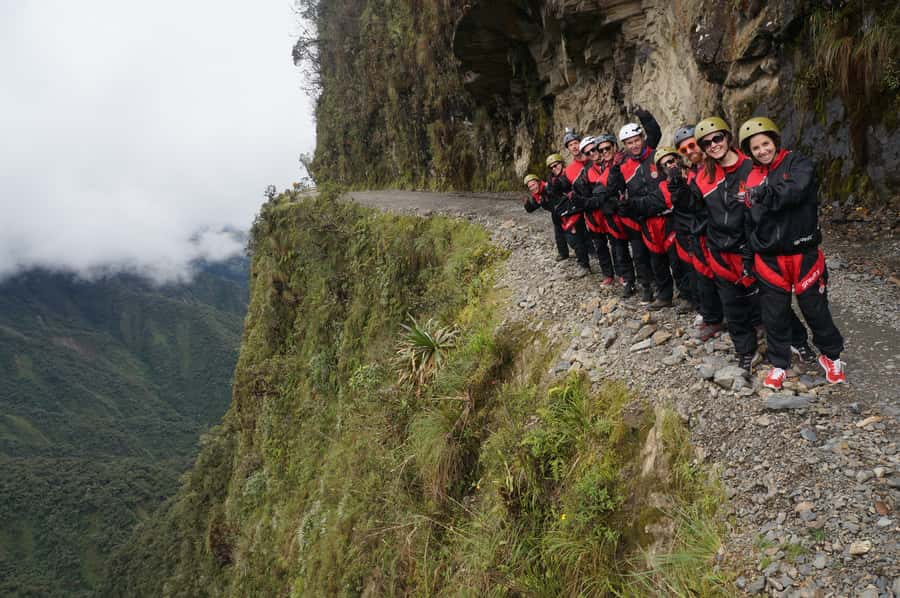
Fear makes a fine breakfast companion. Gravity Bolivia’s one-day ride down Death Road combines a 64-kilometer descent, sharp Andean scenery, and a safety setup that takes the edge off the road’s grim nickname. I like the well-maintained full-suspension bikes and the mechanic who travels with each group. I also like that the van follows you all day, carrying water, clothing, and anyone who needs a break.
The route itself is the other big draw. You begin among snow-covered peaks at 4,700 meters, pass llamas and small villages, then drop into warmer, wetter mountain country before finishing at La Senda Verde Animal Refuge. Guides such as Damian, Kenny, Noel, and Ruben are repeatedly praised for clear instructions, patience, humor, and calm control.
The main drawback is the cost and the length of the day. At $145 per person, this is one of the pricier Death Road operators, and the return to La Paz can take several hours, with some groups arriving around 8:30 p.m. You also pay 50 bolivianos in road tax, while the optional zipline costs extra.
In This Review
- Quick Take on the Death Road Ride
- Breakfast at Café del Mundo, Then a 4,700-Meter Climb
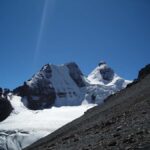
- Asphalt First: Snow Peaks, Llamas, and Open Mountain Views
- The 2,000-Meter Dirt Road Through Mist and Cloud
- Why the Safety System Matters on a Dangerous Road
- Snacks, Photos, and the Long Way Down
- Yolosa and La Senda Verde Animal Refuge
- Is $145 Good Value for This Day?
- Who Will Enjoy This Ride Most?
- What to Bring for the Mountain and Jungle
- Should You Book Gravity’s Death Road Tour?
- FAQ
- How much does the Death Road bike tour cost?
- Where does the tour meet?
- What equipment is included?
- Can someone with limited mountain-biking experience join?
- What happens if I cannot finish the ride?
- What is included at the end of the ride?
Quick Take on the Death Road Ride
- 4,700-meter starting point: Begin at wind-swept La Cumbre with views of Bolivia’s high Andes.
- 64 kilometers downhill: The ride shifts from smooth asphalt to rough, narrow dirt road cut into the mountain.
- Quality equipment: Full-suspension mountain bikes use hydraulic disc brakes, with helmets, pads, gloves, and weather gear included.
- A support van all day: You can get on the bus at any point if you are tired, cold, uncomfortable, or judged unsafe to continue.
- La Senda Verde finish: End with a buffet lunch, refuge entrance, and a chance to see rescued monkeys, birds, capybara, and an Andean spectacled bear.
Breakfast at Café del Mundo, Then a 4,700-Meter Climb
Your day begins outside Café del Mundo in La Paz. Breakfast is included, with meat, eggs, ham and cheese, vegetarian, and vegan choices available. That matters more than it may sound: you are heading from the high-altitude capital toward a long day of cold air, rough ground, and sustained concentration.
From the café, transportation takes you up to La Cumbre at 4,700 meters. The drive is part of the experience, since the city gives way to open high-altitude country and snow-covered peaks. Bring warm layers even if La Paz feels mild; the start can be cold, windy, wet, or snowy.
The group is limited to 14 people, with English- and Spanish-speaking guides. The advertised arrangement includes a guide, a mechanic, and a private safety vehicle for each group, though the staffing you see can vary by departure. The practical advantage is simple: you are not left to manage a bike problem or a clothing problem alone on a remote mountain road.
You can also read our reviews of more cycling tours in La Paz
Asphalt First: Snow Peaks, Llamas, and Open Mountain Views
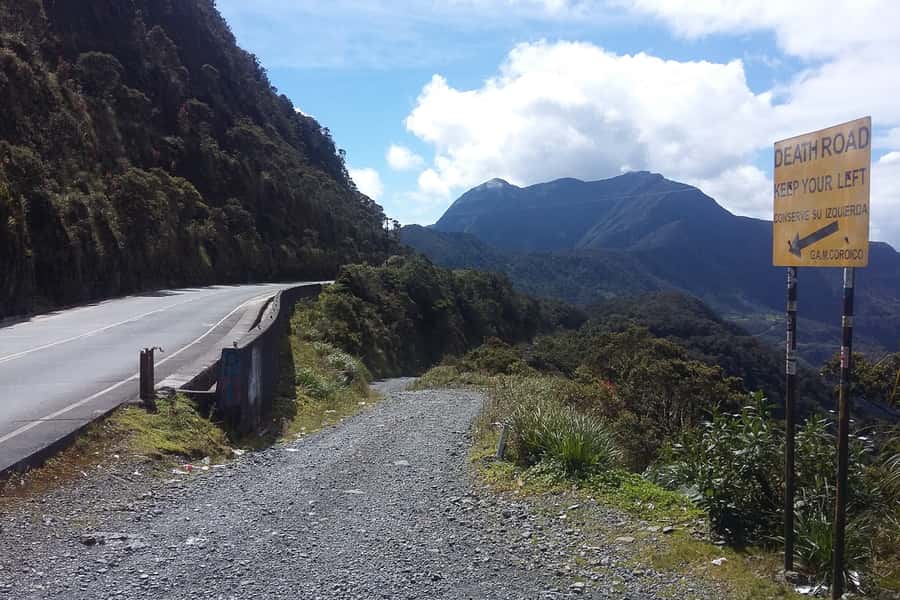
The first section is a fast descent on twisting asphalt. You pass jagged mountain peaks, grazing llamas and alpacas, and tiny settlements. It is scenic, but it is also the section where you get used to the bike, the altitude, and the instructions from your guide.
This opening stretch gives you room to settle in before the dirt road begins. Guides stop for photographs, refreshments, and short rests, then explain what is coming next. That pause-and-brief approach is one of the strongest parts of the operation: you are not simply pointed downhill and left to work things out.
The scenery changes quickly as you lose altitude. High, bare mountain country gives way to greener slopes, cliff faces, and deeper drops. On clear days, the views are huge; in poor weather, mist and cloud can hide much of the scenery. Snow and rain have occasionally made the ride harsher, so you should treat the weather gear as necessary equipment rather than a nice extra.
The 2,000-Meter Dirt Road Through Mist and Cloud
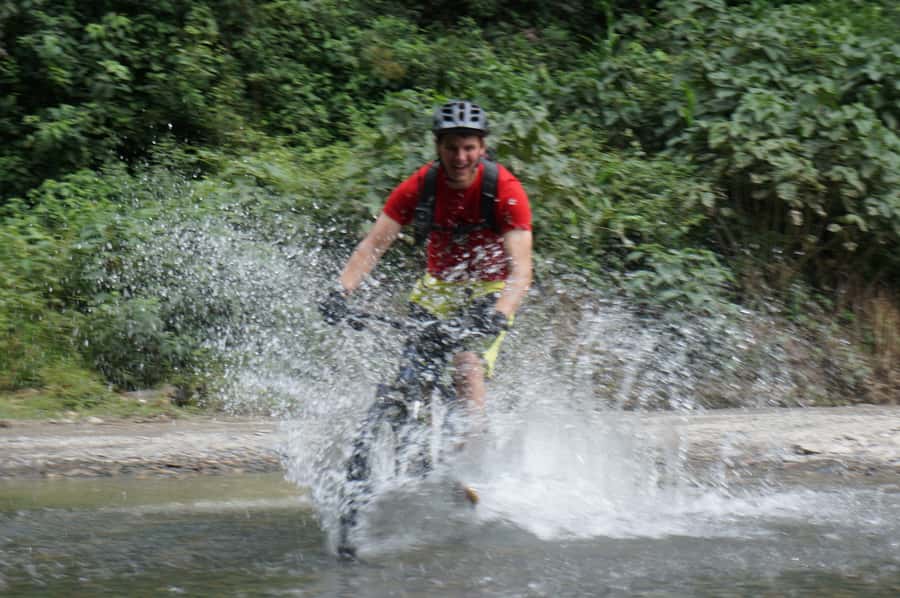
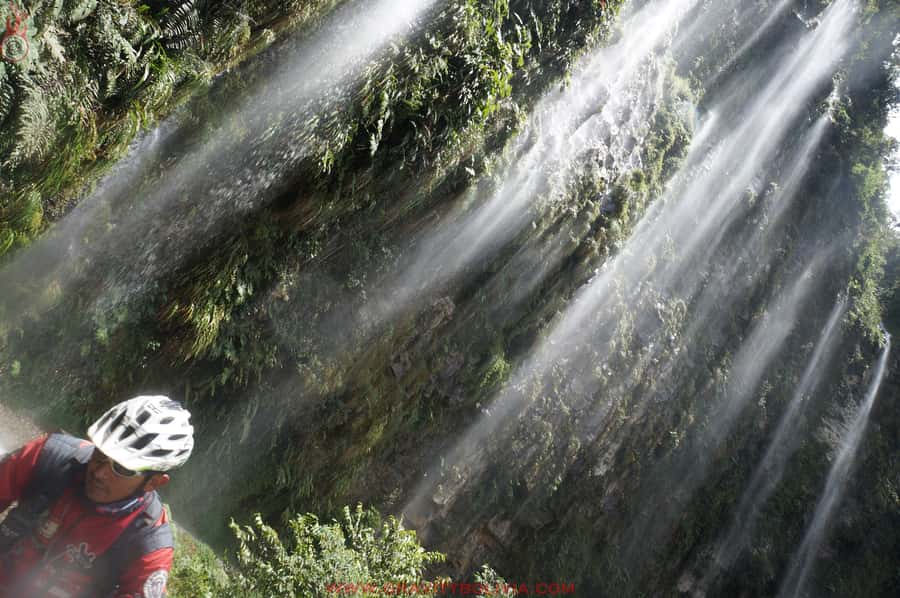
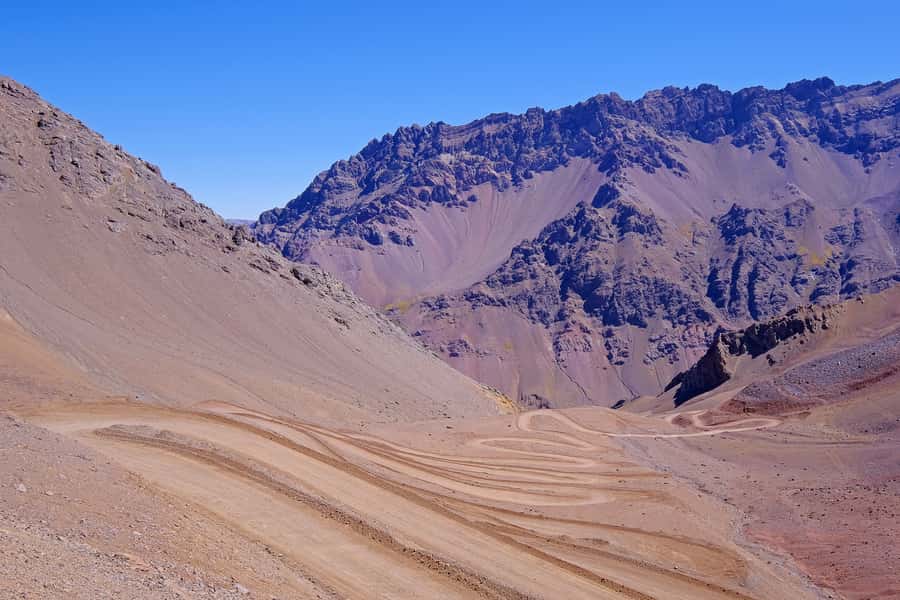
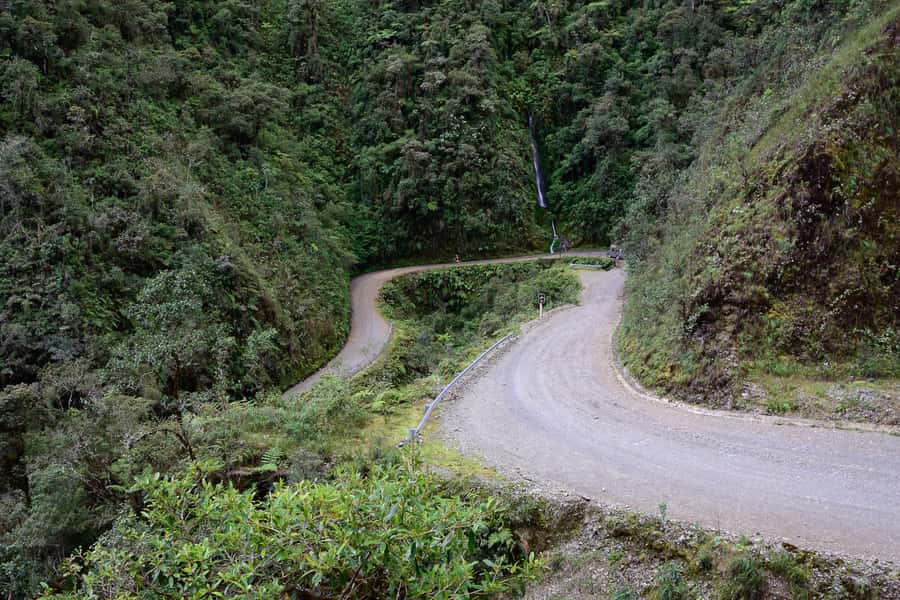
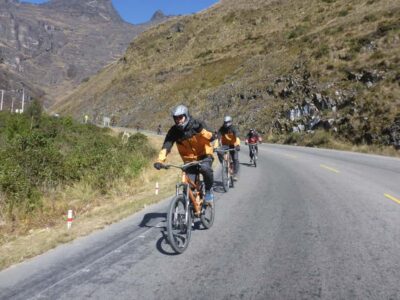
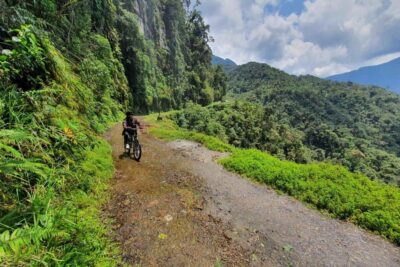
The famous section comes later, after a shorter undulating stretch. Here the road narrows into a rough dirt track cut into the side of the mountain, dropping about 2,000 meters through mist, low cloud, dust, and increasingly warm air.
This is the part that gives Death Road its reputation. You ride beside steep drops, over uneven ground, and through changing conditions. The road becomes hotter and dustier as you approach Yolosa, so sunglasses, sunscreen, insect repellent, and a change of clothes are genuinely useful.
You do not need years of downhill experience, but you do need to be able to ride a bicycle confidently. The guides coach less experienced riders and explain each section before you enter it. Several people with little mountain-biking experience have managed the route with that support, but you should not confuse coaching with a guarantee that the ride will feel easy.
I would also resist treating this as a race. More confident riders can move quickly, but the group makes regular stops, and you are encouraged to choose a speed that feels controlled. The best day is not the one where you reach the bottom first; it is the one where you finish with enough energy to enjoy the refuge.
Why the Safety System Matters on a Dangerous Road
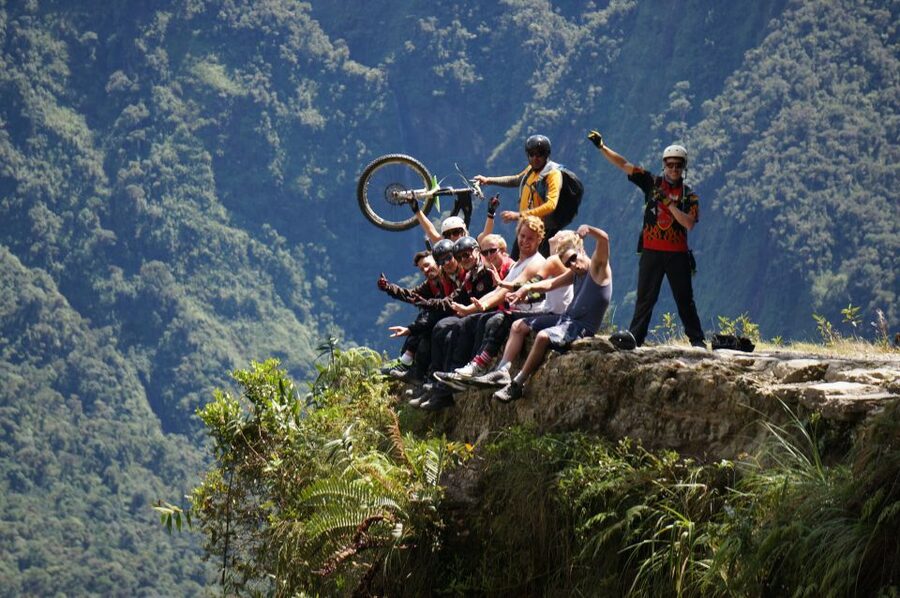
Gravity’s equipment is a major reason to consider paying more. You ride a full-suspension downhill mountain bike with hydraulic disc brakes, rather than a basic recreational bike. Helmets, including full-face options, elbow and knee pads, gloves, cold-weather pants, jackets, and a buff are provided.
The bikes are checked during the day, especially at stops when you are taking photographs or having a snack. A mechanic travels with the group and maintains the bikes after rides. That attention matters on a route where braking, control, and reliable suspension are not minor comforts.
The support van follows the riders down the road. You can use it at any point, and it can carry you if you are tired, cold, injured, or simply no longer comfortable. The guide can also require you to board for your own safety or for the safety of the group; that is a sensible rule, not a mark of failure.
There is still real risk here. One ride required the team to recover a bike that had slipped off a cliff, and the calm response and rescue equipment helped reassure the group. The lesson is not that the road is harmless. It is that experienced guides, a mechanic, protective gear, and a support vehicle make a serious activity better managed.
Guides Damian and Kenny are often praised for mixing clear safety briefings with humor, while Noel is singled out for being attentive and professional. Good English matters here because instructions about braking, road position, corners, and upcoming hazards must be understood quickly.
Snacks, Photos, and the Long Way Down
The included food helps shape the pace. You receive two snacks during the ride and unlimited water, with more opportunities to stop, rest your hands, and check your bike. Breakfast at the start and a box lunch later mean you do not need to plan your own food for the day.
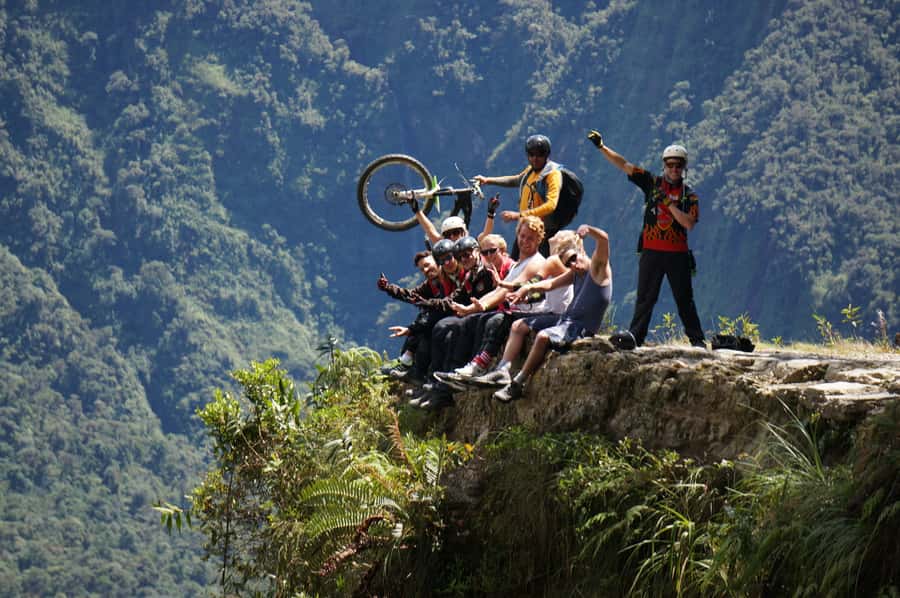
Photography is another useful inclusion. Guides take hundreds of photographs and share them after the ride, allowing you to focus on the road instead of trying to handle a camera on a rough descent. The photographs also capture the scale of the cliffs and the changing scenery better than a quick phone snapshot usually can.
The group format is small enough for the guide to keep an eye on each rider, but 14 is still a group rather than a private outing. If everyone has a different level of confidence, the pace may feel uneven. The regular stops help, and the support van gives you an escape route, but you should expect a full-day group activity.


Yolosa and La Senda Verde Animal Refuge
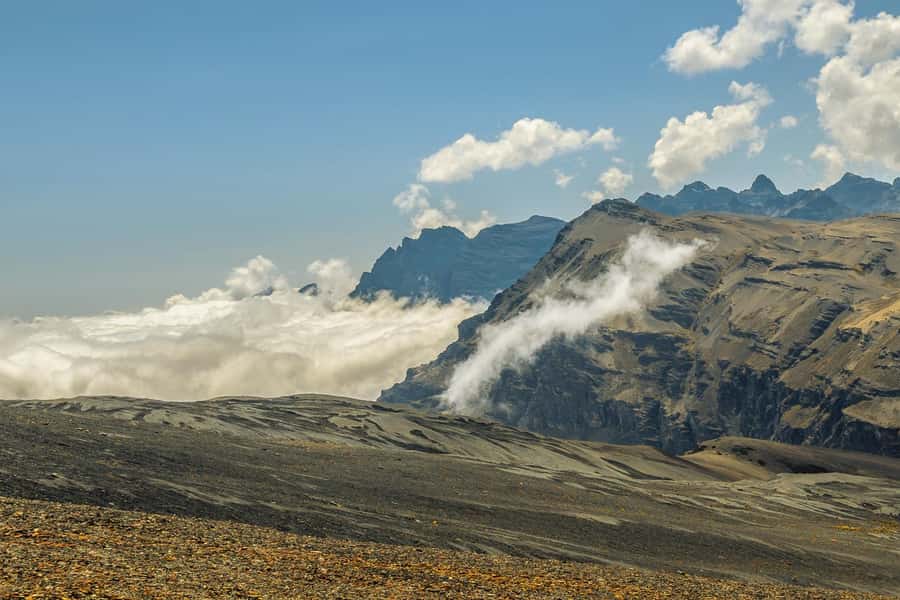
The ride ends in Yolosa, hot, dusty, and probably ready for a shower. From there, you continue to La Senda Verde Animal Refuge, where the entrance and buffet lunch are included.
This is a satisfying finish because the day does not end at the bottom of the road with a quick photo and a long wait for transport. You have time to eat, look around, and see animals rescued from the illegal pet trade. The refuge is home to hundreds of monkeys, an Andean spectacled bear, capybara, birds, and other animals from the Yungas.
Your visit supports the refuge’s rescue work, giving the price a purpose beyond better bikes and more staff. The setting also provides a clear change of mood: after hours of concentration and adrenaline, you can slow down and watch animals in a place built around their care.
Hot showers, towels, and shampoo may also be available at the finish, along with a beer on some departures. Bring a change of clothes regardless. You will be much happier on the return journey in clean, dry clothing than in dusty riding gear.
Is $145 Good Value for This Day?
The price is high compared with budget Death Road operators, but I can see where the money goes. You receive transport, breakfast, lunch, snacks, water, equipment, a mechanic, a private safety vehicle, guides, safety gear, refuge admission, photographs, and a buff to keep.
The strongest value is the equipment and backup. A cheaper trip may still take you down the same road, but a better bike, checked brakes, a mechanic, and a bus that stays behind the group reduce the number of things you need to worry about. Several operators use the same route, so the difference is in how well the day is managed.
The weak point is the return. The ride and refuge visit are only part of the day, and the bus trip back to La Paz can add about three hours. If your schedule is tight, avoid booking this immediately before an evening bus, flight, or fixed dinner reservation.
The 50-boliviano road tax is not included. The zipline is an optional extra you can purchase during the day, so budget for it only if you actually want another adrenaline activity after the bike ride.
Who Will Enjoy This Ride Most?
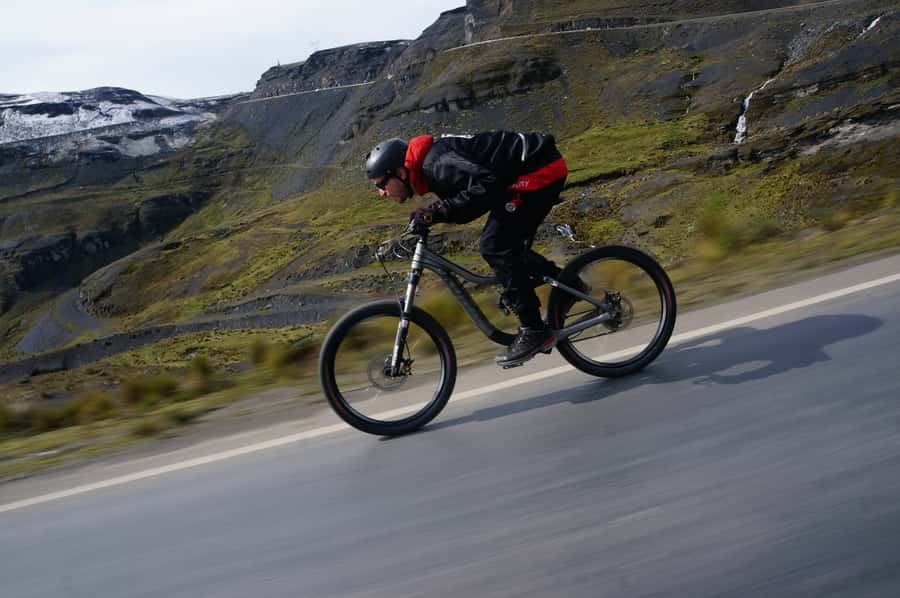
You should choose this if you can ride a bike, want a serious one-day adventure, and are comfortable with steep drops, rough surfaces, dust, and changing weather. You do not need advanced downhill skills, but you should be ready to follow instructions and accept that the guide may place you on the bus.
This is not suitable for pregnant women, wheelchair users, people with mobility impairments, people unable to ride a bicycle, or children under 120 centimeters tall. If you are nervous, that does not automatically rule you out; several riders felt frightened for much of the route yet still felt secure because they could slow down, stop, or use the support vehicle.
I would skip it if you dislike heights, have little control on a bicycle, or want a short activity close to La Paz. The road is thrilling precisely because it demands attention, and the long return makes it a full commitment.
What to Bring for the Mountain and Jungle
Pack your passport or ID card, warm clothing, sunglasses, sunscreen, insect repellent, hiking shoes, weather-appropriate layers, a daypack, cash, and a complete change of clothes. The temperature can shift sharply from the cold start to the warm finish.
Wear shoes that stay secure on the pedals. Keep your daypack light, since the support vehicle can carry clothing and supplies, but do not count on having every personal item instantly available while riding.
The free buff is useful against cold air and dust, and you keep it afterward. Full-face helmets and protective pads are supplied, so you do not need to bring your own unless you have strong equipment preferences.
Should You Book Gravity’s Death Road Tour?
I would book this tour if Death Road is a priority and you value equipment, steady guidance, and a proper support system more than the lowest price. The combination of quality bikes, a mechanic, a following vehicle, regular stops, shared photographs, and La Senda Verde makes the $145 easier to justify.
I would not book it for a rushed schedule or if you want a gentle scenic cycle. This is a long, demanding day on a road that deserves respect. For a confident cyclist who wants Bolivia’s most famous ride handled with care, Gravity is a strong choice.
FAQ
How much does the Death Road bike tour cost?
The tour costs $145 per person. A road tax of 50 bolivianos is extra, and the optional zipline is also available for an additional charge.
Where does the tour meet?
Meet outside Café del Mundo in La Paz. Breakfast is served at the start of the day.
What equipment is included?
You receive a full-suspension downhill mountain bike with hydraulic disc brakes, a helmet, cold-weather pants and jacket, elbow and knee pads, mountain-bike gloves, and a buff. A bike mechanic accompanies each tour.
Can someone with limited mountain-biking experience join?
Yes, limited experience can be suitable if you can ride a bicycle. The guides provide coaching and safety instructions, but you must be able to control a bike and follow directions.
What happens if I cannot finish the ride?
A support bus follows the group down the road, and you can board it at any point. The guide may also place you on the bus if continuing would be unsafe for you or the group.
What is included at the end of the ride?
The tour includes entrance to La Senda Verde Animal Refuge and a box lunch. You can see rescued animals including monkeys, an Andean spectacled bear, capybara, and birds.
More Cycling Tours in La Paz
More Tour Reviews in La Paz
Not for you? Here's more nearby things to do in La Paz we have reviewed
Death Road Biking, compared
 ★ 4.7From La Paz: The World’s Most Dangerous Road Biking TourFrom $12968 reviews
 ★ 3.4La Paz | Death by Bike Route | LunchFrom $1407 reviews
 ★ 5.0World’s Most Dangerous Road “Private” Mountain Biking TripFrom $1497 reviews
 ★ 4.7From La Paz: 3-Day Biking Tour Death Road & Uyuni Salt FlatsFrom $4294 reviews
Browse the lists this tour appears in