
Reviewed · UYUNI SALT FLATS TOURS
From La Paz: 3-Day Biking Tour Death Road & Uyuni Salt Flats
One day puts your brakes to work. This three-day trip pairs a full-suspension ride on Death Road with a full day across the Uyuni Salt Flats, giving you two of Bolivia’s biggest outdoor experiences in one booking. I like the safety van, regular bike checks, and small group of no more than 11 people. I also like that the package includes the bikes, protective equipment, lunches, guides, and both overnight bus journeys.
The main drawback is the tight transport schedule. After cycling, you are dropped at the bus office for the 9 p.m. departure to Uyuni, and the handoff requires close attention. Keep your bags with you, confirm exactly where to go, and do not rely on having time to return to your La Paz hotel.
In This Review
- Key points to know before booking
- Two major Bolivian sights in three demanding days
- Starting at 7:30 a.m. with a paved descent
- The 10-kilometer Death Road section
- Yolosa brings showers, a pool, and lunch
- The 9 p.m. bus connects La Paz and Uyuni
- Train Cemetery and Colchani set the stage
- Crossing the Uyuni Salt Flats at 3,665 meters
- Incahuasi Island and the cactus-filled center
- Sunset, dinner-hour timing, and the second bus
- Is $429 good value for this schedule?
- Who should book this three-day trip?
- Should you book it?
- FAQ
- Where does the tour meet in La Paz?
- Does the tour start and finish in La Paz?
- Are the buses between La Paz and Uyuni included?
- What equipment is provided for Death Road?
- How much are the entrance fees?
- Can I visit Incahuasi Island during the rainy season?
- What should I bring?
- Is the tour suitable for pregnant people or people with back problems?
- What languages are available?
Key points to know before booking
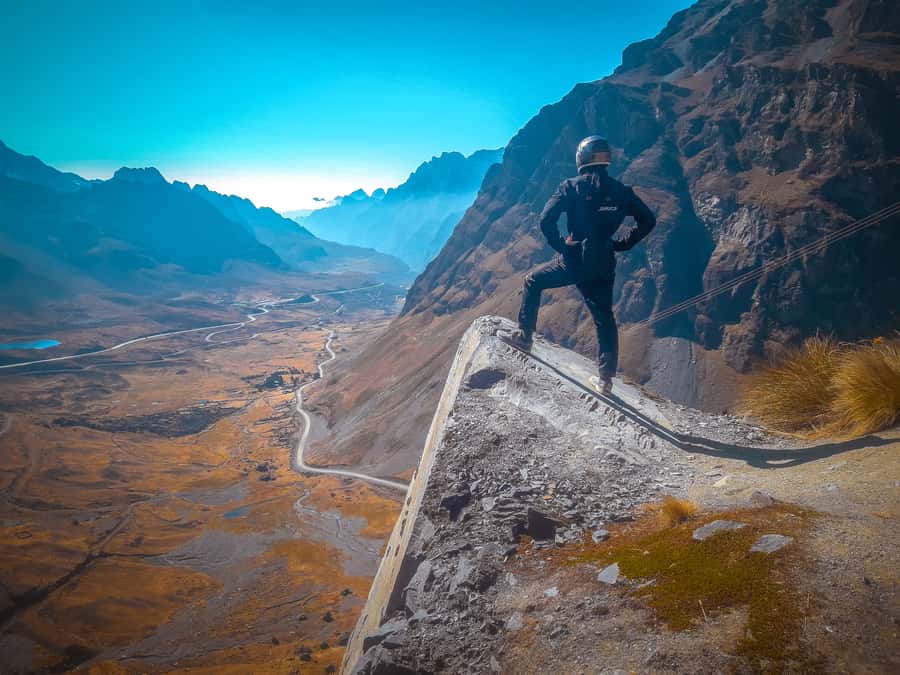
- The cycling day has three distinct sections: a 22-kilometer paved descent, about 10 kilometers on Death Road, and a final section of roughly 32 kilometers before Yolosa.
- A safety van follows the biking group, with stops for water, photographs, and bike checks.
- The trip runs on overnight buses, leaving La Paz at 9 p.m. on Day 1 and Uyuni at 9 p.m. on Day 2.
- Uyuni reaches 3,665 meters, and the salt flats cover about 12,000 square kilometers.
- Incahuasi Island is closed to this tour during the January-to-April rainy season.
- Bring cash for Bs. 80 in listed entrance fees, plus toilets, drinks, snacks, and personal spending.
Two major Bolivian sights in three demanding days
This is a packed trip rather than a relaxed holiday. You spend the first day cycling, the first night on a bus, the second day touring Uyuni in a 4WD vehicle, the second night on another bus, and the third morning arriving back in La Paz.
I like the way the tour links places that are otherwise awkward to combine. Death Road delivers speed, mountain scenery, and physical effort. Uyuni offers wide-open salt, bright skies, unusual monuments, and a memorable sunset. You get a lot for three days, but you also give up sleep, spare time, and a comfortable base.
The listed price is $429 per person. That includes the Death Road ride, full-suspension bike, helmet, gloves, jacket, trousers, snacks, one lunch, English- and Spanish-speaking guides, transportation, both bus tickets, the full-day Uyuni trip, a second lunch, 4WD transport, and the sunset stop.
That is a solid package if you want both activities and do not want to arrange the buses yourself. It is less of a bargain if you prefer slow travel or already have transport booked. You still need money for the Death Road entrance fee of Bs. 50, the Uyuni entrance fee of Bs. 30, toilets at Bs. 10 along the way, drinks, snacks, and about Bs. 150 for personal expenses.
You can also read our reviews of more cycling tours in La Paz
Starting at 7:30 a.m. with a paved descent
Meet at Maria Auxiliadora Church on 16 de Julio Avenue in the El Prado area of La Paz at 7:30 a.m. A valid WhatsApp number is requested for coordination, which matters here because the day involves several vehicles and a late-night bus connection.
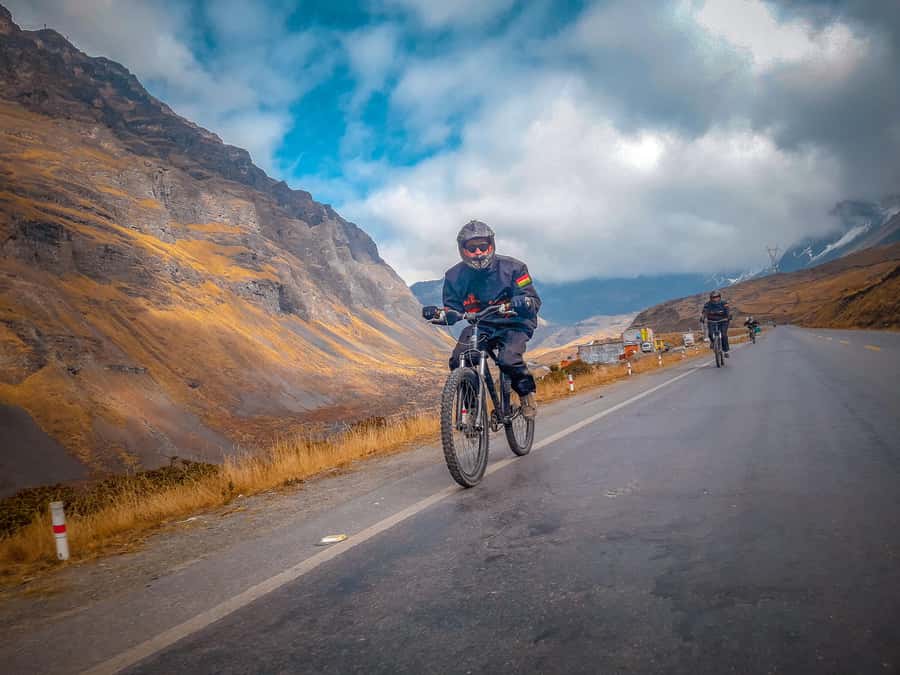
The ride begins with a 22-kilometer downhill run on asphalt. This is not the famous rough road yet. It gives you time to get comfortable with the bike, test the brakes, and settle into the riding position before the more serious section begins.
After roughly 45 minutes, the group reaches a police checkpoint. You pay the Bs. 50 national park entrance fee in cash. Keep small bills handy if possible, since this is one of several places where you will need money during the trip.
The safety van stays behind the group. That is useful for anyone worried about a mechanical problem or simply wanting reassurance on a demanding road. Stops are built in for water, photos, and bike checks, so you are not expected to ride continuously without a pause.
You should still take the opening descent seriously. A downhill road can build speed quickly, and this first stage is meant to help you develop control. Use it to learn how the bike handles before you reach the rougher track.
The 10-kilometer Death Road section
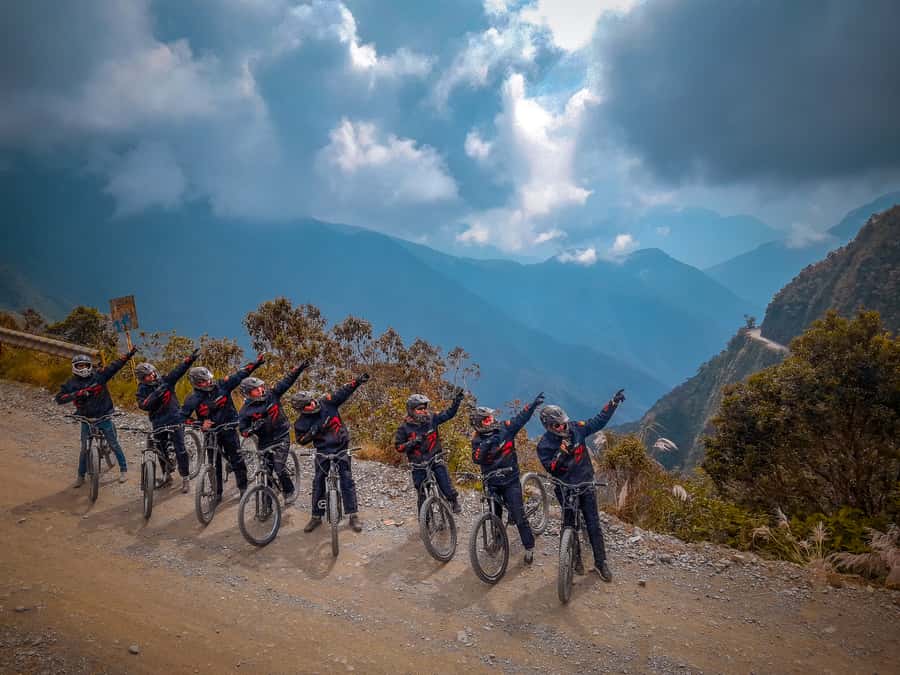
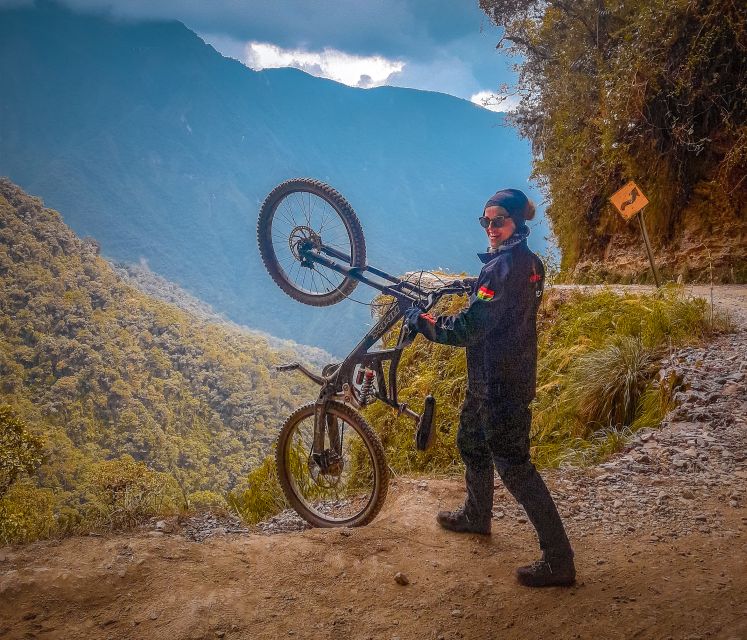
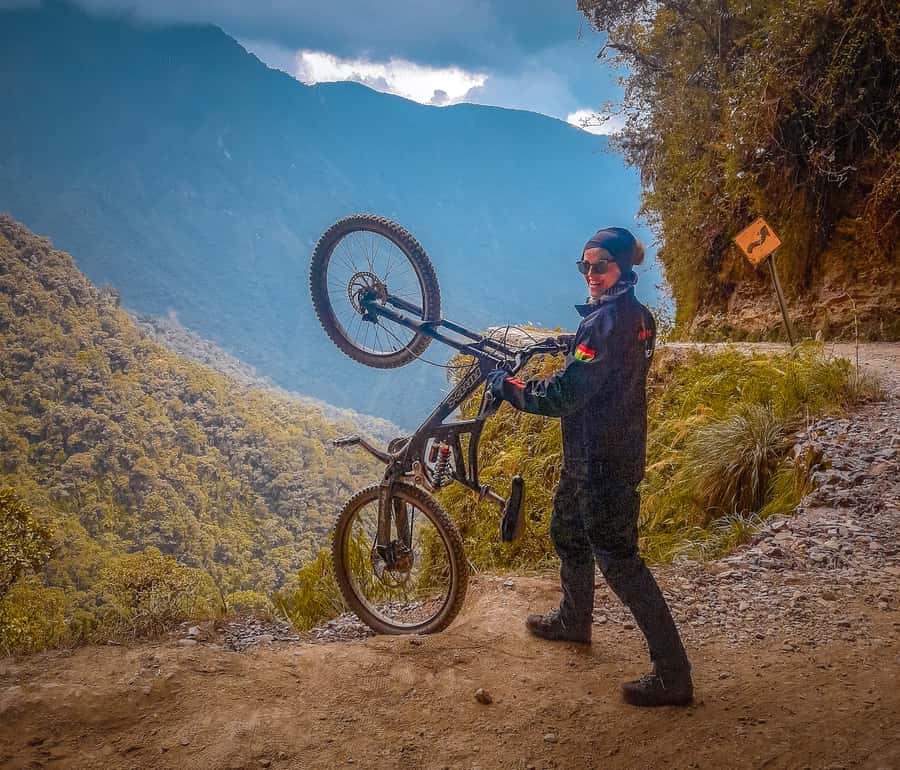
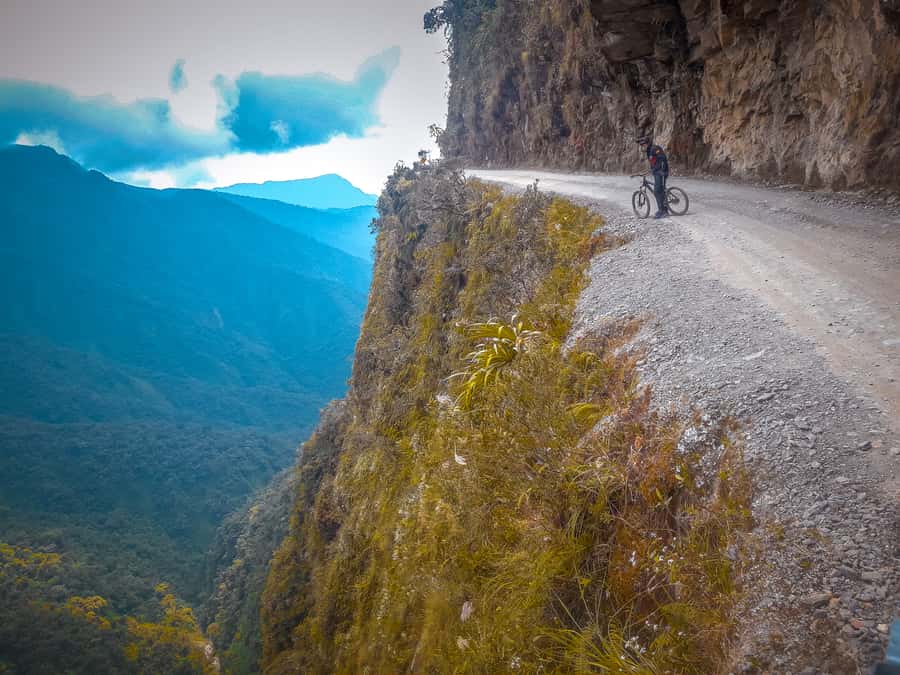
The central section covers about 10 kilometers on Death Road. The group rides in a compact formation, with safety given priority over racing. That format suits this road: you get the drama of the route without turning the ride into a contest.
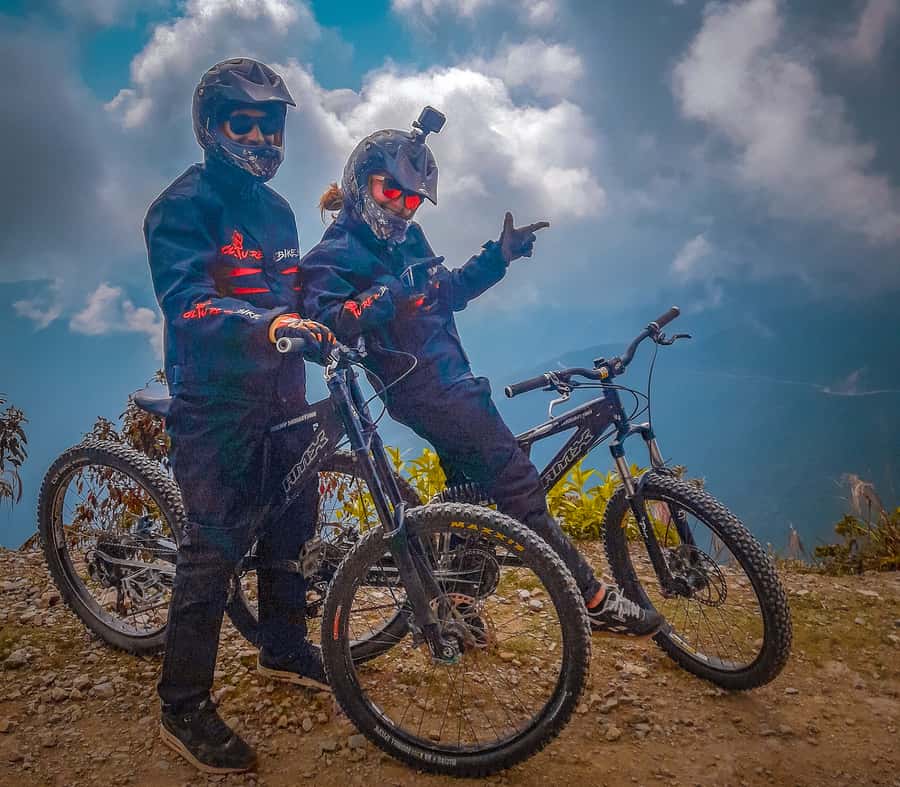
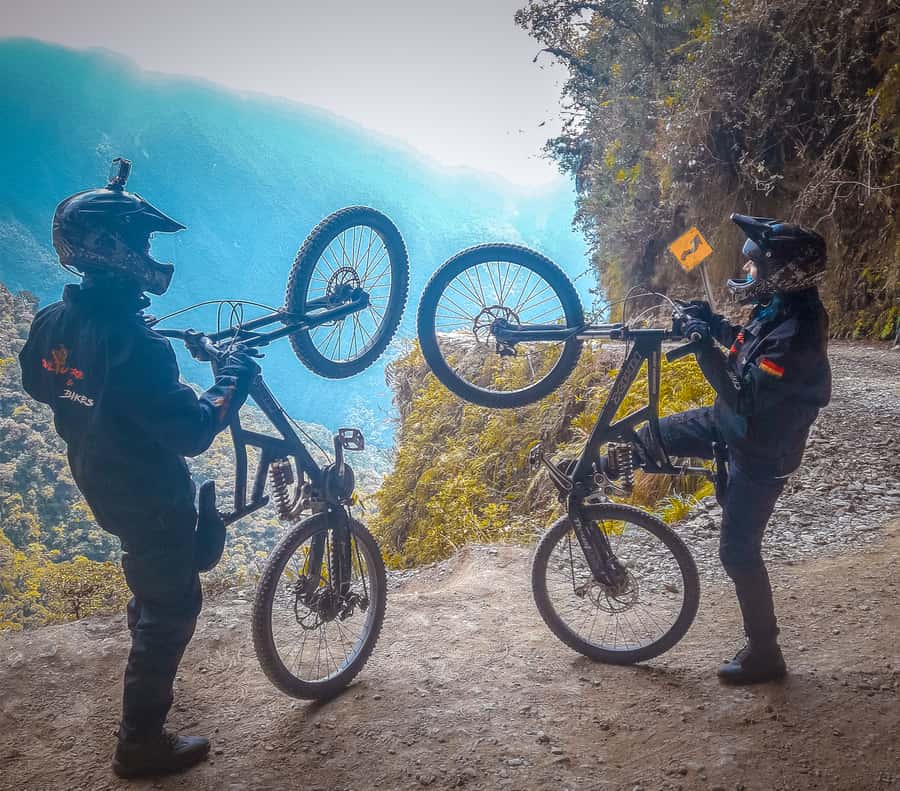
The name is not decorative. You ride along a narrow mountain road with steep drops and rougher surfaces than the opening asphalt section. The tour provides a full-suspension bike, full-face helmet, gloves, jacket, and trousers. That equipment is a meaningful part of the price, since a proper bike and protective kit make a big difference on a route with uneven ground.
A snack stop is included during the ride. You also have time for photographs, though you should keep your attention on the guide and the road whenever the group is moving.
The ride description includes a later section of about 32 kilometers that begins with a waterfall splash. The route finishes in Yolosa. Expect a full day of physical activity, wet clothing, dust, and changing road conditions rather than a short sightseeing cycle.
This is not a good choice if you are pregnant or have back problems. Even with suspension and protective clothing, the combination of downhill riding, rough ground, and a long day can be hard on your body.
Yolosa brings showers, a pool, and lunch
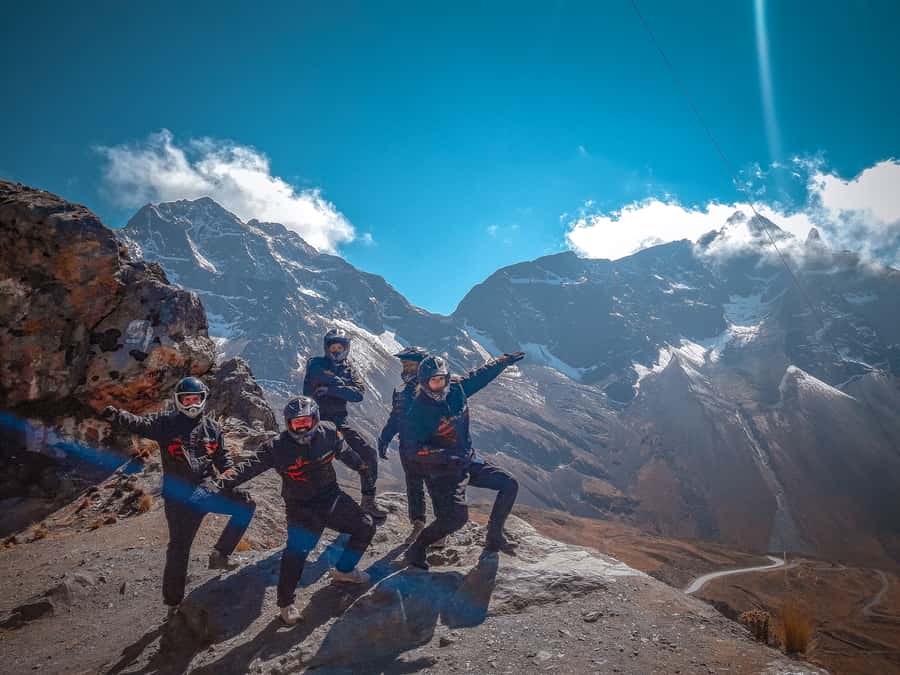
At the end of the ride, you go to a hotel in Yolosa. The stop includes showers, a swimming pool, and a buffet lunch. After a hot, dusty, and sometimes wet ride, the shower is more than a pleasant extra. It lets you reset before the long return drive.
The lunch is included, but drinks during the Death Road meal are not. Bring cash if you want to buy something beyond the included food.
At about 5 p.m., the guide drives you back toward La Paz using the newer road. The tour then drops you at the bus office for the overnight journey to Uyuni. This is where the timing becomes important: you do not return to your hotel, so take your luggage with you from the morning.
Allow yourself plenty of mental space for this transfer. Confirm the bus company, departure point, and boarding instructions with the guide. A very tight handoff has been reported, with only a few minutes available to catch the bus, and the communication around the connection has not always been clear.
The 9 p.m. bus connects La Paz and Uyuni
The bus leaves La Paz at 9 p.m. and reaches Uyuni at about 7:30 a.m. You then have free time before going to the tour office near the bus station. The 4WD excursion begins at 10:30 a.m.
That gap gives you some time to orient yourself, but not a full morning. You should keep your passport, cash, and any essential items easy to reach rather than buried in luggage. The trip includes a rooftop luggage rack on the 4WD vehicle, but you will still want a small day bag for valuables, water, and warm layers.
The overnight bus saves a hotel night and makes the combined itinerary possible. The tradeoff is simple: you will be touring Uyuni after a night in transit. If you need full nights of sleep to enjoy a trip, this schedule may feel punishing.
A few more La Paz tours and experiences worth a look
Train Cemetery and Colchani set the stage
The first Uyuni stops are the Train Cemetery and Colchani. The old 19th-century locomotives at the cemetery offer a stark set of shapes and textures for photographs. They recall the region’s railway era and give you a visual change before the white salt begins.
At Colchani, you can see the Rosario Cooperative’s salt iodization plant and learn how salt is extracted and processed. There is also a small market selling llama clothing and salt handicrafts, along with a small salt museum.
These stops help you understand that Uyuni is not only a place for wide photographs. Salt production remains part of the local economy, and Colchani shows the practical side of the area before the tour moves onto the huge salt plain.
Crossing the Uyuni Salt Flats at 3,665 meters
The salt flats sit at about 3,665 meters and cover roughly 12,000 square kilometers. The scale is the point. Once you are out on the white expanse, the horizon seems to flatten in every direction, and the lack of familiar landmarks makes the 4WD ride feel unusual.
The tour visits salt eyes, where water and salt features appear in the flats, and gives you time for photographs. The bright surface can be hard on your eyes, so sunglasses are a sensible item even though they are not listed as required equipment.
You also stop at the salt hotel museum, an unusual structure built entirely from salt blocks. The Dakar Monument and Flags of the World provide more recognizable photo stops. You can bring your own flag and place it there for free, according to the tour details.
These stops are designed for short visits and photographs, but they also break up a long day in the vehicle. The 4WD has a rooftop luggage rack, which helps with carrying bags, though you should still expect a full day of road travel rather than constant walking.
Incahuasi Island and the cactus-filled center
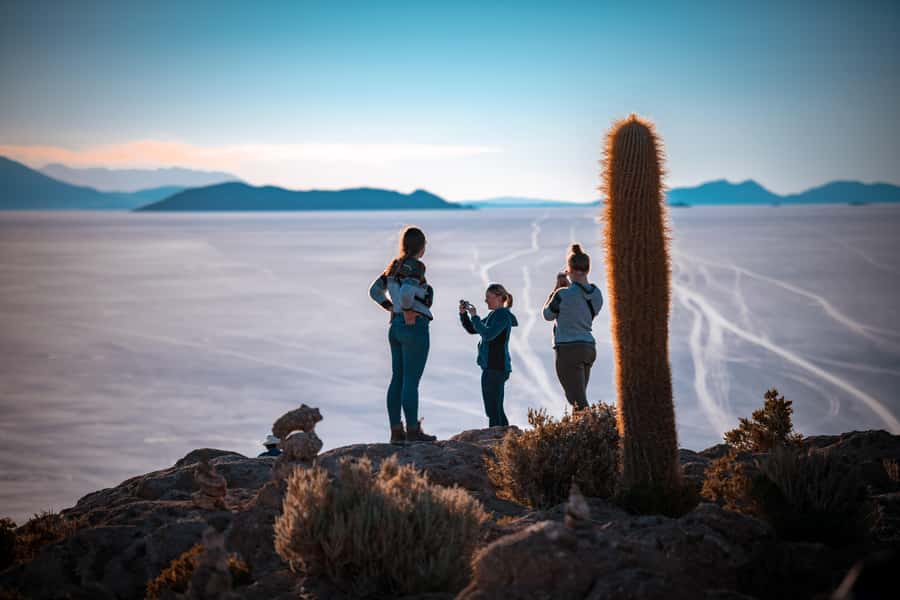
Incahuasi Island sits in the middle of the salt flats. It is described as an isolated ecosystem, with cactuses ranging from about one to four meters high. After the stark white salt, the island’s dark rock and tall cactus shapes offer a welcome change.
You have time there to rest and take photographs while looking back across the salt flats. It is one of the most distinctive stops on the route because it adds height, texture, and living plants to an otherwise nearly white setting.
There is one major seasonal limitation. From January through April, the tour cannot access Incahuasi Island because of the rainy-season conditions. The salt flats may still be the main attraction, but you should not book in those months expecting the complete stop list.
Sunset, dinner-hour timing, and the second bus
The day ends with sunset on the salt flats and a glass of wine. This is the quietest and most scenic part of a day filled with driving and scheduled stops, so it is worth protecting your energy for the evening.
You return to Uyuni at about 7:30 p.m. The bus to La Paz leaves at 9 p.m., and the stated arrival point for the bus office is 8:30 p.m. That leaves a narrow margin. Stay with the guide’s instructions and confirm the route to the bus office before leaving the 4WD vehicle.
The bus reaches La Paz at about 6:30 a.m. on Day 3, finishing at the La Paz city bus station. In practice, the trip ends when you arrive there, not at your hotel.
Is $429 good value for this schedule?
I see the price as fair for people who want a ready-made combination of two expensive-to-arrange activities. The equipment package is useful, the small group keeps the bike day more manageable, and the transport between La Paz and Uyuni is included.
The value is strongest if you would otherwise need to book Death Road, two bus tickets, a 4WD salt-flat tour, meals, and guides separately. The value is weaker if you want hotel comfort, private transport, or a flexible timetable, since those are not part of the package.
Budget beyond the advertised price. You need Bs. 50 for Death Road, Bs. 30 for the salt flats, Bs. 10 for toilets on the way, and money for drinks, snacks, and personal purchases. The listed personal-expense estimate is Bs. 150, but your actual total depends on what you buy.
Who should book this three-day trip?
I would recommend it to an active visitor with limited time in Bolivia who wants a strong mix of cycling and scenery. You should be comfortable with a full day on a bike, rough downhill riding, high-altitude touring, and two overnight bus journeys.
It also suits you if you prefer having the major transport arranged and want an English- or Spanish-speaking guide throughout the activities. The small group, safety van, bike checks, and supplied protective clothing make the Death Road portion easier to approach.
I would not choose it for a slow trip, a family plan involving pets, or anyone who needs a soft bed each night. It is also unsuitable for pregnant people and people with back problems. The bus changes demand organization, so you need to keep your passport and cash accessible and pay attention to every transfer.
Free cancellation is available up to 24 hours before departure, and you can reserve now and pay later. Check the starting time when booking, since the activity lasts three days and begins early.
Should you book it?
Book this tour if you want two headline Bolivian sights in one tightly organized burst and you are willing to trade comfort for efficiency. The Death Road ride, full equipment, safety van, and Uyuni sunset give the trip real appeal.
Skip it if the idea of a rushed bus connection or two nights in transit sounds worse than arranging the sights separately. If you do book, carry your bags from the first morning, bring cash, confirm both bus handoffs, and check the rainy-season access to Incahuasi before paying.
FAQ
Where does the tour meet in La Paz?
The meeting point is Maria Auxiliadora Church on 16 de Julio Avenue in the El Prado area. The meeting time is 7:30 a.m.
Does the tour start and finish in La Paz?
Yes. The tour starts in La Paz City and finishes at the La Paz city bus station after you return from Uyuni.
Are the buses between La Paz and Uyuni included?
Yes. Round-trip bus transportation is included. The bus leaves La Paz at 9 p.m. on Day 1 and Uyuni at 9 p.m. on Day 2.
What equipment is provided for Death Road?
The tour provides a full-suspension bike, full-face helmet, gloves, jacket, and trousers.
How much are the entrance fees?
The Death Road entrance fee is Bs. 50, and the Uyuni Salt Flats entrance fee is Bs. 30. Both are paid in cash and are not included in the tour price.
Can I visit Incahuasi Island during the rainy season?
No. Incahuasi Island cannot be accessed during the rainy season from January through April.
What should I bring?
Bring your passport and cash. You should also keep personal essentials accessible because you go directly from the cycling day to the overnight bus rather than returning to your hotel.
Is the tour suitable for pregnant people or people with back problems?
No. The activity is listed as unsuitable for pregnant women and people with back problems.
What languages are available?
The tour offers live guides in English and Spanish. The group is limited to 11 participants.
More Cycling Tours in La Paz
More Tours in La Paz


More Tour Reviews in La Paz
Not for you? Here's more nearby things to do in La Paz we have reviewed
Uyuni Salt Flats Tours, compared
 ★ 4.5From La Paz: Uyuni Salt Flat Tour & Overnight Roundtrip BusFrom $275327 reviews
 ★ 4.5Uyuni tour express from La Paz by busFrom $269172 reviews
 ★ 4.4From Uyuni: Red Lagoon & Uyuni Salt Flats 3-Day Guided TourFrom $354160 reviews
 ★ 4.3La Paz: 5-Day Uyuni Salt Flats by BusFrom $486153 reviews
Browse the lists this tour appears in