
Reviewed · DEATH ROAD BIKING
World’s Most Dangerous Road “Private” Mountain Biking Trip
The drop starts high. This 12-hour private Death Road trip takes you from 4,650 meters in the Andes to 1,200 meters in the subtropical Yungas, with a full-suspension bike, full-face helmet, and a guide close by. I like the private pace and the strong equipment; I also like that lunch, snacks, water, and round-trip transport are included in the $149 price. The catch is that this remains a serious downhill ride, and the extra 50 BOB admission fee and excluded drinks push the final cost above the headline figure.
The experience can be especially personal when only two people book, as happened on one departure. Guides named Marcelo, Marcello, and Marcel appear in the booking information under slightly different spellings, and the comments about their care, English, route knowledge, and photo stops are consistently warm. You should still be comfortable on a bike and in moderate physical condition before booking.
In This Review
- The Essential Details at a Glance
- From Downtown La Paz to a 4,650-Meter Starting Point
- The Ride from the Andes to the Yungas
- Why the Full-Suspension Bike Matters
- A Guide, Driver, and Pace That Fits You
- Lunch, Snacks, Water, and a Pool at the Finish
- Is $149 Good Value?
- Who Should Book This Ride?
- Should You Book the Death Road Private Ride?
- FAQ
- How much does the private Death Road bike trip cost?
- How long does the experience last?
- Where is pickup available?
- What is included in the price?
- What safety equipment is provided?
- What languages does the guide speak?
- How many people can join the group?
- Do I need mountain-biking experience?
- Is the trip suitable for children or pregnant women?
- Can I cancel or pay later?
The Essential Details at a Glance
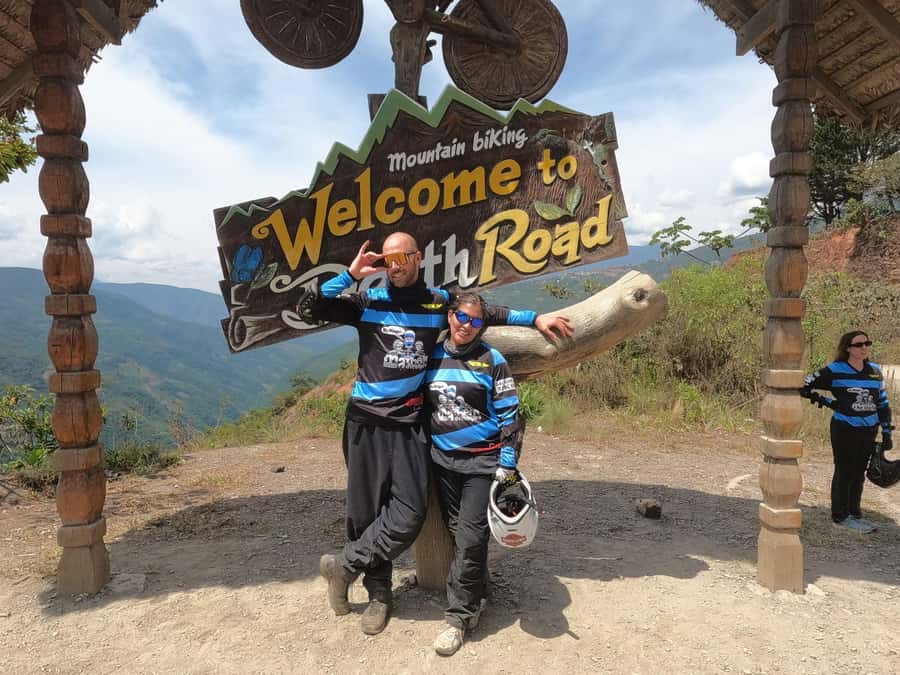
- A huge change in altitude: You ride from the Andean highlands at 4,650 meters down to the Bolivian Yungas at 1,200 meters in one full day.
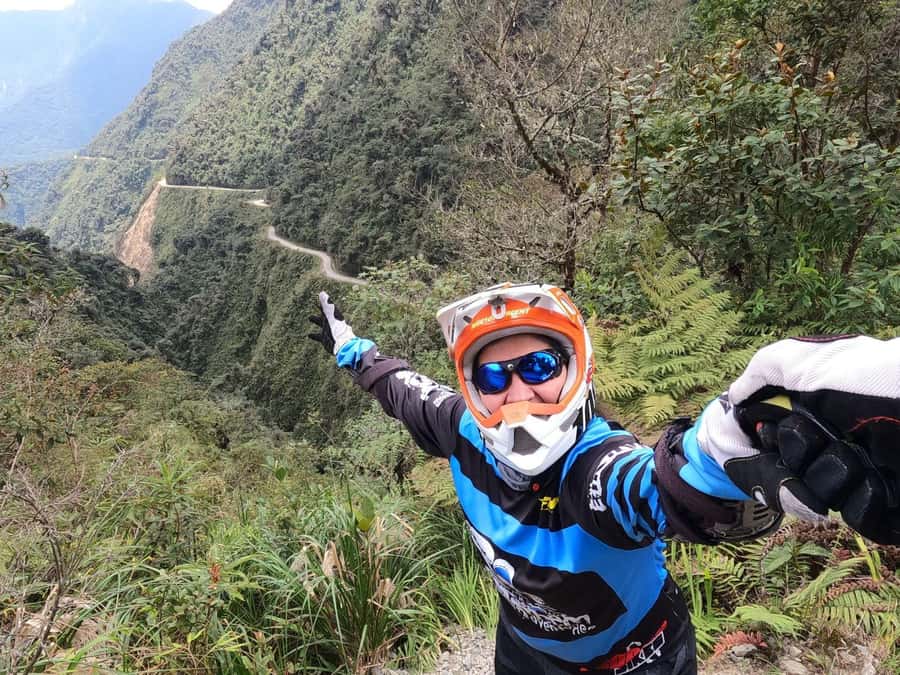
- A genuine dirt-road challenge: The route follows a narrow, roughly three-meter-wide track built during the Chaco War.
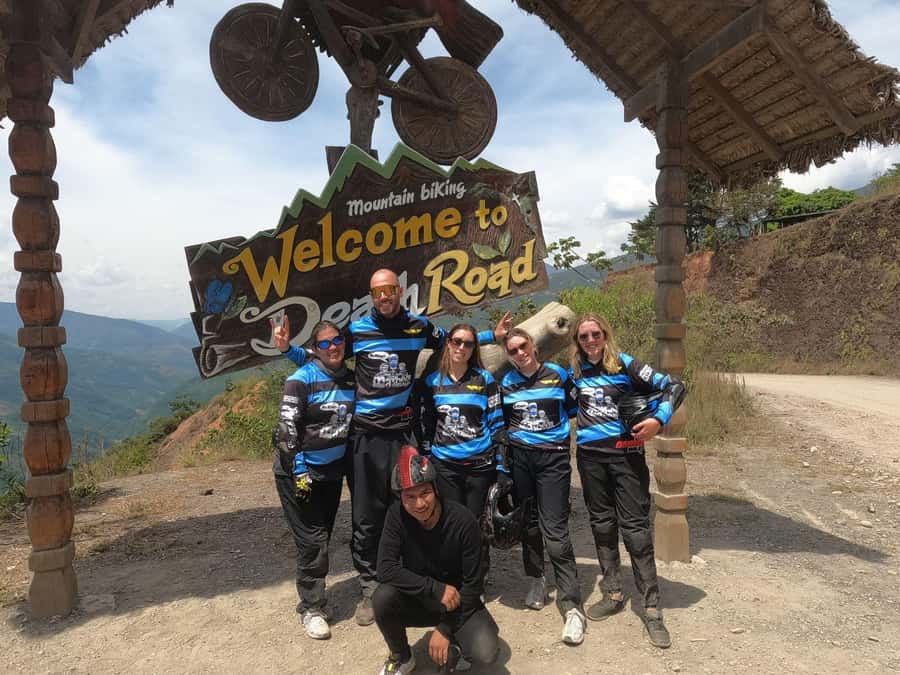
- Good equipment included: You get a full-suspension mountain bike, full-face helmet, gloves, elbow and knee pads, rain pants, and a rain jacket.
- Private does not always mean solo: Your booking runs on the date you choose and lets you ride at your own pace, but the stated maximum is 10 people.
- The finish is easy on the legs: Lunch, snacks, water, and time for a dip in the pool are part of the day.
- A useful value point: The $149 fee covers transport, guide, bike, protection, and food, though admission and other drinks cost extra.
From Downtown La Paz to a 4,650-Meter Starting Point
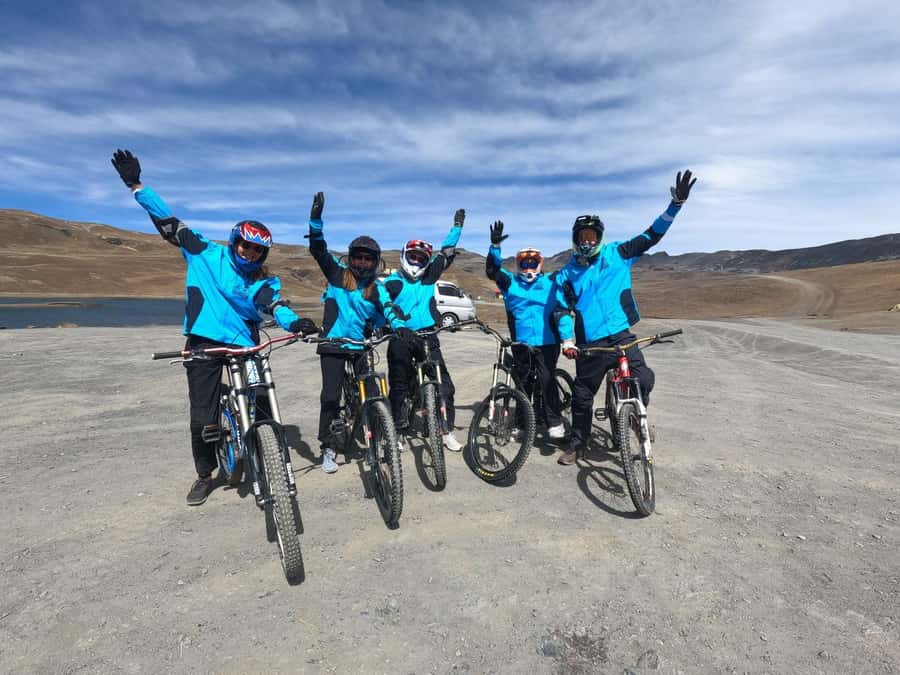
The day begins with pickup from a hotel or hostel in central La Paz. Pickup is not included from Zona Sur or El Alto Airport, so you may need to reach a central meeting point or pay an extra transport charge from those areas.
The stated duration is 12 hours, and the exact starting time depends on availability. That long schedule matters because the trip combines transport, a major altitude change, a full downhill ride, food, and the return journey to La Paz. You are not simply paying for a short bike rental beside the road.
Round-trip transportation is included, along with an experienced driver. That is useful on a route where you want your attention on the ride rather than on arranging separate transfers between the high Andes and the Yungas.
At the high starting point, you are at 4,650 meters above sea level. The route then drops to 1,200 meters in the subtropical rainforest of the Bolivian Yungas, giving you one of the clearest ways to experience how quickly Bolivia changes from high mountain country to warmer forest.
You can also read our reviews of more cycling tours in La Paz
The Ride from the Andes to the Yungas
The main appeal is the scale of the descent. In only a few hours, you move from the Andean mountains to the Amazon Basin side of Bolivia, with the road carrying you through a dramatic change in altitude and setting.
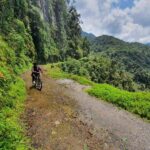
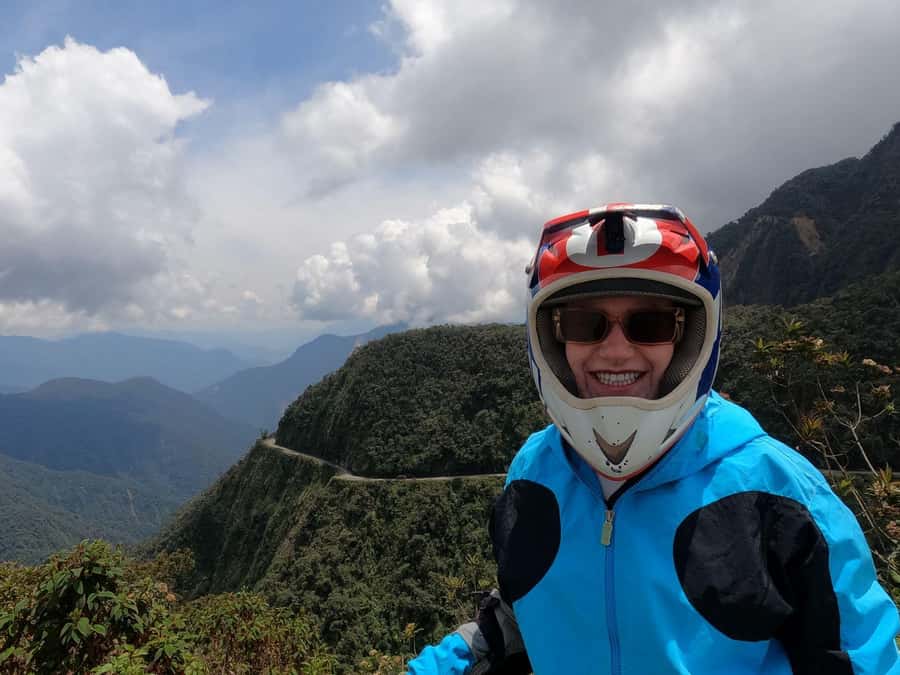
I like that this is not presented as a casual bike outing. The route is famous because the old road is narrow and rough, with a dirt track only about three meters wide. It was built during the Chaco War and became known for the dangerous vehicles that once used it. The cycling experience lets you confront the road itself without having to share the same adventure with the heavy traffic associated with its earlier reputation.
That does not make the ride risk-free. A full-face helmet and pads reduce some consequences of a fall, but they cannot remove the need for careful braking, balance, and attention. You should be comfortable controlling a bicycle before you arrive; this is not the place to learn basic bike handling.
The private format helps here. You are told to ride at your own pace rather than worry about keeping up with a large group. If you are faster, you do not have to spend the whole day waiting. If you are slower, you can focus on control instead of feeling pushed by a racing group.
Why the Full-Suspension Bike Matters
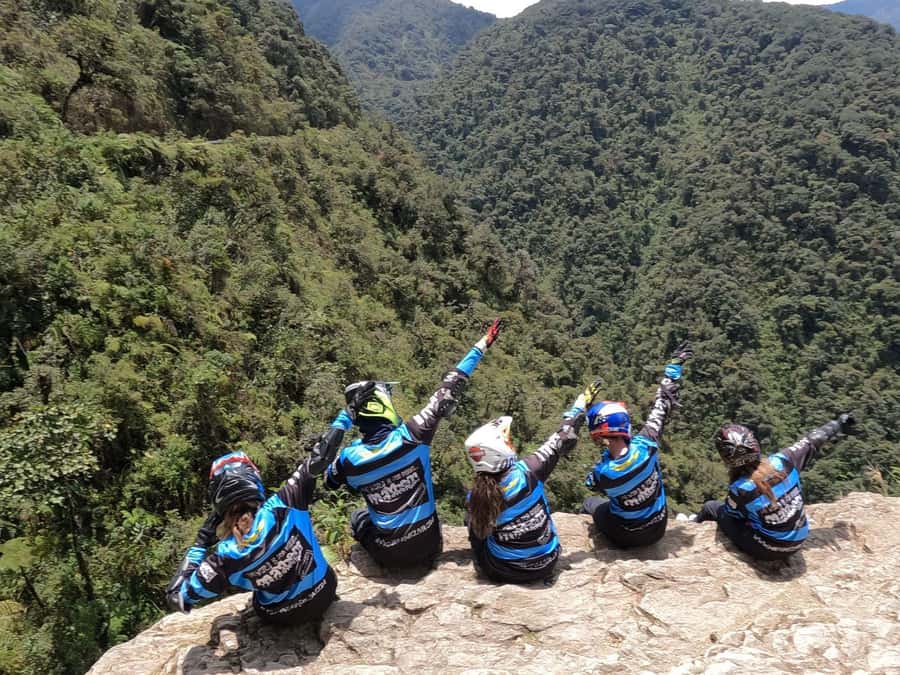
The tour supplies a top-of-the-line full-suspension mountain bike. That is one of the strongest reasons to consider this trip instead of trying to arrange a basic rental on your own.
Suspension does not turn a rough dirt road into pavement, but it can make the ride more manageable and less punishing. The bike is intended for the route, and the equipment was described as being in top condition on one outing. That is important because a poorly maintained bike can change a difficult ride into an unnecessarily stressful one.
You also receive full-body protection:
- Full-face helmet
- Gloves
- Elbow pads
- Knee pads
- Rain pants
- Rain jacket
The rain gear is a practical touch. Conditions can change as you descend from the high Andes toward the Yungas, and carrying your own complete set of protective clothing would be awkward. You should still wear or bring comfortable cycling clothes beneath the provided gear.
The listed weight limit is 220 pounds, or 100 kilograms. The height limit is 6 feet 6 inches, or 2 meters. People outside those limits should not assume the bike or safety gear will fit properly.
A Guide, Driver, and Pace That Fits You
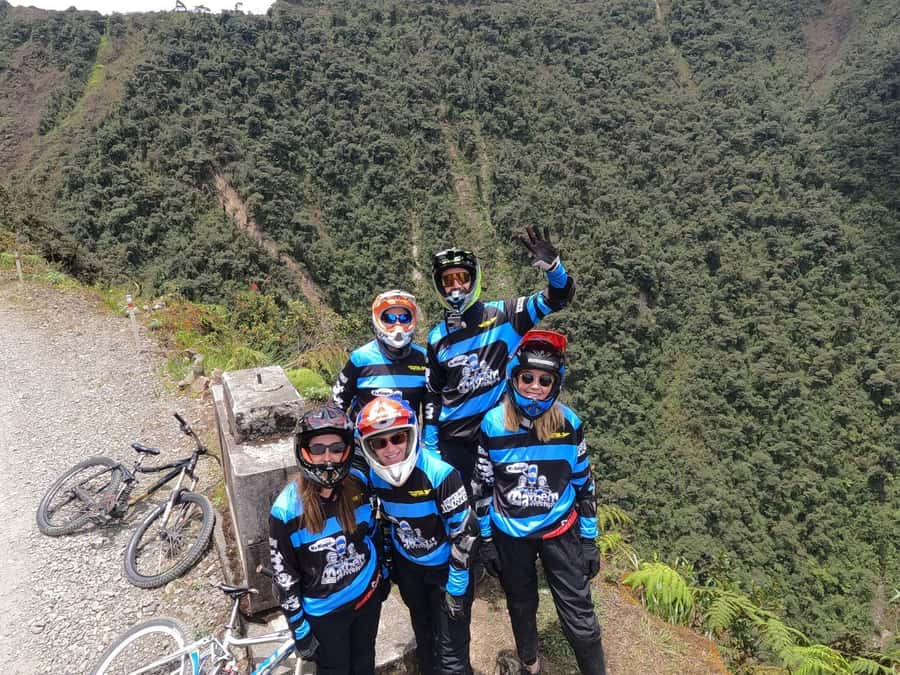
A specialized guide leads the ride, while a professional driver supports the group. You are not left to navigate the route alone, and the guide remains with you throughout the experience.
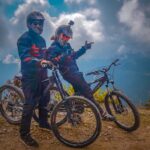
Marcelo is the name most often associated with the guiding, although the name also appears as Marcello or Marcel. He is described as speaking excellent English as well as Spanish, giving useful advice during the ride, and choosing good spots for photographs. That combination matters because the road is not just about speed. You want someone who can help you enjoy the scenery without treating the day like a race.
The personal approach is another strong point. One departure had only two riders, making it possible to shape the day around their pace. Another account describes the experience as personal rather than feeling like a number in a large tour group.
The maximum group size is listed as 10 people. At the same time, the trip is described as private, meaning it runs on the date you book and does not depend on matching you with a large scheduled group. If you need a completely exclusive departure with no other riders, confirm that point before booking, since the stated group limit allows for more than two people.
An extra gondola tour was included on one outing, but it is not listed among the standard inclusions. Treat that as a possible bonus, not something to count on when planning your day.
Lunch, Snacks, Water, and a Pool at the Finish
This tour does a good job of covering the practical needs of a long active day. Lunch is included, along with snacks and water. You do not need to build your entire day around carrying enough food from La Paz.
The finish also includes access to a pool. After a long descent, that gives you the option to relax rather than immediately climb into the return vehicle covered in road dust. The pool is not the reason to choose Death Road, but it makes the ending feel less rushed.
Alcoholic drinks and soft drinks are not included. Water is included, so you only need to budget extra if you want other beverages. The admission fee is also separate: 50 BOB, listed as about $8, per person.
Because the final meal and pool time are included, the day has a proper finish rather than ending the moment you step off the bike. That helps justify the full-day format and makes the $149 price easier to assess.
You can also read our reviews of more private tours in La Paz
Is $149 Good Value?
At $149 per person, this is not the cheapest way to see the Yungas. It is a strong package if you would otherwise need to rent a suitable mountain bike, find protective gear, arrange two long transfers, hire a guide, and organize food.
The price includes the full-suspension bike, safety equipment, specialized guide, professional driver, round-trip transportation, lunch, snacks, and water. I see the equipment and transport as the biggest value points. Renting a low-quality bike or trying to bring your own gear would be a poor trade on a road this demanding.
Remember to add the 50 BOB admission charge. Alcohol and soft drinks are extra as well, so the advertised price is not the final out-of-pocket amount. Even with those additions, the package may make sense for you if safety equipment and logistics would otherwise be separate costs.
The booking terms also offer useful flexibility. You can reserve now and pay later, and cancellation up to 24 hours in advance qualifies for a full refund. Starting times vary, so check availability before arranging your La Paz plans around the ride.
Who Should Book This Ride?
You should consider this trip if you are comfortable on a bicycle, have moderate physical fitness, and want an active way to see one of Bolivia’s best-known routes. You do not need to be an elite cyclist based on the information provided, but you should be able to control a bike confidently on a narrow dirt road.
The ride is not suitable for children under 10, pregnant women, people over 100 kilograms, or people taller than 2 meters. The age rules are written inconsistently, listing both people over 70 and people over 95 as unsuitable. Since 70 is the lower limit, anyone over that age should confirm eligibility directly before booking.
You should also think carefully about the altitude at the start. The ride begins at 4,650 meters, a very high elevation, before dropping steadily toward the Yungas. If you know that altitude affects you strongly, this is worth considering when deciding if a full-day bike ride is sensible.
Bring a camera and sunscreen. The camera is useful for the photo locations the guide may show you, while sunscreen is sensible for a long day outdoors at high altitude. Wear clothing that works beneath the supplied pads and rain gear.
Should You Book the Death Road Private Ride?
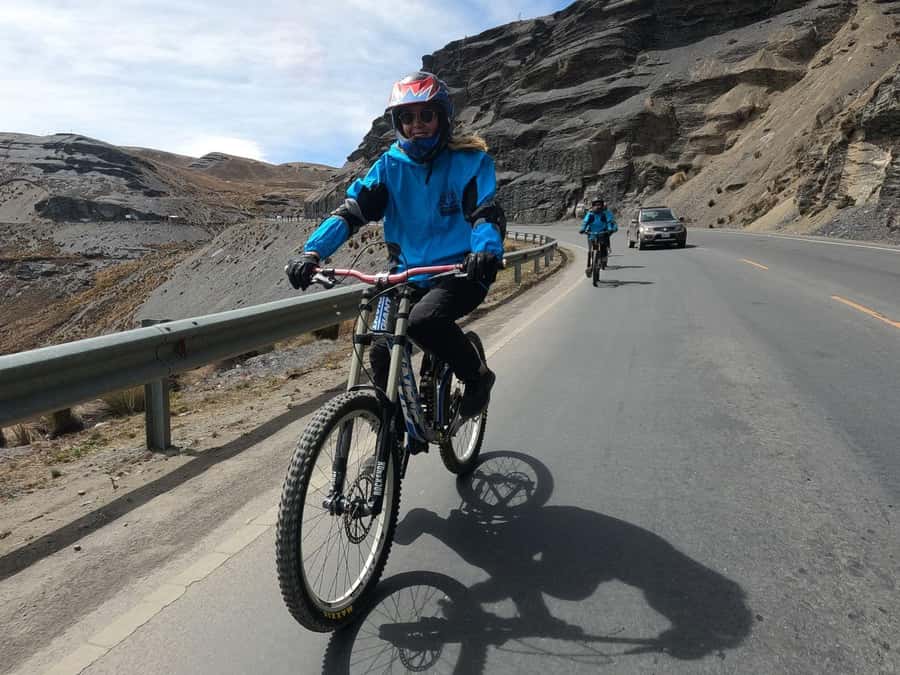
I would book this trip if you want the full Death Road experience but prefer good equipment, a guide-led ride, and freedom from a large group schedule. The combination of a quality full-suspension bike, complete protective gear, food, transport, and the chance to ride at your own pace gives the package real value.
I would skip it if you are uneasy on a bicycle, want a gentle sightseeing day, or are outside the size and age limits. The word dangerous is part of the route’s identity, but it should also remind you to take the physical demands seriously.
For most suitable riders, this is a memorable way to connect two very different parts of Bolivia in one day. Confirm the private group arrangement if having the road to yourself matters, add the admission fee to your budget, and let the guide set a controlled pace rather than chasing speed.
FAQ
How much does the private Death Road bike trip cost?
The tour costs $149 per person. You also pay a separate admission fee of 50 BOB, listed as about $8, and alcoholic drinks and soft drinks are not included.
How long does the experience last?
The full activity lasts 12 hours. The time includes pickup, transportation, the mountain-bike ride, lunch, pool time, and the return journey.
Where is pickup available?
Pickup is available from hotels and hostels in downtown La Paz. Zona Sur and El Alto Airport are excluded; pickup from those locations costs extra, or you will be given a central meeting point.
What is included in the price?
The price includes a full-suspension mountain bike, full-body safety gear, lunch, snacks, water, round-trip transportation, and a specialized guide.
What safety equipment is provided?
You receive a full-face helmet, gloves, elbow pads, knee pads, rain pants, and a rain jacket.
What languages does the guide speak?
Guided support is available in English and Spanish.
How many people can join the group?
The stated maximum is 10 participants. The activity is private in the sense that it runs on the date you book and allows you to ride at your own pace.
Do I need mountain-biking experience?
You should be comfortable on a bike and in moderate physical condition. The activity is not suitable for someone who is not confident controlling a bicycle.
Is the trip suitable for children or pregnant women?
Children under 10 and pregnant women should not join. The activity also lists age, height, and weight restrictions for other participants.
Can I cancel or pay later?
You can reserve now and pay later. Cancellation up to 24 hours before the activity qualifies for a full refund.
More Private Tours in La Paz
More Cycling Tours in La Paz
More Tour Reviews in La Paz
Not for you? Here's more nearby things to do in La Paz we have reviewed
Death Road Biking, compared
 ★ 4.9La Paz: Mountain Bike Down the World’s Most Dangerous RoadFrom $145386 reviews
 ★ 4.7From La Paz: The World’s Most Dangerous Road Biking TourFrom $12968 reviews
 ★ 3.4La Paz | Death by Bike Route | LunchFrom $1407 reviews
 ★ 4.7From La Paz: 3-Day Biking Tour Death Road & Uyuni Salt FlatsFrom $4294 reviews
Browse the lists this tour appears in