
Reviewed · UYUNI SALT FLATS TOURS
From La Paz: 4-Day Trip to San Pedro de Atacama w/Salt Flats
Bolivia saves its biggest show for the open road. This $493 trip links La Paz with San Pedro de Atacama by overnight bus, 4WD, and border transfer, while packing the Uyuni salt flats, high-altitude lagoons, flamingoes, geysers, and hot springs into one route. I like the practical cross-border design, and I like how much scenery you get without arranging separate bus tickets, desert transport, and hostels yourself.
I also like the human side of the trip. Guides such as Mary, Andres, James, and Juan have been praised for their energy, photo help, and care with border formalities, while drivers including Yvan, Jonny, and Arturo have handled the rough roads carefully. The main drawback is comfort: the second night is very basic, the 4WD ride can feel cramped, and the first night is technically an overnight bus rather than a full day of touring.
In This Review
- Five things to know before booking
- Why this route works so well
- The overnight bus from La Paz to Uyuni
- Train Cemetery and the first view of the salt flats
- Uyuni Salt Flats, Incahuasi, and a sunset on salt
- Flamingo lagoons and Laguna Colorada
- Geysers, hot springs, and the road to Chile
- Guides, drivers, and the small-group setup
- Comfort, cold, and what to pack
- Is $493 good value?
- Who should book this trip?
- Should you book it?
- FAQ
- Where does the trip start and finish?
- How long is the bus ride from La Paz to Uyuni?
- Is an English-speaking guide included?
- What accommodation is provided?
- What extra costs should I expect?
- Can I visit Incahuasi Island during the rainy season?
- What do I need to bring?
Five things to know before booking
- The route begins with a 9 p.m. bus from La Paz: You check in at 8:30 p.m. and reach Uyuni around 7:30 a.m.
- The salt flats are only the beginning: The route continues to flamingo-filled lagoons, the Stone Tree, Laguna Colorada, geysers, hot springs, and the Chilean border.
- You may spend long hours in a Toyota-style 4WD: A group can reach 11 people, and tall passengers may find the rear seats tight.
- Accommodation is remote and simple: Expect shared bedrooms and toilets, limited electricity, cold nights, and little or no internet.
- Carry Bolivianos: Incahuasi, the Eduardo Avaroa reserve, toilets, hot springs, migration, and personal expenses are not covered.
- January through April changes the salt-flat visit: Incahuasi Island may be closed, and the overnight location can change with road conditions.
Why this route works so well
This trip solves a common South America transport puzzle. You start in La Paz, see Uyuni without booking a separate domestic journey, cross the desert through southern Bolivia, and finish in San Pedro de Atacama’s main square.
That is a lot of ground. The route is especially useful if you are moving from Bolivia into Chile and want the journey itself to be the main event. Instead of spending three days in separate transfers, you cross a region filled with salt, volcanoes, mineral-colored water, and wide-open desert.
The price includes the overnight bus, 4WD transport, a guide, a local driver, accommodation, and most meals. It is not a luxury trip, but the cost covers the complicated pieces that are hard to arrange independently, especially the desert vehicles and border handoff.
Still, if you are already in Uyuni, booking a similar three-day route locally can be cheaper. One recent booking specifically noted that the same type of journey may cost less when arranged in Uyuni. You are paying extra here for the La Paz start and the convenience of having the connection to Chile organized.
A few more La Paz tours and experiences worth a look

The overnight bus from La Paz to Uyuni
Your evening begins at the bus office at 8:30 p.m., with departure scheduled for 9 p.m. The bus ticket is included, along with dinner, breakfast, bottled water, a hot drink, heating, a toilet, a polar blanket, Wi-Fi, and a first-aid kit.
The overnight ride is an efficient use of time. A comfortable sleeper-style bus gets you toward Uyuni while you sleep, rather than taking a full daytime journey away from the salt flats. Even so, it is worth treating this as a travel night, not a sightseeing day. That is why calling the experience four days can feel generous: the first day starts in the evening, and the final day ends at the Chilean border area by late morning.
You arrive in Uyuni at about 7:30 a.m. and have free time before meeting at the tour office at 10 a.m. The 4WD departure is planned for 10:30 a.m. This gap gives you time to walk around and get breakfast, but organization can be slow. You might wait at a café or nearby office for several hours if the local group is still being assembled.
Use that pause well. Buy extra snacks, drinks, toilet paper, and anything you may need for several days without shops. Once you leave Uyuni, phone service and internet can disappear.
Train Cemetery and the first view of the salt flats
The first stop is the Train Cemetery outside Uyuni. Rusting locomotives from the eighteenth and early twentieth centuries sit in the open desert, their metal frames reduced to stark shapes by wind and time.
It is a quick stop, but a good one. The old engines give you something close to a sculpture park without walls, and the setting makes for unusual photographs. Guides often help with group pictures, which matters on a trip where you will want plenty of wide-angle shots.
From there, you go to Colchani. This small community is tied to salt production, and you can see local work connected with the flats. There is also an artisanal market and a museum, giving you a brief look at the human side of a place otherwise known for its empty scale.
The market stop can feel commercial, but it is short and useful if you want a small salt-related souvenir. Do not expect a long cultural visit. The main event is still ahead.
Uyuni Salt Flats, Incahuasi, and a sunset on salt
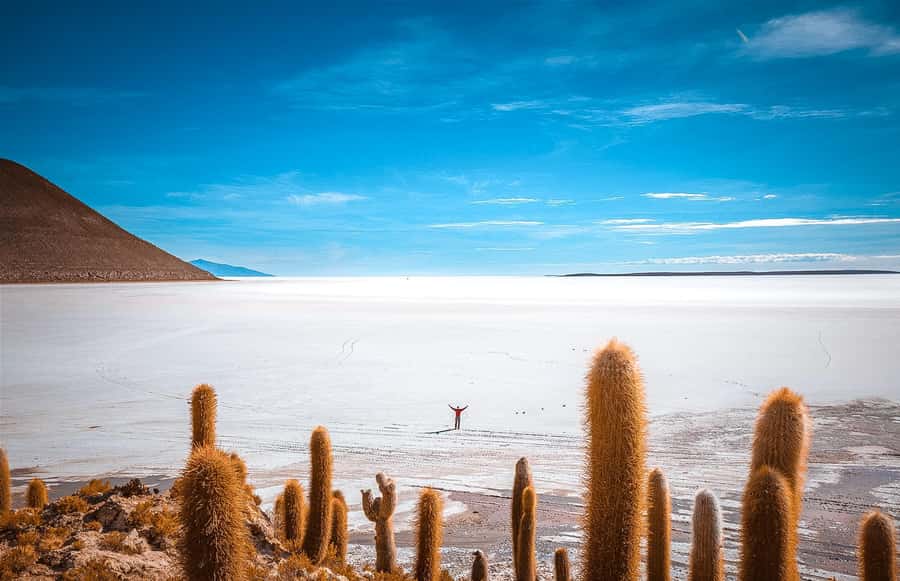
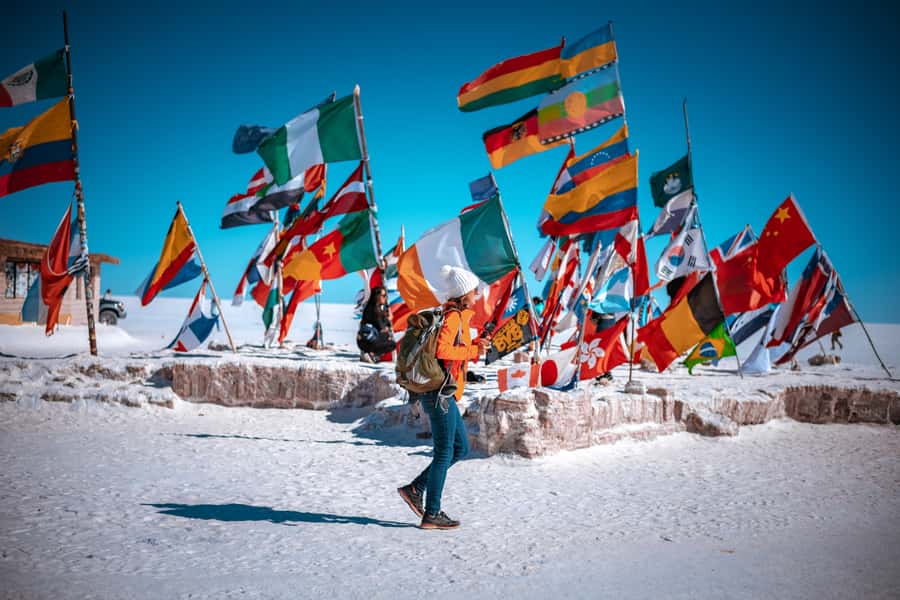
The Salar de Uyuni is the reason most people choose this route, and the timing gives you several different views of it. The 4WDs cross the white expanse toward salt eyes, a salt hotel-museum built from salt blocks, the Dakar Monument, and a collection of flags from around the world.
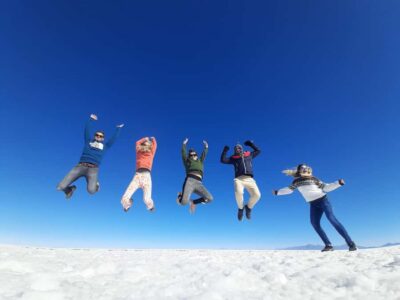
The scale is difficult to grasp at first. The surface can look like a giant white floor with no clear edge, and the lack of familiar landmarks makes distance feel strange. Your driver knows the route and will stop at places where the flat surface opens up for photographs.
Incahuasi Island adds a sharp contrast. Instead of endless white, you find an island covered with giant cactus and a high viewpoint across the salar. It is one of the most satisfying stops because it gives you height and texture after hours of flat scenery.
There is an important seasonal catch. From January through April, water and road conditions can prevent access to Incahuasi Island. The company may also move you to a different overnight location when rain makes the usual roads unusable.
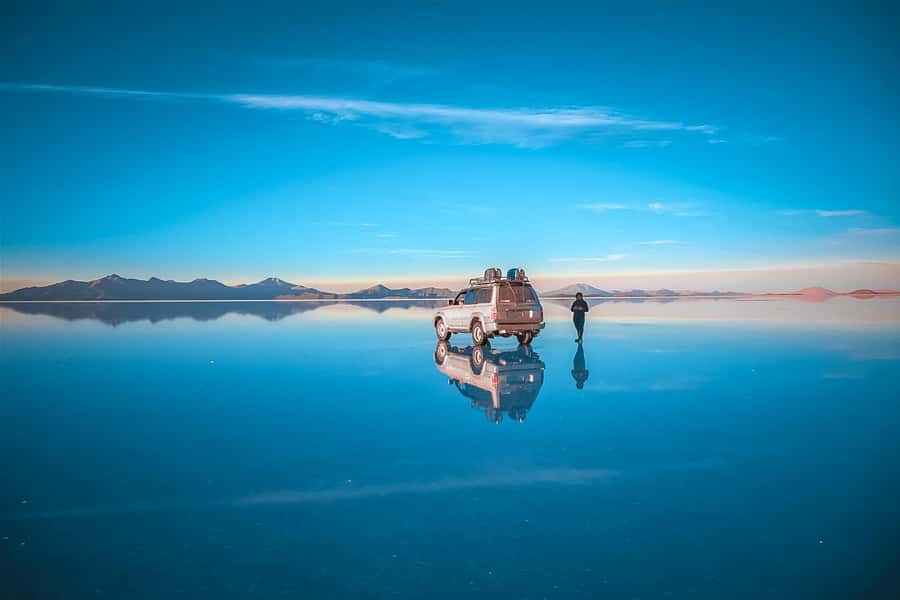
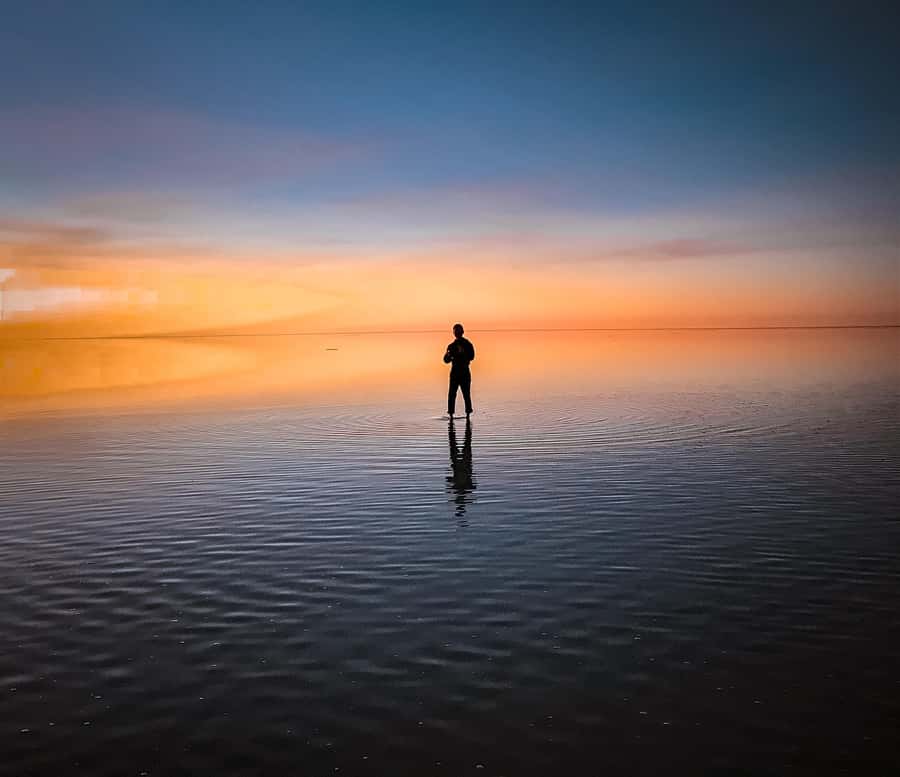
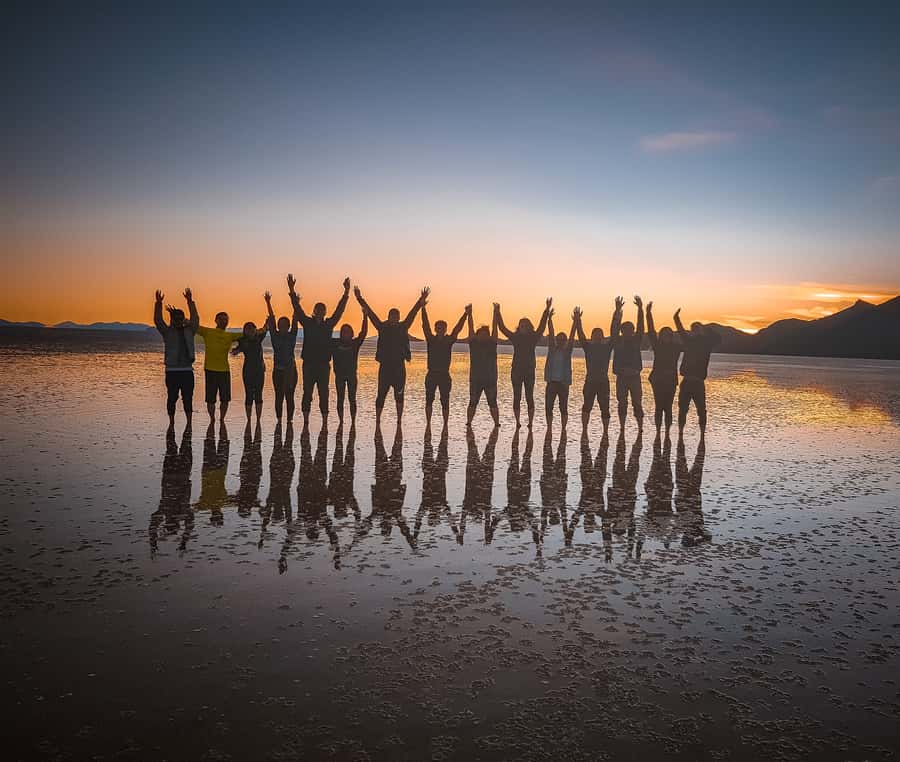
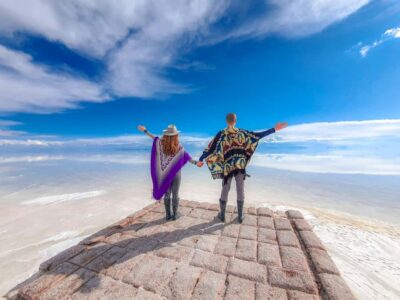
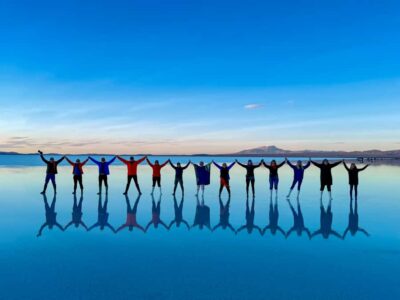
The evening sunset stop is a highlight. You may have wine and a small platter while the white ground changes color in the fading light. In some conditions, a thin layer of water creates the famous mirror effect. It is not guaranteed, but when it appears, the salt flat seems to reflect the sky in every direction.
Your first night is in Ajencha, also written as Agencha in the accommodation details. Rooms generally hold four, five, or six people, and toilets are shared. This is basic desert lodging, but it is usually considered the better of the two nights.
Flamingo lagoons and Laguna Colorada
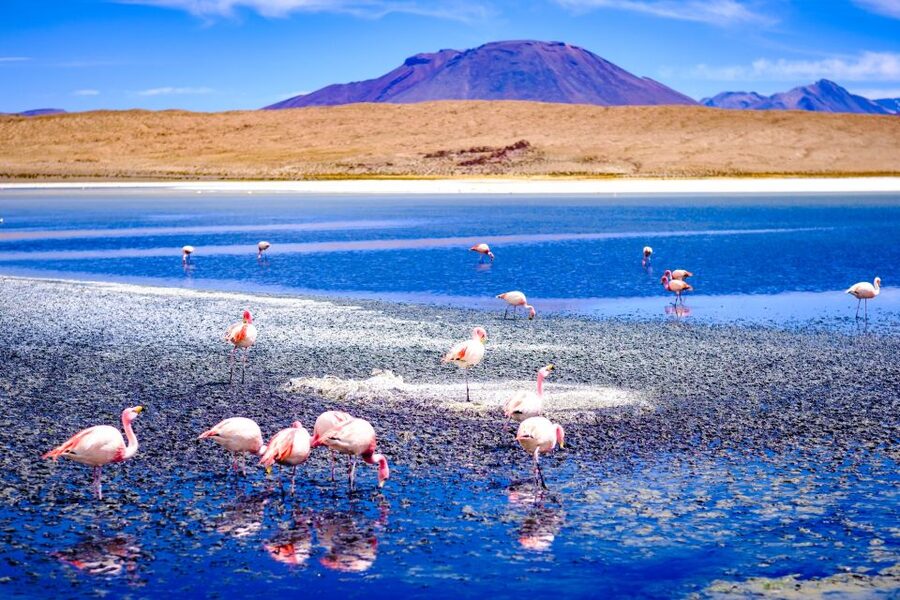
Day three starts after breakfast with the high desert roads toward Chiguana and the Ollague lookout area. From there, the route reaches a chain of lagoons: Cañapa, Hedionda, and Chiarcota.
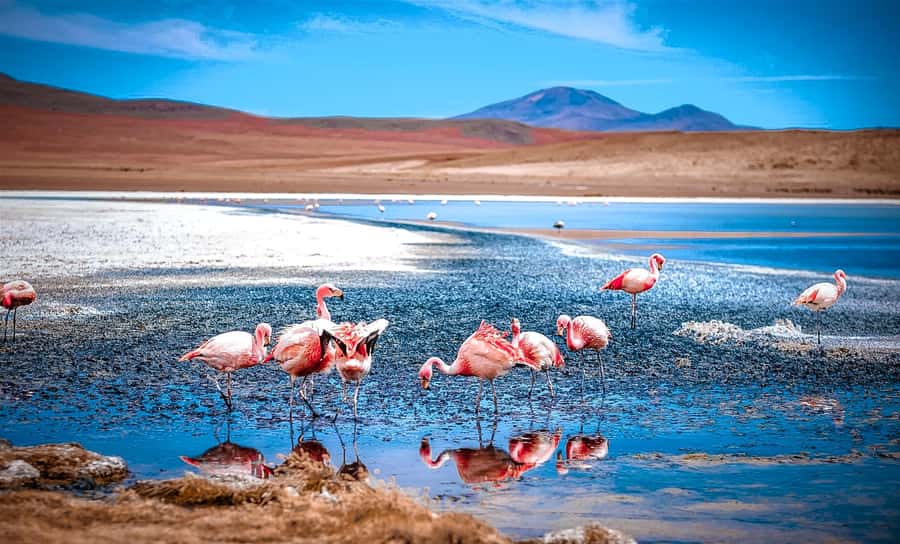
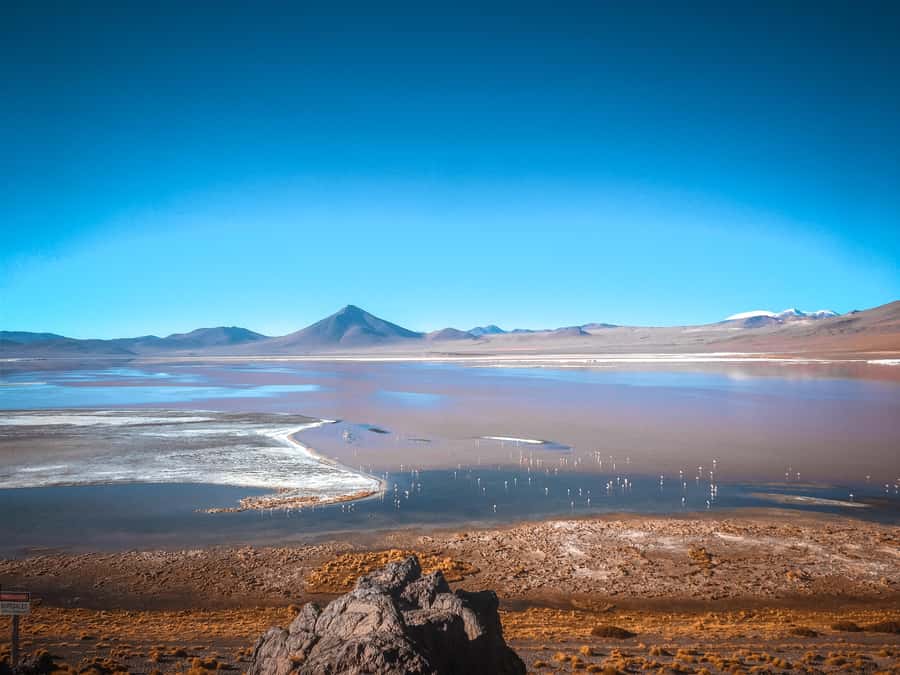
The water colors vary with minerals, light, and weather. Flamingoes are the stars here, often feeding in the shallow water. You may also see llamas, alpacas, and viscachas, small rabbit-like animals that appear near the roadside. These sightings are never controlled, so patience helps.
The long drive is part of the deal. You are crossing rough ground in a 4WD, not traveling on a smooth tourist highway. Drivers such as Yvan, Jonny, Roger, and Arturo have been singled out for careful handling of the vehicles, but even a safe driver cannot remove every bump.
Lunch is included, as are dinner and breakfast during the desert portion. Food quality can vary by departure. Some people have found the meals surprisingly good, while others describe breakfast as plain bread, jam, and tea or coffee. Bring snacks if you need a large breakfast or have particular dietary needs.
After lunch, the scenery turns more stark at the Siloli Desert. The Stone Tree is the famous rock formation here, shaped by wind erosion into a narrow, tilted form. It is a short stop, but the rock looks especially striking against the open ground.
The day ends at Laguna Colorada, or the Red Lagoon. Its red tones come from mineral deposits and tiny organisms in the water, while flamingoes give the scene movement. Wind can be fierce, and temperatures drop quickly, so bring your warmest layers from the vehicle.
The second night is in Huayllajara. Shared six-person rooms and shared toilets are standard. Electricity may be available for only a few hours, rooms may have no heat, and hot water is not reliable. Wi-Fi may be offered for an extra charge, but it is not a good reason to count on staying connected.



Geysers, hot springs, and the road to Chile
Day four starts early, often before sunrise, for Sol de Mañana. The timing is necessary to catch the geysers and fumaroles in the cold morning air. You will see bubbling mud, smoking vents, volcanic holes, and sulfur fumes.
This is one of the more demanding stops. The air is cold, the ground is uneven, and the sulfur smell is strong. You should stay with the guide’s instructions around the vents and avoid treating the area like an ordinary walking path.
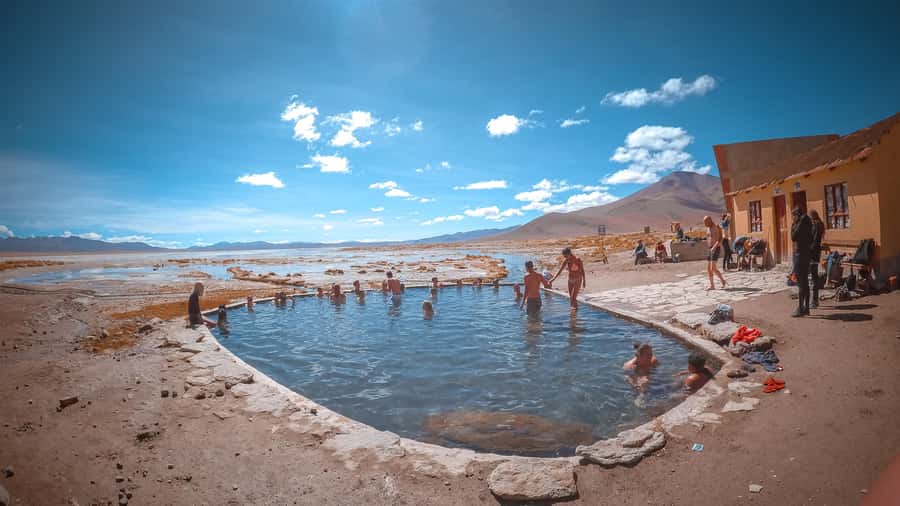
Next comes the Polques hot spring. For 6 Bolivianos, you can bathe in the warm water while looking across the high desert. The contrast is part of the fun: you leave a freezing morning in several layers, then sit outside in a hot pool with volcanoes and open sky around you.
If you skip this stop, you miss one of the route’s best small pleasures. Bring a towel, since toiletries and personal bathing supplies are not included.
The Salvador Dali Desert follows, with multicolored rock formations and shapes that look almost arranged by an artist. The route then climbs toward viewpoints of the Green Lagoon, White Lagoon, and Lincancabur Volcano, also commonly spelled Licancabur.
The final transfer is not a casual border crossing. Guides assist with the process at around 10 a.m., and the crossing can take time. You are expected to carry your passport or ID card, and a Bolivian migration tax of 15 Bolivianos is not included.
Arrival in San Pedro de Atacama is planned for about 1:30 p.m., with drop-off at the main square. This finish is convenient if you have accommodation nearby, but remember that your formal tour time largely ends at the border process. It is not a full sightseeing day in Chile.
Guides, drivers, and the small-group setup
The group is limited to 11 people, which is a useful size for a remote route. The 4WDs have rooftop luggage racks, leaving the interior for people rather than large bags.
A strong guide makes a real difference. Mary has been praised for helping with hotel arrangements and immigration, while Andres was noted for keeping the group organized and answering questions. James, also identified as Haim on one departure, was valued for clear English, patience, energy, and photography help.
Assignments can vary. On one departure, a single English-speaking guide was shared between two 4WDs, leaving one vehicle with less commentary while driving. If hearing explanations throughout the day matters to you, ask how the guide will be assigned before departure.
The drivers are just as important. The roads are rough, and the route covers long distances far from towns. Safe, careful driving is more valuable here than speed. Recent driver pairings such as Yvan, Pedro, Jonny, Arturo, and Roger have been associated with good vehicle handling and photo assistance, but no particular guide or driver is guaranteed.
Comfort, cold, and what to pack

Pack for an off-grid trip, not a city break. The desert nights can be bitterly cold, especially around May and June. A sleeping bag is not included, and hiring one may be wise during colder months.
Bring:
- Warm layers, including gloves and a hat
- Toilet paper and basic toiletries
- A towel for the hot springs
- A power bank
- Snacks and drinks
- Your passport or ID card
- Cash in Bolivianos
The listed extras include 30 Bs for Incahuasi Island, 150 Bs for the Eduardo Avaroa reserve, 30 Bs for toilets along the route, 6 Bs for the hot springs, and 15 Bs for Bolivian migration. A further 150 Bs is suggested for personal expenses, bringing the listed total to 381 Bs if every charge and allowance applies.
The 4WD ride also deserves honest attention. You can spend much of three days in the vehicle, and the rear seats are tight for long legs. Groups often trade seats when possible, but you should not book this trip if back problems or altitude sickness are concerns.
Is $493 good value?
I see the price as fair for the right route, but not a bargain in every situation. You receive the La Paz-to-Uyuni bus, three days of 4WD transport, a driver, an English-speaking guide, two nights of lodging, and the main meals.
The real value is the connection to San Pedro de Atacama. You are not simply buying a salt-flat excursion; you are buying a scenic overland move from Bolivia into Chile. If that is already your plan, the package saves you a lot of coordination.
The value drops if you are already in Uyuni or mainly want a short salt-flat visit. In that case, a local three-day trip may cost less, and you can avoid paying for the La Paz bus portion.
Remember to budget for entry fees, toilets, hot springs, drinks, snacks, personal expenses, and a sleeping bag. The accommodation is included, but extras such as hot showers and Wi-Fi may cost more at the hostels.
Who should book this trip?
I would choose it if you want a high-impact route with minimal planning and do not mind rough transport. It suits fit adults who can handle cold, altitude, shared rooms, early starts, and long drives.
You will probably love it if your priorities are salt-flat photographs, flamingoes, volcanic scenery, and reaching Chile by land. The route offers far more variety than a single-day visit to Uyuni.
I would hesitate if you need reliable hot water, private rooms, stable electricity, or regular internet. It is also a poor match for people with back problems, altitude sickness, or anyone over 95, as the activity specifically excludes those conditions.
The cancellation policy is generous, with a full refund available up to 24 hours before departure, and you can reserve without paying immediately. Still, the more important decision is physical: can you accept three demanding days in a 4WD for the sake of some of Bolivia’s finest scenery?
Should you book it?
Book this trip if you are in La Paz, want to finish in San Pedro, and see the journey across the desert as part of the reward. The salt flats, sunset, flamingo lagoons, Laguna Colorada, geysers, hot springs, and volcano views make the route unusually full.
Skip it or book locally in Uyuni if price matters more than convenience, or choose another option if basic hostels and cramped vehicle seats will spoil the trip. Pack seriously for cold and dust, carry cash, and expect the first and last days to be mostly transport. With those limits understood, this is a powerful and practical way to cross from Bolivia into Chile.
FAQ
Where does the trip start and finish?
The trip starts at the bus office in La Paz City, with check-in at 8:30 p.m. and departure at 9 p.m. It finishes in San Pedro de Atacama, with drop-off at the town’s main square.
How long is the bus ride from La Paz to Uyuni?
The bus leaves La Paz at 9 p.m. and is scheduled to arrive in Uyuni at about 7:30 a.m. You then have free time before meeting at the tour office at 10 a.m.
Is an English-speaking guide included?
Yes. An English-speaking live guide is included. The group can have up to 11 participants, and the guide may sometimes be shared between two 4WD vehicles.
What accommodation is provided?
The first night is in Ajencha or Agencha in a shared four-, five-, or six-person room with shared toilets. The second night is in Huayllajara in a shared six-person room with a shared toilet.
What extra costs should I expect?
Extra charges include 30 Bs for Incahuasi Island, 150 Bs for the Eduardo Avaroa reserve, 30 Bs for toilets, 6 Bs for the hot springs, and 15 Bs for the Bolivian migration tax. Personal expenses, drinks, snacks, toiletries, and sleeping bags are also excluded.
Can I visit Incahuasi Island during the rainy season?
From January through April, Incahuasi Island may not be accessible. The overnight location may also change because of road access and weather conditions.
What do I need to bring?
Bring your passport or ID card, warm clothing, toiletries, toilet paper, a towel, snacks, drinks, a power bank, and cash in Bolivianos. A sleeping bag is not included.
More 1-Day Tours in La Paz
More Tour Reviews in La Paz
Not for you? Here's more nearby things to do in La Paz we have reviewed


Uyuni Salt Flats Tours, compared
 ★ 4.5From La Paz: Uyuni Salt Flat Tour & Overnight Roundtrip BusFrom $275327 reviews
 ★ 4.5Uyuni tour express from La Paz by busFrom $269172 reviews
 ★ 4.4From Uyuni: Red Lagoon & Uyuni Salt Flats 3-Day Guided TourFrom $354160 reviews
 ★ 4.3La Paz: 5-Day Uyuni Salt Flats by BusFrom $486153 reviews
Browse the lists this tour appears in