
Reviewed · WALKING TOURS
Walking tour in Cochabamba not your average
Cochabamba reveals itself one corner at a time. This 150-minute walk links political street murals on San Martin with market stalls, local food, and places most visitors could easily miss. I like the English-and-Spanish format, and I like the small groups of no more than 10 people, which leave room for questions.
The $15 price is fair for two and a half hours with a live guide, especially since the route covers several central sights without rushing through them. The main caution is physical: you’ll walk about 90 percent of the time, and one person found the combination of heat and soroche difficult.
The guide Pedro receives especially strong praise for detailed explanations, thoughtful answers, and adapting the walk to the people in front of him. The experience has a perfect 5/5 rating from 21 ratings, but you should still bring water, sunscreen, and a hat rather than trusting the market to rescue you.
In This Review
- Key Points to Know Before You Go
- Why This Cochabamba Walk Feels Different
- Meeting Pedro at Plazuela Colón
- Forty Minutes Along Calle Colombia and San Martin
- Thirty Minutes at September 14 Square
- Fifty Minutes in Cochabamba’s Market World
- Is $15 Good Value for 150 Minutes?
- Prepare for Heat, Walking, and Soroche
- Who Will Get the Most From This Tour?
- My Booking Recommendation
- FAQ
- Where does the tour start?
- How long does the walking tour last?
- Which languages are available?
- How large is the group?
- What is included in the price?
- How much should I budget for traditional food and drinks?
- Is the tour suitable for people with mobility impairments?
Key Points to Know Before You Go
- San Martin’s street murals: Use Cochabamba’s public art as a doorway into local history and politics.
- A 40-minute central walk: Calle Colombia and Calle San Martin receive the most focused street-art time.
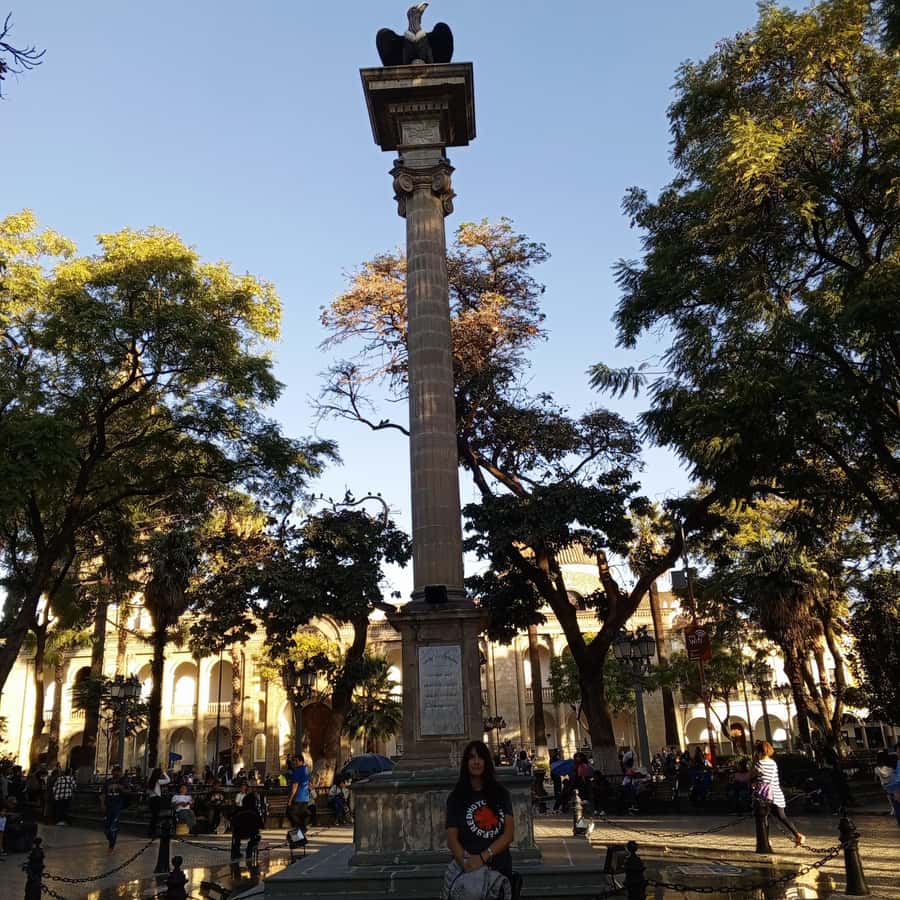
- September 14 Square: See Cochabamba’s main square and browse an arts-and-crafts market.
- Traditional market tasting: The food stop lasts about 50 minutes, with regional foods and drinks costing 5 to 10 bolivianos.
- Small bilingual group: The tour is offered in English and Spanish, with a maximum of 10 participants.
- Mostly on foot: The route starts and ends at Plazuela Colón, but you’ll walk for most of the 150 minutes.
Why This Cochabamba Walk Feels Different
Many city walks move from landmark to landmark, giving you a quick fact and a photo stop before marching on. This one uses ordinary streets, murals, food stalls, and market corners to show how Cochabamba works day to day.
I like that the focus is not limited to grand buildings. You’ll spend time looking at public art, listening to explanations about politics and history, and stepping into markets used for daily shopping. That gives you a better sense of the city than a route built only around monuments.
The walk also promises lesser-known spots where local people go. The exact places are not specified in advance, so part of the appeal is allowing the guide to shape the experience around the group and the conditions on the day.
You should not expect a quiet sightseeing stroll. Markets can be crowded, streets can be lively, and the route is built for walking rather than sitting. If you enjoy stopping often to ask questions and observe people going about their business, this format should suit you well.
Meeting Pedro at Plazuela Colón
The meeting point is in Plazuela Colón, at the banks next to the bridge in the middle of the plaza. That detail matters because a large city plaza can have several possible meeting spots. Look for the area beside the bridge rather than simply waiting somewhere around the square.
The walk returns to Plazuela Colón, making the start and finish easy to understand. You do not need to arrange a complicated pickup or learn a second meeting point for the end.
Pedro is the named guide associated with the strongest praise for this experience. His style appears to be especially useful if you enjoy explanations rather than a simple walk-by commentary. One Spanish-language rating praised his detailed answers, while another described the tour as personal rather than a standard, one-size-fits-all outing.
The tour is available in English and Spanish. If you have questions about Cochabamba’s politics, public art, food, or daily routines, a small group gives you a better chance to ask them than a large coach-style excursion.
Forty Minutes Along Calle Colombia and San Martin
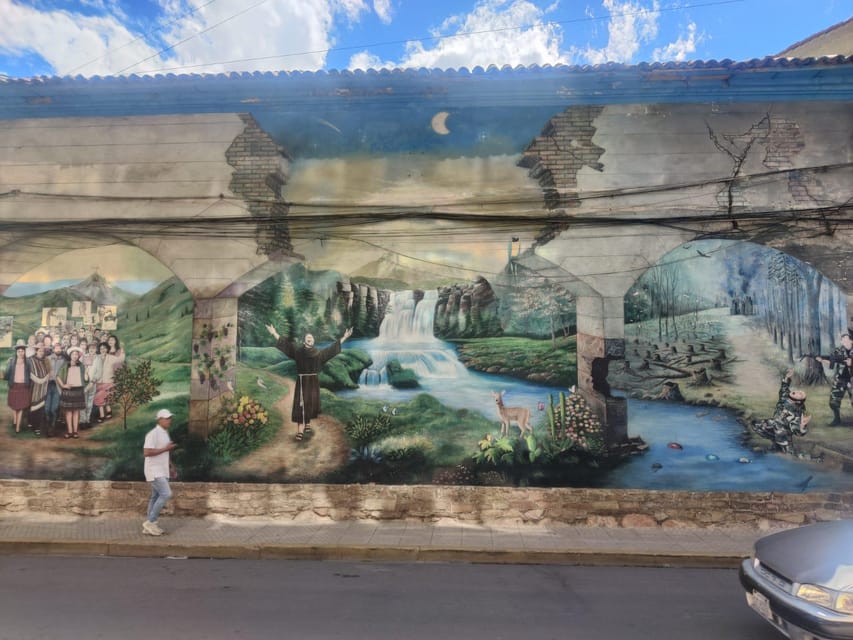
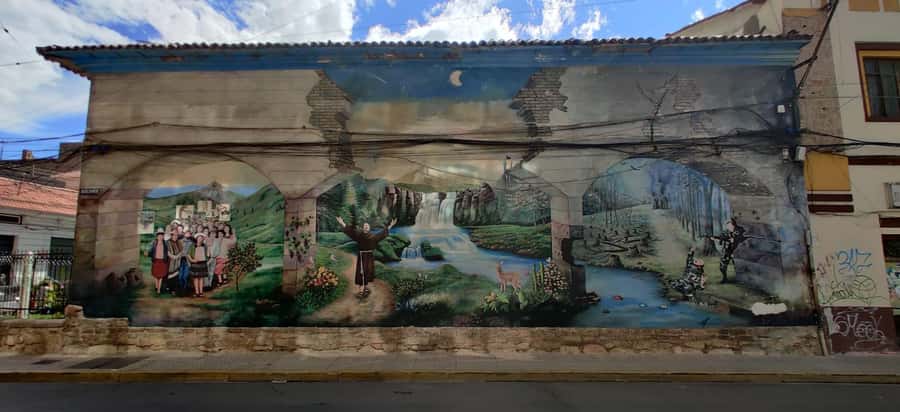
The first major section takes about 40 minutes along Calle Colombia and Calle San Martin. This is where the tour’s street-art focus comes into view.
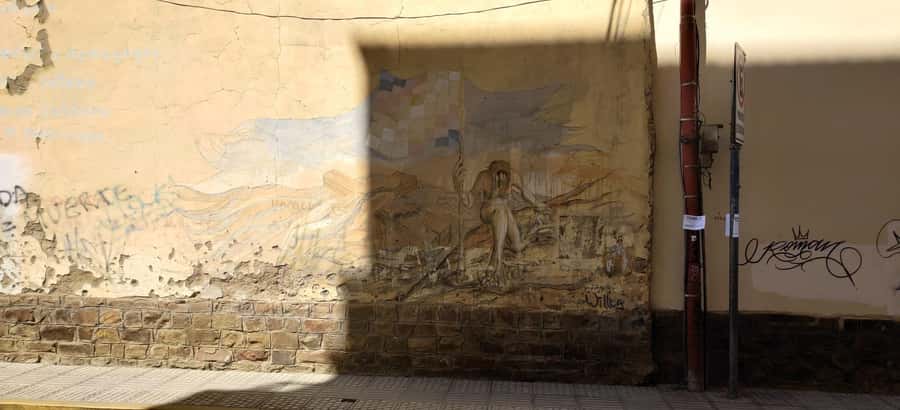
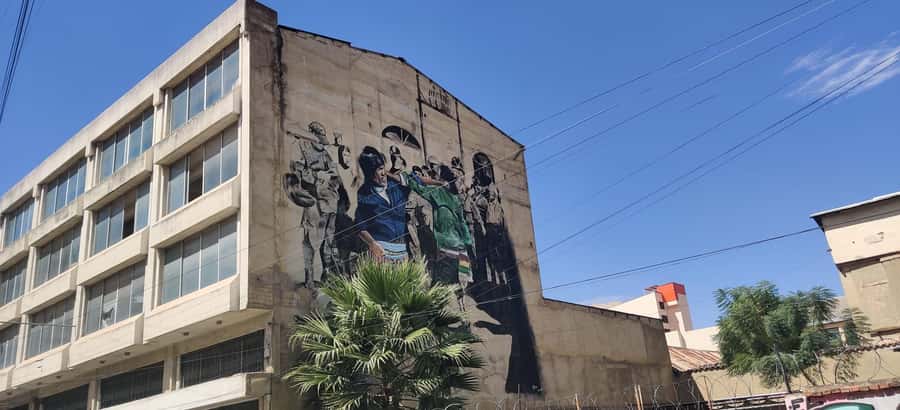
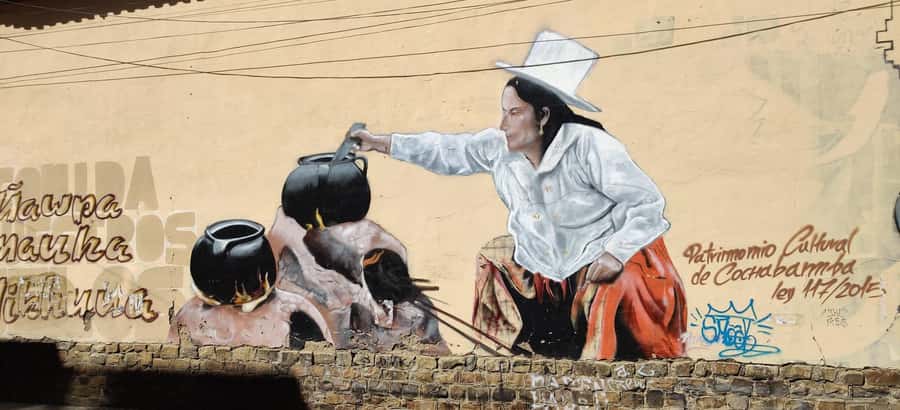
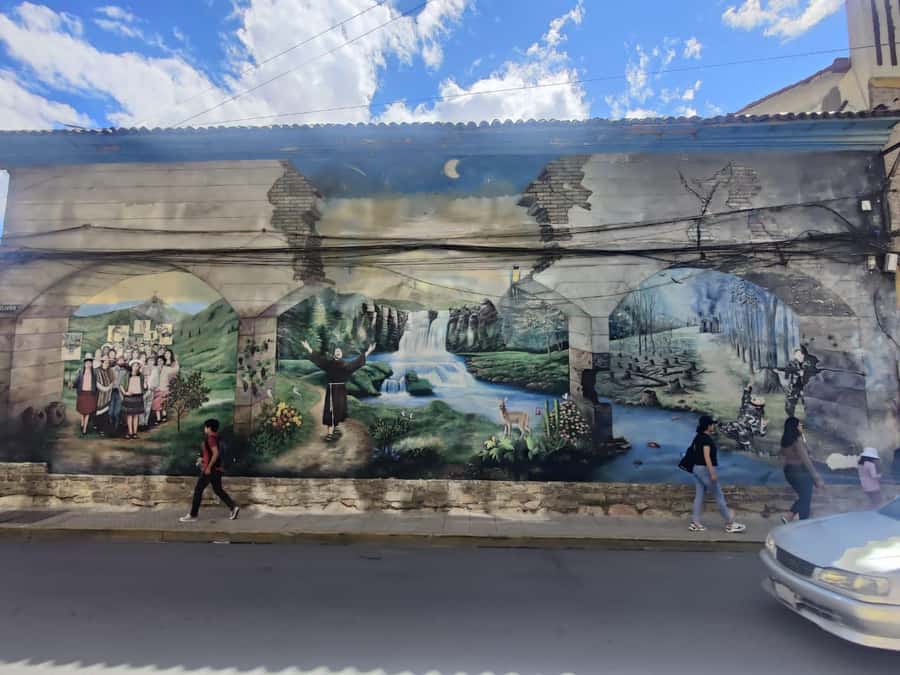
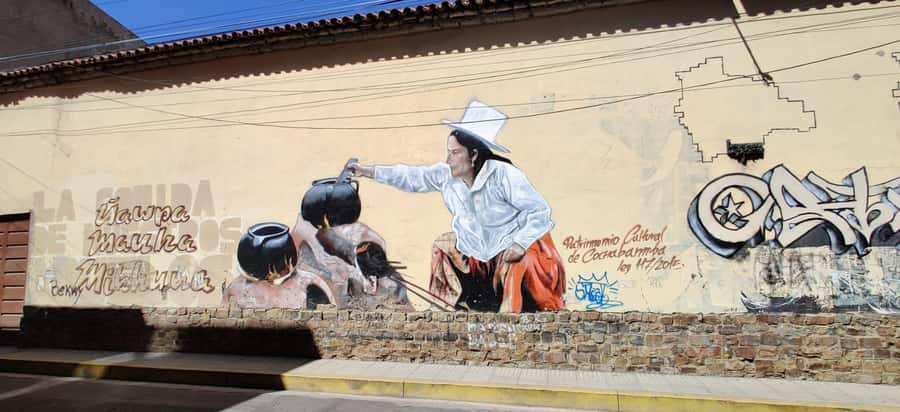
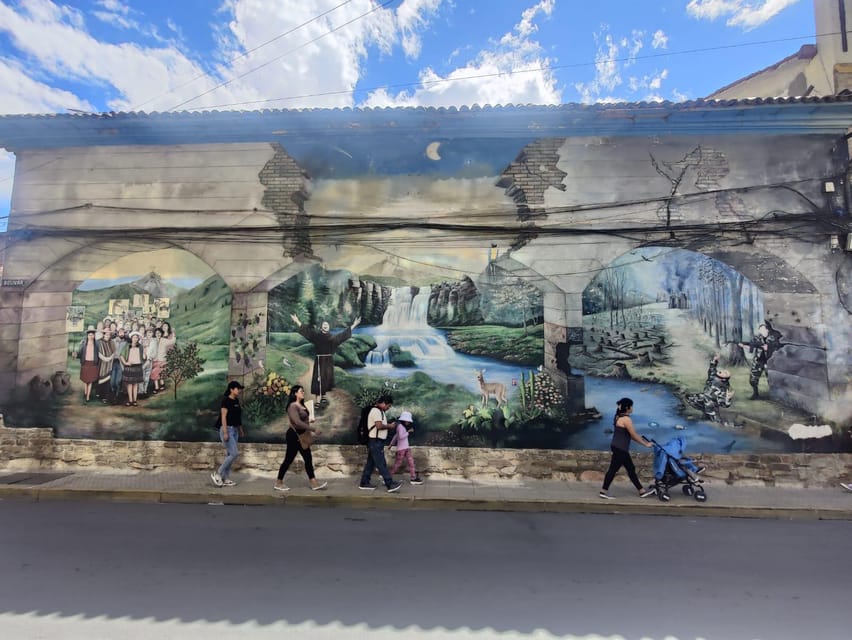
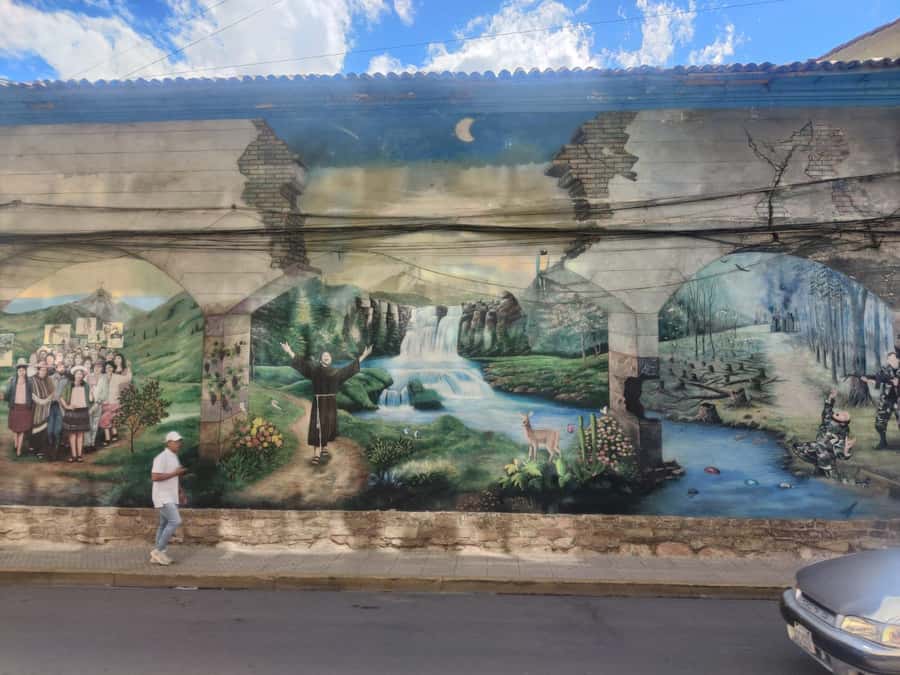
The murals are not treated as decoration alone. They showcase history and politics in Cochabamba, giving Pedro a way to explain issues through images placed directly in the city. I find that useful because public art can reveal what a community wants remembered, debated, or displayed in public space.
You’ll want to slow down here. Look at the colors, figures, symbols, and subjects while listening to the guide’s explanation. The value is not only in seeing a painted wall; it is in learning why that wall matters within the city’s public life.
The route’s political angle may not suit someone who wants only light sightseeing. If you prefer a neutral list of buildings and dates, the mural discussion could feel more serious than expected. If you want context and are willing to ask questions, this is likely to be one of the tour’s best sections.
The walk along these streets also sets the tone for the rest of the morning or afternoon. You are not being shown Cochabamba from a distance. You are moving through central streets and using what you see around you as the subject.
Thirty Minutes at September 14 Square
The next stop is September 14 Square, Cochabamba’s main square, with about 30 minutes for a guided visit and time at an arts-and-crafts market.
This section provides a change of pace. After spending time with murals and political themes, you can look at the square itself and then browse handmade goods. The craft-market portion offers a chance to see local products without turning the tour into a dedicated shopping trip.
I would treat the 30 minutes as an introduction rather than enough time for a slow market search. You can look around, ask questions, and make a small purchase if something catches your eye, but you may not have time to compare every stall.
The square also adds a clear civic center to the walk. The guide’s historical explanation helps connect the public space with the city’s past and present. You get a better reading of the square when you understand it as a place with civic meaning, not just an attractive pause between streets.
Bring a small amount of spending money if you are interested in crafts. Souvenirs are not included in the tour price, and the short stop means you should decide quickly if you want to buy something.
Fifty Minutes in Cochabamba’s Market World
The longest part of the walk lasts about 50 minutes and centers on food and markets. Mercado 25 de Mayo is the named food-market stop, while the experience also highlights La Cancha, Cochabamba’s open-air market.
This is where the tour most directly meets local routines. You’ll see the market as a place for regional food and daily purchases rather than as a staged attraction. I like this kind of stop because it gives you practical insight into what people buy, eat, and drink.
The tasting is not included in the $15 fee. Traditional foods and drinks generally cost between 5 and 10 bolivianos, so you can choose what to try without committing to a large extra expense. Carry some local cash if you want to take part, though the exact payment options are not specified.
Since no particular dishes are named, you should expect the guide to introduce you to available regional choices rather than follow a fixed tasting menu. That can be a strength: market food changes, and you may get a more natural look at what is being served that day.
The market can also be the most demanding section physically. You’ll be walking, standing, and moving through active shopping areas. Keep your bag secure, stay close enough to hear Pedro, and save some energy for the return to Plazuela Colón.
Is $15 Good Value for 150 Minutes?
At $15 per person, this is a reasonably priced city introduction. You get 150 minutes, a live bilingual guide, several central areas, street-art interpretation, a craft-market visit, and a food-market stop.
The price looks strongest if you would otherwise pay separately for a guided city walk and then explore the markets on your own. The guide adds value by explaining the political and historical meaning of the murals and by helping you understand what you are seeing in the market.
The cost does not cover food, drinks, or souvenirs. That keeps the base price low, but you should budget extra for tastings and purchases. The expected 5-to-10-boliviano range for traditional items makes the add-on cost manageable.
The group limit of 10 also improves the value. You are paying for access to a guide who can respond to questions, not just for a route through downtown. Pedro’s praised habit of answering questions in detail is particularly important here.
You can reserve now and pay later, which helps if your schedule is still changing. Free cancellation is available up to 24 hours before the tour for a full refund. Starting times vary, so check availability for the date you want.
Prepare for Heat, Walking, and Soroche
You’ll walk about 90 percent of the time. That means comfortable shoes are essential, even though they are not specifically listed among the required items.
Bring water, sunscreen, and a hat. The advice is practical, not decorative: the tour spends most of its time outside, and one person found a hot day especially tiring while also dealing with soroche.
You should think carefully about your own pace before booking. The experience is not suitable for people with mobility impairments, and there is no indication of a vehicle or extended seated breaks. If you need frequent rest stops, ask the provider before reserving.
The best approach is to treat the route as an active city walk, not a gentle plaza tour. Drink water before you start, eat lightly if you are sensitive to walking in heat, and keep the middle of the group so you can hear the guide without hurrying.
Who Will Get the Most From This Tour?
I would recommend this walk to you if you want to understand Cochabamba through public spaces and daily life. It works particularly well for people interested in political art, local markets, traditional food, and the stories behind ordinary streets.
It is also a good fit if you prefer small groups and direct conversation. The maximum of 10 participants gives the walk a more personal feel, and the English-and-Spanish format opens it to a wider range of visitors.
You may want a different activity if your priority is major architecture, museums, or a slow café break. This route is active and street-focused. The market sections can be crowded, and the 90-percent walking ratio is a real part of the experience.
I would also be cautious if you are sensitive to heat or have been feeling the effects of altitude. The tour is only 150 minutes, but the pace and outdoor setting can make that time feel longer on a difficult day.
My Booking Recommendation
I would book this tour if you want a first look at Cochabamba that goes beyond the main square. The strongest reasons are the political murals, the market access, the small bilingual group, and Pedro’s personal guiding style.
Book it early in your stay if possible, since the tour can help you understand the city before you return to its markets or central streets alone. Just bring water, protect yourself from the sun, and keep 5 to 10 bolivianos available for food and drinks.
Skip it if you need an accessible route or dislike walking for most of an outing. For everyone else, $15 buys a thoughtful, street-level introduction to Cochabamba with plenty of room for real questions and local flavor.
FAQ
Where does the tour start?
The tour starts at Plazuela Colón, at the banks next to the bridge in the middle of the plaza.
How long does the walking tour last?
The tour lasts 150 minutes, or two and a half hours. Starting times vary, so check availability for your chosen date.
Which languages are available?
A live guide leads the tour in English and Spanish.
How large is the group?
The tour is limited to 10 participants.
What is included in the price?
The bilingual guide is included. Food, drinks, and souvenirs are not included.
How much should I budget for traditional food and drinks?
Traditional foods and drinks usually cost between 5 and 10 bolivianos. These purchases are optional and paid separately.
Is the tour suitable for people with mobility impairments?
No. You will walk about 90 percent of the time, and the experience is not suitable for people with mobility impairments. Bring water, sunscreen, and a hat.
Walking Tours, compared
 ★ 4.8La Paz and El Alto: Cable Car Rides and Walking TourFrom $10790 reviews
 ★ 4.8La Paz Half-Day Walking TourFrom $3591 reviews
 ★ 4.8Walking tour in Sucre: History, Culture & Amazing ViewsFrom $1379 reviews
 ★ 4.8Walking tour – A journey through the History of Santa CruzFrom $1161 reviews
Browse the lists this tour appears in