

Reviewed · LA PAZ
From La Paz: Salar de Uyuni 3-D Tour+Entrance Tickets by Bus
The Salar de Uyuni is the sort of place that makes ordinary distances hard to judge: white salt stretches to the horizon, and a person or bottle can become a prop for playful perspective photos. This three-day trip pairs that wide-open day with the practical advantage of round-trip bus tickets from La Paz.
I like the mix of stark sights, from rusting trains to giant island cacti, and the sunset stop with a glass of wine. The trade-off is that the calendar says three days, but the sightseeing is concentrated into one long day between two overnight bus rides.
In This Review
- At a glance: the useful details
- Two nights on the bus, one day in Uyuni
- First stops: rusted trains and Colchani crafts
- Crossing the Salar: water, flags, and the Dakar monument
- Incahuasi Island: cacti and coral rock
- Sunset, wine, and the ride back
- What $230 covers, and what it does not
- Small-group help when plans change
- Who should book this trip?
- FAQ
- How long is the tour?
- What time does the bus leave La Paz?
- When does the bus arrive in Uyuni?
- What time does the salt-flat tour start?
- What time does the group return to Uyuni?
- What is included in the price?
- Is the Incahuasi Island entrance fee included?
- Can the tour visit Incahuasi Island during the rainy season?
- Are drinks and snacks included?
- What languages are available for the guide?
At a glance: the useful details
- Two overnight bus rides connect La Paz and Uyuni, with dinner, breakfast, a water bottle, hot drink, heating, toilets, a fleece blanket, Wi-Fi, and a first aid kit listed for the outbound ride.
- One full day on the salt flats runs from a 10:30 a.m. start in Uyuni until the group returns to town around 7:15 to 7:45 p.m.
- A small group of up to 15 travels by 4×4 with a roof rack and local driver.
- Incahuasi Island entry is extra: budget 30 BOB, or about $5, if the island is accessible.
- January through March can change the route: the island is not accessible during the rainy season.
- The sunset includes a glass of wine, while other drinks and snacks are not included.
Two nights on the bus, one day in Uyuni
The trip begins at the bus office in La Paz. Check-in is at 8:30 p.m., with departure scheduled for 9 p.m. The ride heads south to Uyuni, arriving at about 7:30 the next morning.
The overnight bus is a useful part of the package, not just a transfer tacked onto the end. Dinner and breakfast are included, along with a bottle of water and a hot drink. Heating, toilets, a fleece blanket, Wi-Fi, and a first aid kit are also listed among the onboard amenities. The details matter on a night ride, though Wi-Fi and other facilities can vary in usefulness from one bus to another.
You have free time after arriving in Uyuni to buy snacks, water, and other things for the day. Then head to the tour office, one block from the bus station. That gap is brief but valuable: use it to gather what you need before the 4×4 excursion rather than expecting food and drinks to be supplied throughout the day.
The return bus leaves Uyuni at 9 p.m. You are due at the bus office at 8:30 p.m., after returning from the salt flats around 7:15 to 7:45. That leaves a window to make your way to the bus office on your own. The bus reaches La Paz the next morning, between 6:15 and 6:35.
In practice, this is one sightseeing day framed by two overnight rides. If you want several leisurely days around Uyuni, this is not that plan. If you have limited time and want the main salt-flat stops without arranging transport separately, the format is efficient.
You can also read our reviews of more tours and experiences in La Paz.



First stops: rusted trains and Colchani crafts
The 4×4 sets out at 10:30 a.m. for the Train Cemetery, just outside Uyuni. Old locomotives and rail equipment sit exposed to the elements, a striking change of scene before the bright, open flats. It is an atmospheric stop, though the appeal is visual rather than a long guided visit.
Next comes Colchani, a small settlement known on this route for salt crafts and textiles made from llama and alpaca wool. It offers a glimpse of local craftwork and a chance to see goods made from materials tied to the region. If you like to bring home a small keepsake, this is a natural place to look. The visit is one stop on a busy day, so do not count on an extended shopping session.
These early stops help break up the drive and set the salt flats in context. The tour then moves from settled places and old machinery to a much larger, simpler view: a broad white surface with few visual cues for judging distance.
Crossing the Salar: water, flags, and the Dakar monument
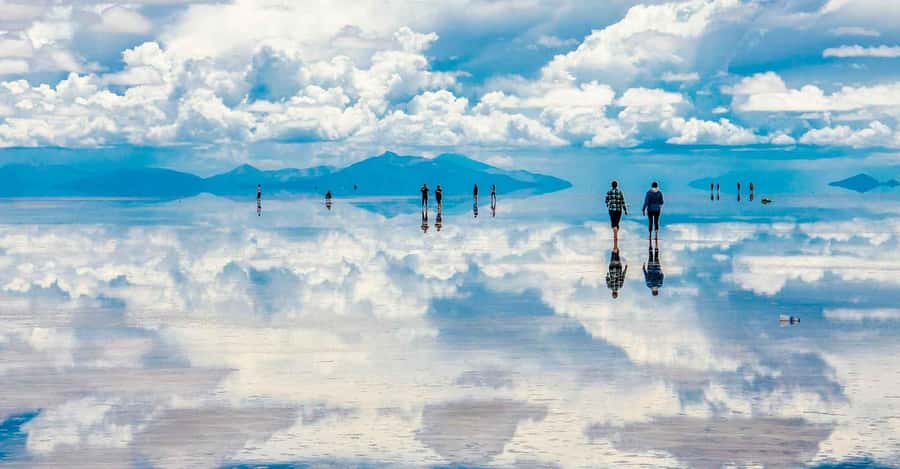
On the Salar de Uyuni, the group stops at the Ojos de Agua Salada, where you can wade through the water. The route also includes a former salt hotel, now used as a museum and restaurant. The building, made entirely of salt, is an unusual reminder that the material beneath your wheels is not just scenery.
At the Flags of the World, you can bring your own flag and place it for free. It is a playful, personal stop, but it is optional in spirit: the draw of the flats is the setting, not the flag display itself. Nearby, the Dakar Races Monument marks the rally’s connection with the region.
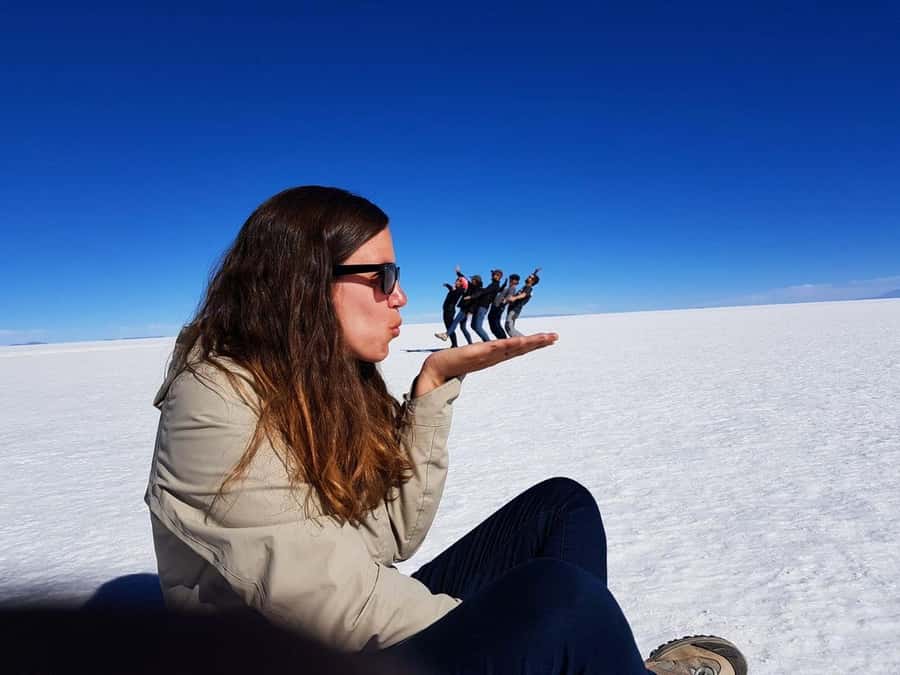
The open white surface is especially good for perspective photographs. With little in the frame to establish scale, you can arrange people and objects to look much nearer, farther, larger, or smaller than they are. The group takes time to organize these pictures, which is useful if you want a few carefully arranged shots. If you prefer to keep moving, this is one point where the pace may feel slow.
Lunch is served along the way. The package includes one lunch, but drinks and snacks are not included, so use the morning free time in Uyuni to stock up. Carrying water is a sensible plan for a long day out, particularly since the itinerary itself specifically suggests buying water before the tour.
Incahuasi Island: cacti and coral rock

When conditions allow, the next major stop is Incahuasi Island. The hike goes to the top, where you can see giant cacti and petrified coral rock formations. After a long stretch of open salt, the island’s rocky shapes and tall plants offer a welcome change in texture and scale.
The hike is a meaningful part of the day, not just a quick photo stop. You should expect to walk uphill to reach the top, although no route length or walking time is specified. The island entrance fee is not covered by the tour price: allow 30 BOB, or about $5.
Season matters here. From January through March, during the rainy season, Incahuasi Island is not accessible. If visiting the island is high on your list, check the conditions and route before booking rather than assuming it will be part of every departure. Even without the island, the salt-flat drive, monuments, water, and sunset remain on the itinerary, but the day will differ.
Sunset, wine, and the ride back
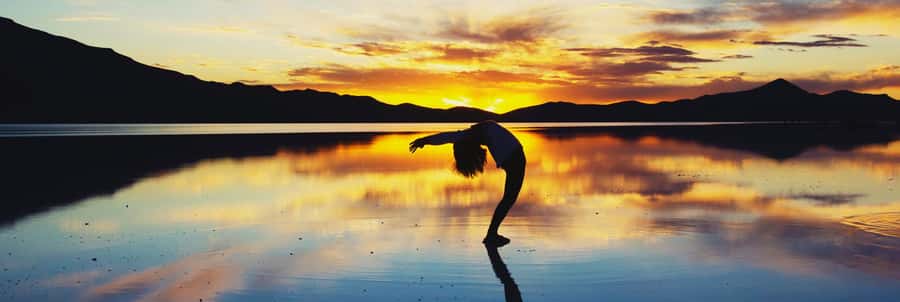
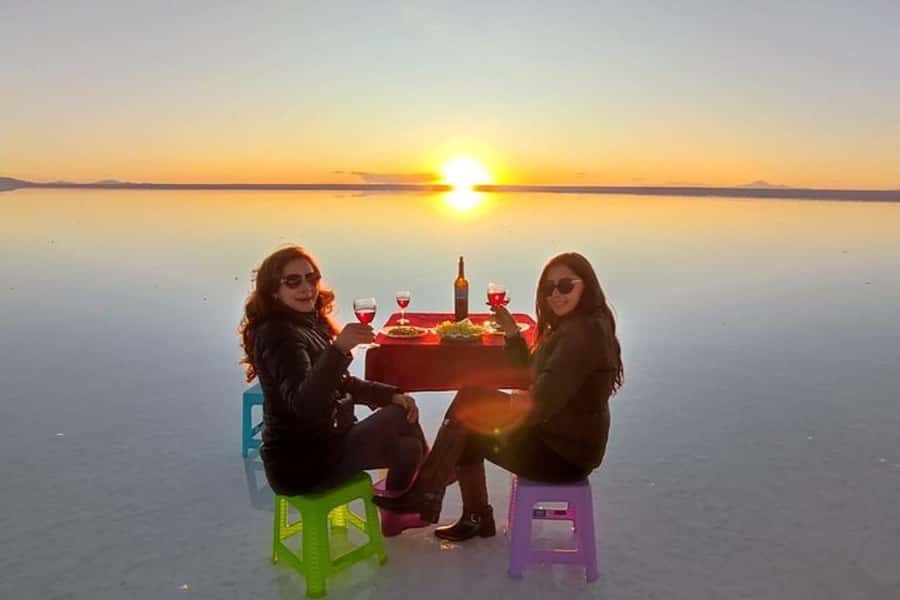
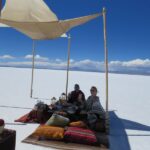
The final stop is a spacious area on the flats, chosen for watching the sunset. As the light changes, colors spread across the salt surface. The group shares a glass of wine, a simple end to a day that has included a long drive, a hike, and time for photographs.
This is the experience’s most unhurried moment by design. The salt flats can look stark under the midday sun; evening light gives the setting a different mood without needing any extra activity. Still, the schedule is tight at the end. The group returns to the Uyuni office between 7:15 and 7:45 p.m., and you need to reach the bus office on your own by 8:30 for the 9 p.m. departure.
That handoff is worth keeping in mind if you tend to lose track of time taking photos. You have some margin, but this is not a late-night stay in Uyuni. The tour is built to bring you back to La Paz the following morning.


What $230 covers, and what it does not
At $230 per person, the price includes both bus tickets between La Paz and Uyuni, pickup at the Uyuni bus terminal, transport in a 4×4 with roof rack, a local driver, and an English-speaking guide option. It also includes one bus dinner, one bus breakfast, and one lunch during the excursion.
That package can represent good value if you want the round-trip transport and the main Uyuni day arranged together. You avoid booking each leg and the local 4×4 separately, and the small-group limit of 15 keeps the excursion more manageable than a large coach outing. The included meals also reduce the number of things to arrange, though only one lunch is listed during the tour day.
The price does not cover Incahuasi Island admission, drinks, or snacks. The island fee is modest, but remember to include it in your budget if you travel during a period when the island is open. You will also want to buy your own snacks and water in Uyuni before setting off.
The tour offers free cancellation up to 24 hours ahead and a reserve-now, pay-later option. Those terms may help if your schedule is unsettled, but the key decision is whether you are comfortable spending two nights on buses for a single long day of sightseeing.
Small-group help when plans change

The group is limited to 15 participants, with a local driver and a live guide in Spanish or English. The English option is useful if you want explanations and coordination in English, but the experience still depends on a full day of moving between several stops.
One guest, Sharon from Hong Kong, developed a urinary infection and high-altitude symptoms during the trip and needed frequent bathroom stops. After lunch, she asked to return; driver and guide James took her to the salt flats for about 10 to 15 minutes, then brought her back early, several hours before the scheduled end. That is a practical example of the team responding to a difficult situation rather than sticking rigidly to the route.
It is one account, not a promise that every schedule can be changed in the same way. Still, it is useful to know that James and the driver showed flexibility when a guest was unwell. The bus also has toilets listed among its amenities, an important detail for a long overnight journey.
The same story is a reminder to take your own health seriously. High-altitude symptoms and illness can disrupt a day quickly. If you start feeling unwell, tell the guide promptly and discuss what is possible; do not assume you must continue through every stop.
Who should book this trip?
I would consider this tour if you want a direct, organized way to see the Salar de Uyuni from La Paz and can manage two overnight bus rides. It suits a short itinerary, a first visit to the salt flats, and anyone who values having the bus tickets, local transport, and principal stops bundled together.
It is less suitable if you want a relaxed stay in Uyuni, more than one day to explore, or the freedom to linger at each stop. The day packs a lot into roughly nine hours, and the return bus leaves the same evening. You should also weigh the overnight schedule against your comfort with sleeping on a bus.
Before booking, check whether Incahuasi Island is likely to be accessible on your dates, set aside money for admission, and buy snacks and water after reaching Uyuni. Keep the bus office return time in mind at sunset. If that brisk rhythm suits you, this is a practical way to see the salt flats’ signature sights and get back to La Paz without arranging the pieces yourself.
FAQ

How long is the tour?
The tour lasts three days, including overnight bus travel from La Paz to Uyuni and back. The main sightseeing day takes place on Day 2.
What time does the bus leave La Paz?
Check-in is at 8:30 p.m., and the bus departs at 9 p.m.
When does the bus arrive in Uyuni?
The scheduled arrival in Uyuni is 7:30 a.m. on Day 2.
What time does the salt-flat tour start?
The 4×4 tour starts at 10:30 a.m.
What time does the group return to Uyuni?
The group is due back at the Uyuni office between 7:15 and 7:45 p.m.
What is included in the price?
The price includes round-trip bus tickets, pickup at the Uyuni bus terminal, 4×4 transport with a roof rack, a local driver, an English-speaking guide option, one bus dinner, one bus breakfast, and one lunch.
Is the Incahuasi Island entrance fee included?
No. Admission costs 30 BOB, or about $5, and is paid separately.
Can the tour visit Incahuasi Island during the rainy season?
No. Incahuasi Island is not accessible during the rainy season from January through March.
Are drinks and snacks included?
No. Drinks and snacks are not included. A glass of wine is served at the sunset stop.
What languages are available for the guide?
The live tour guide is available in Spanish and English.
More Tour Reviews in La Paz
Not for you? Here's more nearby things to do in La Paz we have reviewed





La Paz, compared
 ★ 4.8La Paz and El Alto: Cable Car Rides and Walking TourFrom $10790 reviews
 ★ 4.8La Paz Half-Day Walking TourFrom $3591 reviews
 ★ 4.9La Paz: Private City Tour with Cable Car & Moon Valley VisitFrom $43508 reviews
 ★ 4.5La Paz: Full Day Trip to Copacabana and Isla del SolFrom $59400 reviews
Browse the lists this tour appears in