
Reviewed · LA PAZ
La Paz: Cholitas Wrestling Tickets and Transfer
Big hats, bigger flying elbows. La Paz’s cholitas wrestling turns a trip to El Alto into a loud, funny night of theatrical combat, and I like two things most: the women’s pride at its center and the high-city views along the way. The catch is traffic, especially at rush hour, and the guide may give more transport help than cultural background.
At $25 per person, you get a ticket, shared transport, a seat, popcorn, a drink, photos with the wrestlers, and a small souvenir. If Gabriel is your guide, you may get especially warm care and useful help, but I would still compare the platform price with Búhos Tours directly, since direct booking may be cheaper.
In This Review
- The quick take: five things to know
- From San Francisco Church to El Alto at 4,100 meters
- Pick your wrestling night carefully
- Tuesdays and Thursdays: a colorful cholet
- Mondays, Wednesdays, Fridays, and Saturdays: Casa de la Cholita
- Sundays: the traditional coliseum
- What happens inside the ring
- More than costumes: why the cholitas matter
- The guide: useful help, but keep expectations realistic
- Is $25 good value?
- Traffic, buses, and the timing traps
- Who will enjoy this most?
- My verdict on La Paz cholitas wrestling
- FAQ
- Where is the meeting point?
- How long does the experience last?
- Which days use the cable car?
- What is included in the ticket?
- What should I bring?
- Can I cancel or pay later?
The quick take: five things to know
- El Alto sits at about 4,100 meters: The trip takes you far above central La Paz, with wide views of both cities.
- The venue depends on the day: Tuesdays and Thursdays use a colorful cholet; Mondays, Wednesdays, Fridays, and Saturdays use Casa de la Cholita; Sundays use a traditional coliseum.
- The women lead the card: Expect most matches to feature cholitas, with some bouts against men and possible all-male matches.
- The $25 package covers the useful extras: Transport, entry, guide, seat, snack, drink, photos, souvenir, and return to central La Paz are included.
- Traffic is part of the evening: The outward journey can take around 40 minutes or longer, while the return is often quicker.
From San Francisco Church to El Alto at 4,100 meters
Your meeting point is the Búhos Tours office, one block from San Francisco Church and close to the Witches’ Market. This is a sensible place to begin because it sits in central La Paz, near areas you are likely to visit during the day.
Show your printed ticket or virtual reservation at the office. An assistant takes you to the venue and helps with the return, so you are not left to work out El Alto transport on your own.
The total activity lasts about four hours. The wrestling itself runs for roughly one hour and 30 minutes, with the rest taken up by the journey, entry, seating, photos, and the return to downtown.
The trip to El Alto is part of the experience. La Paz climbs dramatically toward the high plateau, and El Alto sits above the city at around 4,100 meters. You can expect broad views of La Paz and El Alto, though the exact view depends on the route, traffic, and weather.
Bring a jacket even if the afternoon feels mild. At this height, temperatures can change quickly, and the open high-plateau setting may feel much colder than central La Paz.
You can also read our reviews of more tours and experiences in La Paz.


Pick your wrestling night carefully
The day you book changes both the venue and the transport. I would check the schedule before choosing a date, since each setting gives the show a different feel.
Tuesdays and Thursdays: a colorful cholet
On Tuesdays and Thursdays, the show takes place inside a cholet. These are modern, multi-story buildings associated with Aymara economic and cultural success.
Expect bold facades, bright colors, geometric Andean designs, and large interior rooms. The building itself gives the evening a more polished and festive look than a plain sports hall.
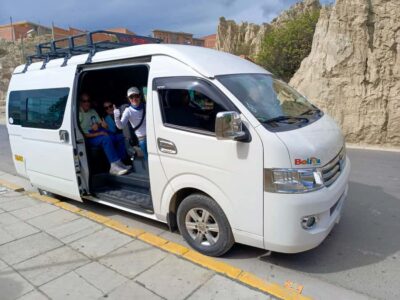
Round-trip bus transport is included on these nights. The bus keeps the route simple, but it is vulnerable to La Paz traffic. If your departure falls near rush hour, the drive may take longer than expected.
Mondays, Wednesdays, Fridays, and Saturdays: Casa de la Cholita
On these nights, the event takes place at Casa de la Cholita, a training space used by the female wrestlers. This venue gives you a closer look at the setting behind the performance.
I like this option for anyone who wants more than a standard arena show. The house is connected to the wrestlers’ daily work, training, discipline, and friendship, so the evening can feel closer to the people involved.
Transport uses the cable car and bus. The cable car may help you avoid some road congestion and gives you another way to see the steep relationship between La Paz and El Alto.
Still, do not assume the entire journey is by cable car. The official transport plan includes both cable car and bus, and the exact timing depends on the day’s operation.
Sundays: the traditional coliseum
Sunday is the busiest night and takes place in a traditional coliseum. You get the classic ingredients: bleachers, a ring, and a larger local crowd.
This is the best choice if you want maximum noise and audience energy. The crowd gets involved, reacts strongly to the action, and adds much of the evening’s humor.
The trade-off is that a busy Sunday can make seating and group movement less tidy. Arrive promptly at the Búhos Tours office and follow the transport instructions closely.



What happens inside the ring
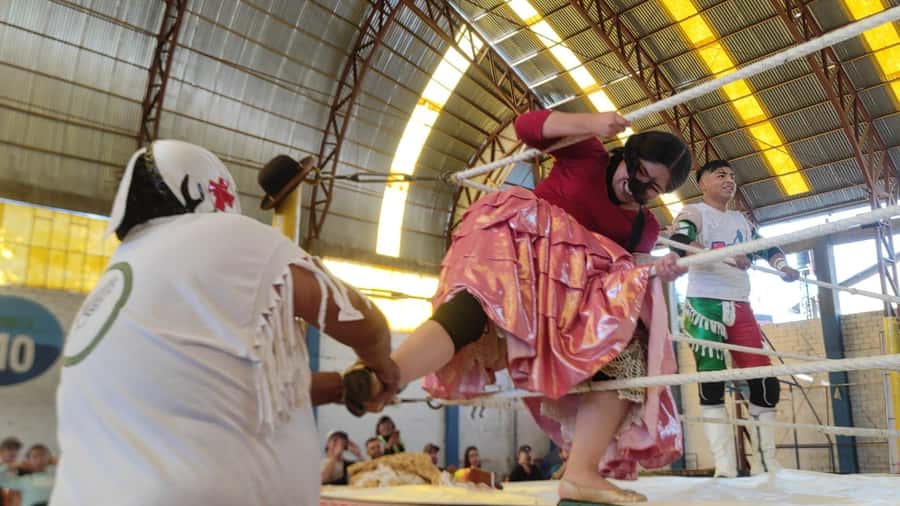
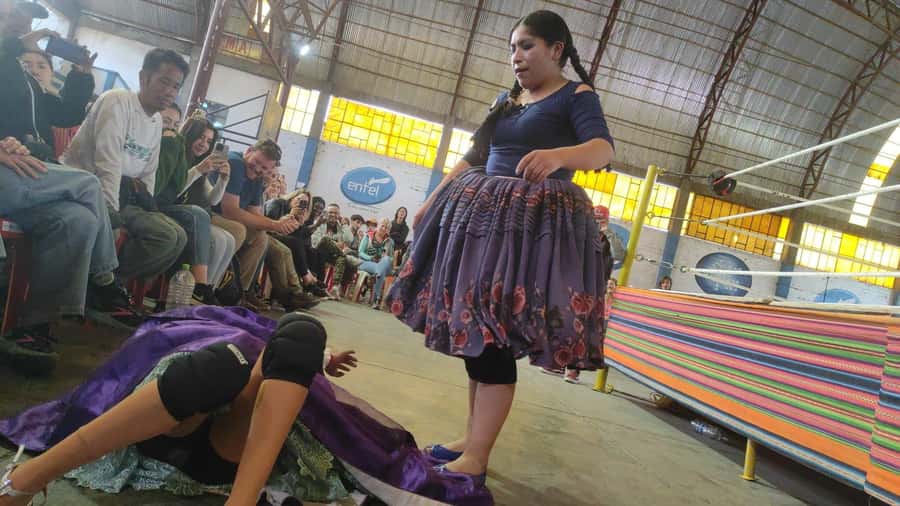
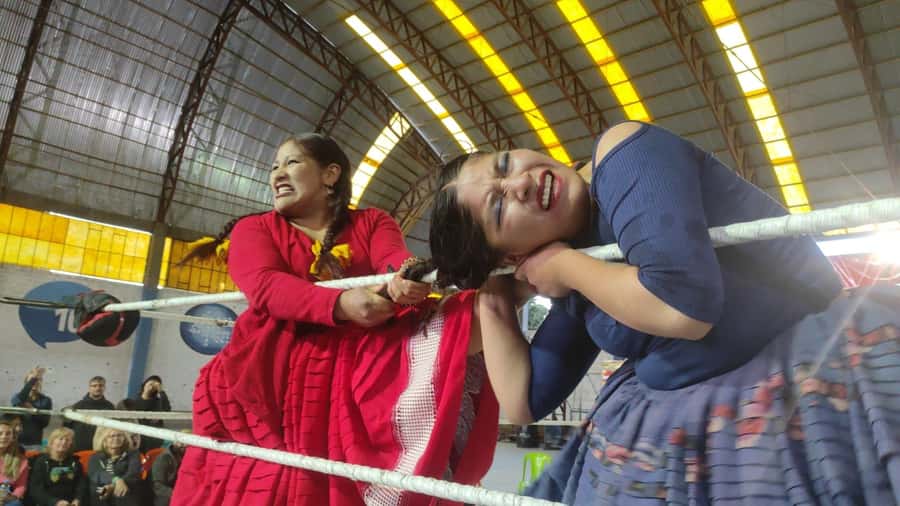
The match card is built around cholitas, the Aymara women whose traditional clothing is part of their public identity. Their wide skirts, colorful shawls, braids, and hats make an immediate visual impression before the first move begins.
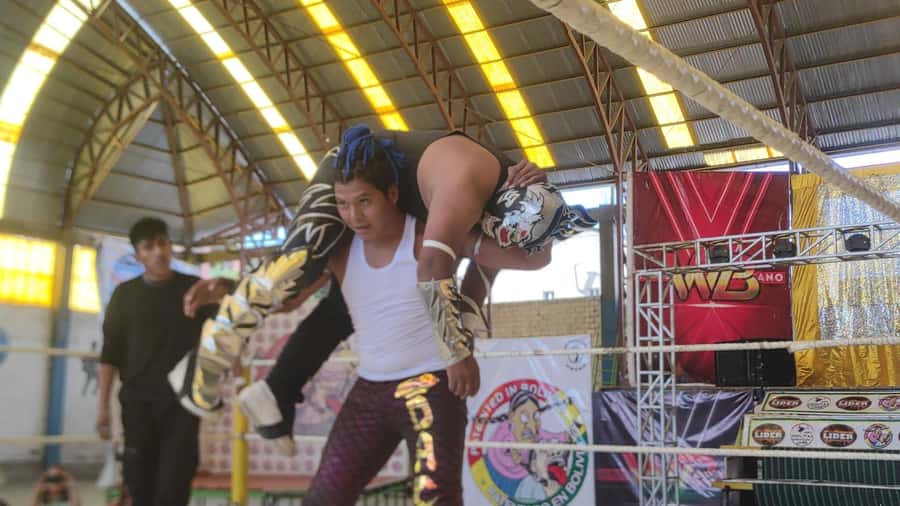
You may see cholita-versus-cholita matches, women facing men, and possibly matches between men. The program is mostly female, which is one reason this show feels different from a standard wrestling event.
The action follows the logic of theatrical wrestling, with storylines, exaggerated characters, crowd reactions, and dramatic moves. Expect slaps, hair-pulling, full-body falls, tag-team action, singles matches, and sometimes a triple-threat bout.
Some performances include moves inspired by international wrestling, including dramatic dives and finishing moves familiar from television wrestling. Do not expect every show to use the same sequence. The card can vary, and the exact performers and match types are not guaranteed.
The wrestling is staged entertainment, but it is not without physical risk. Falls and collisions can cause real injuries. That matters if you are bringing children or anyone uncomfortable with rough physical performance.
You do not need to be a wrestling fan to enjoy the night. The appeal comes from the mix of comedy, costumes, storytelling, crowd participation, and the sheer surprise of seeing traditionally dressed Aymara women command the ring.
More than costumes: why the cholitas matter
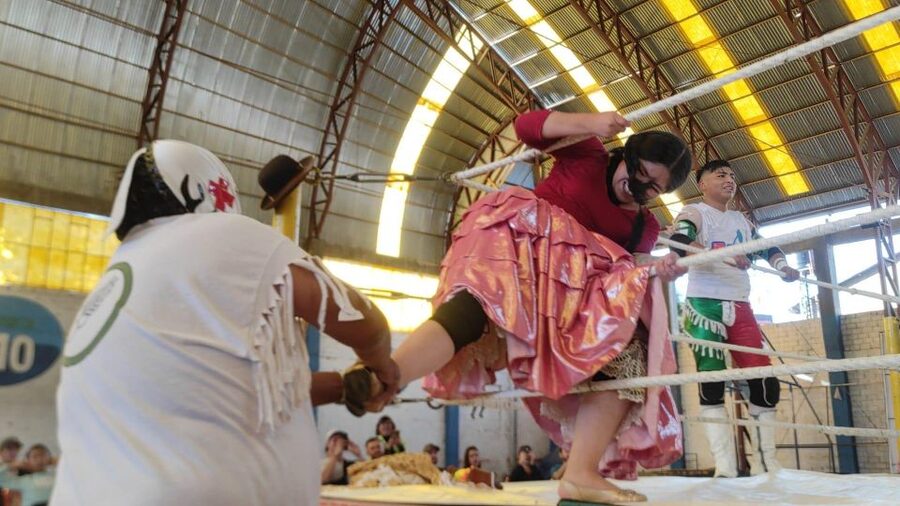
It would be easy to treat cholitas wrestling as a novelty and stop there. That misses part of its importance.
The wrestlers use a public form of entertainment to claim space for Aymara women. Their clothing is not a costume borrowed for tourists. The skirts, shawls, braids, and hats connect the performers with Andean identity while they take on roles usually associated with male athletes.
That contrast gives the show its force. The performers can be funny, theatrical, glamorous, aggressive, and physically commanding without setting aside their cultural identity.
I would describe the evening as a commercial show with a real cultural connection, not as a glimpse of ordinary daily life. The matches are prepared for entertainment, and the ticketed setting is designed for an audience. Yet the women’s role, clothing, and pride are tied to living Andean culture rather than a museum display.
The Casa de la Cholita option offers the strongest connection to the wrestlers’ work because it is also a place where they train. The cholet option gives you more architectural and cultural context through the building itself. Sunday’s coliseum gives you the clearest sense of public spectacle.
The guide: useful help, but keep expectations realistic
The tour includes an English- and Spanish-speaking guide. The guide’s main job is to gather the group, manage transport, distribute entry details, and get everyone back to central La Paz.
Gabriel has received especially warm praise for his hospitality, explanations, and care. If he is assigned to your group, you may find the evening particularly well handled.
That said, do not book this as a long guided lesson in Bolivian wrestling. Some guides focus mainly on logistics and offer little background on the history of cholitas wrestling or the meaning of the event.
I would read a little about the cholitas before leaving La Paz. Even a short introduction will help you notice the connection between the women’s clothing, Aymara identity, and the performance style.
Some outings have also included a viewpoint stop on the way back. Treat that as a welcome extra, not a guaranteed part of the schedule.
Is $25 good value?
For $25, the package offers more than just admission. You receive:
- Entry to the wrestling show
- Shared transport from central La Paz and back
- A guide in English or Spanish
- A seat
- Popcorn and a drink
- A photo session with the cholitas
- A souvenir
- Drop-off near San Francisco Church
I consider that fair value if you want a simple evening with transport arranged. El Alto is not next door, and returning after dark with a group is easier than arranging every stage yourself.
The value is less convincing if you only want a ticket and are comfortable arranging your own transport. Some ticket sellers operate around La Paz, and booking directly through Búhos Tours may cost less than the $25 platform rate.
The included snack and drink are modest, but they are welcome during a 90-minute show. The souvenir is small, yet it gives the activity a pleasant finish. The photos are also useful because the post-show session gives you a chance to meet the performers rather than only watch them from the stands.
Bring cash if you want to buy anything extra at the venue. Some additional purchases may be cash-only.
Traffic, buses, and the timing traps
The most common practical weakness is transport timing. The ride out can take about 40 minutes, and rush-hour traffic may stretch it further.
The return to La Paz is often quicker, but you should still treat the four-hour schedule as a real block of your day. Do not plan a tight dinner reservation or airport transfer immediately afterward.
The buses are shared and functional rather than luxurious. Some have been described as old or average, and group departures can be delayed when people arrive late.
At the end of the night, pay close attention to the return instructions. Several large buses may be waiting, and clear signs are not always guaranteed. Stay near the guide and confirm the correct bus before leaving the venue.
Arrive at the Búhos Tours office on time. This is not only polite; it may improve your chance of getting a good view inside a busy venue.
Who will enjoy this most?
I would recommend this activity to you if you want something unusual after visiting La Paz’s churches, markets, museums, and viewpoints. It works especially well as an afternoon or evening plan after a morning city tour.
You will probably enjoy it if you like live comedy, crowd participation, colorful costumes, and theatrical sports. You do not need to follow wrestling closely, since the storylines and reactions are easy to understand as they unfold.
Families can enjoy it, but parents should know that the action includes falls, body slams, aggressive gestures, and occasional injuries. Anyone sensitive to simulated violence may prefer a quieter cultural activity.
I would hesitate to recommend it if you want a serious sporting contest, a polished international production, or a detailed historical lecture. The show can feel deliberately over-the-top, and the plots may seem thin.
Altitude is another consideration. El Alto is high enough that some people may feel the effects, especially if they have only just arrived in Bolivia. Take the evening at your own pace, carry water, and wear weather-appropriate clothing.
My verdict on La Paz cholitas wrestling
I would book this if you want a memorable night that combines Andean identity with comic wrestling spectacle. The women are the heart of the event, and their strength, costumes, and crowd command give the show a character you will not find at home.
Choose your day with care: Casa de la Cholita gives the closest connection to the wrestlers’ working world, the cholet adds striking architecture, and Sunday brings the biggest crowd atmosphere. At $25, the included transport, snacks, photos, and souvenir make the package worthwhile for most visitors, provided you can accept traffic and basic buses.
FAQ
Where is the meeting point?
Meet at the Búhos Tours office, one block from San Francisco Church and near the Witches’ Market in central La Paz. Show your printed ticket or virtual reservation to the assistant.
How long does the experience last?
The full activity lasts about four hours. The wrestling show itself lasts approximately one hour and 30 minutes, and the return to central La Paz is scheduled for around 20:00.
Which days use the cable car?
Mondays, Wednesdays, Fridays, and Saturdays use transport by cable car and bus to Casa de la Cholita. Tuesdays, Thursdays, and Sundays use round-trip bus transport.
What is included in the ticket?
The package includes entry, shared transport, an English- or Spanish-speaking guide, a seat, popcorn, a drink, photos with the cholitas, a souvenir, and drop-off near San Francisco Church.
What should I bring?
Bring a camera, charged smartphone, jacket, long pants, and clothing suited to the weather. The high altitude and changing conditions make warm layers useful.
Can I cancel or pay later?
You can cancel up to 24 hours before the activity for a full refund. The reservation option also allows you to book now and pay later, keeping your plans flexible.
More Tour Reviews in La Paz
Not for you? Here's more nearby things to do in La Paz we have reviewed






La Paz, compared
 ★ 4.8La Paz and El Alto: Cable Car Rides and Walking TourFrom $10790 reviews
 ★ 4.8La Paz Half-Day Walking TourFrom $3591 reviews
 ★ 4.9La Paz: Private City Tour with Cable Car & Moon Valley VisitFrom $43508 reviews
 ★ 4.5La Paz: Full Day Trip to Copacabana and Isla del SolFrom $59400 reviews
Browse the lists this tour appears in