
Reviewed · CABLE CAR TOURS
La Paz: Cable Car, Cemetery, Shaman, and El Alto Tour
La Paz looks best from above. This $20 tour pairs cable-car views with a close look at the cemetery, El Alto, and Andean spiritual customs. I like the way it uses public transport instead of keeping you inside a tourist vehicle, and I like the English-speaking guides who explain what you are seeing as the city changes around you. The main drawback is that the shaman visit depends on time and may extend the tour if several people choose a reading.
This is a strong choice if you want more than central La Paz streets and souvenir shops. Guides including Max, Christian, Daniel, Chris, and Denise have been singled out for their clear English, humor, and local insight. Still, bring a jacket and cash, and do not expect a private ride, food, or a guaranteed coca-leaf reading.
In This Review
- Five things to know before you go
- Why this La Paz tour feels different
- Meeting your guide on Calle Murillo
- Reaching the cemetery by local transport
- Taking the red cable car toward El Alto
- Walking through El Alto beyond the cable-car station
- Meeting a shaman and reading coca leaves
- The ride back to central La Paz
- What the guide adds to the experience
- Is $20 good value for three hours?
- What to bring and how to prepare
- Should you book this La Paz tour?
- FAQ
- How much does the tour cost?
- How long does the tour last?
- Where does the tour meet?
- How do I identify the guide?
- Is the shaman visit guaranteed?
- What transport is used?
- What should I bring, and is the tour suitable for everyone?
Five things to know before you go
- The cable cars are the tour’s moving viewpoint: You travel above La Paz and El Alto on more than one teleférico line, with broad views of the city and mountains.
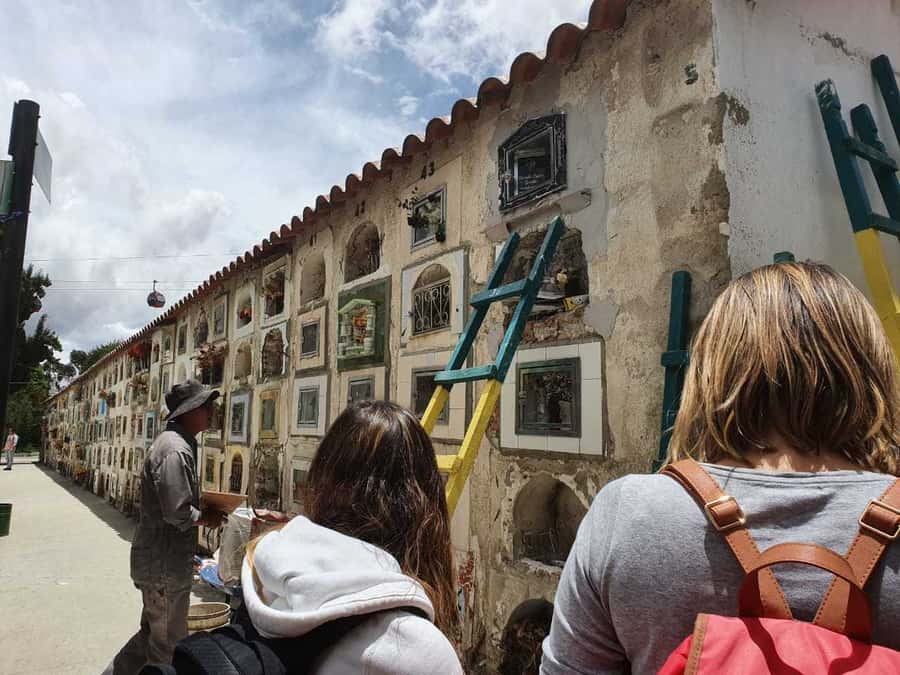
- The cemetery is also an art stop: Its open-air gallery gives you a different way to think about Bolivian customs surrounding death.
- Public transport is part of the lesson: Local minibuses and cable cars show you how residents move around the city.
- El Alto feels far from postcard La Paz: You see a high-altitude district where older Aymara traditions meet modern city life.
- The shaman visit is optional in practice: A coca-leaf fortune reading may be possible, but it depends on the schedule and can make the afternoon longer.
Why this La Paz tour feels different
Many La Paz outings stay around the central streets, markets, churches, and viewpoints. This one heads outward and upward, using the city’s public transport network to connect places that can feel difficult to approach on your own.
The appeal is not simply seeing El Alto from a cable-car window. You get off, walk through part of the district, hear about its customs, and visit a local shaman if time allows. The guide gives context that is hard to pick up when you are moving through unfamiliar streets by yourself.
I especially like the balance between sightseeing and ordinary city movement. A local minibus or collectivo is not as polished as a private vehicle, but it makes the trip feel less staged. Your guide handles the route, explains local habits, and helps the group move through crowded areas safely.
The tour lasts about three hours and costs $20 per person. That is good value because the price includes public transportation, an English-speaking bilingual guide, and tourist entry to the cemetery. You pay separately for anything you eat or drink, and the optional shaman reading is not listed as an included service.
You can also read our reviews of more tours and experiences in La Paz.



Meeting your guide on Calle Murillo
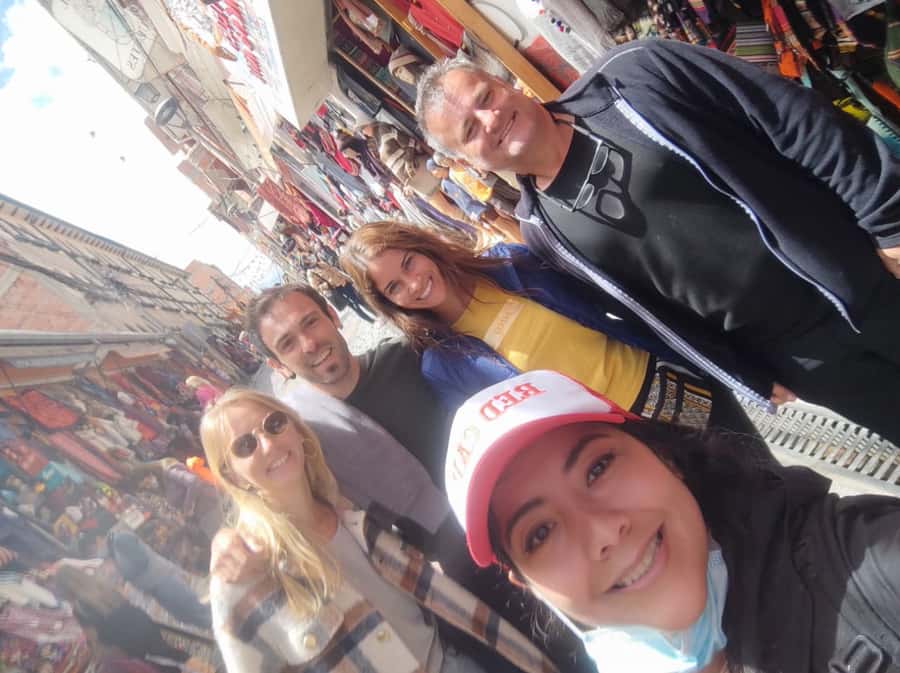
The tour begins at 2 PM inside The SteakHouse restaurant at the corner of Calle Murillo and Tarija Street. The guide wears a red cap and waits a maximum of seven minutes, so this is not a meeting point where you should arrive casually at 2:05.
One useful detail: the starting spot can be harder to find than expected. I would locate the restaurant earlier in the day and plan to be inside before the meeting time. That matters even more in central La Paz, where streets can be busy and maps do not always make the exact entrance obvious.
Guide quality is one of the strongest reasons to book this outing. Christian has been described as someone who grew up in La Paz and speaks excellent English. Max has lived in El Alto and can explain that district from a local point of view. Daniel, Chris, Matt, Denise, and others have also led outings, so the exact personality and style depend on the day’s assignment.
The common thread is strong local explanation. The guides do not simply point out a cable line or a market stall. They answer questions about Aymara culture, Bolivian customs, city life, and spiritual practices. That makes a real difference on a tour where many sights have meaning that is not obvious at first glance.
Reaching the cemetery by local transport

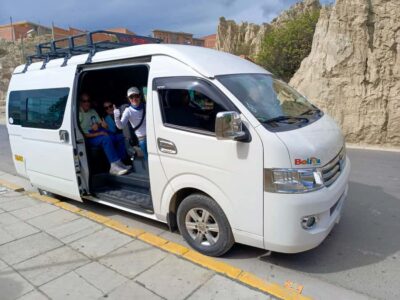
The first part of the route uses public transportation, including local minibuses or collectivos. This is a practical choice as well as a cultural one. You see how people get around, and you avoid spending the whole afternoon in a sealed vehicle separated from the city.
Your guide leads the way through the transport changes and keeps the group together. That is useful in La Paz, particularly if you do not speak Spanish or have not yet worked out the city’s informal minibus system.
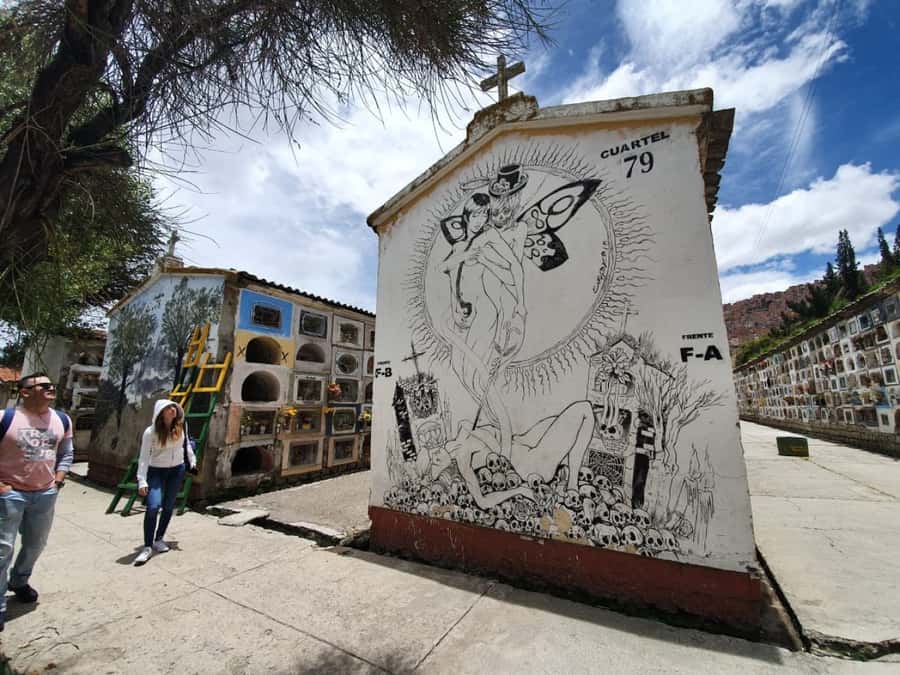
The cemetery is more than a quick stop for photographs. It includes an open-air street-art gallery, and the artwork adds color and modern expression to a place that might otherwise seem solemn. The guide explains local ideas about death and what happens after it, helping you understand why the cemetery matters beyond its walls and graves.
This is one of the tour’s most rewarding stops because it combines visual interest with cultural explanation. Several outings have spent extra time here when a shaman was unavailable, including during the Todos Santos period. That flexibility is useful: the cemetery is not treated as a filler stop if the optional part of the schedule changes.
Give the place the respect you would give any cemetery. The art may be the immediate draw, but the visit also concerns family, memory, and religious custom. Your guide can help you understand the setting without turning it into a spectacle.
Taking the red cable car toward El Alto
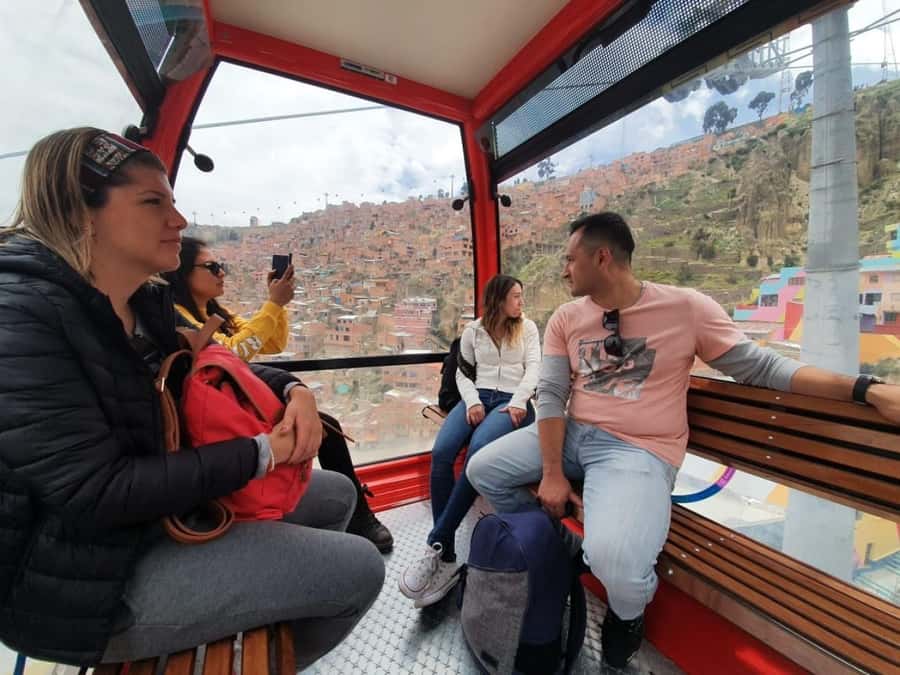
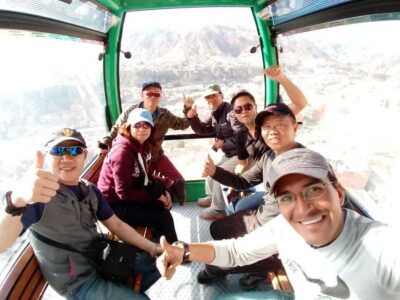
From the cemetery area, the tour continues by teleférico. The red cable car is associated with the route toward El Alto, and the ride gives you a striking view of La Paz from above.
The city’s shape becomes clearer in the air. Streets, buildings, steep slopes, and the wide spread of El Alto form a very different picture from what you see at street level. You also get broad mountain views, weather permitting. I like this part because the transport itself becomes a sightseeing stop rather than a mere way to get from point A to point B.
The cable cars are popular with local residents, so you are using a working part of the city rather than a ride built only for sightseeing. Your guide explains the lines and points out what is below, which helps you make sense of the view.
The route may involve two or more cable-car lines, depending on the day’s plan and conditions. It is worth keeping your phone or camera ready, but do not spend the entire ride staring through a screen. The point is to understand how La Paz and El Alto connect physically and socially.
The altitude can make the day tiring, especially if you have just arrived in Bolivia. This tour is not suitable for people with altitude sickness, and pregnant women are advised not to take it. If you already feel unwell at altitude, a three-hour outing involving walking, waiting, minibuses, and cable cars is not the place to test your limits.
Walking through El Alto beyond the cable-car station
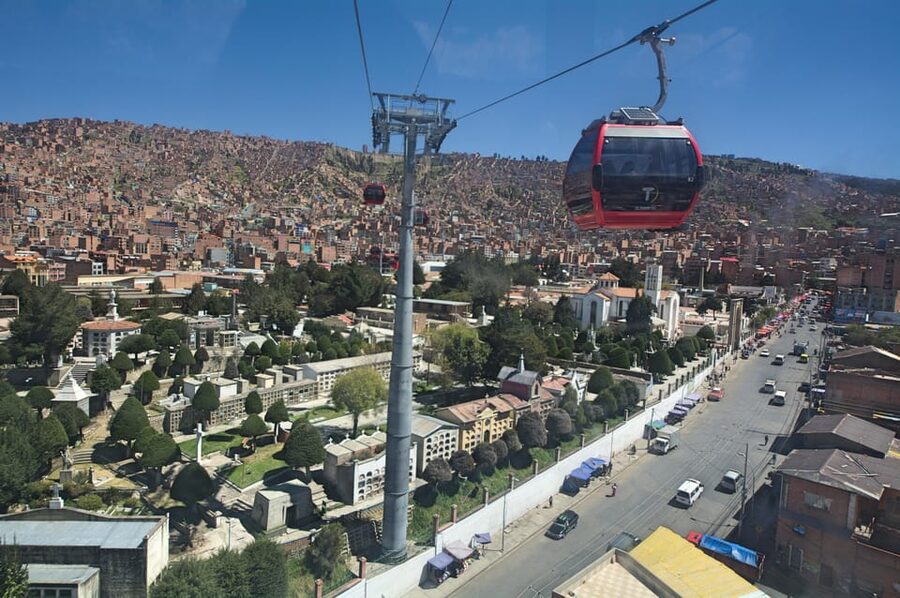
El Alto is the part of the tour that gives it its edge. The district is presented as a place where historical tradition and modern city life meet. You are not just looking down from the cable car; you walk through the area with a guide who can explain what you are seeing.
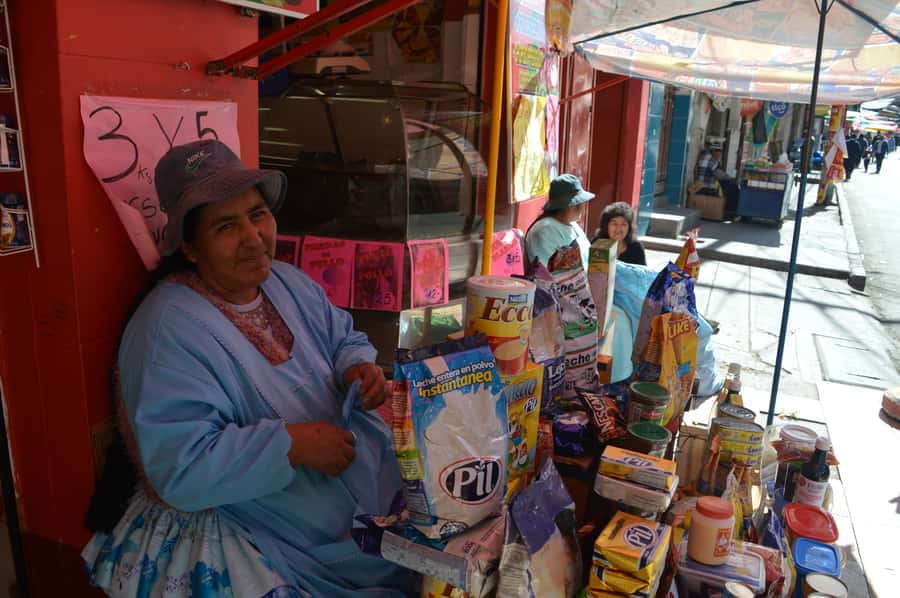
The setting is more practical and local than the central tourist zone. Depending on the day, you might pass market activity, neighborhood streets, and shops connected to Andean beliefs. The experience asks you to pay attention to daily life instead of waiting for one grand monument.
Thursdays and Sundays are especially notable because one of the world’s largest open-air markets takes place in El Alto. Those days can add a major market component to the outing, but they may also make the walking and group movement slower.
There is also Cholitas Wrestling on Thursdays and Sundays. The matches feature Indigenous women and are not included in this tour. You would need to arrange that separately, and it should not be treated as part of the $20 package.
I would choose a Thursday or Sunday if you want the market atmosphere and are comfortable with a busier schedule. Choose another day if you prefer a calmer walk and more time for explanations. The tour still goes to El Alto outside those market days, so you are not losing the main point of the visit.





Meeting a shaman and reading coca leaves
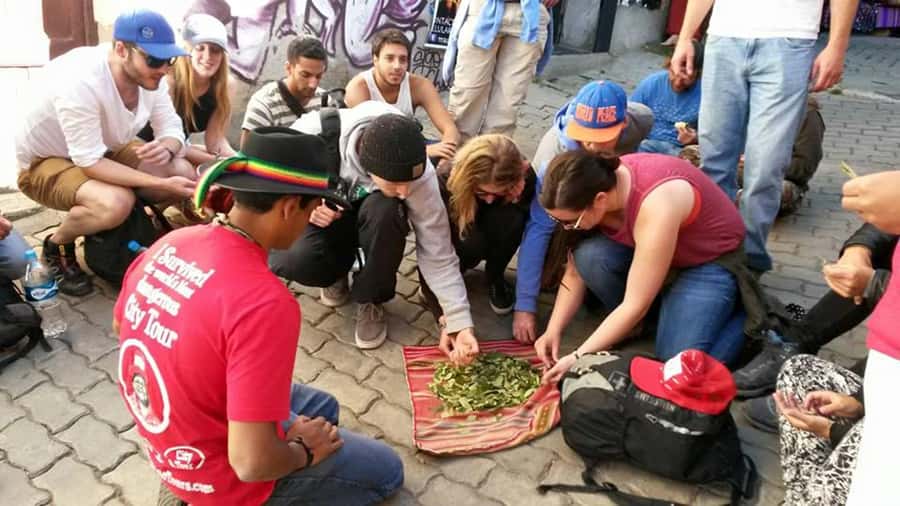
The shaman visit is the most unusual part of the afternoon, but it is also the least certain. If time allows, you visit a local shaman, learn about Andean spirituality and healing herbs, and may have your fortune read in coca leaves.
The guide’s role matters here. Without explanation, a short visit to a spiritual practitioner could be confusing or easy to misunderstand. With context, you can ask respectful questions about the beliefs and customs connected with the visit.
A coca-leaf reading should be approached as a cultural experience, not as a guaranteed prediction or a performance arranged for every person in the group. The activity may not happen if the schedule runs late or the shaman is unavailable.
There is one practical catch. If several people in the group choose readings, you may wait while each person takes a turn. One outing became considerably longer for that reason, and the sensible solution would be to place readings at the end whenever possible. I would avoid scheduling a fixed appointment immediately after the tour.
Some people consider this the highlight of the day. Others may prefer to observe rather than participate, and that is perfectly reasonable. You can still learn about the practice without asking for your own fortune.
The ride back to central La Paz
The return uses another teleférico route, giving you a second chance to see the city from the air. The changing angle is useful: you have already walked through El Alto, so the view back toward La Paz now has more meaning.
The trip ends in or near the city center after roughly three hours, though the schedule can run longer if there are delays or readings. The guide continues to explain the city on the way back, so the final cable-car ride is not just a quiet commute.
By the end, you have used several forms of transport, visited a cemetery and art gallery, walked through El Alto, and encountered Andean spiritual traditions. That is a lot for $20, especially when public transport and cemetery entry are included.
The trade-off is pace. This is not a slow, leisurely walk with long stops at every site. It is a compact route that covers ground. You should expect some waiting, transfers, and movement through public areas.
What the guide adds to the experience
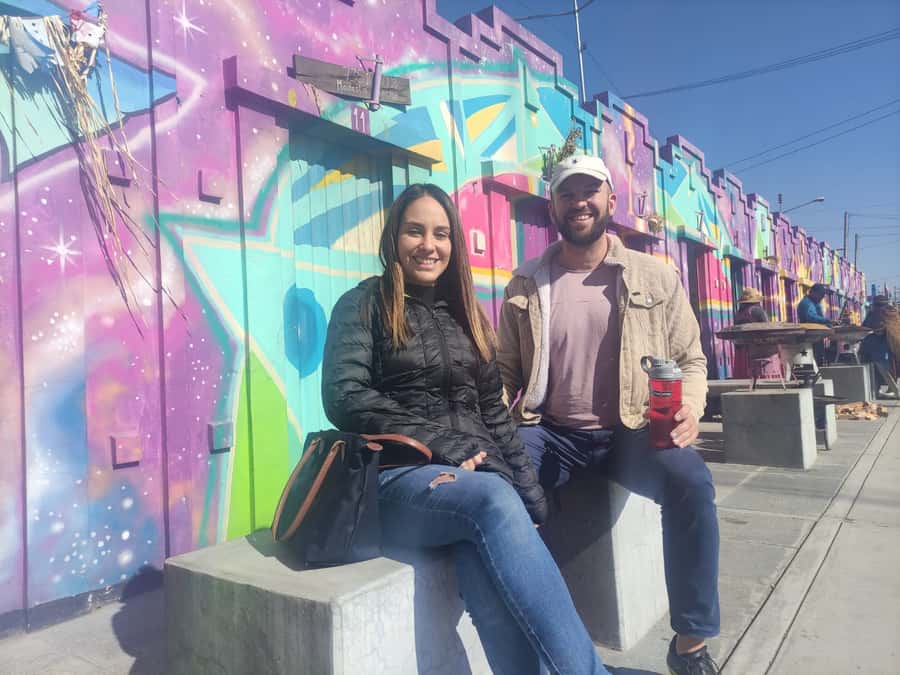
The strongest feature is the guide’s ability to connect separate sights. The cemetery, cable cars, El Alto, the market, and the shaman might otherwise feel like unrelated stops. A good guide turns them into a picture of how La Paz works.
Max has been noted for growing up and living in El Alto, which gives him a particularly useful connection to that part of the city. Christian has been praised for his English, care, and ability to answer questions. Guides such as Daniel and Chris have also been described as friendly, funny, and full of local facts.
Do not expect every guide to tell the tour in exactly the same way. This is a small-team operation, and personal style will vary. Still, the repeated strength is clear: the guides explain rather than rush, and they help you use local transport with confidence.
If you want a conventional introduction to central La Paz first, consider taking the company’s Red Cap walking tour before this outing. This cable-car and El Alto trip works well as a follow-up because it takes you beyond the center and assumes you are ready to see a less familiar side of the city.
Is $20 good value for three hours?
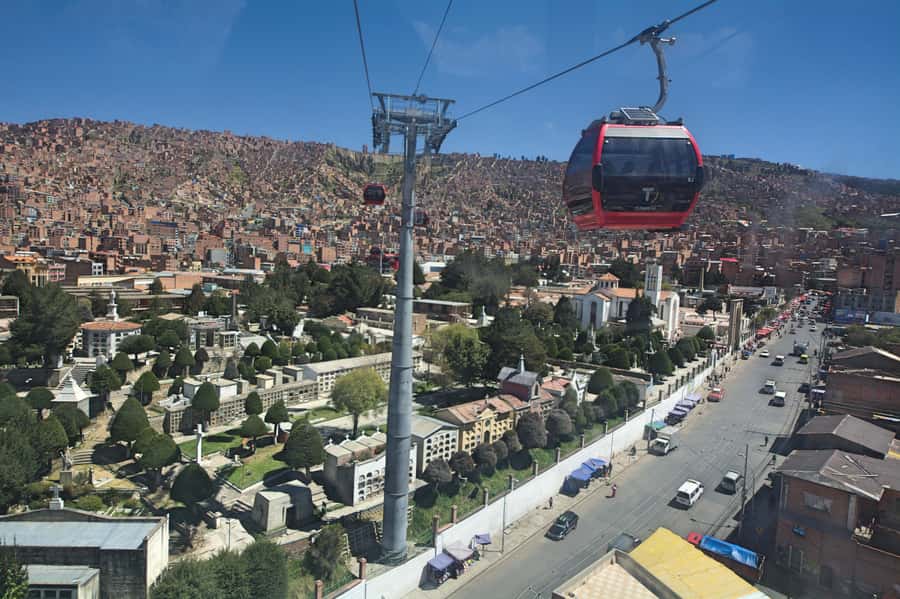
Yes, provided you want culture and transport rather than comfort. The fee covers the guide, public transport, and cemetery entry, so there are no obvious major costs during the standard route. Food and drinks are not included, and you should bring cash for personal purchases or optional activities.
A private taxi-based tour might be easier, but it would remove one of this experience’s best features: seeing La Paz as residents do. The public-transit format also explains why the guide is so important. You are paying for route planning, translation, local context, and group care as much as for the individual stops.
The value is strongest for first-time visitors who would not feel comfortable reaching El Alto alone. It is also good for repeat visitors who have already seen the central streets and want a different afternoon.
It is weaker for anyone who wants a guaranteed shaman reading, a fixed return time, or a fully private vehicle. The price is low, but the day’s rhythm depends on public transport and the choices made by the group.
What to bring and how to prepare
Wear comfortable shoes. The route involves walking, public transport, and cable-car stations rather than one continuous guided promenade.
A sun hat is useful, but so is a jacket. La Paz weather can change during an afternoon, and the cable-car sections can feel exposed. Bring your passport or ID card, plus cash. Food and drinks are not included, so carry enough for your own needs.
Plan for altitude. The tour is not suitable for people with altitude sickness, and it is not recommended for pregnant women. If you are newly arrived and still adjusting, keep your schedule flexible and do not pressure yourself to complete every optional part.
Most important, bring curiosity and patience. Public transport means you may wait or adjust the route. The shaman visit may take longer than expected, and the market days can change the pace.
Should you book this La Paz tour?
Book it if you want local transport, wide city views, cemetery art, and El Alto in one short outing. The guide support makes places such as the cemetery and El Alto far easier to understand, especially if you do not speak Spanish.
I would recommend it most strongly to first-time visitors who have already seen—or plan to see—the central La Paz sights and want an afternoon with more cultural context. It is also a good pick for small groups who enjoy asking questions and do not mind a flexible schedule.
Skip it if you need private transport, guaranteed timing, or a shaman reading for every participant. For everyone else, $20 buys a smart mix of views, public life, and Andean customs, with guides who can make the city feel much less puzzling.
FAQ
How much does the tour cost?
The tour costs $20 per person. Public transportation and tourist entry to the cemetery are included, while food and drinks are not.
How long does the tour last?
The advertised duration is three hours. It can take longer if several people choose a coca-leaf reading or if the group spends extra time at a stop.
Where does the tour meet?
The meeting point is inside The SteakHouse restaurant on Calle Murillo at the corner of Tarija Street. The tour starts at 2 PM.
How do I identify the guide?
The guide wears a red cap. The maximum waiting time at the meeting point is seven minutes, so arrive on time.
Is the shaman visit guaranteed?
No. The visit and coca-leaf fortune reading are offered if time allows. The activity can also lengthen the tour if several people take readings.
What transport is used?
The tour uses public transportation, including local minibuses or collectivos and La Paz cable cars. The route includes the red cable car toward El Alto and another teleférico on the return.
What should I bring, and is the tour suitable for everyone?
Bring your passport or ID card, comfortable shoes, a sun hat, a jacket, and cash. The tour is not suitable for pregnant women or people with altitude sickness.
More Tours in La Paz

More Tour Reviews in La Paz
Not for you? Here's more nearby things to do in La Paz we have reviewed






Cable Car Tours, compared
 ★ 4.8La Paz and El Alto: Cable Car Rides and Walking TourFrom $10790 reviews
 ★ 4.9La Paz: Private City Tour with Cable Car & Moon Valley VisitFrom $43508 reviews
 ★ 4.2La Paz: Cable Car Ride Tour with Food TastingFrom $885 reviews
La Paz: City Tour Classic + Telefericos + Moon Valley Half DayFrom $653 reviews
★ 4.2La Paz: Cable Car Ride Tour with Food TastingFrom $885 reviews
La Paz: City Tour Classic + Telefericos + Moon Valley Half DayFrom $653 reviews
Browse the lists this tour appears in