
Reviewed · UYUNI SALT FLATS TOURS
From Uyuni: 3-Day Tour to San Pedro with Salt Flats Visit
Three days, two countries, one rough road. This route links Uyuni’s giant salt flats with Bolivia’s high volcanic desert before delivering you to San Pedro de Atacama. I like the wide range of scenery, from abandoned locomotives and salt blocks to flamingo-filled lagoons and steaming geysers. I also like the direct finish in San Pedro’s main square, which saves you the trouble of arranging a separate border transfer. The trade-off is clear: accommodation is basic, shared, and cold, with no promise of hot water.
The trip costs $419 per person and includes a 4×4 vehicle, guide, driver, meals, hostels, and the cross-border transfer. That is a useful package for a three-day route in a remote area, but you need extra Bolivianos for entry fees, toilets, drinks, and personal expenses. Bring warm clothing, patience, and a sleeping bag if you feel the cold easily.
In This Review
- Five things to know before you go
- Why this Uyuni-to-San Pedro route works
- Day One: locomotives, salt blocks, and giant cacti
- Day Two: flamingo lagoons and the Red Lagoon
- Day Three: geysers, hot springs, and the Chilean border
- What the $419 price really includes
- Cold nights, shared rooms, and altitude
- Who will get the most from this trip
- FAQ
- Where does the tour start and finish?
- What time is pickup in Uyuni?
- Can I be picked up at Uyuni Airport?
- Is Incahuasi Island always included?
- What accommodation is included?
- Which costs are not included?
- Do I need a visa for Chile?
- What should I bring?
- My call: book it for the route, not the rooms
Five things to know before you go

- The first day begins at 10:30 a.m. You get a full salt-flat visit without an exhausting dawn departure from Uyuni.
- Incahuasi Island may be closed from January through April. Rain can make access impossible, and the overnight location may change.
- Both nights use six-bed shared rooms. Toilets are shared, and hot water is not guaranteed.
- The route reaches very high, exposed country. The salt flats alone sit at 3,663 meters, so altitude and cold deserve serious attention.
- The border crossing is part of the service. Guides assist around 10 a.m., with arrival in San Pedro planned for 1:30 p.m.
Why this Uyuni-to-San Pedro route works
This is not simply a salt-flats excursion with a transfer tacked on. It is a three-day crossing through some of Bolivia’s most unusual scenery, ending in Chile. You spend the first day on the famous white expanse near Uyuni, then move into a harsher high-altitude region of lagoons, volcanic rock, geysers, and desert.
The small-group format helps. The vehicle carries a group of no more than 11 people, though your specific Jeep group may share a six-bed room at night. An English-speaking guide is included, and Spanish is also available. The guide and driver are important here because the route is remote and the border arrangements can be confusing without local help.
I also like the timing of the first morning. Hotel pickups take place between 10:15 and 10:30 a.m., with the tour starting around 10:40. That gives you some breathing room after arriving in Uyuni, though you still need to be ready in your hotel lobby. If your accommodation is not on the pickup list, go to the operator’s Uyuni office at 10 a.m., on the corner of Colón Street and Camacho.
At the current price, the strongest value is the combination of transportation and convenience. A sturdy 4×4, two nights of lodging, six included meals, a guide, and a Chile transfer would be difficult to arrange independently across this remote region. Still, the price is not all-inclusive. Entrance charges and basic travel costs can add up.
A few more Uyuni tours and experiences worth a look
Day One: locomotives, salt blocks, and giant cacti
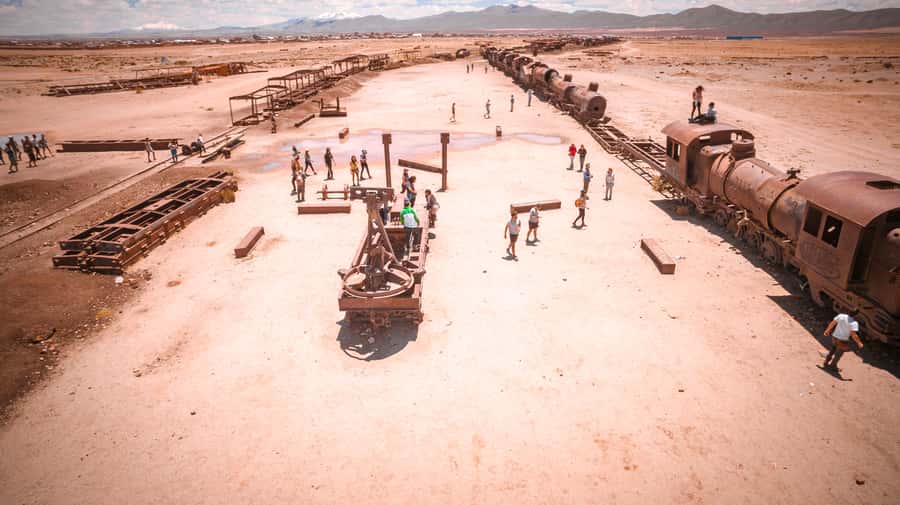
The first stop is Uyuni’s Train Cemetery, just outside the city. Rusting locomotives from the eighteenth and early twentieth centuries sit in the open air, surrounded by the dry plain. It is a compact stop, but the old engines make excellent subjects for photographs, especially if you enjoy stark industrial shapes against empty sky.
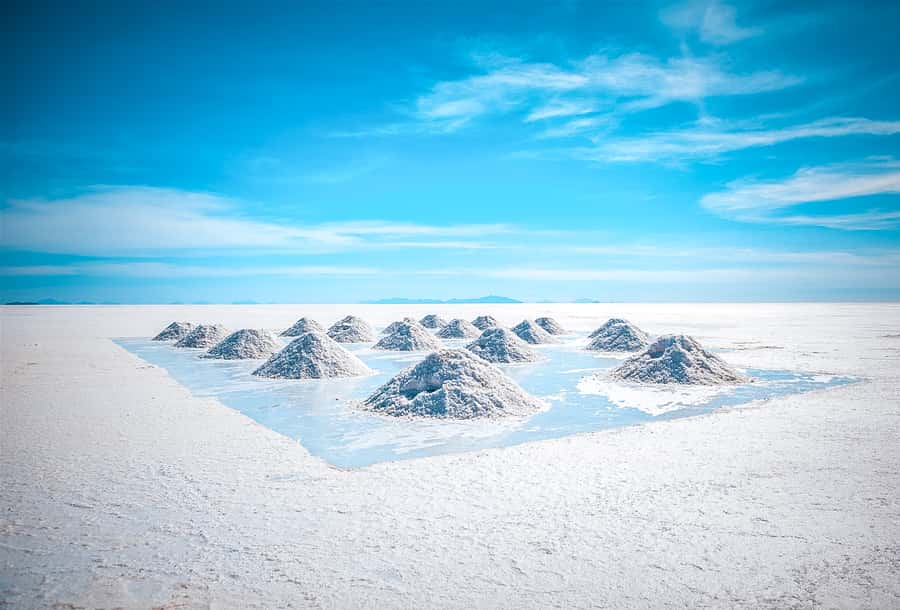
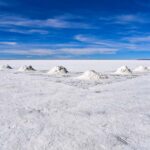
From there, you go to Colchani, a small settlement tied to salt production. You can see how salt is gathered and processed, then take a short walk through the artisanal market and museum. This stop adds human context to what can otherwise feel like a purely natural attraction. The market is also a practical place to look for small souvenirs, though you should not expect a long shopping session.
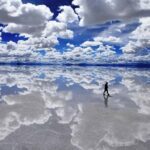
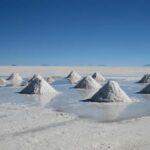
Then comes the main event: the Uyuni Salt Flats. At 3,663 meters above sea level and covering about 12,000 square kilometers, the flats are hard to grasp from photographs. The surface can appear almost perfectly white and flat, but the route includes several distinct stops.
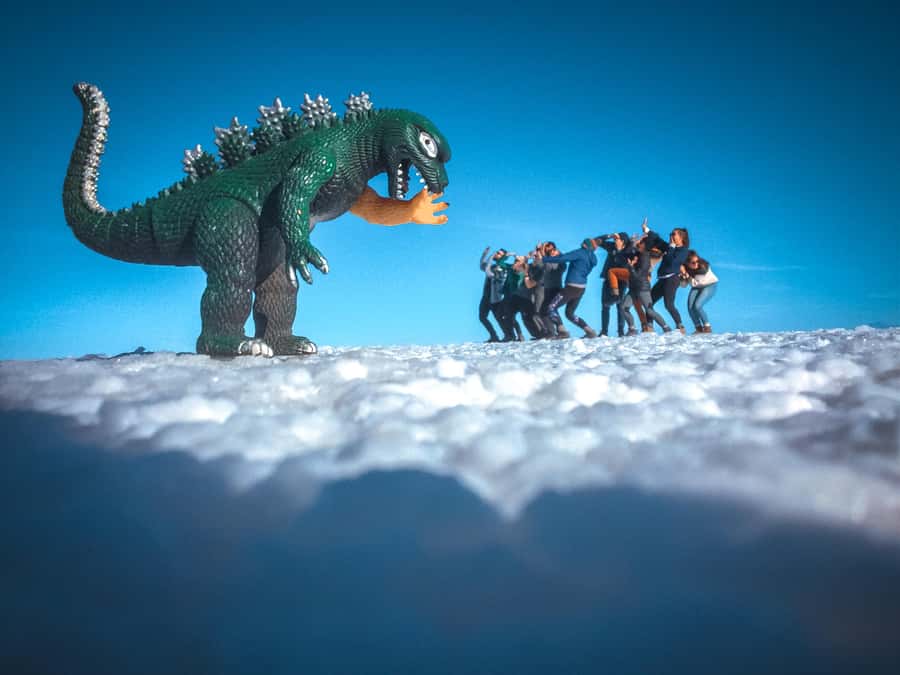
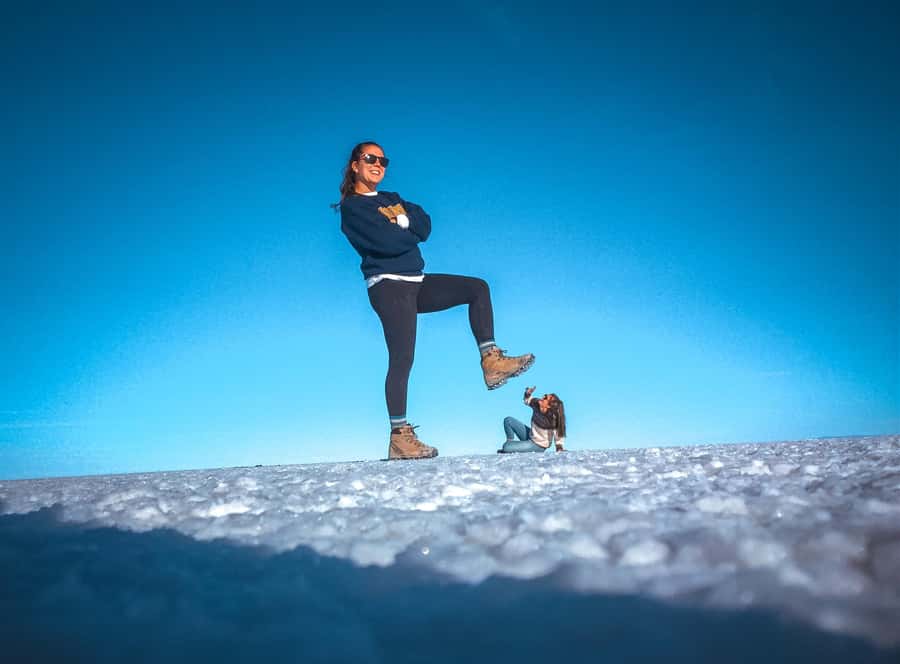
You visit salt eyes, natural openings in the crust where water and minerals show through. The Salt Hotel-Museum is built entirely from salt blocks, including its walls and structural features. You also stop at the Dakar Monument and the flags of the world, two playful photo stops that break up the vast emptiness.
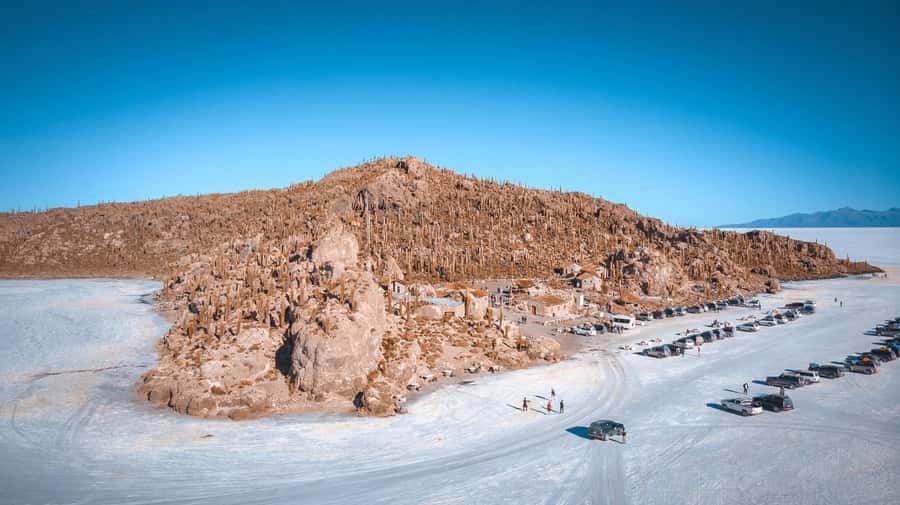
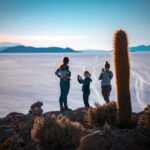
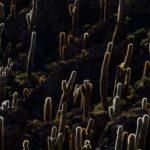
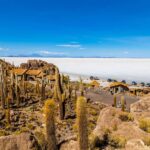
The most memorable stop is Incahuasi Island. It rises from the salt flat with giant cacti and provides a broad view across the white plain. The contrast is almost comic: a dry island covered in cactus in the middle of what looks like a frozen sea.
During the rainy season, from January through April, Incahuasi Island may not be accessible. The route may also use a different overnight location when rain affects the roads. If the island is important to you, ask about conditions before departure rather than assuming it will be included.
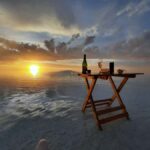
The day ends with sunset and a glass of wine before dinner. That sounds leisurely, but remember that sunset temperatures can drop quickly at this altitude. Keep your warm layer close instead of burying it in your luggage.
Day Two: flamingo lagoons and the Red Lagoon
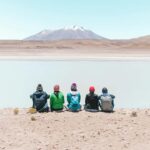
After breakfast, the vehicle heads toward the Chiguana area and the Ollague lookout point. The scenery becomes less about one huge white surface and more about open volcanic country, colored earth, and distant peaks.
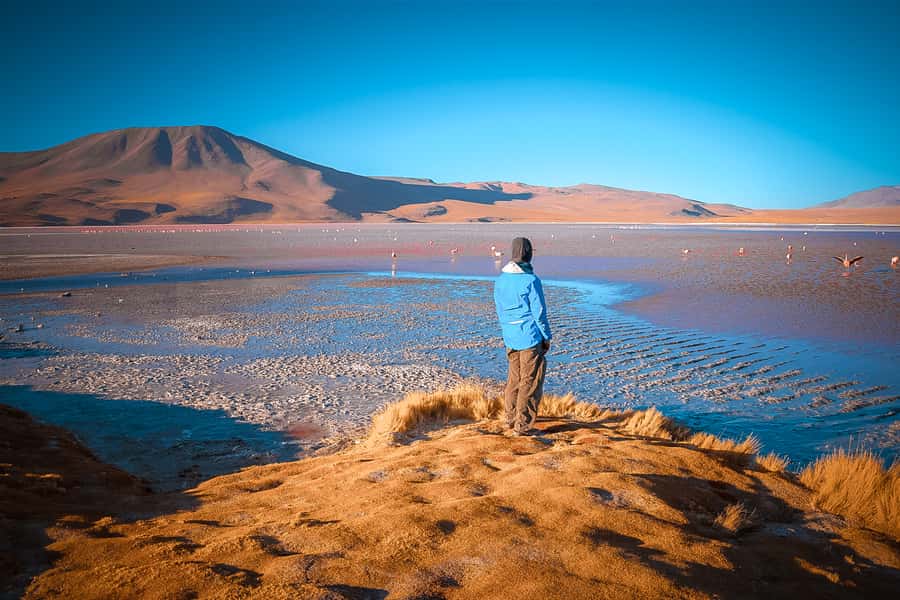
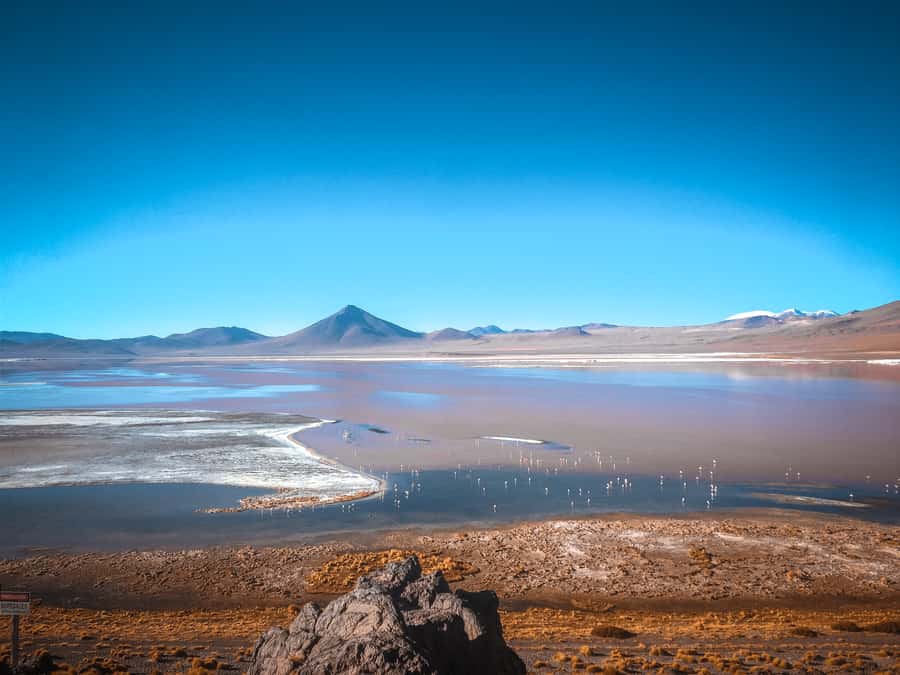
The main stops are Cañapa, Hedionda, and Chiarcota lagoons. These high Andean waters are known for flamingoes, so keep your eyes open around the shorelines. The route later reaches the Red Lagoon, where three flamingo varieties are identified: Chilean, James, and Andean.
The lagoons are valuable because they show how much life exists in this seemingly severe part of Bolivia. You are not just driving from one photo stop to another; you are seeing birds feeding in mineral-rich water against a backdrop of desert and volcanoes.
Lunch is included, but meals should be treated as simple expedition food rather than restaurant dining. The tour includes two lunches, two dinners, and two breakfasts across the full route. Drinks and snacks are not included, so carry supplies from Uyuni and keep some Bolivianos available for purchases.
Later, the road crosses the Siloli Desert, with its strange rock shapes and the famous Stone Tree. The formations look as if wind and erosion have carved them into sculptures. This is one of the places where the long drive pays off: the scenery changes without warning, and the rock colors become more varied as the day goes on.
The overnight stay is in Huayllajara, near the Red Lagoon. The accommodation is basic, with a shared six-bed room for your Jeep group and shared toilets. Cold conditions are part of the deal. One useful warning is that warm water is not assured, so pack wipes, a small towel, and toiletries rather than expecting a comfortable hotel bathroom.
Day Three: geysers, hot springs, and the Chilean border
The final morning starts very early. You head to Sol de Mañana, an active volcanic area filled with fumaroles, bubbling mud, smoking holes, and strong sulfur smells. The ground is part of the attraction, so follow the guide closely and do not wander around the steaming areas on your own.
The geysers are most dramatic in the cold morning air, when steam rises clearly from the ground. This is also the toughest morning physically. You are already tired from two days of rough roads, and the high altitude can make even short walks feel harder than expected.
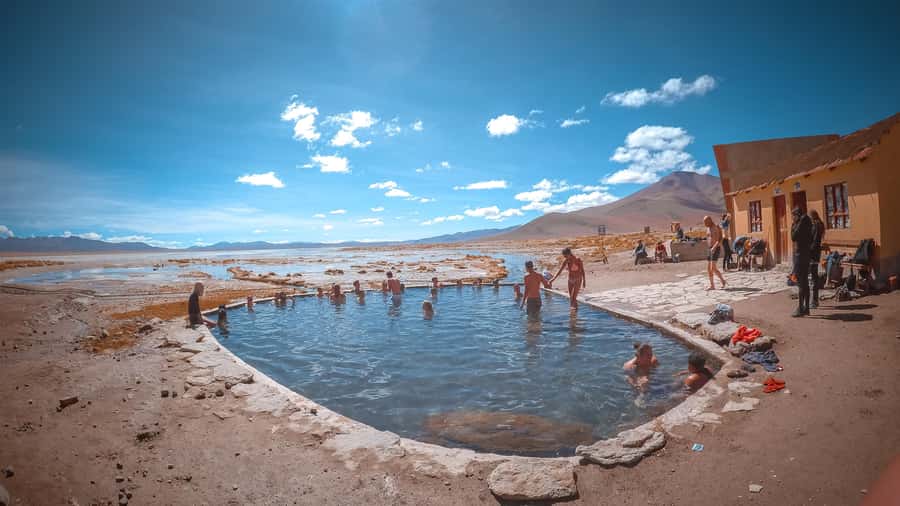
Next comes the Polques hot spring. For 6 Bolivianos, you can bathe while looking out across the surrounding high desert. The water offers a welcome break from the cold, though you should bring a towel and remember that changing facilities may be basic.
The route continues through the Salvador Dalí Desert, named for its unusual rock formations and their resemblance to surrealist paintings. The setting includes multicolored volcanic rock and broad views of nearby peaks. It is a good reminder that this trip is about much more than the salt flats.
The last major scenic stop is the viewpoint over the Green Lagoon, White Lagoon, and Licancabur Volcano. These sights appear together in one broad panorama, with the volcano forming a strong visual anchor behind the colored waters. The stop is brief compared with the scale of the view, so have your camera ready before leaving the vehicle.
Guides assist with the Bolivian border crossing at about 10 a.m. The planned arrival in San Pedro de Atacama is 1:30 p.m., with drop-off at the town’s main square. That central ending is useful if you have lodging nearby or need to continue into town on foot.
You are responsible for the documents needed to enter Chile. The provider does not take responsibility for Chilean visa requirements, so check your own nationality’s rules before booking. At the Bolivian border, you may also need to pay a 15-Boliviano migration tax. Carry cash.
What the $419 price really includes
The $419 fare has solid practical value if you want to connect Uyuni and San Pedro in one trip. It includes:
- A 4×4 vehicle and driver
- An English- and Spanish-speaking guide
- The transfer into San Pedro de Atacama
- Two breakfasts, two lunches, and two dinners
- Two nights of shared hostel accommodation
The remote setting explains why transportation matters so much. You are not moving between ordinary towns with regular buses. The 4×4 carries you over rough routes and links several remote sights that would be difficult to reach alone.
The weak point is comfort. The first night is described as Atulcha Salt Hostel, in a shared six-bed room with shared toilets. The day-by-day schedule refers to a hotel in Ajencha, so confirm the exact first-night location before departure. The second night is at a basic hostel in Huayllajara, also in a shared six-bed room.
Budget extra money for the Eduardo Avaroa Reserve entry, listed at 150 Bolivianos, the Incahuasi entrance at 30 Bolivianos when the island is open, the hot springs at 6 Bolivianos, and possible toilet charges listed at 30 Bolivianos. You should also carry at least 150 Bolivianos for personal spending, plus money for snacks and drinks.
Only Bolivianos can be used during the trip. Do not rely on dollars, Chilean pesos, or a card once you leave Uyuni. The listed fees can vary in practical importance depending on seasonal access, but cash is still essential.

Cold nights, shared rooms, and altitude
The main comfort issue is not the 4×4. It is the accommodation. Six people from the Jeep group share a room, toilets are shared, and hot water may not be available. Basic bedding is provided by the hostels, but a sleeping bag is not included.
Pack thermal layers, a warm hat, gloves, thick socks, and a sleeping bag if you own one. Toiletries are also excluded. A small headlamp, water bottle, and compact towel would be sensible additions, though only a passport or ID card is formally required.
The salt flats sit at 3,663 meters, and the route continues through even higher-feeling terrain. The tour is not suitable for people with altitude sickness or back problems. The long drives, rough roads, cold, and early start make this a poor choice if you need a soft bed and a predictable schedule.
It is also not suitable for people over 95, and pets are not allowed. You should be comfortable getting in and out of a 4×4 and spending long stretches on the road.
Who will get the most from this trip
I would choose this route if you want to see the major Uyuni sights and reach San Pedro without returning to Uyuni. It suits people who value scenery, efficient transport, and a full schedule more than privacy or comfort.
It is especially useful for an itinerary moving from Bolivia into Chile. Ending in San Pedro’s main square saves a separate bus or transfer booking and gives you an afternoon arrival rather than a late-night finish.
I would hesitate if you are sensitive to altitude, dislike shared rooms, or need reliable hot water. The journey is efficient, but it is not gentle. The guide and driver receive the strongest praise, and the range of sights is a major strength; the hostels are the part that demands the most adjustment.
You can cancel up to 24 hours before departure for a full refund, and the reserve-now, pay-later option keeps your plans flexible. Still, check your Chilean entry documents before paying. A flexible booking does not solve a visa problem at the border.
FAQ
Where does the tour start and finish?
The tour starts in Uyuni, Bolivia, and finishes at the main square in San Pedro de Atacama, Chile. Planned arrival in San Pedro is 1:30 p.m. on the third day.
What time is pickup in Uyuni?
Hotel pickups are scheduled between 10:15 and 10:30 a.m. You should wait in your hotel lobby. The tour itself starts at about 10:40 a.m.
Can I be picked up at Uyuni Airport?
Airport pickup is available if you provide your flight time and airline name in advance. If your hotel is not on the pickup list, go to the office on the corner of Colón Street and Camacho at 10 a.m.
Is Incahuasi Island always included?
No. During the rainy season, from January through April, road conditions may prevent access to Incahuasi Island. The overnight location can also change during this period.
What accommodation is included?
Both nights use basic shared accommodation in six-bed rooms with your Jeep group and shared toilets. The first night is identified as Atulcha Salt Hostel, while the day-one schedule refers to Ajencha, so confirm the exact location before departure. The second night is in Huayllajara.
Which costs are not included?
You pay separately for the Incahuasi entrance, Eduardo Avaroa Reserve entrance, hot springs, toilets along the route, drinks, snacks, toiletries, a sleeping bag, personal expenses, and a possible 15-Boliviano Bolivian migration tax.
Do I need a visa for Chile?
You are responsible for arranging any Chilean visa or entry documentation required for your nationality. The provider does not take responsibility for those requirements.
What should I bring?
Bring your passport or ID card, warm clothing, toiletries, cash in Bolivianos, and a sleeping bag if you want more warmth at night. Drinks and snacks are not provided.
My call: book it for the route, not the rooms
Book this trip if your priority is seeing the salt flats, lagoons, flamingoes, geysers, and volcanic scenery while traveling directly from Uyuni to San Pedro. The guide, driver, included meals, small group, and central Chilean drop-off make the $419 price reasonable.
Skip it if shared six-bed rooms, cold nights, and basic facilities would sour the experience. Before booking, check the Chilean entry rules, ask about rainy-season access to Incahuasi, and arrive with enough Bolivianos for every listed fee. That preparation will make the rough edges much easier to accept.
More 3-Day Experiences in Uyuni
More Tours in Uyuni
More Tour Reviews in Uyuni
Not for you? Here's more nearby things to do in Uyuni we have reviewed
Uyuni Salt Flats Tours, compared
 ★ 4.5From La Paz: Uyuni Salt Flat Tour & Overnight Roundtrip BusFrom $275327 reviews
 ★ 4.5Uyuni tour express from La Paz by busFrom $269172 reviews
 ★ 4.4From Uyuni: Red Lagoon & Uyuni Salt Flats 3-Day Guided TourFrom $354160 reviews
 ★ 4.3La Paz: 5-Day Uyuni Salt Flats by BusFrom $486153 reviews
Browse the lists this tour appears in