
Reviewed · ANDES CLIMBING & TREKKING
From La Paz: Huayna Potosí 2-Day Climbing Trip
Six thousand meters is not a casual day out. From La Paz, this two-day climb takes you by road to Paso Zongo, then on foot to a glacier camp and up Huayna Potosí’s 6,088-meter summit. I like the clear progression from a rock trail to crampon work, and I like the guide ratio of roughly one guide for every two people in the shared group.
You also get a real mountain camp, close views of glaciers, and a summit panorama stretching from Illimani to Illampu. The main drawback is simple: you need strong fitness and serious acclimatization before arriving. The early start, thin air, steep snow, and 9-to-13-hour summit day leave little room for casual preparation.
In This Review
- Key points before you book
- Why Huayna Potosí Makes a Serious Two-Day Goal
- From La Paz to Paso Zongo at 4,700 Meters
- The Three-to-Four-Hour Trek to High Camp
- Pala Chica and the First Steep Snow Section
- The Final Ridge at 6,088 Meters
- Descending to La Paz After a Very Long Day
- What You Get for the $319 Price
- Equipment, Clothing, and the Gear Check
- Acclimatization, Medication, and Physical Demands
- Shared or Private: Which Option Fits You?
- Who Should Book Huayna Potosí?
- My Call: Book It If You Are Ready for the Altitude
- FAQ
- How high is the summit of Huayna Potosí?
- How long is the Huayna Potosí trip?
- Is previous ice-climbing experience required?
- What climbing equipment is provided?
- Do I need to bring a sleeping bag and backpack?
- Are meals and accommodation included?
- Can I join a private group?
- Can I cancel the trip for a refund?
Key points before you book
- A genuine 6,000-meter climb: Huayna Potosí reaches 6,088 meters, with a final exposed ridge and glacier travel.
- Acclimatization is essential: Six to eight days between 3,000 and 5,000 meters is recommended before the climb.
- Hands-on mountain support: Shared groups use about one guide for every two climbers; private trips use one guide per person.
- Core climbing gear is provided: Expect double mountaineering boots, crampons, an ice ax, harness, helmet, cold-weather layers, and ropes.
- The summit day is long: Allow 9 to 13 hours for the climb, descent to high camp, and return to base camp.
- The $319 price covers the essentials: Transport, meals at camp, a cook, one night’s accommodation, a guide, and safety equipment are included.
Why Huayna Potosí Makes a Serious Two-Day Goal
Huayna Potosí is a useful first step into high-altitude mountaineering because the route combines several kinds of movement. You begin on a rocky mountain path, then move onto a glacier, cross steep snow and ice, and finish along an exposed ridge.
That variety is what makes the trip special. You are not simply walking uphill for two days. You are learning how a summit climb works, with crampons, a harness, an ice ax, ropes, and a guide managing the more technical sections.
The summit reaches 6,088 meters, high enough to make every physical effort count. You need to be honest with yourself here. A strong hiking background helps, but hiking at lower altitude is not the same as climbing above 6,000 meters after a short night.
I especially like the small-group setup. A shared group has about two climbers per guide, while the private option gives you one guide per person. That ratio matters when you are tired, cold, or moving at different speeds. One participant with extensive hiking experience but no previous ice-climbing background praised the guide’s ability to adjust the pace. That is exactly the kind of support you want on a demanding climb.
A few more La Paz tours and experiences worth a look
From La Paz to Paso Zongo at 4,700 Meters
Day one starts with about a 1.5-hour drive from La Paz. The road climbs from roughly 3,600 meters to Paso Zongo at 4,700 meters, so you gain altitude quickly before the main walking even begins.
At Paso Zongo, you stop for lunch in one of the refuges. This is a practical pause, not a grand sightseeing stop. You can eat, sort your clothing, and make sure your pack is ready before leaving the road behind.
The altitude is already serious at 4,700 meters. If you have not acclimatized properly, you may feel the effects before reaching high camp. That is why the recommended preparation is six to eight days spent between 3,000 and 5,000 meters. Austria Peak, at about 5,300 meters, is given as one example of a suitable acclimatization climb.
The quick road ascent is efficient, but it also means you cannot use the first day to gradually ease into the altitude. You should arrive in Bolivia with time already set aside for acclimatization rather than treating this climb as an immediate add-on from La Paz.
The Three-to-Four-Hour Trek to High Camp
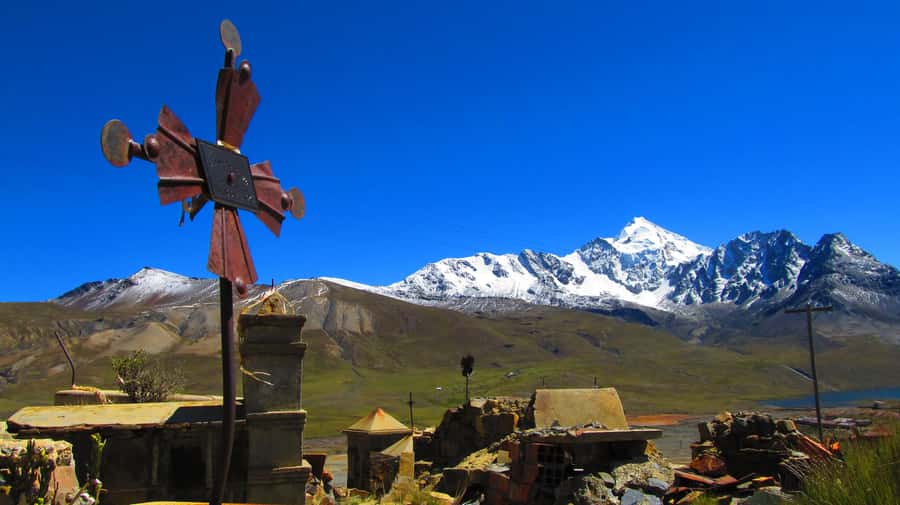
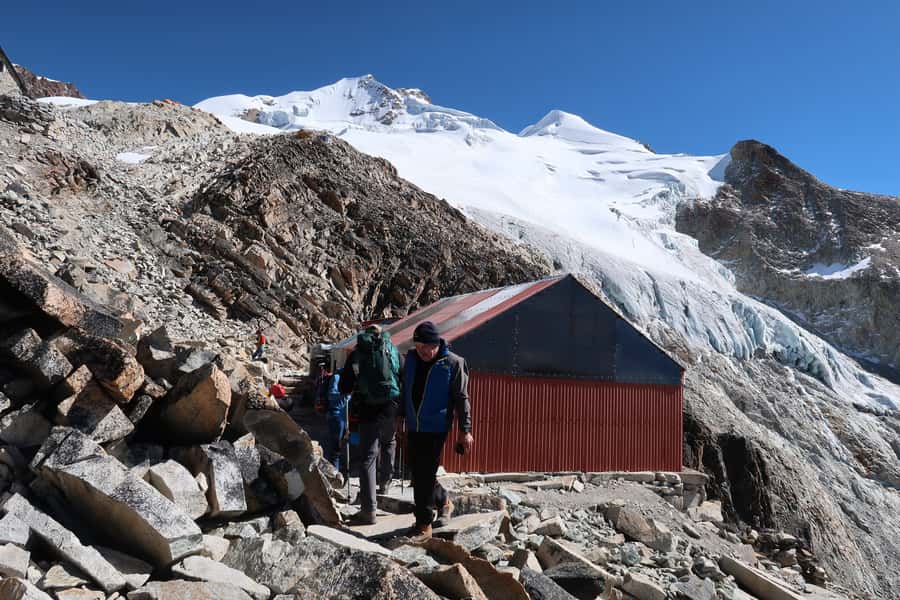
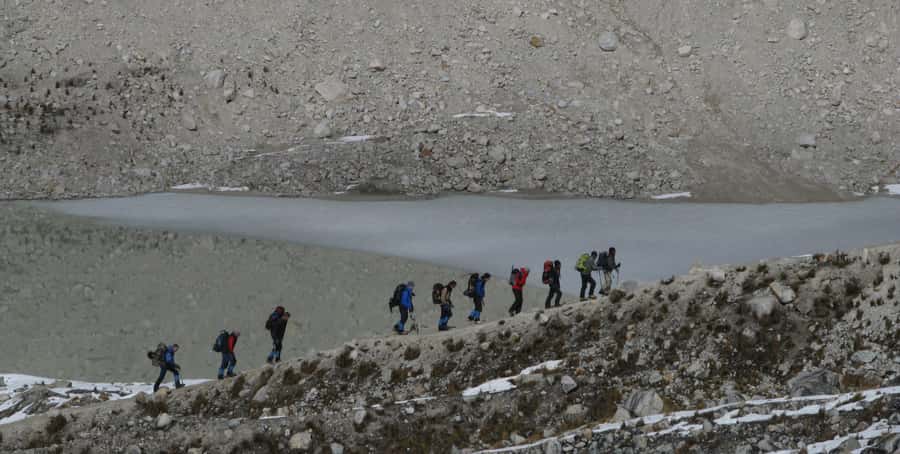
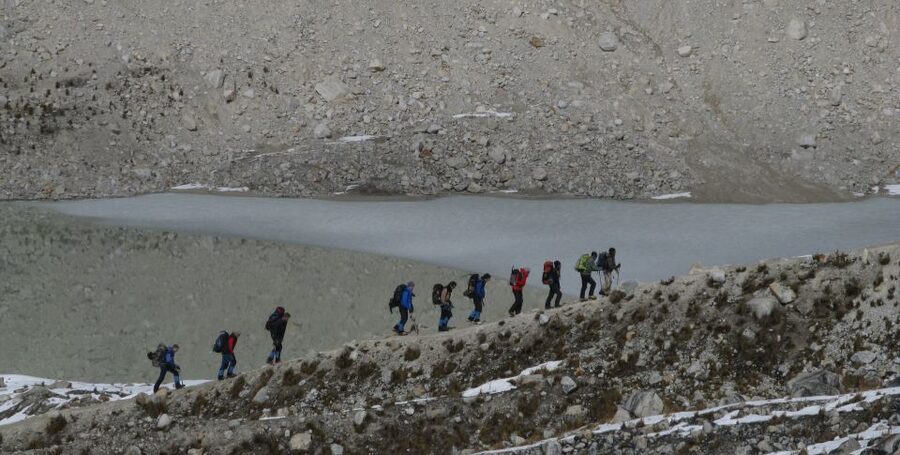
From Paso Zongo, you walk for about three to four hours on a well-used rocky path. The route leads to high camp at 5,150 meters, on a rock buttress at the base of the glacier.
This section is not yet the technical glacier climb, but it is still hard work. You are walking uphill at an altitude where even a modest pace can feel slow. I would rather have a steady guide here than rush and waste energy needed for the summit day.
High camp’s position is one of the trip’s best features. You are right beside the glacier, with the route’s snow and ice ahead of you. It gives the climb a clear sense of place: you are not sleeping in town and making a quick morning transfer to the mountain. You are spending the night at the foot of the real objective.
Once you arrive, the schedule is basic and sensible. You prepare your gear, eat dinner, drink as much as you can, and rest in the refugio. The early night is important because the next day begins before dawn and may last 9 to 13 hours.
Do not expect luxury. The refugio is there to provide shelter and a place to sleep, not comfort after a long day at altitude. Bring warm clothing and take the evening seriously. Your job is to eat, hydrate, organize your equipment, and sleep.
Pala Chica and the First Steep Snow Section
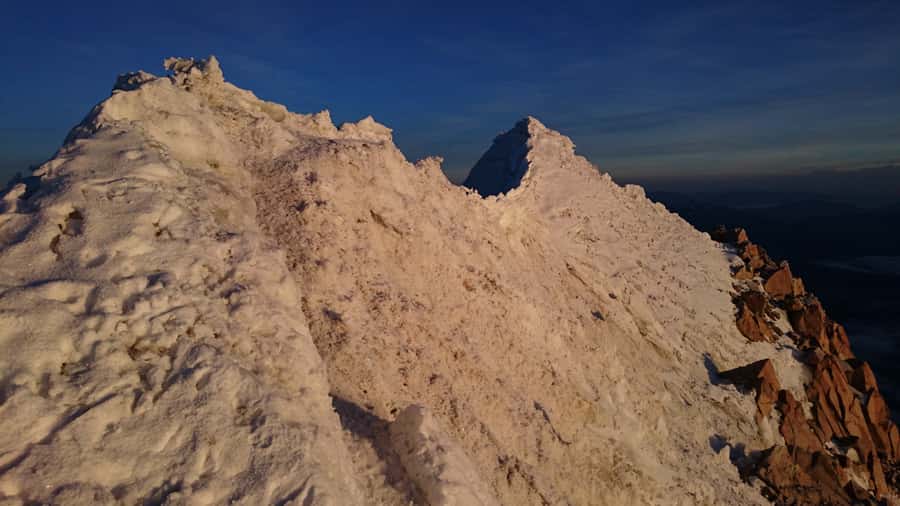
The second day begins early. You put on your warm layers and climbing equipment, then start across the glacier with crampons fitted to your boots.
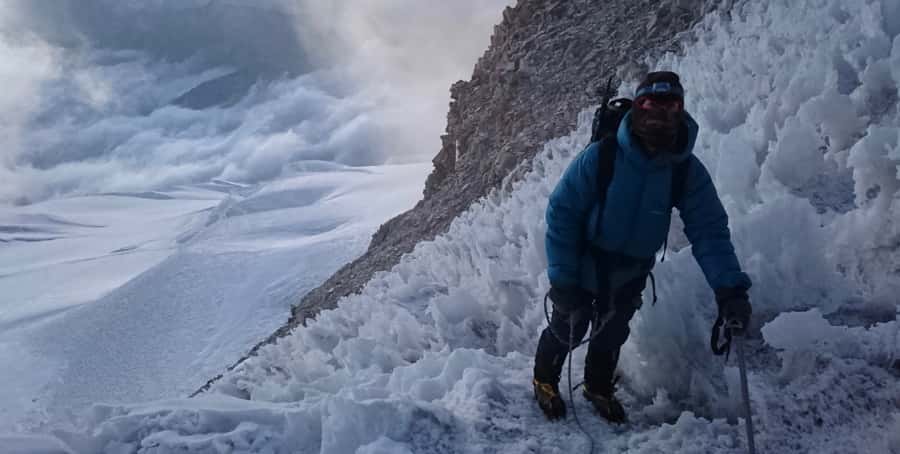
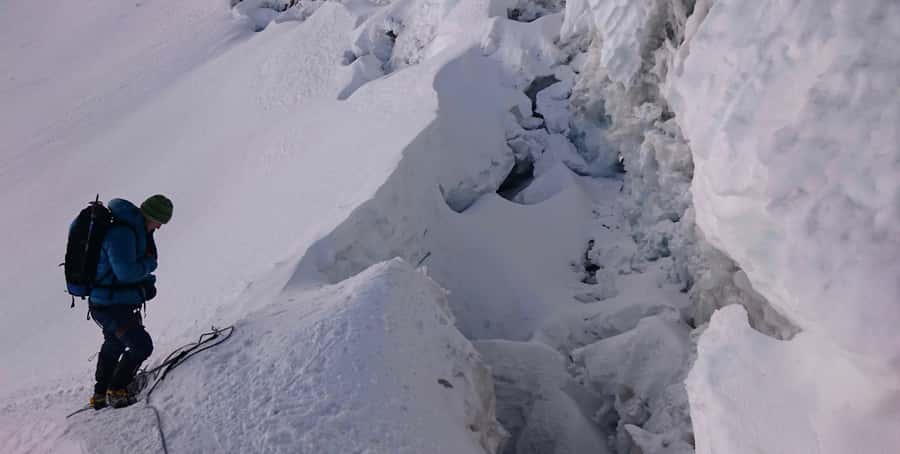
The first major obstacle comes at about 5,600 meters. Called Pala Chica, it is a small ice and snow wall roughly 10 meters high. The route passes through this steep section before continuing across the glacier toward 6,000 meters.
This is where the trip changes from high-altitude hiking into mountaineering. You will need to use the supplied equipment properly and follow your guide’s instructions. The operator provides an ice ax, crampons, harness, helmet, ropes, and protection for mountain climbing, along with double mountaineering boots and gaiters.
You do not need previous ice-climbing experience in every case. A strong, well-acclimatized hiker may be able to learn the basic movements with guide support. Still, that does not make Pala Chica easy. You are dealing with steep ice and snow at an altitude above most European and North American peaks.
Your guide ratio is particularly valuable here. A guide watching one or two climbers can help with foot placement, rope movement, and pace. In a private group, one-to-one support gives you even more direct attention, though the price and group arrangement may vary by option.
The Final Ridge at 6,088 Meters
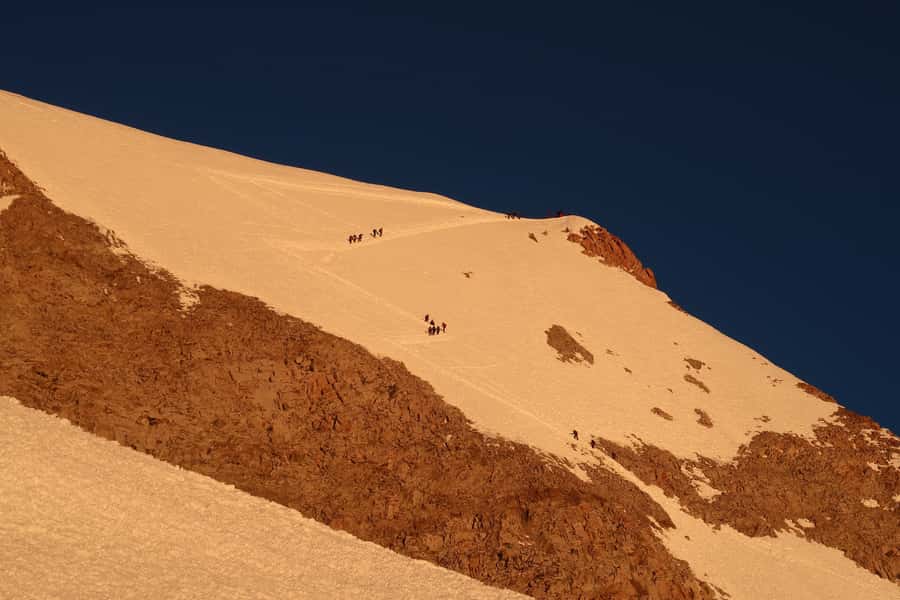
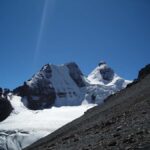
After Pala Chica, you continue up the glacier toward the 6,000-meter mark. From there, you can see the summit at 6,088 meters.
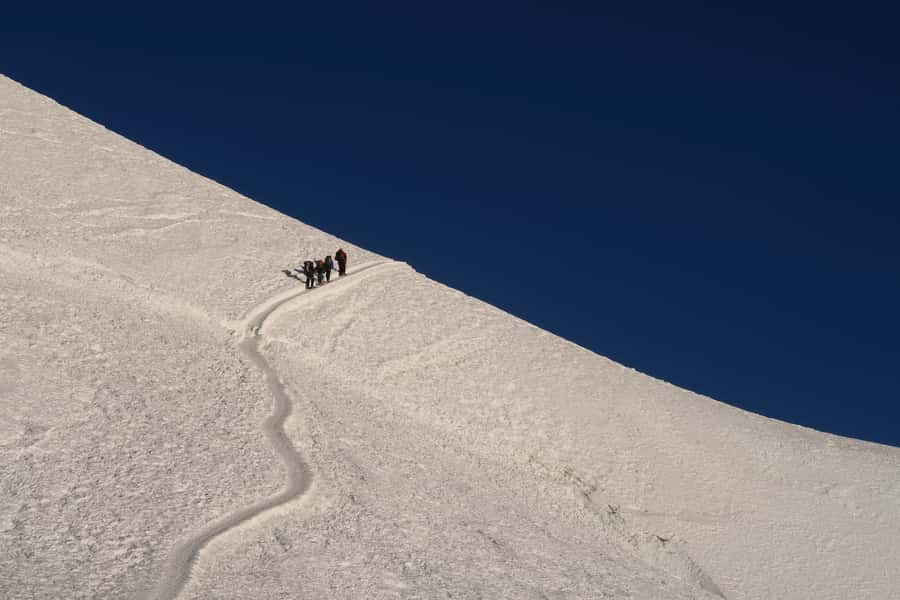
The final section follows an exposed ridge. This is the dramatic finish, but it is also the part that may feel most demanding mentally. You are high, tired, cold, and moving along a narrow-feeling mountain crest with the guide and climbing protection nearby.
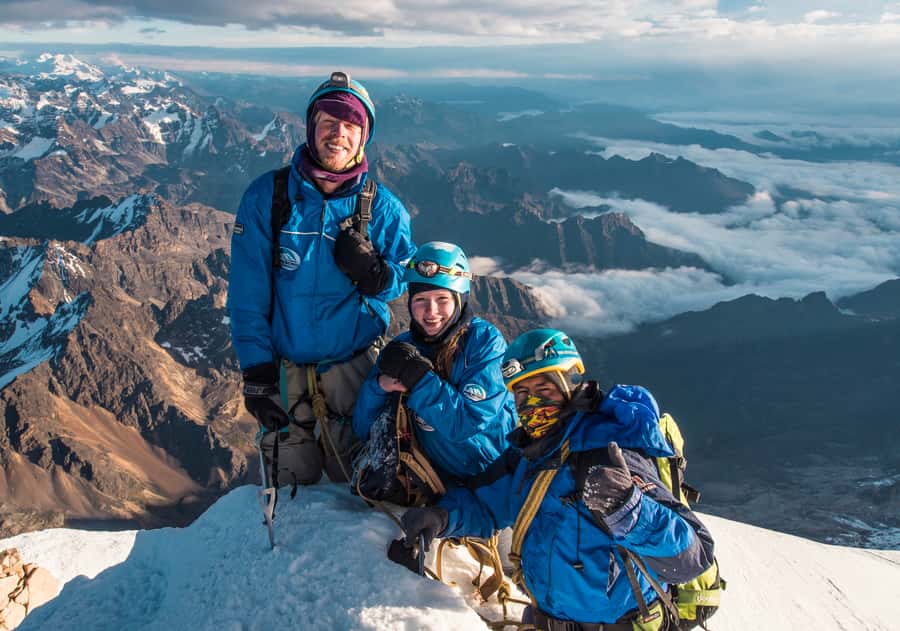
At the summit, the views reach across the Cordillera Real. Illimani rises to the south at 6,439 meters, while Illampu reaches 6,368 meters to the north. Lake Titicaca is also part of the wider view from the region. The summit gives you the kind of broad mountain panorama that makes the difficult preparation worthwhile.
You will have time for summit photographs, but keep the moment practical. At 6,088 meters, lingering too long in the cold is not wise. Take your pictures, appreciate the view, and begin the descent according to your guide’s instructions.
Reaching the summit is the obvious goal, but the descent matters just as much. Fatigue increases the chance of poor footwork, and the route still includes glacier travel and steep sections. A professional guide who adjusts pace is a major advantage on this return journey.


Descending to La Paz After a Very Long Day
You descend the same way to high camp. Once there, you take a short rest, pack your equipment, and continue down to base camp.
The final walk is not a small extra. You have already spent many hours climbing, so the descent from high camp can feel long even though the route is familiar. At base camp, transportation takes you back to La Paz in about an hour.
This return arrangement keeps the trip compact. You do not need a second night on the mountain, but the tradeoff is a very full summit day followed by road travel. You may be exhausted by the time you return to the original meeting point in La Paz.
The schedule suits you if you want to fit a major climb into a short trip. It does not suit you if you prefer slow mountain days, generous recovery time, or a relaxed sightseeing schedule afterward.
What You Get for the $319 Price
At $319 per person, the trip includes the parts that would be difficult and costly to arrange alone:
- Professional mountain guide
- Transport from the designated meeting point
- One night in the mountain refugio
- Main meals and drinks at camp
- Cook
- First aid kit
- Emergency oxygen bottle up to high camp
- Climbing equipment
- Free T-shirt at the end
- Free BUFF at the start
The emergency oxygen detail needs careful reading. The bottle is carried only up to high camp for emergencies and is not used during the climb. It is a backup, not a substitute for acclimatization, good judgment, or medical planning.
The price offers good value if you need transport, camp food, a cook, technical gear, and a professional guide. The value is less straightforward if you already own mountaineering equipment or need several add-ons.
A sleeping bag and backpack are available only if booked as add-ons. Porters carrying up to 20 kilograms are also an add-on, and the stated porter cost is one way only. If you do not book those extras, you need to bring your own 50-liter backpack and a sleeping bag rated to -10°C.
Personal insurance is not included. Arrange your own cover and check the terms carefully for high-altitude climbing. Hotel pickup is also not included, and the meeting point can change depending on the option you choose.
Equipment, Clothing, and the Gear Check
The provided equipment is a strong part of this trip. You receive double mountaineering boots, crampons, an ice ax, harness, helmet, gaiters, thick gloves, a balaclava, extra jackets, cold-weather pants, and a headlamp if needed.
Ropes and mountain protection are also supplied. Headlamp batteries are not included, so bring the correct batteries if you plan to use one provided by the operator.
You still need to bring several personal items:
- Passport or ID card
- Sunglasses
- Sunscreen
- Snacks for the climb
- Socks
- Thermal clothing
- Warm clothing
- Thermal underwear
- Thin liner gloves
- Sleeping bag
- 50-liter backpack
The gear check may happen the day before the climb or about 45 minutes before departure. Take it seriously. Try on the boots, check the layers, and ask about anything that feels wrong before reaching the mountain.
The provided thick gloves do not replace thin liner gloves. Your fingers can become uncomfortable when you need to handle straps, ropes, or an ice ax, so the extra hand layer is a small but useful item.
Acclimatization, Medication, and Physical Demands
This climb requires more than general fitness. You need to be acclimatized to altitude, and the suggested preparation is six to eight days between 3,000 and 5,000 meters.
The local partner suggests acetazolamide, also called Diamox, at 125 milligrams in the morning and 125 milligrams in the evening before the climb. Treat that as local guidance, not a personal medical order. The trip is not suitable for people with heart problems, pre-existing medical conditions, mobility impairments, or pregnancy.
You should also expect a short night before a long summit push. Even fit climbers are not at their best after an early wake-up, cold temperatures, and limited sleep. The most positive assessment of the trip also came with a clear warning: you need very good physical condition and proper acclimatization.
I would book this only after spending time at altitude first. Arriving in La Paz and going straight onto Huayna Potosí is a poor plan. The mountain may be technically manageable for a capable beginner in ice climbing, but it is not forgiving of weak preparation.
Bad weather can cancel the climb, and there is no refund if the tour is canceled for that reason. You can cancel up to 24 hours in advance for a full refund under the normal cancellation terms, but weather cancellation is treated differently.
Shared or Private: Which Option Fits You?
The shared group option offers a guide ratio of about one guide to two climbers. That is already a close arrangement and should work well if you are comfortable sharing the pace and decisions with another person.
The private option assigns one guide to each participant. I would choose private if you want the most direct coaching, need a highly specific pace, or feel uncertain about the technical sections. It may also be useful if you are traveling alone and want the entire climb organized around your ability.
English- and Spanish-speaking guides are available. The group type can be private or small group, but the meeting point may vary by the option you book.
Neither format removes the physical challenge. A private guide can improve support and pacing, but no guide can remove the effects of 6,000-meter altitude or turn an unacclimatized climber into a safe summit candidate.
Who Should Book Huayna Potosí?
I would recommend this trip to a strong hiker who has already spent several days at altitude and wants to learn basic glacier and mountaineering skills with professional help.
It is also a good fit if you value a small guide ratio, want technical equipment supplied, and prefer a compact two-day schedule from La Paz. The route gives you a clear goal, dramatic mountain views, and a real summit attempt without requiring you to organize transport, camp meals, climbing ropes, and a guide separately.
I would not recommend it as a first Bolivian activity at altitude. Start with acclimatization, listen to your body, and understand that the 9-to-13-hour summit day is the center of the trip, not a minor part of it.
My Call: Book It If You Are Ready for the Altitude
Huayna Potosí offers a strong mix of access, guide support, glacier training, and summit drama. The helpful guide service, adaptable pacing, good-quality equipment, and small groups are the biggest reasons to consider it.
Book it if you have the required acclimatization and fitness, and if you are comfortable with an early start, a short night, steep snow, and an exposed ridge. Skip it for now if you are still adjusting to La Paz, have medical concerns, or want a gentle mountain outing.
For a prepared climber, $319 is a fair price for the guide, transport, camp, meals, and core equipment. Just budget for insurance, snacks, missing clothing layers, and any backpack, sleeping bag, or porter add-ons you need.
FAQ
How high is the summit of Huayna Potosí?
The summit is 6,088 meters above sea level. The route reaches about 5,600 meters at Pala Chica and continues to 6,000 meters before the final summit section.
How long is the Huayna Potosí trip?
The activity lasts two days. Day one includes the drive to Paso Zongo and the three-to-four-hour trek to high camp. Day two includes a 9-to-13-hour climb, descent, and return to La Paz.
Is previous ice-climbing experience required?
The trip is designed to build on current climbing experience, and a strong hiker without previous ice-climbing experience may be able to take part with guide support. Good physical fitness and proper acclimatization are required.
What climbing equipment is provided?
The equipment includes double mountaineering boots, an ice ax, crampons, harness, helmet, gaiters, thick gloves, a balaclava, extra jackets, cold-weather pants, ropes, and mountain protection. A headlamp may be provided if needed, but batteries are not included.
Do I need to bring a sleeping bag and backpack?
Yes. A 50-liter backpack and a sleeping bag rated to -10°C are required. Both may be booked as add-ons, or you can bring your own.
Are meals and accommodation included?
Main meals and drinks at camp, a cook, and one night of accommodation in the high-camp refugio are included. Snacks for the climb are not included.
Can I join a private group?
Yes. Private and small-group options are available. Shared groups use about one guide for every two participants, while private trips use one guide for each participant.
Can I cancel the trip for a refund?
You can cancel up to 24 hours in advance for a full refund under the stated cancellation terms. There is no refund if the tour is canceled because of bad weather.
More 2-Day Experiences in La Paz
More Tour Reviews in La Paz
Not for you? Here's more nearby things to do in La Paz we have reviewed

Andes Climbing & Trekking, compared
 ★ 4.7La Paz: Charquini Mountain Guided HikeFrom $39287 reviews
 ★ 4.4From La Paz: Day Trip to Chacaltaya and Moon ValleyFrom $4065 reviews
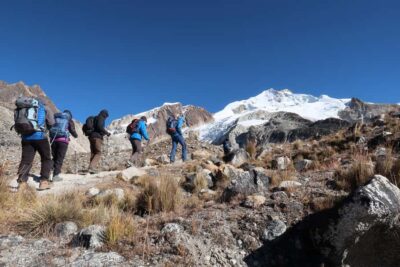 ★ 4.9From La Paz: Huayna Potosí Mountain 3-Day Ice-Climbing TripFrom $34421 reviews
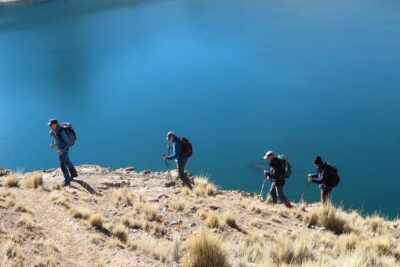 ★ 4.8From La Paz: Austria Peak One-Day Climbing TripFrom $1888 reviews
Browse the lists this tour appears in