
Reviewed · UYUNI SALT FLATS TOURS
Uyuni Salt Flat: Sunrise & Starlight Experience
Stars come first on the salt flat. I like the 3:30 a.m. departure because it gives you both a dark-sky stop and sunrise in one outing, and I like that a guide, 4×4, pickup, entry, and rain boots are included for $59. The catch is the cold—and the mirror effect depends on a thin layer of water, so your photos may not show the famous reflections.
You return to Uyuni around 7:30 a.m., making this a compact way to see the Salar de Uyuni before breakfast. The current public score is 3.1 out of 5 from three ratings, and one verified booking dated March 20, 2025 is marked couldn’t participate in Japanese, with no further detail. I would confirm pickup arrangements before going to bed.
In This Review
- Key points before you book
- Why the 3:30 a.m. start works
- The 20-minute ride from Uyuni to the salt flat
- Starlight across the white salt
- Sunrise reflections and the famous mirror effect
- The 2.5-hour salt-flat stop
- Making the most of the Instagram Moment
- What the $59 price covers
- Cold-weather packing for a pre-dawn departure
- The guide, language, and booking caution
- Who should book this early-morning outing
- My call: book for the combination, not one photograph
- FAQ
- How much does the Sunrise and Starlight Experience cost?
- How long does the experience last?
- Where does pickup take place?
- What transportation is used?
- What is included in the price?
- What should I bring?
- Can I see the mirror effect and stars every time?
Key points before you book
- 03:30 departure: You leave Uyuni in the dark, reaching the salt flat in time for stars and the first light.
- Stars before sunrise: A guide takes you to a suitable place for viewing stars and constellations across the white salt.
- Mirror effect depends on water: A thin layer can reflect the sky, but conditions vary, especially after the dry season.
- 4×4 transport for six: The outing uses an all-terrain truck with space for up to six people.
- Useful inclusions: Pickup, entry, guide, rain boots, first aid supplies, and logistical equipment are covered.
- Bring your own food: Snacks and water are recommended, while food is not included.
Why the 3:30 a.m. start works
This is not a lazy morning excursion. Pickup begins at 3:30 a.m. from Uyuni, so you should be ready before dawn, dressed for very cold conditions, and carrying anything you want during the four-hour outing.
The early start has a clear purpose. You reach the Salar de Uyuni while the sky is still dark, giving you time for the starlight portion before the sun changes the scene. Then you wait for the first rays, rather than arriving after the main colors have passed.
I like this timing because it combines two very different views of the salt flat. At night, the white surface helps frame the sky. At sunrise, the same open space catches soft color and reflections. You get more than a standard sunrise stop without spending an entire day in the salt flat.
The trade-off is sleep. If you have just arrived in Uyuni after a long bus or train journey, this departure may feel punishing. I would book it after a good night’s rest, not on a night when you expect to arrive late.
The stated duration is four hours, with a return around 7:30 a.m. The listed time segments add up to about four hours and 20 minutes, so I would treat the schedule as approximate. Sunrise times and driving conditions can affect the exact return.
You can also read our reviews of more tours and experiences in Uyuni.
The 20-minute ride from Uyuni to the salt flat
The first transfer is listed at about 20 minutes. You are picked up at your hotel or airport and taken in a 4×4 all-terrain truck toward the Salar de Uyuni.
The truck holds up to six people. That is a useful middle ground: smaller than a large coach and more social than a private car. Small-group and private options are available, although you should check how the price changes for a private departure.
A 4×4 matters here because the experience takes place away from ordinary city roads. The vehicle is part of the practical value of the tour, not just a way to get from one photo stop to another. You do not need to arrange a separate transfer, find the salt flat entrance, or work out transport in the dark.
Pickup at an airport is especially handy if it matches your arrival time, but the tour starts at 3:30 a.m. You should confirm that the airport pickup option works with your actual arrival and accommodation plans. Do not assume the vehicle will wait for an unrelated flight delay.
The guide speaks Spanish and English. That is important during the starlight stop, when you will want help identifying stars and constellations rather than simply standing in the cold with a camera pointed upward.
Starlight across the white salt
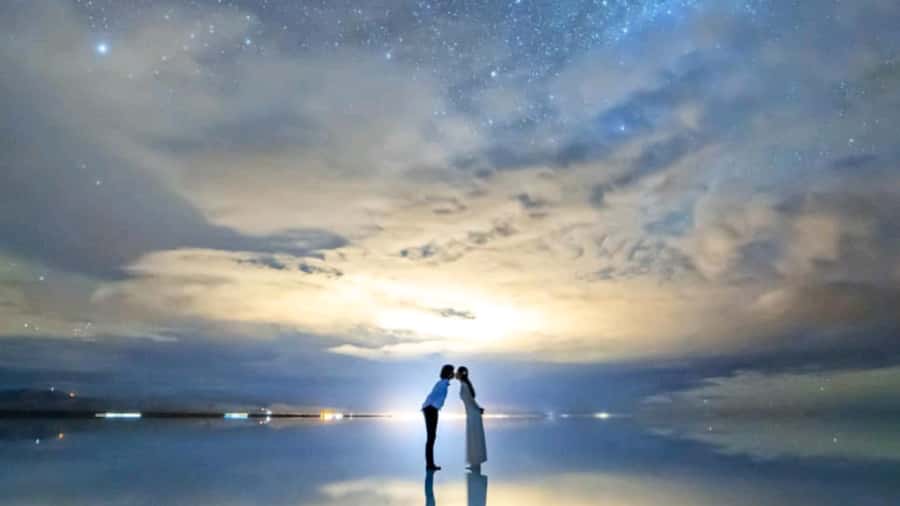
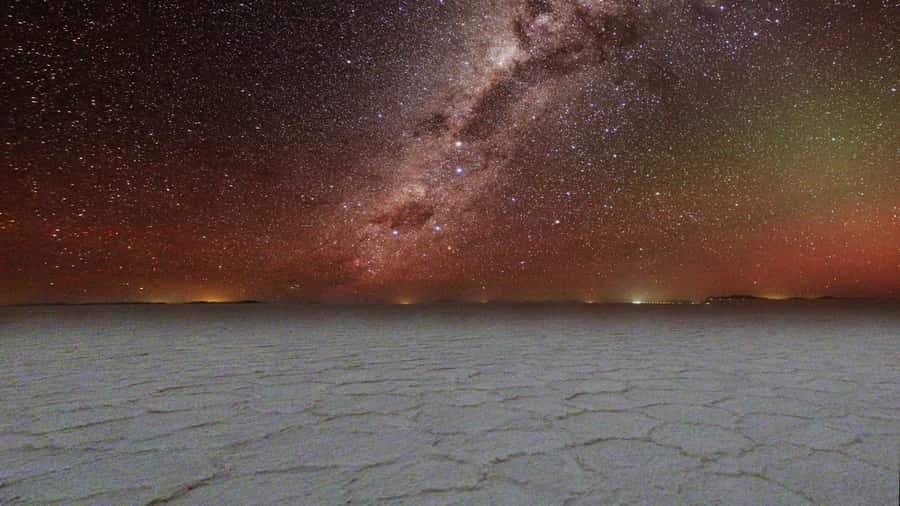
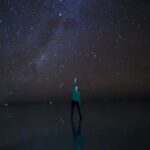
The first main part of the outing is the starlight experience. Your guide takes you to a suitable place on the salt flat and helps you observe stars and constellations across the wide, white surface.
The appeal is the contrast. In daylight, the Salar de Uyuni can feel almost too bright and empty to measure. Before sunrise, the salt becomes a dark foreground beneath the sky. The open horizon gives the view a sense of scale that is hard to get in a city.
I would not book this only for serious astronomy. The description promises guided observation of stars and constellations, but it does not specify a telescope, formal astronomy lesson, or particular constellations. Think of it as a guided night-sky stop in a remarkable setting.
The moon matters. On a full-moon night, extra brightness can reduce the visibility of stars. If stargazing is your main reason for booking, check the lunar phase and choose a darker night when possible. A full moon can still create its own attractive light on the salt, but it works against the darkest sky.
Clouds and weather are also important, though the available details do not promise clear conditions. Your best approach is to treat the stars as a major possibility, not a guaranteed show. The sunrise still gives the outing another strong reason to go.
The cold before sunrise is not a minor issue. Bring warm clothing, a jacket, gloves, and comfortable clothes. You will be outside during the darkest and coldest part of the morning, so fashion should lose this argument to fleece.
Sunrise reflections and the famous mirror effect
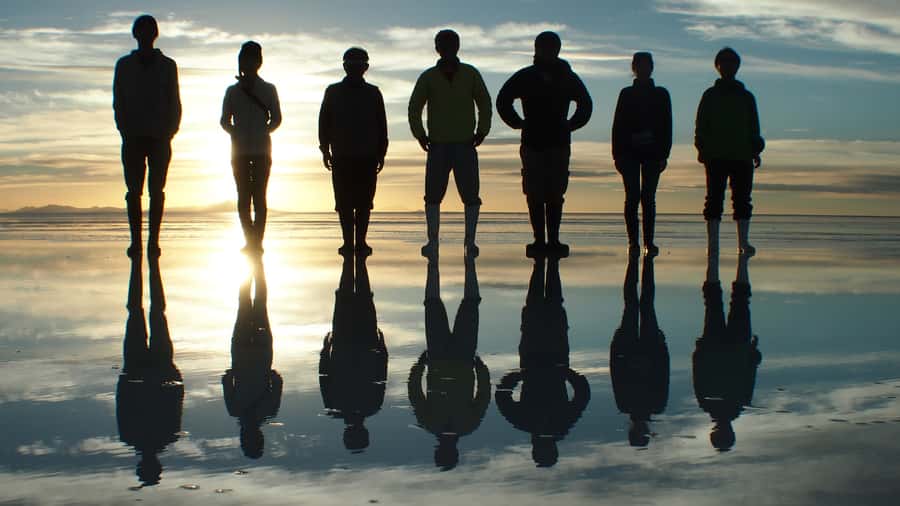
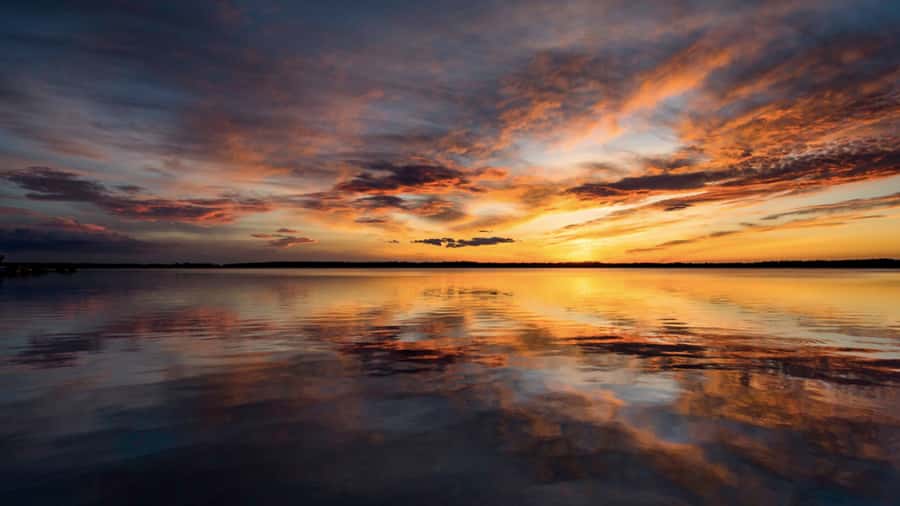
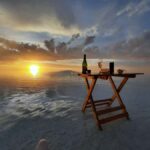
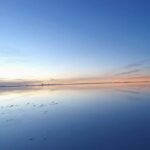
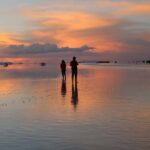
After the night-sky viewing, the tour allows about an hour for sunrise. The first rays can bring unusual colors to the sky, and those colors may reflect in shallow water on the salt.
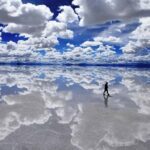
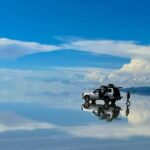
This is the image most people have in mind when they picture the Salar de Uyuni: sky and salt joining into one broad reflective surface. When the conditions cooperate, the horizon can appear to stretch far beyond the usual boundaries of land and sky.
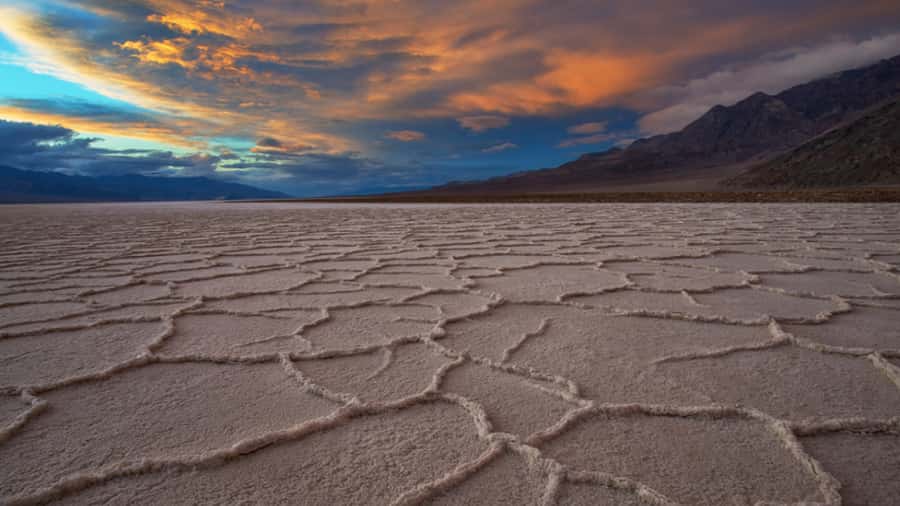
But the mirror effect is not guaranteed. It requires a thin layer of water. The surface can show some reflection at different times of year, yet water levels change with weather. After the dry season, typically around September to November, the amount of water may decrease.
That distinction matters if you are booking mainly for mirror photographs. You may get the reflective effect, but you may also find a dry, bright salt surface. The dry version is still visually striking, but it produces a different kind of picture—more white expanse and horizon, less sky-on-the-ground reflection.
The tour information presents the effect as possible throughout the year when water is present. I would read that as a useful reminder to manage expectations, not as a promise of a wet salt flat on every departure.
Sunrise itself remains worthwhile even without much water. The changing color of the sky gives you a natural subject, and the open salt provides a clean foreground with little visual clutter. You are there for a short window, so have your camera ready before the color begins.
The 2.5-hour salt-flat stop
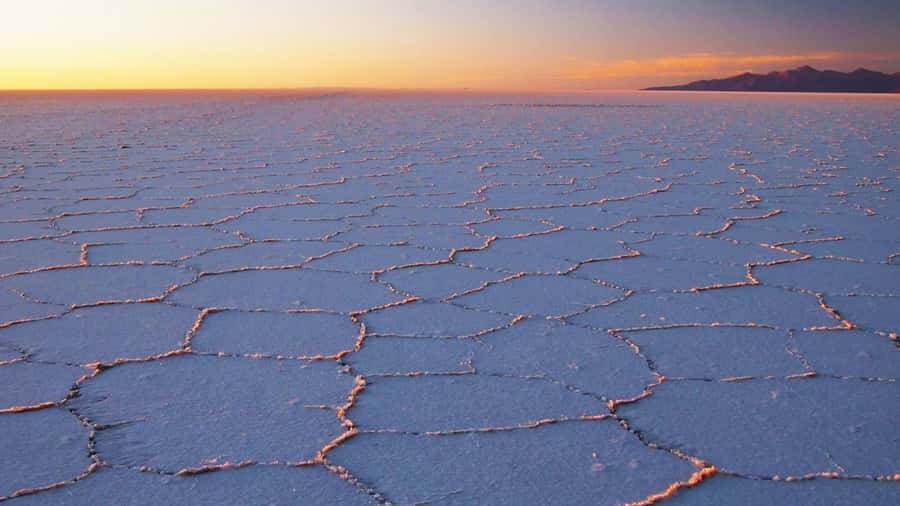
The main visit to the Salar de Uyuni is listed at about two and a half hours. This time covers guided touring, photo stops, the dark-sky portion, and the period leading into sunrise.
That length is well suited to the early start. You have enough time to get away from the city, view the stars, wait for dawn, and take photographs without turning the outing into a full-day commitment.
The sequence also means you should dress for changing light. At first, your priority is warmth. As sunrise develops, you may want your gloves off for camera controls and your jacket adjusted. Comfortable clothes are more useful than anything restrictive.
Rain boots are included. They are practical when shallow water covers the salt, especially if you want to step onto a wet surface for photographs. They also spare you from packing special footwear for one short outing.
I would still wear warm socks and bring footwear suitable for standing around. The supplied boots protect your feet from wet salt, but they do not replace warm clothing. Ask about available sizes if you need an unusual boot size.
The tour includes a first aid kit and logistical equipment. That gives the outing a basic practical foundation, but it does not remove the need to bring your own water, snacks, and personal medication.

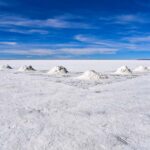
Making the most of the Instagram Moment
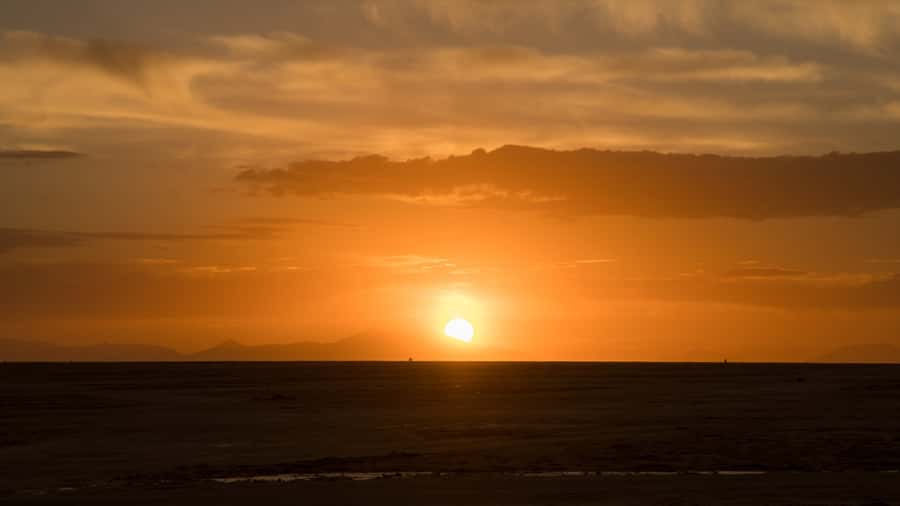
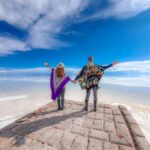
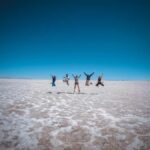
Before returning to Uyuni, you get time for an Instagram Moment on the broad white salt. The point is simple: use the open surface for unusual photographs and short videos.
The location gives you plenty of visual space. You can frame a person against the horizon, focus on the texture of the salt, or use the reflection if water is present. The exact picture depends on the conditions and your own creativity; no special props or staged effects are specified.
I like that this photo time comes after the starlight and sunrise rather than replacing them. You can first watch the sky change, then shift into picture-taking mode. That keeps the morning from feeling like a rushed series of camera stops.
Bring a camera or phone with enough battery. The information specifically recommends a camera, but it does not mention charging facilities or power banks. Since you are leaving before dawn, charge your device the night before and keep it protected from cold and moisture.
You should also bring snacks and water. Food is not included, and the early departure leaves no time for a normal breakfast before the salt-flat visit. A small, easy-to-carry snack can make the final transfer back to Uyuni much more pleasant.
What the $59 price covers
At $59 per person, the package includes more than transport alone. You get a guide, pickup from your hotel or airport, a 4×4 vehicle, entrance tickets to the mentioned attractions, rain boots, a first aid kit, and logistical equipment.
For a four-hour outing, that is a reasonably complete package. The strongest value comes from combining transport and access with the guide-led starlight stop. Arranging each part separately would be inconvenient, particularly when you are leaving in the middle of the night.
The price does not include food or travel insurance. That is easy to handle, but it is worth noting because the departure time makes breakfast planning awkward. Bring water and snacks rather than counting on a stop along the way.
Private or small-group departures are available. A smaller group can make photography easier and may give you more room to ask questions, but the basic vehicle capacity is six people. Check the exact group arrangement before booking if personal space matters to you.
Free cancellation is available up to 24 hours in advance for a full refund, and you can reserve now and pay later. Those terms help if your Bolivia plans are still changing, but they do not solve the weather question. I would use the flexibility to watch your schedule, not to assume the mirror effect will appear.
Cold-weather packing for a pre-dawn departure
The most important item is warm clothing. The tour specifically recommends a jacket, gloves, and comfortable clothes, and I would take all three seriously.
Pack in layers if you can. The data does not give a temperature range, so I would not promise a particular level of cold. Still, the warning is clear: temperatures can be very low before sunrise.
Bring water, snacks, and a camera. Keep your phone or camera easy to reach, but protect it from any water on the salt flat. Rain boots are supplied, which reduces the amount of gear you need to carry.
A small bag is better than loose items in the 4×4. You will be moving between dark-sky viewing, sunrise, and photo stops, so simple access matters. Avoid bringing anything you would not want exposed to salt or moisture.
Travel insurance is not included. If you want coverage for the wider trip, arrange it separately before departure.
The guide, language, and booking caution
The live guide is available in Spanish or English. That makes the outing more useful than a simple transfer, particularly during the constellation viewing and the changing sunrise conditions.
No individual guide name is provided, so I cannot recommend a specific person. The current public rating is 3.1 out of 5 from three ratings, and there is no detailed positive account identifying a guide or a particular service strength.
One verified booking from Japan dated March 20, 2025 records couldn’t participate and gives no explanation. I would not treat that single entry as proof that the activity is unreliable, but I would take it as a reason to confirm the pickup time, location, and contact method with Nomadex Perú before the night ends.
That check matters more here than on a normal daytime tour. At 3:30 a.m., you do not want to stand outside your hotel wondering if the vehicle is at another entrance.
Who should book this early-morning outing
I would recommend it to you if you want a short visit to the Salar de Uyuni and care about both the night sky and sunrise. It is also a good fit if you prefer a guided package that handles the vehicle, entry, and basic equipment.
Photographers should like the range of conditions: stars, first light, possible reflections, and the wide white salt surface. The tour also suits anyone with only a morning available before a bus, flight, or later activity, provided the timing fits.
I would hesitate if you need a slow morning, dislike cold weather, or want a guaranteed mirror effect. The four-hour schedule is efficient, but it leaves little room for delays or a relaxed breakfast afterward.
I would also think twice if your main goal is formal astronomy. The guide helps you view stars and constellations, but no telescope or extended astronomy program is listed.
My call: book for the combination, not one photograph
I would book this at $59 if I wanted the Salar de Uyuni in a compact format and could handle the 3:30 a.m. departure. The combination of starlight, sunrise, a possible mirror effect, 4×4 transport, and supplied rain boots gives you several chances for a memorable morning.
I would not book it expecting a guaranteed water mirror or perfect star visibility. Check the moon phase, ask about current water conditions, confirm pickup with the provider, and pack warmer clothing than you think you need.
If those conditions suit you, this is a practical way to see the salt flat at its most dramatic hours. If they do not, wait for a daytime outing or choose a longer visit that gives you more time and more flexibility.
FAQ
How much does the Sunrise and Starlight Experience cost?
The listed price is $59 per person. Private or small-group options are available, so confirm the price for your preferred group arrangement.
How long does the experience last?
The stated duration is four hours. Departure is at about 3:30 a.m., with a return to Uyuni around 7:30 a.m.
Where does pickup take place?
Pickup is available in Uyuni, including at your hotel or airport.
What transportation is used?
You travel in a 4×4 all-terrain truck with capacity for six people.
What is included in the price?
The price includes a guide, hotel or airport pickup, 4×4 transportation, entrance tickets to the mentioned attractions, rain boots, a first aid kit, and logistical equipment.
What should I bring?
Bring warm clothing, a jacket, gloves, comfortable clothes, a camera, snacks, and water. Temperatures can be very low before sunrise.
Can I see the mirror effect and stars every time?
The mirror effect depends on a thin layer of water and can vary with weather and season. Full-moon nights may make stars harder to see because of increased brightness.
More Tour Reviews in Uyuni
Not for you? Here's more nearby things to do in Uyuni we have reviewed
Uyuni Salt Flats Tours, compared
 ★ 4.5From La Paz: Uyuni Salt Flat Tour & Overnight Roundtrip BusFrom $275327 reviews
 ★ 4.5Uyuni tour express from La Paz by busFrom $269172 reviews
 ★ 4.4From Uyuni: Red Lagoon & Uyuni Salt Flats 3-Day Guided TourFrom $354160 reviews
 ★ 4.3La Paz: 5-Day Uyuni Salt Flats by BusFrom $486153 reviews
Browse the lists this tour appears in