
Reviewed · UYUNI SALT FLATS TOURS
From Uyuni: Full-Day Guided Trip to Salar de Uyuni
Salt flats turn distance into illusion. This full-day outing gives you a 4×4 ride across Salar de Uyuni, with the Train Cemetery, Colchani, Incahuasi Island, and a sunset glass of wine all packed into one long day. I like the route because it mixes salt culture with big photo stops, and I like that an English-speaking guide is included rather than leaving you to figure out the flats alone.
The main drawback is the schedule. You leave Uyuni at 10:30 a.m. and return around 7:15 p.m., so this is a full day in strong sun and at high altitude. Incahuasi Island is also closed to this tour during the rainy season, from January through April, and the listed price does not cover the island entrance, toilets, drinks, or snacks.
Guide Lilly has earned special praise for helping with creative poses and photos, while Fernando and Alejandro have also been associated with especially warm, capable service. That personal touch matters here: the salt flats are vast, and a good guide can turn a string of stops into a much more enjoyable day.
In This Review
- Key points at a glance
- Why this one-day route works
- Train Cemetery: rust, rails, and easy photographs
- Colchani: seeing how salt becomes a local product
- Crossing the salt flats at 3,665 meters
- The Salt Hotel and Dakar Monument
- Incahuasi Island and its giant cacti
- Sunset with wine before returning to Uyuni
- What the $146 price really covers
- Comfort, altitude, and what to carry
- Should you book this Uyuni day trip?
- FAQ
- What time does the tour start and finish?
- Where is the meeting point?
- What type of transportation is used?
- Is an English-speaking guide included?
- What does the price include?
- What additional costs should I expect?
- Can the tour visit Incahuasi Island during the rainy season?
- What should I bring?
- Can I cancel or pay later?
Key points at a glance
- The 10:30 a.m. departure is well timed for a full day that ends with sunset rather than requiring an early morning start.
- Incahuasi Island adds contrast with giant cacti rising from an otherwise nearly white expanse.
- Colchani shows working salt culture, including salt extraction, iodization, handicrafts, and a small museum.
- The tour is built for photographs, with the Dakar Monument, world flags, salt eyes, and wide-open salt surfaces.
- The $146 price includes the main essentials, including 4WD transport, an English-speaking guide, lunch, and one sunset glass of wine.
Why this one-day route works
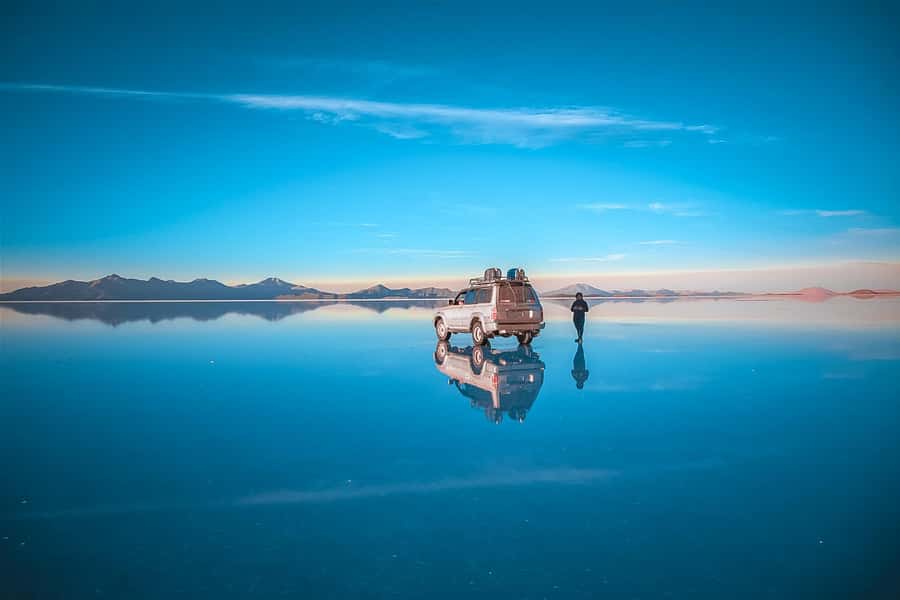
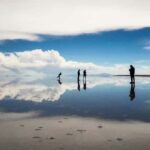
Salar de Uyuni covers about 12,000 square kilometers at an altitude of roughly 3,665 meters. That scale is the point. You do not simply look at a salt field; you spend much of the day crossing a bright, nearly boundless surface where the horizon can seem to disappear.
The 4WD vehicle is important. A regular city car would not suit this route, and the included rooftop luggage rack is useful if you are carrying bags between destinations. You will be with a local driver and an English-speaking guide, so the day combines transport with explanations rather than functioning as a simple transfer.
This is also an efficient choice if you have only one day in Uyuni. The route covers the main sights close to the city and pushes farther into the flats for Incahuasi Island and sunset. You will not have time for an overnight stay on the salt flats, but you will see a broad range of places in one outing.
The itinerary is a guide rather than a fixed promise. Weather, roadblocks, strikes, and other events can cause changes with little notice. On the salt flats, that flexibility is practical: conditions can affect access, especially during the rainy months.
You can also read our reviews of more guided tours in Uyuni
Train Cemetery: rust, rails, and easy photographs
The first major stop is the Train Cemetery, a collection of 19th-century locomotives left in the open near Uyuni. Rusted engines and old rail cars create a stark scene against the flat surroundings.
This stop works well because it offers visual variety before you reach the salt. The dark metal, broken wheels, and weathered surfaces give you something close and textured to photograph, while the open setting keeps the sky in nearly every frame.
You should expect a popular photo stop rather than a quiet museum visit. The appeal is the setting and the old machinery, not indoor displays or a long historical explanation. Wear shoes with a firm sole, since the ground around old metal equipment may be uneven.
Colchani: seeing how salt becomes a local product
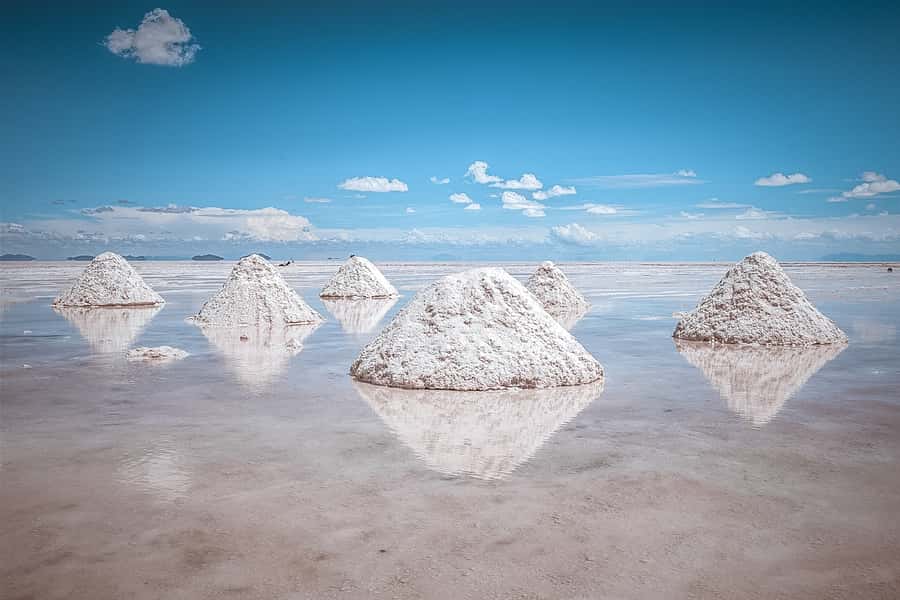
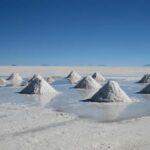
Colchani sits at the edge of the salt flats and gives you a closer look at the local salt trade. The Rosario Cooperative operates a salt iodization plant here, where you can observe methods of salt extraction and processing.
This is one of the more useful stops on the route because it connects the giant white expanse to daily work. Salar de Uyuni can feel almost unreal, but Colchani shows that it is also a source of material, income, and handmade goods.
You will also have time to see the Salt Artisanal Market, which sells llama clothing and salt handicrafts. A small salt museum adds another layer, though the supplied information does not give its size or the length of the visit.
I like this stop for shopping with a sense of place. If you want a small reminder of Bolivia beyond a standard souvenir, salt handicrafts and llama clothing fit the setting better than generic gifts. Keep some money available, but remember that personal purchases are not included in the tour price.
Crossing the salt flats at 3,665 meters
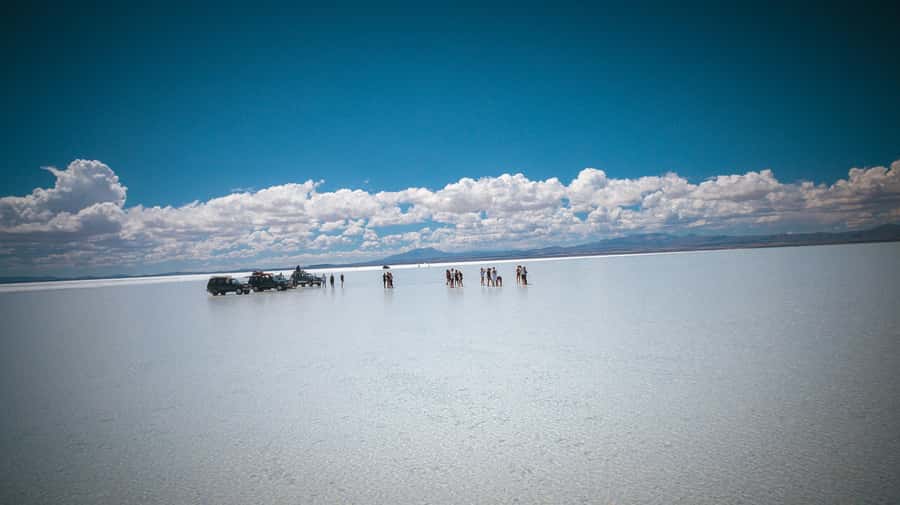
Once the vehicle reaches the main salt flats, the day changes pace. The scale opens up, and the route takes you across a surface that can look almost completely white in every direction.
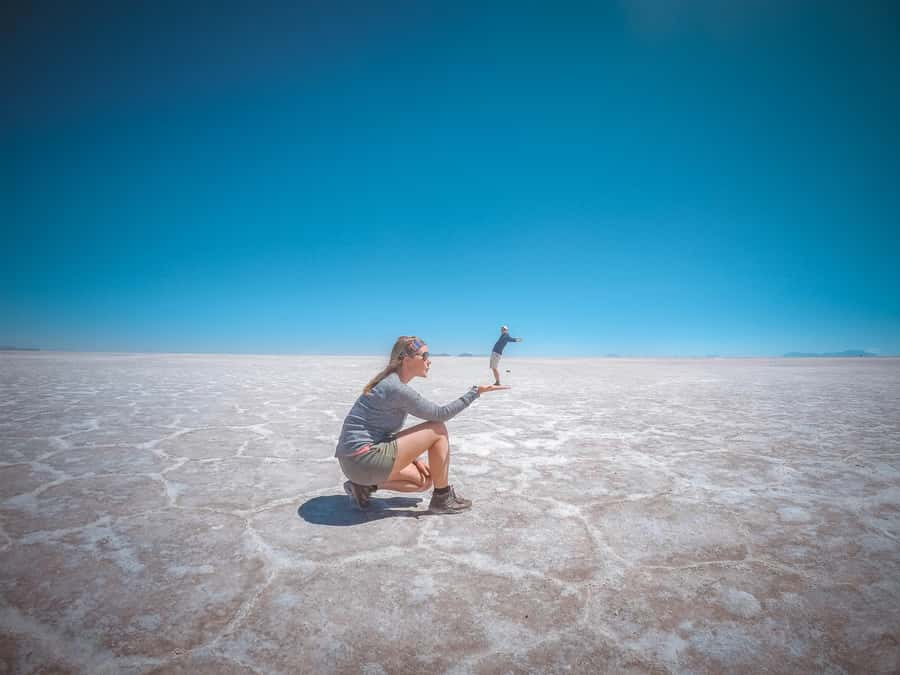
The tour includes time to see the salt eyes and salt formations and to take photographs. These features break up the broad surface and give your guide chances to point out details that would be easy to miss from a moving vehicle.
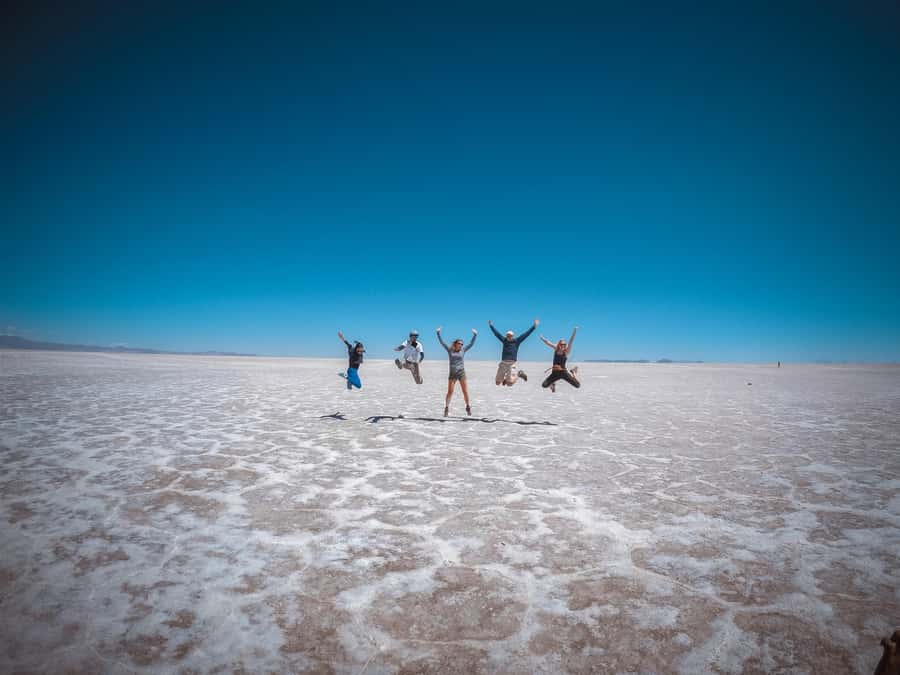
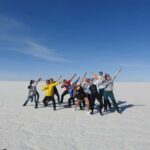
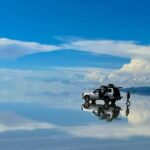
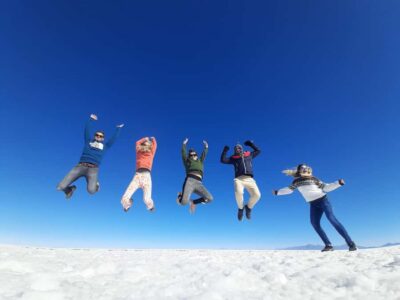
This is where a photo-minded guide can add real value. Lilly, in particular, has been praised for suggesting poses and helping create more inventive pictures. The open surface makes forced perspective shots possible, although the exact photo opportunities can depend on the condition of the flats and where the vehicle can safely go.
You should bring sunscreen even if the day feels cool. The high altitude, pale salt, and strong reflected light can make sun protection especially important. Comfortable clothes and shoes are also listed as essentials, and you will be glad to have both during a long day in the open.
The Salt Hotel and Dakar Monument
The route includes an unusual salt construction described as a museum and Salt Hotel. It is built entirely from salt blocks, making it one of the more distinctive man-made sights on the route.
Do not expect a conventional hotel visit. The value here is seeing how the local material has been used for walls and construction, then comparing that human-scale building with the enormous salt surface outside.
The Dakar Monument provides another clear photo stop. It recalls the Dakar race and gives you a recognizable marker in a place where the surroundings can otherwise look almost identical from one angle to the next.
Nearby, you can see the Flags of the World display. You may bring your own flag and place it there for free, which is a simple way to add a personal detail to your photographs. If you plan to do that, bring the flag with you; it is not supplied as part of the tour.
A few more Uyuni tours and experiences worth a look
Incahuasi Island and its giant cacti
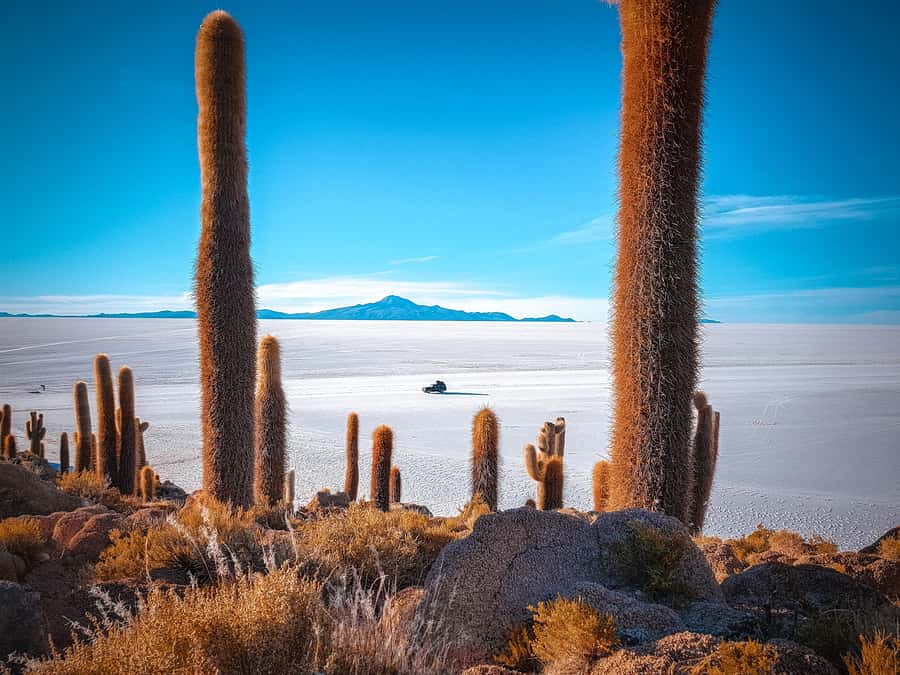
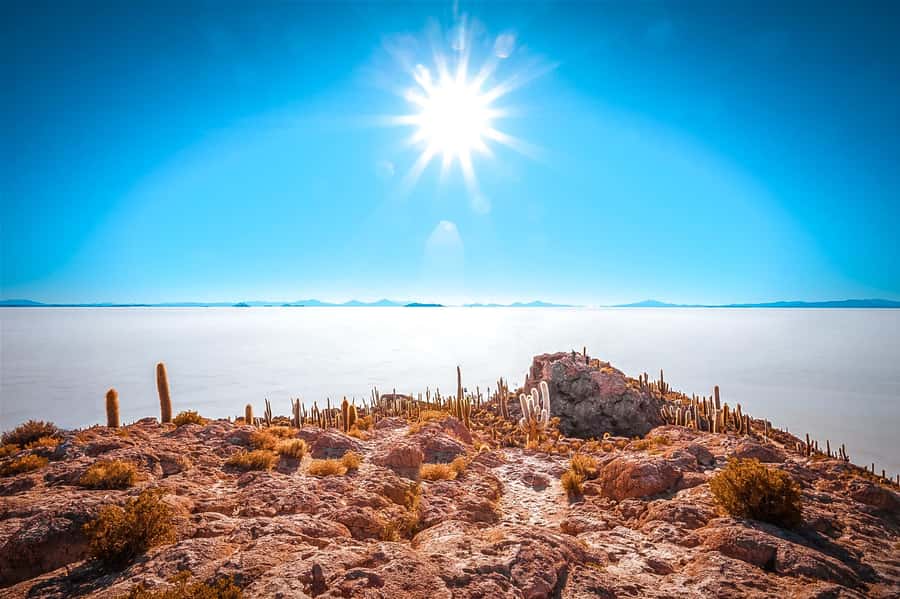
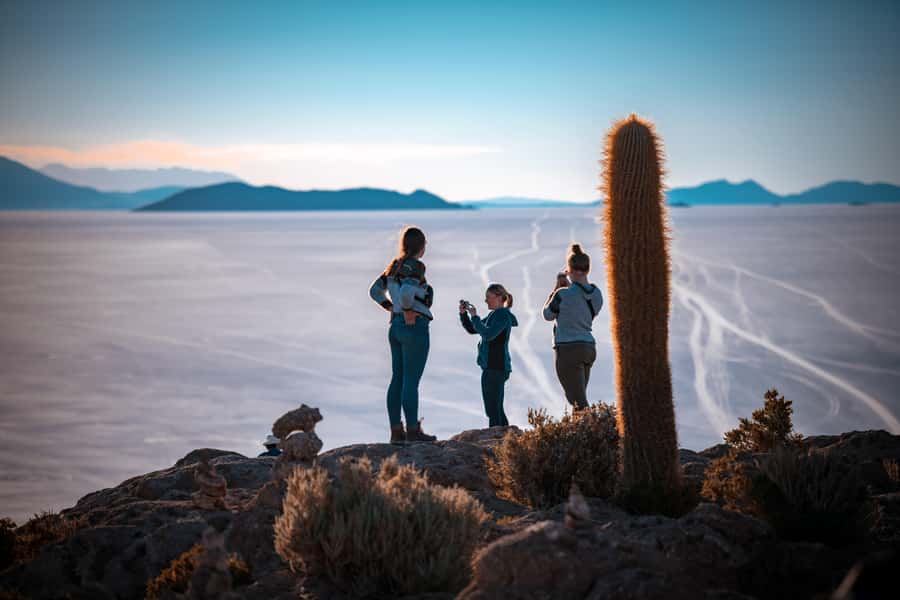
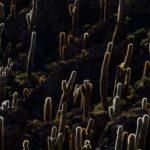
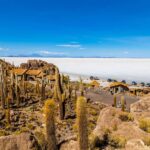
Incahuasi Island is the most dramatic change in scenery during the dry-season route. Located in the center of the salt flats, it rises like an isolated island and supports a separate ecosystem with cacti ranging from about one to four meters tall.
The contrast is excellent. After hours of white salt and open sky, the dark island surface and tall cacti give your eyes something vertical and solid to follow. The island is also described as a good place to rest, so it breaks up the long vehicle journey.
There is an entrance fee of 30 Bs, which is not included in the $146 price. Bring local currency or confirm your payment options before setting out, since access to the island is an extra cost.
The key seasonal warning is simple: Incahuasi Island cannot be accessed during the rainy season from January through April. The rest of the route may still change with weather, so you should not book this day expecting every stop to be guaranteed in every month.
If Incahuasi is open, it is likely to be one of the day’s most memorable stops. If it is closed, the salt flats still provide the main attraction, but the itinerary loses its strongest contrast between bright salt and cactus-covered rock.
Sunset with wine before returning to Uyuni
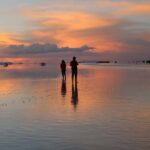
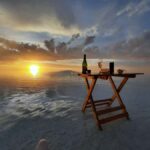
The day finishes with sunset over the salt flats and one included glass of wine. This is a smart ending because the changing light gives the same setting a different mood after the bright midday hours.
The wine is a small inclusion, but it adds ceremony to the final stop. You are not simply driving back after a list of attractions; you get time to pause and watch the color change across the salt.
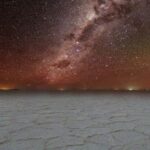
One past outing continued into the evening for stargazing, with the sunset followed by an unreal night sky. You should not assume that extended stargazing is part of the standard program, since the stated return time is about 7:15 p.m., but clear conditions may make the late light especially appealing.
The long return makes the timing important. You start at 10:30 a.m., spend the day moving between stops, and finish back in Uyuni rather than at an airport or another town. The tour does not include airport pickup or bus-station pickup, though the Pearl Bolivia office is located one block from the bus station.
What the $146 price really covers
At $146 per person, this is not a bare-bones ride to the salt flats. The price includes 4WD transportation, a local driver, an English-speaking guide, one lunch, and a glass of wine at sunset.
The English guide is especially useful if you want context at Colchani, help understanding the salt works, and assistance with photographs. The vehicle and driver also matter because the route covers several separated stops in a demanding high-altitude setting.
Still, you should budget beyond the headline price. Incahuasi Island costs 30 Bs, toilets along the way cost 10 Bs, and drinks, snacks, and personal purchases are extra. Since lunch is included but its exact menu is not specified, bring any preferred snacks or drinks you know you will want.
The price is strongest for you if you value a full route, an English-speaking guide, and a sunset finish. It is less attractive if you only want a short salt-flat visit or prefer to arrange every stop yourself. The tour’s value comes from convenience, coverage, and guide support rather than from luxury.
Comfort, altitude, and what to carry
The tour is not suitable for people with altitude sickness. Uyuni sits high, and the salt flats reach about 3,665 meters, so you should take the altitude seriously even though the day is not physically described as strenuous.
People over 95 are also listed as unsuitable for this experience. No other accessibility details are provided, so if you need specific mobility arrangements, you should confirm them before booking rather than assume the 4WD vehicle will meet your needs.
Pack your passport or ID card, comfortable shoes, comfortable clothing, and sunscreen. Toilets cost 10 Bs on the way, so keep small local cash available. Drinks and snacks are not included, and the tour does not allow pets, alcohol, or drugs; the included sunset wine is the stated exception to the general alcohol restriction.
Free cancellation is available up to 24 hours before departure, and you can reserve now and pay later. That flexibility is useful when your Uyuni plans depend on buses, weather, or a wider Bolivia itinerary.
Should you book this Uyuni day trip?
Book it if you want the major sights in one organized day and care about photographs, local salt production, and a sunset finish. The combination of Colchani, the Train Cemetery, the Salt Hotel, Dakar Monument, Incahuasi Island, and the salt eyes gives you more variety than a simple drive out to the flats.
I would be most likely to choose it during the dry season, when Incahuasi Island is open and the full route can operate. If you are visiting from January through April, accept that the island will not be included and that weather can change the plan.
The strongest reason to book is the guide support. Help with poses, explanations, and timing can make a large difference in a place where the scenery is immense but the details are easy to miss. Just bring sunscreen, cash for extras, and realistic expectations about a long day in a high-altitude 4WD.
FAQ
What time does the tour start and finish?
The tour leaves Uyuni City at 10:30 a.m. and returns at approximately 7:15 p.m.
Where is the meeting point?
You meet your guide at Pearl Bolivia. The office is located one block from the bus station in Uyuni.
What type of transportation is used?
Transportation is provided in a 4WD vehicle with a rooftop luggage rack. A local driver is included.
Is an English-speaking guide included?
Yes. The tour includes a live English-speaking guide.
What does the price include?
The price includes 4WD transportation, a local driver, an English-speaking guide, one lunch, and one glass of wine at sunset.
What additional costs should I expect?
The Incahuasi Island entrance costs 30 Bs, and toilets along the way cost 10 Bs. Drinks, snacks, and personal expenses are not included.
Can the tour visit Incahuasi Island during the rainy season?
No. Incahuasi Island cannot be accessed during the rainy season from January through April.
What should I bring?
Bring your passport or ID card, comfortable shoes, comfortable clothing, and sunscreen. Drinks and snacks are not provided, so you may wish to bring or purchase them separately.
Can I cancel or pay later?
You can cancel up to 24 hours in advance for a full refund. You can also reserve your place and pay later.
More Full-Day in Uyuni
More Guided Tours in Uyuni
More Tour Reviews in Uyuni

Not for you? Here's more nearby things to do in Uyuni we have reviewed

Uyuni Salt Flats Tours, compared
 ★ 4.5From La Paz: Uyuni Salt Flat Tour & Overnight Roundtrip BusFrom $275327 reviews
 ★ 4.5Uyuni tour express from La Paz by busFrom $269172 reviews
 ★ 4.4From Uyuni: Red Lagoon & Uyuni Salt Flats 3-Day Guided TourFrom $354160 reviews
 ★ 4.3La Paz: 5-Day Uyuni Salt Flats by BusFrom $486153 reviews
Browse the lists this tour appears in