

Reviewed · UYUNI SALT FLATS TOURS
From La Paz: Uyuni Salt Flats Excursion + Round Trip Bus
The horizon disappears, and the salt takes over. This trip packs Bolivia’s star attraction into a tight three-day outing, with an overnight bus from La Paz, a 4×4 ride across the flats, and the famous train cemetery and Incahuasi Island along the way. I like the spectacular salt-flat views and the chance to make creative perspective photos, and the combination of abandoned locomotives and giant cacti gives the day more variety than a single-point visit.
The main drawback is loose organization. You may arrive in Uyuni around 6:30 or 7 a.m. and wait until about 10:30 before the 4×4 departs. Add an overnight bus in each direction, basic meals, and unclear communication, and the $200 price needs careful consideration.
In This Review
- Five Things to Know Before You Go
- What the $200 Price Covers
- The 8 p.m. Bus from La Paz
- The Morning Wait in Uyuni
- Rusted Locomotives at the Train Cemetery
- Colchani’s Salt Industry Stop
- The Salt Flats: The Day’s Main Reward
- Incahuasi Island and Its Giant Cacti
- Sunset, Evening Food, and the Ride Back
- Guides, Languages, and Group Size
- Who Will Like This Trip Most
- Should You Book It?
- FAQ
- How long does the experience last?
- When does the bus leave La Paz?
- What time does the bus arrive in Uyuni?
- What transport is included?
- Which meals are included?
- Is the Incahuasi Island entrance fee included?
- What languages are available?
- What should I do for a last-minute booking?
Five Things to Know Before You Go
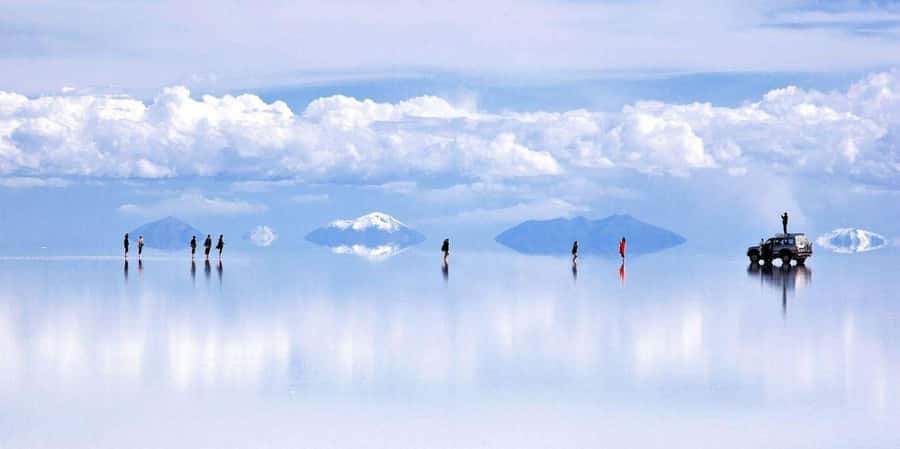
- The salt flats are the reason to book: The wide white expanse is the clear highlight, especially during the late-day light.
- Your transport is mostly overnight: You leave La Paz at about 8 p.m., reach Uyuni in the morning, and return to La Paz the same evening.
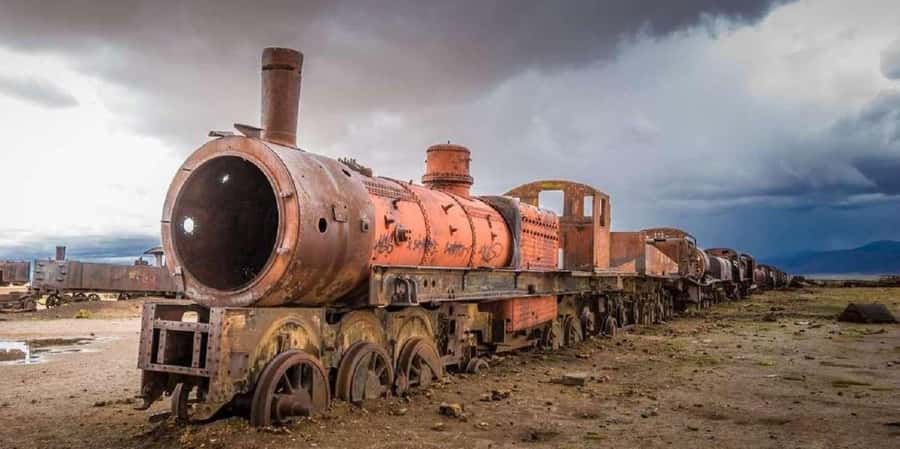
- The train cemetery makes an excellent first photo stop: Rusting 19th-century locomotives create a striking contrast with the bare surroundings.
- Incahuasi Island costs extra: The island’s enormous cacti are included in the route, but the entrance fee is not included in the $200 price.
- The schedule can lose several hours: Keep your morning flexible, carry patience, and make sure the operator has your correct WhatsApp number.
- Food is limited: One breakfast and one lunch are included, while dinner is not. Bring extra food for the long day.
What the $200 Price Covers
At $200 per person, this is not a cheap day trip. The price includes the long-distance bus from La Paz to Uyuni and back, a 4×4 vehicle for the salt-flat route, a guide, one breakfast, and one lunch. It also saves you from arranging separate transport, finding a local Uyuni operator, and working out how to return to La Paz.
That convenience has real value if you have limited time in Bolivia. You can leave La Paz at night, spend the daylight hours around Uyuni, and arrive back in La Paz early on Day 3. You do not need to book a separate hotel in Uyuni for this plan, although the trade-off is two overnight bus journeys rather than proper rest.
Still, the inclusions need a close look. Dinner is not included, even though the schedule says you will enjoy dinner on the outbound bus. On the return day, the evening food described on one recent departure was a large bag of crisps, some nuts, and a glass of wine—not a full meal.
The $200 can make sense for a tight schedule and for anyone who values having the main transport arranged. It feels less convincing if you expect polished coordination, generous meals, or a leisurely multi-day salt-flat program.
You can also read our reviews of more tours and experiences in La Paz.



The 8 p.m. Bus from La Paz
The trip begins at approximately 8 p.m. in La Paz. You board a bus for an all-night ride toward Uyuni, with the intention of sleeping during the journey and arriving in time for breakfast.
This arrangement makes efficient use of time, but you should set realistic expectations. The night bus is not a small scenic transfer; it is the main way the tour covers the long distance between the two cities. Pack a jacket, water, snacks, and anything you need to rest, since you will have a full sightseeing day soon after arrival.
Do not count on Wi-Fi. A recent departure had no Wi-Fi on the bus, so download maps, entertainment, and important booking details before leaving La Paz. Keep your phone charged as well, since WhatsApp is the main communication channel requested by XPLORA AMERICA.
The supplier asks you to provide your phone number with the full country code and to have WhatsApp. Take this seriously. If the pickup or morning meeting becomes unclear, a working phone is your best way to get instructions.
The Morning Wait in Uyuni
The bus is scheduled to reach Uyuni at about 7 a.m., with some departures arriving around 6:30. You are then meant to meet someone, go for breakfast, and transfer to the 4×4.
This is where the trip can become frustrating. On one recent departure, the arriving passenger found no one waiting, made several calls, and spent about 50 minutes getting directions to the nearby agency. Another group arrived early and waited until roughly 10:30 a.m. before heading to the salt flats.
That four-hour gap matters. You have already spent the night on a bus, and the best light and cooler conditions at the salt flats are being used for waiting rather than sightseeing. The delay may not happen every time, but I would plan for it instead of assuming the advertised timing will run neatly.
Have your booking details ready, stay near the agreed arrival point, and contact the supplier quickly if no one appears. For a last-minute booking, check availability with the supplier by email before paying. The official instructions specifically recommend this.
The included breakfast should also be confirmed before you order. One recent passenger was charged at the café despite breakfast being listed as included and had to resolve the problem in Spanish. Carry enough cash or a card for an unexpected breakfast charge, just in case.
Rusted Locomotives at the Train Cemetery

Once the 4×4 begins, the first major stop is the train cemetery outside Uyuni. Here, abandoned 19th-century locomotives sit on an open esplanade, their metal bodies weathered by time and the dry conditions.
This is a good opening stop because it gives you strong photographs before the salt flats appear. You can walk around the locomotives and frame the rusted machinery against the empty surroundings. It feels unusual rather than polished, which is part of its appeal.
The stop may last longer than you expect. One recent account found an hour excessive and felt that five minutes would have been enough. If your group is eager to reach the salt, ask the guide how long you have and use the time for photos rather than waiting beside the vehicle.
The cemetery is worth seeing, but it is not the main event. Think of it as a brief visual prelude to the enormous white plain ahead.
Colchani’s Salt Industry Stop
The route then reaches Colchani, a community associated with salt processing. The schedule includes a stop at an iodization plant, and the route may also include a nearby market.
This stop helps you see that the salt flat is not only a place for photographs. Salt is collected and processed by local communities, and the iodization plant gives the day a small piece of working-life context. It also breaks up the drive between the train cemetery and the flats.
The visit is not likely to be the most memorable part of the day, but it adds purpose to the route. If you want to buy something, the market may be useful, though the supplied information does not specify what products or prices are available.


The Salt Flats: The Day’s Main Reward
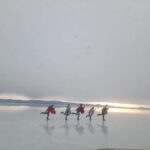
The Uyuni salt flats are the clear payoff. The sheer scale creates the feeling that the ground and sky have merged, with very little to interrupt the view. This is the stop that earned the strongest praise, and it is easy to understand why.
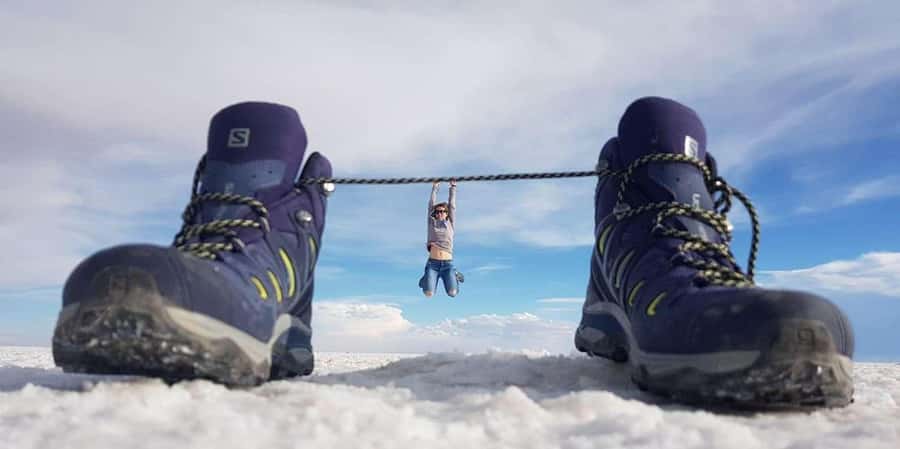
The open surface is ideal for playful perspective photographs. Ask the guide to help you with composition and timing, especially if you want more than standard standing portraits. The guide on a recent departure was particularly helpful with photos, and that personal assistance can make a major difference when the setting is so open and visually repetitive.
The route also includes the Dakar Monument and the Playa Blanca salt hotel. These are recognizable stops that give you fixed points within an otherwise endless expanse. They are useful for photos and orientation, though the salt itself remains more impressive than the built features.
Lunch is included, but you should keep expectations modest. One recent departure had a very basic lunch, so bring snacks if you need a substantial meal before the long afternoon and evening. The combination of an early start, possible waiting, and a full day in the 4×4 makes food more important than the short schedule suggests.
Incahuasi Island and Its Giant Cacti
Incahuasi Island is one of the most distinctive stops. It is famous for enormous cacti, which rise from the rocky island in sharp contrast to the flat white salt around it.
I like this stop because it changes the scenery completely. After hours of looking across a broad white surface, the island gives you rock, plants, height, and a more compact walking area. The cacti also make memorable photographs without needing any special trick.
The entrance fee is not included, so budget for it separately. The supplied information does not give the fee amount, so you should check the current charge before departure. Do not assume the $200 covers every admission on the route.
The visit also adds walking to a day that already includes long vehicle transfers. Wear comfortable shoes and keep your camera ready, but the exact walking conditions and duration are not specified.
Sunset, Evening Food, and the Ride Back
The schedule aims to finish with sunset at the salt flats. This is a smart choice. The softer evening light gives the white surface more texture and color, and it provides the day’s most memorable closing scene.
At about 7:30 p.m., you return to the bus for the overnight trip to La Paz. The bus is expected to arrive around 6:30 a.m. on Day 3, making the full experience closer to one long sightseeing day surrounded by two nights of transport.
Dinner is the weak point in the food plan. It is not included in the official list, and one recent departure provided crisps, nuts, and a glass of wine. If you need a real dinner, arrange your own food in advance or ask clearly what is planned before leaving the salt flats.
Dietary needs also require early communication. During one evening stop, a vegan meal had not been communicated, and the restaurant had to prepare something quickly. The restaurant staff handled it well, but you should not rely on last-minute solutions.
Guides, Languages, and Group Size
The tour is advertised as a small-group experience limited to 15 people. That is a useful size for coordinating a 4×4 day, though the information does not specify how many people ride in each vehicle.
The guide and driver can make the difference between a rushed outing and a worthwhile one. The strongest personal praise has focused on the salt-flat guide and driver, especially the effort put into making the day enjoyable and helping with photos.
Language information is slightly mixed. The activity lists live guiding in English and Spanish, while the main description identifies the guide as Spanish-speaking. If you need English throughout the day, confirm this with XPLORA AMERICA before booking, rather than assuming every guide and transfer will use English.
Communication is the bigger concern. Send your correct country-coded phone number, keep WhatsApp active, and ask for the meeting instructions before boarding in La Paz. A small amount of preparation can prevent a long, confusing wait in Uyuni.
Who Will Like This Trip Most
I would recommend this outing to you if you have only three days, want to see the Uyuni salt flats from La Paz, and prefer having the long-distance transport arranged in one booking. The route includes the principal sights: the train cemetery, Colchani, the salt flats, the Dakar Monument, Playa Blanca, Incahuasi Island, and sunset.
It also suits photographers. The train cemetery offers unusual industrial images, the salt flats allow creative perspective shots, Incahuasi supplies the giant cacti, and the evening light adds a final set of photographs.
You should think twice if you dislike overnight buses, need precise timing, or expect full meals. The possible morning wait is the biggest practical issue, and the quality of the food does not match what many people would expect from a $200 package.
This is also not the best choice if you want a relaxed Uyuni stay. The plan moves quickly and uses the night buses to avoid overnight accommodation in Uyuni. A longer local program may offer more time, but this option is aimed at efficiency.
Should You Book It?
Book this tour if the salt flats are your priority and you can accept a tiring schedule, basic food, and the possibility of poor coordination. The sights themselves are exceptional, and the guide or driver may add real value through local direction and photo help.
I would not book without first confirming the pickup point in Uyuni, the guide language, the breakfast arrangement, and the plan for dinner. At $200, the tour works best as a practical time-saver—not as a polished luxury excursion.
The most important calculation is simple: you are paying for access and transport, not comfort. If that trade suits you, the salt flats, Incahuasi’s cacti, and the sunset can make this a memorable short visit. If you need reliable timing and proper meals, look for a slower, better-organized alternative.
FAQ
How long does the experience last?
The experience lasts three days, including overnight bus journeys between La Paz and Uyuni.
When does the bus leave La Paz?
The bus is scheduled to leave La Paz at approximately 8 p.m. on Day 1.
What time does the bus arrive in Uyuni?
Arrival is expected at approximately 7 a.m., with some information indicating around 6:30 a.m.
What transport is included?
Transportation by long-distance bus and 4×4 vehicle is included.
Which meals are included?
One breakfast and one lunch are included. Dinner is not included.
Is the Incahuasi Island entrance fee included?
No. The entrance to Incahuasi Island must be paid separately.
What languages are available?
The activity lists live tour guiding in English and Spanish. The main tour details identify the guide as Spanish-speaking, so confirm your preferred language before booking.
What should I do for a last-minute booking?
Check availability with the supplier by email before booking. You should also provide your phone number with the country code and have WhatsApp available.
More Tours in La Paz
More Tour Reviews in La Paz
Not for you? Here's more nearby things to do in La Paz we have reviewed


Uyuni Salt Flats Tours, compared
 ★ 4.5From La Paz: Uyuni Salt Flat Tour & Overnight Roundtrip BusFrom $275327 reviews
 ★ 4.5Uyuni tour express from La Paz by busFrom $269172 reviews
 ★ 4.4From Uyuni: Red Lagoon & Uyuni Salt Flats 3-Day Guided TourFrom $354160 reviews
 ★ 4.3La Paz: 5-Day Uyuni Salt Flats by BusFrom $486153 reviews
Browse the lists this tour appears in