
Reviewed · MOON VALLEY & CANYON TOURS
La Paz: Private Vehicle & Guide. City Tour + Moon Valley
See La Paz from rock, rails, and rooftops. This private three-hour outing gives you a brisk introduction to the city, pairing the strange rock formations of Moon Valley with a ride on Mi Teleférico, colonial streets, major plazas, and traditional markets. I like starting with the quiet, otherworldly terrain outside the center, and I also like having a private guide and vehicle to connect so many scattered sights. The main drawback is the tight schedule: La Paz has a lot to show you in three hours.
Guides such as Tereza and Erika have earned praise for clear explanations of La Paz’s past and present. One guide even changed the route when a visitor had already seen Killi Killi. The transport is less dependable on paper, though: a separate booking specifically found the vehicle and driver Juan Carlos disappointing, so I would confirm the pickup and vehicle details before setting out.
At $35 per person, the tour offers good value if you want transport, a guide, hotel pickup and drop-off, and cable car rides bundled together. You still pay 15 bob for the Moon Valley entrance, and meals, drinks, and shopping are extra. Bring cash, sturdy shoes, water, a hat, and sunscreen.
In This Review
- Five things to know before booking
- Moon Valley opens the tour with strange Andean scenery
- Mi Teleférico shows how La Paz climbs the canyon walls
- Calle Jaén brings the city’s colonial past into view
- Plaza Murillo links politics, religion, and public life
- The Witches Market offers a window into Aymara ritual life
- San Francisco Church shows Andean Baroque detail
- Sagarnaga Street gives you a final chance to shop
- A private vehicle makes a packed route easier
- Is $35 a fair price for three hours?
- Who should choose this La Paz tour?
- How to prepare for the three-hour route
- FAQ
- How long does the tour last?
- What is the price?
- Is hotel transportation included?
- Is the Moon Valley entrance fee included?
- Are cable car rides included?
- What languages are available?
- Is this a private tour?
- What should I bring?
- Can I cancel or pay later?
- Should you book this La Paz experience?
Five things to know before booking
- Moon Valley comes first: You begin with eroded rock formations and a short walk away from the city center.
- Two Mi Teleférico lines are included: You get broad views of La Paz, the canyon, steep hillsides, and—on clear days—snow-capped Illimani.
- The tour is private: You travel with your own guide and vehicle rather than joining a large group.
- The city portion is packed with character: Calle Jaén, Plaza Murillo, the Witches Market, San Francisco Church, and Sagarnaga Street each show a different side of La Paz.
- Carry 15 bob in cash: The Moon Valley entrance is not included in the tour price.
- Walking ability matters: The tour is not suitable for wheelchair users or people with vertigo.
Moon Valley opens the tour with strange Andean scenery
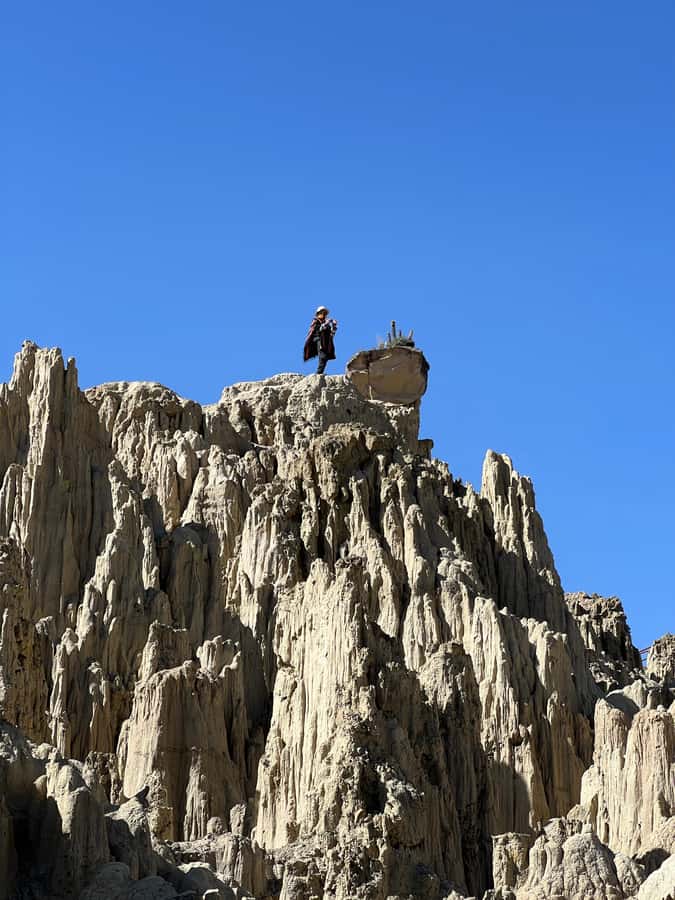
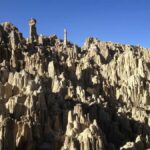
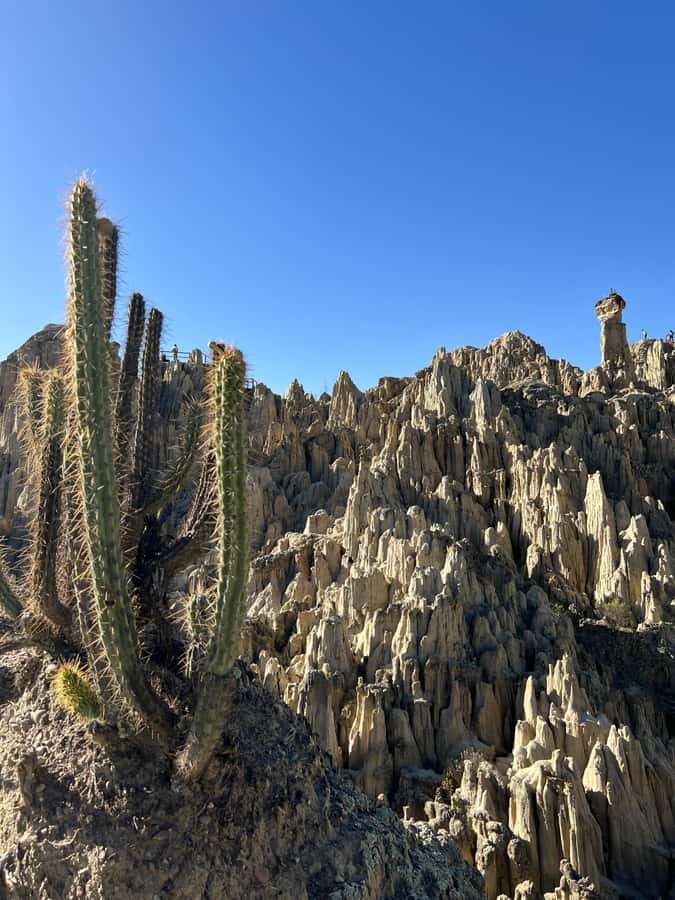
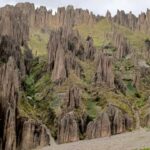
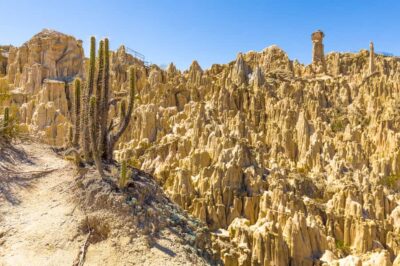
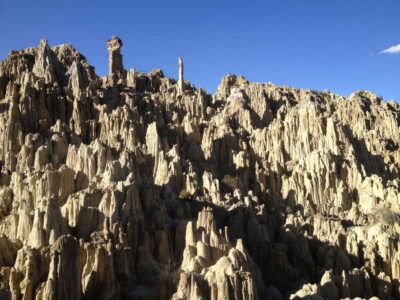
The first stop is Valle de la Luna, or Moon Valley, a natural area shaped by erosion. Its narrow paths and pointed rock formations look more like a miniature desert than part of a major capital city. The grey and tan formations have been cut into unusual ridges, spires, and gullies over time.
I like this as the opening stop because it gives you a quick change of pace. La Paz can feel crowded and intense, with traffic, steep streets, and constant movement. Moon Valley offers a quieter walk before you return to the city’s busy core.
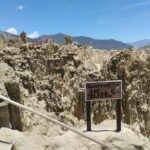
You pay the 15-bob entrance fee separately. Keep that money ready, since you do not want to waste time searching for cash at the gate. The price is modest, but it is an important extra to remember when working out your total cost.
Wear comfortable walking shoes. The paths are uneven, and the tour includes walking through the formations rather than simply stopping for a roadside photograph. A hat, sunscreen, and water are also sensible because shade may be limited.
There is one awkward point in the route. A visitor noted having to walk beside a busy road from Moon Valley back to the vehicle. That may not define every departure, but it is worth knowing. The stop is scenic, yet the transition back to the car may be less pleasant than the walk inside the valley.
You can also read our reviews of more guided tours in La Paz
Mi Teleférico shows how La Paz climbs the canyon walls
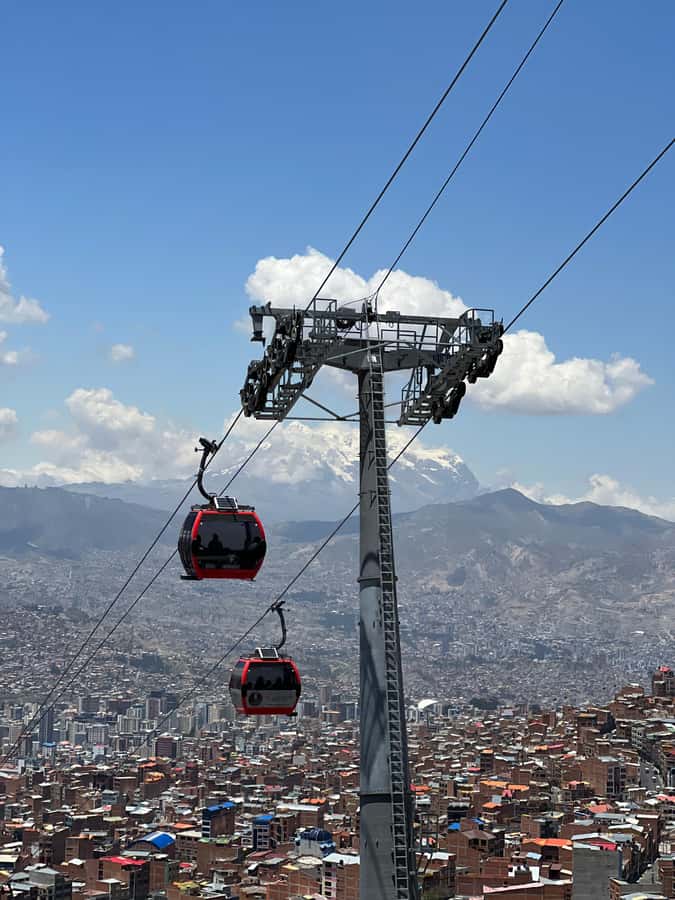
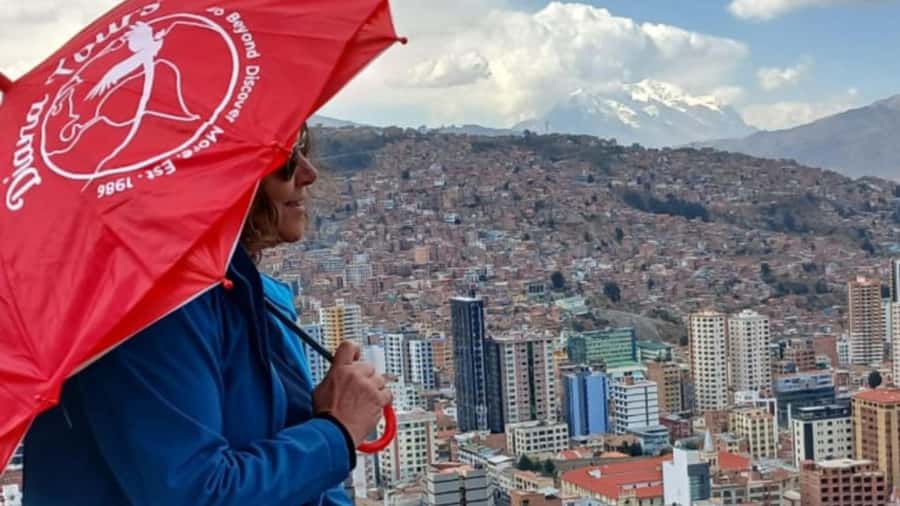
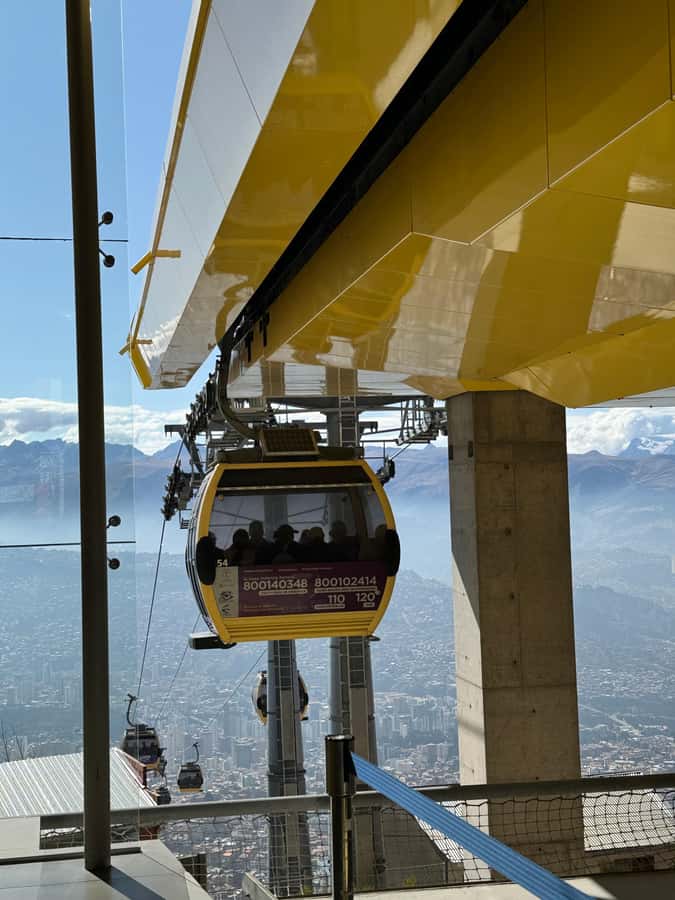
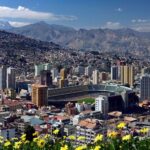
The Mi Teleférico ride is one of the strongest parts of the outing. La Paz is built across steep slopes and a deep canyon, so the cable cars give you a view that is hard to get from street level. Instead of looking up at the hills, you see the city spread across them.
The tour includes rides on two of the system’s most scenic lines. From the cabins, you can watch homes and buildings cling to steep slopes, while roads and neighborhoods stretch across the canyon below. The view helps you understand La Paz’s shape in a way that a walking tour cannot.
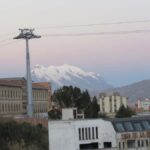
On a clear day, look for Illimani, the snow-capped mountain that rises above the city. Clouds or haze can hide it, so treat the mountain view as a bonus rather than a promise. Even without Illimani, the cable car gives you a broad look at the city and the surrounding Andes.
The ride also adds a practical benefit. La Paz’s streets can be slow and crowded, while the cable car moves above the traffic. Since the private vehicle and guide handle the connections, you get the sightseeing value without having to work out the route on your own.
If you have vertigo, take the warning seriously. The tour is not suitable for people who are uncomfortable with heights. The cable car is a central feature, not an optional extra that you can easily skip without changing the day’s plan.
Calle Jaén brings the city’s colonial past into view
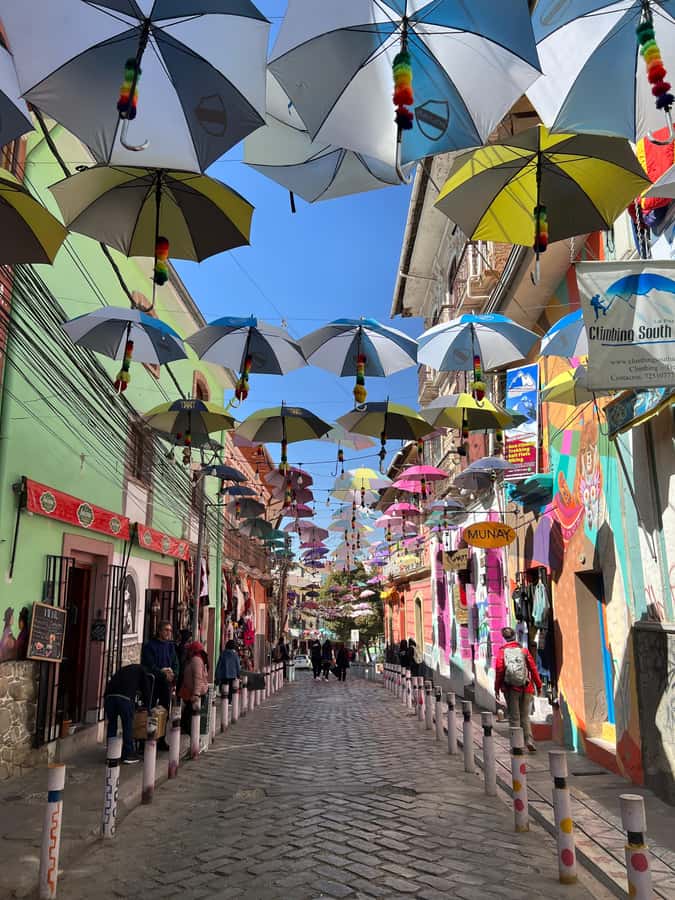
After the high views, the tour moves into the older center and Calle Jaén. This cobblestone street is one of the best-preserved colonial streets in La Paz, lined with brightly painted buildings dating from the 18th century.
Calle Jaén feels notably calmer than the main avenues. You can focus on the colored façades, doors, and close-set buildings without the same level of traffic around you. I like this stop because it gives you a sense of old La Paz in a small, walkable stretch rather than through a long lecture.
The street is also useful for understanding the city’s mix of influences. Spanish colonial design appears alongside local Andean details, a pattern you will see again at San Francisco Church. Your guide can connect the buildings and street layout to the wider story of La Paz.
Do not expect a long, slow architectural walk. With Moon Valley, the cable cars, the market, the plaza, the church, and shopping still ahead, the visit is likely to be an introduction rather than a detailed study of every building. If Calle Jaén catches your attention, make a note to return on your own.
Plaza Murillo links politics, religion, and public life
Plaza Murillo is the historic and political center of La Paz. It is surrounded by important national buildings, including the Presidential Palace, the Legislative Assembly, and the Cathedral Basilica of Our Lady of Peace.
The Presidential Palace is often called the Burned Palace because it has endured several fires over the centuries. That nickname gives the square a memorable detail and helps explain why this is more than a formal city plaza.
The Legislative Assembly building is home to Bolivia’s parliament. Beside it, the cathedral shows the continuing importance of Catholic traditions in Bolivia. Together, the buildings place political power, religion, and public life in one compact setting.
This is a good place to let your guide explain how colonial and modern La Paz fit together. The city is not preserved in one tidy historic district. Instead, old churches, government buildings, steep streets, newer construction, and daily street activity all sit close together.
The square can occasionally be affected by demonstrations or closures. One visitor could not see the plaza fully because of protests, and that was outside the tour company’s control. A private format helps your guide adjust the order, but it cannot guarantee access to a public square during a civic event.
The Witches Market offers a window into Aymara ritual life
The Witches Market is one of La Paz’s most unusual stops. Local yatiris, or spiritual healers, sell objects used in traditional Aymara ceremonies, including dried llama fetuses, herbs, and potions.
These items are connected with beliefs about good fortune, health, protection, and prosperity. The market is best understood as a living part of local spiritual practice, not as a theatrical oddity arranged for visitors. Your guide can explain how ancient Andean beliefs exist alongside Catholic customs.
The llama fetuses often attract the most attention. They are traditionally associated with offerings connected to homes and buildings, though the tour information does not promise a particular demonstration or ceremony. Listen to the explanation rather than treating the objects as simple souvenirs.
This stop may feel confronting if you have never seen ritual goods of this kind. That is part of its value, but respectful curiosity matters. Ask questions through your guide, avoid treating the market like a costume display, and remember that these beliefs are meaningful to the people who use them.
The market is also a place where personal spending can creep into the budget. Shopping is not included, so carry cash only if you want to buy something. You should not feel pressured to purchase anything to appreciate the visit.
You can also read our reviews of more city tours in La Paz

San Francisco Church shows Andean Baroque detail
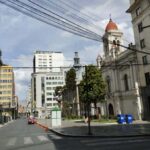
The stop at San Francisco Church follows naturally from the market. Built in the mid-16th century, the church is a major example of Andean Baroque architecture and one of La Paz’s best-known religious buildings.
Look closely at the stone façade. Catholic symbols appear beside indigenous motifs, showing how Spanish religious art and local Aymara traditions were brought together. The result is more complicated than a simple European church copied in Bolivia.
I find this pairing especially useful: the Witches Market introduces living Andean spiritual practice, while San Francisco Church shows how indigenous and Spanish traditions were also combined in formal religious art. The two stops make more sense together than they would as isolated sights.
The tour emphasizes the church’s architecture and cultural importance. The supplied details do not promise a full interior visit or a particular museum section, so I would treat this as a focused church stop rather than a long indoor tour.
Sagarnaga Street gives you a final chance to shop
The tour ends with time on Sagarnaga Street, a well-known shopping area in central La Paz. This is your chance to look for souvenirs after the guide has explained the city’s religious and cultural traditions.
Since the stop is at the end of a three-hour outing, the shopping time may be limited. I would decide in advance what you want to browse, then keep your purchases modest unless you have arranged extra time after the tour.
Personal expenses are not included. Bring cash for anything you may want to buy, and remember that the tour price also excludes meals and drinks. The guide may point you toward useful places, but restaurant costs remain your responsibility.
A private vehicle makes a packed route easier
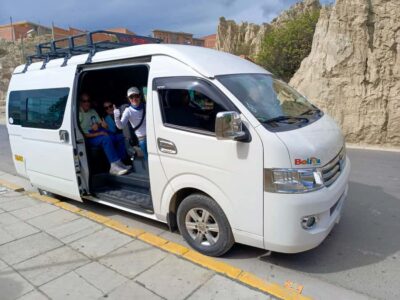
The private setup is the main reason this tour works in such a short period. Hotel pickup and drop-off are included, along with a private vehicle, a local guide, and the cable car rides. You do not have to organize separate transport between Moon Valley, the cable car, the old center, and the markets.
A private guide also gives you room to ask questions and adjust the route. A guide changed the itinerary for someone who had already visited Killi Killi, which suggests that the format can respond to your interests when timing allows.
Guide quality appears to be the strongest part of the experience. Tereza has been praised for both her help and her explanations, while Erika was singled out for discussing not only the history of La Paz but also the city’s present-day reality. Teresa also helped with restaurant suggestions and getting a phone SIM card, useful assistance when you have just arrived.
The transport side deserves more caution. The guide and driver are separate parts of the service, and one booking found both the vehicle and Juan Carlos, the driver, poor. That does not erase the value of the private format, but it does make it sensible to confirm pickup details and speak up if the vehicle is uncomfortable.
Is $35 a fair price for three hours?
At $35 per person, this is a reasonable package for someone who wants a short, organized introduction to La Paz. You are paying for a private group, hotel transfers, a guide, and the included cable car rides rather than only for a walking tour.
The value is strongest if you are new to the city or have limited time. In three hours, you see a natural site, ride above the city, walk a colonial street, visit the political center, examine traditional ritual goods, see a major church, and get a little shopping time.
The value is less clear if you already know central La Paz or prefer to spend an hour at each stop. The route covers a lot, but it cannot give every location the same attention. Think of it as a well-organized introduction, not a slow specialist tour.
Add 15 bob for Moon Valley, plus anything you spend on food, drinks, or souvenirs. The tour offers free cancellation up to 24 hours before departure, and you can reserve now and pay later, which gives you some flexibility while planning.
Who should choose this La Paz tour?
I would recommend it to first-time visitors who want to understand La Paz quickly without handling transport themselves. It is also a good fit if you want a guide who can explain the city’s political, religious, and indigenous sides in one compact outing.
You should be comfortable walking on uneven ground and along city streets. The tour is not suitable for wheelchair users or people with vertigo, and smoking is not allowed.
This is less suitable if you want a relaxed day, extensive church interiors, long market browsing, or a deep focus on one subject. The schedule is active, and the private vehicle saves time, but the route still asks you to move from one stop to the next.
How to prepare for the three-hour route
Wear comfortable walking shoes and bring water. A hat and sunscreen are important, as is a camera if you want to capture Moon Valley, the cable car views, and the city’s colorful streets.
Keep 15 bob ready for the Moon Valley entrance. Extra cash is useful for Sagarnaga Street and any other personal purchases, but meals and drinks are not included.
English- and Spanish-speaking guides are available. If you have already visited a major viewpoint or want help with practical matters such as a SIM card or restaurant ideas, mention it at pickup. A private tour gives you a better chance of getting that kind of useful local help.
FAQ
How long does the tour last?
The tour lasts three hours.
What is the price?
The listed price is $35 per person.
Is hotel transportation included?
Yes. Hotel pickup and drop-off are included, along with private transport.
Is the Moon Valley entrance fee included?
No. You should bring 15 bob to pay the entrance fee separately.
Are cable car rides included?
Yes. The tour includes rides on two scenic Mi Teleférico lines.
What languages are available?
Live guides are available in English and Spanish.
Is this a private tour?
Yes. It is offered as a private group experience with a local guide and private vehicle.
What should I bring?
Bring comfortable shoes, a hat, sunscreen, water, and a camera. Cash is useful for the Moon Valley entrance fee and personal purchases.
Can I cancel or pay later?
You can cancel up to 24 hours in advance for a full refund. You can also reserve the tour and pay later.
Should you book this La Paz experience?
Book it if you want a fast, well-connected first look at La Paz and value having a private guide explain what you are seeing. The best parts are the Moon Valley contrast, the two cable car rides, and guides such as Tereza or Erika who can add useful context beyond dates and monuments.
Skip it if you dislike heights, need wheelchair access, or want a slow visit with plenty of time at each stop. For most able walkers with only a few hours in La Paz, the $35 price is fair—just budget for the Moon Valley fee, expect a brisk pace, and confirm the vehicle arrangements before departure.
More Guided Tours in La Paz

More Tours in La Paz




More Tour Reviews in La Paz

Not for you? Here's more nearby things to do in La Paz we have reviewed




Moon Valley & Canyon Tours, compared
 ★ 4.9La Paz: Private City Tour with Cable Car & Moon Valley VisitFrom $43508 reviews
 ★ 4.9La Paz: Valle de las Animas, Moon Valley, & Killi Killi TourFrom $85192 reviews
 ★ 4.4From La Paz: Day Trip to Chacaltaya and Moon ValleyFrom $4065 reviews
 ★ 4.2La Paz City Tour and Moon ValleyFrom $4038 reviews
Browse the lists this tour appears in