
Reviewed · UYUNI SALT FLATS TOURS
From La Paz: 3-Day Uyuni Salt Flat and Incahuasi Island Tour
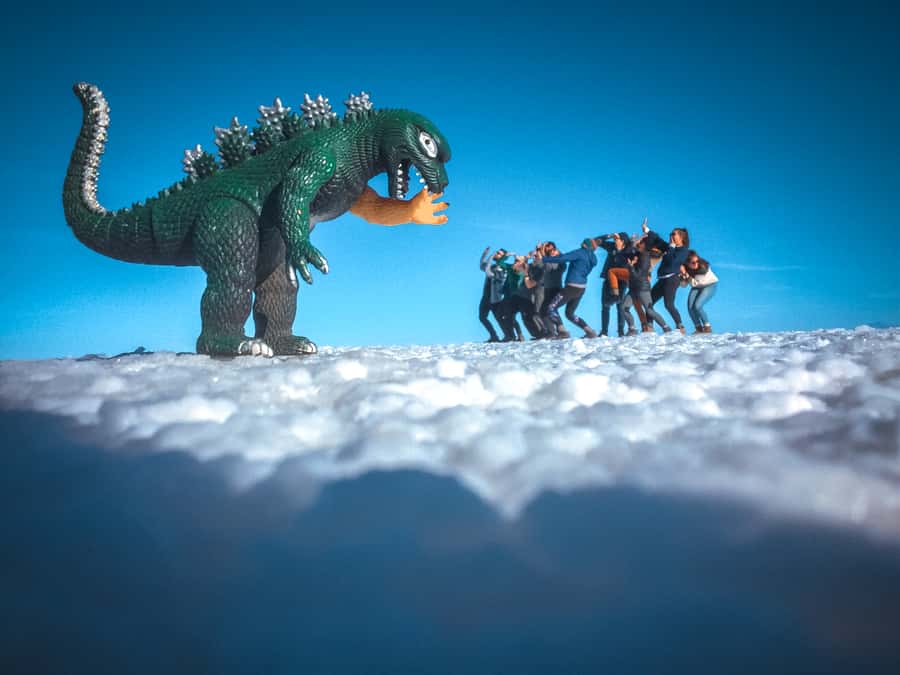
Salt can turn the horizon into a mirror. This three-day trip connects La Paz with Bolivia’s vast Uyuni Salt Flats, combining an overnight bus ride, a full 4WD day, and striking stops such as the Train Cemetery, Colchani, Incahuasi Island, and the Dakar monument. I like the sharp contrast between rusting 19th-century locomotives and brilliant white salt, and I like how much scenery fits into one tightly planned day.
I also like the price structure: $289 per person covers round-trip bus tickets, onboard meals, a 4WD vehicle, lunch, a local driver, and an English- or Spanish-speaking guide. Guides Orlando and driver Vladimir have received especially warm praise for good organization, helpful photography, and friendly service. The clear drawback is the overnight bus: the seats do not recline very far, roads can be rough, and one departure included food that caused illness.
You spend only one full day in Uyuni, so this is a practical choice rather than a leisurely one. Be ready for waiting around the Uyuni office, a high-altitude day at 3,665 meters, and a schedule that can shift with roadblocks, strikes, or weather.
In This Review
- Five things to know before booking
- The overnight ride from La Paz to Uyuni
- The morning arrival and Uyuni office wait
- Rust and memory at the Train Cemetery
- Colchani and the working salt trade
- Crossing the 12,000-square-kilometer salt flats
- The salt hotel and the Dakar monument
- Incahuasi Island and its giant cacti
- Sunset, wine, and the return to Uyuni
- What the $289 price really buys
- Altitude, comfort, and who should book
- Should you book this La Paz to Uyuni tour?
- FAQ
- Where does the tour start and finish?
- How long is the tour?
- Is Incahuasi Island included?
- What meals are included?
- What should I bring?
- Is the tour suitable for people with altitude or back problems?
Five things to know before booking
- One full 4WD day covers the major sights: You visit the Train Cemetery, Colchani, the salt flats, the salt hotel, the Dakar monument, the world-flags site, and Incahuasi Island.
- Incahuasi is unavailable from January through April: Rainy-season water conditions can prevent access to the island.
- The $289 price includes the big transport costs: Round-trip buses and the salt-flat vehicle are included, along with several meals.
- The journey uses overnight buses instead of hotels: This saves money and time but makes the trip tiring.
- The group is limited to 11 people: That gives the day a more personal feel than a large coach tour.
- Bring a passport and water: Comfortable clothes and shoes are also listed as essentials.
The overnight ride from La Paz to Uyuni

Your first evening begins at the bus office at 8:30 p.m., with departure scheduled for 9 p.m. The bus ride is part of the tour rather than a simple transfer, since service includes dinner, breakfast, a bottle of water, and a toilet onboard.
This arrangement is the main reason the trip can fit Uyuni into three days from La Paz. You leave after dinner, arrive early in Uyuni, spend the day in a 4WD vehicle, then board another overnight bus back to La Paz. You do not lose a separate hotel night, and you avoid arranging transport between the two cities yourself.
The tradeoff is sleep. The seats recline, but not enough for everyone to rest well, and the roads can be bumpy. I would not choose this format if you need a proper night in bed to function the next day.
Food is another point to consider. Dinner and breakfast are included on both bus journeys, but one passenger reported becoming ill after a bus meal. Since snacks and drinks are not included, I would carry a few familiar snacks and extra water rather than relying entirely on the onboard service.
A few more La Paz tours and experiences worth a look

The morning arrival and Uyuni office wait
The bus is due into Uyuni City at about 7:30 a.m. You have free time before meeting at the operator’s office near the bus station, with the 4WD departure planned for 10:30 a.m.
That gap gives you time to get your bearings, but it is not necessarily a comfortable waiting period. A reported departure included nearly two hours in an office without heating before the desert drive. The office wait after returning from the salt flats may also feel long, since the vehicle gets back around 7:30 p.m. and the return bus leaves at 9 p.m.
I would treat this as a transfer day with a tour attached, not as a relaxed start. Keep your passport, water, and personal items easy to reach. The schedule allows some breathing room, but the timing is still closely tied to the buses.
Rust and memory at the Train Cemetery
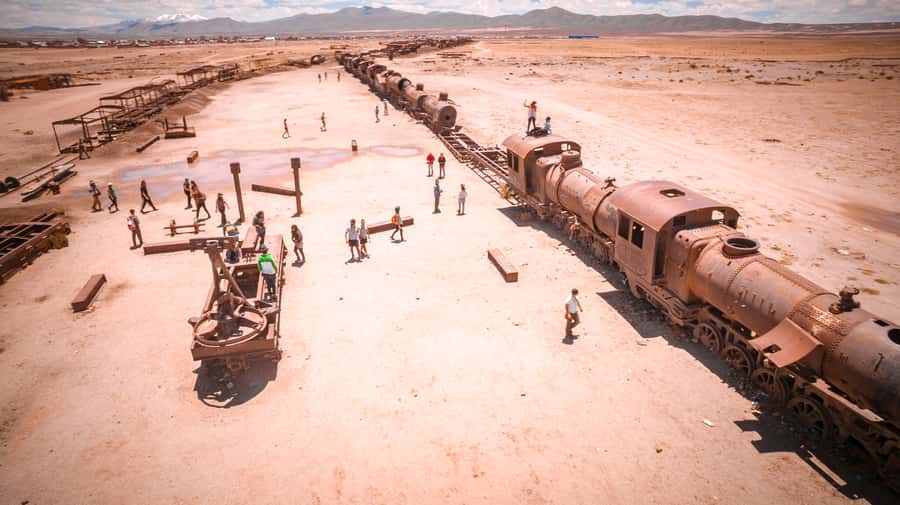
The first major stop is the Train Cemetery, where 19th-century locomotives sit in the open air outside Uyuni. These old engines recall the area’s former rail ambitions and now provide one of the tour’s most unusual photo settings.
You get a strong visual change here. Instead of the clean geometry of the salt, you see corroded metal, wheels, and locomotive frames against an open plain. It is a short stop, but it gives the day historical texture before you move into the salt-producing region.
The ground and metal structures make comfortable shoes a good idea. You will want time for photographs, but the real attraction is the setting rather than a long museum visit.
Colchani and the working salt trade
At Colchani, the tour visits the edge of the salt flats and the Rosario Cooperative, a salt iodization plant. You can see how salt is extracted and processed, which adds useful context to the enormous white surface you are about to cross.
This stop also includes a small salt museum and an artisanal market. Look for llama clothing and handicrafts made from salt. I like this part because it connects the famous scenery with local production instead of treating the salt flats as a photo backdrop alone.
You should also expect a shopping element here. That does not make the stop pointless, especially if you want a small souvenir, but keep your budget in mind. Personal expenses are not included, and the tour does not cover drinks or snacks.
Crossing the 12,000-square-kilometer salt flats
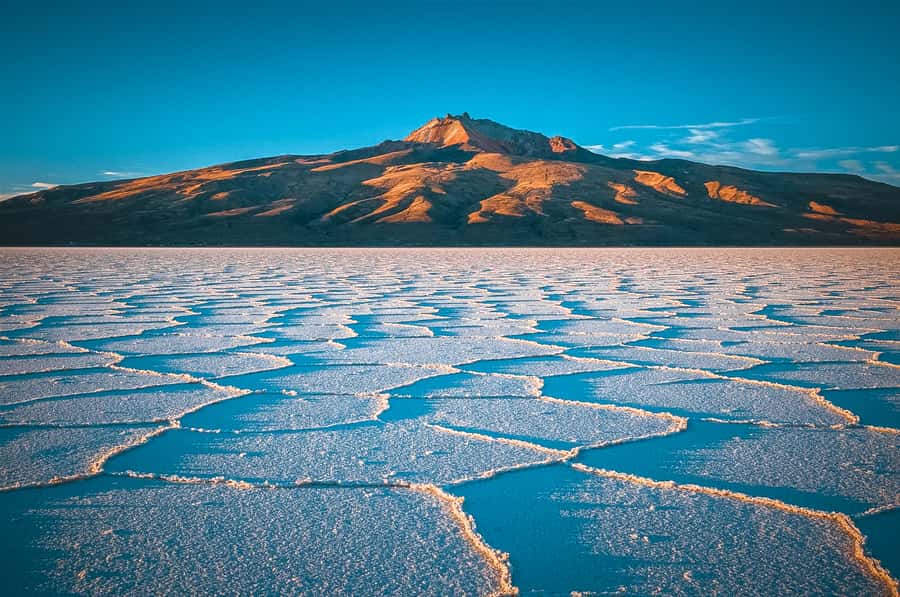
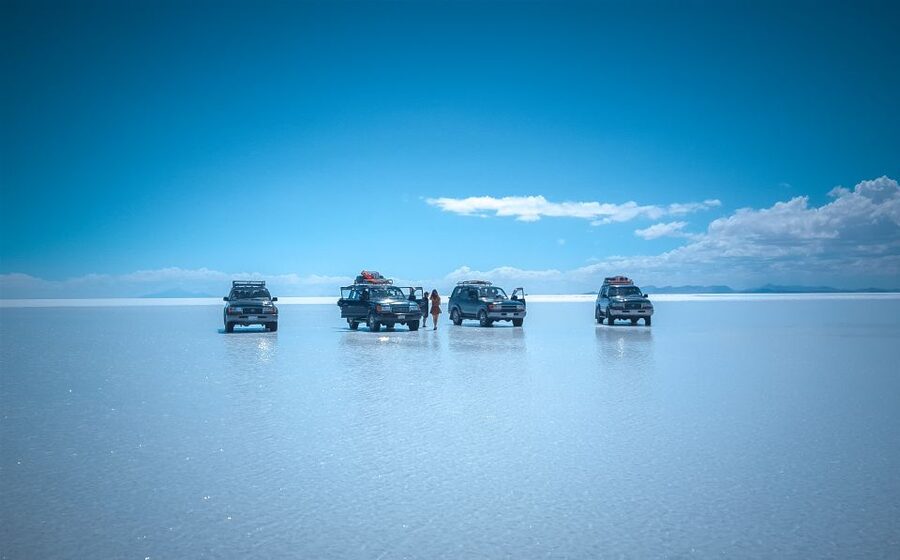
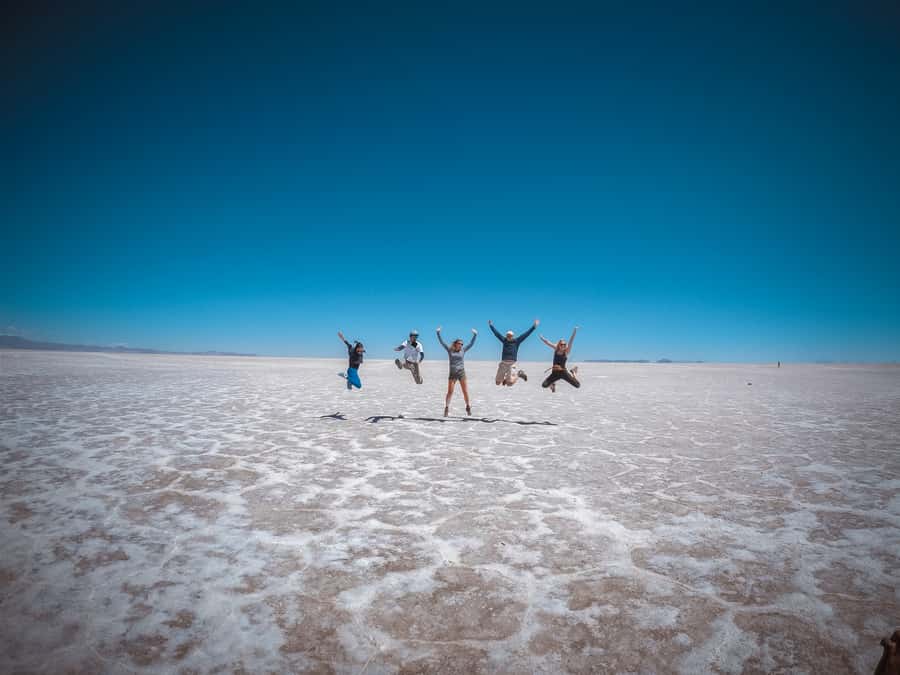
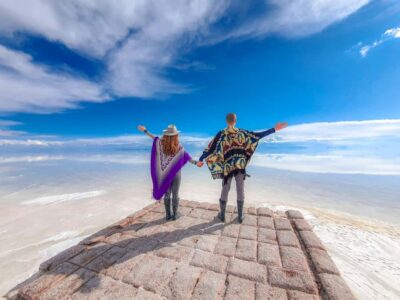
The main event is Salar de Uyuni, a salt expanse covering about 12,000 square kilometers at an altitude of 3,665 meters. The scale is hard to grasp from a vehicle. The surface stretches so far that the usual sense of distance begins to slip away.
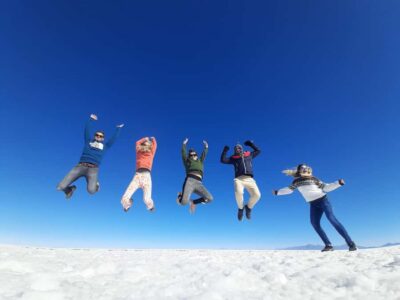
The 4WD vehicle is the right tool for this setting. You leave the city behind and travel across the salt by vehicle with a rooftop luggage rack, stopping at features such as the salt eyes and areas where salt is collected. The day is built around open views and photographs, so you will have repeated chances to stop and take pictures.
Your guide’s role matters here. Orlando has been especially praised for organizing the day well and helping with photographs. That kind of assistance is valuable on the flats, where a good photo often depends on positioning, timing, and a little patience.
Guide quality may vary by departure. One account described the guide as less serious, while another found the guide’s opening a little awkward before the service improved later. The small-group limit of 11 gives the guide a better chance to help, but you should still expect some variation in style.



The salt hotel and the Dakar monument
The route includes an unusual salt-block construction described as a museum and salt hotel. Walls and other elements are made entirely from salt, making this a quick but memorable stop.
Do not confuse the salt hotel visit with overnight lodging. Your accommodation on this package is effectively the bus, not a hotel in the salt flats. The salt building is included as a sight along the route.
Later, you visit the Dakar Monument and the Flags of the World site. The Dakar monument refers to the famous desert race, while the flag collection offers a small personal touch: you can bring your own national flag and add it for free.
These stops break up the endless white scenery and create easy photo opportunities. They also show how Uyuni has become a meeting point for local salt culture, international visitors, and global adventure events.
Incahuasi Island and its giant cacti
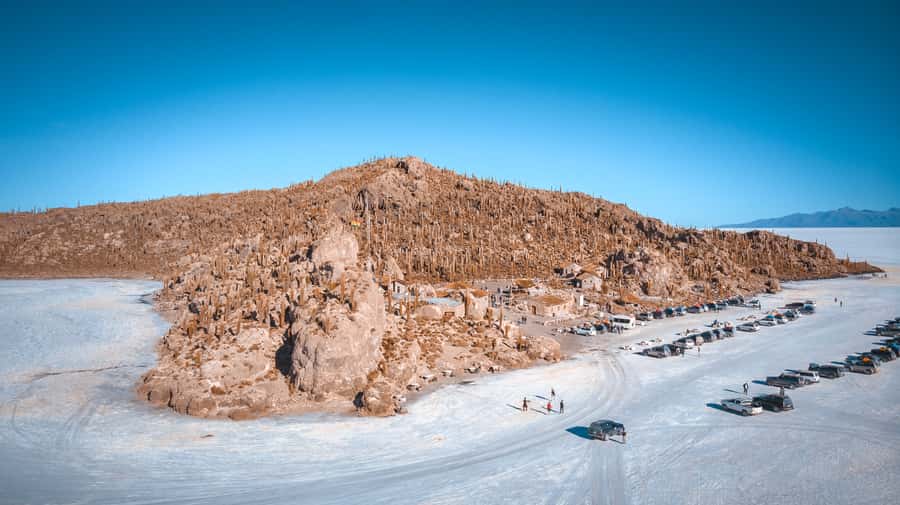
Incahuasi Island sits near the center of the salt flats and feels like an isolated oasis. Its most striking feature is the collection of cacti, some measuring from one to four meters high.
The island gives you a different view of Uyuni. Instead of looking across a flat white surface, you see tall cacti rising above the salt with the open expanse behind them. It is both a photo stop and a place to pause during a long day in the vehicle.
There is an important seasonal restriction. From January through April, the tour cannot access Incahuasi Island. If the island is your main reason for booking, check the date carefully and accept that conditions may alter the route.
The tour also lists an entrance fee of 30 Bolivianos, or about $5, for Incahuasi. That charge is not included in the advertised price.
Sunset, wine, and the return to Uyuni
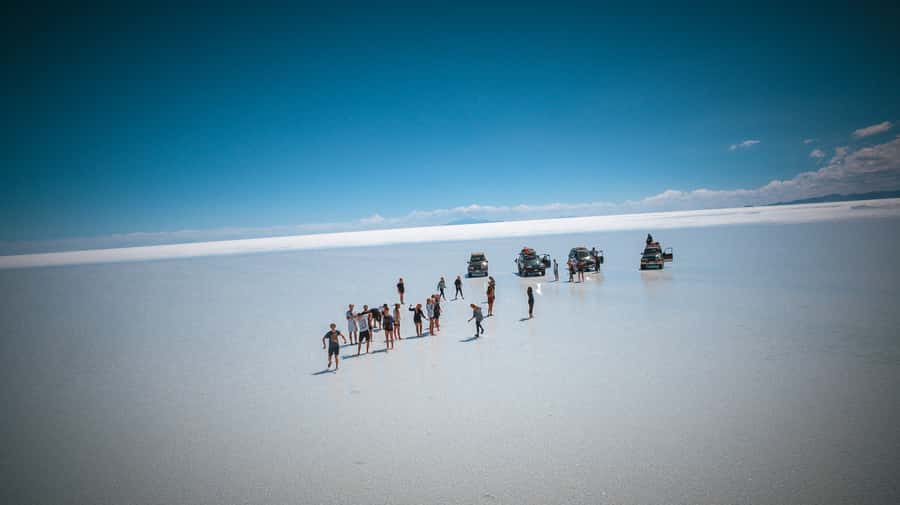
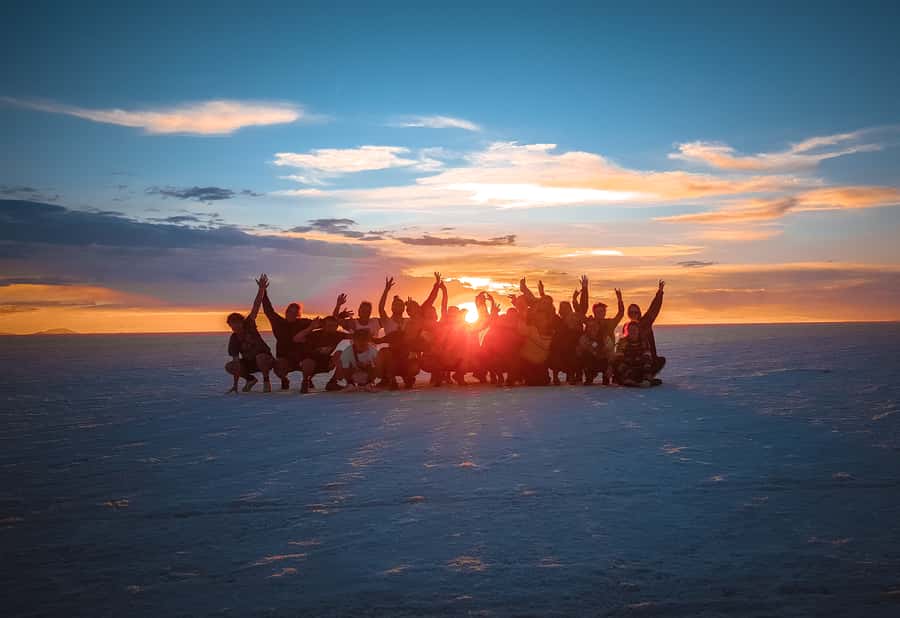
The day ends with sunset on the salt flats and a glass of wine. This is a fitting final stop because the bright white surface changes character as the light fades.
The sunset is also the point where the schedule becomes especially important. The vehicle returns to Uyuni at about 7:30 p.m., while the bus back to La Paz departs at 9 p.m. You then go to the bus office around 8:30 p.m. for the evening departure.
You have enough time for the transfer as planned, but not much room for delays. Road conditions, weather, strikes, and roadblocks can change the schedule with little notice. The operator specifically treats the times as guides rather than guarantees, so avoid booking a separate early-morning connection from La Paz.
The return bus includes the second dinner and breakfast. Arrival in La Paz is expected at about 6:30 a.m., with the tour ending at the city bus station.
What the $289 price really buys

At $289 per person, this is not the cheapest way to see Uyuni, but it can be good value if you want a ready-made connection from La Paz. The price includes the round-trip buses, onboard dinners and breakfasts, a full-day Uyuni trip, lunch, a local driver, an English- or Spanish-speaking guide, and 4WD transport.
The major saving is convenience. You do not need to arrange the La Paz–Uyuni bus, find a local salt-flat operator, or organize the return journey. The small group, limited to 11 people, is another advantage over a large vehicle.
The price does not cover everything. Budget at least 30 Bolivianos for the Incahuasi entrance, plus roughly 100 Bolivianos for personal spending. Drinks and snacks are extra, so the real cost will be a little higher than the headline amount.
The value depends on your tolerance for discomfort. I think the package makes sense for a short Bolivia schedule, especially if your priority is seeing the salt flats without building a separate Uyuni plan. If you have more time, staying longer in Uyuni would likely give you a more comfortable pace and remove the need to sleep on two buses.
Altitude, comfort, and who should book
At 3,665 meters, Uyuni is not a low-altitude outing. The tour is specifically not suitable for people with altitude sickness or back problems, and the combination of high elevation, vehicle travel, and poor overnight sleep may be demanding.
The practical packing list is short: passport, comfortable shoes, water, and comfortable clothes. Pets are not allowed. Since the tour includes long bus rides and a full day in a 4WD vehicle, comfort matters more than dressing for a formal city outing.
I would recommend this trip to you if you have only three days, want the main Uyuni sights, and are willing to trade sleep for efficiency. It also suits photographers, first-time visitors to the salt flats, and anyone who likes a small group with a guide available in English or Spanish.
I would be more cautious if you have back trouble, struggle with altitude, or know that an overnight bus ruins the rest of your trip. The strongest praise goes to the day guides and drivers, particularly Orlando and Vladimir, but the transport is still the weak link.
Should you book this La Paz to Uyuni tour?
Book it if you want the main Uyuni experience in one tightly packed trip and value having transport, meals, a 4WD vehicle, and a guide arranged for you. The Train Cemetery, Colchani, salt hotel, Dakar monument, flags, Incahuasi Island, and sunset wine make for a full and varied day.
Skip it if comfort is your first concern. In that case, allow more time in Uyuni and choose a plan with proper lodging rather than two overnight bus rides.
Before paying, check the month carefully. January through April may remove Incahuasi Island from the route, and all times can change because of conditions beyond the operator’s control. Free cancellation is available up to 24 hours before departure, and you can reserve now and pay later, which helps if your Bolivia schedule is still shifting.
FAQ
Where does the tour start and finish?
The tour starts in La Paz City and finishes at the La Paz City bus station. You depart from La Paz on the first evening and return there on the third morning.
How long is the tour?
The total duration is three days. The main salt-flat visit takes place on the second day, with overnight bus journeys between La Paz and Uyuni.
Is Incahuasi Island included?
Incahuasi Island is included in the planned route, but access is not possible during the rainy season from January through April. The entrance fee of 30 Bolivianos, about $5, is extra.
What meals are included?
The package includes two dinners and two breakfasts served on the buses, plus one lunch during the Uyuni 4WD day. Drinks and snacks are not included.
What should I bring?
Bring your passport, comfortable shoes, water, and comfortable clothes. Pets are not allowed.
Is the tour suitable for people with altitude or back problems?
No. The tour is listed as unsuitable for people with altitude sickness or back problems. Uyuni is at approximately 3,665 meters, and the trip also involves overnight bus travel and a full day in a 4WD vehicle.
More 3-Day Experiences in La Paz
More Tours in La Paz

More Tour Reviews in La Paz
Not for you? Here's more nearby things to do in La Paz we have reviewed



Uyuni Salt Flats Tours, compared
 ★ 4.5From La Paz: Uyuni Salt Flat Tour & Overnight Roundtrip BusFrom $275327 reviews
 ★ 4.5Uyuni tour express from La Paz by busFrom $269172 reviews
 ★ 4.4From Uyuni: Red Lagoon & Uyuni Salt Flats 3-Day Guided TourFrom $354160 reviews
 ★ 4.3La Paz: 5-Day Uyuni Salt Flats by BusFrom $486153 reviews
Browse the lists this tour appears in