
Reviewed · UYUNI SALT FLATS TOURS
From Uyuni: Red Lagoon & Uyuni Salt Flats 3-Day Guided Tour
White salt, red water, flamingos, repeat. This three-day route gives you far more than a quick photo stop at the Salar de Uyuni: I love the sharp change from white salt to desert, lagoons, and geysers, and I like the time set aside for playful perspective photos and a salt-flat sunset. Your trade-off is basic shared lodging, long hours in a jeep, and several extra entrance fees.
At $354 per person, the tour makes sense if you want one organized trip covering the salt flats, Eduardo Avaroa National Reserve, flamingo lagoons, hot springs, and geysers. You travel in a small group of up to 11 with an English- or Spanish-speaking guide, though the simple accommodation and rough roads mean this is an expedition, not a comfortable coach holiday.
In This Review
- Five things to know before you book
- Day 1: From Uyuni’s trains to the endless salt
- Incahuasi Island and the photo session
- Day 2: Ollagüe, flamingo lagoons, and the Red Lagoon
- Day 3: Geysers at sunrise and a 35°C hot spring
- What the 4WD ride is really like
- Food, sleeping arrangements, and what to pack
- Is $354 good value?
- Who should choose this Uyuni tour?
- Should you book it?
- FAQ
- How long is the tour?
- What is included in the price?
- How large is the group?
- Are entrance fees included?
- What should I bring?
- Can I cancel the booking?
Five things to know before you book
- The route changes dramatically each day: Day 1 is white salt and giant cacti; Days 2 and 3 bring deserts, lagoons, geysers, and hot springs.
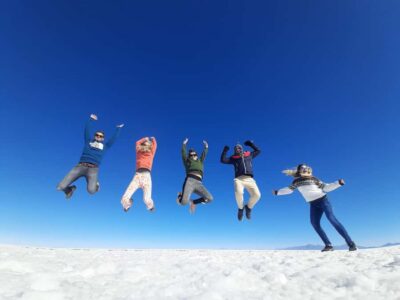
- The salt-flat photos are a major part of the fun: Your guide can help create forced-perspective shots using toys, people, and the endless white surface.
- Flamingos are a real highlight: You may see them around Cañapa, Hedionda, Chiarcota, and the Red Lagoon.
- Expect a packed 4WD: The vehicle carries the group and rooftop luggage, with long stretches on rough roads and seat rotation along the way.
- Budget for extras: Listed entrance fees, toilets, drinks, and optional sleeping bags or rain boots are not covered by the $354 price.
Day 1: From Uyuni’s trains to the endless salt
Your pickup is normally between 10:15 and 10:30 a.m. at your hotel lobby, with departure at about 10:40. If your accommodation is not on the pickup list, you meet at the operator’s Uyuni office at 10 a.m., at Colon Street and Camacho Corner.
The first stop is the Train Graveyard on the edge of Uyuni. Rusting locomotives sit in the open desert, their metal frames weathered by sun and wind. It is a short, atmospheric stop and an easy place to begin taking photographs before the day’s vast white views arrive.
Next comes Colchani, a small settlement beside the salt flats. Local workshops sell salt handicrafts along with textile work made from llama and alpaca wool. I would use this stop for practical souvenirs rather than waiting until the end of the trip, since these are among the few shopping opportunities on the route.
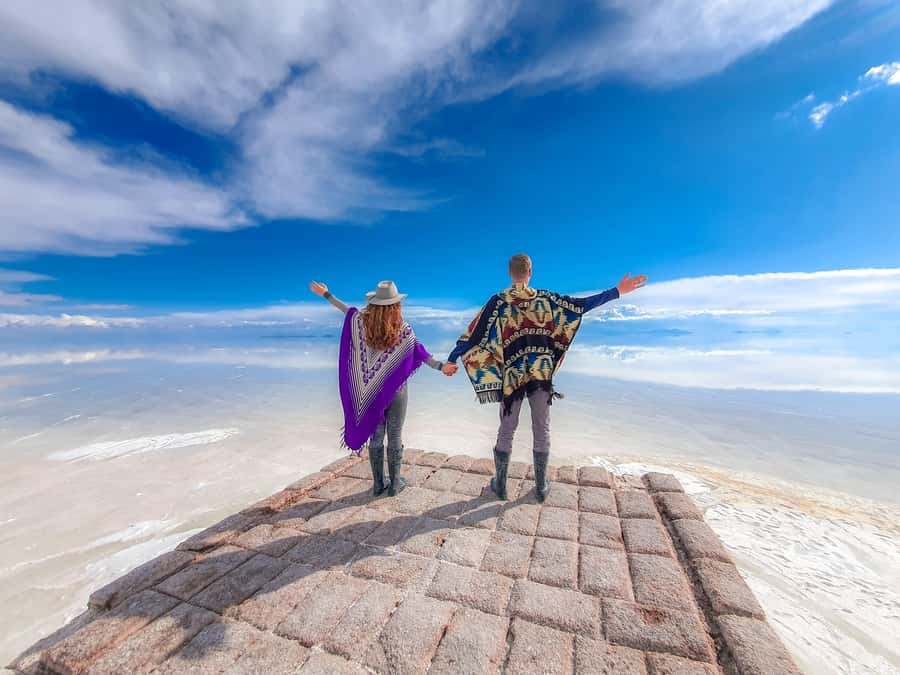
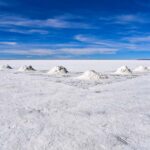
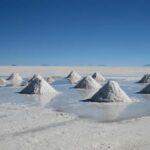
Then the road reaches the Salar de Uyuni. The scale is difficult to grasp at first. The surface stretches so far that the horizon can appear to disappear, leaving you with white ground, bright sky, and a very small-looking jeep.
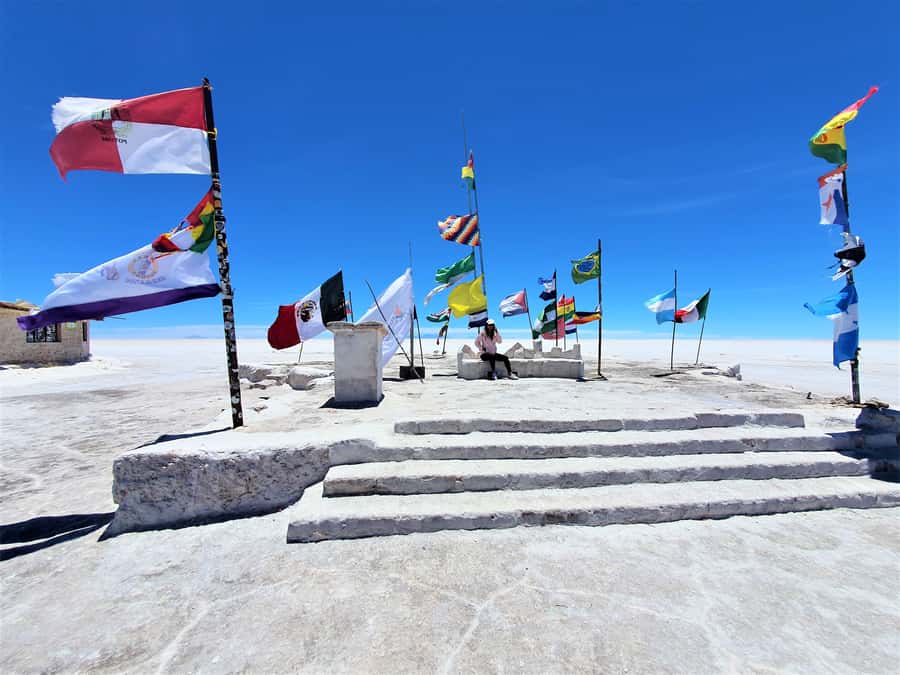
The route includes Ojos de Agua Salada, or saltwater springs, along with a former salt hotel now used as a museum and restaurant. You also stop at Flags of the World, where you can place your own national flag, and at a monument connected with the Dakar race.
Lunch is served during the salt-flat portion of the day. Bring water even though meals are included; one past participant recommended carrying around three liters for personal use, and that is sensible in such a dry setting.
You can also read our reviews of more guided tours in Uyuni
Incahuasi Island and the photo session
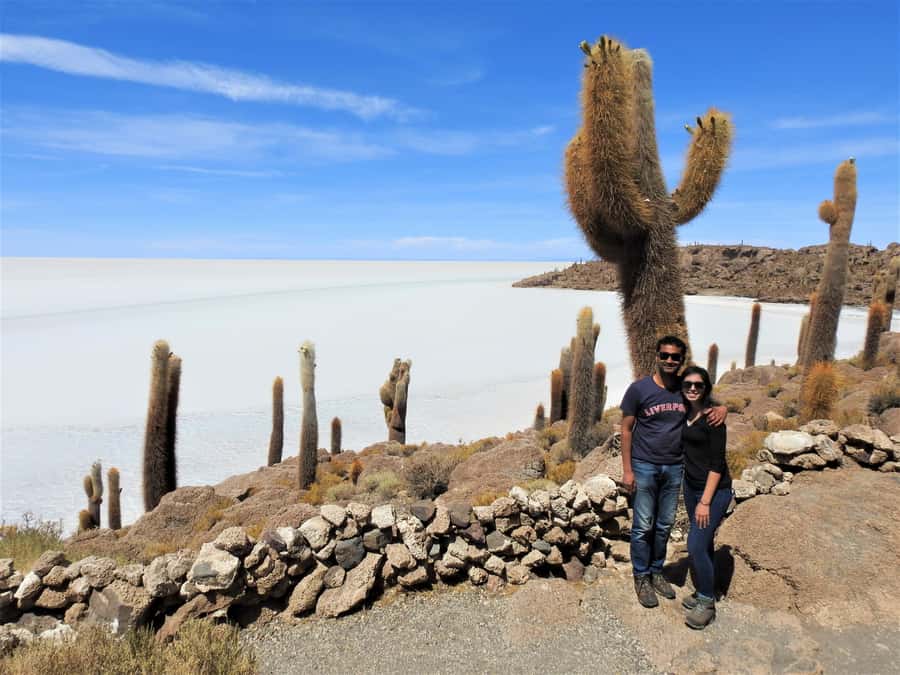
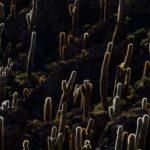
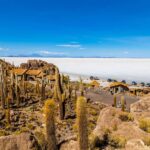
Incahuasi Island rises from the salt plain like a rocky island in a white sea. A walk to the top brings you among giant cacti and rock formations made from petrified coral.
The entrance fee to Isla Incahuasi is 30 bolivianos and is not included. The walk is one of the day’s active sections, so comfortable shoes matter. You also get a close look at how the island breaks up the otherwise flat surface of the salar.
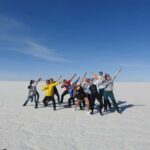
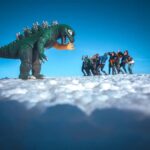
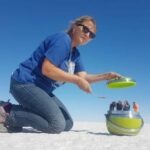
Afterward, your group gets time for perspective and proportion photographs. Your guide may help arrange shots that make people appear tiny, huge, or able to hold up another person. This is a good place to use small props, empty food packaging, or anything else that helps create scale, though the brightest challenge is simply keeping your eyes open in the glare.
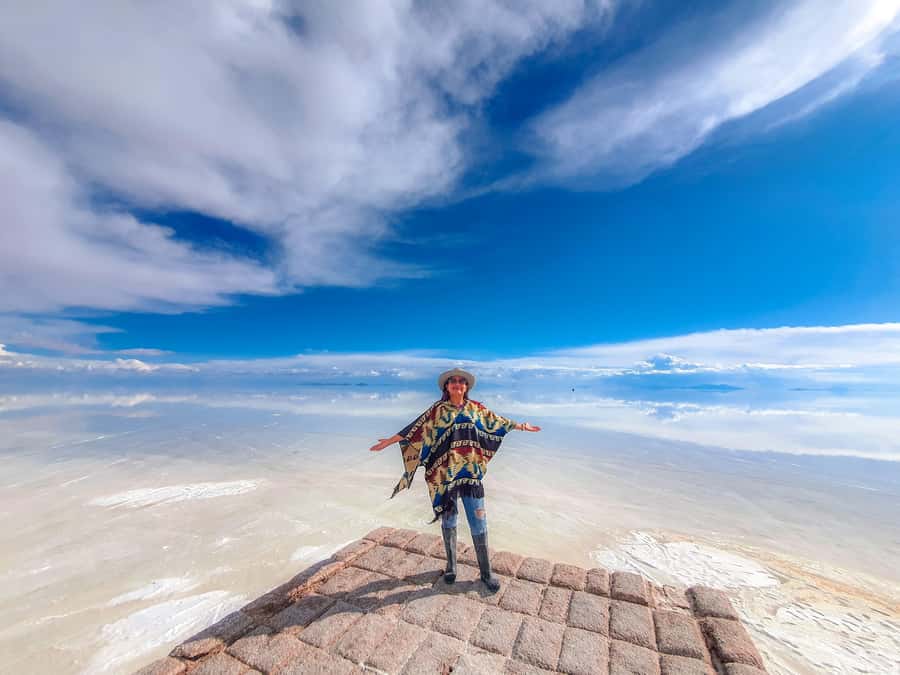
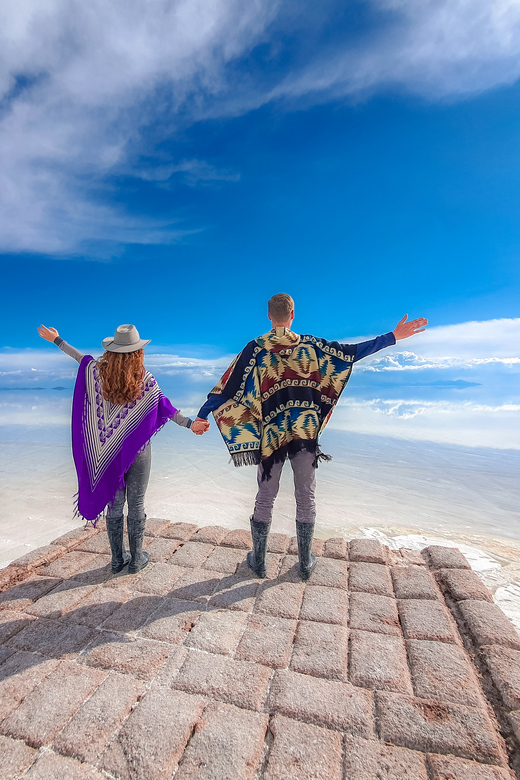
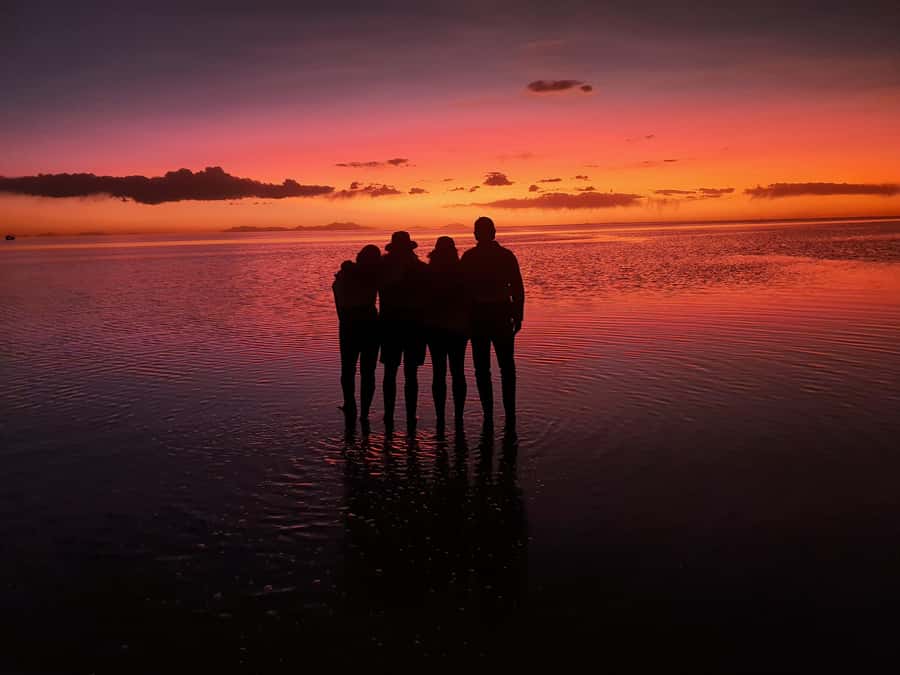
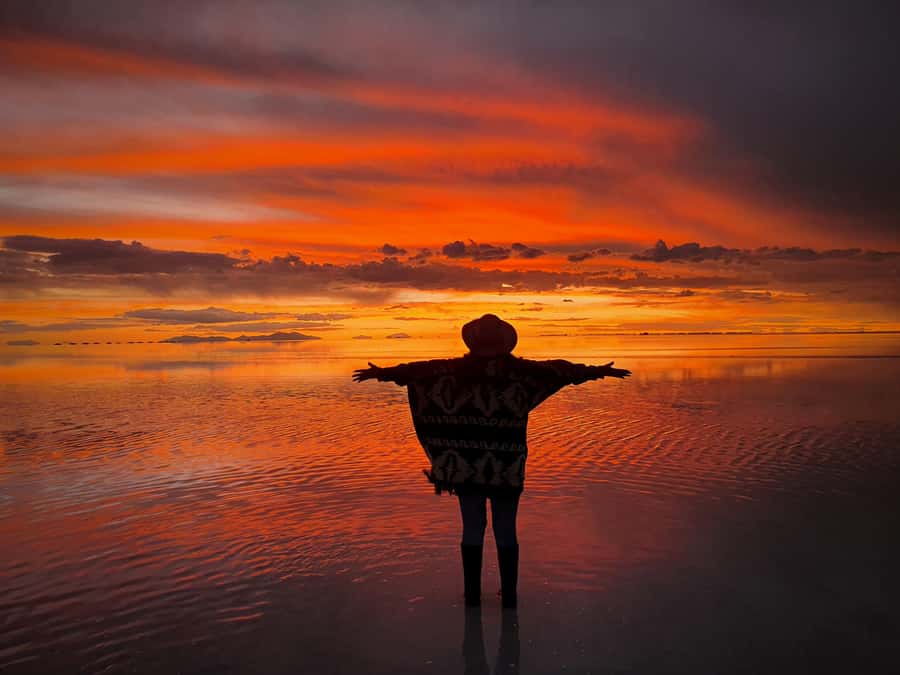
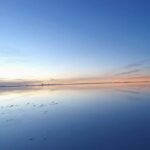
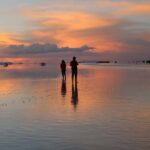
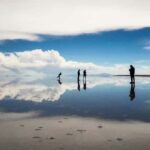
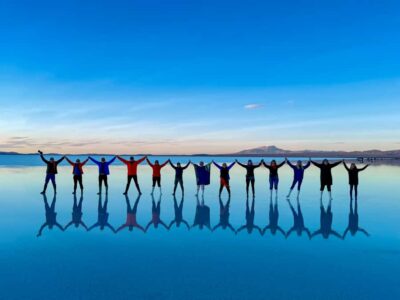
The day ends at a broad section of the flats for sunset. The white surface reflects changing colors as the sun drops, and the outing includes a glass of wine. If you travel during a period when water remains on the salar, you might also see the famous mirror effect. The exact conditions depend on the amount of water present.
You spend the night at Atulcha Salt Hostel in a shared six-bed room with your jeep group. Toilets are shared, and there is no Wi-Fi. The salt setting is memorable, but you should think of the room as a clean, practical base rather than a private retreat.
Day 2: Ollagüe, flamingo lagoons, and the Red Lagoon
Day 2 begins at 6:30 a.m. with breakfast. You head toward the Chiguana Desert on the southern side of the salt flats, where volcanoes frame the open terrain. Ollagüe is still active, and a lookout offers a view toward the volcano.
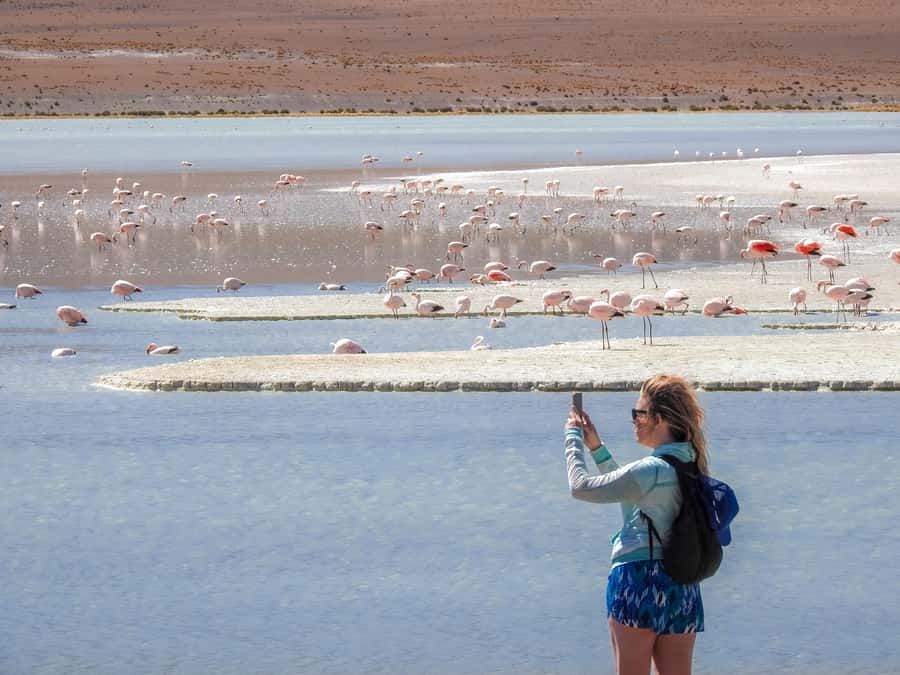
From there, the road becomes rockier as you continue to Cañapa, Hedionda, and Chiarcota lagoons. These stops bring a welcome change from the white salar. The lagoons are home to flamingos, which gather near the water and feed in their natural setting.
You should bring a camera with a useful zoom if you have one, but the birds can also be seen without specialist equipment. The appeal here is not just the flamingos; it is the contrast between pink birds, mineral-colored water, low vegetation, volcanoes, and bare ground.
Lunch comes before entering Eduardo Avaroa National Reserve. The reserve entrance fee is 150 bolivianos and is paid separately. This is an important cost to include in your budget because it is one of the larger unavoidable extras on the journey.
The afternoon reaches the Siloli Desert, described as one of the highest and driest deserts in the world. Its rock formations are shaped by wind and erosion, and the famous Rock Tree gives you one of the route’s most recognizable photo stops.
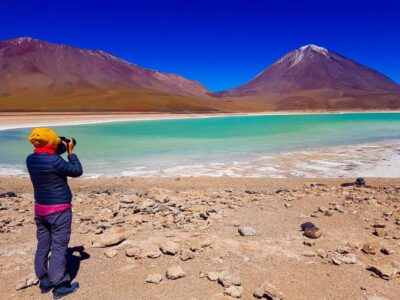
The day finishes at the Red Lagoon. The water’s red color comes from mineral content and microscopic life, and pink flamingos often gather around its edges. You view the lagoon from an overlook, making this a good point for wide photographs rather than close wildlife portraits.
The scenery is excellent, but Day 2 is also when the physical demands of the tour become clear. You spend many hours seated in the jeep, and the road can be rough. One useful arrangement is seat rotation, which allows everyone a chance at different windows and gives you a break from the same position.
That night is at Huayllajara Hostel. It is another basic shared six-bed room for your jeep group, with shared toilets and no Wi-Fi. The accommodation may be better than you fear from the description, but you should still pack with patience and accept that privacy is limited.
Day 3: Geysers at sunrise and a 35°C hot spring
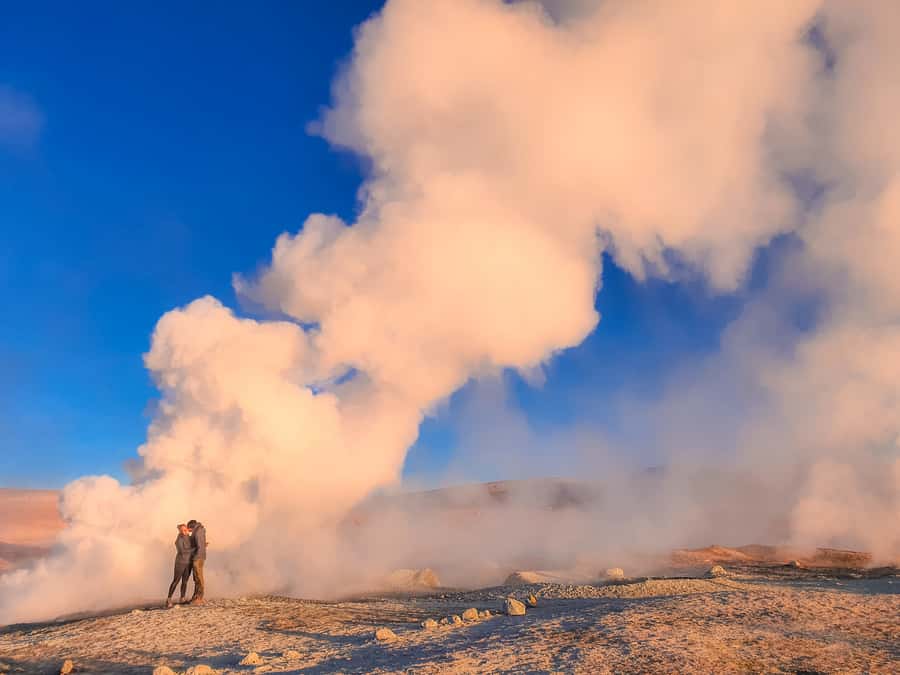
The final day starts around 5 a.m. at Sol de Mañana Geyser. You walk near fumaroles, steaming craters, and boiling mud pots. The early start is necessary to reach the geothermal area at the right time, but it also means a cold, dark departure from the hostel.
Take care around the geysers and follow your guide’s instructions. The ground contains hot mud and steam, so this is not a place for wandering off to find a better photograph.
Next comes an open-air hot spring with water at about 35°C. After the cold morning, the bath can feel especially welcome. Pack a towel and sandals in an easy-to-reach part of your luggage rather than burying them under everything on the rooftop rack.
The route then passes the Dali Desert, followed by the Green Lagoon and White Lagoon. These stops add more mineral color and open views before the return journey to Uyuni. The names give you a clue to the appeal: this is a day of strong contrasts rather than one single landmark.
You eat a picnic lunch beside the road, then continue through Rock Valley. A brief stop at San Cristobal Village gives you a chance to use the toilets. Arrival in Uyuni is scheduled between 5:45 and 6:45 p.m., so do not book a tightly timed evening connection unless you have a backup plan.
What the 4WD ride is really like
Transportation is by 4WD vehicle with a rooftop luggage rack. The small-group limit is 11, but the vehicle can still feel full, especially with luggage and supplies. One sensible practice is rotating seats during the drive and stepping out to stretch at stops.
The driver matters greatly on this route. You cross rocky tracks, remote desert, and long empty stretches where route knowledge and careful driving count for more than fancy equipment. Drivers and guides named on different departures include Jose, Ivan, Tony, Wilber, Rudi, and Sandro, while guides have included Violeta, Andres, Bismark, and Gus.
Your guide’s role goes beyond pointing at sights. A good guide explains the wildlife and terrain, manages the group, helps with photographs, and keeps the mood light during long drives. Bismark was praised for being funny and helpful, while Violeta was particularly flexible with an itinerary change for one person who needed to finish in Chile.
Still, the published route starts and ends in Uyuni City. Do not book this trip assuming a Chile finish can be arranged. Ask before paying if you need a border transfer or another endpoint.
A few more Uyuni tours and experiences worth a look
Food, sleeping arrangements, and what to pack
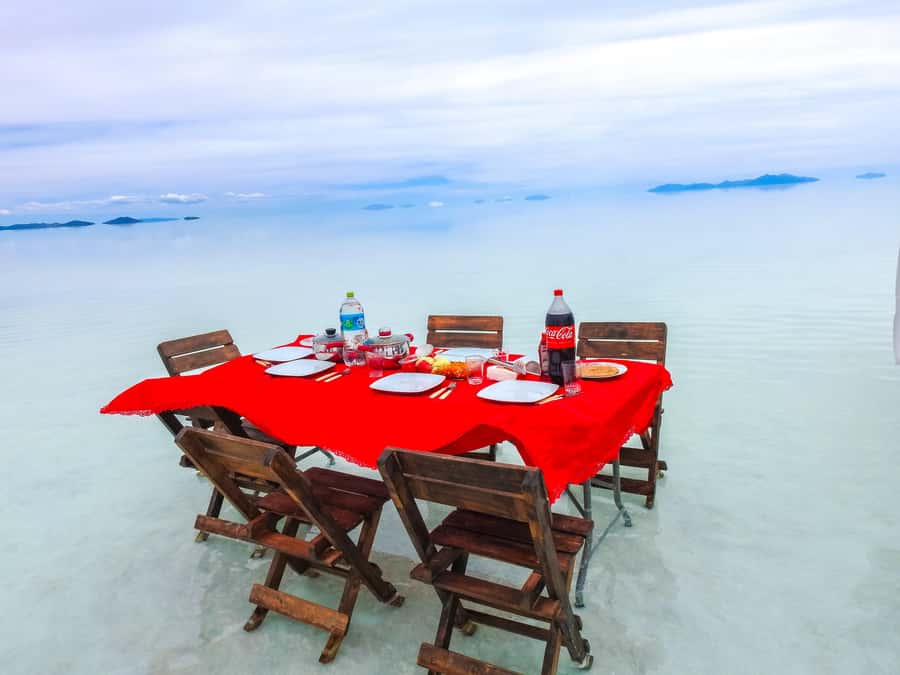
The price includes three lunches, two dinners, and two breakfasts. The food is practical fuel for long days, and it may include local dishes. Some meals have been described as filling and tasty, while food and lodging are the areas most open to improvement.
Drinks are not included. Carry water and keep a little personal money available for snacks, drinks, and toilets along the route.
Your packing list should be aimed at cold mornings, intense sun, and simple facilities:
- Warm clothing and a long-sleeved shirt
- Sunglasses and sunscreen
- Comfortable shoes
- Towel and sandals for the hot spring
- Water
- Toiletries
- A sleeping bag, if wanted, for the optional 50 BOB charge
- Rain boots, if needed, for the optional 20 BOB charge
The listed entrance costs are separate: 30 BOB for Incahuasi, 150 BOB for Eduardo Avaroa National Reserve, 15 BOB for Galaxy Caves, and 6 BOB for the hot springs. Together, those four listed admissions total 201 BOB, though Galaxy Caves is not named in the day-by-day schedule, so I would confirm that stop before counting the fee as certain.
Toilets along the way are listed at 30 BOB. A further 150 BOB is suggested for personal expenses. The optional hostel upgrade has an extra price shown during final payment, but no amount is provided here.
Is $354 good value?
At $354 per person, you are paying for more than the salt flats. The package includes a 4WD, local driver, guide, two nights of lodging, and seven included meals. It also links remote sights that would be awkward to arrange independently in only three days.
The value is strongest if you want a full route with minimal planning. You see salt formations, a cactus-covered island, volcanic desert, three flamingo lagoons, the Red Lagoon, geysers, hot springs, and colored lagoons without arranging separate transport between each area.
The value is weaker if you expect private rooms, strong Wi-Fi, generous personal space, or every cost included. The shared rooms are basic, the jeep can feel packed, and entrance fees add to the headline price. One person felt the price was high for the level of accommodation and inclusions, while other departures were described as worth every penny because of the range of places covered.
The operator offers free cancellation up to 24 hours before departure and allows you to reserve now and pay later. That flexibility is useful when your Bolivia route is still shifting, but you should still confirm pickup details and airport arrival information in advance.
Who should choose this Uyuni tour?
I would choose this trip if you want the broadest possible view of southwestern Bolivia in a short time. It suits adults and older children who can handle early starts, rough roads, shared rooms, and long periods sitting in a vehicle.
It is particularly good for photographers, bird watchers, and anyone who prefers natural scenery to city sightseeing. The guide-led photo stops are helpful if you want memorable images without having to direct every shot yourself.
I would think twice if you need a private bathroom, a quiet room, reliable internet, or a slow pace. The itinerary is full, and Day 3 begins before sunrise. The tour is not suitable for children under six, pregnant people, anyone with back or heart problems, or wheelchair users.
Should you book it?
Book this three-day trip if you want the salt flats plus the wider desert route, not just a single day on the salar. The flamingo lagoons, Red Lagoon, geysers, and hot spring can be just as rewarding as the famous white flats, and the variety keeps the three days from feeling repetitive.
Skip it if the $354 price feels too high once you add entrance fees and personal costs, or if basic shared accommodation will spoil the experience. For everyone else, pack water, warm clothes, sunglasses, and a good sense of humor. The salt flats are only the beginning; the long ride south is where the trip earns its three-day length.
FAQ
How long is the tour?
The tour lasts three days. It starts and ends in Uyuni City, with arrival back in Uyuni scheduled between 5:45 and 6:45 p.m. on Day 3.
What is included in the price?
The $354 price includes transportation in a 4WD with a rooftop luggage rack, a local driver, an English- or Spanish-speaking guide, two nights of basic shared accommodation, three lunches, two dinners, and two breakfasts.
How large is the group?
The tour is limited to 11 participants. Accommodation is arranged in shared six-bed rooms with your jeep group.
Are entrance fees included?
No. The listed additional fees include 30 BOB for Isla Incahuasi, 150 BOB for Eduardo Avaroa National Reserve, 15 BOB for Galaxy Caves, and 6 BOB for the hot springs. Toilets along the route are listed at 30 BOB.
What should I bring?
Bring comfortable shoes, warm clothing, sunglasses, sunscreen, water, a long-sleeved shirt, toiletries, a towel, and sandals. Sleeping bags and rain boots are available as optional paid items.
Can I cancel the booking?
You can cancel up to 24 hours in advance for a full refund. The tour also offers a reserve-now, pay-later option.
More Guided Tours in Uyuni
More Tours in Uyuni

More Tour Reviews in Uyuni
Not for you? Here's more nearby things to do in Uyuni we have reviewed
Uyuni Salt Flats Tours, compared
 ★ 4.5From La Paz: Uyuni Salt Flat Tour & Overnight Roundtrip BusFrom $275327 reviews
 ★ 4.5Uyuni tour express from La Paz by busFrom $269172 reviews
 ★ 4.3La Paz: 5-Day Uyuni Salt Flats by BusFrom $486153 reviews
 ★ 4.1La Paz: Uyuni Salt Flats & San Pedro de Atacama 3-Day TourFrom $469145 reviews
Browse the lists this tour appears in