
Reviewed · WALKING TOURS
La Paz: Street Food Walking Tour
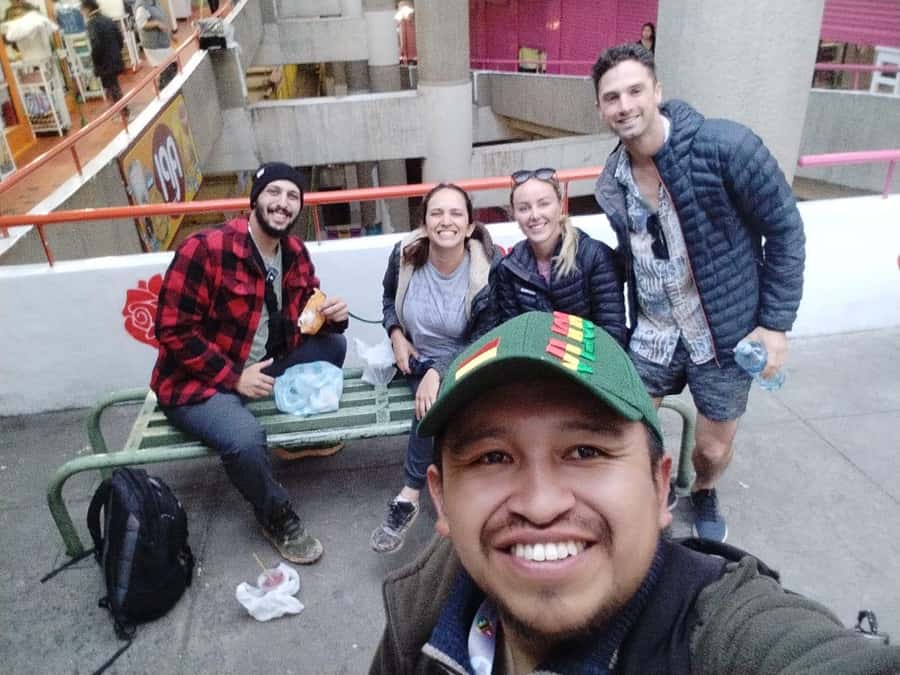
Come hungry, walk ready, and watch the clock. This four-hour La Paz outing links local markets with major historic sights, giving you a useful first look at the city while serving several Bolivian tastings. I like the route because it moves through real everyday places instead of keeping you on a sightseeing bus, and I like that the food tastings are included in the $19 price.
The main concern is reliability. Two bookings in December 2024 reported that no guide arrived, and one also reported a duplicate card charge. The overall score is 3.3 out of 5 from six ratings, so I would confirm the meeting details shortly before setting out.
The tour starts at 2 p.m. at Riosinho Square, near Jaen Street, and operates in English. Look for the guide with the green umbrella. Guides named Erwin, Christian, and Chris have received especially warm praise for their city knowledge, patience, and friendly manner, but the food-only format will not suit vegetarians.
In This Review
- Five things to know before you book
- Starting beside Jaen Street at 2 p.m.
- Lanza Market: your first taste of La Paz
- Murillo Square and La Paz’s city story
- The San Pedro prison stop
- Rodriguez Market brings the produce
- The Witches Market adds local character
- Finishing at San Francisco Church
- What the four hours really include
- Guides can make or break the walk
- Weather, altitude, and what to carry
- Who will enjoy this La Paz food walk?
- Should you book the La Paz Street Food Walking Tour?
- FAQ
- How much does the La Paz Street Food Walking Tour cost?
- How long does the tour last?
- Where does the tour meet?
- How do I identify the guide?
- What language is the tour offered in?
- Which places does the tour visit?
- What food and drink will I taste?
- Is the tour suitable for vegetarians?
- What should I bring?
Five things to know before you book
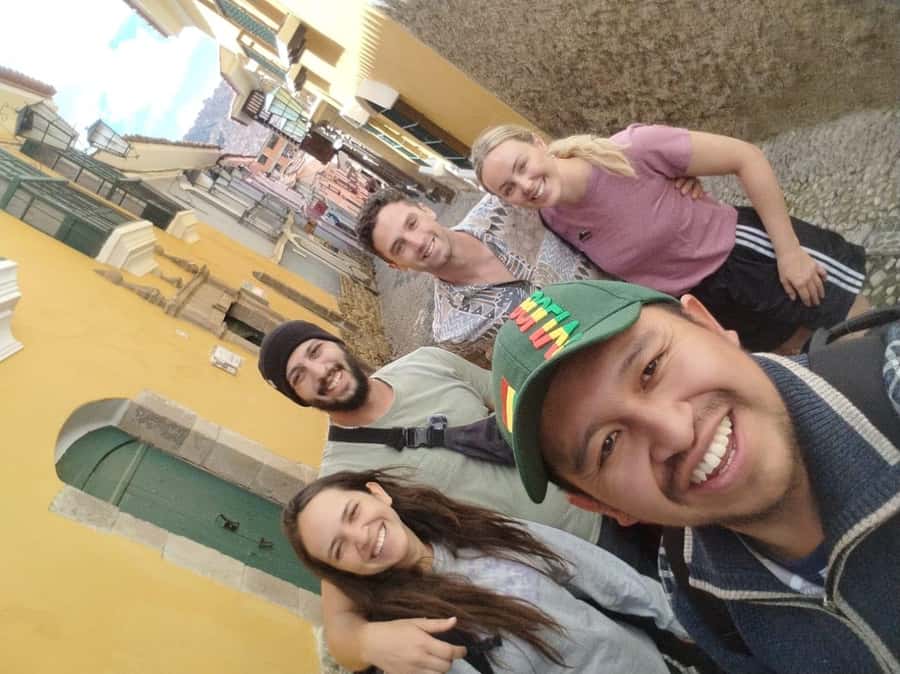
- The route covers four important La Paz areas: Lanza Market, Murillo Square, the San Pedro prison area, Rodriguez Market, the Witches Market, and San Francisco Church.
- You taste food at several stops: the exact dishes are not listed, but the experience includes a Bolivian drink, a typical dish, and more local foods along the way.
- The tour lasts about four hours: with a 2 p.m. start, you should expect to finish around 6 p.m.
- The meeting point is easy to miss: go to Riosinho Square near Jaen Street and search for the green umbrella.
- The $19 price is fair if the tour runs well: a guide, walking route, and several tastings are included, with no separate food bill mentioned.
Starting beside Jaen Street at 2 p.m.
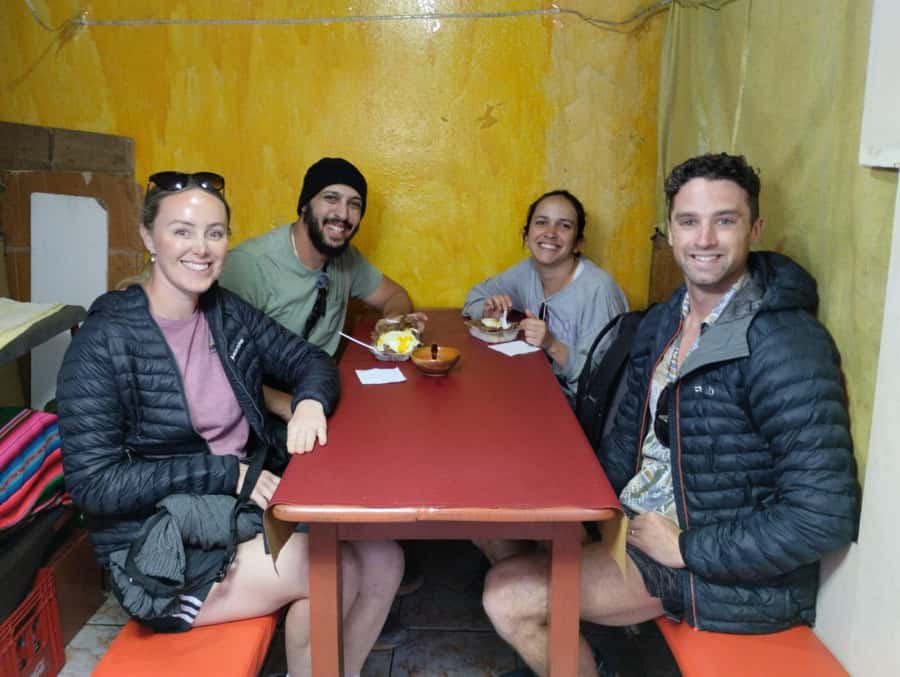
Riosinho Square is close to Jaen Street, one of La Paz’s best-known colonial streets. That gives you a pleasant place to begin, but you should arrive with enough time to find the square and identify the green umbrella before the 2 p.m. departure.
This is a walking tour, not a food crawl reached by private transport. You will spend several hours moving through central La Paz, so comfortable shoes matter more than stylish ones. The route combines eating with city orientation, which makes it useful early in a stay when you want to understand how the main center fits together.
The English-language format is a clear advantage for visitors who want explanations as they walk. Group size is not stated, so I would not book this expecting either a private outing or a tiny group unless the operator confirms it directly.
You can also read our reviews of more walking tours in La Paz

Lanza Market: your first taste of La Paz
The first major stop is Lanza Market, one of the city’s best-known markets. Here, you try a Bolivian drink while learning about La Paz and its daily life.
A market is a good place to begin a food tour because it connects the snack in your hand with the people who buy, sell, and prepare food every day. You will not simply be shown a polished restaurant menu. Instead, the tour is designed to put you near the ordinary food trade of the city.
The drink itself is not named in the description, so you should keep your expectations open. If you have allergies, strong dietary limits, or concerns about ingredients, ask the guide before tasting rather than assuming every item will be suitable.
Lanza Market may also be one of the more crowded sections of the walk. Keep your belongings close and stay aware of the guide as the group moves between stalls. That is ordinary good sense in any busy market, not a special warning about this tour.
Murillo Square and La Paz’s city story

From Lanza Market, the route continues to Murillo Square, the city’s main square. This is where the tour shifts from food sampling to the history and public life of La Paz.
The value here is not just the square itself. Your guide explains the city as you walk, helping connect the markets, streets, religious buildings, and public spaces into a clearer picture. Erwin was praised for explaining city life and local customs, while Christian was credited with showing the main sights and discussing their history.
Murillo Square gives the route a natural pause between tastings. You can take in the setting, listen to the guide, and get your bearings before the walk moves into another food stop. The tour is not presented as a full historical tour, so I would see this as a useful introduction rather than a specialist lesson in Bolivian history.
The San Pedro prison stop
The next destination is San Pedro, described as one of La Paz’s most unusual prisons. This is a striking choice for a city walk because it is not the standard church-and-plaza stop found on many introductory tours.
The description says you visit San Pedro and taste another typical Bolivian dish after arriving there. It does not explain how close you get to the prison, whether entry is possible, or what areas are open to the public. For that reason, you should treat this as a stop connected to the prison and its surroundings, not assume you will enter the facility.
That uncertainty is worth noting. The prison adds an unusual social and historical angle, but the experience may depend on what can be seen from outside and what the guide can explain. A strong guide can make this stop meaningful through context; a rushed guide could make it feel like a quick photo point.
Christian has been singled out for patience when a participant developed altitude sickness, even helping that person find medication at a pharmacy. That does not replace carrying your own essentials, but it suggests that some guides are attentive when the demanding pace or altitude becomes difficult.
Rodriguez Market brings the produce
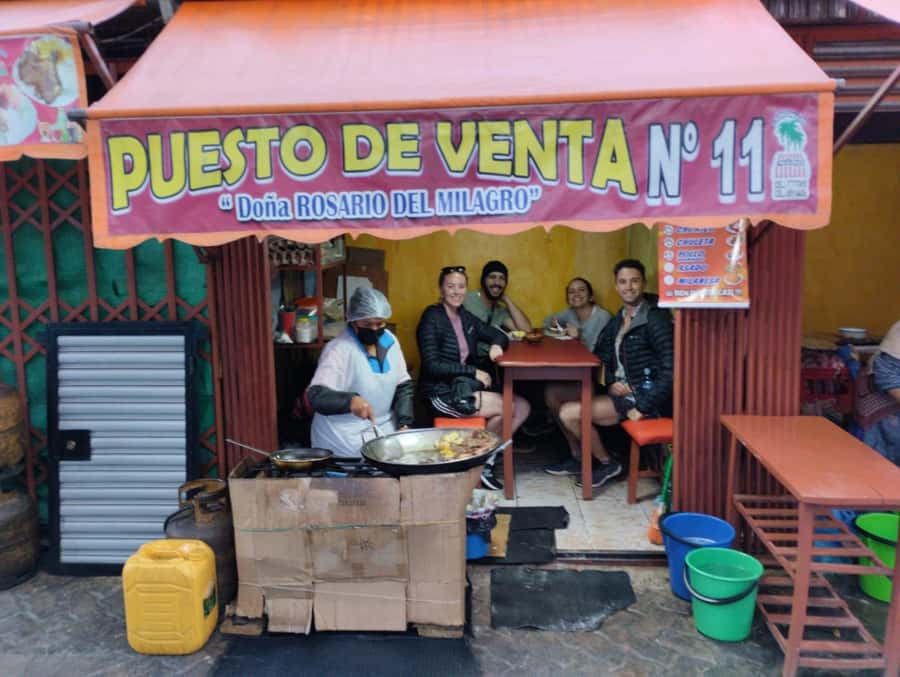
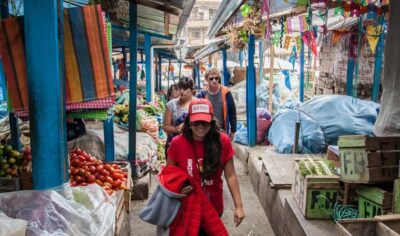
After the San Pedro stop, you head to Rodriguez Market, a popular market for vegetables and fruit. This section gives the tour a different food perspective: not prepared dishes alone, but the produce that supports everyday cooking.
Markets like this help you see how a city eats. You can compare the order and feel of a produce market with the prepared-food areas earlier in the walk, while your guide explains what you are seeing. Since no specific fruits or vegetables are promised, the exact experience will depend on what is available that day.
Rodriguez Market is also a reminder that this tour is built around ordinary city spaces. If you prefer food tours that focus only on restaurants, wine bars, or formal tastings, this may feel rough around the edges. If you want food connected to daily life, it is one of the route’s stronger ideas.




The Witches Market adds local character
The route then reaches La Paz’s famous Witches Market. The name alone makes this one of the city’s most memorable stops, and it adds a local-belief and market-tradition element to the walk.
You are also promised another Bolivian food tasting here. The description does not give the name of the food, so the appeal is the chance to try something local in the setting rather than ordering a known dish from a fixed menu.
This is a place where a guide’s explanation matters. Without context, the market can seem strange or theatrical. With a good explanation of local customs and the items sold there, it becomes a more useful look at how tradition and commerce meet in La Paz.
Chris was praised for explaining not only Bolivian dishes but also table customs and social habits. That kind of guidance can make the Witches Market stop more than a quick visit. It may help you understand the meaning behind what you see rather than simply photographing it.
Finishing at San Francisco Church
The final stop is San Francisco Church, one of La Paz’s major landmarks. The tour closes here with another Bolivian food tasting, giving you one last chance to ask questions and compare the different flavors from the walk.
Ending at a major church is practical. You finish near a well-known central sight rather than returning to the starting square, although no exact end point or onward transport details are provided. Ask the guide where the group officially finishes if you have an evening reservation or a fixed departure to catch.
San Francisco Church also gives the tour a stronger visual finish than ending in a market. After several hours of food and street scenes, you have a landmark that helps anchor the route in the city center. The combination of food, markets, public squares, and religious architecture is what gives this experience its appeal.
What the four hours really include
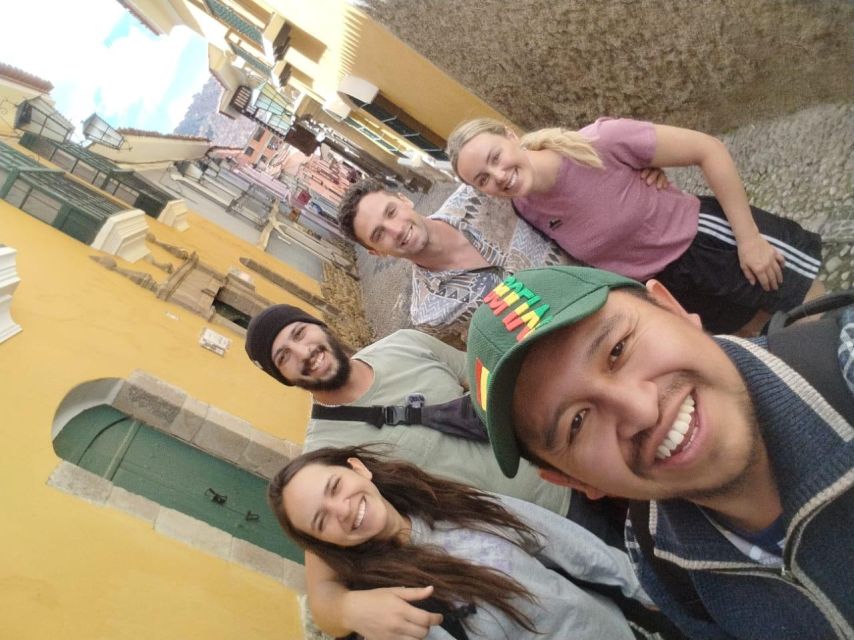
The tour lasts approximately four hours and includes the guide plus the different tastings. At $19 per person, that is a reasonable price if you value both food and orientation, since you are paying one modest fee for several stops rather than buying each sample separately.
The value depends on your expectations. This is not a cooking class, a sit-down restaurant meal, or a carefully itemized tasting menu. You are paying for access to a guided route through central La Paz, explanations about the city, and multiple chances to try local food.
The exact menu is the largest unknown. The experience promises a Bolivian drink, a typical dish, and several other foods, but it does not name them or state the number of tastings. I would book for variety and local context, not for a guaranteed chance to try one particular specialty.
Food is available only for carnivorous eaters, according to the tour information. If you are vegetarian, vegan, or simply avoid meat, this is the wrong choice unless the provider confirms a suitable alternative before you reserve.
Guides can make or break the walk
The most praised part of the experience is the personal guide. Erwin received strong approval for explaining La Paz, local life, and the food stops while responding to individual wishes. Christian was praised for patience and helpfulness, especially when altitude sickness affected one participant.
Chris was described as friendly, socially connected in the city, and able to explain table customs as well as dishes. Two women also described feeling comfortable and safe while touring La Paz with him. That is reassuring, though no guide can remove the need for ordinary care in markets and crowded streets.
The serious issue is guide attendance. Two bookings dated December 1 and December 27, 2024 reported that the guide did not show up and that the provider did not respond. One of those accounts also reported being charged twice and needing help obtaining a refund.
I would not ignore this. Confirm the meeting time, square, and guide identification shortly before the tour, and keep the booking confirmation available on your phone. The green umbrella is important, but it does not solve a no-show problem, so build a little flexibility into your afternoon.
Weather, altitude, and what to carry
La Paz weather can change quickly, so bring layers. The recommended kit includes a jacket, pullover, umbrella, clothing for warmer conditions, sunscreen, comfortable walking shoes, water, snacks, sunglasses, and a camera.
That may sound like a long list for a four-hour walk, but it reflects the mixed nature of the outing. You may be outside in sun, shade, wind, or rain while moving between markets and landmarks. A light jacket that fits into a small bag is more useful than one heavy coat.
Water and snacks are sensible even though food tastings are included. Tasting portions are not described, and you should not assume the samples will replace a meal. If you are prone to altitude sickness, plan gently and tell the guide early if you feel unwell.
Who will enjoy this La Paz food walk?
I would recommend it to someone visiting La Paz for the first time who wants a quick introduction to central markets and landmarks. It suits curious eaters who prefer local stalls and public markets to a polished restaurant itinerary.
It also works well for people who enjoy asking questions. The strongest accounts describe guides who explained customs, city life, and history rather than simply leading the group from one bite to the next.
I would be cautious if you need guaranteed dietary flexibility, dislike walking for several hours, or have a tightly fixed schedule. I would also think twice if a missed appointment would seriously disrupt your trip, given the two no-show reports.
Should you book the La Paz Street Food Walking Tour?
Book it if $19 feels like a fair price for a guided walk, several Bolivian tastings, and a look at markets that you might not understand on your own. The route is varied, the guides can be excellent, and the combination of Lanza Market, Murillo Square, San Pedro, Rodriguez Market, the Witches Market, and San Francisco Church offers a lot in one afternoon.
Before paying, confirm that the tour is operating, that you have the correct 2 p.m. meeting point, and that the green umbrella will identify your guide. If you eat meat and want a friendly city introduction with food along the way, it is worth considering; if reliability or dietary choice is your top priority, choose another La Paz experience.
FAQ
How much does the La Paz Street Food Walking Tour cost?
The price is $19 per person. The guide and the different food tastings are included.
How long does the tour last?
The tour lasts approximately four hours. The stated English-language departure is at 2 p.m., so it should finish at about 6 p.m., though the exact end time can vary.
Where does the tour meet?
The meeting point is Riosinho Square, close to Jaen Street in La Paz. Jaen Street is described as a famous colonial street.
How do I identify the guide?
Look for the guide with the green umbrella at Riosinho Square. This is the specific identification instruction for the tour.
What language is the tour offered in?
The live tour guide speaks English. English is the only language specified.
Which places does the tour visit?
The route includes Lanza Market, Murillo Square, the San Pedro prison area, Rodriguez Market, the Witches Market, and San Francisco Church.
What food and drink will I taste?
You will try a Bolivian drink at Lanza Market, a typical Bolivian dish after the San Pedro stop, and additional local foods at later stops. The exact menu is not specified.
Is the tour suitable for vegetarians?
The activity information says it is available only for carnivorous people. If you do not eat meat, contact the provider before booking to ask if any alternative is possible.
What should I bring?
Bring comfortable walking shoes, water, sunscreen, sunglasses, a camera, snacks, and clothing for changing weather. Suggested clothing includes a jacket, pullover, umbrella, and an outfit for warmer conditions.
More Walking Tours in La Paz
More Tours in La Paz

More Tour Reviews in La Paz
Not for you? Here's more nearby things to do in La Paz we have reviewed






Walking Tours, compared
 ★ 4.8La Paz and El Alto: Cable Car Rides and Walking TourFrom $10790 reviews
 ★ 4.8La Paz Half-Day Walking TourFrom $3591 reviews
 ★ 4.8Walking tour in Sucre: History, Culture & Amazing ViewsFrom $1379 reviews
 ★ 4.8Walking tour – A journey through the History of Santa CruzFrom $1161 reviews
Browse the lists this tour appears in