
Reviewed · UYUNI SALT FLATS TOURS
Uyuni Salt Flat: Sunset & Starlight Experience
Salt, sunset, and stars make a rare short outing. This four-hour trip pairs the best evening colors on the Uyuni Salt Flat with a dark-sky show after nightfall. I like that you get both major sights in one outing, and I also like the practical touches: hotel or airport pickup, waterproof wellies, and hot coffee.
The stop in Colchani adds a human side to the salt flat, showing how salt is processed rather than treating the area as only a giant photo backdrop. One important consideration is water. The mirror effect can appear year-round, but it depends on a thin layer of water and may be weaker after the dry period, usually September through November.
The view is the clear star here. A 5/5 score based on three ratings reflects the strongest part of the experience: a scene that can shift from white salt and orange sky to reflected stars in a single evening. Still, full moon nights can make the stars less visible, so timing matters if the Milky Way is your main goal.
In This Review
- Quick take: five details worth knowing
- Leaving Uyuni at 4:30 PM in a six-seat 4×4
- Colchani: the salt flat with a human touch
- The first 90 minutes: sunset over endless white
- Mirror-effect photos and the importance of water
- One hour after sunset: coffee and the Milky Way
- Returning to Uyuni around 8:30 PM
- Is $59 a good value?
- What to pack for a cold, bright evening
- Who will enjoy this evening most?
- My call: book it for a focused evening on the flats
- FAQ
- What time does the experience begin?
- How long does the experience last?
- How far is the salt flat from Uyuni?
- Is Colchani included?
- Is transportation included?
- Are rain boots provided?
- Is food included?
- Can I see the mirror effect all year?
- Does a full moon affect stargazing?
Quick take: five details worth knowing
- 4:30 PM departure: You leave from the Nomadex office in Uyuni, with hotel or airport pickup available.
- Colchani provides local context: You can see how salt is processed in the nearby community.
- Three hours around the salt flat: The sunset and photo time is divided into periods of about 1.5 hours and one hour.
- Wellies are supplied: Waterproof boots let you walk on the wet salt without worrying about ordinary shoes.
- Small groups of up to six: Transport is by 4×4 all-terrain truck, with private and small-group options available.
Leaving Uyuni at 4:30 PM in a six-seat 4×4
Your evening begins at 4:30 PM at the Nomadex office in Uyuni. If you prefer not to walk to the office, pickup from your hotel or airport is included when arranged in advance.
The drive to the salt flat takes about 20 minutes. That short transfer matters because you are not spending the best light sitting in a vehicle for hours. You get out of Uyuni, reach the open salt, and still have time for the changing colors of sunset.
Transport is in a 4×4 truck with space for six people. That is a useful middle ground. You are not in a large coach, but you also are not automatically paying for a fully private vehicle unless you choose the private option.
Your driver or guide speaks English or Spanish. That makes it easier to handle pickup details, understand the stops, and ask for help with photographs. The experience is available as a private trip or a small group, so check the option you select if personal space is important to you.
You can also read our reviews of more evening experiences in Colchani
Colchani: the salt flat with a human touch
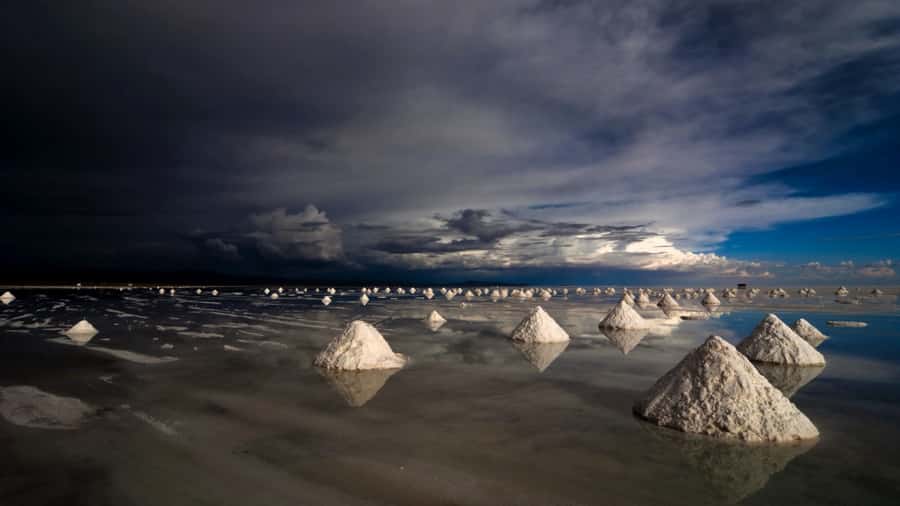
Colchani gives the outing more substance than a simple sunset drive. In this community, you can see how salt is processed, connecting the dazzling white surface with the work that supports local life.
That stop is valuable because the salt flat can feel almost too vast to understand. From a distance, it looks like a blank sheet stretching to the horizon. Seeing salt handled and processed helps you connect the famous view with a real place and a working community.
I would not expect Colchani to be the longest part of the evening. The main purpose of this experience is sunset and stargazing, so the community visit works best as a short cultural addition rather than a full town tour.
It also gives you a different kind of photograph. Instead of only capturing reflections and endless white, you can take pictures connected to the local salt industry. If you want an outing that includes a little context along with the famous scenery, this is a useful feature.
The first 90 minutes: sunset over endless white
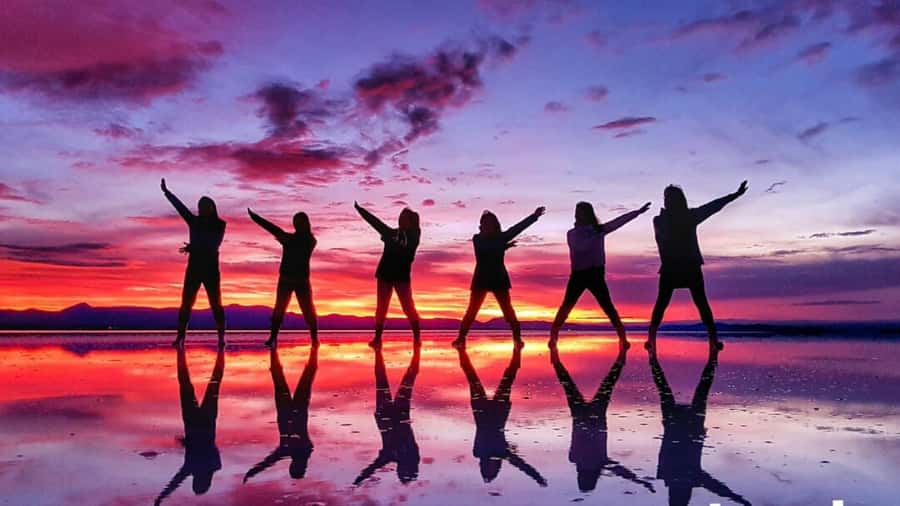
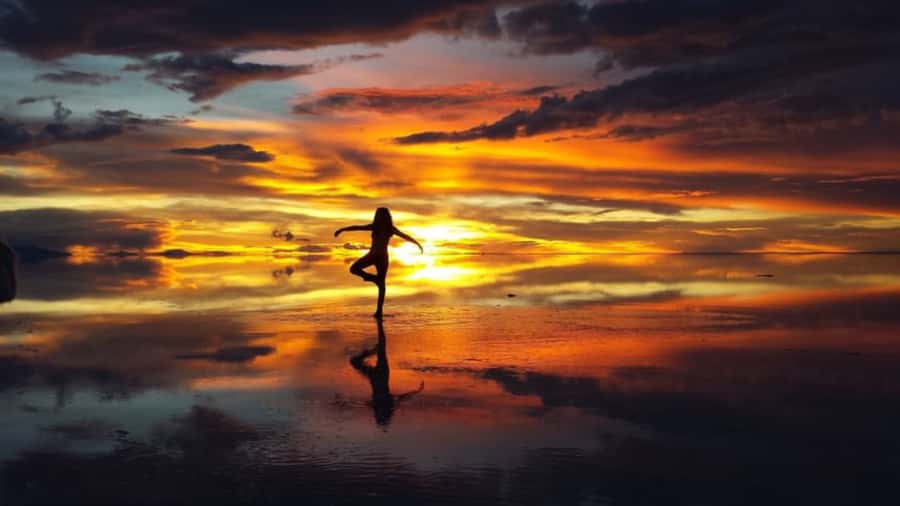
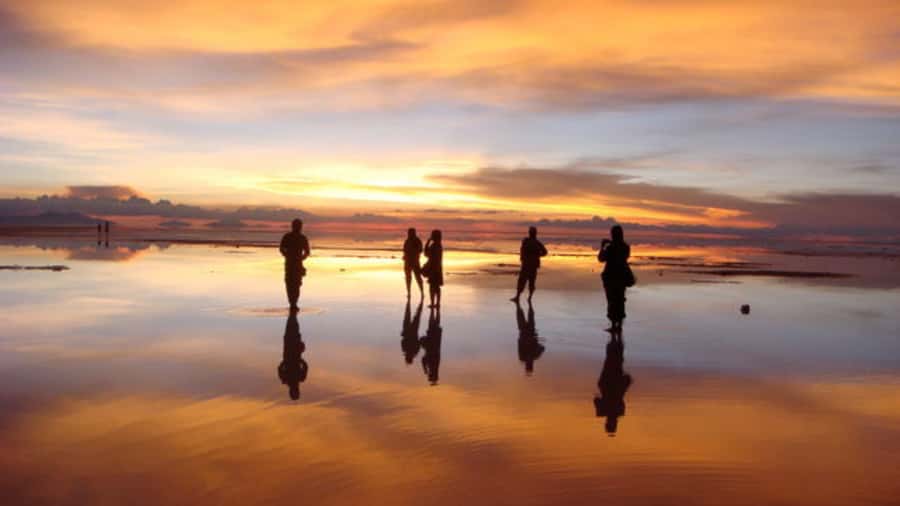
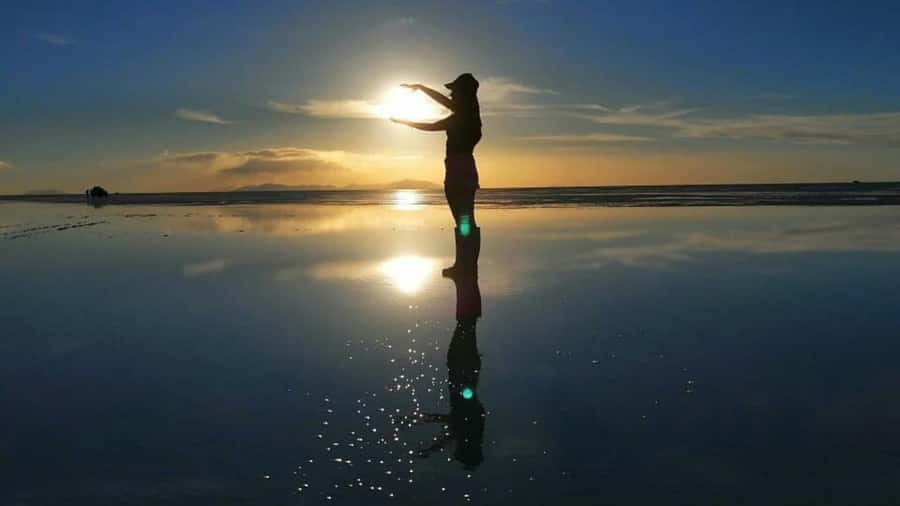
The main photo period lasts about 1.5 hours, giving you time to watch the light change rather than arriving for one quick snapshot. As the sun drops, the white salt takes on the colors of the sky, with reflections and optical effects making the scene look unreal.
The attraction is not just the sunset itself. It is the way the flat removes visual clutter. There are no ordinary streets, buildings, or trees filling your frame. You can point your camera across the salt and get a clean image of sky, color, and reflection.
The colors are difficult to describe neatly, which is part of the appeal. The sky changes while you are watching, and the salt below can echo those tones when water is present. I like this slower approach because it gives you a chance to take photographs, put the camera down, and watch the view develop.
The 5/5 rating makes sense if scenery is your top priority. The most praised aspect is plainly the view, and this trip gives you the right timing to see it at its most dramatic.
Mirror-effect photos and the importance of water
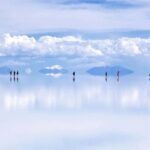
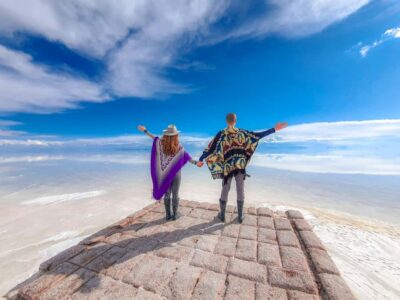
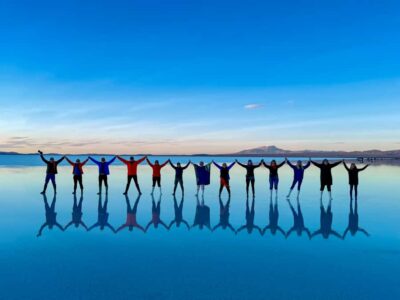
The mirror effect comes from a thin layer of water on the salt. When conditions cooperate, the surface reflects the sky and people in the scene, producing the famous doubled horizon and surreal photographs.
The effect is possible throughout the year, but it is not guaranteed to look equally strong on every date. Water levels can decrease after the dry period, generally September through November, and the weather controls how much reflection you actually see.
That is the biggest practical limitation of the experience. You are buying access to a special setting and carefully chosen timing, not a promise that every photograph will show a perfect mirror. If the salt is drier, you should still get the broad white surface and sunset, but the reflections may be less pronounced.
The supplied wellies are a smart inclusion. You can step onto the wet salt without soaking ordinary shoes, and you do not need to pack waterproof boots for this one outing. Wear comfortable footwear underneath or alongside them, since you will still be walking on the salt and changing shoes is rarely fun when the light is fading.
For photography, bring your camera and sunglasses. The white surface can be hard on your eyes during brighter periods, and sunscreen is sensible even on an evening trip. The optical effect is the star, so keep your camera ready, but do not spend every minute looking at the view through a screen.
One hour after sunset: coffee and the Milky Way
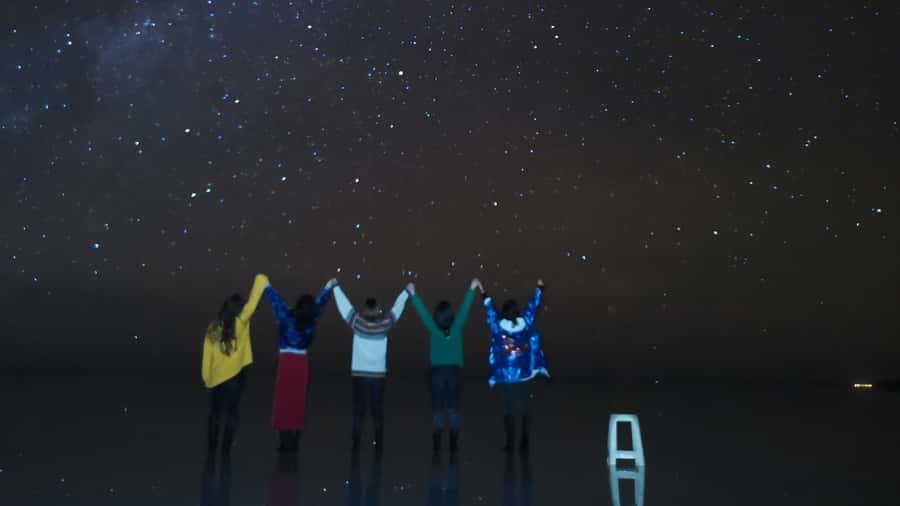
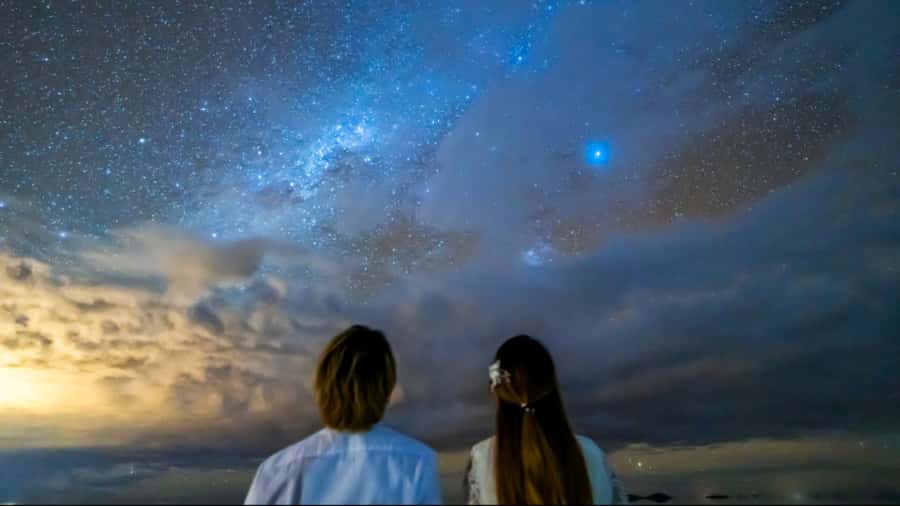
After the color drains from the sky, the experience shifts from sunset photography to stargazing. The second photo period lasts about one hour, giving you time to look up at constellations and, with suitable conditions, the Milky Way.
Uyuni’s open salt plain offers a huge sweep of sky. The lack of ordinary city scenery is what makes this part feel so different from a standard sunset stop. You are not simply waiting in darkness; you are watching the setting change from colored reflections to a black sky filled with stars.
The tour includes hot coffee, which is more than a small comfort once the sun is gone. Temperatures can drop significantly after sunset, so warm clothing is essential. Pack layers, even if the afternoon in Uyuni feels mild.
The moon deserves attention when you choose your date. Full moon nights are brighter, and that brightness can reduce the visibility of stars. If you care most about constellations and the Milky Way, a night with less moonlight is the better choice. If the moon is full, you may still enjoy the salt flat and reflections, but the sky may not look as dark.
The stargazing depends on conditions, so keep your expectations sensible. The experience is designed around one of South America’s clearest night skies, but no guide can control cloud, water, or moonlight. That uncertainty is part of any outdoor night-sky outing.



Returning to Uyuni around 8:30 PM
The return transfer takes about 30 minutes, and you should reach Uyuni around 8:30 PM. That schedule makes this a manageable evening activity if you have limited time in town or are fitting it between longer excursions.
You get roughly three hours at the salt flat, divided between the sunset period and the later photo and stargazing period. This is enough time to see the main sights without committing to a full-day salt-flat program.
The short format also has a trade-off. You will see the sunset, the night sky, and Colchani, but you will not have the long daylight schedule associated with a wider Uyuni visit. If you want more time for distant parts of the salt flat or additional sites, a longer trip may suit you better.
For a focused evening, though, the timing is efficient. You leave after most of the day is over and return before the night becomes too late. That balance is one reason I see this as a good add-on for a short stay in Uyuni.
Is $59 a good value?
At $59 per person, the price covers more than transport to a viewpoint. You receive a guide, hotel or airport pickup, 4×4 transportation, entrance tickets for the listed attractions, rain boots, a first aid kit, and logistical equipment.
The truck holds six people, and private or small-group arrangements are available. That matters because the quality of a salt-flat photo stop depends partly on how much room you have to move and how much time you can spend setting up. A small group is likely to feel more relaxed than a large vehicle, while a private option gives you the most control.
Hot coffee is also provided during the evening. Food is not included beyond what is specifically provided, so eat beforehand and carry water. Travel insurance is not included either.
I consider the price reasonable for a short, equipment-supported experience. The wellies alone save you from packing or renting waterproof footwear, while pickup and the 4×4 transfer simplify the evening. The value is strongest for you if you want the sunset and stars in one trip rather than arranging separate transport.
The value is less clear if you already have a vehicle, only want sunset photos, or are hoping for a long visit with many different stops. In that case, the four-hour format may feel narrow.
What to pack for a cold, bright evening
Your clothing choice will shape how much you enjoy the second half. Dress warmly, because the temperature can fall sharply after sunset.
Bring:
- Warm layers
- Comfortable shoes suitable for walking on salt
- Sunglasses
- Sunscreen
- Water
- A camera
The wellies are supplied, but comfortable shoes still matter. The salt flat is not a place for delicate footwear, and the surface may be wet when the mirror effect is visible.
Keep water with you even though the trip is short. Uyuni sits at high altitude, and the supplied information specifically advises staying hydrated. Do not count coffee as your only drink.
A camera is the obvious item, but remember that the most unusual photographs depend on the surface conditions. If the water is thin and calm, reflections can be striking. If conditions are drier, focus on the broad white surface, sunset colors, and clean horizon.
Who will enjoy this evening most?
I would choose this experience if you want Uyuni’s signature sights without giving up a full day. It suits you especially well if you care about photography, enjoy wide-open views, and want both sunset and stars in the same outing.
It is also a good fit if you are staying in Uyuni and want a simple pickup arrangement. The short transfer from town, small-group vehicle, included boots, and return around 8:30 PM keep the evening easy to manage.
You should think twice if your main goal is guaranteed mirror water. The effect depends on weather and water levels, and the provider specifically warns that the surface can be less wet after the dry period. You should also reconsider a full moon date if stargazing is more important to you than sunset color.
Families and mixed-interest groups may appreciate the balance. One person can focus on photos, another can enjoy Colchani, and everyone gets the sunset and night sky. The cold is the main challenge, not the length of the outing.
My call: book it for a focused evening on the flats
I would book this trip if I had only one evening in Uyuni and wanted the strongest visual payoff. The combination of a 4:30 PM departure, sunset, mirror-effect photos, Colchani, stars, and hot coffee packs a lot into four hours.
Book with realistic expectations about water and moonlight. Choose warm clothing, carry water, and confirm pickup details before setting out. If you want the famous fantastic view without spending a full day on the salt flat, this $59 experience is a sensible choice.
You can cancel up to 24 hours before departure for a full refund, and the reserve-now, pay-later option keeps your plans flexible. That is helpful when weather may affect the reflections and night sky.
FAQ
What time does the experience begin?
The experience begins at 4:30 PM from the Nomadex office in Uyuni. Hotel or airport pickup is available when requested.
How long does the experience last?
The experience lasts four hours. You should arrive back in Uyuni around 8:30 PM.
How far is the salt flat from Uyuni?
The transfer from Uyuni to the salt flat takes about 20 minutes. The return transfer takes about 30 minutes.
Is Colchani included?
Yes. The experience includes a visit to the community of Colchani, where you can see how salt is processed.
Is transportation included?
Yes. Transportation is provided in a 4×4 all-terrain truck with capacity for six people.
Are rain boots provided?
Yes. Waterproof rain boots or wellies are included for walking on the salt and seeing the mirror effect.
Is food included?
Food is not included except for items specifically mentioned. Hot coffee is provided during the evening, and you should bring water.
Can I see the mirror effect all year?
The mirror effect can be seen year-round when a thin layer of water is present. Water levels may decrease after the dry period, typically September through November, depending on weather.
Does a full moon affect stargazing?
Yes. Full moon brightness can reduce the visibility of stars and constellations.
More Evening Experiences in Colchani
More Tour Reviews in Colchani
Not for you? Here's more nearby things to do in Colchani we have reviewed
Uyuni Salt Flats Tours, compared
 ★ 4.5From La Paz: Uyuni Salt Flat Tour & Overnight Roundtrip BusFrom $275327 reviews
 ★ 4.5Uyuni tour express from La Paz by busFrom $269172 reviews
 ★ 4.4From Uyuni: Red Lagoon & Uyuni Salt Flats 3-Day Guided TourFrom $354160 reviews
 ★ 4.3La Paz: 5-Day Uyuni Salt Flats by BusFrom $486153 reviews
Browse the lists this tour appears in