
Reviewed · UYUNI SALT FLATS TOURS
Uyuni: Salar de Uyuni and San Pedro de Atacama 3-Day Tour
White salt, red water, smoking earth. This $280, three-day journey links the world’s largest salt flat with Bolivia’s high desert and San Pedro de Atacama in Chile. I like the excellent range of sights, from the Train Cemetery and salt crafts to flamingo-filled lagoons, and I like that a Spanish-speaking driver helps you cross the border. The main drawback is basic organization: meeting-point details and vehicle standards may need extra checking before departure.
The published score is 4.2 out of 5 from four verified bookings, with the scenery and driver receiving the strongest praise. I would treat the trip as a rugged overland crossing, not a polished hotel-based holiday. Confirm the exact pickup address, ask which agency will operate the drive, and carry cash for entrance fees, toilets, and small extras.
In This Review
- Five things to know before booking
- Day 1: Train Cemetery to a salt-flat sunset
- Day 2: Chiguana Desert and flamingo lagoons
- Day 3: Geysers, hot springs, and the Chilean border
- What the $280 price really covers
- 4×4 comfort and practical standards
- Meeting points and agency handoffs
- Who will enjoy this trip most
- Should you book the Uyuni-to-San Pedro crossing?
- FAQ
- How long is the Salar de Uyuni and San Pedro de Atacama tour?
- What time does the tour start?
- How much does the tour cost?
- What languages are available?
- How many people can join the tour?
- What accommodation is included?
- Which meals are included?
- What extra fees should I budget for?
- Does the tour help with the Bolivia–Chile border crossing?
Five things to know before booking
- 10:30 a.m. departure from Uyuni: The first day begins with pickup in Uyuni and finishes with sunset on the salt flat.
- A 5,000-meter morning: Sol de Mañana Geyser comes early on Day 3, followed by fumaroles, boiling mud, and a 35 C hot spring.
- Two very different nights: Agencha Hostel offers rooms with private toilets, while Huayllajara uses six-bed dormitories and shared toilets.
- Up to 15 people: The tour is classed as a small group, though one departure used two 4×4 vehicles and two drivers.
- Extra fees matter: Incahuasi Island, Eduardo Avaroa National Reserve, hot springs, and roadside toilets are not covered by the $280 price.
Day 1: Train Cemetery to a salt-flat sunset
You meet your guide in Uyuni at about 10:30 a.m. and board a 4×4 with a roof rack for the first part of the route. The exact vehicle matters here because you will spend long hours on rough high-altitude roads, and luggage is carried above the passenger compartment.
The first stop is Uyuni’s Train Cemetery, where abandoned locomotives sit in the open air. It is a stark introduction to the area: rusty machinery, empty tracks, and a sense of a once-useful railway left behind. You will not need much time here, but it gives the day a human and industrial opening before the salt takes over.
At Colchani, you stop at a small settlement once associated with salt miners. This is your chance to buy salt crafts along with textile work made from llama and alpaca fiber. I would keep a few bolivianos ready, since this is one of the more direct ways to support local makers during the trip.
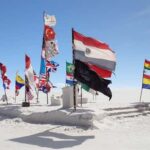
The route then reaches a hotel and museum built entirely from salt. Salt blocks are used for the structure and furnishings, making the stop more than a quick photo opportunity. You can also place your own country’s flag at the Flags of the World, so pack one if you want to add to the display.
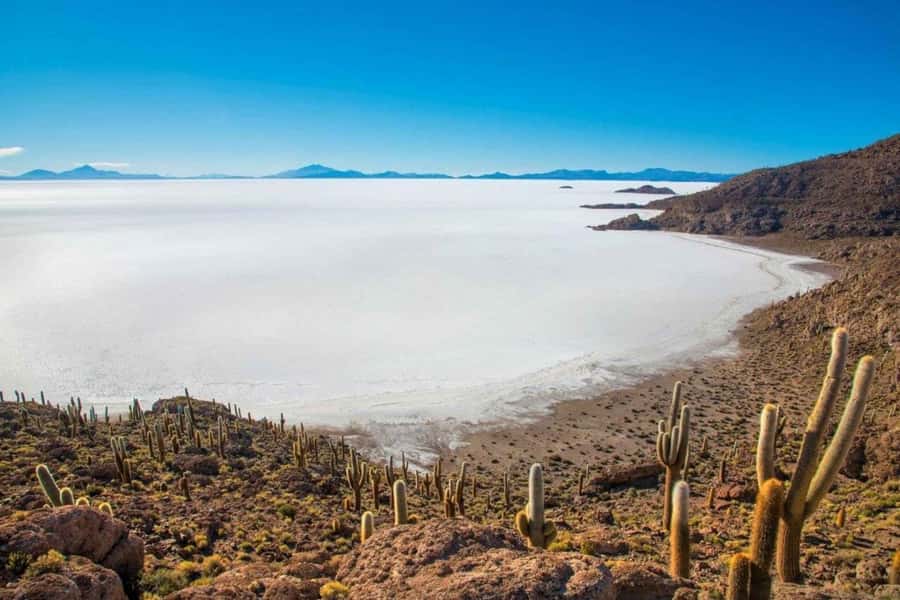
The Dakar Race Monument provides another short stop on the salt flat. Incahuasi Island is available for an extra 30 BOB, and that fee is not included. Because the island is an ancient formation in the middle of the flat, it adds a different texture and viewpoint to a day otherwise dominated by white salt.
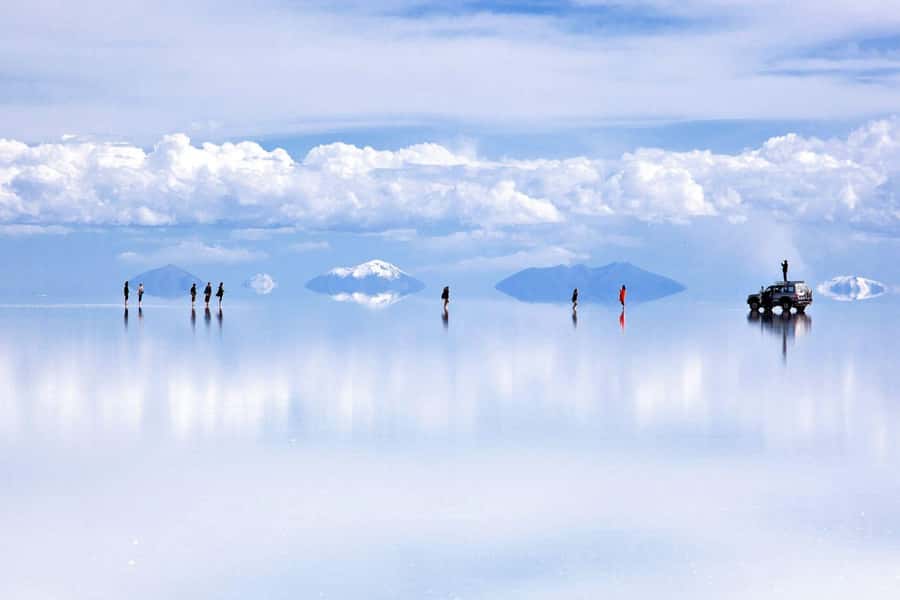
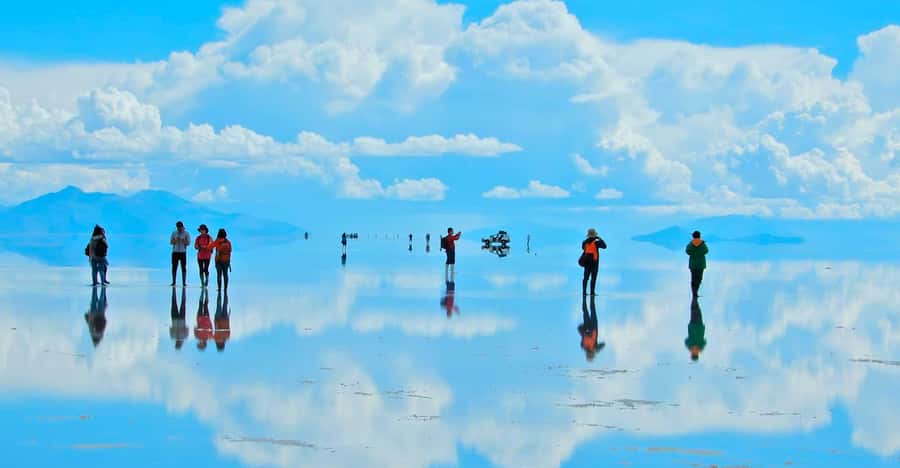
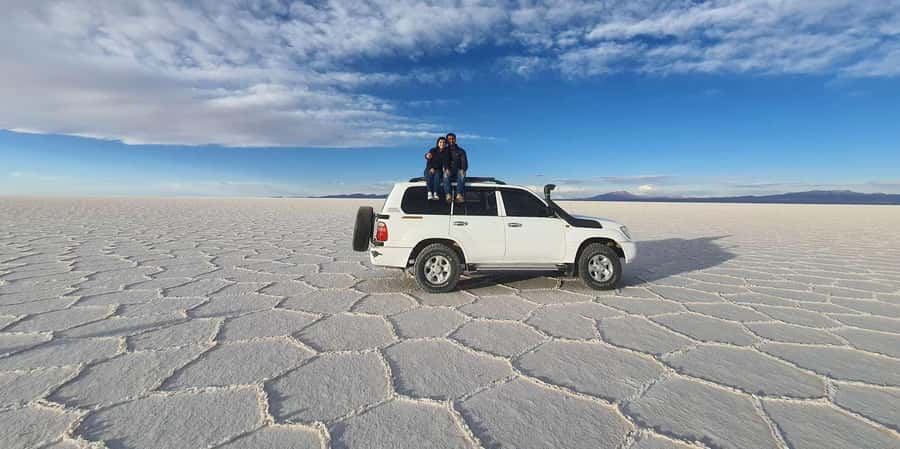
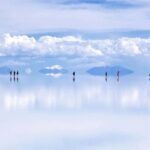
The salt flat is also the setting for forced-perspective photos. Your driver can use the huge, featureless surface to make people and objects look out of proportion, so bring a small prop if you want to play along. This is a lighthearted pause in an otherwise severe setting.
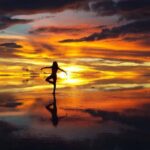
Day 1 ends with a sunset stop in a wide, open part of the Salar de Uyuni. The white surface catches the changing colors, and the tour includes a glass of wine while you watch the light fade. It is a fitting end to the first day, though the sunset timing naturally depends on the route and conditions.
Your first night is at Agencha Hostel. Rooms may be arranged for two, three, or four people and have private toilets. That sounds comfortable compared with the second night, but be prepared for possible charges for towels and toilet paper; this was reported during one departure.
You can also read our reviews of more tours and experiences in Colchani.

Day 2: Chiguana Desert and flamingo lagoons
Day 2 starts with an early breakfast and a drive toward the Chiguana Desert. The route places you among volcanoes, including Ollagüe, which is still active. This is a day of long road sections, but the changing terrain keeps it from feeling like a simple transfer.
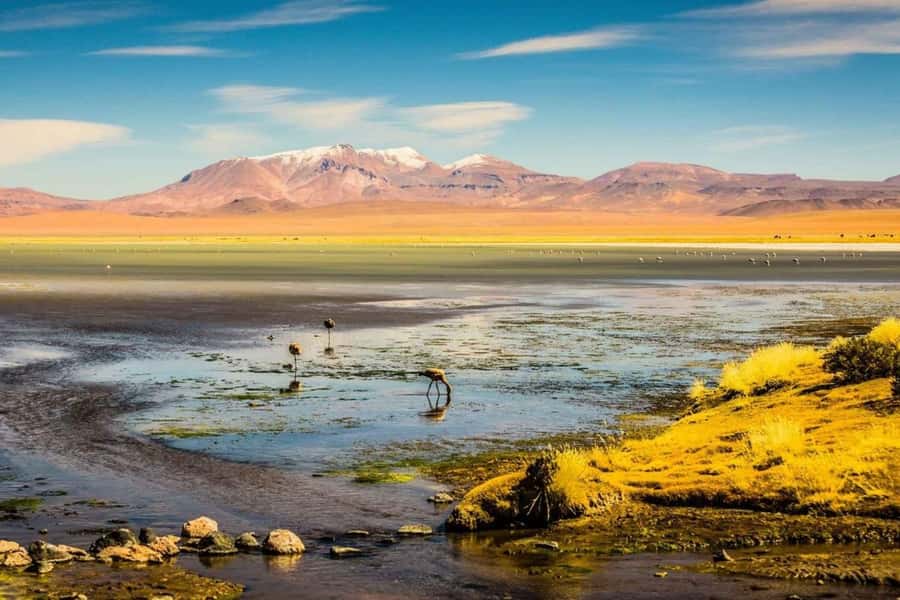
You continue along the rocky El Pasito Tuntún road toward three lagoons: Cañapa, Hedionda, and Chiarcota. Their colors and mineral content differ, and flamingos gather around the water. You should expect short walks and photo stops rather than a long, guided natural-history visit; the attraction is the combination of open desert, volcanoes, water, and birds.
Lunch is included before you enter the Eduardo Avaroa National Reserve. The reserve entrance costs 150 BOB and is not part of the tour price, so keep local currency available. This is the largest extra charge on the route and should be included in your budget from the start.
Inside the reserve, you visit the Siloli Desert and the Árbol de Roca, a lava-rock formation shaped like a tree. The rock is a quick stop, but it is one of the route’s signature sights. The surrounding desert is spare and exposed, with the road and rock formations providing most of the visual interest.
The day ends near Huayllajara, with a stop at the Laguna Roja viewpoint. The lake’s intense red color comes from its mineral-rich water, while flamingos rest near the surface. You will want warm layers for this stop, since the day begins early and the route reaches very high, open ground.
The second night is far more basic than the first. Albergue Huayllajara uses six-bed dormitory rooms with shared toilets, so this is a good point to lower your comfort expectations. If you need a private bathroom each night, this three-day crossing is probably not the right fit.
Day 3: Geysers, hot springs, and the Chilean border
The final day begins at about 5:00 a.m. with a drive to Sol de Mañana Geyser at roughly 5,000 meters. You walk past fumaroles, steaming craters, and boiling mud pots reaching 150–200 C. Keep to the marked walking areas and pay attention to your footing; this is a raw, active geothermal area, not a manicured park.
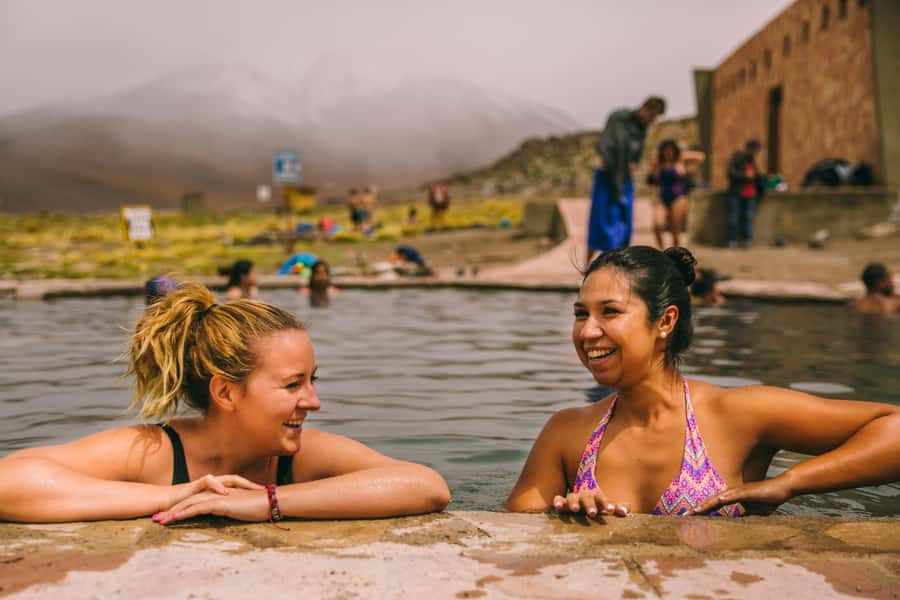
After the geyser stop, you can bathe in an outdoor hot spring at about 35 C. The warmth is welcome after a cold early morning and several days on rough roads. Admission costs 6 BOB, and you will need to bring your own towel unless your accommodation or operator confirms otherwise.
The route then passes through the Dalí Desert before reaching the Green and White Lagoons at the foot of Licancabur Volcano. The colors come from toxic copper water, so these are places to admire rather than touch. The lagoons give the final Bolivian section a strong visual finish before the border crossing.
The timetable lists a transfer toward San Pedro de Atacama at about 10:30 a.m., with arrival at the spa around 1:30 p.m. Exact timing may shift, so avoid booking a tight onward connection in San Pedro on the same afternoon.
Your guide helps with the crossing from Bolivia into Chile, and the tour ends in the main square of San Pedro de Atacama. That handoff is one of the best reasons to choose this format. You get a direct overland connection instead of arranging separate transport through a remote border area.
What the $280 price really covers
At $280 per person, the price is reasonable for a three-day 4×4 journey that includes two nights of accommodation, two breakfasts, two lunches, two dinners, and transport across a remote route. The shared vehicle and basic lodging keep the cost down, while the route covers most of the major Uyuni-to-San Pedro sights.
The included meals cover the listed breakfasts, lunches, and dinners, but Day 3 has no meal listed. Carry snacks and water for the long drives, since the schedule includes early starts and isolated stops. Do not assume every roadside purchase is included.
The known admission costs are significant:
- Incahuasi Island: 30 BOB
- Eduardo Avaroa National Reserve: 150 BOB
- Hot spring: 6 BOB
- Bathrooms along the route: 20 BOB
That adds up to 186 BOB before any additional bathroom use or purchases. The reserve fee alone makes a noticeable difference, so compare tours only after checking which entrance costs are included.
4×4 comfort and practical standards
The vehicles are 4x4s fitted with roof racks, which is the right type of transport for this route. Still, vehicle quality can vary. One departure had a cracked windshield, no right-side rear-view mirror, and windows that did not work well.
Those are not minor details on a remote road. Before setting off, check where your daypack will sit, how luggage will be secured, and what happens if the vehicle has a problem. Passengers on one departure were expected to help place bags on the roof rack, so pack light enough to lift your own luggage safely.
Waterproof boots may be useful if the salt flat has standing water. One booking reported that boots arrived only after shoes were already wet, so ask before departure if footwear is supplied and at what point. I would still pack waterproof shoes or a spare pair rather than rely entirely on the operator.
The driver is Spanish-speaking, and the strongest praise attached to the driving and the scenery. If you need explanations in English or another language, this may not suit you. Also ask if the assigned driver has a radio or satellite communication system, since the route passes through isolated areas.
Meeting points and agency handoffs
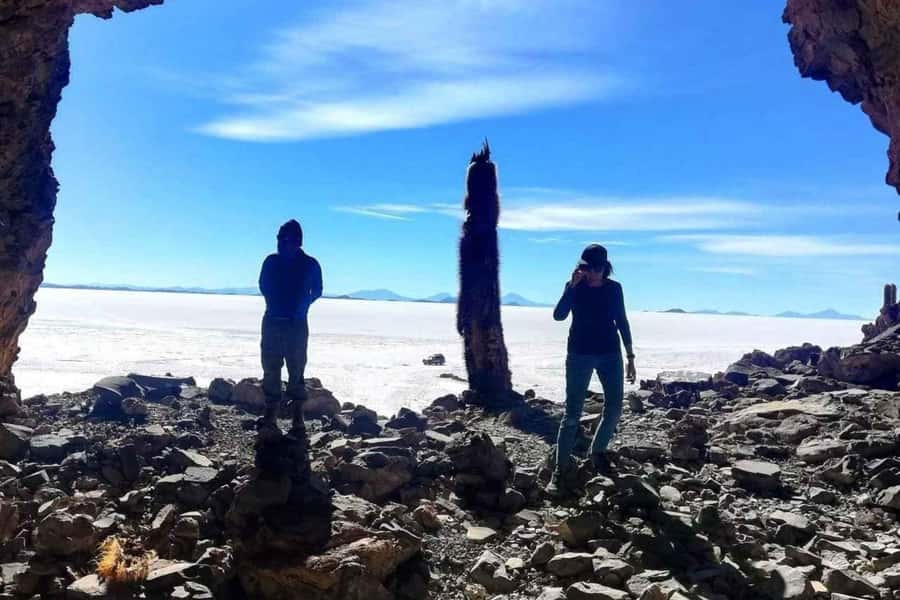
Pickup instructions deserve special attention. A meeting point was once shown only as a street, without a clear street number or agency name, and the departure location changed about an hour before the scheduled start.
To avoid wasting the morning, confirm the exact address, a recognizable landmark, the driver’s phone number, and the operating company the day before. The booking may be sold by Inspires Viagens but operated by another local company. One documented departure was handed to Les Perles d’Uyuni, with the guide, driver, and organization receiving strong praise.
That arrangement is not automatically a problem, but you should know who is responsible for pickup and border assistance. A message confirming the final meeting point is especially important if you arrive in Uyuni shortly before the 10:30 a.m. departure.
The tour permits free cancellation up to 24 hours before departure, and you can reserve without paying immediately. Those terms give you some flexibility, but they do not remove the need to confirm the practical details.
Who will enjoy this trip most
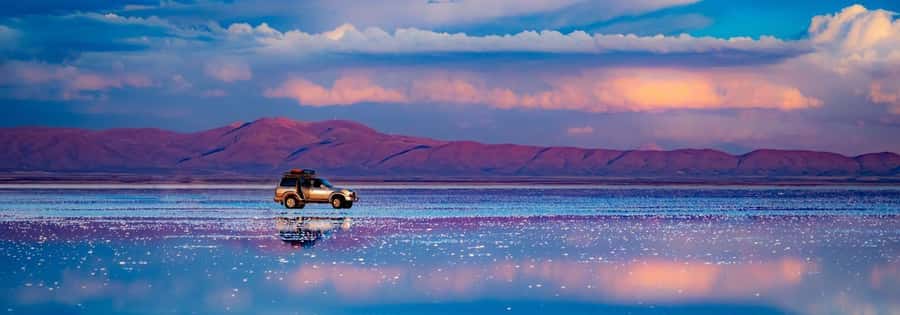
I would recommend this tour to you if your priority is seeing the main Uyuni sights and continuing directly to San Pedro in three days. Photographers will have plenty to work with: salt geometry, perspective tricks, flamingos, red and green water, volcanoes, geysers, and sunset.
It also suits people who can accept shared accommodation, early mornings, long drives, and a Spanish-only operation. The small-group limit of 15 helps keep the experience more manageable, although two vehicles may be used.
I would hesitate if you want polished logistics, guaranteed private bathrooms, an English-speaking guide, or a comfortable vehicle with no reported maintenance concerns. The route is spectacular, but the comfort level is closer to practical expedition than easy sightseeing.
Should you book the Uyuni-to-San Pedro crossing?
Book it if you want the full three-day route and value the border connection as much as the salt flat itself. The scenery is the clear prize, and the combination of salt, desert, lagoons, flamingos, geysers, hot springs, and volcanoes gives you a strong view of Bolivia’s high-altitude southwest.
Before paying, budget the 186 BOB in known extras, confirm the pickup location, ask which agency and vehicle will operate the trip, and bring warm clothing, cash, snacks, waterproof footwear, and a towel. With those details handled, the $280 price offers a lot of ground and a useful final stop in San Pedro de Atacama.
FAQ
How long is the Salar de Uyuni and San Pedro de Atacama tour?
The tour lasts three days, beginning in Uyuni and ending in the main square of San Pedro de Atacama, Chile.
What time does the tour start?
Day 1 begins at about 10:30 a.m. in Uyuni. Day 3 begins much earlier, around 5:00 a.m., for the Sol de Mañana Geyser visit.
How much does the tour cost?
The listed price is $280 per person.
What languages are available?
The tour has a Spanish-speaking driver and live tour guidance in Spanish.
How many people can join the tour?
It is a small-group tour limited to 15 participants.
What accommodation is included?
The first night is at Agencha Hostel in two-, three-, or four-bed rooms with private toilets. The second night is at Albergue Huayllajara in six-bed dormitory rooms with shared toilets.
Which meals are included?
The package includes two breakfasts, two lunches, and two dinners.
What extra fees should I budget for?
Incahuasi Island costs 30 BOB, Eduardo Avaroa National Reserve costs 150 BOB, and the hot spring costs 6 BOB. Bathrooms along the route are listed at 20 BOB.
Does the tour help with the Bolivia–Chile border crossing?
Yes. The tour guide helps you cross the Bolivian border, and the trip ends in San Pedro de Atacama’s main square.
More Tours in Colchani
More Tour Reviews in Colchani
Not for you? Here's more nearby things to do in Colchani we have reviewed
Uyuni Salt Flats Tours, compared
 ★ 4.5From La Paz: Uyuni Salt Flat Tour & Overnight Roundtrip BusFrom $275327 reviews
 ★ 4.5Uyuni tour express from La Paz by busFrom $269172 reviews
 ★ 4.4From Uyuni: Red Lagoon & Uyuni Salt Flats 3-Day Guided TourFrom $354160 reviews
 ★ 4.3La Paz: 5-Day Uyuni Salt Flats by BusFrom $486153 reviews
Browse the lists this tour appears in