
Reviewed · UYUNI SALT FLATS TOURS
Salar de Uyuni 1 day + photo session + Sunset (English)
White salt, rusty trains, giant cacti. This $76 day packs Bolivia’s most striking sights into one route, from the Uyuni train cemetery and Colchani’s salt workshops to the vast Salar de Uyuni. I like the sharp contrast between abandoned steam locomotives and the bright, open salt flat. I also like the built-in photo session, especially the perspective pictures at the center of the Salar.
The trade-off is a long day, with a return to Uyuni around 20:00. The visit to Incahuasi Island also depends on the rainy season, so you should not treat that stop as guaranteed. If Carlos is your guide, expect a patient, friendly host who pays attention to each person and may add music from different countries during the drive.
In This Review
- The Details That Shape This Salt-Flat Day
- A $76 Day Across Bolivia’s White Salt Plain
- Rusty Rails at the Uyuni Train Cemetery
- Colchani’s Salt Factory and Handmade Souvenirs
- Entering the Salar de Uyuni: Salt Piles, Gas, and Open Space
- The Incahuasi Cactus Walk and Coral Window
- Sunset at the Salar’s Edge With Wine
- A Toyota or Nissan 4×4 for a Full Day
- What the $76 Includes—and the Extra Cost to Watch
- Who Will Get the Most From This Uyuni Day?
- Should You Book This Tour?
- FAQ
- How long does the tour last?
- What is the price?
- Is food included?
- Is wine included?
- What type of transportation is used?
- Can I be picked up at the airport?
- Is the Incahuasi Island visit guaranteed?
- Are entrance tickets included?
The Details That Shape This Salt-Flat Day
- More than 20 old locomotives: Rusting engines and wagons sit scattered across the high plateau at the train cemetery.
- Colchani is more than a photo stop: You can see salt processing and buy crafts made from salt, llama fiber, and alpaca fiber.
- The Salar is a working salt flat: Salt piles, extraction areas, bubbling water, and gas emissions show that this is not just a scenic backdrop.
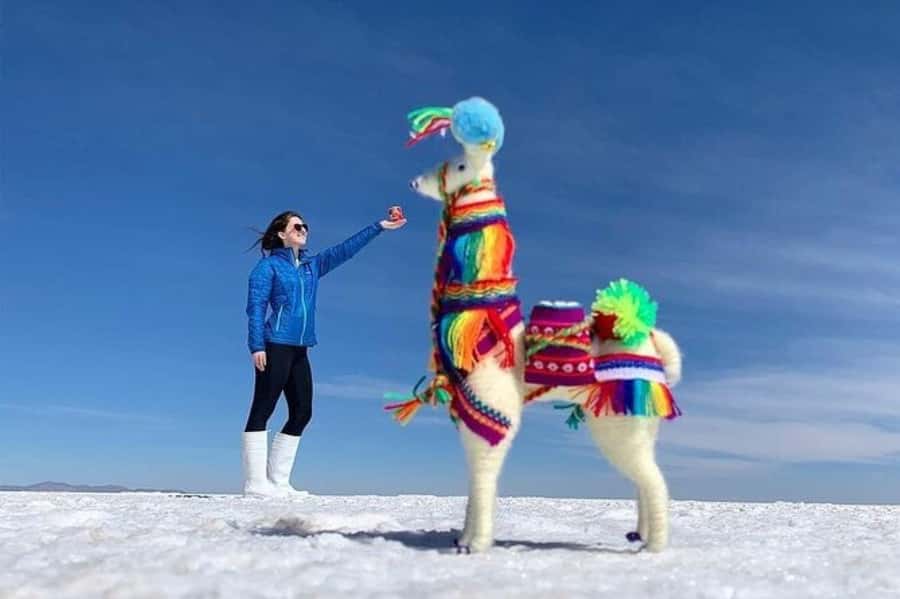
- Perspective photos are part of the plan: The center of the Salar gives you room for playful, oversized-looking pictures.
- Incahuasi adds a cactus walk: The visit lasts more than an hour and includes giant cacti, broad views, and the Coral Window.
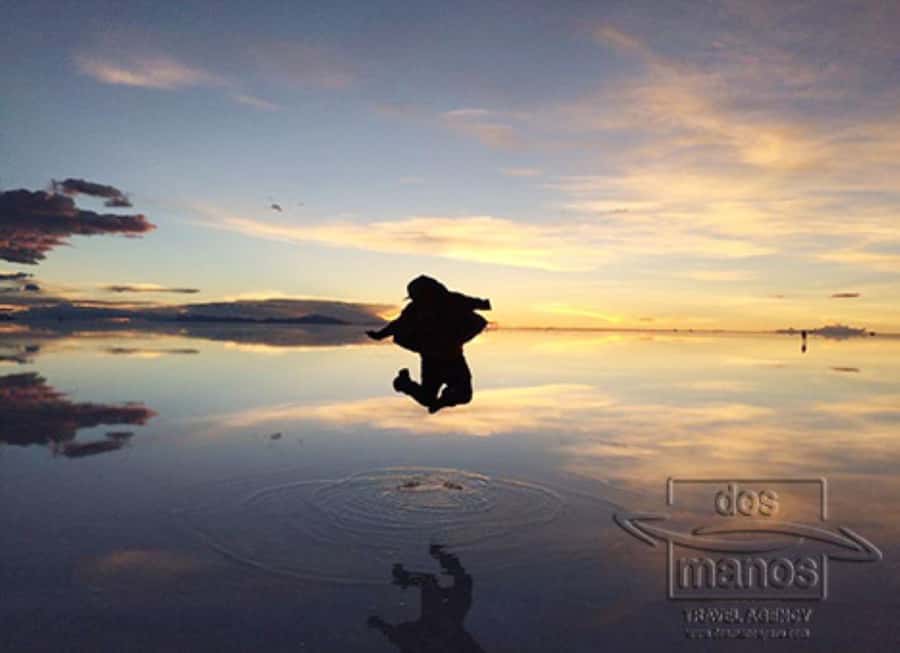
- Sunset comes with wine: The day ends near water at the edge of the Salar before the 20:00 return to Uyuni.
A $76 Day Across Bolivia’s White Salt Plain
At $76 per person, this is priced as a full-day outing rather than a simple ride to the salt flat. You get a Toyota or Nissan 4×4, a professional driver-guide, food and drink, wine for sunset, an oxygen bottle, and pickup from a hotel or the airport on the same day.
That package makes the price reasonable, especially if you want the major Uyuni sights in one day. The extra cost to watch is entrance fees for attractions or museums, which are not included. The total can therefore rise slightly depending on which stops charge admission.
The route returns to Uyuni at about 20:00. You can be dropped at your hotel, the airport, or the bus stop, which is useful if you are connecting onward that evening. Still, I would avoid booking a tight transport connection because road conditions and time spent taking photos can affect the schedule.
The exact starting time is not fixed in the supplied details. You need to check availability for the date you want. Airport pickup is available for a same-day tour, which is handy, but you should confirm the timing before relying on it for an arrival connection.
You can also read our reviews of more evening experiences in Colchani

Rusty Rails at the Uyuni Train Cemetery
The first stop brings you to more than 20 old locomotives and wagons scattered over the frozen ground of the high plateau. Their rusted iron makes a stark first chapter to the day: before the salt, you get a reminder that Uyuni once looked toward railways and mineral shipments.
The railway story here is tied to Bolivia’s industrial growth. In 1899, the first railway line in the country was laid along the route linking Uyuni with Antofagasta. It carried tin, silver, and even gold, while the silver mines of Huanchaca helped make the railway a backbone of development.
I like this stop because it gives the day a human and industrial edge. The Salar can feel almost too large to understand, but the locomotives give you something solid and familiar to examine. You can look closely at the wheels, boilers, and wagons, then compare that heavy machinery with the nearly empty salt plain coming later.
The drawback is that the site is exposed and visually repetitive if you are not interested in old machinery. You will want comfortable shoes and protection from the high-plateau conditions, though the supplied information does not specify the exact facilities or length of this stop.
Colchani’s Salt Factory and Handmade Souvenirs
Colchani sits about 23 kilometers from Uyuni and works as a useful transition between town and the Salar. The stop includes a salt factory, salt craft shops, and handmade goods using llama and alpaca fiber.
This is one of the better places to buy a small souvenir because the products connect directly with the region. Salt crafts give you a simple reminder of the day, while llama and alpaca items offer a different look at local materials and making traditions.
I would save a little space in your bag if you like practical keepsakes. The stop is not presented as a long cultural visit, so you should think of it as a short shopping and orientation break rather than a full tour of Colchani.
The salt factory matters because it shows the Salar as a source of work, not only a place for dramatic photographs. You see the connection between the white surface under your feet and the products being processed and sold nearby.
Entering the Salar de Uyuni: Salt Piles, Gas, and Open Space
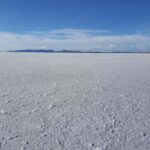
The Salar de Uyuni is the largest salt flat in the world, formed when prehistoric lakes evaporated. Its scale is the reason most people make the trip, but the route gives you several ways to understand it beyond simply driving across white ground.
You first see piles of salt and areas where salt is extracted. These details make the plain feel active and useful. The salt is not just scenery; it is part of the local economy and the reason the area has drawn attention for generations.
The next stop is the Ojos del Salar, where you can see water moving and gases being emitted. This is a good counterpoint to the dry salt crust. Instead of a silent, frozen-looking surface, you get a glimpse of movement below or between the salt formations.
The route then reaches the Hotel or Salt Museum at Playa Blanca. Here you can see flags from different countries and the Dakar monument. Lunch is included during the day, and this is listed as the place where you continue the visit before heading toward the center of the Salar.
The Dakar monument adds a modern sporting reference to the trip. The flags make the stop feel international, while the salt building brings you back to the material that defines the region. I like that this section gives you several short points of interest instead of asking you to stare at the same white surface for hours.
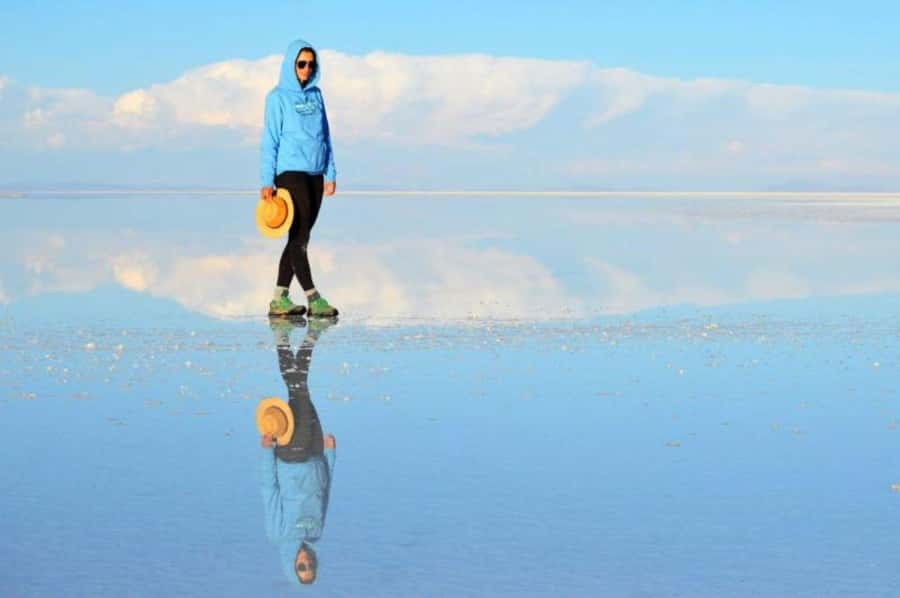
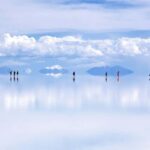
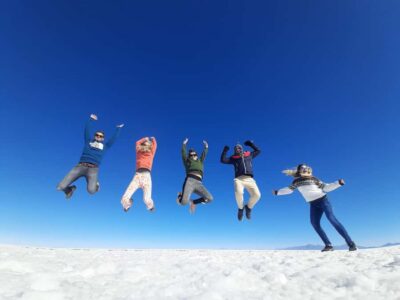
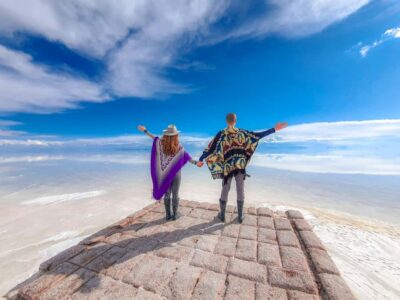
The center of the Salar is the main photo area. Here, the open space makes perspective photography possible, so you can create playful images that make people or objects appear unusually large or small. You will want to bring a few simple photo ideas, but the guide and the setting do much of the work.
This is also where patience helps. Perspective pictures often require arranging people at different distances and trying several angles. If your group is enjoying the photos, the stop may feel lively; if you prefer a quick visit, it can feel drawn out. The schedule gives you the chance to enjoy the fun rather than rush past it.
The Incahuasi Cactus Walk and Coral Window
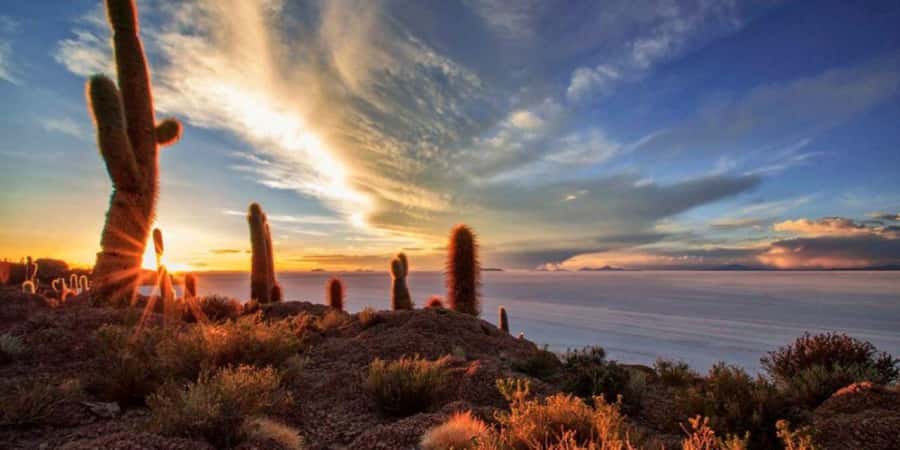
Incahuasi Island changes the mood again. Instead of a flat, open surface, you get a walk of more than an hour among ancient giant cacti, along with panoramic views across the Salar.
This is the most active part of the day. I like it because you get out of the vehicle and use a clear walking path rather than making every stop about looking from beside the 4×4. The giant cacti also give you a strong sense of scale: the salt plain is vast, but these old plants make the island feel distinctive and easy to remember.
The route also includes the Coral Window. The supplied details do not explain its exact form, so you should think of it as a named feature on the island rather than expect a particular type of rock or opening.
The important qualification is seasonal. The visit to Incahuasi depends on the rainy season. Ask about conditions for your date if this stop is a priority, since the rest of the itinerary may still operate even when the island visit does not.
You should also take the walking time seriously. More than an hour on an exposed island can feel tiring after the earlier driving and photo stops. The tour includes food and drink, but the details do not specify what to bring for the walk, so basic personal water and sun protection are sensible choices.


Sunset at the Salar’s Edge With Wine
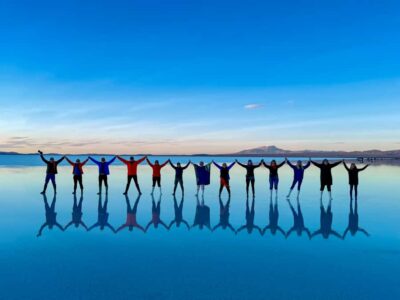
After Incahuasi, the 4×4 returns toward the edge of the Salar. The guide looks for a place with water, where you can watch the sunset and have wine included with the experience.
This is a smart ending because the day begins with industrial relics and finishes with a quieter natural view. The water gives the sunset stop a different surface from the dry salt route, and the wine adds a small celebratory touch without turning the entire day into a formal event.
The timing is useful to know: you arrive back in Uyuni at about 20:00. Sunset times change with the season, so the exact light and waiting time are not stated. The tour description also does not promise a specific sunset location, only that the guide will find water near the edge of the Salar.
I would treat the wine as a pleasant extra rather than the main reason to book. The real value is having a final stop that lets you slow down after a full schedule. If you are hoping for a long, private sunset picnic, no such arrangement is specified, so keep your expectations modest.
A Toyota or Nissan 4×4 for a Full Day
Transportation is by Toyota or Nissan 4×4, a practical choice for a route that covers the train cemetery, Colchani, the salt flat, Incahuasi, and the sunset area. You are spending a great deal of the day on the road, so the vehicle matters as much as the stops.
The group size is not given. That means you should not assume a private ride or a small group unless the provider confirms it. The driver is also the professional guide, and the live tour is offered in English and Spanish.
Guide quality will shape the day. Carlos has been singled out for being friendly, professional, and patient, with a habit of checking that each person is comfortable and enjoying the outing. Music from different countries is another personal touch associated with his guiding style.
That kind of attention is especially useful on a long day with several stops. A patient guide can help organize perspective photos, explain the salt-working areas, and keep the mood pleasant during the longer drives. You should confirm who will guide your departure if having an English-speaking guide is important.
An oxygen bottle is included. The information does not state how or when it is used, but its presence is reassuring on a remote high-plateau route. If you have concerns about the conditions or your own needs, ask the provider before departure rather than relying on the bottle as a medical solution.
What the $76 Includes—and the Extra Cost to Watch
The price includes several items that can make a one-day tour easier:
- Toyota or Nissan 4×4 transportation
- Professional driver-guide
- Food and drink, including lunch during the route
- Wine for the sunset
- Oxygen bottle
- Pickup at your hotel
- Same-day airport pickup
- Drop-off at an airport, hotel, or bus stop
Entrance tickets to attractions or museums are not included. That exclusion is the main point to check before you book, particularly if you plan to enter a museum or paid site during the route.
At $76, I see good value for someone who wants transport, meals, guiding, the cactus island, photo time, and sunset in one day. It is less attractive if you only want a quick visit to the Salar and do not care about the train cemetery, Colchani, or the long photo session.
You can reserve now and pay later, which keeps your plans flexible. Free cancellation is available up to 24 hours in advance for a full refund, useful if your Bolivia schedule is still shifting.
Who Will Get the Most From This Uyuni Day?
I would choose this trip if you have only one day around Uyuni and want the widest possible sample of the area. You get industrial history, local salt production, the giant salt flat, a walking stop, perspective photography, and sunset in one packed outing.
It also suits you if photographs are a major reason for visiting. The center of the Salar is specifically used for funny perspective pictures, while Incahuasi gives you giant cacti and broad views for a different set of images.
The day is less suited to you if you dislike long road journeys or prefer a slow visit with plenty of time at each location. No group size is specified, and the return is around 20:00, so the schedule is clearly full.
You should also think carefully about the rainy-season qualification. If Incahuasi is the sight you most want, ask before paying. The salt flat, train cemetery, Colchani, and sunset remain the core appeal, but the cactus island can be an important part of the day.
Should You Book This Tour?
Book it if you want a one-day overview of Uyuni with transportation, food, photos, a cactus walk, and sunset wine already arranged. The $76 price is fair for the number of major stops and the included extras, though you should budget for entrance fees and confirm the start time.
Skip it if you want a private, slow-paced outing or if your schedule cannot handle a return around 20:00. Before booking, confirm the English guide, the Incahuasi conditions for your date, and the drop-off timing for your next connection.
FAQ
How long does the tour last?
It is a one-day experience, with arrival back in Uyuni at approximately 20:00.
What is the price?
The price is $76 per person.
Is food included?
Yes. Food and drink are included, and lunch is part of the route.
Is wine included?
Yes. Wine is provided for the sunset stop.
What type of transportation is used?
Transportation is provided in a Toyota or Nissan 4×4.
Can I be picked up at the airport?
Yes. Same-day airport pickup is included, along with pickup from your hotel.
Is the Incahuasi Island visit guaranteed?
No. The visit depends on the rainy season.
Are entrance tickets included?
No. Payments for entrance tickets to attractions or museums are not included.
More Evening Experiences in Colchani
More Tour Reviews in Colchani
Not for you? Here's more nearby things to do in Colchani we have reviewed
Uyuni Salt Flats Tours, compared
 ★ 4.5From La Paz: Uyuni Salt Flat Tour & Overnight Roundtrip BusFrom $275327 reviews
 ★ 4.5Uyuni tour express from La Paz by busFrom $269172 reviews
 ★ 4.4From Uyuni: Red Lagoon & Uyuni Salt Flats 3-Day Guided TourFrom $354160 reviews
 ★ 4.3La Paz: 5-Day Uyuni Salt Flats by BusFrom $486153 reviews
Browse the lists this tour appears in